Technical Articles — Nabak Composite Technical Center
Engineering know-how for better decisions — part of Nabak Composite's technical library for FRP/GRP products.
 Nabak CompositeReg. No. 634799
Engineering know-how for better decisions — part of Nabak Composite's technical library for FRP/GRP products.

Types of composite resin additives: fillers, pigments, thixotropes, ATH fire retardants, silanes, release agents, UV stabilizers and cure systems, with typical dosages.

Chemical resistance chart for isophthalic polyester and vinyl ester FRP in 82 acidic, alkaline, saline and solvent solutions, with maximum service temperatures.
Carbon footprint and embodied energy of FRP composites vs steel, aluminum and concrete, a 50-year grating LCA, and mechanical, thermal and chemical recycling.

Bolted, riveted, bonded and hybrid joints for FRP profiles: hole and edge distances, torque, failure modes, bearing capacity, adhesives and connection details.

An engineering comparison of polyester, vinyl ester, epoxy and phenolic resins, thermoset vs thermoplastic, cure, HDT and Tg, and how to choose a resin for FRP.

Complete list of ASTM, ISO and EN 13706 standards for testing composites: tension, flexure, ILSS, Barcol, fire, electrical, chemical resistance and pultruded profiles.

Uses of FRP grating, handrails, ladders and cable trays in power plants, metros, refineries, pools, airports, food plants and public spaces, with a selection table.

Differences between molded and pultruded FRP grating in manufacture, fiber content, strength, allowable span, weight and surface types, with a selection guide.

Guide to unsaturated polyester and vinyl ester resins: ortho, iso and NPG grades, gelcoat, cure stages, catalysts and accelerators, and choosing a resin for FRP products.
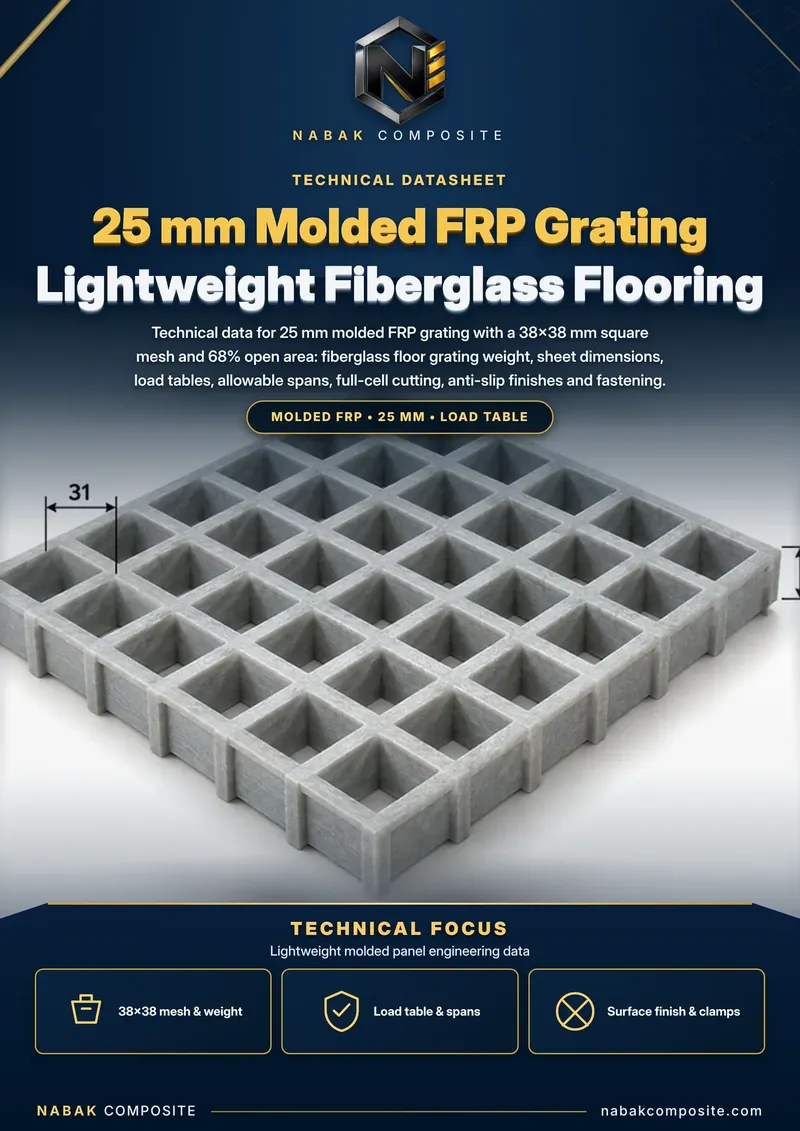
25 mm molded FRP grating datasheet: 38 mm square mesh, 68% open area, 11.4 kg/m², 1220×3660 panels, full-cell cut sizes, load table, surfaces and clips.
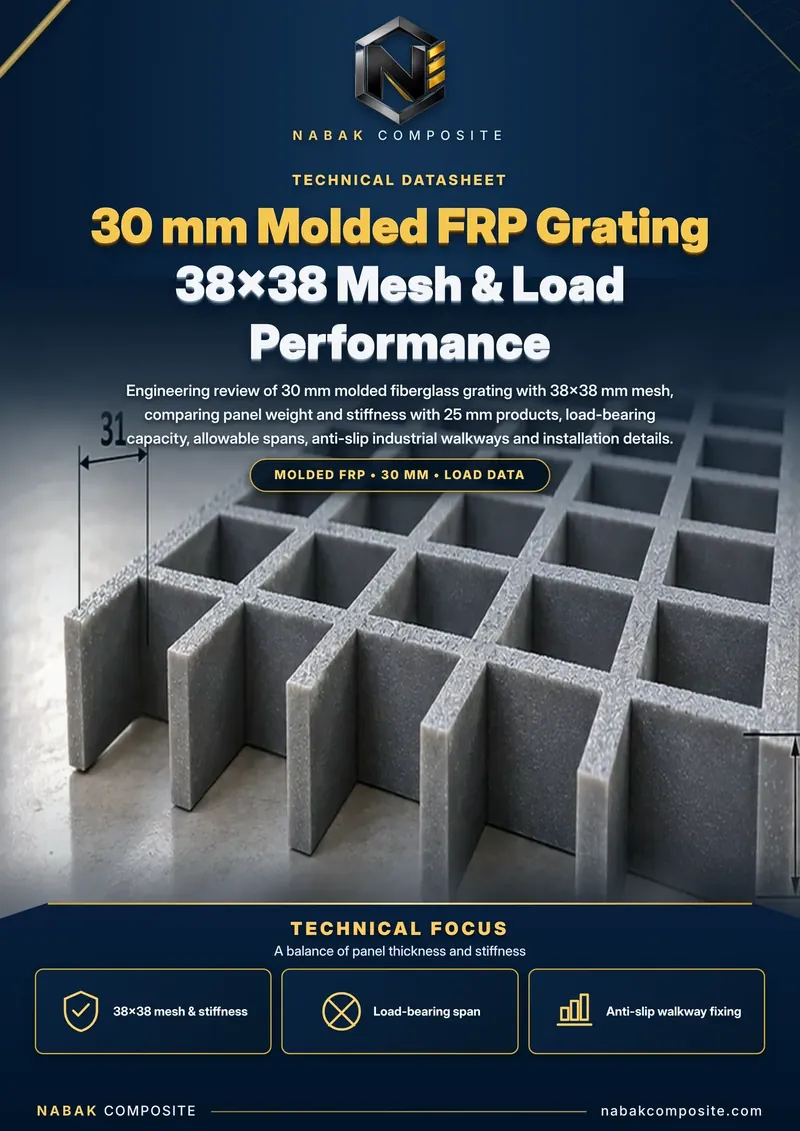
30 mm molded FRP grating datasheet: 38 mm mesh, 68% open area, 61 kg per 1220×3660 sheet, cut sizes, load capacity, 25 vs 30 mm comparison and installation.
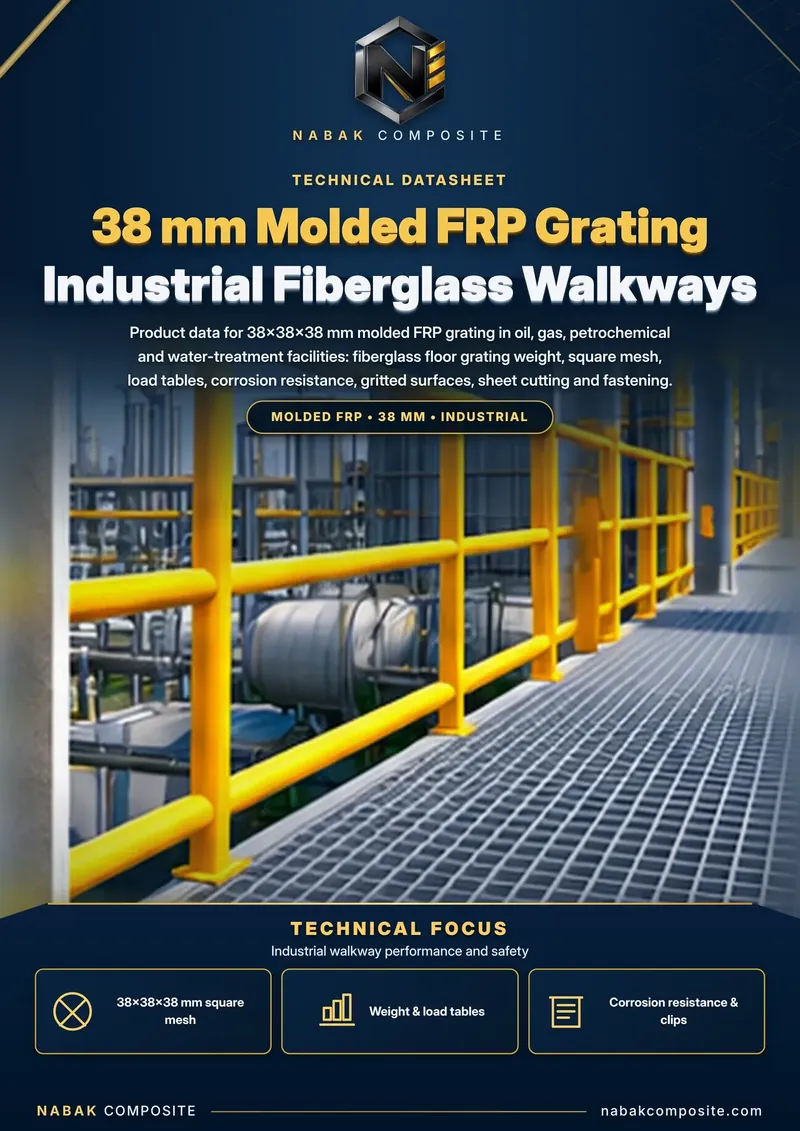
38 mm molded FRP grating datasheet — the industrial standard: 38 mm mesh, 18.4 kg/m², 1220×3660 panels, cut sizes, load table, surfaces and clips.
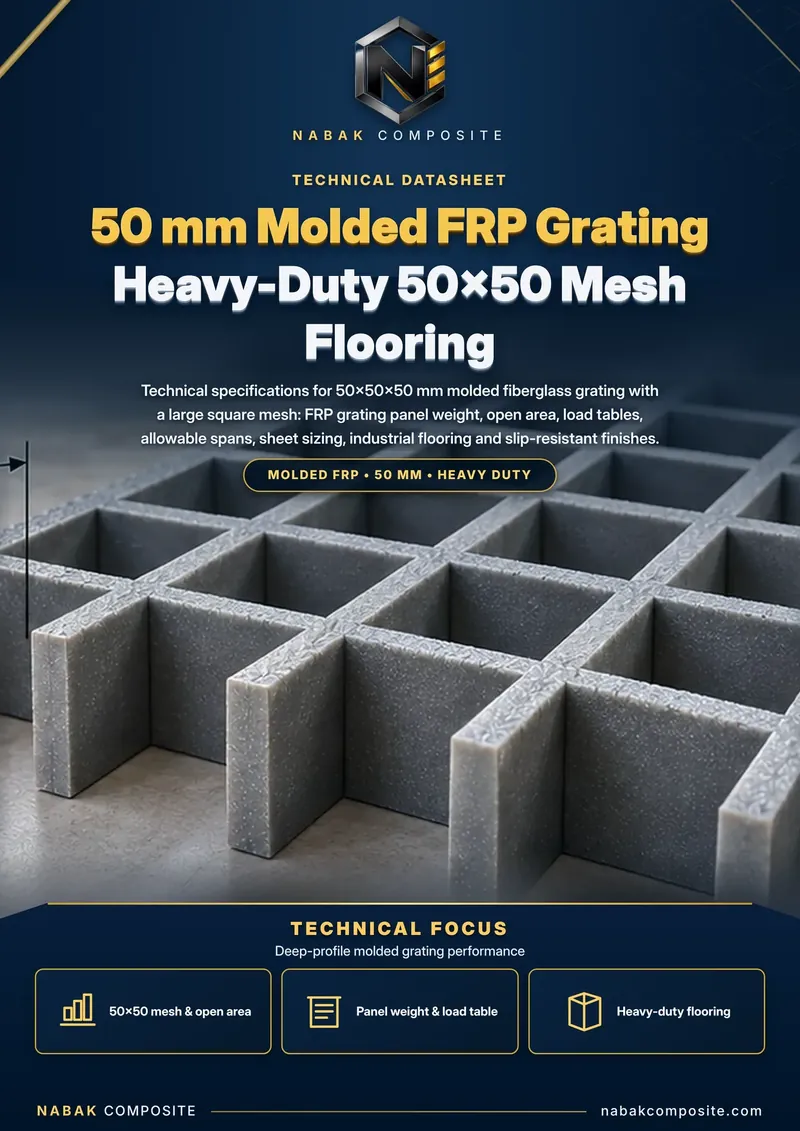
50 mm molded FRP grating datasheet: 50 mm mesh, 72% open area, 20.8 kg/m², 24×72 cells per sheet, dedicated cut table, load table and installation.
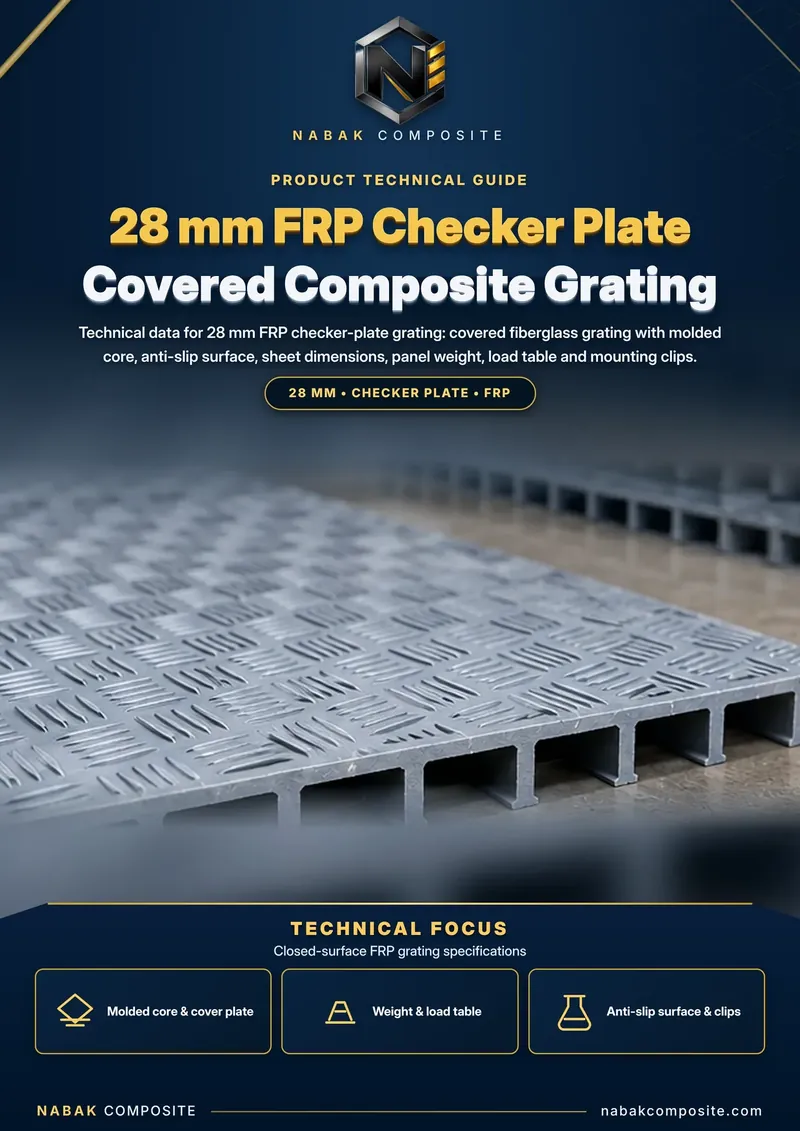
28 mm covered FRP grating datasheet: 25 mm molded grating with a 3 mm patterned plate, 17 kg/m², closed anti-slip surface, cut sizes, load table and clips.
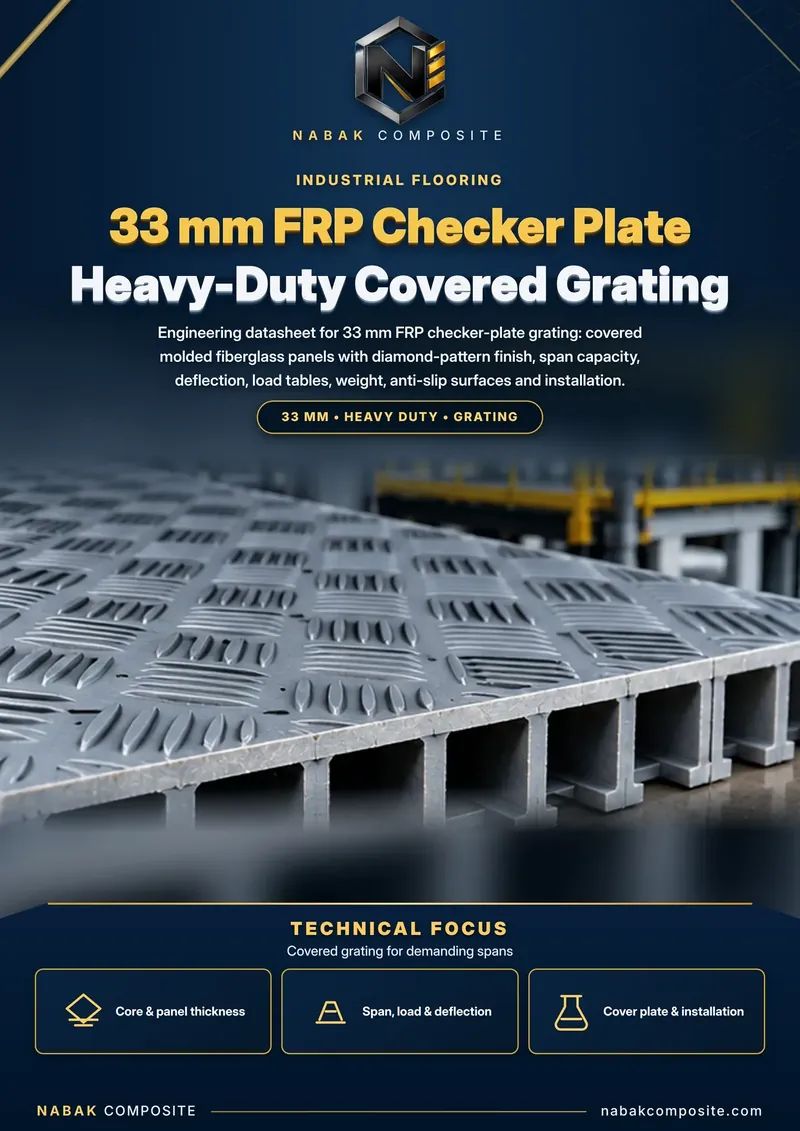
33 mm covered FRP grating datasheet: 30 mm molded core + 3 mm patterned plate, 84 kg per sheet, 60% more capacity than 28 mm, cut sizes and load table.
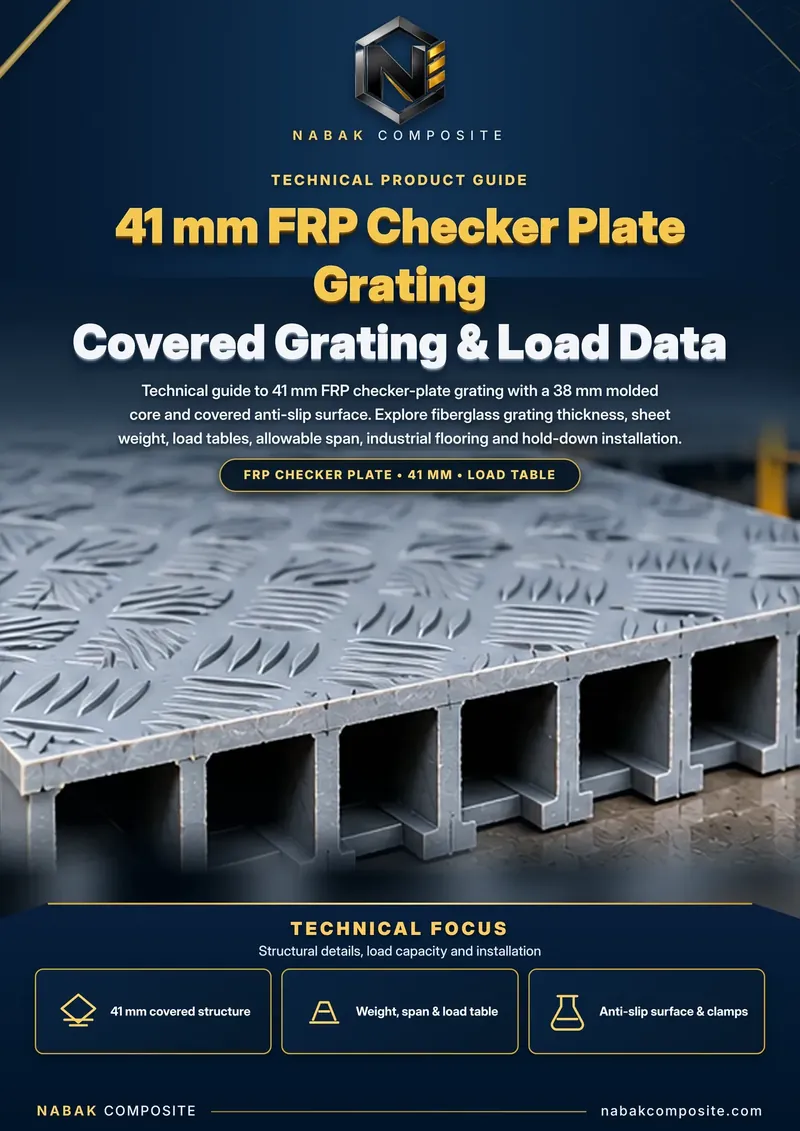
41 mm heavy-duty covered FRP grating: 38 mm molded core + 3 mm patterned plate, 23.8 kg/m², pedestrian spans up to 1 m, cut sizes and load table.
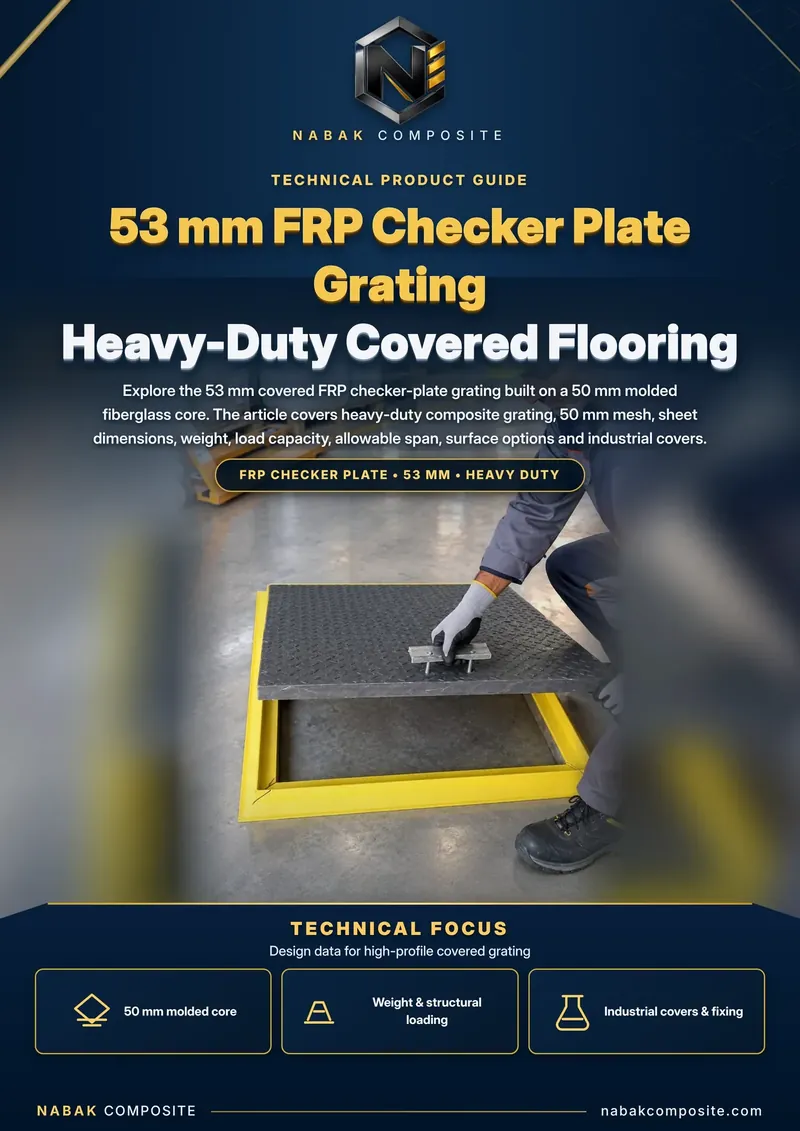
53 mm covered FRP grating with 50 mm cells: 26 kg/m², pedestrian spans up to 1200 mm, 24×72 cells, dedicated cut table, load table and installation.
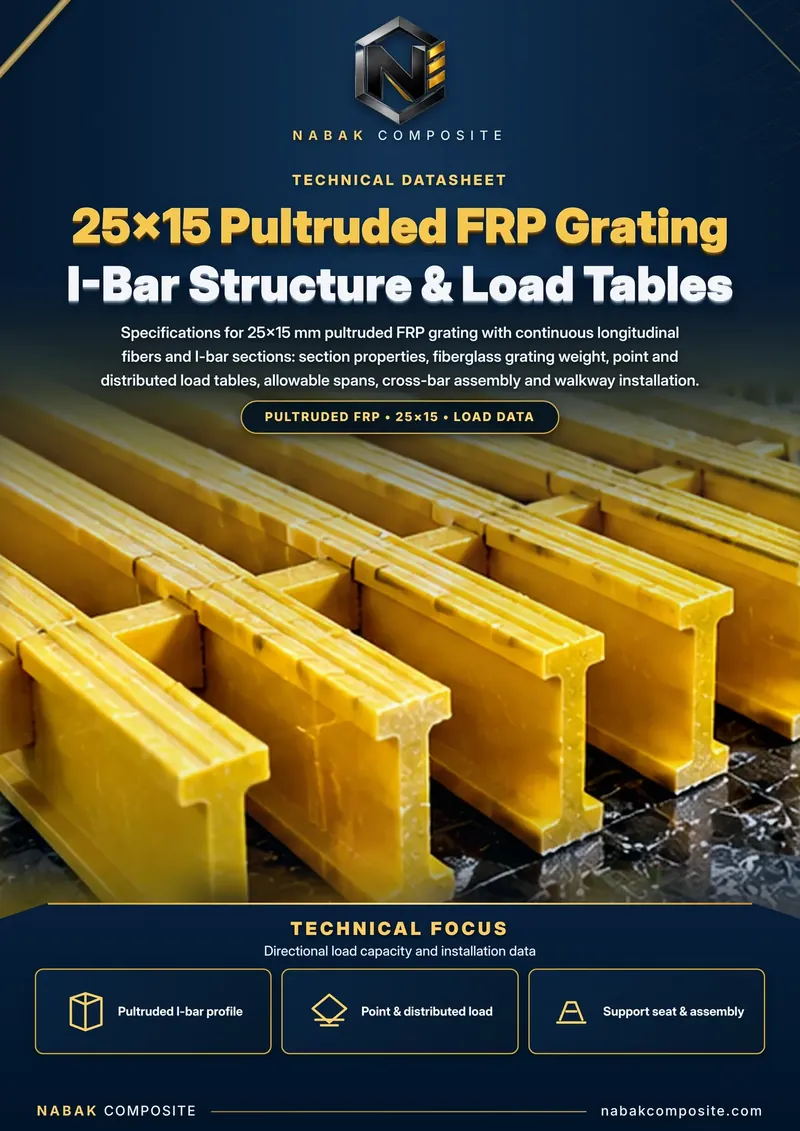
25×15 pultruded FRP grating datasheet: 25 mm I-bars at 30 mm centers, 48% open area, 14.5 kg/m², section properties, load table, installation and surfaces.
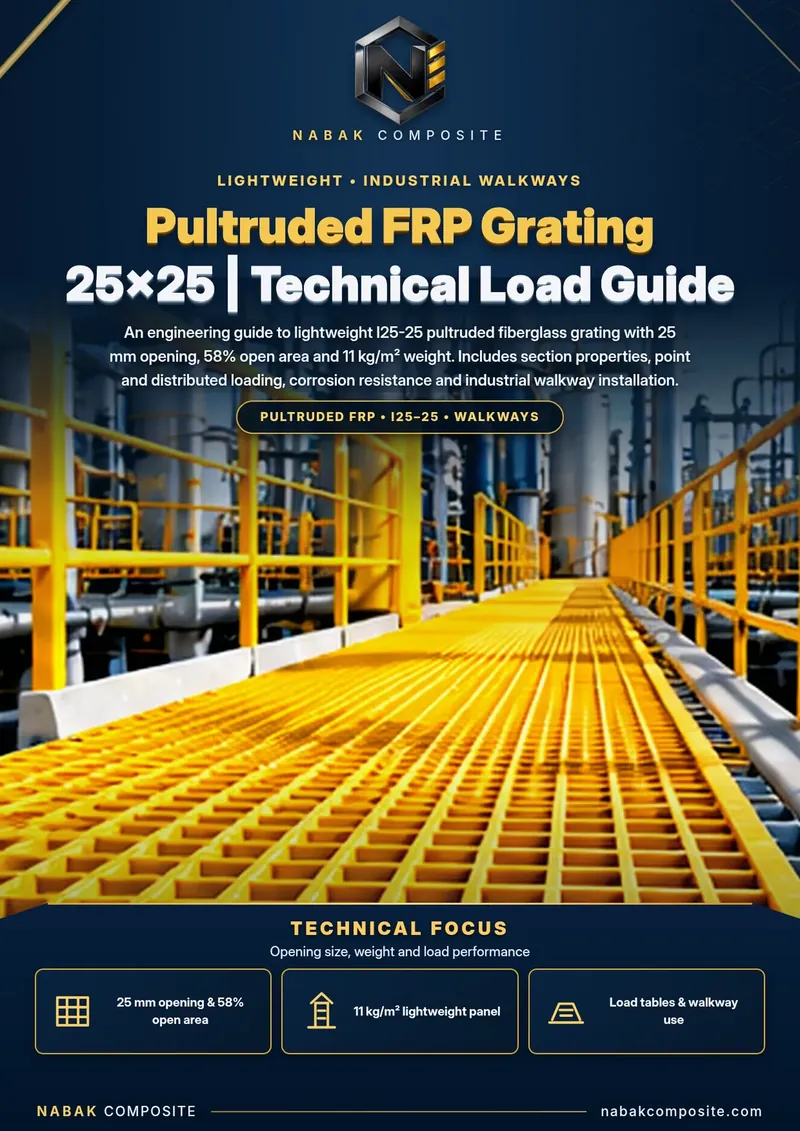
25×25 pultruded FRP grating datasheet: lightest pultruded grating, 11 kg/m², 58% open area, section properties, load table and comparison with 25×15.
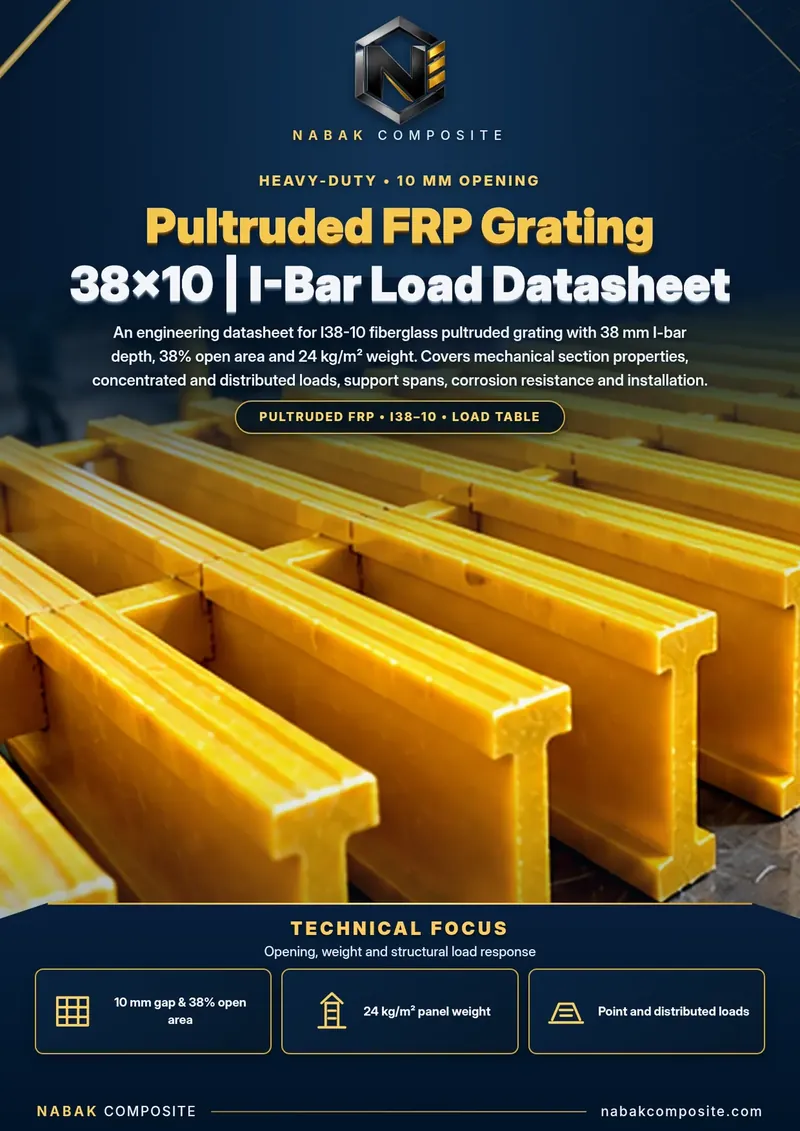
38×10 heavy-duty pultruded FRP grating: 38 mm I-bars at 25 mm centers, 10 mm opening, 24 kg/m², section properties, load table and design examples.
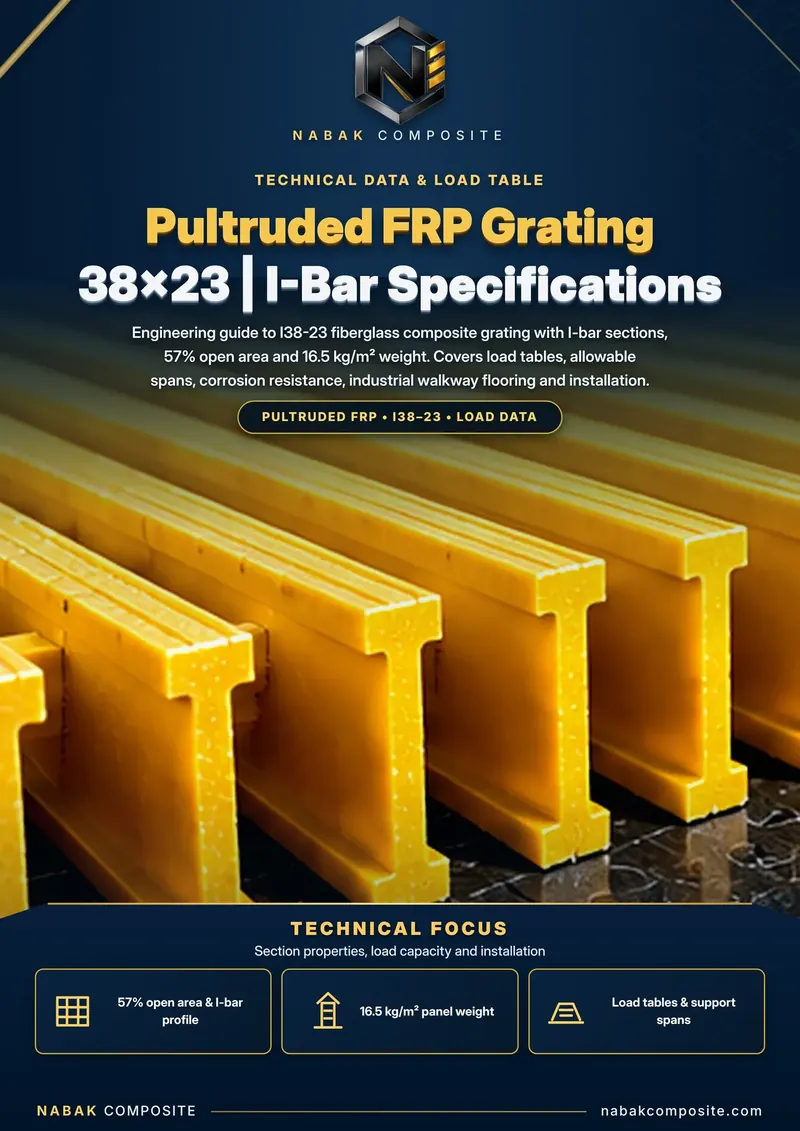
38×23 pultruded FRP grating datasheet: 57% open area, 16.5 kg/m², 990 kg/m² allowable at 1 m span, section properties, load table and 38×23 vs 38×10.
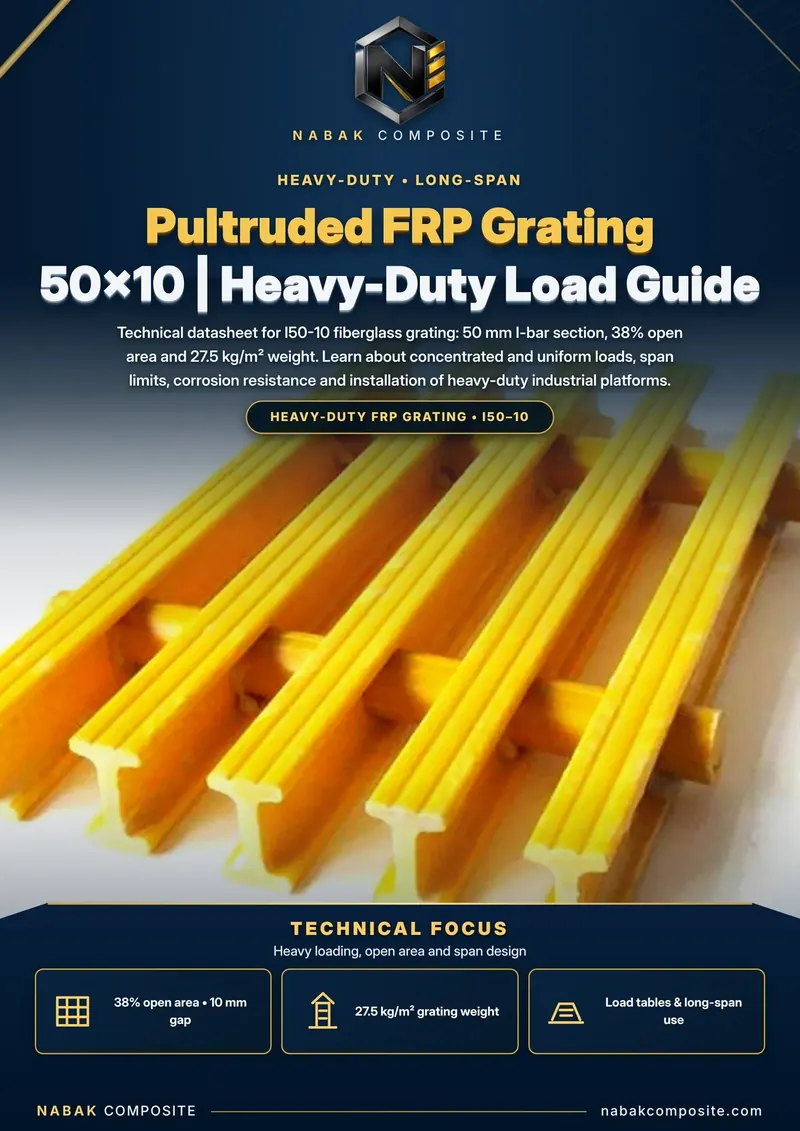
50×10 extra heavy-duty pultruded FRP grating: 50 mm I-bars, 27.5 kg/m², 1000 kg/m² allowable at 1400 mm span, section properties and load table.
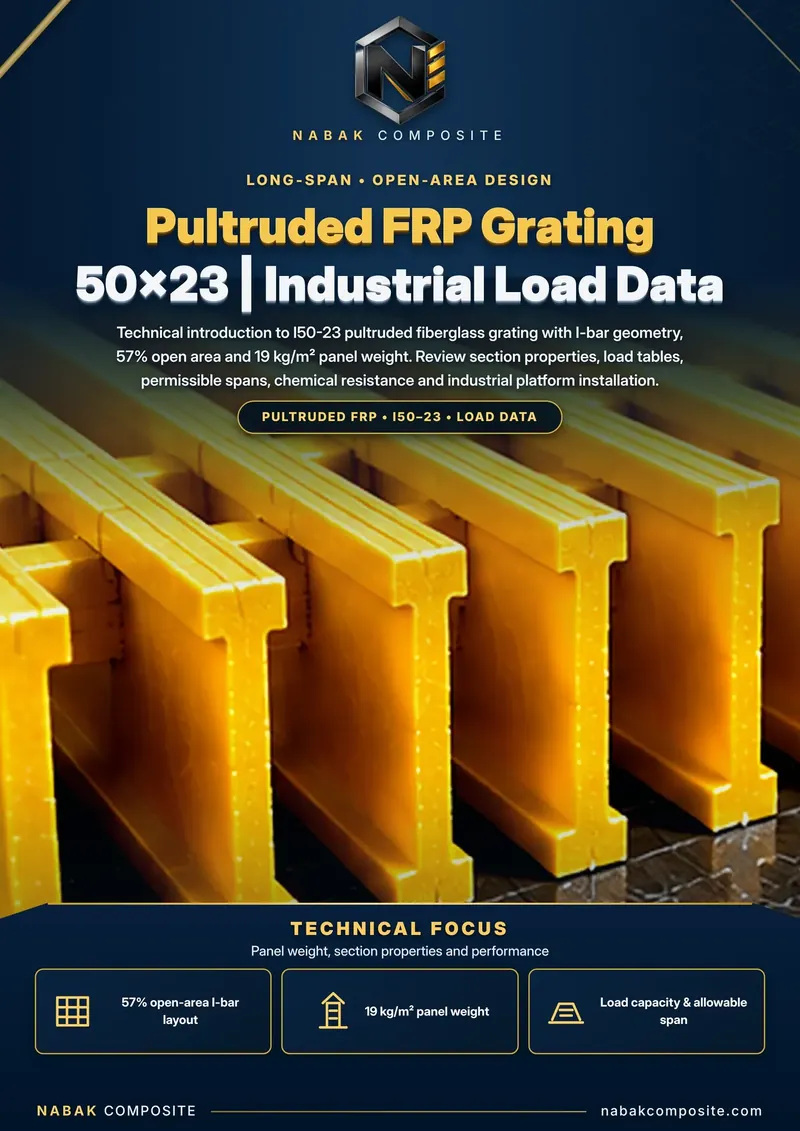
50×23 long-span pultruded FRP grating: 19 kg/m², 57% open area, 1000 kg/m² allowable at 1200 mm span, corrected section modulus and load table.
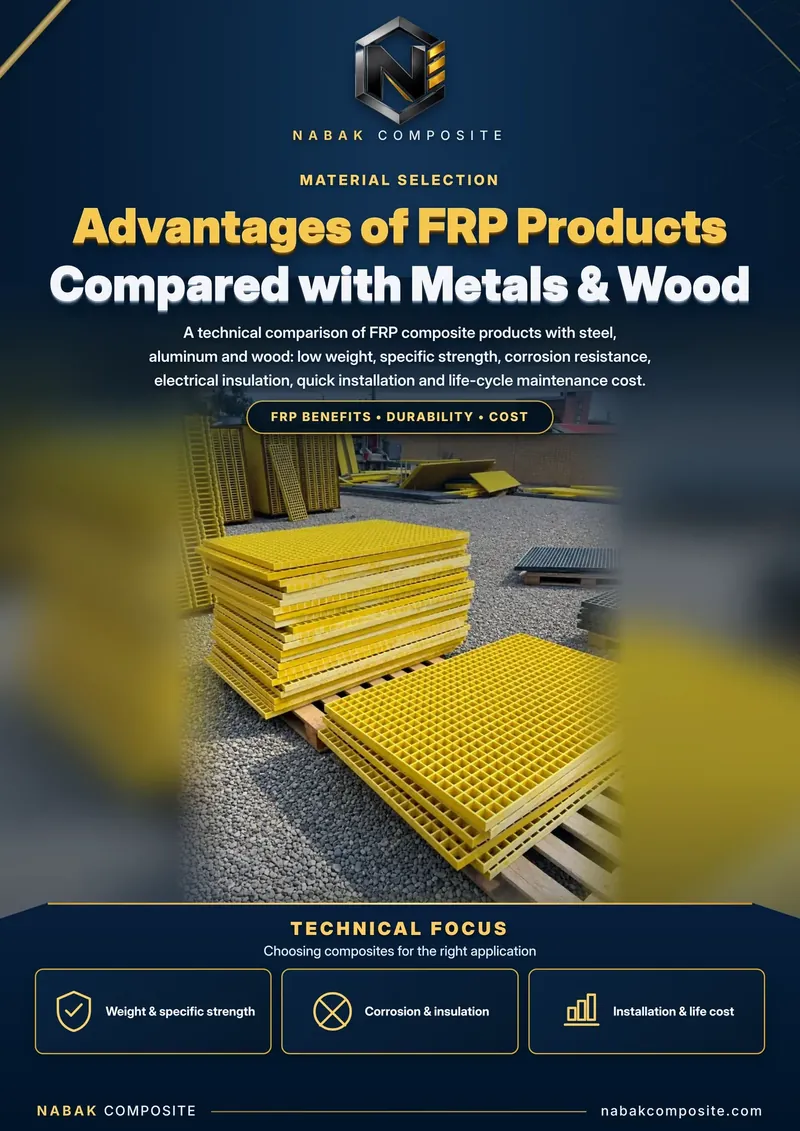
Why FRP? 75% lighter than steel, corrosion-proof, electrically and thermally insulating, low life-cycle cost — compared with steel, aluminum, wood and granite.
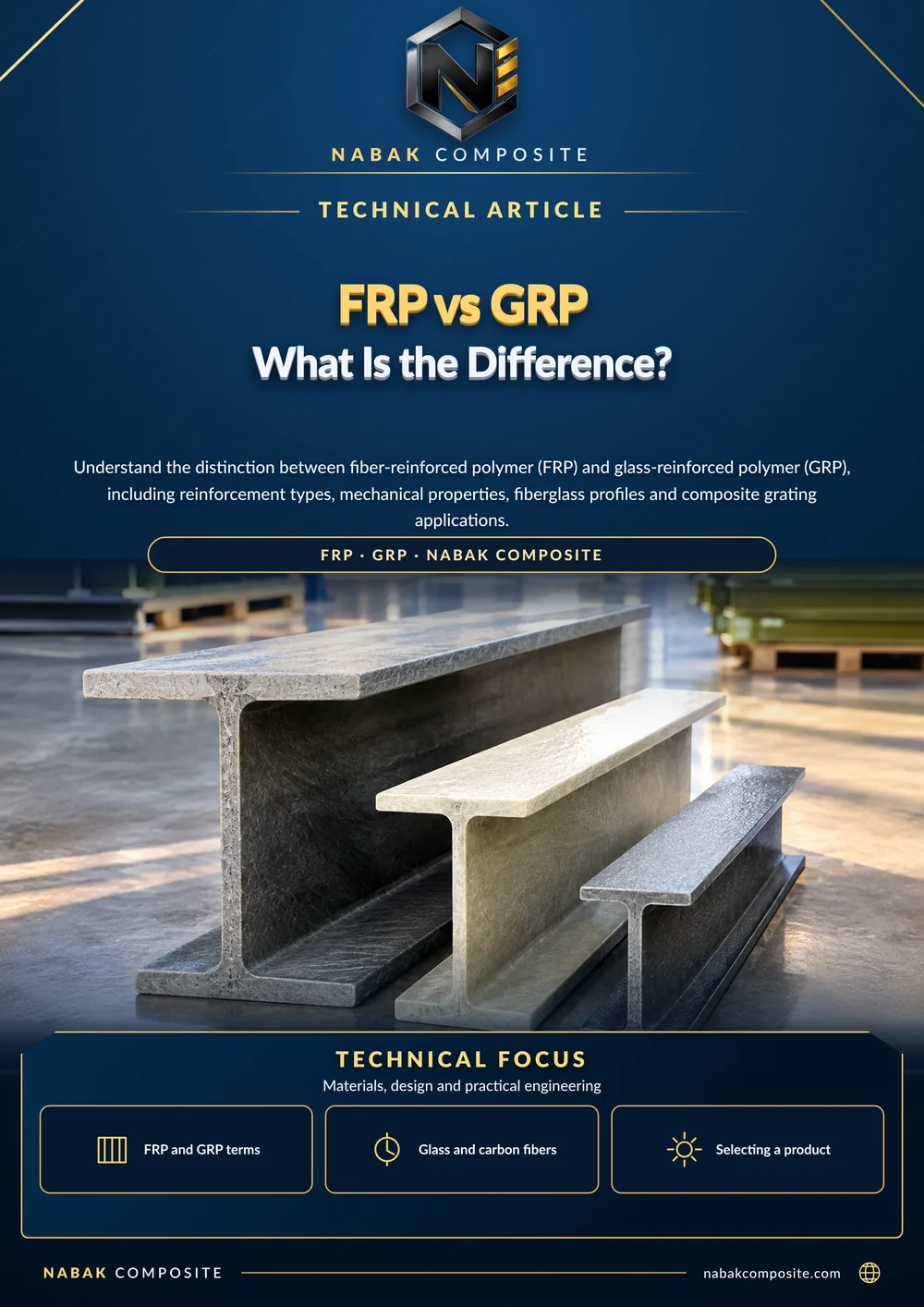
What is a composite material? Definition, history, fibers and matrix resins, classification of composites, and what FRP, GRP, GFRP and CFRP mean — explained for engineers.

Design and analysis of polymer composites at micro, meso and macro levels: anisotropy, lamination theory, failure criteria, FRP profile design and FEM modeling in Abaqus.

Hand lay-up, spray-up, vacuum infusion, pultrusion, filament winding, RTM, SMC/BMC, centrifugal casting and more — principles, fiber content, pros, cons and a full comparison.
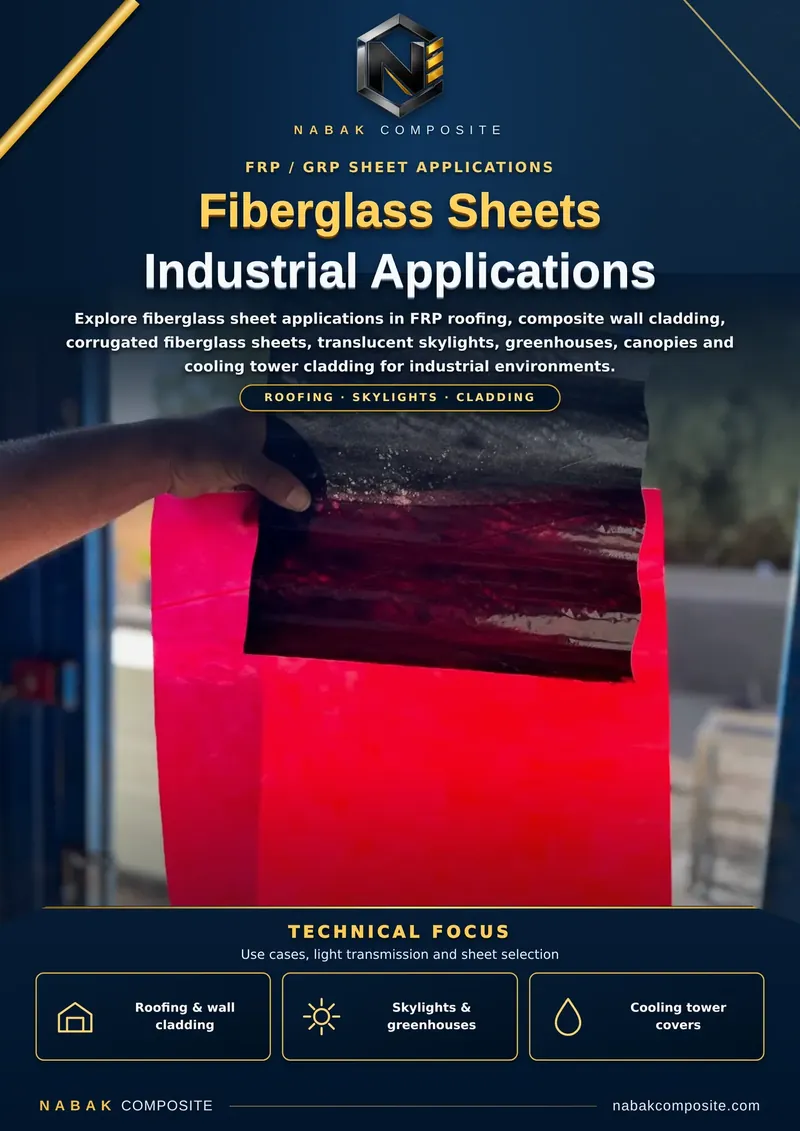
18+ applications of flat, corrugated and trapezoidal fiberglass sheet: roofing, wall cladding, skylights, canopies, greenhouses, cooling towers, facades and more, with selection tips.
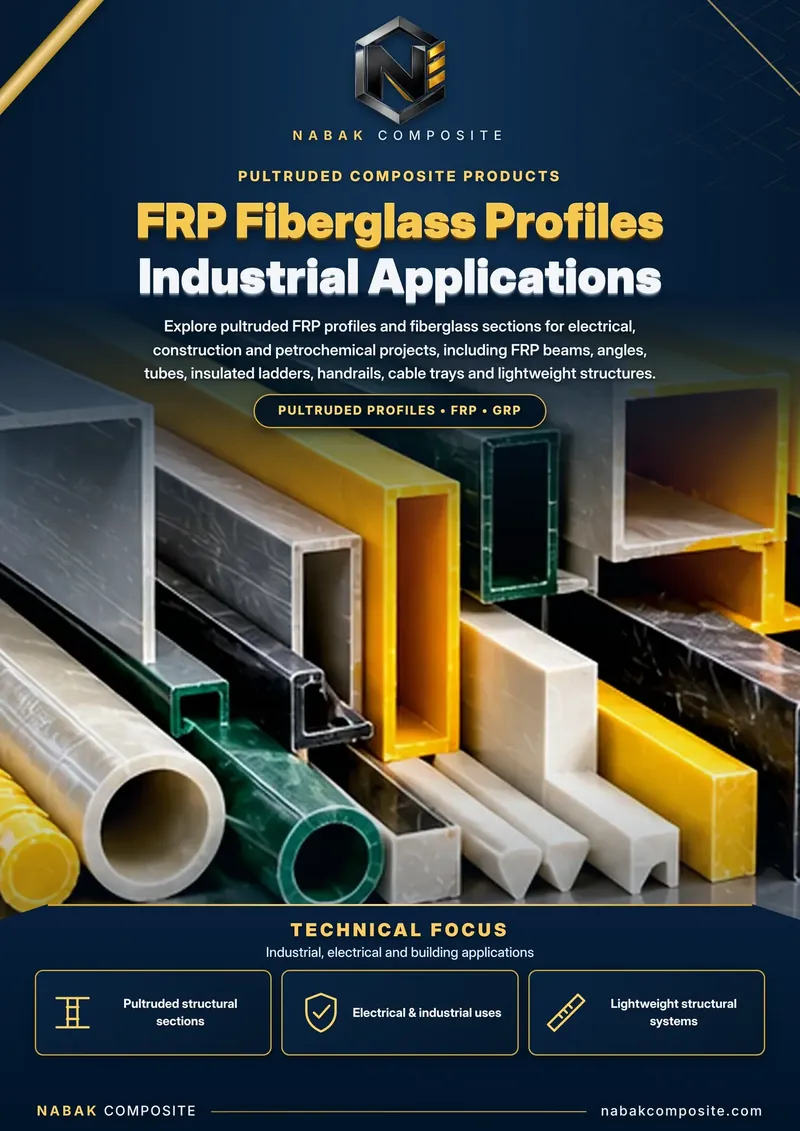
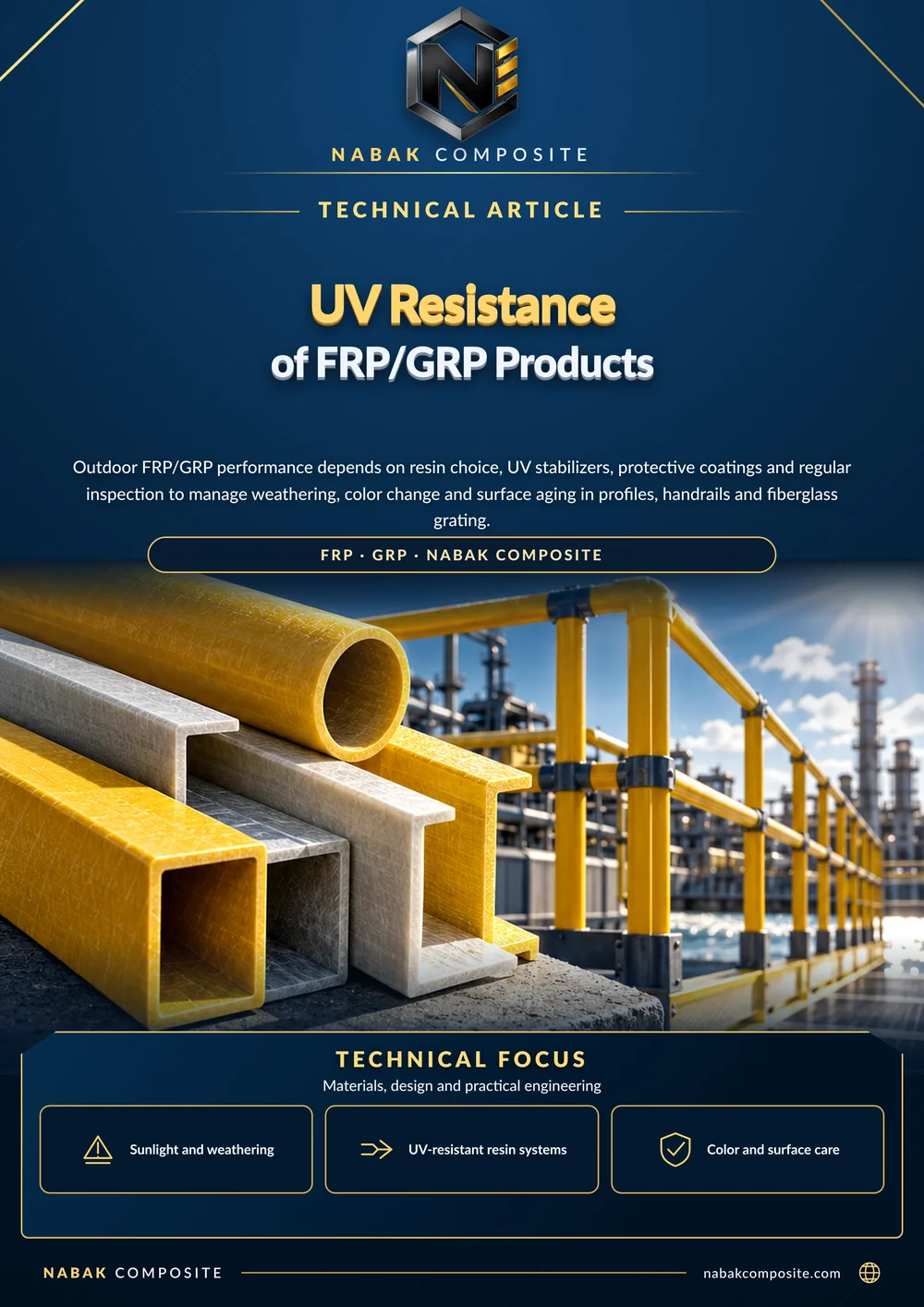
Where pultruded FRP profiles are used — by property, industry and type of use: handrails, ladders, cable trays, platforms, bridges, cooling towers, tool handles and more.

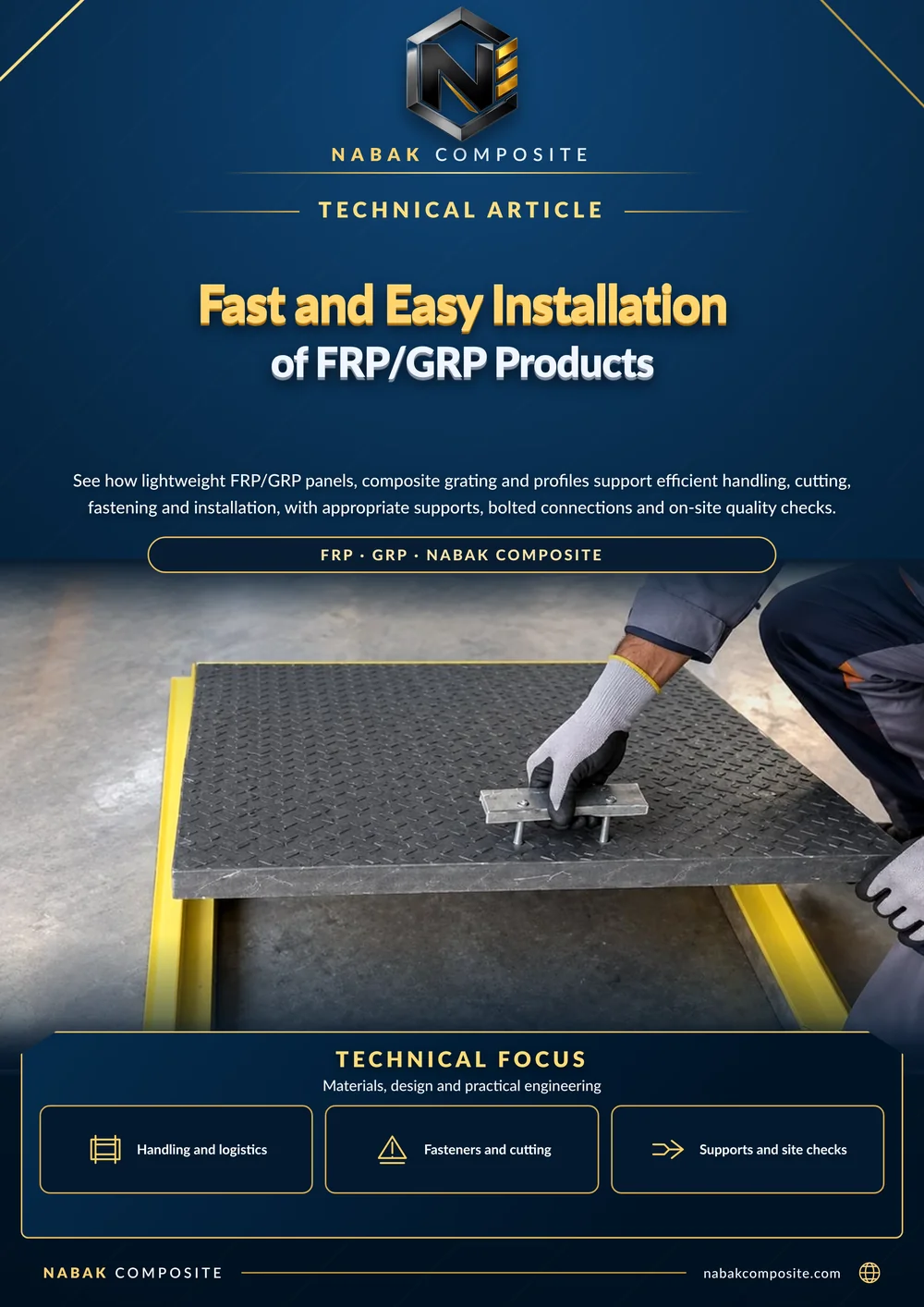
How to cut, drill and machine FRP composite parts: tools, speeds and feeds, hole design, edge sealing, defects and safety — an engineering guide by Nabak Composite.
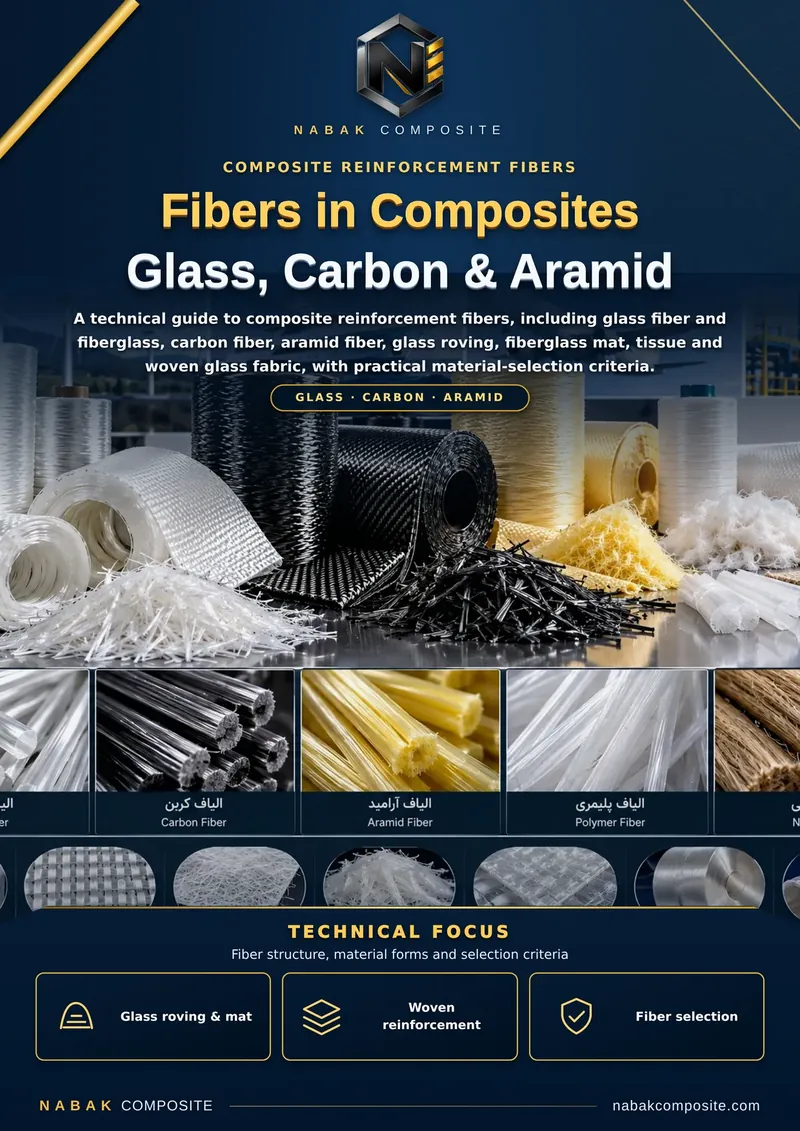
An engineering guide to reinforcing fibers: glass fiber types, carbon, aramid and UHMWPE fibers, roving, CSM, CFM, tissue and woven fabrics, and how to choose fibers by process.

Calculate composite density, fiber volume fraction, void content, modulus and strength with the rule of mixtures and Halpin-Tsai, with a full worked example for a pultruded profile.

Safety of FRP composite products following the SDS structure: composition, GHS hazards, dust and styrene control, first aid, firefighting, PPE, storage, transport and disposal.
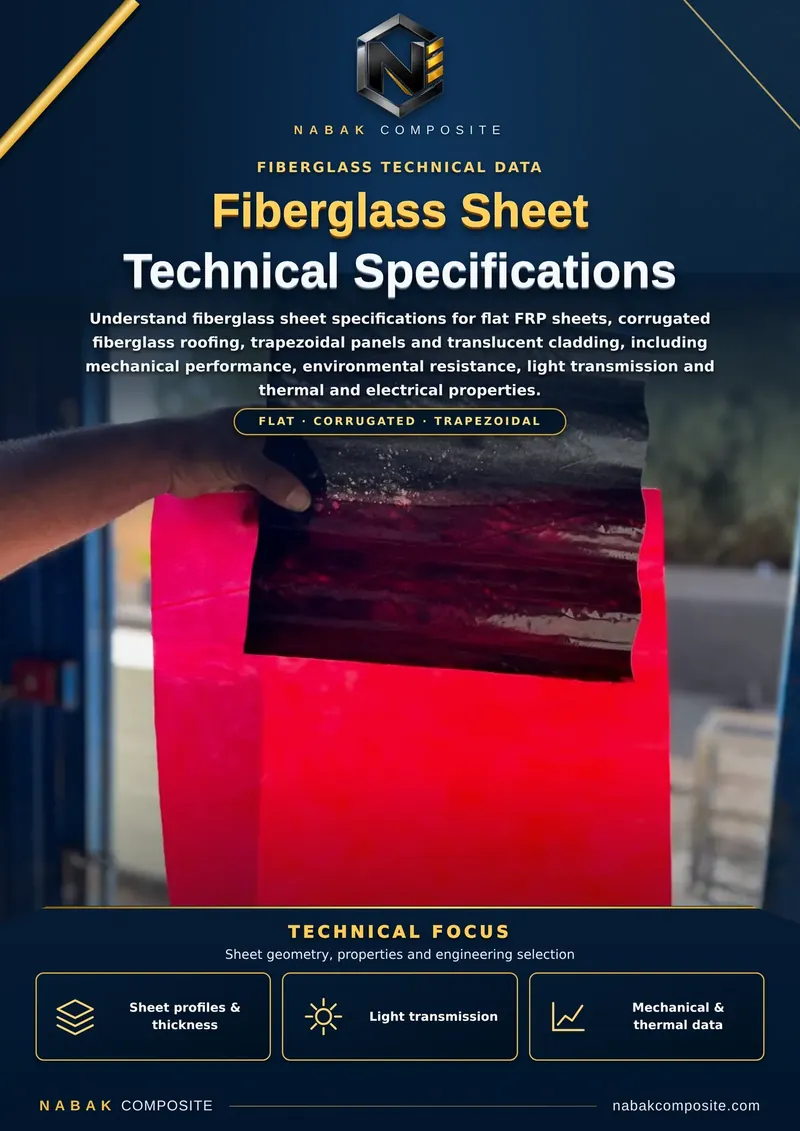
Datasheet of hand lay-up fiberglass sheet: tensile and flexural strength, density and weight by thickness, light and heat transmission, UV, service temperature and installation notes.
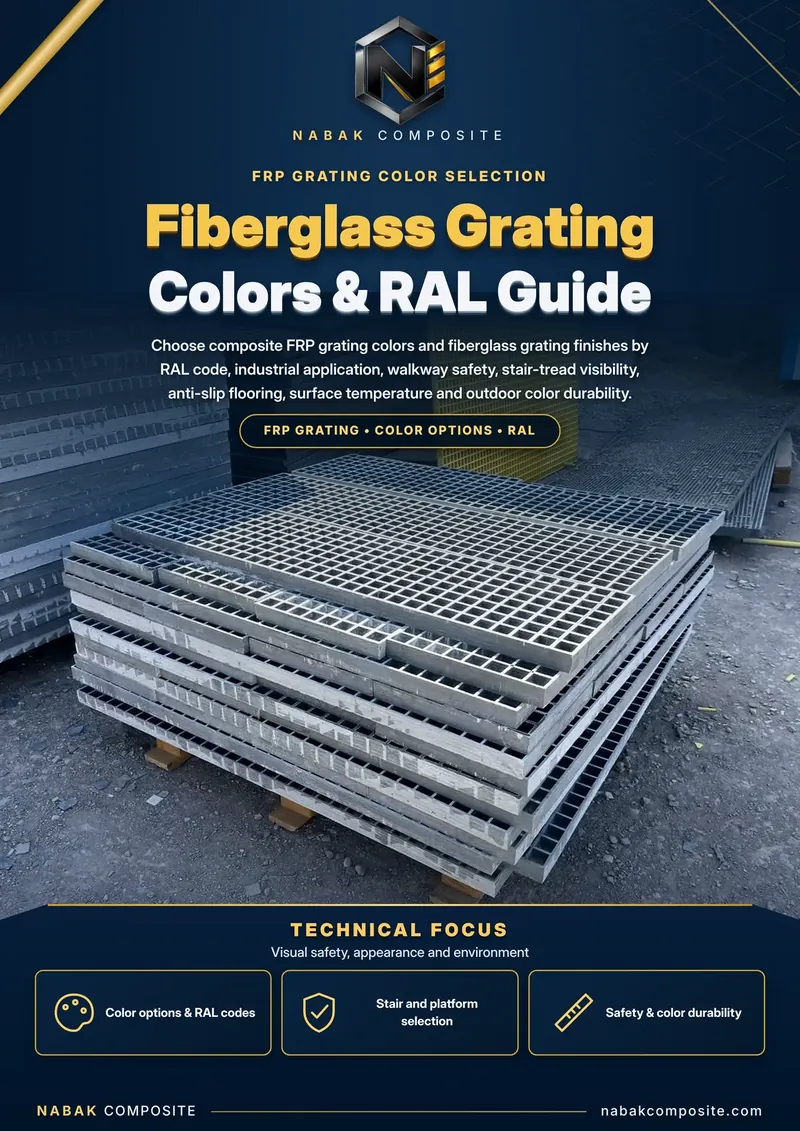
How to choose fiberglass grating color by application, safety and RAL code: stairs, platforms, walkways, hatches, tree grates, car washes and facades, plus UV and heat effects.
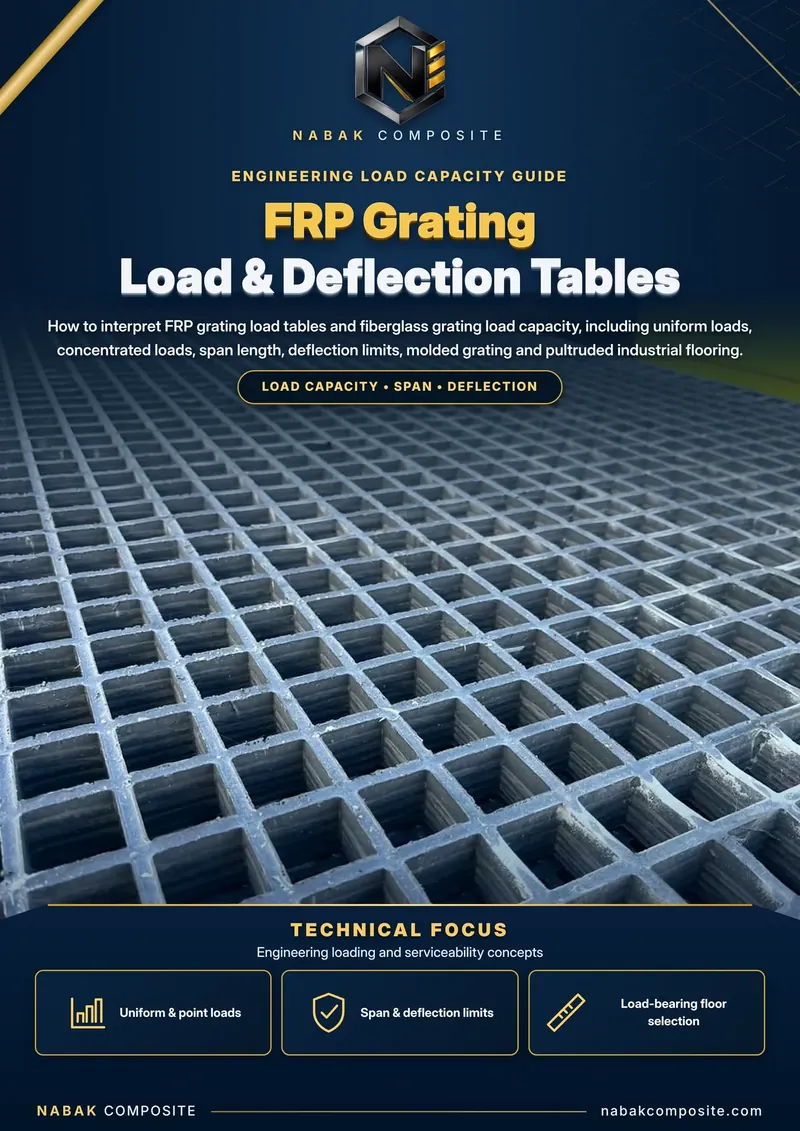
How composite grating load tables work: span, uniform and concentrated load, L/200 deflection, beam formulas, sample tables for 25, 38 and 50 mm and a selection example.
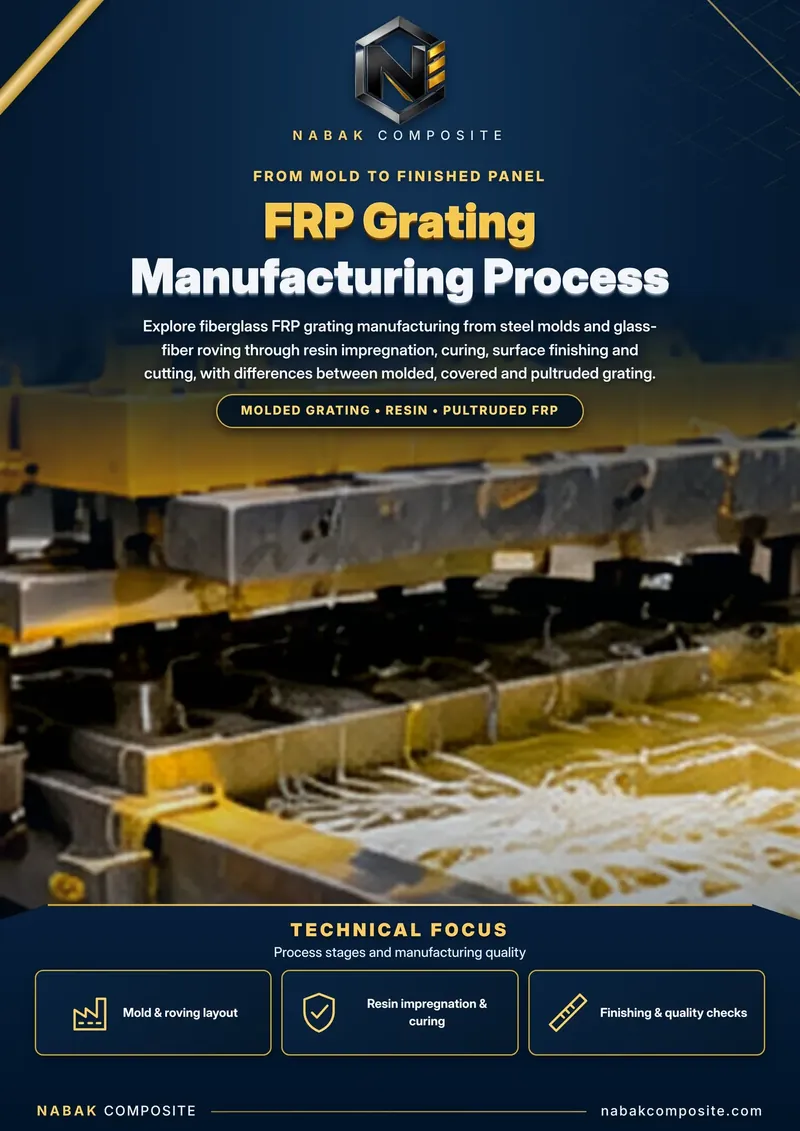
Step-by-step production of molded, covered and pultruded FRP grating: mold, roving, resin impregnation, curing, finishing, cutting, materials and quality control.
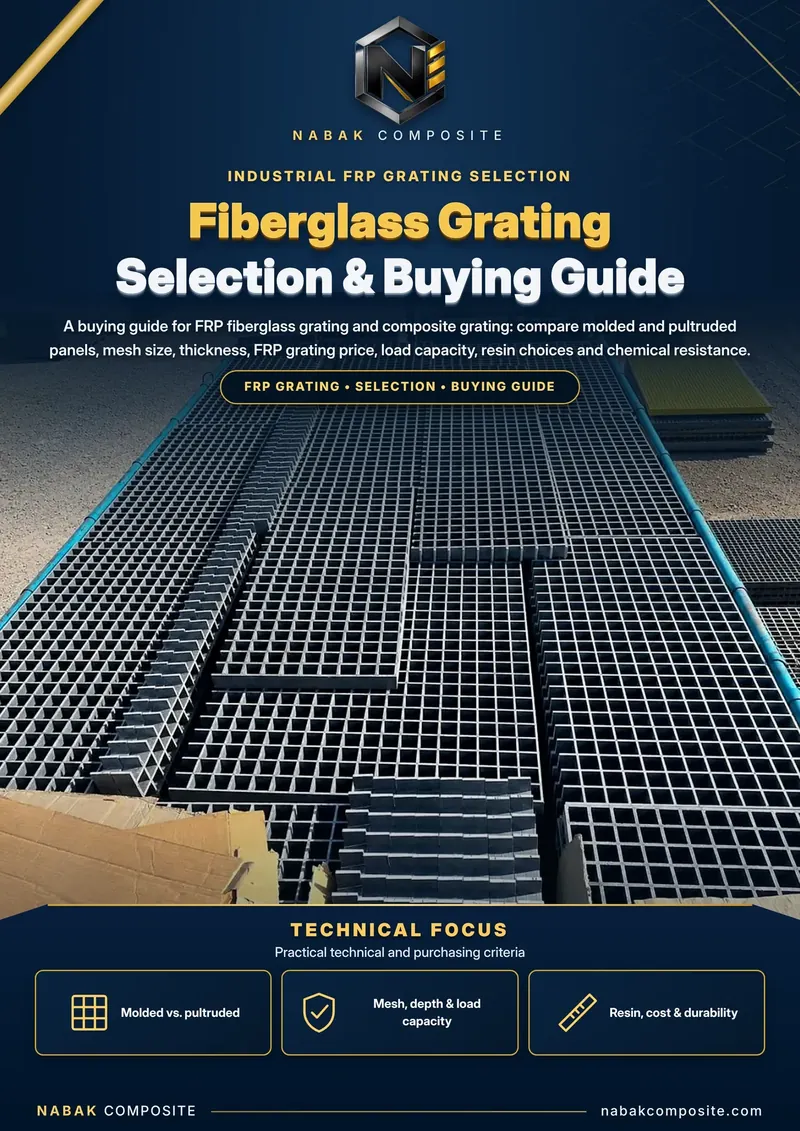
Choose the right fiberglass grating: molded vs pultruded, height and mesh, allowable and failure load tables, deflection limits, resin, fire, UV and color — with worked examples.
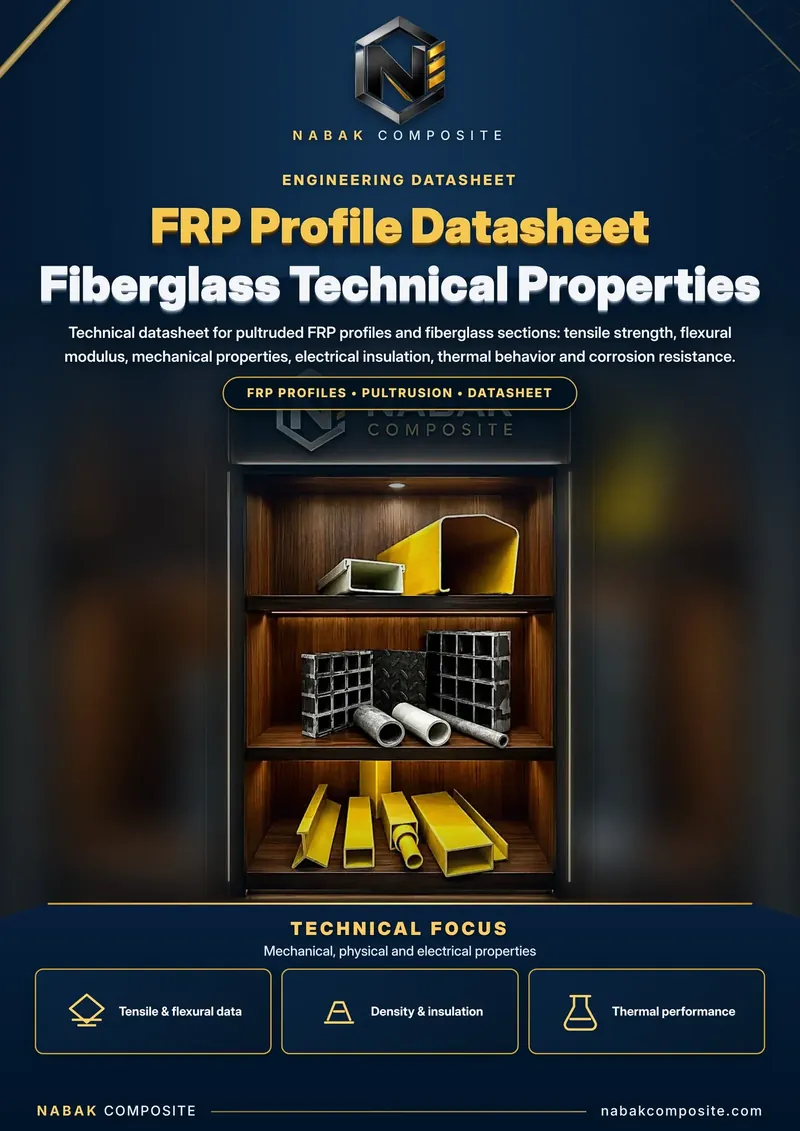
Longitudinal and transverse properties of pultruded FRP profiles: strength, modulus, density, electrical and thermal properties, temperature effects, fire, UV and corrosion.
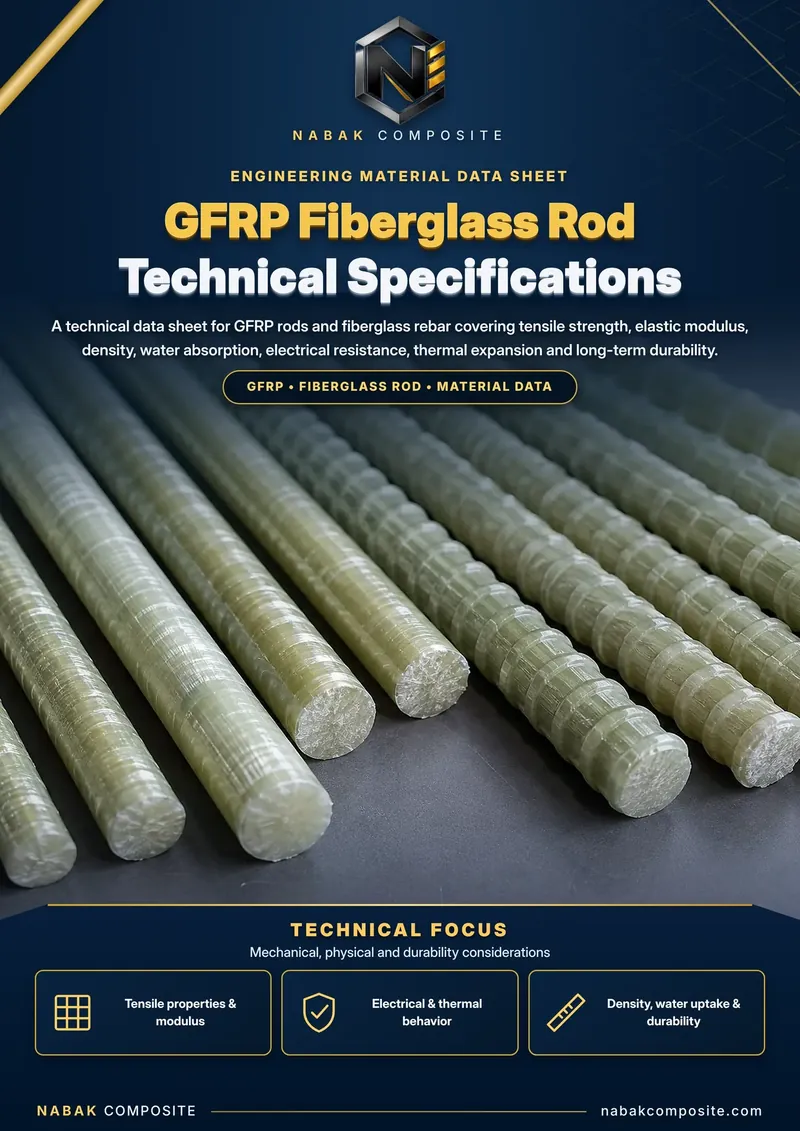
Datasheet of pultruded vinyl ester GFRP rods: 1200 MPa tensile strength, modulus, density, bend diameter, electrical and thermal properties, weight and capacity by diameter.

The full hand lay-up process: pattern and mold making, gel coat, lay-up, de-airing, cure, finishing, resin-to-fiber calculations, defects and fiberglass sheet production.
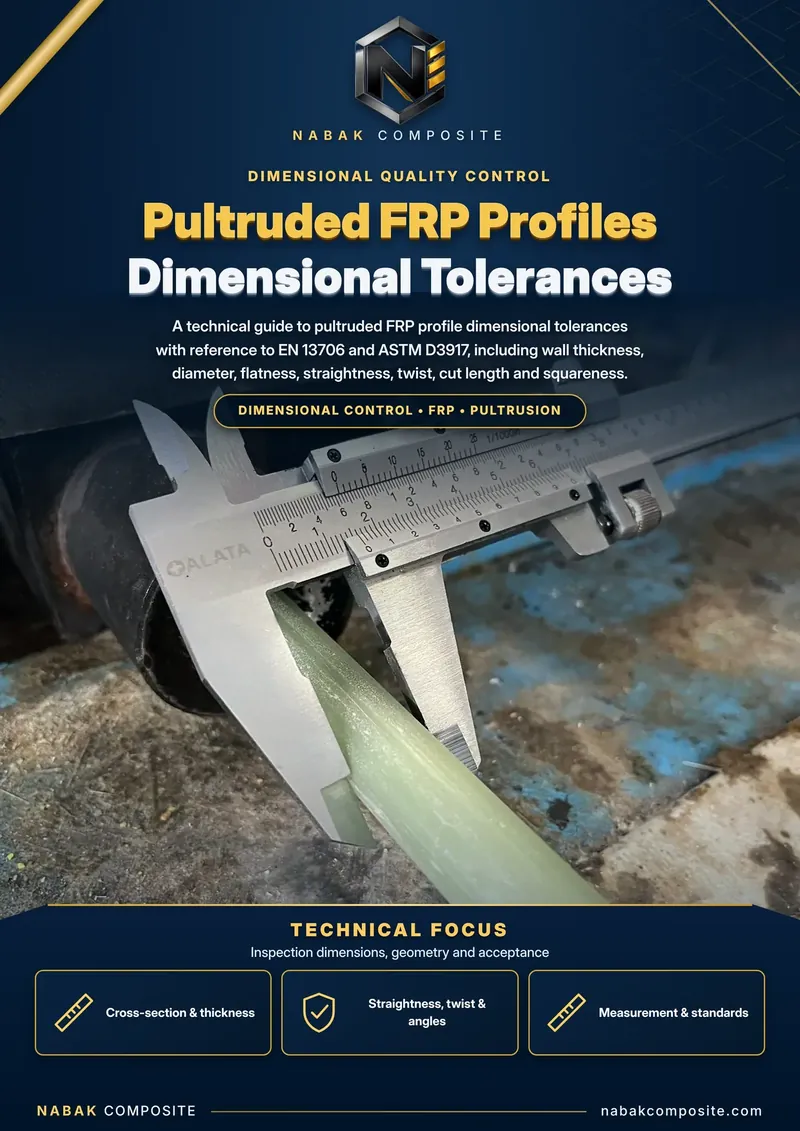
Dimensional tolerances of pultruded profiles per EN 13706 and ASTM D3917: section, diameter, thickness, cut length, flatness, straightness, corner angle, twist and measurement.

How pultrusion works: fibers and resin bath, preforming, heated die and cure, pullers, process parameters, quality control, defects, properties and pultruded products.
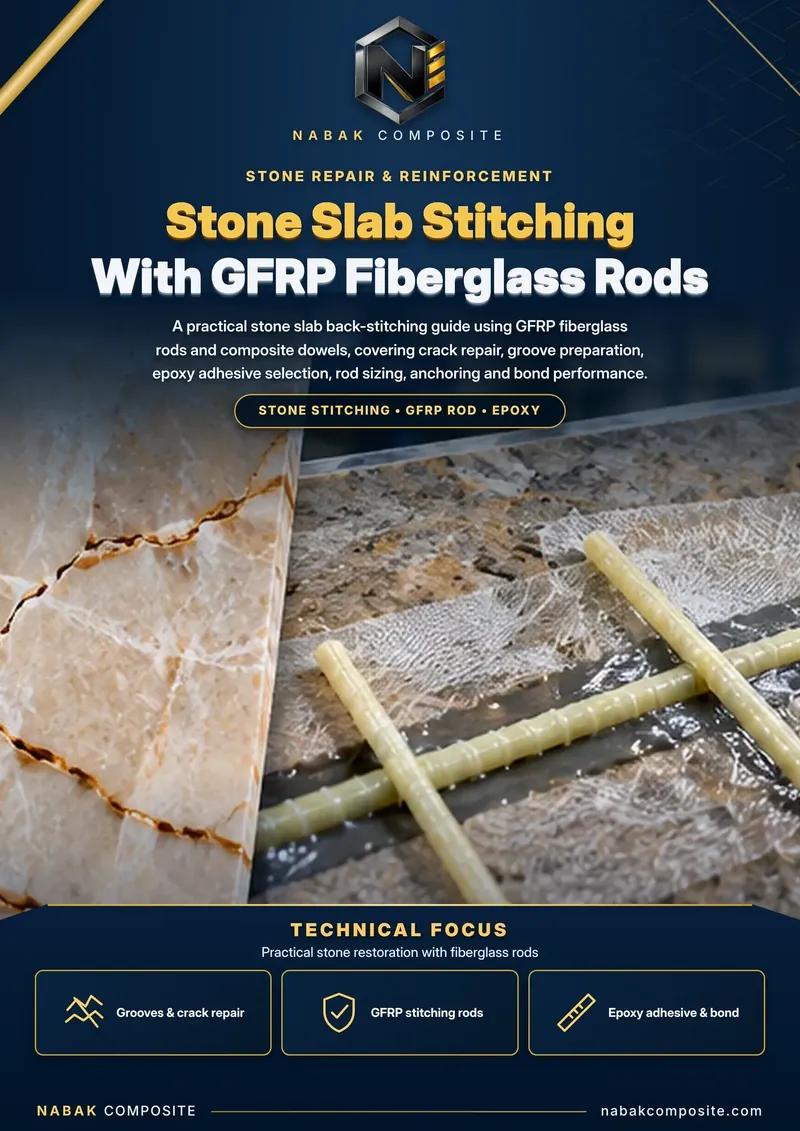
How to stitch veined stone with fiberglass rods and epoxy: crack mechanics, groove sizing, step-by-step method, adhesive choice, rod diameter and metal vs composite wire.