Why are polyester and vinyl ester the most widely used composite resins?
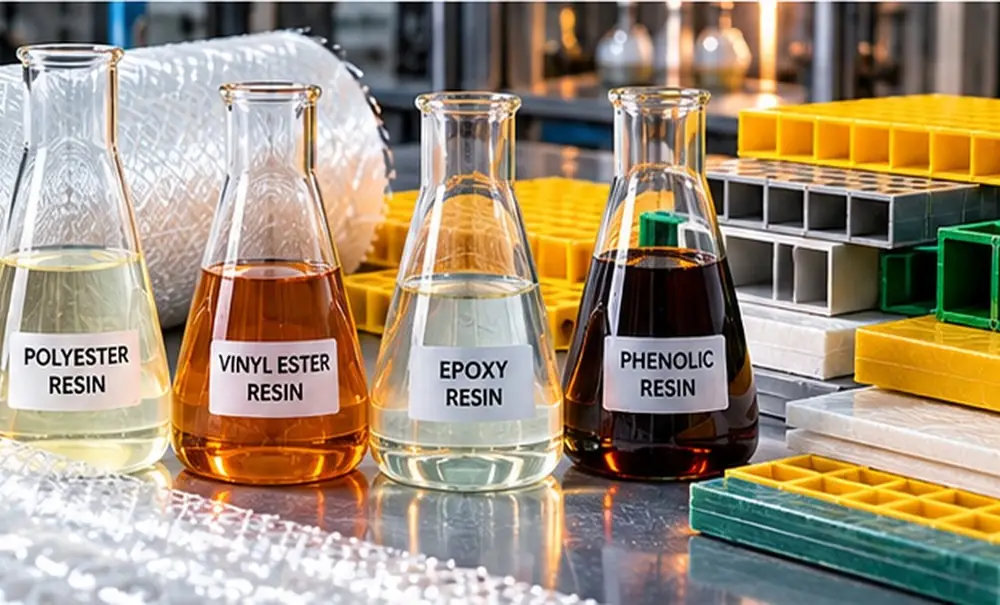
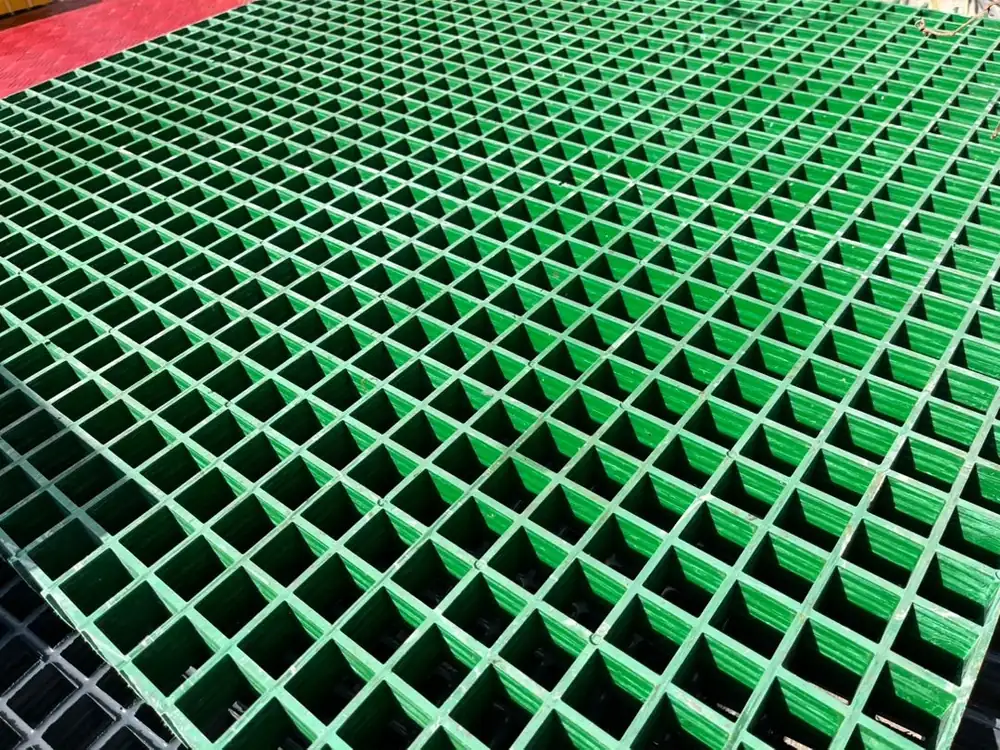
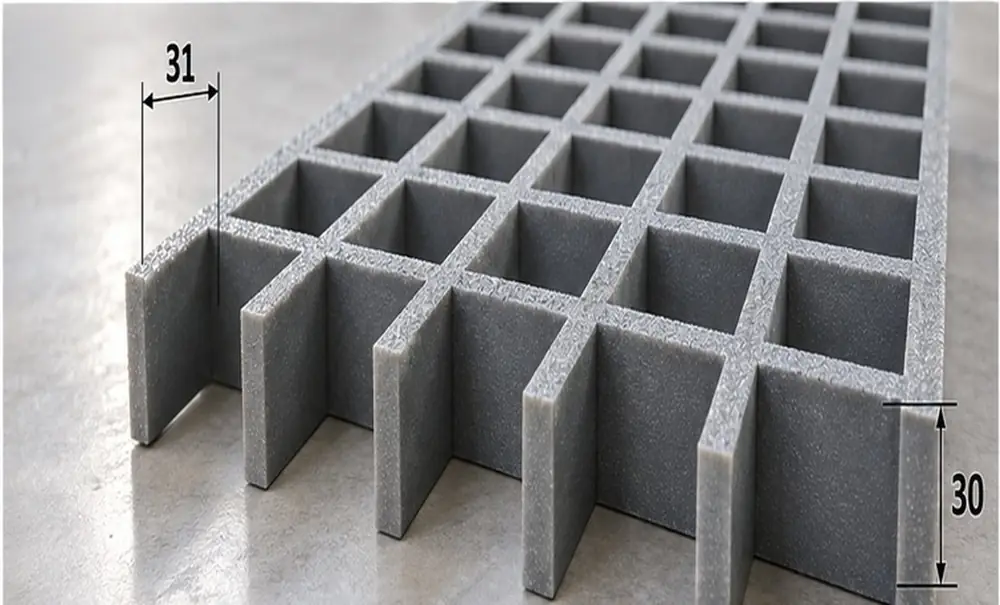
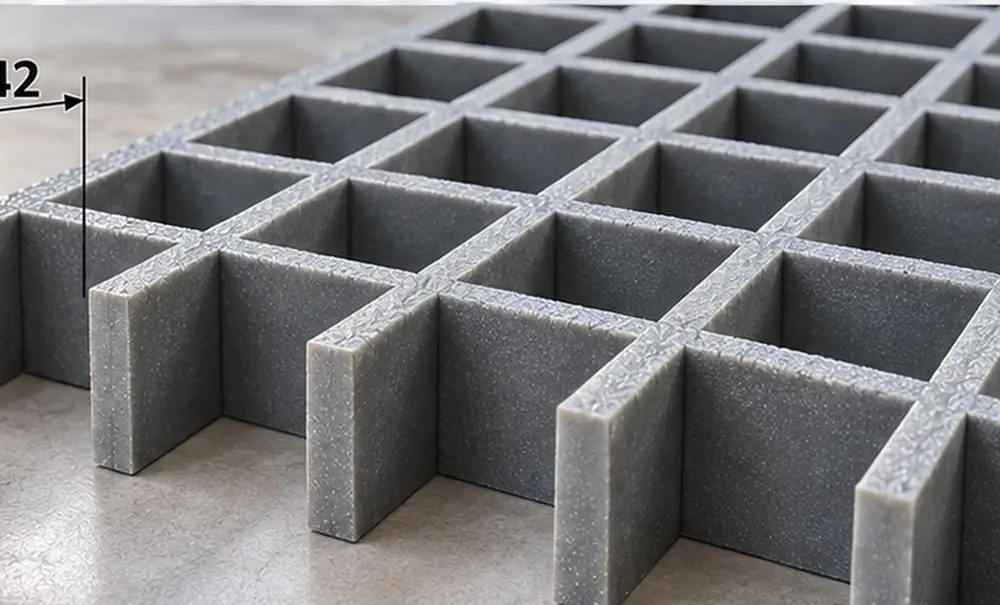
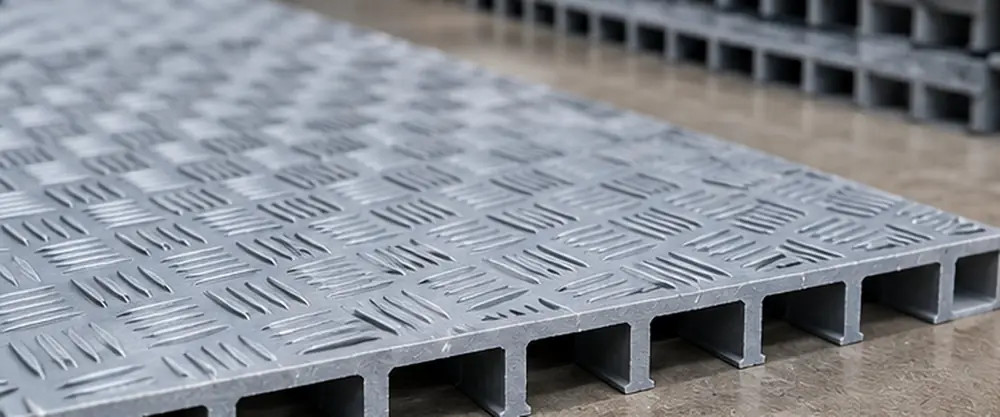
Polyester and vinyl ester resins are the most common resins for producing composite products, including fiberglass sheet (corrugated fiberglass roofing), composite grating, composite box sections, fiberglass angles, composite channels, composite beams, fiberglass tubes, composite flat bars, polymer rods, composite rods, and cable trays and ladders. The reason for this popularity is the combination of reasonable price, low viscosity for fiber wet-out, cure at room or elevated temperature, and a wide range of grades. For a general comparison with epoxy and phenolic, see the article types of composite resin.
Polyester polymers: saturated and unsaturated
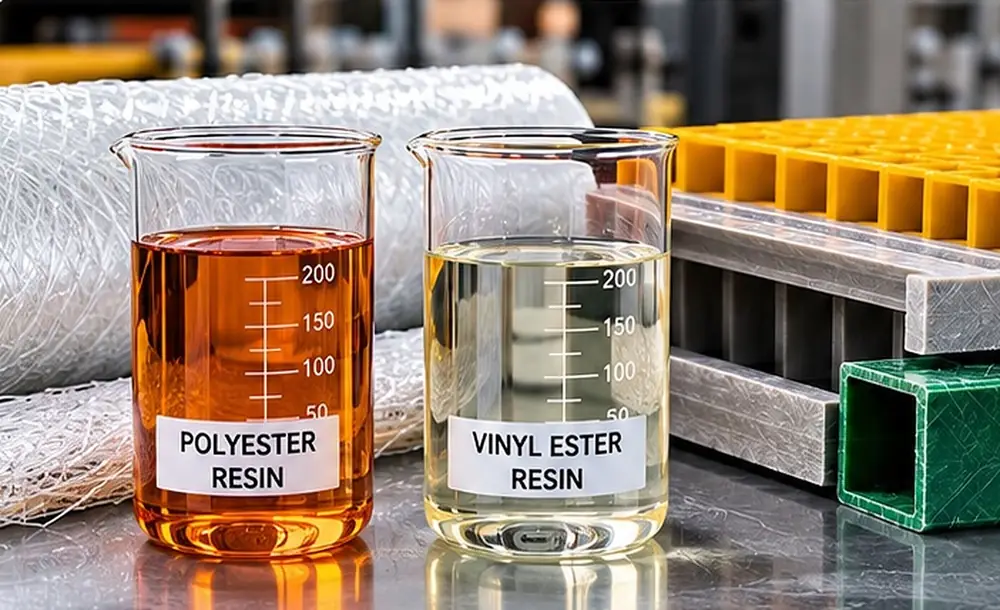
Polyester is the name of a large family of polymers that have ester groups (–COO–) in their main chain. Polyesters are made by condensation of di- or polyfunctional alcohols with di- or polyfunctional acids and, depending on the raw materials, fall into two groups, saturated and unsaturated:
| Polyester type (saturated or unsaturated) | Structure | Application | Usable as a composite resin |
|---|---|---|---|
| Saturated thermoplastic polyester (PET, PBT) | Linear chain with no reactive double bonds | Bottles, textile fibers, injection-molded parts | No (only as a thermoplastic) |
| Saturated thermoset polyester (alkyds and coating polyesters) | Networked by external agents | Paints and surface coatings | No |
| Unsaturated polyester (UP) | Carbon–carbon double bonds in the chain | Resin for composite parts, gelcoat, cultured stone | Yes |
Saturated polyester, whether thermoplastic or a thermoset coating, has no reactive double bonds and cannot form a network with styrene. In unsaturated polyester resin, by contrast, carbon–carbon double bonds from the unsaturated acid are distributed along the chain. These double bonds react with styrene monomer during curing and form three-dimensional cross-links; so only unsaturated polyester (not saturated polyester) can form a network and be used as a resin in the composites industry.
How unsaturated polyester resin is made
Unsaturated polyester resin is produced in a reactor in two stages: first, the unsaturated acid, saturated acid and glycol react at about 180 to 220 degrees by condensation (esterification with removal of water) to form a solid or very viscous unsaturated polyester polymer; then, after partial cooling, this polymer is dissolved in styrene monomer and an inhibitor is added. The ratio of unsaturated to saturated acid determines the cross-link density of the unsaturated polyester resin.
| Component | Common materials | Role and effect on properties |
|---|---|---|
| Unsaturated acid | Maleic anhydride, fumaric acid | Provides reactive double bonds; determines cross-link density, hardness and HDT |
| Saturated acid | Phthalic anhydride (ortho), isophthalic acid, terephthalic acid, adipic acid | Controls the spacing of double bonds; reduces brittleness and increases flexibility; determines the resin grade |
| Glycol (dihydric alcohol) | Propylene glycol, ethylene glycol, diethylene glycol, neopentyl glycol (NPG) | Two hydroxyl groups; propylene glycol is the most common; NPG increases chemical and water resistance |
| Monomer | Styrene (common), methyl methacrylate, vinyl toluene | Thins the resin and cross-links during cure; 30 to 50 percent by weight; the source of the resin's odor |
| Inhibitor | Hydroquinone (HQ), toluhydroquinone (THQ) | Prevents unwanted gelling during production and storage; very small amounts |
Ortho resin is made with phthalic anhydride and iso resin with isophthalic acid. Iso resin has a higher molecular weight and a more regular chain, so it has better mechanical, thermal, water and chemical resistance, and usually costs about 10 to 20 percent more than ortho resin.
Classifying polyester resins by chemical structure
By changing any of the four main components (unsaturated acid, saturated acid, glycol and monomer), polyester resins with different properties are made, and every manufacturer offers several types of polyester resin. The catalysts and accelerators used with these grades are similar:
| Polyester resin grade | Key feature | Application |
|---|---|---|
| Orthophthalic (Ortho) | Inexpensive, general purpose | General parts, small boats, non-structural parts |
| Isophthalic (Iso) | Higher chemical, mechanical and thermal resistance than ortho | Pultruded profiles, composite grating, gelcoat, water tanks |
| NPG-based isophthalic | Higher chemical and water resistance than standard isophthalic | Marine gelcoat, swimming pools, tanks |
| Terephthalic | High heat and chemical resistance | Hot-service and chemical-resistant parts |
| DCPD | Low shrinkage, good surface, inexpensive | Parts with high surface quality |
| Bisphenol A fumarate (bisphenol resin) | Resistance in alkaline and corrosive environments | Chemical equipment |
| Halogenated (HET, tetrachlorophthalic) | Fire retardant and corrosion resistant | Parts with fire requirements |
Classifying polyester resins by application and properties
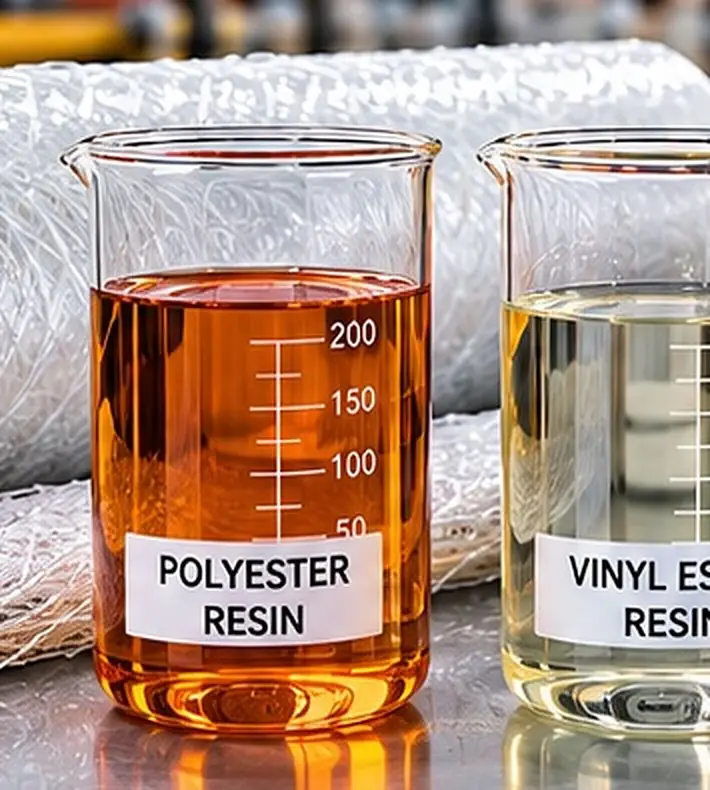
- General-purpose resin: the most widely used group, mainly orthophthalic, with a viscosity of about 500 to 4000 centipoise.
- Fire-resistant resin: self-extinguishing behavior is achieved by adding aluminum trihydrate (ATH); for higher requirements, halogenated polyester resin (made with tetrachlorophthalic anhydride or HET acid) is used. Details in the article composite additives.
- Heat-resistant resin: identified by a high HDT (heat deflection temperature); terephthalic and bisphenol grades belong to this group and, for composite parts exposed to fire or heat, are combined with fire-retardant additives.
- Chemical-resistant resin: the first approach is to increase network density through full cure and post-cure; the second is to change the raw materials, for example using NPG, HET acid or bisphenol A.
- Impact-resistant resin: high toughness and some flexibility; isophthalic resin performs well under impact.
- Flexible resin: in this group of polyester resins, adding linear saturated acids such as adipic or sebacic acid increases elongation at break and impact resistance and reduces surface hardness and strength.
- Low-profile (low-shrink) resin: the volume shrinkage of polyester resin after cure is about 7 to 9 percent (up to 10 percent in some grades), which reduces dimensional accuracy and causes surface waviness and micro-cracks; adding 10 to 30 percent of a thermoplastic such as polyvinyl acetate, polystyrene or acrylic (PMMA) solves this problem.
- UV-resistant resin: polyester resins without stabilizers are vulnerable to ultraviolet light; residual double bonds and aromatic rings are weak points under sunlight and cause discoloration and yellowing; UV stabilizers and absorbers are added at the level recommended by the manufacturer.
- Surface resins (gelcoat and topcoat): the gelcoat is a layer about 0.5 mm thick (about 500 g/m²) in contact with the mold, usually made from iso or iso-NPG resin with additives; the topcoat is the outermost layer on the back side of the part and is made from air-curing resins (containing paraffin wax).
- Low styrene emission (LSE) resin: volatile styrene pollutes the workplace and the environment; solutions include reducing styrene content, replacing it with a low-volatility monomer, and adding paraffin film-forming agents that cover the resin surface.
Properties of cured polyester resin
The table below shows typical properties of a neat isophthalic polyester resin (cast and post-cured, without fibers) together with the test standard for each property:
| Property | Test standard | Typical value |
|---|---|---|
| Density of cured resin (g/cm³) | ASTM D792 | ~1.2 |
| Tensile strength (MPa) | ASTM D638 | 60 to 80 |
| Tensile modulus (GPa) | ASTM D638 | 3.5 |
| Tensile elongation at break (%) | ASTM D638 | 2 to 3 |
| Flexural strength (MPa) | ASTM D790 | 120 |
| Flexural modulus (GPa) | ASTM D790 | 4 |
| Hardness (Barcol) | ASTM D2583 | 40 |
| 24-hour water absorption (%) | ASTM D570 | 0.2 |
| Linear shrinkage (%) | ASTM D2566 | ~2 |
| Heat deflection temperature HDT (°C) | ASTM D648 | 88 |
Curing polyester resin
Curing unsaturated polyester resin means turning the liquid into a solid through a free-radical chain reaction between the double bonds of the resin and styrene monomer. Four main parameters control the curing process:
- Amount of initiator (catalyst): the source of free radicals.
- Amount of accelerator and inhibitor and when they are added: the rate of catalyst decomposition and the length of the induction period.
- Temperature: resin without catalyst and accelerator gels thermally only at very high temperatures (about 150 to 160 °C); with a heat-activated catalyst it cures at about 80 to 140 degrees, and with catalyst and accelerator it can cure at room temperature (about 20 to 25 degrees).
- Time: cross-linking continues after gelation, and the final properties are reached with time or post-cure.
If the combined effect of these parameters is too high, the exothermic reaction becomes violent and the temperature of thick composite parts can rise to 150 to 170 °C, resulting in discoloration, cracking, warping and residual stress. If it is too low, the cure remains incomplete and the composite part does not reach its final properties.
Stages of polyester resin cure
- Gel time: the interval from adding the initiator (to accelerated resin) until the resin gels.
- Hardening time: from gel to sufficient hardness for demolding the composite part; surface hardness about 15 Barcol.
- Final hardening time: full cure or post-cure to reach the maximum resin properties; surface hardness about 40 to 45 Barcol.
For the temperature–time cure curve and precise definitions of gel time and peak exotherm, see the article on composite resin types.
Types of initiator (catalyst) for polyester resin
Initiators (often loosely called "catalyst", "acid" or "hardener" in the trade) are organic peroxides that decompose to create free radicals. Because they are highly reactive, they are supplied as solutions diluted in phthalates or as pastes. The usual dosage is 1 to 2 percent of the resin weight (at most about 3 percent):
| Initiator | Cure temperature | Feature |
|---|---|---|
| MEKP (methyl ethyl ketone peroxide) | Room temperature (with cobalt) | The most common and cheapest; corrosive and harmful to eyes and skin |
| CHP (cyclohexanone peroxide) | Room temperature (with cobalt) | Lower peak exotherm and gentler cure; suitable for thick and bulky parts |
| AAP (acetylacetone peroxide) | Room temperature (with cobalt) | Faster cure and higher peak exotherm; suitable for thin parts |
| BPO (benzoyl peroxide) | Room temperature (with DMA amine) or elevated temperature (80 to 140°C) | Paste or powder; in pultrusion and hot molding |
| TBPB (tert-butyl perbenzoate) | Elevated temperature (120 to 160°C) | Heat-activated catalyst for pultrusion and SMC; no accelerator |
| Low-temperature peroxydicarbonates and peresters | 50 to 80°C | First-stage initiator in two- or three-component pultrusion systems |
In pultrusion, a combination of low- and high-temperature initiators (for example peroxydicarbonate + BPO or TBPB) is used so that the cure is completed step by step along the hot die; the residence time of the resin in the die is typically 1 to a few minutes, depending on thickness and pull speed.
Accelerators for polyester resin
In room-temperature cure, accelerators make it possible for the initiator to decompose at low temperature. They are usually added to the resin before use, and many resins are supplied "pre-accelerated" so that they cure simply by adding the initiator. The dosage is about 0.1 to 0.5 percent of the resin weight:
- Organic cobalt salts (cobalt octoate or cobalt naphthenate): the most common accelerator for MEKP, purple in color and usually supplied as a 1 to 6 percent cobalt solution.
- Tertiary amines (dimethylaniline DMA and diethylaniline DEA): the main accelerator for BPO, and a co-accelerator (promoter) alongside cobalt with MEKP to shorten gel time and cure at low temperatures.
Advantages and limitations of polyester resins
Advantages of polyester resins
- Polyester resins are the cheapest structural thermoset resins.
- Polyester resins cure at room temperature without heating equipment.
- The low viscosity of polyester resins allows fast wet-out of glass fibers.
- The variety of polyester grades (ortho, iso, NPG, bisphenol, halogenated) offers an option for almost every application.
- Polyester resins are highly compatible with pigments, fillers and fire retardants.
Limitations of polyester resins
- The high shrinkage of polyester resins (7 to 9 percent by volume) reduces dimensional accuracy.
- Their many ester groups make polyester resins vulnerable to alkalis and hot water.
- Low elongation (2 to 3 percent) and more brittle behavior than vinyl ester and epoxy resin.
- Styrene emissions from polyester resins in the workplace.
- Lower adhesion of polyester resins to old cured surfaces and metals.
For this reason, in many industrial applications polyester resin is used for the structural layer and vinyl ester resin for the chemical-resistant layer, so that the cost and performance of each composite part are optimized at the same time.
Vinyl ester resin
In structure and properties, vinyl ester resins sit between unsaturated polyester and epoxy resin (some sources count them as a subset of unsaturated polyesters). Their backbone is made from epoxy resin, but like polyester they are dissolved in styrene and cured with a peroxide system. The main use of vinyl ester resin is making chemical-resistant parts such as pipes, tanks, scrubbers, gratings and profiles for chemical plants.
Properties of vinyl ester resin
- Higher chemical resistance than polyester resin: resistant to acids, alkalis, hot water and many specific corrosive environments; details in the composite chemical resistance chart.
- Greater elongation and toughness: elongation at break of about 4 to 6 percent versus 2 to 3 percent for polyester; better resistance to impact, fatigue and micro-cracking.
- Higher HDT than standard polyester resins.
- Better wet-out and adhesion to fibers thanks to the hydroxyl groups of the epoxy backbone.
- Low water absorption after cure.
- Slower cure than polyester and greater sensitivity to cure conditions.
- Shrinkage slightly lower than polyester.
- Price usually about 1.5 to 2.5 times that of polyester resin.
How vinyl ester resin is made
| Vinyl ester type | Epoxy base | Feature |
|---|---|---|
| Bisphenol A | DGEBA epoxy | The most common; excellent resistance to acids, alkalis and hypochlorite; the greatest mechanical flexibility in the vinyl ester family |
| Novolac (epoxy novolac) | Phenol-novolac epoxy | Higher cross-link density; better resistance to solvents, oxidizing acids and high temperature; more brittle |
| Brominated | Brominated epoxy | Halogenated and fire resistant, with chemical resistance |
| Elastomer-modified | Epoxy + rubber | Higher toughness and impact resistance; bonding layers and dynamically loaded parts |
The unsaturated acid in vinyl ester resin belongs to the family of unsaturated carboxylic acids: methacrylic acid (more common) and acrylic acid. Styrene monomer (about 30 to 50 percent by weight) is both a diluent and a cross-linking agent; as in unsaturated polyester resin, this monomer becomes part of the final network of every composite part.
How vinyl ester resin is cured
At room temperature, adding 1 to 2 percent by weight of MEKP as the initiator together with 0.2 to 0.4 percent by weight of cobalt accelerator (6 percent solution) is sufficient; to improve the cure, 0.2 to 0.5 percent of a 10 percent dimethylaniline (DMA) solution is also added as a co-accelerator. Vinyl ester is more sensitive to water, moisture and low temperatures, and reaching full cure is more important.
Comparison of polyester resin and vinyl ester resin
| Feature | Ortho polyester | Iso polyester | Bisphenol A vinyl ester | Novolac vinyl ester |
|---|---|---|---|---|
| Neat resin tensile strength (MPa) | 50–65 | 60–80 | 75–85 | 70–85 |
| Elongation at break (%) | 1.5–2 | 2–3 | 4–6 | 3–4 |
| HDT (°C) | 55–80 | 75–110 | 100–125 | 130–165 |
| Acid resistance | Moderate | Good | Excellent | Excellent |
| Alkali resistance | Poor | Poor to moderate | Excellent | Good |
| Solvent resistance | Poor | Poor | Moderate | Good |
| Relative price | 1 | 1.1–1.2 | 1.5–2.5 | 2.5–3.5 |
| Typical use | General parts | Profiles, grating, gelcoat | Tanks, pipes, chemical-grade grating | Hot and solvent-bearing environments |
Polyester and vinyl ester resins in different manufacturing methods
Each composite manufacturing method requires a particular resin viscosity, gel time and cure system. Polyester and vinyl ester resins are supplied in special grades for each process:
| Manufacturing method | Common resin | Typical resin viscosity (cps) | Cure system |
|---|---|---|---|
| Hand lay-up | Thixotropic ortho or iso polyester resin; vinyl ester resin for the resistant layer | 300 to 600 | MEKP + cobalt, room temperature |
| Spray-up | Thixotropic, pre-accelerated polyester resin | 250 to 500 | MEKP + cobalt |
| Resin transfer molding (RTM) and infusion | Low-viscosity polyester or vinyl ester resin | 100 to 300 | MEKP or CHP + cobalt (longer gel) |
| Pultrusion | Non-thixotropic isophthalic polyester or vinyl ester resin | 500 to 1500 (with filler) | Multi-component heat-activated initiators, no cobalt |
| Filament winding (pipes and tanks) | Iso polyester or vinyl ester resin | 300 to 800 | MEKP + cobalt, or heat cure |
| SMC and BMC (compression molding) | Polyester resin with LPA and MgO thickener | Paste | TBPB, 140 to 160°C |
| Casting and cultured stone | Low-reactivity ortho or iso polyester resin | 500 to 1500 | MEKP + cobalt with controlled peak exotherm |
See the manufacturing methods in detail in the article composite manufacturing methods.
Troubleshooting the cure of polyester and vinyl ester resin
Most quality problems in composite parts come back to the resin cure. The table below shows the most common defects, their causes and their solutions:
| Defect in the composite part | Likely cause | Solution |
|---|---|---|
| Tacky surface after cure | Air (oxygen) inhibition at the polyester resin surface | Use a topcoat containing paraffin wax or cover the surface with film |
| No gel or very slow gel | Low workshop temperature, too little accelerator or initiator, old resin | Temperature above 15 to 18°C, adjust accelerator, test resin gel time |
| Cracking, discoloration and smoke during cure | Excessive peak exotherm in a thick composite part | Less accelerator, CHP initiator, build up in layers, filler |
| Low Barcol hardness | Incomplete cure, moisture, wrong component ratio | Post-cure, control fiber moisture, correct the ratios |
| Foaming of vinyl ester resin | Reaction of high-water MEKP with cobalt in vinyl ester resin | MEKP grade for vinyl ester or cumene hydroperoxide, add defoamer |
| Blistering in immersed parts | Osmosis, voids and unsuitable resin in the surface layer | Iso-NPG gelcoat or vinyl ester resin in the surface layer, full cure |
| Yellowing in sunlight | UV degradation of the resin | UV stabilizer, UV-resistant gelcoat, pigment |
| Warping and surface waviness | High shrinkage of polyester resin | Low-profile resin, filler, peak exotherm control |
Storage and handling of polyester and vinyl ester resins
- Temperature and light: keep resin in sealed containers, away from direct sunlight and heat sources, at 15 to 25 °C; every 10 degrees of temperature rise roughly halves the shelf life of polyester resin.
- Shelf life: polyester and vinyl ester resins usually have a shelf life of 3 to 6 months; pre-accelerated resin has a shorter life.
- Separation of materials: store peroxide initiators separately from cobalt accelerator and away from resin and flammable materials.
- Fire: styrene is flammable; the resin store must have ventilation, fire suppression and a ban on open flames.
- Incoming inspection: test viscosity and gel time before using each batch of resin.
Polyester and vinyl ester resin in Nabak products
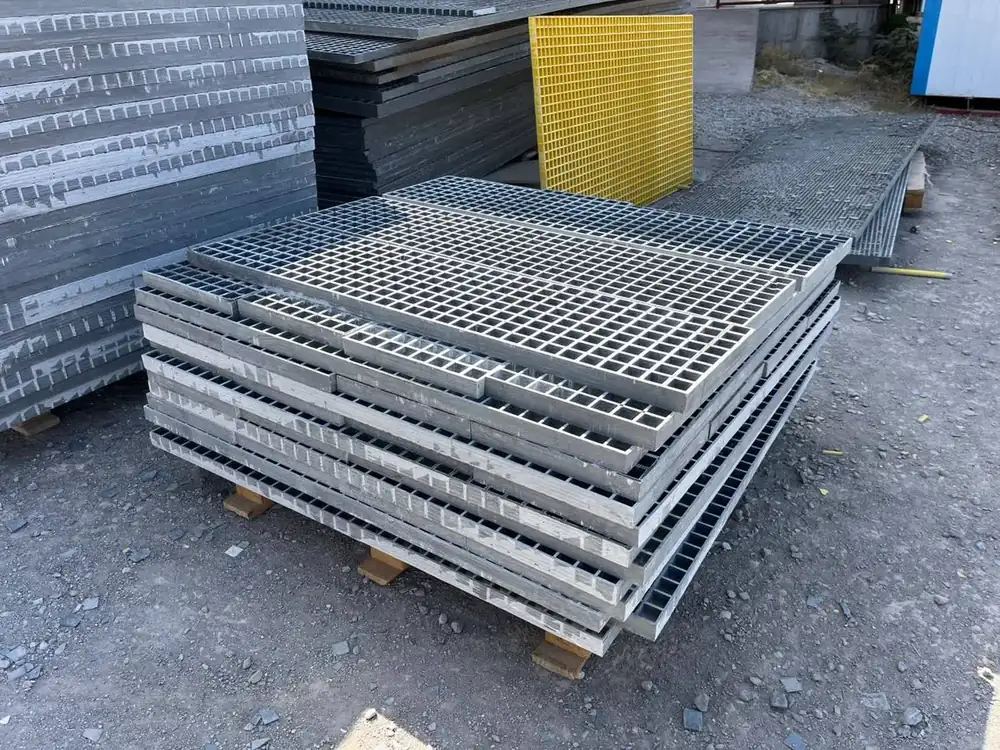
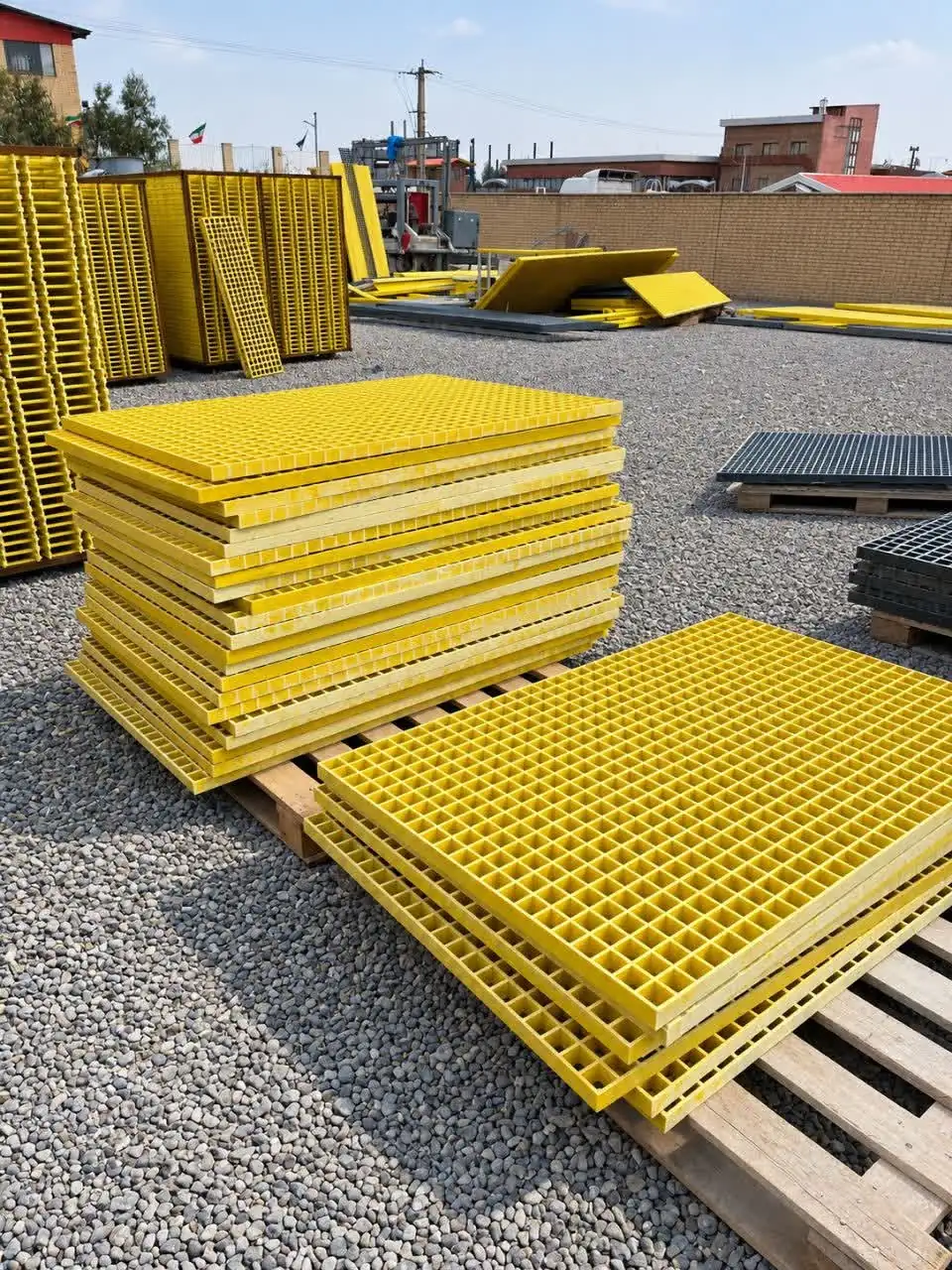
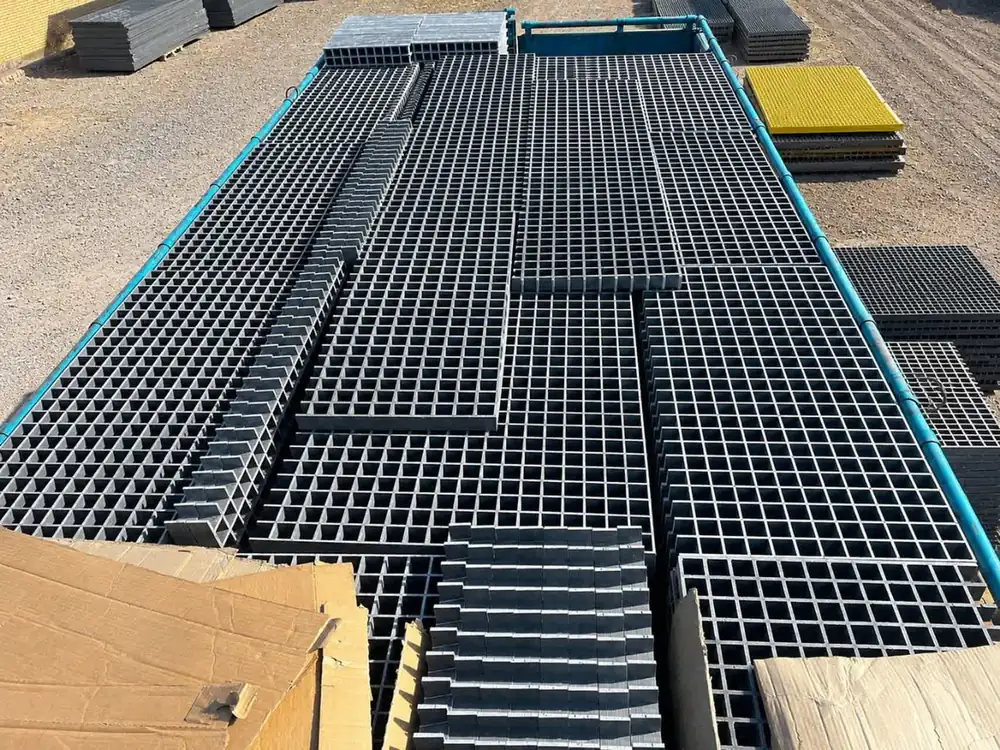
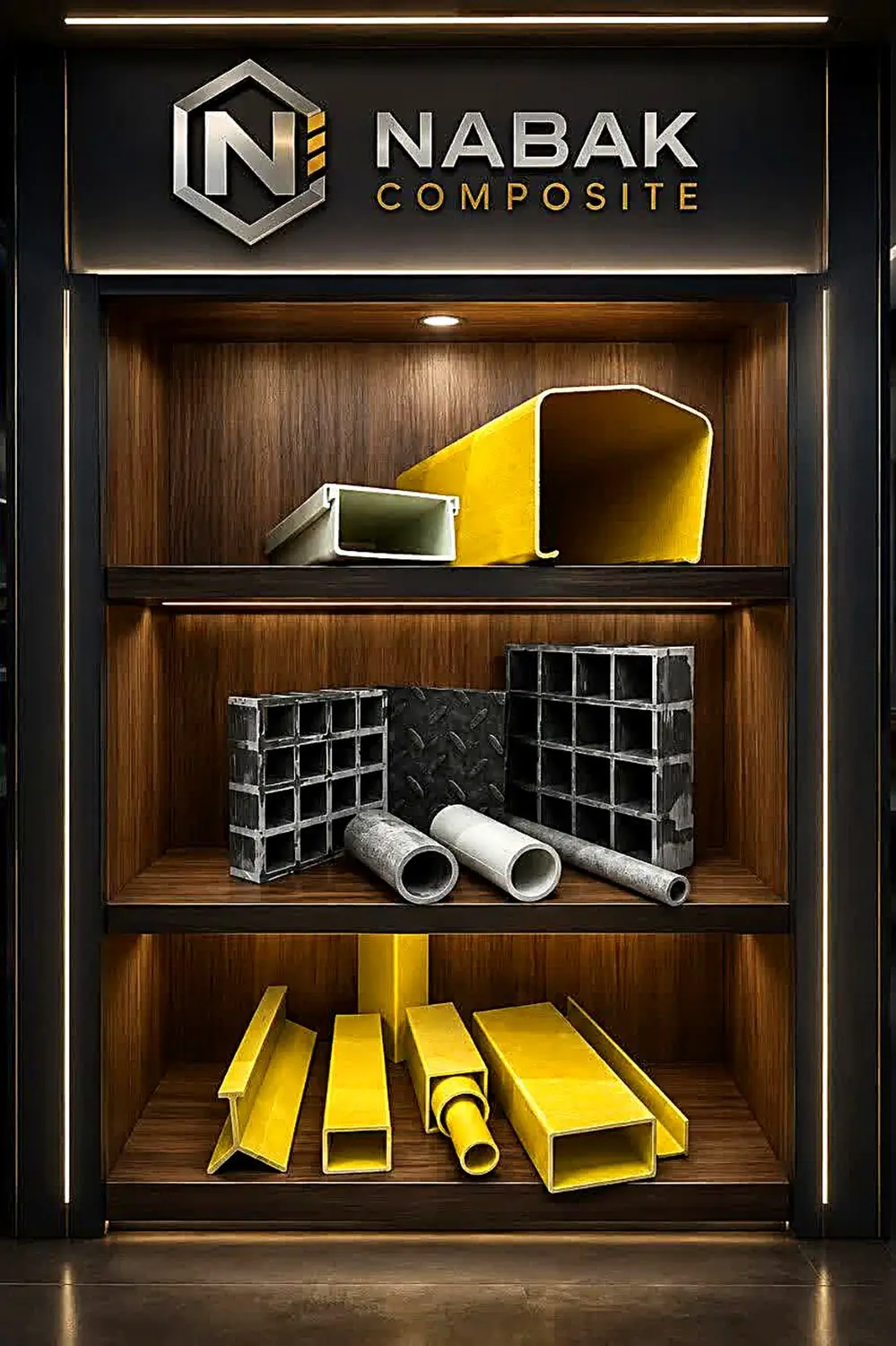
At Nabak Composite, the isophthalic grade of polyester resin is used for general-purpose profiles, sheets and gratings, and vinyl ester resin for chemical, alkaline and hot-water environments. Our main products are fiberglass sheet (corrugated fiberglass roofing), composite grating, composite box sections, fiberglass angles, composite channels, composite beams, fiberglass tubes, composite flat bars, polymer rods, composite rods, and cable trays and ladders.
Selection guide: polyester resin or vinyl ester resin?
- General environments, fresh water, outdoors: isophthalic polyester resin + UV stabilizer.
- Low-cost general and non-structural parts: orthophthalic polyester resin.
- Acids, alkalis, hypochlorite, hot water: bisphenol A vinyl ester resin with post-cure.
- Solvents and high temperature: novolac vinyl ester resin.
- Fire requirements: halogenated/brominated polyester or vinyl ester, or a grade with ATH.
- High-quality surface and precise dimensions: low-profile or DCPD resin.
Glossary of polyester and vinyl ester resin terms
| Term | English term | Description |
|---|---|---|
| Cure | Cure | Conversion of liquid resin to a solid by a cross-linking reaction |
| Post-cure | Post cure | Heating after the initial cure to complete the resin network |
| Cross-link | Cross-link | A transverse bond between polyester resin chains through styrene |
| Monomer | Reactive monomer | Styrene or an alternative monomer; the reactive diluent of the resin |
| Unsaturated acid | Unsaturated acid | Maleic anhydride or fumaric acid; the source of double bonds |
| Initiator (catalyst) | Initiator | Organic peroxide such as MEKP, CHP, AAP, BPO |
| Accelerator | Accelerator / Promoter | Cobalt salt or amine such as dimethylaniline (DMA) |
| Inhibitor | Inhibitor | Hydroquinone (HQ) and toluhydroquinone (THQ); sometimes misspelled in trade literature |
| Gelcoat | Gel coat | The colored resin surface layer of a part in contact with the mold |
| Topcoat | Top coat | A resin layer containing paraffin wax so the surface cures in contact with air |
| Low-profile resin | Low profile resin | Polyester resin containing a thermoplastic to compensate for shrinkage |
| Halogenated resin | Halogenated resin | Polyester or vinyl ester resin containing chlorine or bromine for fire resistance |
| HDT | Heat deflection temperature | Heat deflection temperature of the resin under load |
Frequently asked questions about polyester and vinyl ester resin
What is the difference between polyester resin and vinyl ester resin?
Unsaturated polyester resin is made by reacting glycols with saturated and unsaturated acids, and its double bonds and ester groups are spread along the chain. Vinyl ester resin is made by reacting an epoxy resin with methacrylic or acrylic acid; its double bonds are only at the two chain ends and it has far fewer ester groups, so it has greater chemical resistance, toughness and elongation, but costs more.
What is the difference between isophthalic and orthophthalic resin?
Orthophthalic (ortho) resin uses phthalic acid or anhydride as the saturated acid, while isophthalic (iso) resin uses isophthalic acid. Iso resin has a higher molecular weight and better mechanical, thermal, water and chemical resistance, and usually costs about 10 to 20 percent more than ortho resin.
How much catalyst and accelerator should be added to polyester resin?
For room-temperature cure, typically 1 to 2 percent by weight of MEKP catalyst (at most about 3 percent) and 0.1 to 0.5 percent by weight of cobalt accelerator are added to the resin. The exact amounts depend on temperature, part thickness and the required gel time, and should be set with a gel time test. Catalyst and cobalt must never be mixed directly together.
How is post-cure of polyester and vinyl ester resin done?
Post-cure is done by heating the part after the initial cure; as a guide, about 2 days at 60 °C or about 3 hours at 80 °C. Post-cure maximizes the degree of cross-linking, Barcol hardness, HDT and chemical resistance.
Why does polyester resin have a strong smell?
The smell of polyester and vinyl ester resin comes from styrene monomer, which makes up 30 to 50 percent of the resin weight. Styrene is volatile and harmful at high concentrations; good ventilation, an organic-vapor respirator and low styrene emission (LSE) resins are recommended.
Summary
Unsaturated polyester resin is made from four main components (unsaturated acid, saturated acid, glycol and styrene monomer), and changing each component produces orthophthalic, isophthalic, NPG, terephthalic, bisphenol and halogenated grades. The cure of polyester resin is controlled by a peroxide initiator (MEKP, CHP, AAP, BPO or TBPB), a cobalt or amine accelerator, temperature and time, and proceeds in three stages: gelation, hardening and final cure. Vinyl ester resin, with its epoxy backbone and terminal double bonds, has higher chemical resistance, toughness and HDT, and is the standard choice for corrosive environments: the bisphenol A type for acids, alkalis and hypochlorite, and the novolac type for solvents and high temperatures. Choosing the right resin grade, a suitable cure system and post-cure ensures the quality and service life of Nabak composite products.

This article was prepared by the technical team of Nabak Composite, a manufacturer of grating, pultruded profiles, sheets and composite products.