What are composite additives and why are they used?
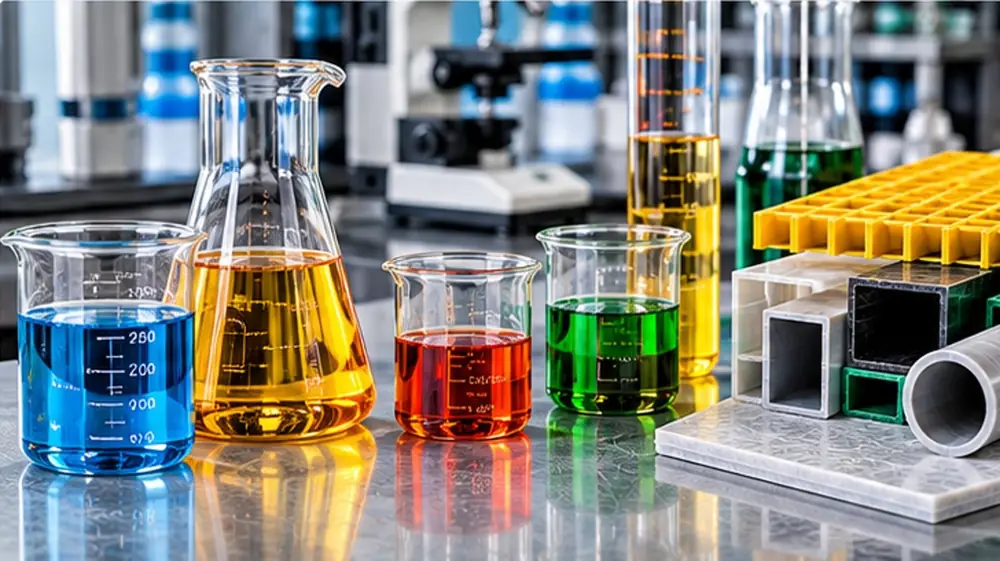
Composite additives are ingredients added to the resin in relatively small amounts (from a few tenths of a percent to several tens of percent of resin weight) to create, modify or enhance a property that resin and fibers alone do not have. The property may relate to the final product (color, fire retardancy, UV resistance, conductivity, abrasion resistance) or to the production process (viscosity, sag prevention, mold release, cure speed, shrinkage reduction).
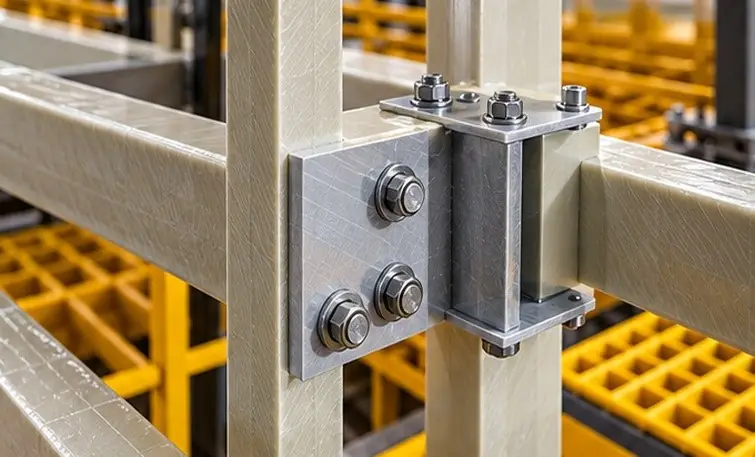
Additives are used in producing the whole range of composite products — from fiberglass sheet (corrugated fiberglass) and composite grating to composite box sections, fiberglass angles, composite channels, composite beams, fiberglass pipe, composite flat bars, polymer rods, composite wire and cable trays and ladders. For the base resins and fibers, see what is a composite and composite fibers.
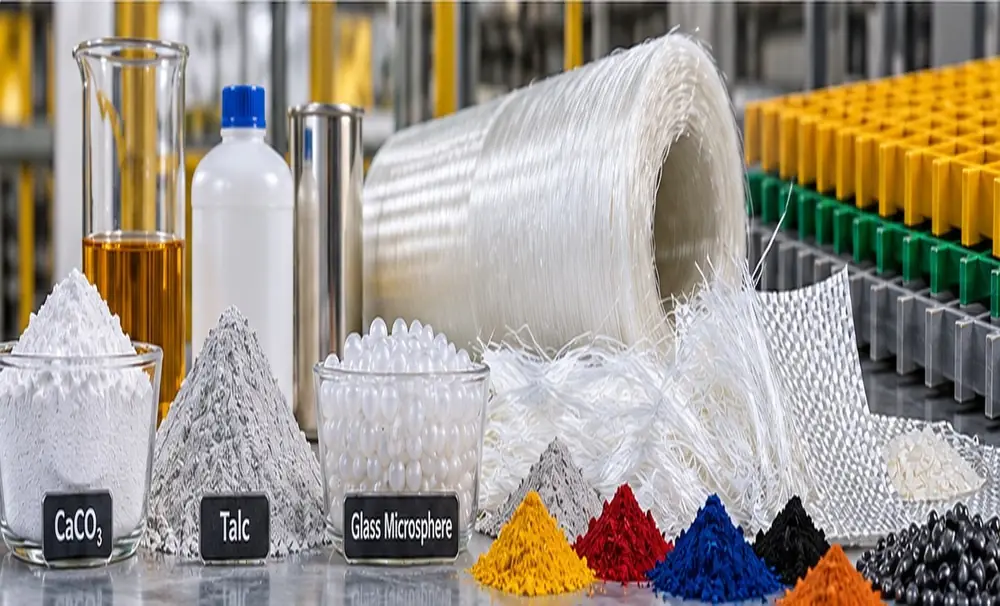
Additives can be classified by their purpose. The table below shows the classification of composite additives and common examples of each group; every composite additive should be chosen with its effect on mechanical properties and processing in mind:
| Additive group | Main purpose | Common examples |
|---|---|---|
| Fillers | Lower cost, higher modulus, lower shrinkage | Calcium carbonate, talc, kaolin, microspheres |
| Pigments | Color and hiding power | Titanium dioxide, carbon black, organic and inorganic pigments |
| Thixotropes | Preventing resin sag | Fumed silica (Aerosil) |
| Conductive and antistatic | Electrical and thermal conductivity | Conductive carbon black, graphite, metal powder |
| Fire retardants | Flame retardancy and self-extinguishing behavior | ATH, antimony oxide, halogenated, phosphorus-based |
| Tougheners and low-profile additives | Impact resistance, surface quality | Liquid rubbers, LPA |
| Coupling agents | Adhesion of resin to fibers and fillers | Silanes |
| Reactive diluents | Lower viscosity | Styrene, methyl methacrylate, vinyl toluene |
| Mold release | Easy release of the part | Wax, PVA, silicone, stearates |
| Anti-wear | Surface hardness and abrasion resistance | Silicon carbide, aluminum oxide, glass powder |
| Light stabilizers | Resistance to UV and yellowing | UV absorbers, HALS |
| Cure system | Controlling cure speed and degree of cure | Peroxide initiators, accelerators, inhibitors |
1) Fillers: the most widely used composite additive
Fillers, the most widely used composite additive, are inert mineral powders that take up part of the resin volume. Their main purpose is cost reduction (filler is cheaper than resin), but they have other important engineering effects: higher modulus and hardness, lower cure shrinkage and cracking, lower exotherm in thick sections, better surface quality and greater dimensional stability. On the other hand, filler raises resin viscosity and, at high loadings, reduces fiber wet-out, tensile strength and toughness.
Calcium carbonate (CaCO₃)
Calcium carbonate is the most common filler in the composites industry. It is cheap and white, with a density of about 2.7, and makes the resin somewhat white and opaque. Particle size is usually 1 to 20 microns. Adding it gradually increases resin viscosity, and high loadings cause a relative loss of mechanical properties. Calcium carbonate dissolves in acidic environments, so in composite parts that contact acid, a resistant filler (such as kaolin or barite) or unfilled resin should be used in the chemical-resistant layer.
Talc (hydrated magnesium silicate)
Talc has platy (plate-like) particles. This particle shape means that, compared with spherical fillers, talc raises flexural modulus more and causes the least loss of tensile strength. Talc powder improves the surface quality of the part, makes mold release easier and increases resin viscosity and sag resistance. Talc also reduces moisture penetration because of the tortuous path between the plates.
Glass microspheres
Glass microspheres are solid or hollow spheres about 10 to 300 microns in diameter. Because of their spherical shape, adding this composite additive raises resin viscosity only slowly (the spheres roll over each other like ball bearings), allowing higher filler loadings. The hollow type, with a density of about 0.15 to 0.6 g/cm³, reduces part weight and is used in lightweight pastes, putties and lightweight cores; the solid type increases stiffness, compressive strength and dimensional stability.
Other fillers
| Filler | Main feature | Application |
|---|---|---|
| Kaolin (aluminum silicate, china clay) | Better chemical resistance than calcium carbonate, good electrical properties | Pultrusion, insulating parts |
| Nanoclay (modified montmorillonite) | Higher modulus and barrier properties at low loadings (1 to 5%) | Engineering parts, reduced permeability |
| Mica | Platy particles; electrical and thermal insulation | Electrical insulators, dimensional stability |
| Feldspar | Refractive index close to the resin; keeps relative translucency | Translucent parts, cultured stone |
| Barite (barium sulfate) and lead oxide | High density, radiation absorption | Radiation shielding, heavy parts |
| Sawdust, plant fibers and gypsum | Cheap and light, or moldable | Non-structural and decorative parts |
2) Pigments
Pigments are used to change the color of the resin and of the composite part made from it, and are added to the resin as powder or as color paste (pigment dispersed in resin or a compatible carrier). In the composites industry, color paste is more common because it gives more even dispersion and better color repeatability. Pigments fall into two groups:
- Organic pigments: bright colors and high tinting strength, often semi-transparent; their heat and light resistance must be checked for outdoor use.
- Inorganic pigments: matte and opaque, stable to heat and light; such as iron oxides, chromates and titanium dioxide.
Titanium dioxide (TiO₂, titania) is the most widely used white and opacifying pigment; its high refractive index gives excellent hiding power, and the rutile form also helps absorb some UV. Carbon black gives a black color, is the best color-based protection against UV and, at higher loadings, also increases electrical conductivity. Composite products are colored through; the color runs through the whole thickness of the part and is not lost when scratched. See the color selection guide in composite grating colors.
3) Thixotropes: controlling resin sag
Thixotropic agents make resin thick and gel-like at rest, but when stirred or sheared (brush, roller, spray) the resin flows again. As a result, resin does not sag on the vertical and overhead surfaces of the mold and the layer thickness stays even. These additives are particularly important in hand lay-up, spray-up and gelcoat.
Fumed silica (amorphous SiO₂, commonly known by the trade name Aerosil) is the most common thixotrope. Nanometer silica particles form a weak three-dimensional network in the resin through hydrogen bonds between surface silanol groups; the network breaks under shear and re-forms at rest. Auxiliary additives such as glycols or special polyethers (thixotropy enhancers) strengthen the effect of silica. Other fillers also raise viscosity to some extent and help prevent sag.
4) Electrically and thermally conductive additives
Glass composite is inherently an electrical and thermal insulator. Where static discharge is needed (explosive atmospheres, clean-room floors, fuel tanks and powder conveying pipes) or heat transfer matters, conductive additives are used:
- Conductive carbon black: increases electrical and thermal conductivity; once the "percolation threshold" is reached (usually a few percent by weight), a continuous particle path forms and surface resistance drops by several orders of magnitude.
- Graphite and carbon nanotubes: conductivity at lower loadings; graphite also reduces friction.
- Metal powders: aluminum, iron, copper and silver — for conductivity, thermal conductivity, a metallic look or wave absorption.
- Conductive surface veil: in pultrusion, instead of adding powder to all the resin, a carbon veil is used at the surface to make the product antistatic.
5) Fire-retardant additives: flame retardancy and self-extinguishing behavior
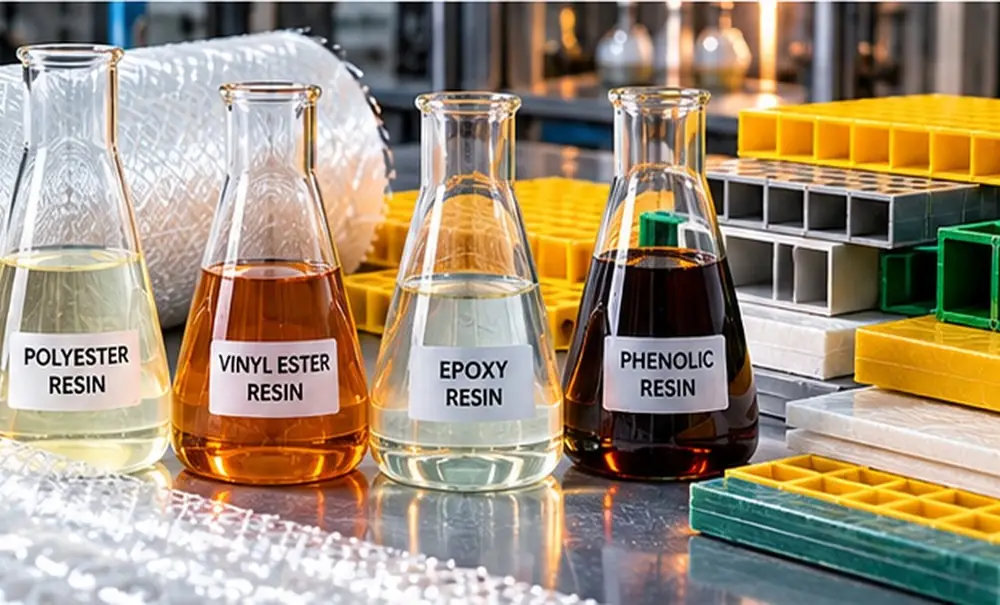
Polyester, vinyl ester and epoxy resins are organic, combustible polymers. Fire-retardant additives give the resin flame retardancy and self-extinguishing behavior, meaning the part stops burning once the flame is removed. The main mechanisms of fire retardants differ:
| Fire retardants | Mechanism | Typical amount (phr) | Considerations |
|---|---|---|---|
| Aluminum trihydrate (ATH) | Endothermic decomposition from about 200 °C, releasing ~35% of its weight as water and forming an Al₂O₃ layer | 40–150 | Halogen-free, low smoke and non-toxic; greatly increases viscosity |
| Magnesium hydroxide (MDH) | Similar to ATH, decomposing from about 320 °C | 40–150 | For higher-temperature processes |
| Halogenated compounds (bromine or chlorine) | Trapping flame radicals in the gas phase | Halogenated resin, or 10–25 | Very effective; black smoke and corrosive, toxic gases |
| Antimony oxide (Sb₂O₃) | Synergist with halogens; forms antimony halides | 2–8 | Has little effect on its own |
| Phosphorus compounds (phosphates, APP) | Forming a protective char layer in the solid phase | 10–30 | Halogen-free; sometimes intumescent |
In fire-retardant profiles and grating, the right resin combined with ATH or a halogen–antimony system makes high fire ratings such as Class 1 in ASTM E84 possible. See the fire test methods in composite testing standards.
6) Improving mechanical and thermal properties: tougheners and LPA
Thermoset resins are inherently brittle. To improve the toughness and impact resistance of a composite part, the following additives are used:
- Liquid and solid rubbery polymers: such as carboxyl-terminated nitrile rubbers (CTBN) in epoxy and vinyl ester, or core-shell particles. Fine rubber particles multiply the fracture energy by creating local deformation ahead of the crack, though modulus and service temperature drop slightly.
- Mineral powders: iron oxide, zinc oxide, magnesium oxide and aluminum oxide to increase hardness, modulus, thermal conductivity or heat resistance. Magnesium oxide is also the chemical thickener in SMC and BMC compounds.
- Low-profile additives (LPA): thermoplastics such as polyvinyl acetate, PMMA or polystyrene that compensate for the cure shrinkage of polyester resin (7 to 9 percent by volume); the result is a smoother surface, fewer micro-cracks and better dimensional accuracy in pultrusion and compression molding.
7) Improving adhesion: silane coupling agents
Silane coupling agents are bifunctional molecules: one end bonds chemically with the hydroxyl groups on the surface of the glass fiber or mineral filler, and the other reacts with the resin during cure. The result is better bonding of resin to fiber and full stress transfer from resin to fiber, which improves mechanical properties, interlaminar shear strength and impact resistance, and especially property retention in wet environments.
- Polyester and vinyl ester resins: methacryloxy silanes (such as γ-MPS) and vinyl silanes, which take part in the radical cure.
- Epoxy resin: amino silane and glycidoxy (epoxy) silane.
- How it is used: the main silane is applied in the fiber sizing by the fiber manufacturer; direct addition to the resin (integral blend) is usually about 0.5 to 1 percent by weight of resin and is mostly used to improve filler bonding.
8) Diluents: reactive versus solvent
Diluents lower resin viscosity so that fibers wet out more easily. In polyester and vinyl ester resins, styrene is the most widely used diluent; methyl methacrylate (MMA, for better UV resistance and clarity) and vinyl toluene (lower volatility) are its alternatives. In epoxy, glycidyl ether reactive diluents are used.
9) Mold release
Release agents ensure easy separation of the part from the mold and stop resin sticking to the mold surface. There are two main groups:
- External release agents: applied to the mold surface — waxes (carnauba and paraffin waxes), PVA solution (polyvinyl alcohol film), silicone release agents, PTFE sprays and semi-permanent release agents that last for several parts. This group is common in hand lay-up, spray-up and RTM.
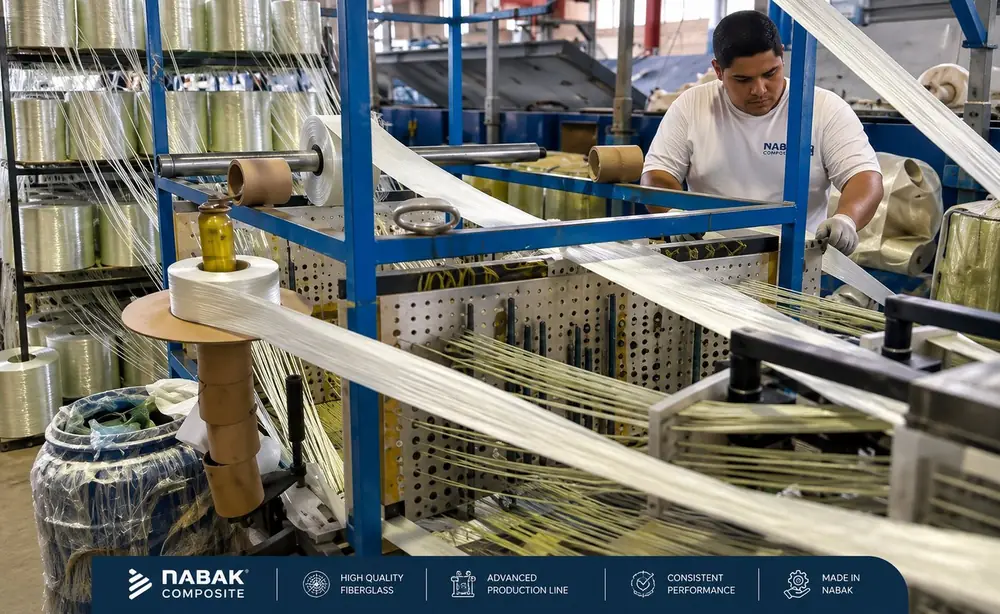
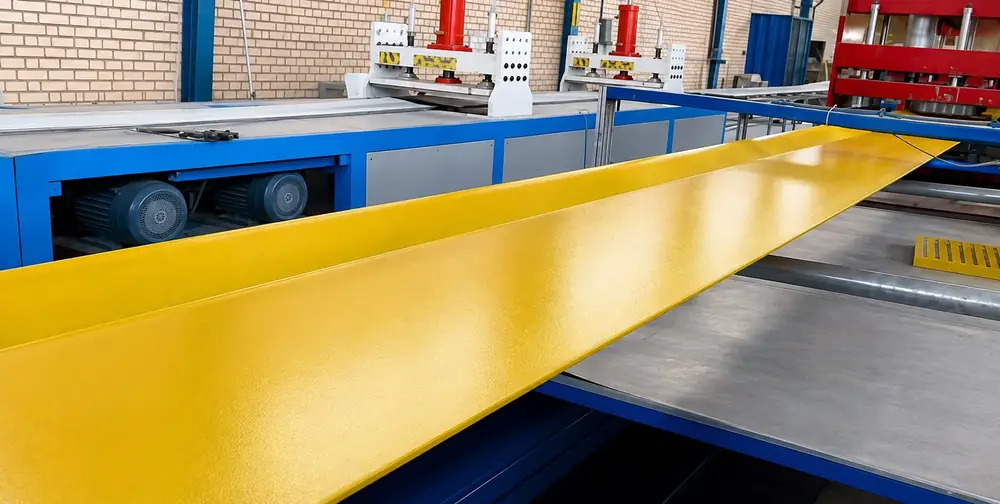
- Internal release agents: added directly to the resin and essential in pultrusion and compression molding — such as stearates (zinc and calcium stearate) and acid phosphate esters. In pultrusion, internal release (usually 0.5 to 2 parts per hundred parts resin) reduces pulling force and die friction and gives a smooth, glossy surface.
10) Anti-wear additives
Anti-wear additives increase surface hardness and resistance to abrasion; they matter in flooring, pipes carrying slurry and abrasive materials, chutes and heavy-traffic surfaces:
- Glass powder (micro and nano): increases abrasion resistance and also improves resistance to corrosion and chemicals.
- Silicon carbide (SiC): very hard; used in the surface layer of parts under severe abrasion.
- Aluminum oxide (alumina): hard and chemically resistant; on anti-slip surfaces, its coarser particles or quartz are scattered on the grating surface.
Abrasion resistance is measured with standards such as ISO 9352 (Taber abrasive wheel).
11) Light stabilizers: resistance to UV and yellowing
Ultraviolet radiation from the sun breaks resin bonds and over time causes yellowing, loss of gloss, chalking and fiber blooming. Light stabilizers increase UV resistance and prevent long-term yellowing of the part. There are two main mechanisms:
- UV absorbers: benzotriazoles and benzophenones (such as Tinuvin 328, Tinuvin P and Tinuvin 1130) absorb UV radiation and convert it into heat.
- Hindered amine light stabilizers (HALS): such as Tinuvin 292 and MAYZO's BLS 292; they trap the radicals produced by photodegradation and regenerate in a cycle.
A combination of UV absorber and HALS (each about 0.2 to 0.5 percent by weight of resin) gives the best result. Alongside the stabilizer, a gelcoat surface layer, or a polyester surface veil in pultrusion, physically protects the fibers from sunlight.
12) The cure system: initiator, accelerator and inhibitor
This group of composite additives is rarely covered in sources, but without them the resin does not cure:
- Initiators (catalysts): organic peroxides that decompose to form free radicals and start the cure of polyester and vinyl ester resins. In cold cure (hand lay-up), MEKP (methyl ethyl ketone peroxide) at about 1 to 2 percent is common; in pultrusion, a combination of low- and high-temperature initiators (such as peroxydicarbonates and TBPB) is used so that cure is completed in stages along the die.
- Accelerators: such as cobalt salts and aromatic amines, which make peroxide decomposition possible at ambient temperature.
- Inhibitors: such as hydroquinone and tert-butyl catechol, which set the gel time and extend resin shelf life.
- Epoxy hardeners: amines and anhydrides which, unlike initiators, are used in a specific stoichiometric ratio (not a small percentage).
A sample pultrusion resin formulation: additives working together
To show the role of each composite additive in practice, the table below gives a typical isophthalic polyester resin formulation for pultruded profiles. The values are illustrative and educational and are adjusted in each plant according to the resin, line speed and target properties:
| Component | Role | Typical amount (phr) |
|---|---|---|
| Isophthalic polyester resin (containing styrene) | Polymer matrix | 100 |
| Kaolin or calcium carbonate | Filler; lower shrinkage and cost | 15–30 |
| Low-profile additive (LPA) | Smooth surface, fewer micro-cracks | 5–15 |
| Internal release (zinc stearate or phosphate ester) | Lower die friction | 1–2 |
| Low-temperature + high-temperature initiator | Staged cure along the die | 1–2 (total) |
| Color paste | Color (for example yellow or grey) | 2–5 |
| UV absorber + HALS | UV resistance | 0.3–1 |
| ATH (fire-retardant grade only) | Flame retardancy | 40–80 |
| Wetting and dispersing agent | Viscosity control at high filler loadings | 0.5–1.5 |
Table of additive effects on composite properties
No additive is "purely positive"; every composite additive affects mechanical properties, processing and price at the same time. The table below shows the typical effect of each group on the key characteristics (↑ increase, ↓ decrease, — negligible effect):
| Additive | Viscosity | Modulus | Strength / toughness | Cost | Shrinkage |
|---|---|---|---|---|---|
| Calcium carbonate | ↑ | ↑ | ↓ (at high loadings) | ↓ | ↓ |
| Talc | ↑↑ | ↑↑ | — / ↓ | ↓ | ↓ |
| Hollow microspheres | ↑ (slowly) | ↓ | ↓ | ↑ | ↓ |
| Fumed silica | ↑↑↑ (thixotropic) | — | — | — | — |
| ATH | ↑↑↑ | ↑ | ↓ | ↓ | ↓ |
| Liquid rubber | ↑ | ↓ | ↑ toughness | ↑ | — |
| LPA | ↑ | ↓ slight | — / ↓ slight | ↑ | ↓↓ |
| Silane | — | — | ↑ (especially wet) | ↑ slight | — |
Additives in Nabak composite products
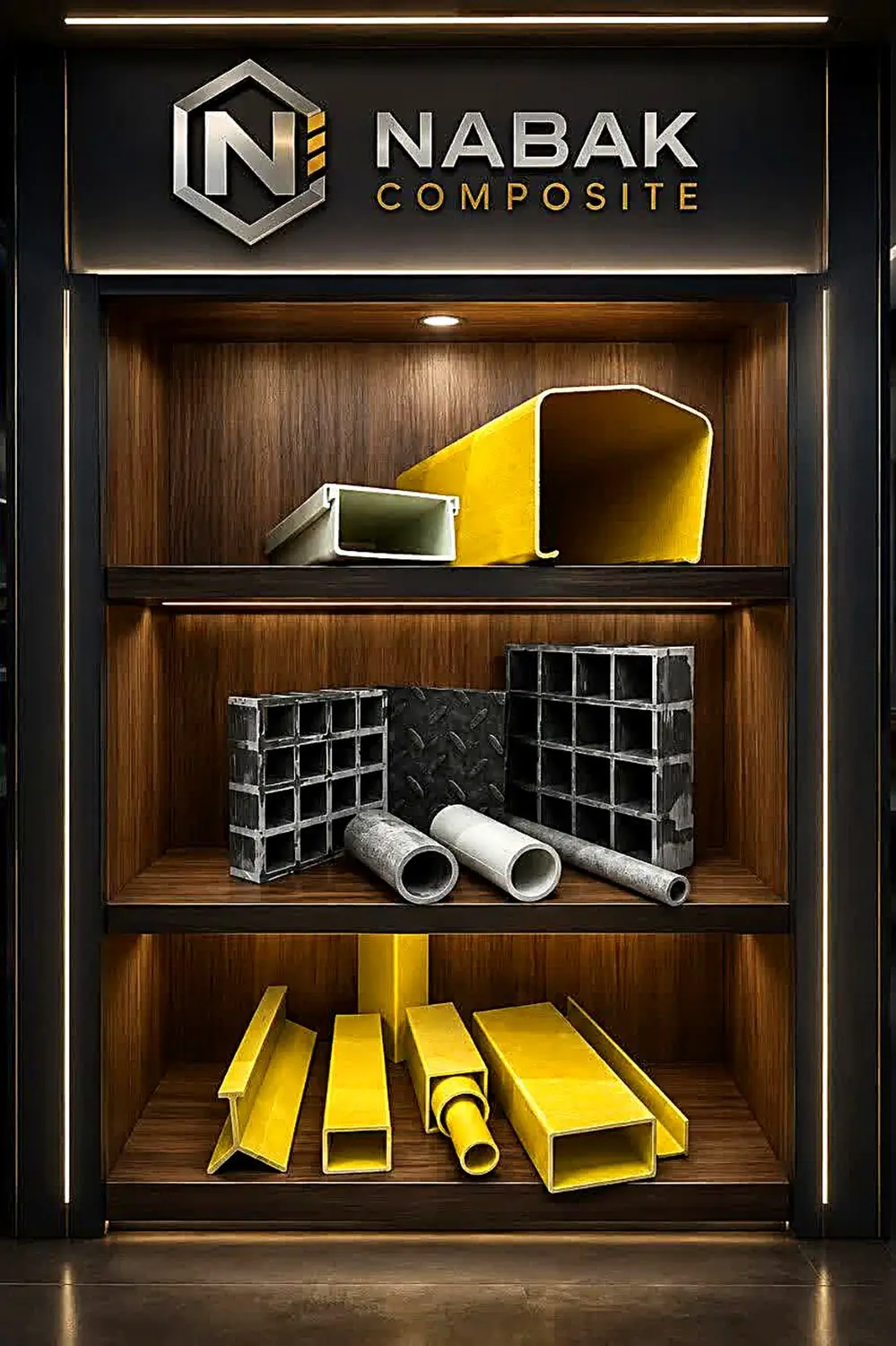
At Nabak Composite, the resin formulation of each product is tailored to its application: composite grating and outdoor profiles with UV stabilizer and stable pigment, fire-retardant grades with ATH, parts for acidic environments with vinyl ester resin and minimal filler, and insulating parts with suitable electrical fillers such as kaolin. The main products are fiberglass sheet (corrugated fiberglass), composite grating, composite box sections, fiberglass angles, composite channels, composite beams, fiberglass pipe, composite flat bars, polymer rods, composite wire and cable trays and ladders.
Additive selection guide: five engineering rules
- Start from the goal: first define the property you need (fire, UV, color, cost, surface), then choose the additive — not the other way round.
- Manage the viscosity budget: the total of filler, ATH and thixotrope must not raise viscosity beyond the limit for fiber wet-out.
- Test compatibility with the cure: pigments, HALS and some fillers change the gel time; every formulation change should be confirmed with gel time and Barcol hardness tests.
- Consider the environment: calcium carbonate dissolves in acid; for chemical environments choose a resistant filler or an unfilled layer.
- Measure the result: confirm the final effect of each composite additive on mechanical properties and durability with standard tests (fiber content, flexure, ILSS, fire and UV) on the product.
Frequently asked questions about composite additives
What are the most important additives in composites?
Fillers (calcium carbonate, talc, kaolin and glass microspheres), pigments, thixotropic agents (fumed silica), fire retardants (aluminum trihydrate, antimony oxide, halogenated and phosphorus compounds), silane coupling agents, mold release agents, UV light stabilizers, conductive additives and the cure system, including initiator and accelerator.
How much fumed silica (Aerosil) is added to resin?
Because of its very high specific surface area (about 150 to 300 m²/g), fumed silica is usually used at only 0.5 to 3 percent by weight of resin; this is enough to stop resin sagging on vertical surfaces. Higher amounts make the resin too thick and fiber wet-out difficult.
Do fillers reduce the mechanical properties of a composite?
Mineral fillers such as calcium carbonate increase the modulus and hardness of the resin, but at high loadings they reduce tensile strength, toughness and fiber wet-out. In fiber-reinforced composites the fibers carry the main load, so a balanced amount of filler (usually 10 to 40 parts per hundred parts resin in pultrusion) has little effect on longitudinal strength.
How does ATH make a composite fire-retardant?
Aluminum trihydrate decomposes from about 200 °C, releasing about 35 percent of its weight as water vapor and absorbing about one kilojoule of heat per gram; as a result it cools the surface, dilutes the combustible gases and forms a protective aluminum oxide layer. ATH is halogen-free and produces little, non-toxic smoke.
What is the difference between a UV absorber and a HALS stabilizer?
UV absorbers (such as benzotriazoles and benzophenones) absorb ultraviolet radiation and convert it into heat, whereas hindered amine light stabilizers (HALS) trap the free radicals produced by photodegradation. Combining the two gives the best protection against yellowing and chalking.
Summary
Additives are the formulator's tools for turning "resin and fibers" into a "working product". Fillers such as calcium carbonate, talc, kaolin and glass microspheres reduce cost and shrinkage and raise modulus; pigments give a stable color; fumed silica at 0.5 to 3 percent stops resin sag; ATH and halogenated or phosphorus systems provide flame retardancy and self-extinguishing behavior; silanes strengthen resin-to-fiber adhesion; release agents make production possible; and UV stabilizers prevent yellowing and surface degradation. In choosing additives, the key to success is the right amount and the compatibility of the ingredients with each other and with the cure system — the approach Nabak Composite takes in formulating its composite products.

This article was prepared by the technical team of Nabak Composite, a manufacturer of grating, pultruded profiles, sheets and composite products.