Safety in composite products: why, and where to start?
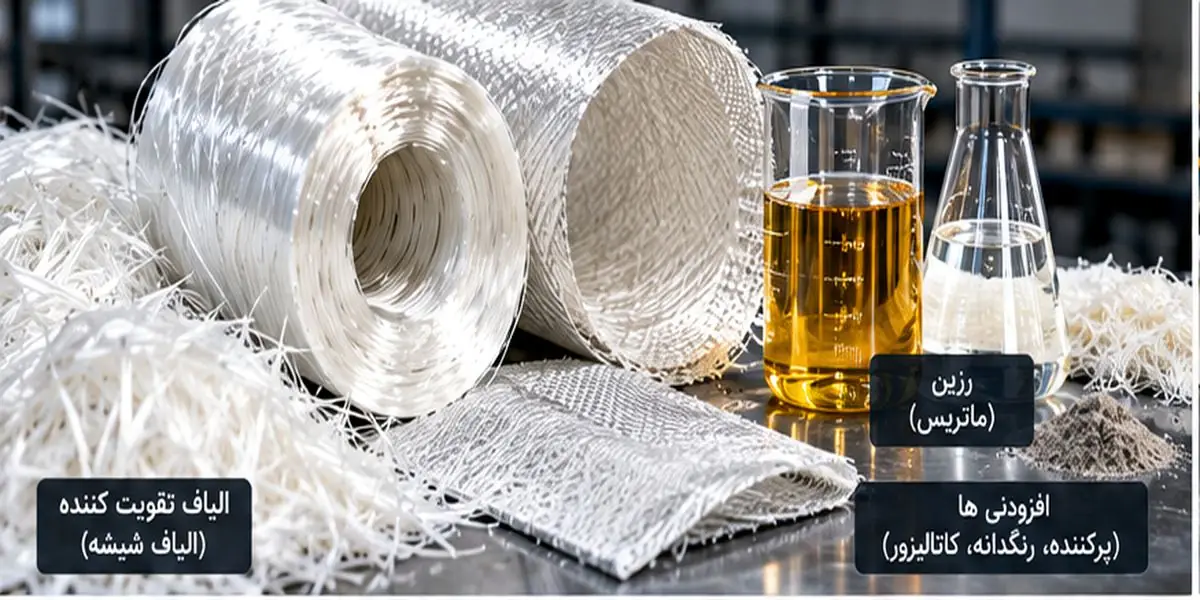
A fiber-reinforced polymer composite (FRP) is made of two main parts: the reinforcement, i.e. glass fibers that carry the mechanical load, and the matrix, i.e. resin that holds the fibers together, transfers load to them and protects the part against moisture, chemicals and the environment. Unlike alloys, the constituents of a composite remain physically and chemically distinct, and the final properties depend on their type, proportion and arrangement.
From a safety point of view, the life cycle of composite products should be divided into three stages: production (handling liquid resin, styrene, peroxides and fibers), secondary processing and installation (cutting, drilling and sanding, which create dust), and service and disposal. The key point is that a cured composite product is a stable, inert solid that poses no health hazard under normal conditions of use; most risks are concentrated in production and mechanical processing and are fully manageable with engineering controls and personal protective equipment.
What is a safety data sheet (SDS)?
A safety data sheet, or SDS (formerly known as MSDS), is a standard document that gives users, employers, HSE officers and emergency responders the information needed for the safe use, storage, transport and disposal of a substance or product. Today's SDS format is based on the United Nations Globally Harmonized System of Classification and Labelling of Chemicals (GHS) and consists of 16 fixed sections.
| Section | SDS heading | Main content for composite products |
|---|---|---|
| 1 | Product and supplier identification | Product name, use, manufacturer details and emergency telephone |
| 2 | Hazard identification | GHS classification, pictograms and precautionary statements |
| 3 | Composition and information on ingredients | Glass fiber, cured resin, fillers, CAS numbers |
| 4 | First aid | Measures for eye, skin, inhalation and ingestion exposure |
| 5 | Firefighting | Extinguishing media, combustion products, firefighter equipment |
| 6 | Accidental release measures | Collecting dust and preventing its spread |
| 7 | Handling and storage | Safe handling, stacking and warehousing |
| 8 | Exposure controls and personal protection | Exposure limits, ventilation, respirator, goggles, gloves, clothing |
| 9 | Physical and chemical properties | Appearance, density, solubility, decomposition temperature |
| 10 | Stability and reactivity | Incompatible conditions and materials, decomposition products |
| 11 | Toxicological information | Potential health effects |
| 12 | Ecological information | Behavior in the environment |
| 13 | Disposal considerations | Waste disposal and recycling methods |
| 14 | Transport information | ADR, IMDG and IATA classification |
| 15 | Regulatory information | Relevant national and international regulations |
| 16 | Other information | Revision date, abbreviations and references |
Composition and information on ingredients
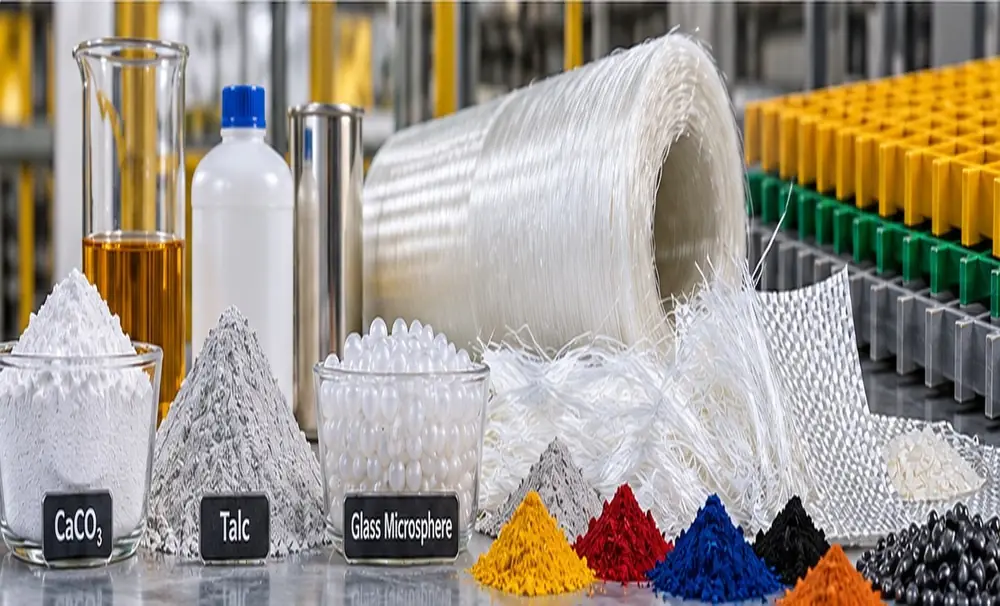
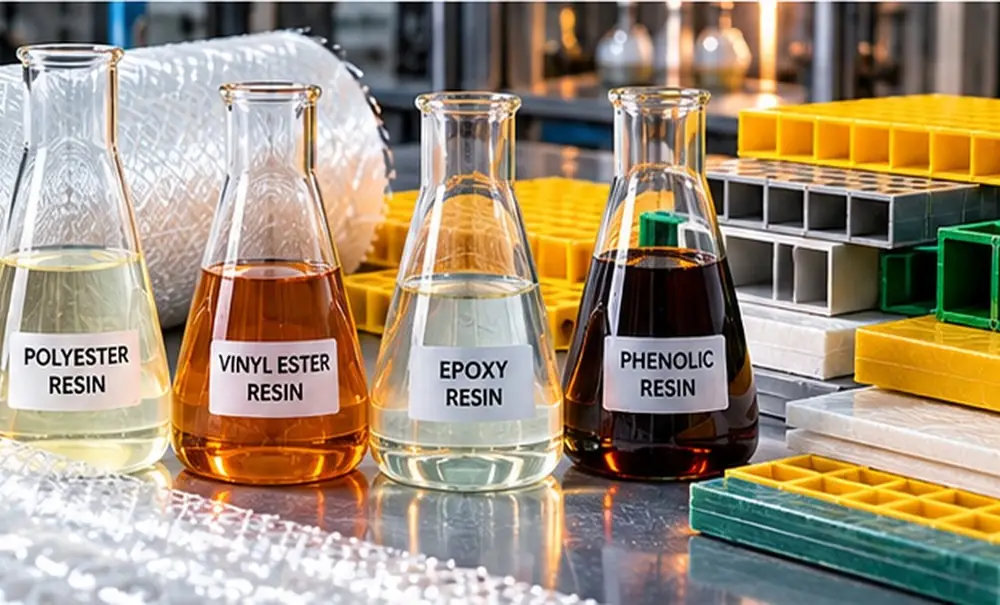
Composite products are made from a mixture of resin, glass fiber, mineral fillers, pigments and additives. In the production process (such as pultrusion), polyester or vinyl ester resin dissolved in styrene is cured by adding a catalyst (organic peroxide), hardener or accelerator and applying heat. The catalyst and hardener are consumed in the curing reaction or locked into the polymer network, and the reinforcing fibers are fully locked into the solid resin. In this reaction, styrene also enters the polymer network as a reactive monomer, and the final product is a hard, stable solid. The cured product may contain a very small amount of free unreacted styrene (usually less than 1 percent), which decreases over time.
| Component | CAS number | Typical weight percent | Safety considerations |
|---|---|---|---|
| Continuous glass fiber (glass filament) | 65997-17-3 | 40 to 80 | Not respirable because of its large diameter; its dust causes mechanical irritation |
| Cured polyester or vinyl ester resin | Polymer (no single CAS) | 20 to 50 | Inert solid after cure |
| Residual free styrene | 100-42-5 | Less than 1 | Faint odor in fresh products; decreases in a ventilated warehouse |
| Calcium carbonate (filler) | 471-34-1 | 0 to 20 | Low-hazard mineral dust |
| Aluminum trihydroxide (flame retardant) | 21645-51-2 | 0 to 25 | In self-extinguishing grades |
| Pigments such as titanium dioxide | 13463-67-7 | Less than 3 | Locked in the cured matrix |
Physical and chemical properties of composite products
| Property | Typical value or description |
|---|---|
| Physical state | Solid (profile, sheet, tube, rod, grating) |
| Color | Varies with pigment (yellow, gray, green, white, etc.) |
| Odor | Odorless, or a faint styrene odor in freshly made products |
| Density | approx. 1.7 to 2.0 g/cm³ |
| Water solubility | Insoluble |
| Water absorption | Usually less than 0.5 percent (24 hours) |
| Melting point | None; thermoset resin does not melt and decomposes at high temperature |
| Onset of thermal decomposition | Usually above about 300 °C |
| Flash point | Not applicable to the cured solid |
| Electrical conductivity | Insulating |
| Chemical stability | Stable under normal conditions; incompatible with strong oxidizers |
Hazard identification under GHS
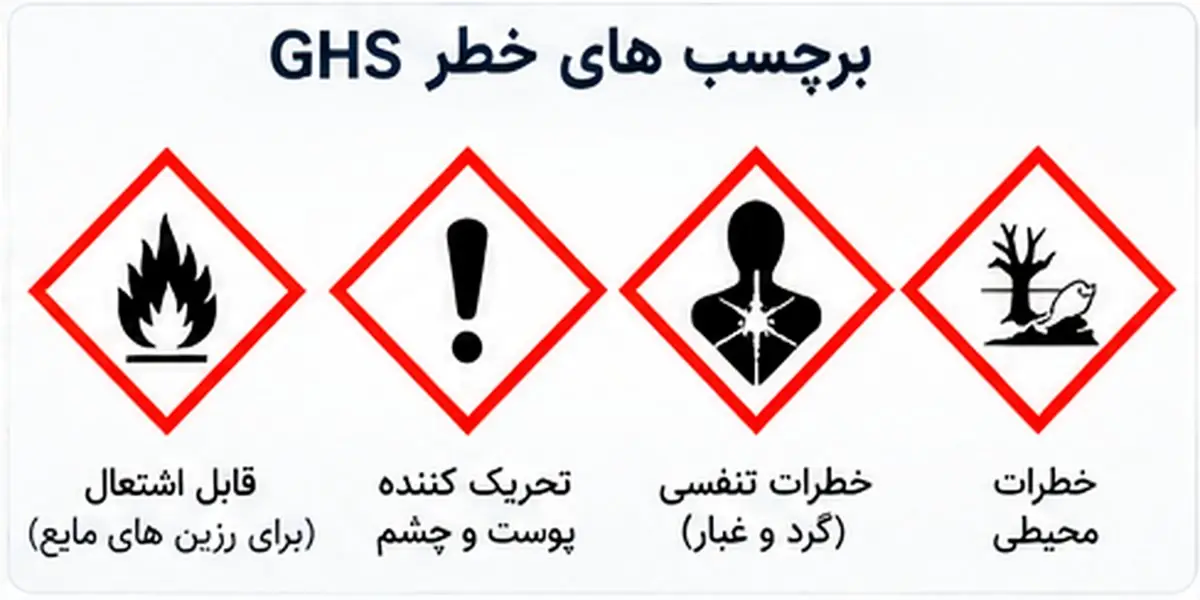
Cured composite products under normal conditions of use, from which the release of chemicals is negligible, are not classified as hazardous mixtures under GHS criteria. Nevertheless, complete safety information should cover possible hazards at the following stages:
- Dust from mechanical processing: cutting, drilling, milling and sanding produce fine particles of resin, filler and short pieces of glass fiber that can cause mechanical irritation of the skin, eyes and respiratory tract.
- Combustible dust: accumulation of fine resin dust in ducts, on ceilings and around machines can form an explosive mixture with air at high concentrations.
- Raw materials at the production stage: liquid resin containing styrene (a flammable, irritant liquid), organic peroxides (oxidizing and reactive) and accelerators, which are controlled in the factory and do not reach the user of the final product.
- Fire: standard grades burn and produce smoke when exposed to direct flame.
Potential health effects and exposure limits
| Route of exposure | Potential effect | When it occurs |
|---|---|---|
| Inhalation | Irritation of the nose, throat and respiratory tract; coughing | Cutting and sanding without ventilation; styrene vapor during production |
| Skin contact | Temporary itching and redness (mechanical irritation) | Contact with dust or cut edges; no effect in normal use |
| Eye contact | Stinging, watering and redness | Airborne particles during processing without safety goggles |
| Ingestion | Unlikely; may cause mild gastrointestinal irritation | Eating and drinking in a dusty workplace |
To assess workplace exposure, the following reference values (based on ACGIH recommendations) are widely used. The HSE officer should also check the legal limits in their own country:
| Factor | 8-hour time-weighted average (TWA) | Short-term exposure limit (STEL) |
|---|---|---|
| Styrene | 10 ppm | 20 ppm |
| Continuous glass fiber | 1 fiber/cm³ (respirable) and 5 mg/m³ (inhalable) | — |
| Insoluble particles of low toxicity (general dust) | 10 mg/m³ (inhalable) and 3 mg/m³ (respirable) | — |
First aid
No significant health hazard is expected in the normal and intended use of composite products. The following measures are recommended for exposure to dust and particles from processing:
Firefighting and the behavior of composite products in fire
Composite products do not ignite spontaneously. Unlike thermoplastics, thermoset resins do not melt and drip; when exposed to flame their surface chars and the glass fiber remains as a mineral skeleton. However, standard polyester or vinyl ester grades burn and produce smoke when exposed to direct, sustained flame. For sensitive applications, self-extinguishing grades are produced with flame-retardant additives such as aluminum trihydroxide, which slow the spread of fire by releasing water vapor and absorbing heat, and extinguish themselves once the flame source is removed.

Standards for assessing fire behavior
- ASTM E84: flame spread and smoke index; Class 1 grade (flame spread index 25 or less) for building applications.
- UL 94: flammability classification; V-0 is the best rating.
- ASTM D2863 (LOI): the minimum oxygen percentage needed to sustain burning; the higher, the safer.
- EN 13501-1: European classification of the reaction to fire of construction products.
Firefighting methods
- Suitable extinguishing media: water spray, foam, dry chemical powder and carbon dioxide. A direct water jet on accumulated dust is not recommended, because it disperses the dust into the air.
- Hazardous combustion products: carbon monoxide, carbon dioxide, styrene vapor and organic compounds, and dense smoke. In grades containing halogenated additives, acid gases may also be produced.
- Firefighter equipment: full firefighting gear and self-contained breathing apparatus (SCBA) are mandatory.
- After extinguishing: do not move burned parts until they have cooled completely; glass fibers released from burned parts are irritating and should be collected with gloves and a respirator.
Environmental precautions and accidental release
An important part of the safety information for composite products is preventing the spread of dust in the workplace and surroundings:
- Collect dust with an industrial vacuum cleaner fitted with a HEPA filter or by wet methods; do not dry-sweep or use compressed air.
- Do not allow dust and cutting waste to enter sewers, drains or soil.
- Keep waste and shavings in closed, labeled bags or containers.
- Cured composite products are insoluble and non-bioaccumulative and have no known toxic effect on aquatic organisms.
Safe handling, transport and storage
Under international regulations for road (ADR), sea (IMDG) and air (IATA) transport, cured composite products are not dangerous goods and need no hazard labels. However, because of the long length of profiles and their cut edges, the following points are essential for personal safety and to protect product quality:
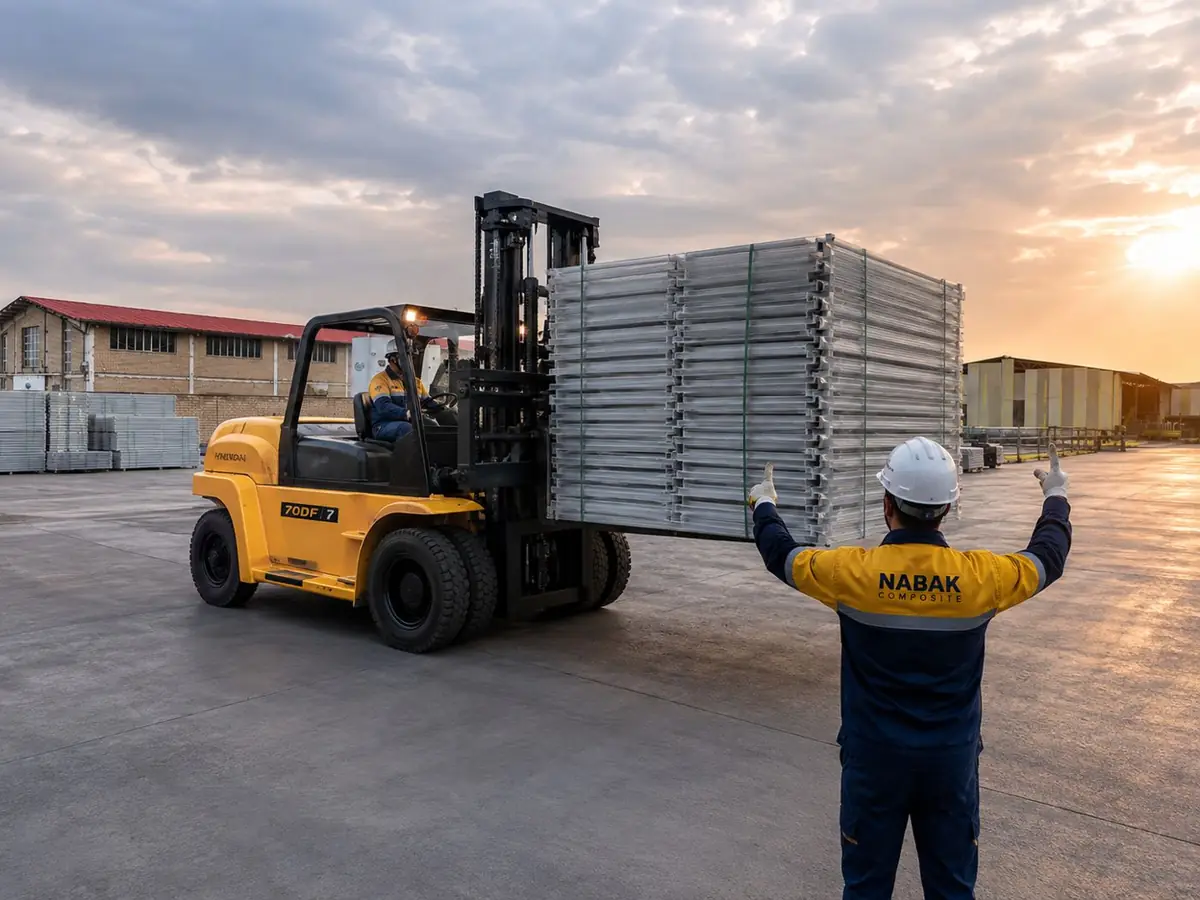
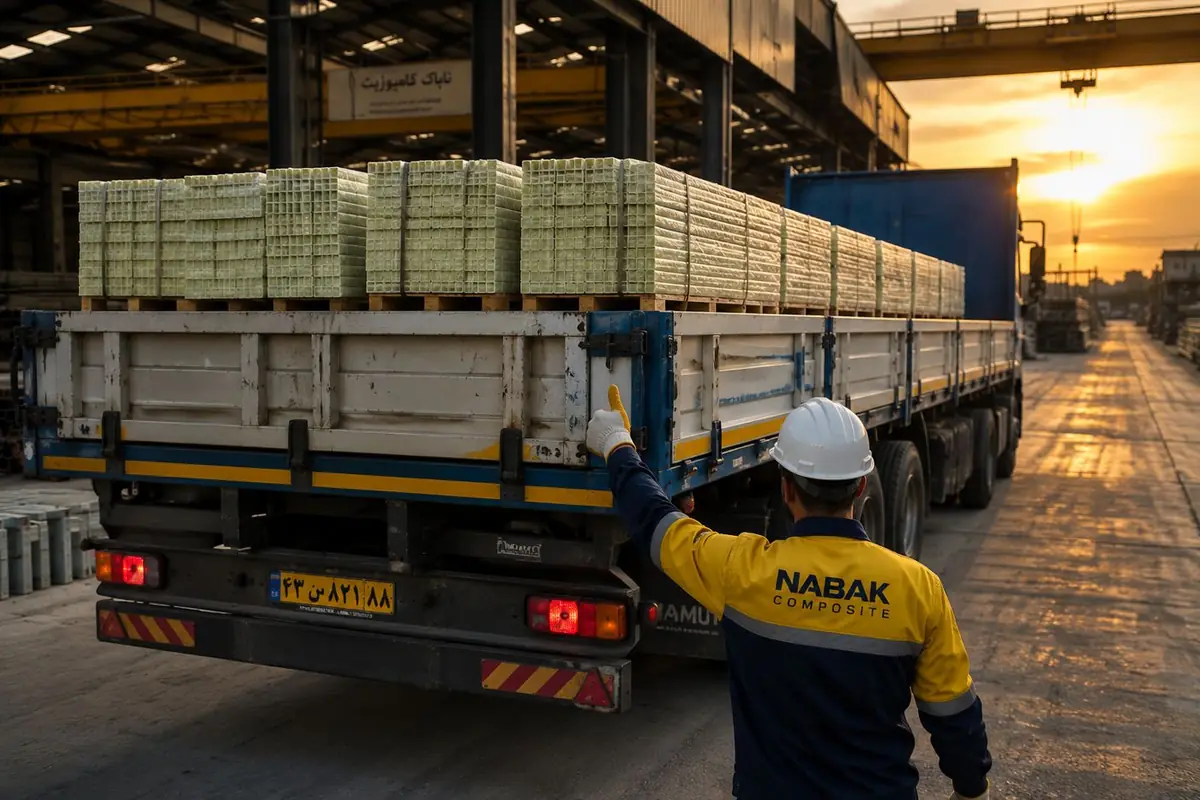
- Suitable gloves: when handling cut edges, wear cut-resistant gloves (EN 388 rated) to prevent fibers penetrating the skin.
- Lifting long profiles: lift from two or more points with fabric slings (not metal chains) to avoid excessive bending and local damage. Move profiles longer than 6 m with two people or a hoist with a spreader bar.
- Stacking in the warehouse: place bundles on flat supports about 1 to 1.5 m apart so they do not sag; limit stack height and put heavier bundles at the bottom.
- Storage conditions: keep in a dry place away from heat sources and flame. For long-term outdoor storage, protect from direct UV with an opaque cover.
- Freshly made products: store indoors with good ventilation so that residual styrene odor can dissipate.
Exposure controls and personal protective equipment
In safety engineering, hazards are controlled according to the hierarchy of controls, and personal protective equipment is the last line of defense, not the first:
- Elimination or reduction at source: order products cut to length and pre-drilled at the factory to minimize cutting on site.
- Substitution: use tools that produce coarser particles and less dust, such as a diamond saw at a suitable speed instead of extensive sanding.
- Engineering controls: local exhaust ventilation with a hood at the cutting point, wet cutting and enclosed booths; in the production hall, general ventilation and styrene vapor extraction around the resin bath.
- Administrative controls: training, limiting exposure time, banning eating, drinking and smoking in the workplace, and periodic air monitoring.
- Personal protective equipment (PPE): respirator, safety goggles, gloves and suitable workwear.
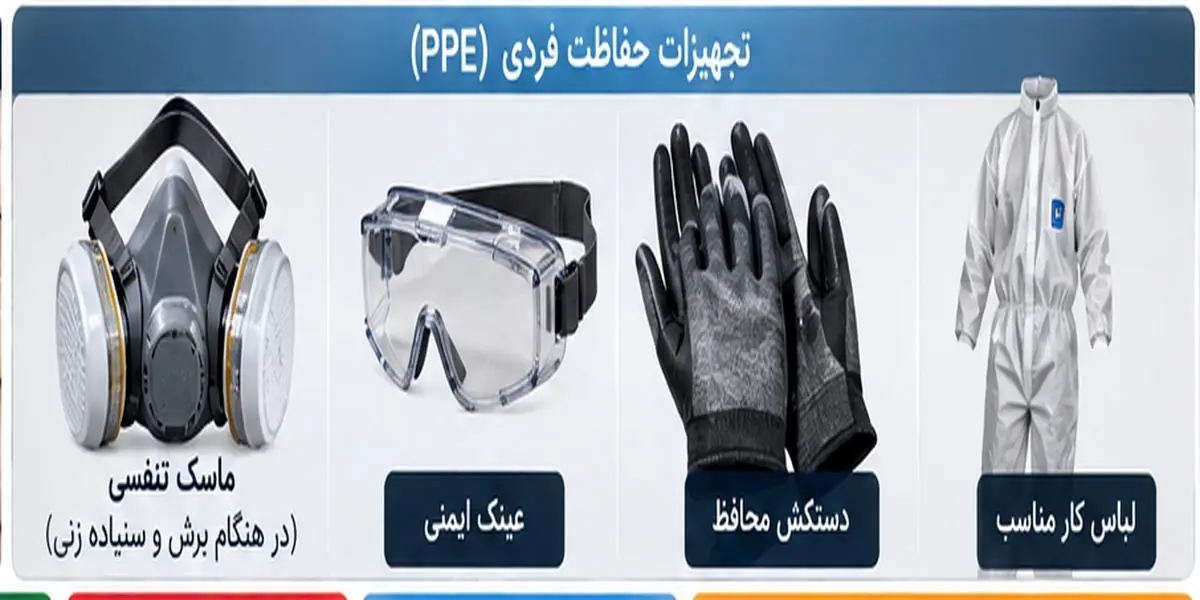
| Activity | Respiratory protection | Eye and face protection | Gloves | Clothing |
|---|---|---|---|---|
| Handling and installing products without cutting | Usually not needed | Basic safety glasses | Cut-resistant work gloves | Long-sleeved workwear |
| Cutting, drilling and milling | FFP2 / N95 particulate respirator or higher | Safety goggles to EN 166 | Cut-resistant gloves | Long sleeves with closed cuffs, or coveralls |
| Prolonged, dusty sanding | FFP3 / P100 respirator or half-mask with P3 filter | Sealed goggles or face shield | Protective gloves | Disposable dust-resistant coveralls |
| Working with liquid resin and styrene (production) | Respirator with combined organic vapor and particle filter (A2P3) | Splash goggles | Chemical-resistant nitrile gloves | Chemical-resistant clothing |
| Heating or thermal cutting | Combined gas, vapor and particle filter | Face shield | Heat-resistant gloves | Flame-resistant clothing |
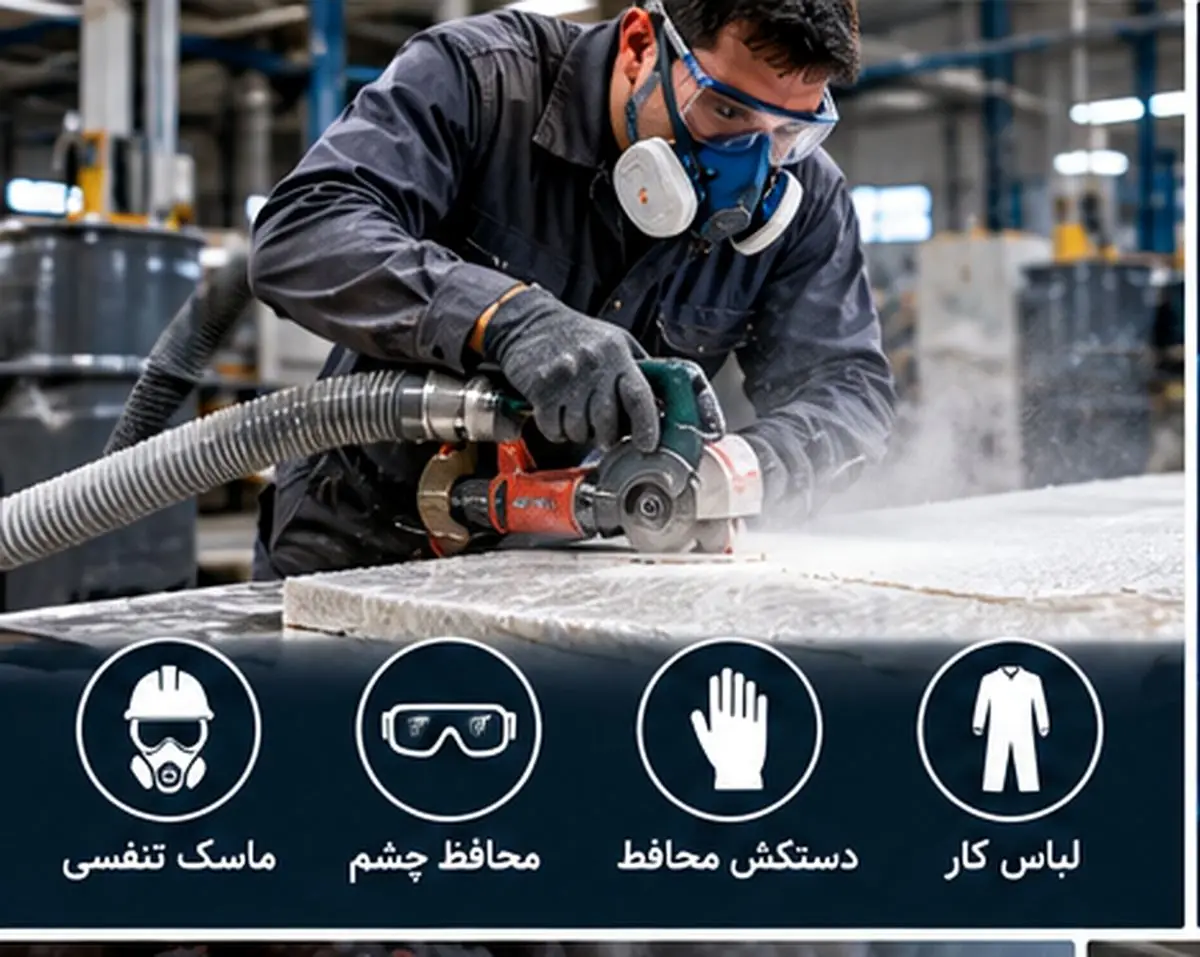
Respiratory, eye and skin protection
Respiratory protection: if respirable fibers and dust are dispersed in the air in the production area or when processing FRP products, use a filtering respirator suited to the dust concentration. The respirator must seal fully on the face (fit test), and filters must be replaced as the manufacturer instructs. An effective respiratory protection program includes respirator selection, training, maintenance and monitoring of employees' respiratory health.
Eye and face protection: safety glasses with side shields are mandatory for light work and sealed goggles for cutting and sanding; ordinary prescription glasses are not adequate eye protection. Skin protection: long sleeves with closed cuffs and collar, protective gloves and, if needed, a hood minimize fiber contact with the skin; sensitive skin at the wrists and neck is most exposed to irritation.
Personal hygiene recommendations
- Wash hands and face with soap and water before breaks, before eating and at the end of the working day.
- After a shift in a dusty environment, shower and wash workwear separately from household clothes.
- Do not clean dusty workwear by shaking it or with compressed air.
- Provide access to clean water and eyewash solution in the workplace.
- Using a barrier cream before work can reduce fiber irritation.
Safety tips for cutting and drilling composite products
- Suitable tools: use diamond or carbide blades; blunt blades generate heat and finer dust and delaminate the edges.
- Speed and feed: moderate speed and steady feed produce coarser particles and less respirable dust.
- Extraction at source: connect power tools to an industrial vacuum cleaner with a HEPA filter.
- Sealing edges: after cutting, seal edges and holes with resin or a suitable coating; this prevents exposed fibers and skin irritation on contact, and preserves the product's durability.
- Work area: cut outdoors or in a well-ventilated area and keep unrelated people away from the work zone.
Stability, reactivity and toxicological information
Cured composite products are stable under normal storage and use conditions and have no hazardous reactions. Avoid prolonged contact with strong oxidizers and excessive heat. Above about 300 °C, thermal decomposition of the resin begins, releasing smoke, carbon monoxide and volatile organic compounds. Toxicologically, the solid product has no significant acute toxicity, and its known effects are limited to mechanical irritation from dust.
Disposal and recycling considerations
Waste from cured composite products is not considered hazardous waste under common criteria. Waste management options, in order of priority, are:
- Reduction at source: optimizing cut lengths and ordering exact dimensions.
- Reuse: short profile offcuts for making connections, corners and small parts.
- Mechanical recycling: grinding and use as filler in polymer concrete and non-structural products.
- Co-processing in cement kilns: the resin is used as fuel and the glass fiber and mineral fillers as clinker raw material.
- Landfill: at licensed industrial waste landfills in accordance with local regulations.
Composites: a safer option in service
Apart from processing considerations, composite products offer significant safety advantages over metals in service:
- Electrical insulation: lower risk of electric shock in substations, power plants and electrical installations — the main reason for using composite cable trays and ladders and insulating ladders.
- Non-sparking: suitable for environments with flammable gases in refineries and petrochemical plants.
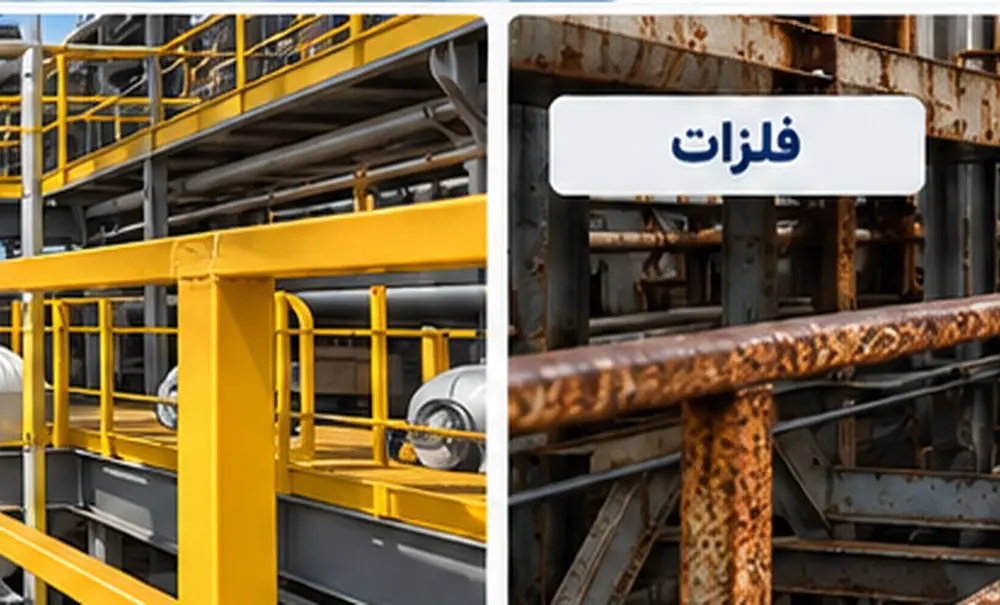
- Corrosion resistance: prevents sudden weakening of structures, handrails and composite grating in corrosive environments.
- Low weight: fewer musculoskeletal injuries to workers during handling and installation; a composite beam weighs about a quarter of a steel beam of the same volume.
- Anti-slip flooring: the grit surface of grating and fiberglass sheet reduces the risk of slipping in oily and wet environments.
Safety at Nabak Composite
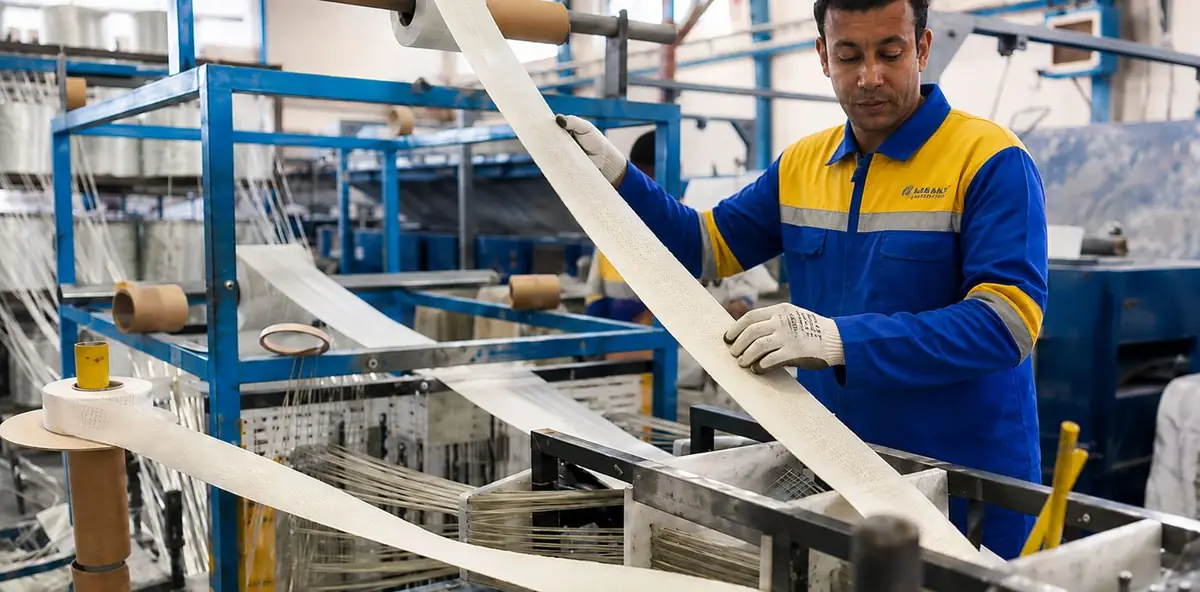
At Nabak Composite, safety is part of the production process, not a separate stage. Controlling styrene vapor with extraction systems around the resin bath, separate and safe storage of peroxides, dust extraction at cutting stations, continuous staff training and mandatory use of personal protective equipment are principles of our production lines. For details of the production process, read the article pultrusion manufacturing method, and to learn about raw materials, the article types of fiber in composites.
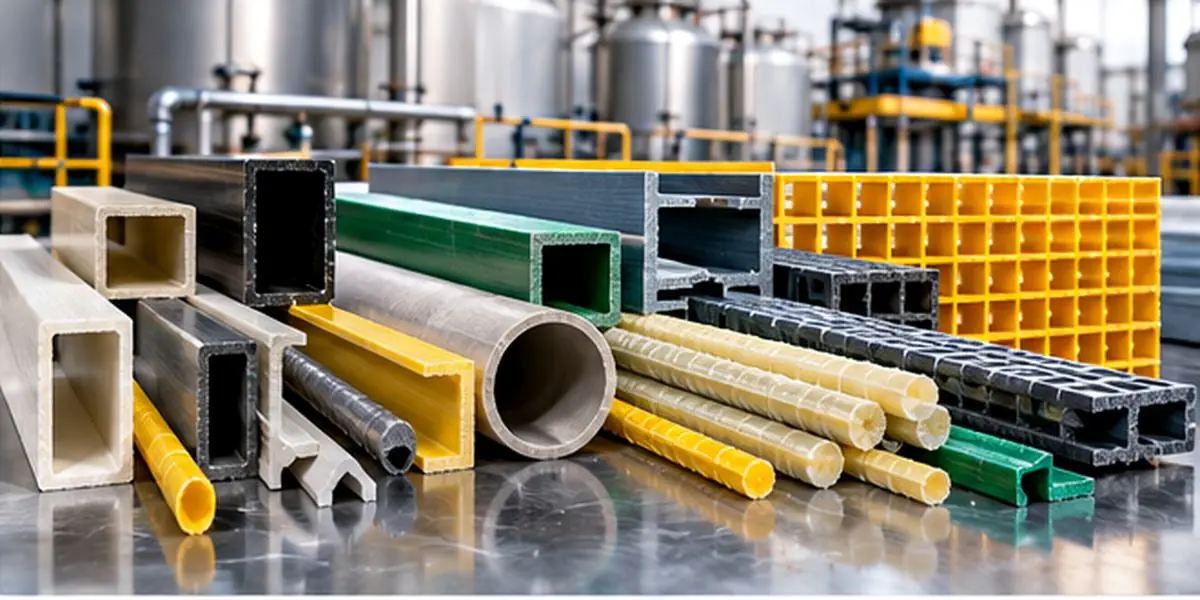
Safety data sheets for Nabak composite products, with complete safety information in the standard SDS format, are provided on customer request. Products covered by this safety information, from composite box sections and channels to composite flat bars, polymer rods and composite wire, include:
Frequently asked questions about composite product safety
Are composite products hazardous to health?
Cured composite products are solid, stable and inert and pose no health hazard in normal use. The main hazard is dust from cutting, drilling and sanding, which is controlled with ventilation and personal protective equipment.
What is a safety data sheet (SDS)?
A safety data sheet (SDS) is a 16-section document based on the Globally Harmonized System (GHS) that describes a product's composition, hazards, first aid, firefighting, transport, storage and disposal.
What respirator should be used when cutting composite profiles?
For cutting and sanding dust, a particulate filtering respirator of at least FFP2 or N95 is recommended, and FFP3 or P100 for prolonged work. If vapor or thermal fumes are produced, a combined gas and particle filter (such as A2P3) is required.
Do composite products catch fire?
Composite products do not ignite spontaneously, but standard grades burn when exposed to direct flame. Self-extinguishing grades are made with flame-retardant additives. Water, foam, powder or carbon dioxide are used for firefighting.
How should composite waste be disposed of?
Cured composite waste is not considered hazardous and should be disposed of at licensed industrial landfills or recycled by grinding for use as filler or by co-processing in cement kilns; open burning is not permitted.
Summary
Safety in composite products starts with a simple fact: the cured product is a stable, inert solid that poses no health hazard in normal use. The real risks are concentrated in dust from cutting, drilling and sanding, styrene vapor at the production stage, and the product's behavior in fire. By understanding these hazards through the safety data sheet (SDS), applying the hierarchy of controls, local exhaust ventilation and suitable personal protective equipment, following first aid procedures, being prepared for firefighting, and managing transport, storage and disposal correctly, all the advantages of composites can be enjoyed with complete safety. For safety data sheets and technical advice, contact the Nabak Composite team.

This article was prepared by the technical and HSE team of Nabak Composite. Its information is educational and does not replace the product's official SDS or national safety regulations.