
FRP/GRP Cable Ladder (Industrial)
What is an FRP/GRP cable ladder?
An FRP/GRP cable ladder (fiberglass cable ladder tray) is an open cable support system, made of two side rails joined by cross rungs instead of a solid base, used to carry large volumes of power cables over long spans with fewer supports. Unlike a cable tray with a closed base, the gaps between rungs give natural ventilation and easy access for adding or servicing cables on large industrial projects. Nabak cable ladders are made by pultrusion from continuous glass fibers and polyester or vinyl ester resin, and resist moisture, corrosive vapors and UV.
Advantages over steel cable ladders
- Corrosion resistance: no rust in humid, coastal or chemical environments; no galvanizing or periodic painting.
- Light weight: about one-quarter the weight of an equivalent steel ladder, allowing longer spans between supports without adding load to the structure.
- Electrical insulation: does not conduct electricity, reducing the shock hazard if cable insulation is damaged.
- Natural ventilation: the open rung spacing lets heat from power cables escape without extra perforations.
- Easy access for maintenance: cables can be added or replaced without removing a cover.
- Maintenance-free: color runs through the material and does not flake or fade over time.
Nabak FRP cable ladder range
Straight cable ladder
Straight sections for long horizontal or vertical runs; the most common type for cable basements, trenches and overhead routes on equipment racks.
Bends and elbows
For horizontal or vertical changes of direction without cutting on site; common angles are 90° and 45°.
Tees and crosses
For branching cable routes in several directions where cable corridors intersect.
Splice plates and support brackets
Splice plates to join ladder sections and wall or ceiling brackets to fix them to the structure, all made in the same composite material. See our FRP cable ladder fittings and splice plates.
FRP cable ladder sizes and weights
| Width (mm) | Side rail height (mm) | Rung spacing (mm) | Approx. weight per meter (kg) |
|---|---|---|---|
| 150 | 75–100 | 300 | 2.20–3.00 |
| 300 | 75–100 | 300 | 3.50–4.60 |
| 450 | 100 | 300 | 5.00–6.20 |
| 600 | 100–150 | 300 | 6.80–8.50 |
| 900 | 150 | 300 | 10.50–12.80 |
Standard rung spacing is 300 mm; custom spacing can be produced for projects with higher cable density.
Cable ladder vs cable tray vs steel ladder
| Property | FRP cable ladder | FRP cable tray | Steel cable ladder |
|---|---|---|---|
| Ventilation | Excellent (open) | Needs perforations | Excellent (open) |
| Corrosion resistance | Excellent | Excellent | Poor once scratched |
| Best for | Heavy power cables, long spans | Telecom cables, full protection | Heavy power cables |
| Relative weight | Light | Light | Heavy |
| Electrical insulation | Yes | Yes | No |
Applications
- Oil, gas and petrochemical: heavy power cable routes between process units in corrosive vapors.
- Power plants: long runs on equipment racks that need heat dissipation.
- Water and wastewater treatment: cabling in constant contact with moisture and disinfectants.
- Marine and coastal: open routes exposed to humidity and salt water.
- Mining: resists abrasion, moisture and mineral chemicals on long underground runs.
How FRP cable ladders are made
Nabak cable ladders are made by pultrusion: continuous glass fibers with polyester or vinyl ester resin are pulled through a steel die of constant section and cured at a controlled temperature. The rungs are integrally fixed or riveted to the side rails so that joint strength is maintained over the life of the project.
Choosing the right cable ladder
- Cable volume and weight: choose width and support spacing based on the distributed cable load.
- Support span: the longer the span, the taller the side rail needed to control deflection.
- Ventilation: for high-heat power cables, a cable ladder is preferred over a cable tray.
- Environment: acids, alkalis or permanent moisture determine the resin type.
If you are unsure, send the general project details to Nabak’s technical team and we will recommend width, rail height and support spacing.
Standards and quality control
Nabak cable ladders are produced with reference to EN 13706 for pultruded profiles and NEMA FG 1 for loading and fittings of fiberglass cable support systems. Before shipping, every batch is inspected for dimensions, rung-to-rail joint strength and surface finish.
Installation
Cable ladders are bolted or clamped to wall, ceiling or structural brackets, with no welding or hot work on site. Sections are joined with splice plates and corrosion-resistant bolts, keeping the run continuous with no gaps or raised edges.
Why Nabak FRP cable ladders?
Nabak Composite produces cable ladders in a full range of widths and heights with matching fittings (bends, tees, splice plates) and custom cutting to the project drawing. Before ordering, our engineers recommend width and rail height based on cable fill and support span, and after delivery our technical team supports installation.
Frequently asked questions
- Cable ladder or cable tray? For high-heat power cables and long spans, a cable ladder is better thanks to ventilation; for full protection of telecom cables, a cable tray is more suitable.
- How long do FRP cable ladders last? In corrosive environments, far longer than steel, because they do not corrode.
- Do FRP cable ladders need earthing? No. They are non-conductive, so unlike steel ladders they do not need bonding to earth for electrical safety.
- What is the maximum support span? It depends on width and cable load; our engineers calculate the allowable span from your project drawing.
- Can FRP cable ladders be cut on site? Yes, with an ordinary disc cutter and no special equipment.
Packing, price and ordering
Ladders are bundled and wrapped in protective film. Because they are much lighter than steel, freight costs are noticeably lower. Price depends on width, rail height, rung spacing and quantity.
- Define cable volume and support span.
- Choose width, rail height and rung spacing, with free technical advice if needed.
- Request a quotation and lead time.
- Confirm the order; ladders are produced or cut to your drawing.
- Shipping and delivery to your site.
For an up-to-date quotation, contact us through the contact form or see our technical documents.
Summary
For projects with heavy power cabling, long spans and a need for natural ventilation, an FRP/GRP cable ladder is a lighter, corrosion-proof and lower-cost alternative to steel ladders. Nabak Composite supplies cable ladders with matching bends, tees and splice plates in a full range of sizes.
For the complete technical specifications, dimensions and engineering tables of the products in this category, see FRP/GFRP Composite Cable Tray — Technical Datasheet.
Related technical datasheets
Products in this category
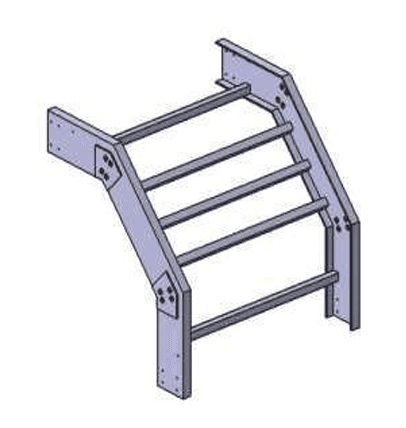
FRP/GRP Cable Ladder 90° Vertical Inside Bend
The FRP/GRP cable ladder 90° vertical inside bend is an important composite cable ladder fitting for turning c
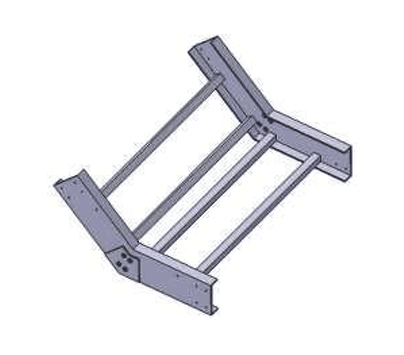
FRP/GRP Cable Ladder 45° Vertical Inside Bend
The FRP/GRP cable ladder 45° vertical inside bend is a specialist composite fitting for turning cable runs 45°
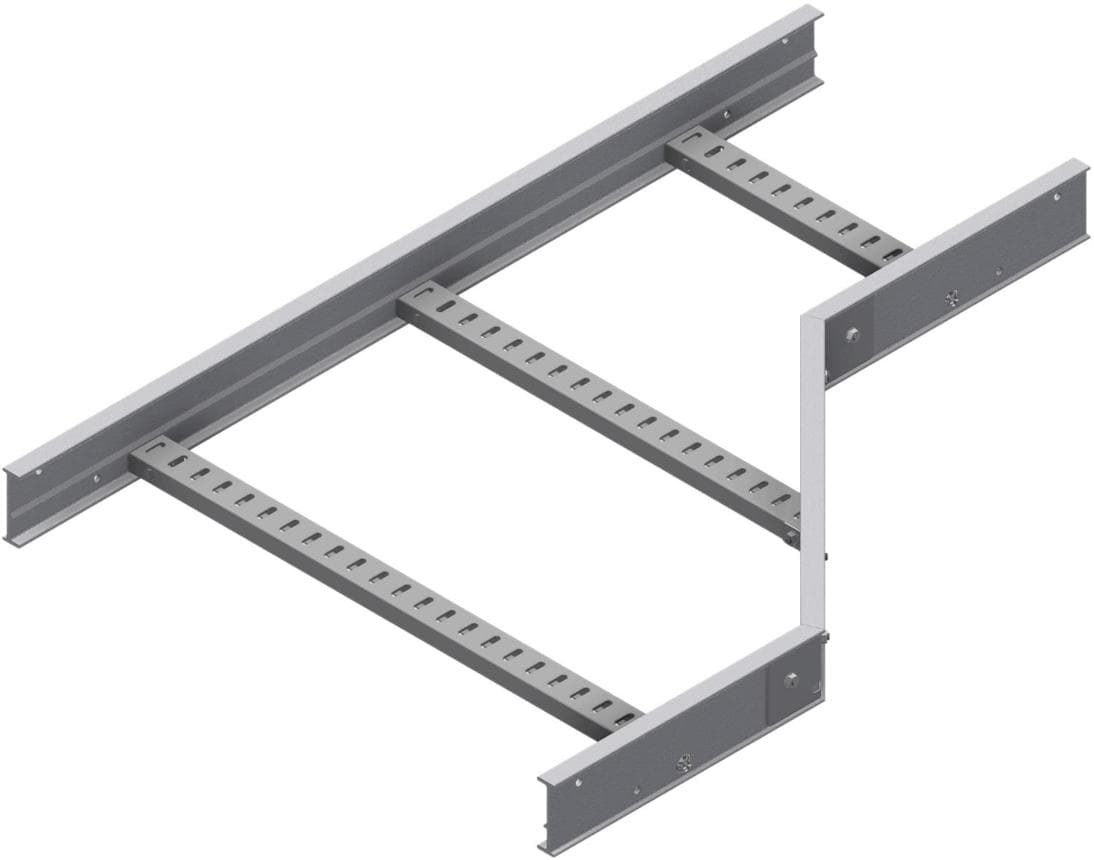
FRP/GRP Cable Ladder Left-Hand Reducer (Offset)
The FRP/GRP left-hand cable ladder reducer is a specialist fitting that offsets a cable ladder run to the left
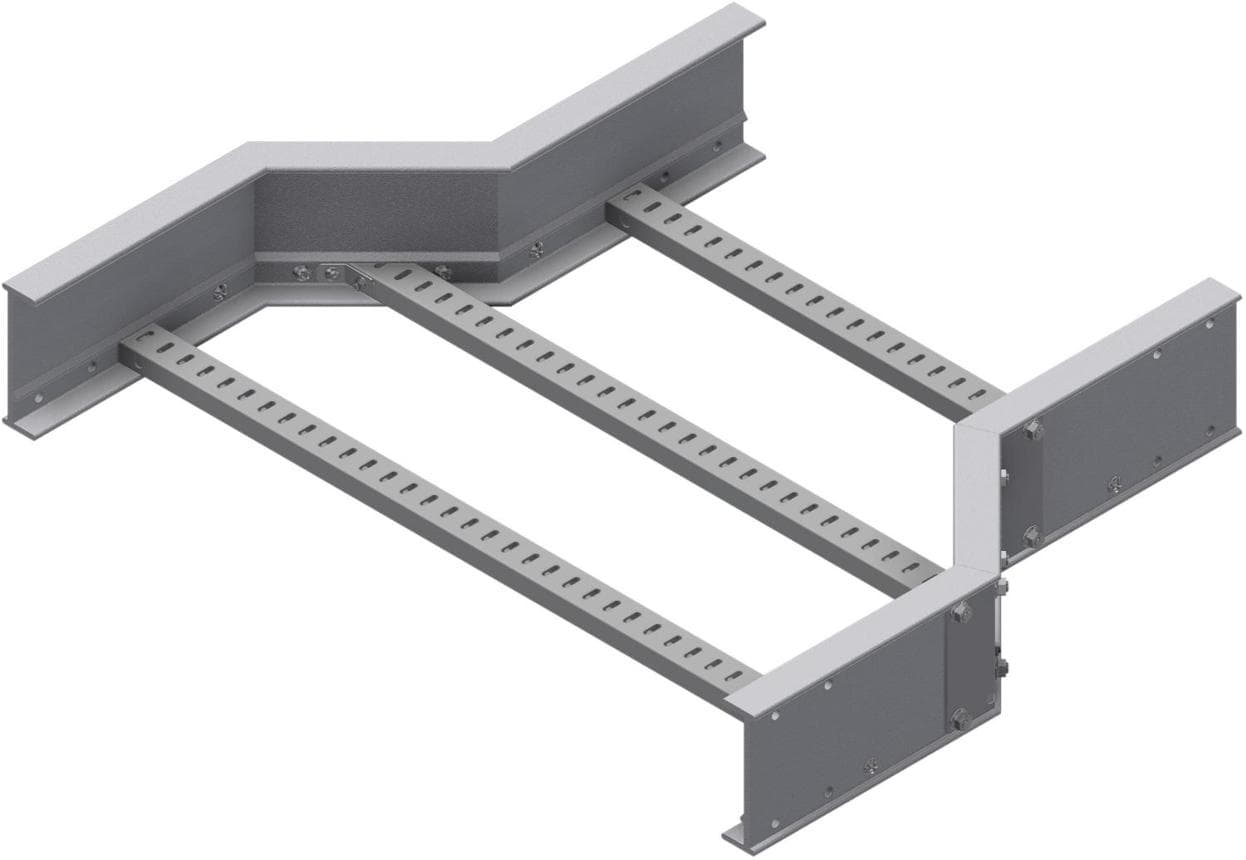
FRP/GRP Cable Ladder Straight Reducer
The FRP/GRP cable ladder straight reducer is a specialist cable management fitting used to change the width of
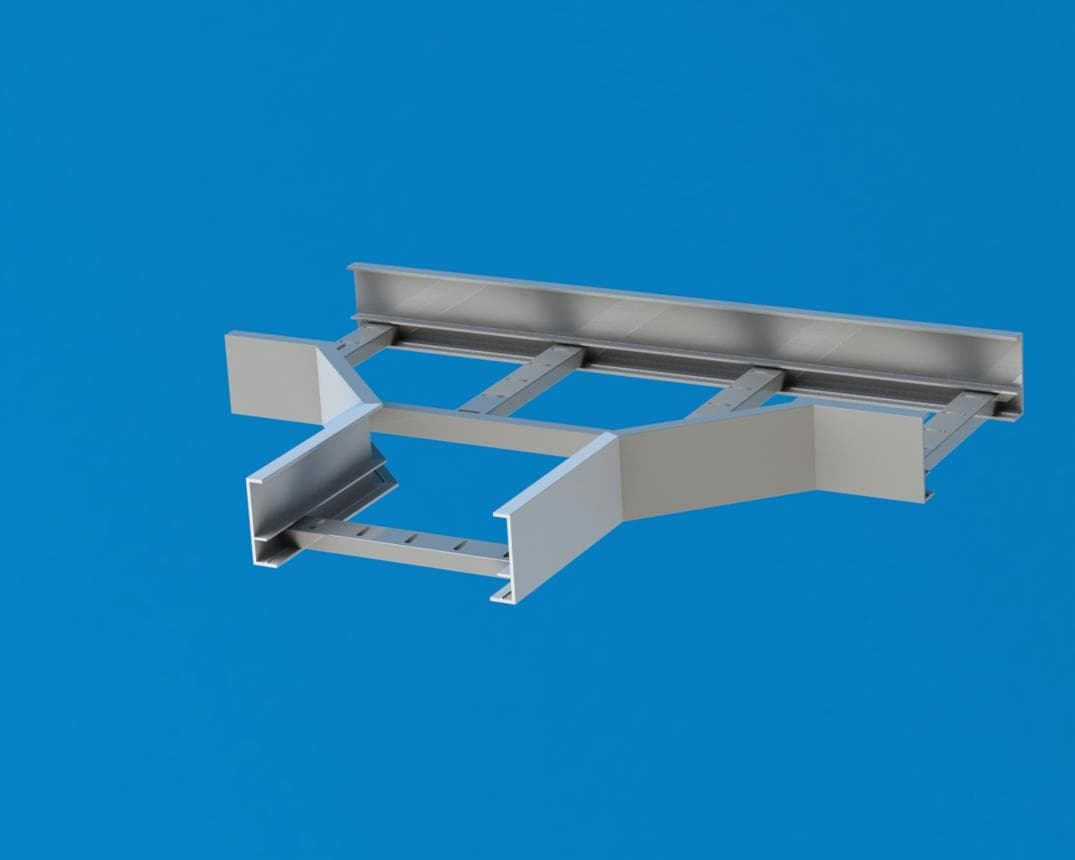
FRP/GRP Cable Ladder Horizontal Tee
The FRP/GRP cable ladder horizontal tee is a main fitting in composite cable ladder systems, creating a three-
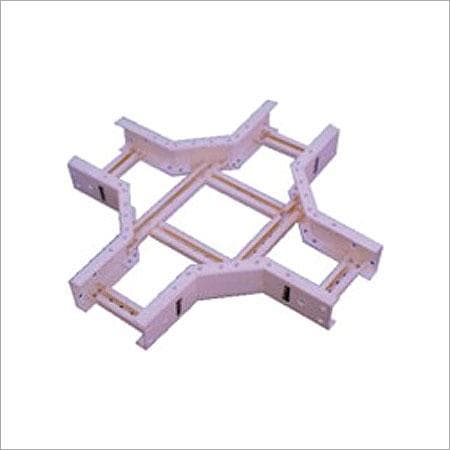
FRP/GRP Cable Ladder Horizontal Cross
The FRP/GRP cable ladder horizontal cross is a specialist composite fitting that creates a four-way branch, jo
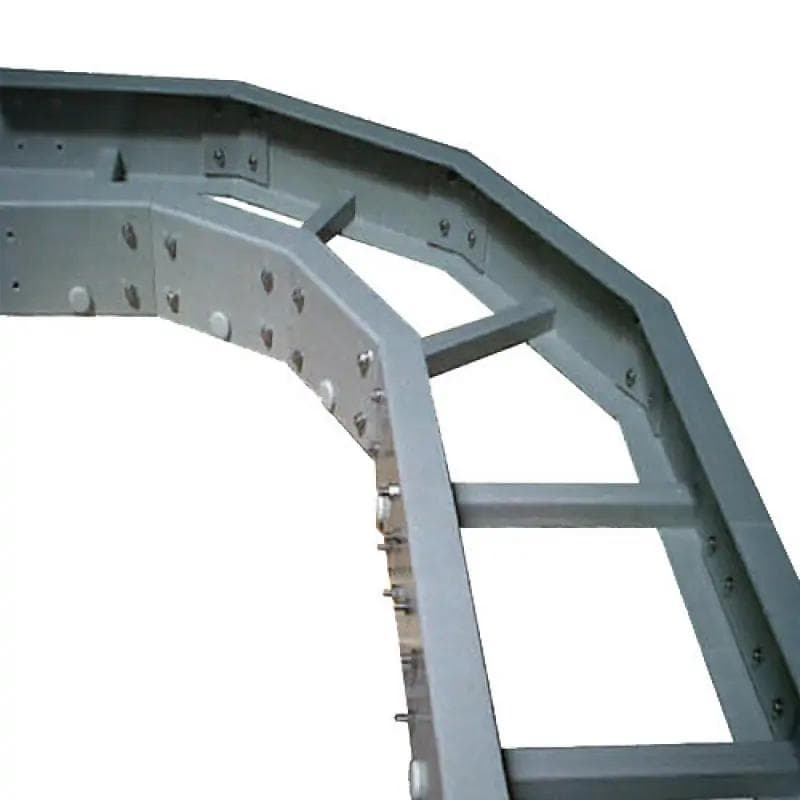
FRP/GRP Cable Ladder 90° Horizontal Bend
The FRP/GRP cable ladder 90° horizontal bend is a main fitting in composite cable ladder systems, used to turn
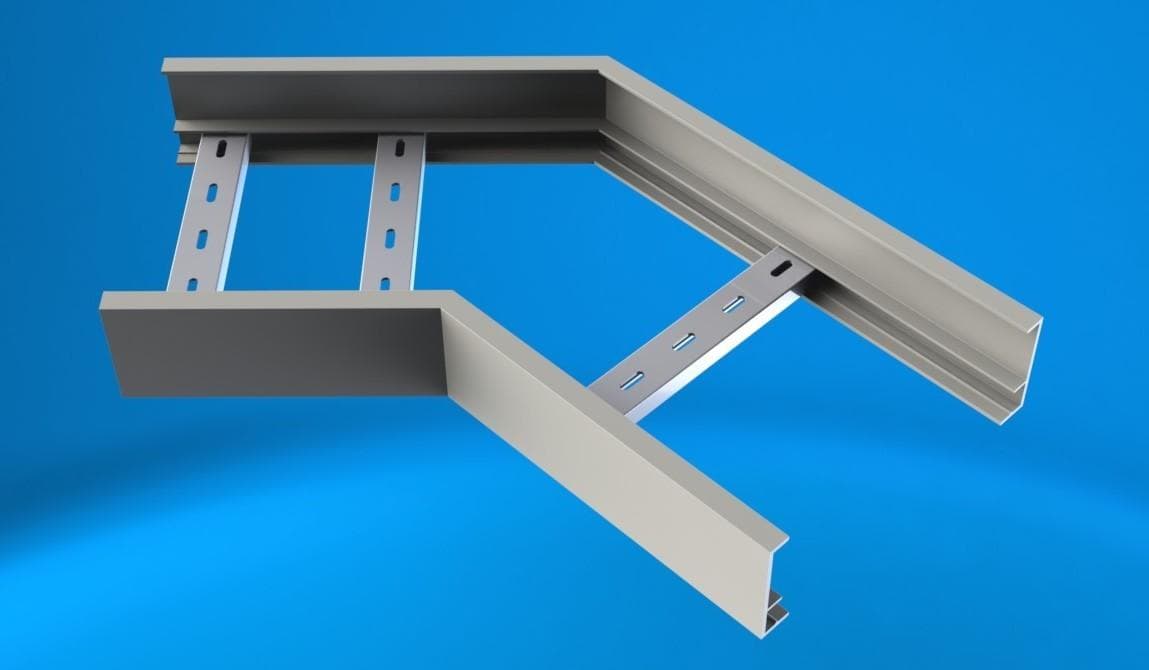
FRP/GRP Cable Ladder 45° Horizontal Bend
The FRP/GRP cable ladder 45° horizontal bend is a key cable ladder fitting for gradually turning a ladder run
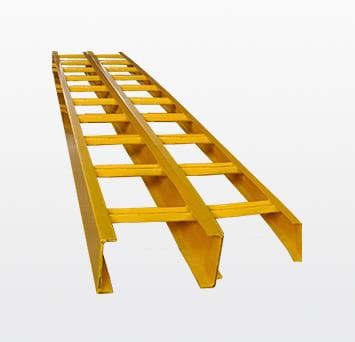
FRP/GRP Straight Cable Ladder
The straight FRP/GRP cable ladder is a core part of industrial cable management systems, carrying power, contr
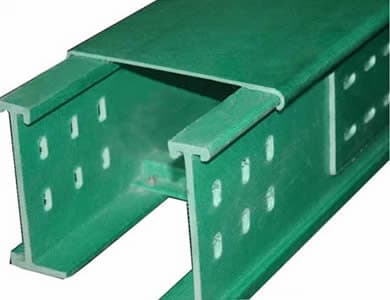
FRP/GRP Box-Type Cable Ladder
The FRP/GRP box-type cable ladder is an advanced cable management system that combines a ladder structure with