
FRP/GRP Pultruded Profiles
What are FRP/GRP profiles?
FRP/GRP profiles (also called pultruded profiles, fiberglass structural shapes or GRP sections) are made by pultrusion: continuous glass fibers in the longitudinal and transverse directions, impregnated with polyester, vinyl ester or epoxy resin, are pulled through a heated steel die with a constant cross-section and cured at a controlled temperature. The result is a profile with a uniform section, low weight and high corrosion resistance, assessed against references such as ASTM D3917 (dimensional tolerances) and ASTM E84 (surface flame spread). Unlike steel, which gradually rusts and loses thickness in acidic, alkaline, humid or coastal environments, the fiber-resin structure of a composite profile does not react with these substances.
Nabak FRP profile range
Nabak Composite supplies a full range of standard pultruded sections in one product family, so you can choose the best section for the connection type and structural load of your project:
FRP angle (L-profile)
Two perpendicular legs, equal or unequal; for corner connections, lightweight framing and equipment supports in corrosive environments.
FRP channel (U/C-profile)
A U-shaped section with a web and two flanges; for guide rails, door and window frames and support structures with moderate bending loads.
FRP square and rectangular tube
A closed hollow square or rectangular section; thanks to its more even stress distribution, it is widely used for light columns, handrails and non-load-bearing frames.
I-beams, H-beams, T, Z, omega, flat bars and rods
Structural beams for platforms and frames, plus T, Z and omega profiles, flat bars and solid rods for bracing, edging and supports.
Custom profiles
If your project needs a section outside the standard range, a custom die can be designed and made to the client’s drawing; this is usually economical for large orders.
Advantages over steel and aluminum
- Corrosion resistance: no reaction with moisture, acids, alkalis or salt; no galvanizing or periodic painting needed.
- Light weight: FRP profiles weigh about one-quarter as much as steel, reducing transport and installation costs.
- Electrical and thermal insulation: unlike metals, they do not conduct electricity; ideal near electrical equipment or where sparks are a hazard.
- Maintenance-free: with no rust, there is no repainting or re-galvanizing over the life of the project.
- Dimensional stability: the pultruded section is consistent along its length and can be cut accurately to the drawing.
Technical data and typical sizes
| Profile type | Typical sizes (mm) | Wall thickness (mm) | Standard length | Resin |
|---|---|---|---|---|
| Angle (equal/unequal) | 25×25 to 100×100 | 3–10 | 6 m (cut to size) | Polyester / vinyl ester |
| Channel | 50×25 to 150×50 | 4–10 | 6 m (cut to size) | Polyester / vinyl ester |
| Square/rectangular tube | 20×20 to 100×100 | 3–8 | 6 m (cut to size) | Polyester / vinyl ester |
| Custom | To client drawing | To design | To order | To suit the environment |
Standard colors are grey and yellow; other colors can be produced on request. For fire-sensitive areas, a self-extinguishing resin can be specified.
FRP profiles vs steel profiles
| Property | FRP/GRP profile | Steel profile |
|---|---|---|
| Corrosion in humid/coastal environments | Resistant, no rust | Prone to rust, needs galvanizing |
| Relative weight | About one-quarter of equivalent steel | Heavier |
| Electrical conductivity | Insulating | Conductive |
| Periodic maintenance | None | Periodic painting/galvanizing |
| Transport and installation cost | Lower (light weight) | Higher |
Applications
- Oil, gas and petrochemicals: framing and light structures in corrosive vapor environments.
- Water and wastewater treatment: handrails, grab bars and equipment frames in constant contact with moisture and disinfectants.
- Marine and coastal: jetties and structures near salt water, where steel corrodes quickly.
- Buildings: facade frames and light roof and wall cladding structures.
- Electrical industry: insulating frames and supports for equipment.
How to choose the right profile
Before ordering, define:
- Connection type: corner (angle), rail/frame (channel), column/handrail (tube) or beam (I/H).
- Design load: the static or dynamic load on the section determines the thickness.
- Service environment: acids, alkalis or permanent moisture determine the resin type.
- Length and cutting: exact installed lengths and any cutting to the drawing.
If you are unsure, send the general project details to Nabak’s technical team and we will recommend the right section, size and thickness.
Quality control
Every stage of Nabak’s pultrusion, from the resin-to-catalyst ratio to pulling speed and die temperature, is controlled by our production specialists so that wall thickness and fiber-to-resin bond stay consistent along the whole profile. Before shipping, sections are inspected for dimensions, surface flatness and any bubbles or surface cracks.
Why Nabak FRP profiles?
Nabak Composite supplies pultruded sections with consistent dimensions, precise cutting to your structural drawing and free technical advice on choosing the right type and thickness. Our engineering team helps clients and contractors match the section to the design load, the corrosive environment and the budget.
For large orders, a physical sample can be sent before the order is finalized so you can check surface quality, color and dimensional accuracy.
Frequently asked questions
- How long do FRP profiles last? In corrosive environments, much longer than steel, because they do not corrode and need no periodic replacement.
- Can FRP profiles be cut on site? Yes, with an ordinary disc cutter and no special equipment; seal cut ends with resin.
- Angle or tube? It depends on the connection: angles suit corner joints, tubes suit columns and handrails.
- Can the color be changed? Yes; besides the standard colors, custom colors are produced on request.
- Are FRP profiles fire resistant? It depends on the resin (standard or self-extinguishing), which should be specified for fire-sensitive projects.
Packing, shipping and price
Profiles are bundled and wrapped in protective film to prevent edge damage. Because they are much lighter than equivalent steel, freight costs are noticeably lower. The price depends on section type, size, thickness and order quantity. For an up-to-date quotation and delivery time to your location, contact our sales team through the contact form, and see our FRP profile datasheets.
For the complete technical specifications, dimensions and engineering tables of the products in this category, see FRP Composite Flooring (GFRP Decking) — Technical Datasheet and Fiberglass (FRP) Tent Pole — Technical Datasheet.
Related technical datasheets
Products in this category
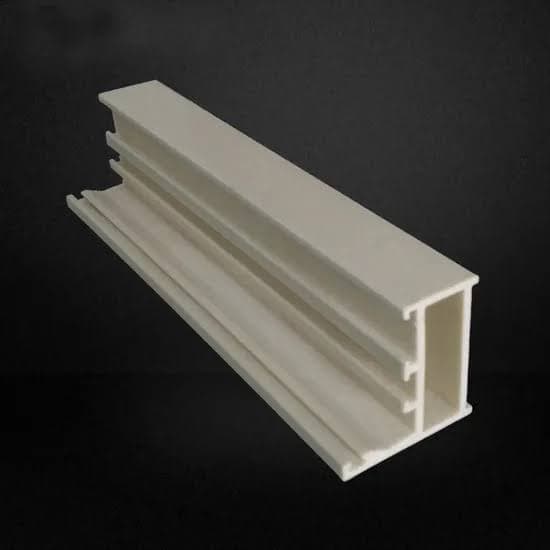
Custom FRP/GRP Profiles
Custom FRP/GRP profiles are an engineered way to produce bespoke composite sections for specific project and i
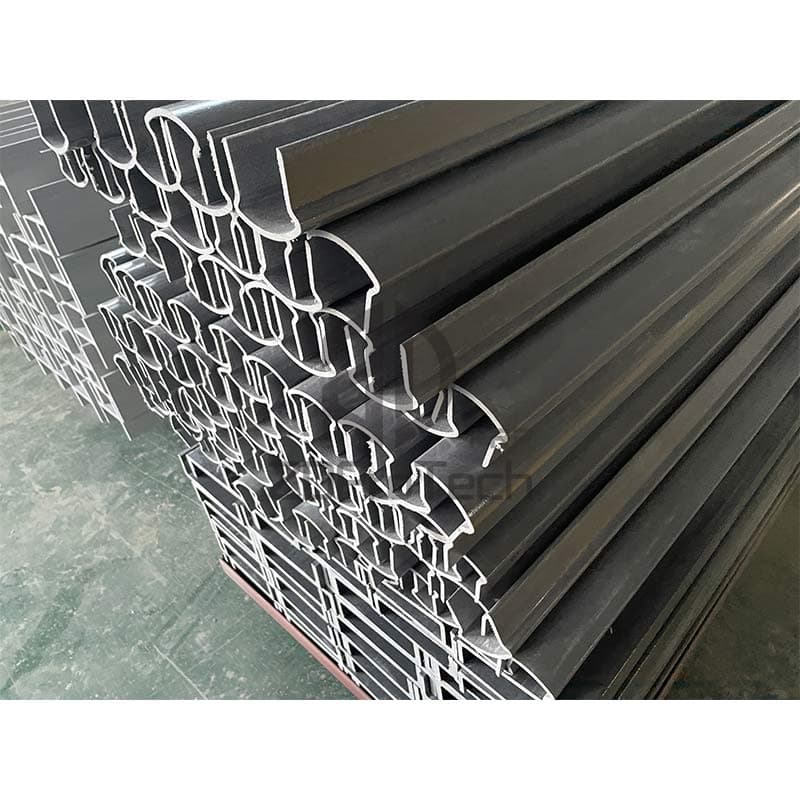
FRP/GRP Omega Profile (Ω Section)
The FRP/GRP omega profile is a specialist pultruded section with an Ω-shaped (hat) cross-section, made from gl
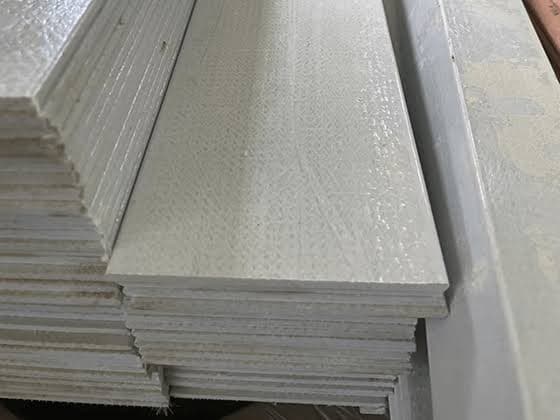
FRP/GRP Flat Bar (Strip)
The FRP/GRP flat bar is a widely used pultruded profile made from glass-fiber reinforcement and durable engine
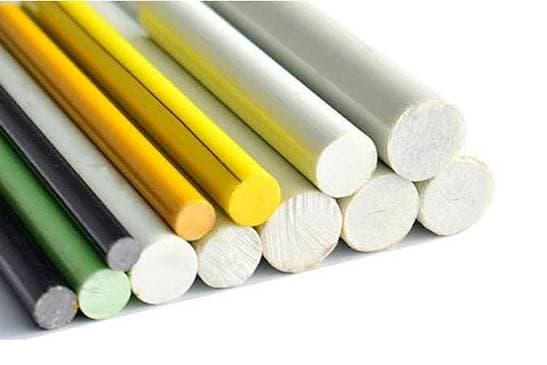
FRP/GRP Solid Rod
The FRP/GRP solid rod is a widely used pultruded profile made from glass-fiber reinforcement and durable engin
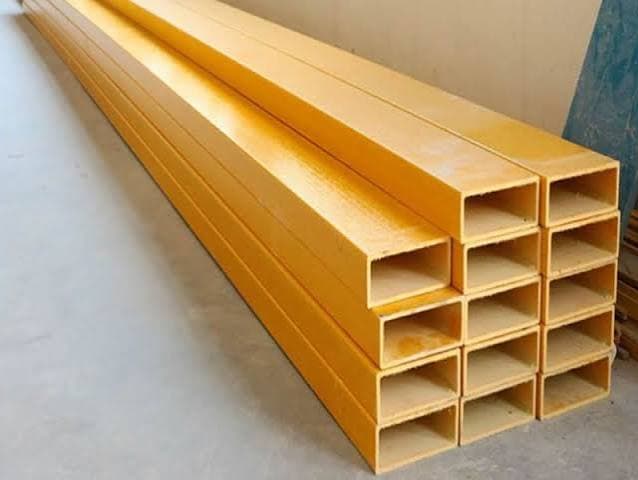
FRP/GRP Rectangular Tube (Rectangular Hollow Section)
The FRP/GRP rectangular tube is a strong pultruded structural profile made from glass-fiber reinforcement and
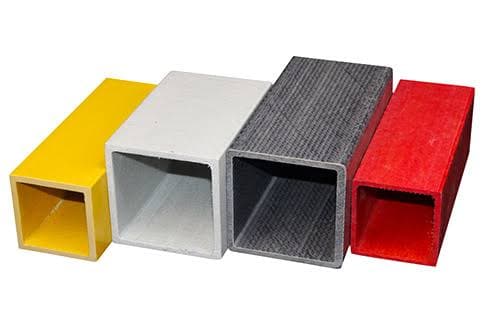
FRP/GRP Square Tube (Square Hollow Section)
The FRP/GRP square tube is a strong, widely used pultruded profile made from glass-fiber reinforcement and dur
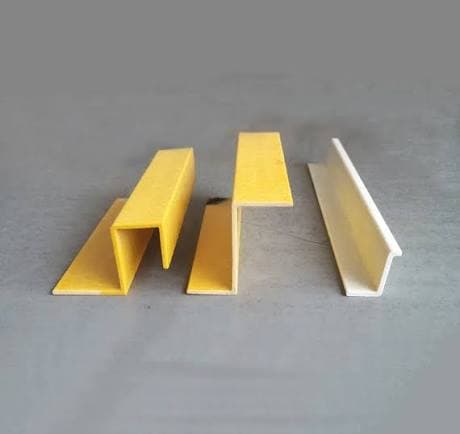
FRP/GRP Z-Profile
The FRP/GRP Z-profile is an engineered pultruded structural section made from glass-fiber reinforcement and du
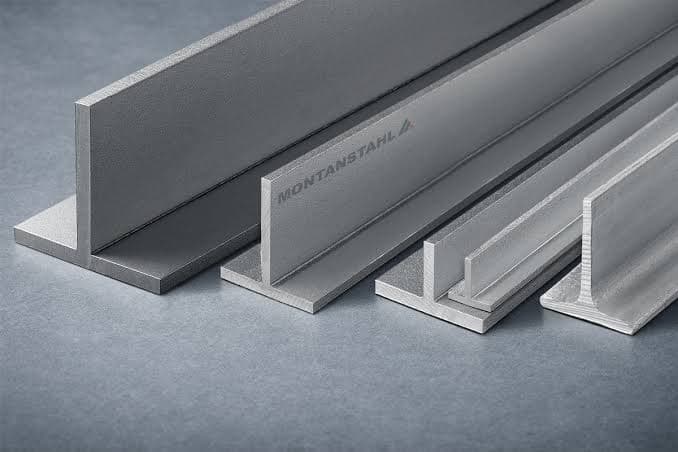
FRP/GRP T-Profile (Tee Section)
The FRP/GRP T-profile is an engineered pultruded structural section made from glass-fiber reinforcement and du
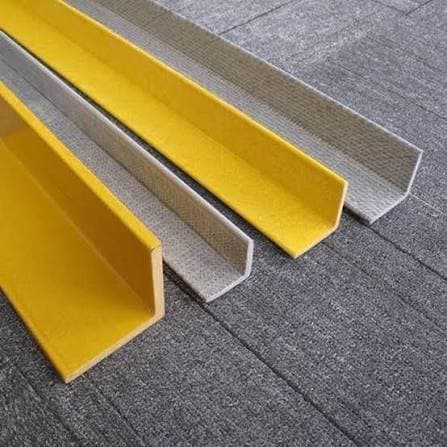
FRP/GRP Angle (L-Profile)
The FRP/GRP angle is one of the most widely used pultruded structural profiles, made from glass-fiber reinforc
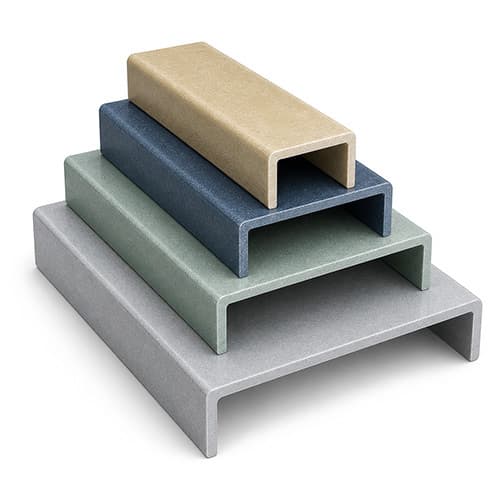
FRP/GRP C-Channel
The FRP/GRP C-channel is a widely used pultruded structural profile made from glass-fiber reinforcement and du
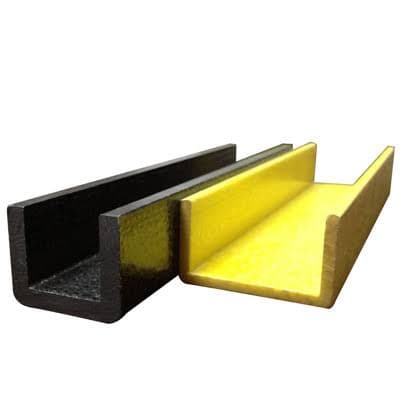
FRP/GRP U-Channel
The FRP/GRP U-channel is an engineered pultruded profile made from glass-fiber reinforcement and durable indus
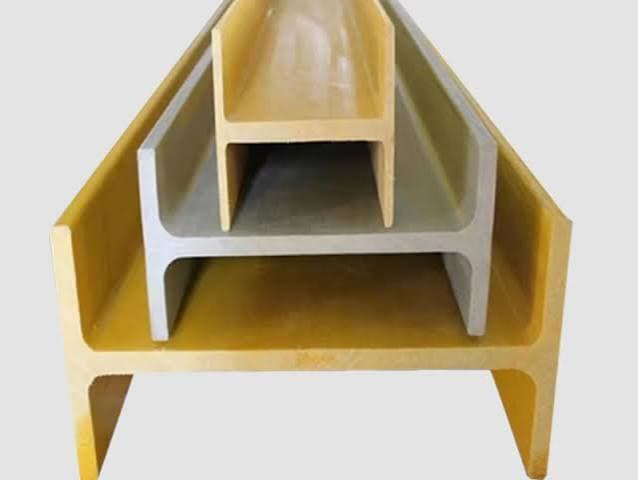
FRP/GRP H-Beam (Wide Flange)
The FRP/GRP H-beam (wide flange beam) is an advanced pultruded structural profile made from glass-fiber reinfo
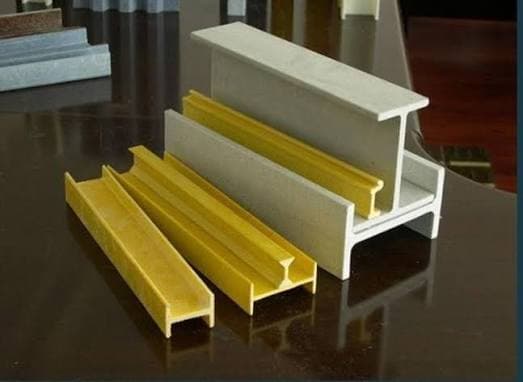
FRP/GRP I-Beam
The FRP/GRP I-beam is a widely used pultruded structural profile made from engineering resins and glass-fiber