
GFRP Rebar (FRP Composite Reinforcing Bar)
What is GFRP rebar?
FRP composite rebar (also called GFRP rebar, GRP rebar or fiberglass rebar) is a non-metallic reinforcing bar made from continuous E-glass fibers (at least 75% by weight) and epoxy resin by pultrusion. As a replacement for steel rebar in concrete, it solves the main problem of steel reinforcement at its root: corrosion inside the concrete, which cracks the concrete and shortens the life of the structure. GFRP rebar simply does not rust.
Nabak GFRP rebar types
Plain (smooth) rod
A smooth surface with no ribs, for non-structural uses or light reinforcement.
Ribbed (deformed) rebar
A helical rib on the surface improves bond with concrete; the functional equivalent of deformed steel rebar and the most widely used type in civil projects.
Important: unlike steel, GFRP rebar cannot be bent after manufacture. Any bends or angles needed (stirrups, L-bars) must be formed during production, to the structural drawings.
Advantages over steel rebar
- No corrosion or rust: steel rusts in wet or coastal concrete and cracks it; GFRP rebar does not corrode.
- High tensile strength for its weight: at about one-quarter the weight of equivalent steel, it gives higher tensile strength per kilogram.
- Electrically insulating and non-magnetic: does not conduct electricity or interfere with electromagnetic fields, vital for MRI room foundations or large electric motor halls.
- Light weight: transported and handled on site without heavy equipment.
- Chemical resistance: suitable for concrete in contact with acids, alkalis or salt water.
- Longer structural life: with no internal corrosion, there is no cracking from expanding rust.
Sizes and weights
| Nominal diameter (mm) | Approx. weight per meter (g) | Type |
|---|---|---|
| 8 | 95 | Plain / ribbed |
| 10–12 | 160–230 | Plain / ribbed |
| 14–16 | 300–420 | Plain / ribbed |
| 18–20 | 500–630 | Plain / ribbed |
| 22–24 | 750–900 | Plain / ribbed |
| 28–30 | 1,240–1,480 | Plain / ribbed |
GFRP rebar vs steel rebar
| Property | GFRP rebar | Steel rebar |
|---|---|---|
| Corrosion in wet/coastal concrete | Resistant, no rust | Prone to corrosion and concrete cracking |
| Relative weight | About ¼ of steel | Heavier |
| Electrical/magnetic | Insulating and non-magnetic | Conductive and magnetic |
| Bending after manufacture | No (specify at production) | Yes |
| Service life in corrosive environments | Long | Limited by corrosion |
Applications
- Seawalls and port infrastructure: resists salt water, where steel rebar corrodes quickly.
- Bridge decks: lower dead load and no corrosion risk from de-icing salts.
- Water and wastewater basins and dams: concrete in constant contact with moisture and chemicals.
- MRI room foundations and magnetically sensitive equipment: being non-magnetic, it does not affect imaging accuracy or equipment performance.
- Foundations and floors of large electric motor halls: no interference with equipment electromagnetic fields.
- Buildings in coastal areas: replacing steel rebar in facades and frames that need high durability.
FRP anchors and rock bolts
Alongside plain and ribbed rebar, Nabak supplies FRP anchors and FRP/GRP rock bolts for geotechnical and mining work. They are used to stabilize tunnel walls, cuttings and mines in wet or chemical environments, bringing the same key benefits, no corrosion and non-magnetic, to geotechnical applications.
How Nabak GFRP rebar is made
Nabak GFRP rebar is pultruded: continuous glass fibers and resin are pulled through a steel die with a constant round section and cured at a controlled temperature. For ribbed bars, the helical rib is formed in the same step to ensure bond with concrete.
Choosing the right rebar
- Application: ribbed for mechanical bond with concrete, plain for light reinforcement.
- Diameter: chosen from structural calculations and design loads to code.
- Lengths and bends: because bars cannot be bent later, lengths and any bends or stirrups must be specified exactly before ordering.
- Environment: in coastal or chemical environments, the resin is chosen for the chemical resistance required.
If you are unsure, send your structural drawings to Nabak’s engineers and we will propose exact rebar specifications.
Standards and quality control
Nabak GFRP rebar is produced with reference to EN 13706 for pultruded products, and structural design requirements follow ACI 440 (American Concrete Institute), the leading international reference for FRP reinforcement. Before shipping, every batch is checked for diameter, rib depth and fiber-to-resin bond. See our GFRP rod technical specifications.
Mechanical properties and structural behavior
GFRP rebar has a higher tensile strength-to-weight ratio than steel, but it does not behave like steel: a lower modulus of elasticity and linear-elastic behavior up to rupture (with no gradual yielding) are key differences that must be considered in design. Structural calculations must therefore not simply swap steel diameters; they must be redone using the factors and equations of ACI 440.
Chemical resistance in the alkaline concrete environment
The epoxy resin in EPOROD GFRP rebar supplied by Nabak, combined with a glass fiber content of at least 75% by weight, is chosen to resist the alkaline environment inside concrete, which can weaken some glass fibers over the long term. This choice of materials is the main difference between structural-grade GFRP rebar and general fiberglass products, and directly affects service life in permanently wet concrete.
Why Nabak GFRP rebar?
Nabak supplies EPOROD plain and ribbed rebar in a full range of diameters. Because bars cannot be bent after production, our engineers coordinate diameter, lengths and bends with the client and contractor from the start, based on the structural drawings, so delivered rebar matches site needs exactly. After delivery, our technical team answers any site questions.
Frequently asked questions
- Can GFRP rebar be bent on site? No; unlike steel, it cannot be bent after production, so bends are formed at the factory.
- How long does GFRP rebar last? In wet or coastal concrete, far longer than steel, because it does not corrode or crack the concrete.
- Is it as strong as steel? Its tensile strength per unit weight is higher, but its mechanical behavior (such as modulus of elasticity) differs, so design must follow ACI 440.
- Can it be used near magnetically sensitive equipment? Yes; being non-magnetic, it suits MRI foundations and large electric motor halls.
- Ribbed or plain? Ribbed for concrete structures needing high bond; plain for light reinforcement.
Packing, price and ordering
Bars are bundled and wrapped to protect the ribs in handling. Being much lighter than steel, freight costs are noticeably lower. GFRP rebar is sold by the meter; price depends on diameter, type, length and quantity.
- Send your structural drawings with diameters, lengths and bends.
- Choose the type (plain or ribbed), with free technical advice to ACI 440 if needed.
- Request a quotation and lead time.
- Confirm the order; bars are produced to drawing, with bends formed in production.
- Shipping and delivery to your site.
Contact us through the contact form.
Summary
For any concrete structure exposed to moisture, salt water or chemicals, or needing non-magnetic reinforcement, GFRP rebar is a more reliable choice than steel: lighter, corrosion-free and longer-lasting. Nabak supplies EPOROD plain and ribbed rebar in a full range of diameters, with free technical advice based on your drawings and ACI 440.
Products in this category
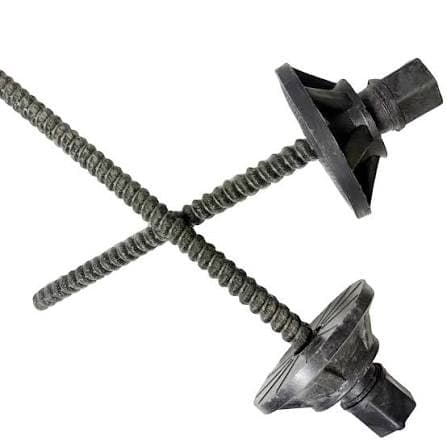
FRP/GRP Anchor
The FRP/GRP anchor is an engineered system for anchoring, stabilizing and reinforcing concrete, rock and soil
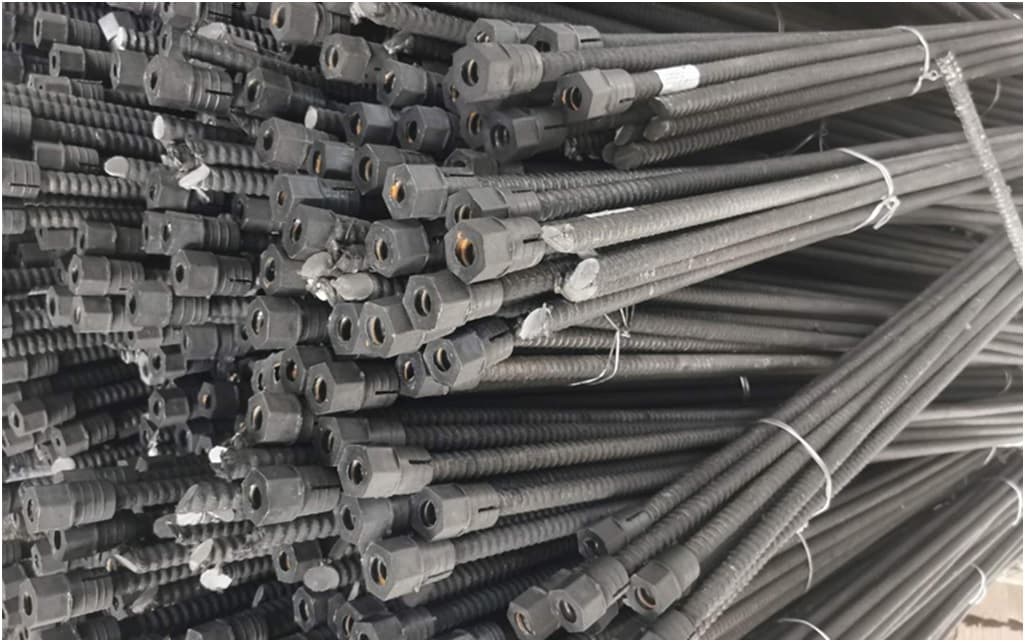
FRP/GRP Rock Bolt
The FRP/GRP rock bolt is an engineered system for stabilizing and reinforcing rock masses in mining, tunneling
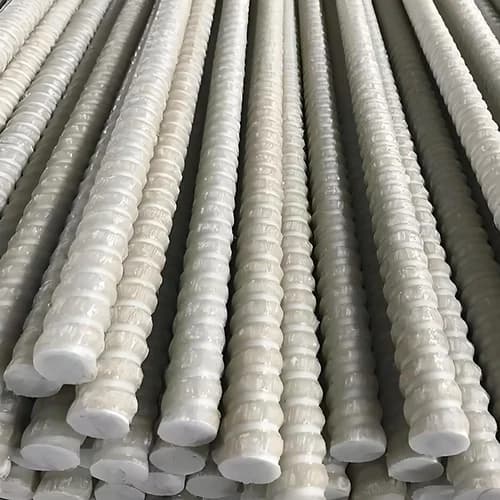
GFRP Ribbed Rebar (FRP/GRP Deformed Bar)
FRP/GRP ribbed rebar is an advanced composite reinforcing bar designed to improve the durability and performan
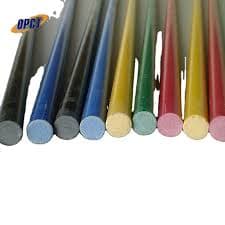
GFRP Plain Rebar (FRP/GRP Smooth Bar)
FRP/GRP plain rebar is an advanced composite reinforcing bar for structures that need high corrosion resistanc