
FRP/GRP Cable Tray (Corrosion-Resistant)
What is an FRP/GRP cable tray?
An FRP/GRP cable tray (fiberglass cable tray) is a lightweight, pultruded open trough used to carry, route and protect power and telecom cables along long industrial runs. It is made from continuous glass fibers and polyester or vinyl ester resin and, unlike metal or galvanized cable trays, it does not corrode or degrade under moisture, acidic or alkaline vapors or UV exposure. A composite cable tray is also electrically non-conductive: if a cable’s insulation is damaged, current is not transferred to the tray body, an advantage metal trays cannot offer.
Advantages over steel, galvanized and PVC cable trays
- Corrosion resistance: no rust in humid, coastal or chemical environments. With galvanized trays, corrosion starts at the first scratch.
- Light weight: about one-quarter the weight of an equivalent metal tray; installed and handled without cranes or heavy equipment.
- Electrical insulation: does not conduct electricity, removing the shock hazard if a cable is damaged.
- Smooth edges: no sharp burrs to damage cable insulation, unlike galvanized trays.
- High strength-to-weight ratio: tensile strength per kilogram is higher than galvanized steel.
- Stronger than PVC: glass-fiber reinforcement gives far better mechanical strength and long-term durability than unreinforced PVC trays.
- Maintenance-free: no repainting or re-galvanizing over the life of the project.
Nabak FRP cable tray types
Solid-bottom cable tray
A closed, unperforated base for runs where cables need full protection from dust, splashing water or foreign objects.
Perforated cable tray
Regular perforations in the base allow air circulation and keep cables cool; better suited to runs with several heat-generating power cables.
Cable tray cover
A top cover that gives extra protection from direct sunlight, rain and falling objects; fixed to the tray with clips or plastic cable ties.
FRP cable tray sizes and weights
| Width (mm) | Height (mm) | Thickness (mm) | Approx. weight per meter (kg) |
|---|---|---|---|
| 50 | 50 | 3 | 0.85 |
| 100 | 50 | 3–4 | 1.25–2.05 |
| 150 | 50–100 | 4 | 1.85–2.55 |
| 200 | 50–100 | 4 | 2.30–3.35 |
| 300 | 50–150 | 4–4.5 | 3.05–4.45 |
| 400–900 | 100–150 | 4.5–6 | 5.00–11.15 |
These are the most common production sizes; special widths and custom cutting to the project drawing are also available.
FRP cable tray vs other materials
| Property | FRP/GRP | Galvanized steel | PVC | Stainless steel |
|---|---|---|---|---|
| Corrosion resistance | Excellent | Poor once scratched | Good | Excellent |
| Relative weight | Light (¼ of metal) | Heavy | Light | Heavy |
| Electrical insulation | Yes | No | Yes | No |
| Mechanical strength | High | High | Low | High |
| Maintenance cost | None | Periodic painting/galvanizing | None | Low |
| Initial cost | Medium | Low to medium | Low | High |
Applications
- Oil, gas and petrochemical: power and instrumentation cable routes in corrosive vapors and spark-hazard areas.
- Water and wastewater treatment: cabling in constant contact with moisture and disinfectants.
- Marine and coastal: resists humidity and salt water, where galvanized trays corrode quickly.
- Power plants: long cable runs that need electrical insulation and heat resistance.
- Mining: resists abrasion, moisture and mineral chemicals.
How FRP cable trays are made
Nabak cable trays are made by pultrusion: continuous glass fibers and resin are pulled through a steel die with a constant U-shaped section and cured at a controlled temperature. This gives a uniform section with consistent strength along the whole length of the tray.
Choosing the right cable tray
- Number and diameter of cables: choose width and height to suit the cable fill.
- Cooling needs: for high-heat power cables, a perforated tray is the better choice.
- Installation environment: outdoors or in direct sunlight, a cover is recommended.
- Route length: define the total run and the fittings needed (bends, tees).
Standards and quality control
Nabak cable trays are produced with reference to EN 13706 (specifications for pultruded fiber-reinforced profiles) and NEMA FG 1 (load and fitting requirements for fiberglass cable tray systems). Before shipping, every batch is inspected for dimensions, surface finish and fiber-to-resin bond.
Where several runs are installed in parallel, tier spacing is set by the cable fill ratio and access needed for future maintenance; Nabak’s technical team can advise on spacing and on the right support brackets for your structure.
Cable tray fittings and accessories
Alongside the tray itself, a full set of matching composite fittings is produced, including elbows, tees, reducers and couplers, so the entire cable route has the same chemical and electrical resistance. Using metal fittings with a composite tray defeats the benefit of an insulated route. See our FRP cable tray fittings.
Cable tray cover sizes
| Cover width (mm) | Thickness (mm) | Approx. weight per meter (kg) |
|---|---|---|
| 50–100 | 3 | 0.50–0.75 |
| 150–200 | 3 | 1.10–1.25 |
| 300–450 | 3.5–4 | 2.00–3.75 |
| 600–900 | 4–5 | 6.85–11.25 |
Covers are fixed with clips or plastic cable ties and are ordered separately from the tray.
Installation
Installing Nabak cable trays is straightforward: they are bolted or clamped to pre-installed brackets or supports, with no welding or hot work on site. Tray sections are joined with splice plates and stainless or FRP bolts, keeping the run continuous with no gaps or raised edges.
Hygiene and safety
The smooth, non-porous surface resists algae and bacteria, so FRP cable trays also suit hygienic and food-processing areas. Low thermal conductivity means the tray does not get as hot as a metal tray in direct sun, which helps preserve cable insulation. And because composite trays have no scrap value, the risk of theft is far lower than with metal trays.
Standard length, custom cutting and color
Nabak cable trays are produced in a standard 3 m length and can be cut to any length to suit the cable route drawing. For bends and changes of direction, matching elbows and tees are used, so no angled cutting is needed on site, which speeds up installation and keeps the route accurate.
The standard color is grey; other colors can be produced by pigmenting the resin. Because the color runs through the material rather than being a surface coat, it does not fade or flake with age or abrasion, unlike painted metal trays.
Samples, technical support and delivery
For large cable runs, a physical sample can be sent before the order is finalized so you can check surface finish, color and dimensional accuracy. Before ordering, our engineers recommend tray width, height and type based on your cable fill and site conditions, and after delivery our technical team is available for any installation or connection questions.
Trays are bundled and wrapped in protective film to prevent edge damage. Because they are much lighter than equivalent metal trays, freight costs for the same length are noticeably lower.
Frequently asked questions
- How long do FRP cable trays last? In corrosive environments, far longer than metal or galvanized trays, because they do not corrode.
- Do FRP cable trays need earthing (grounding)? No. Because they are non-conductive, they do not need bonding to earth for electrical safety, unlike metal trays.
- Solid-bottom or perforated? It depends on cooling needs: perforated for high-heat cables, solid-bottom for full protection.
- Can FRP cable trays be cut on site? Yes, with an ordinary disc cutter and no special equipment.
- Is the cover optional? Yes; it is ordered separately depending on the need for sun and rain protection.
Price and how to order
The price of an FRP cable tray depends on width, height, thickness, type (solid or perforated), cover and order quantity.
- Define the cable fill and route length for your project.
- Choose width, height, type and cover, with free technical advice if needed.
- Request a quotation and lead time from our sales team.
- Confirm the order; trays are produced or cut to your drawing.
- Shipping and delivery to your site.
For an up-to-date price list, contact us through the contact form or see our technical documents.
Summary
For any project facing moisture, chemicals, coastal conditions or a need for electrical insulation, an FRP/GRP cable tray is a more logical choice than metal or galvanized trays: lighter, corrosion-proof, insulating and lower-cost over the project life. Nabak Composite produces both solid-bottom and perforated trays with matching covers in a full range of widths and heights.
For the complete technical specifications, dimensions and engineering tables of the products in this category, see FRP/GFRP Composite Cable Tray — Technical Datasheet.
Related technical datasheets
Products in this category
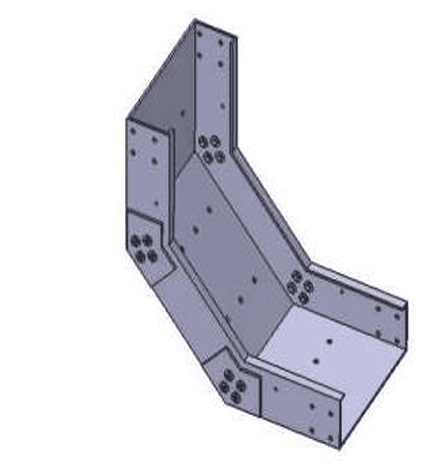
FRP/GRP Cable Tray 90° Vertical Inside Bend
The FRP/GRP 90° vertical inside bend is an important composite cable tray fitting for turning a cable run 90°
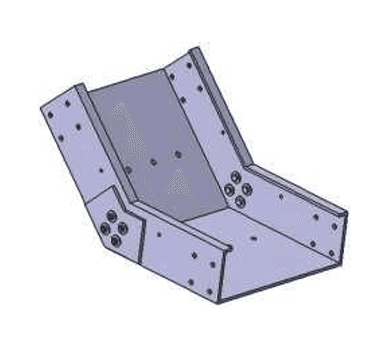
FRP/GRP Cable Tray 45° Vertical Inside Bend
The FRP/GRP 45° vertical inside bend is a specialist cable tray fitting for turning a cable run 45° inward in
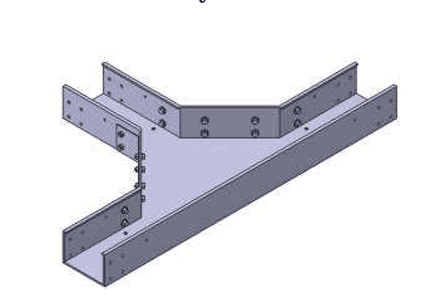
FRP/GRP Cable Tray Horizontal Tee
The FRP/GRP horizontal tee is a key cable tray fitting for creating a three-way branch and splitting a cable r
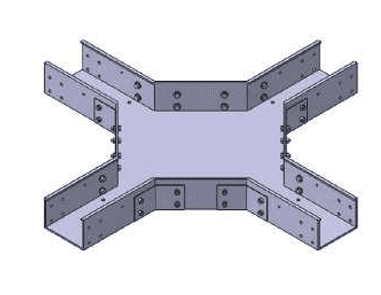
FRP/GRP Cable Tray Horizontal Cross
The FRP/GRP horizontal cross is a four-way cable tray fitting that joins four cable tray runs at a single poin
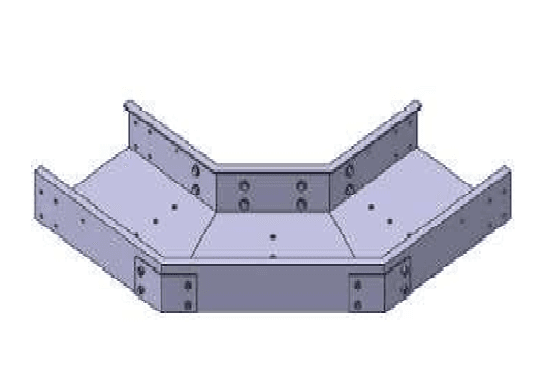
FRP/GRP Cable Tray 90° Horizontal Bend
The FRP/GRP 90° horizontal bend is a composite cable tray fitting for turning cable runs through 90° in the ho
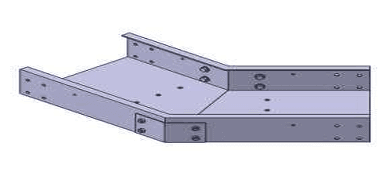
FRP/GRP Cable Tray 45° Horizontal Bend
The FRP/GRP 45° horizontal bend is a cable tray fitting used to change the direction of a cable run by 45° in
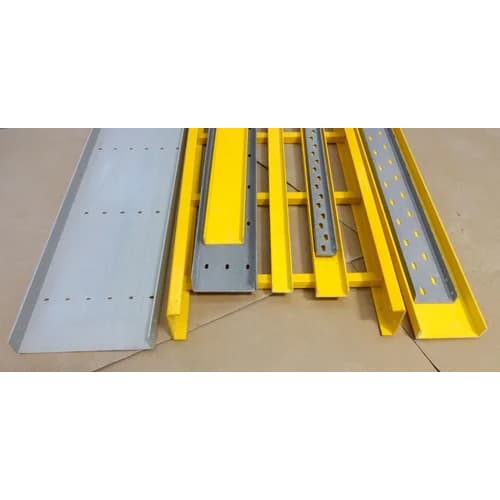
FRP/GRP Straight Cable Tray (Channel Type)
The straight FRP/GRP cable tray is an engineered channel-type system for routing and supporting power, control
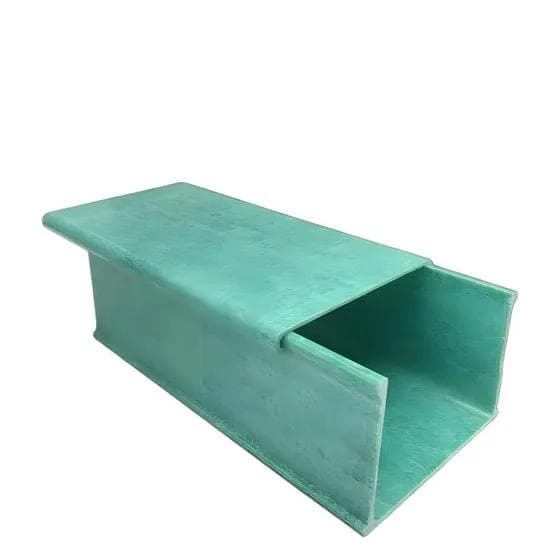
FRP/GRP Box Cable Tray
The FRP/GRP box cable tray is an engineered system for routing, supporting and protecting power, control and i
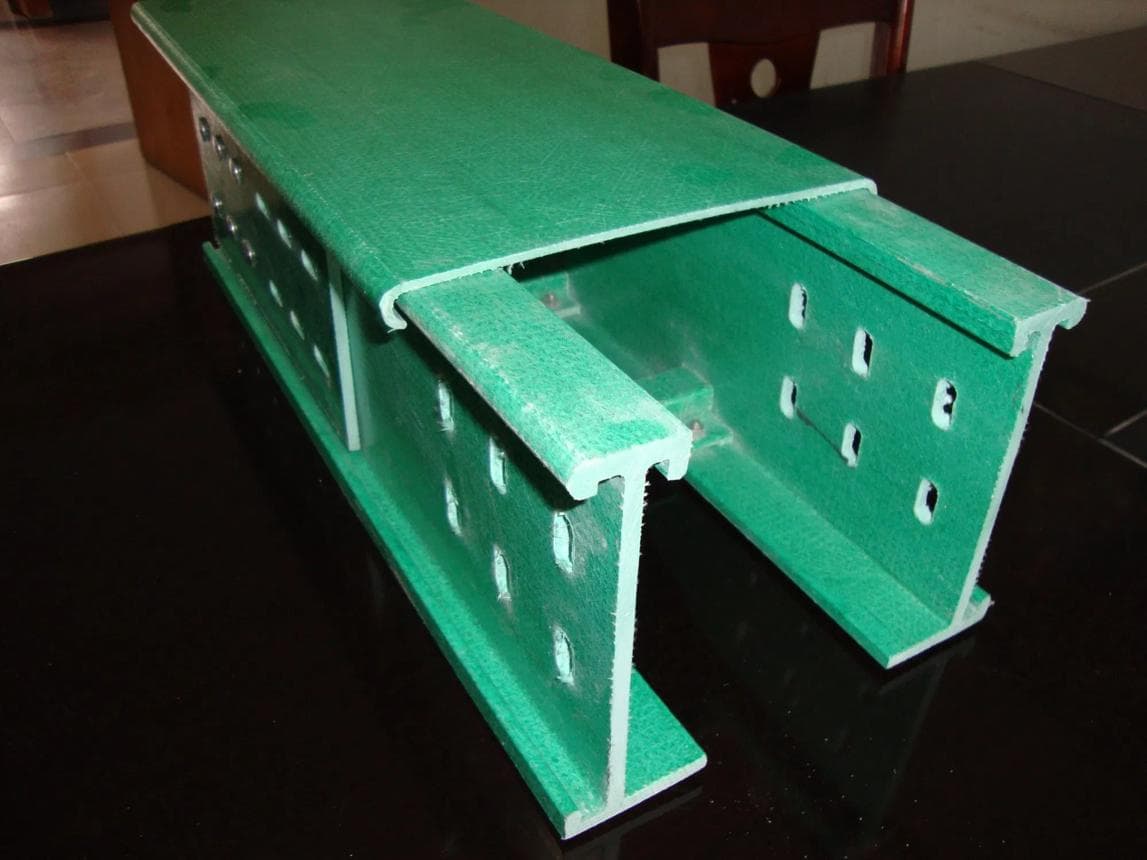
FRP/GRP Perforated Cable Tray
The perforated FRP/GRP cable tray is a widely used cable management system made from glass-fiber reinforcement
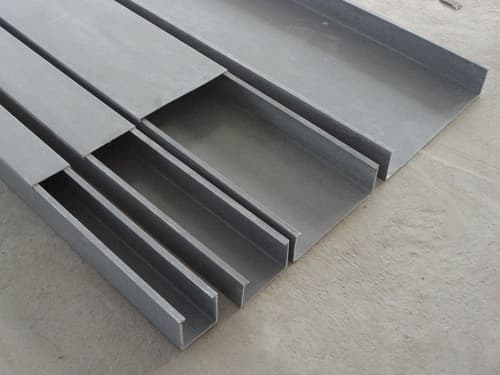
FRP/GRP Solid-Bottom Cable Tray
The solid-bottom FRP/GRP cable tray is one of the most widely used cable management systems, made from glass-f