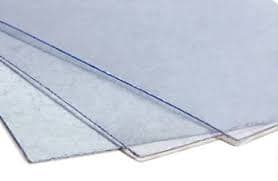
FRP/GRP Fiberglass Sheets
What are FRP/GRP fiberglass sheets?
FRP/GRP sheets (also called fiberglass sheets, GFRP sheets or fiberglass roofing panels) are made from several layers of glass fiber and polyester or vinyl ester resin by hand lay-up. They replace galvanized corrugated steel, metal sheet and polycarbonate for roofing, wall cladding and skylights on industrial and agricultural buildings and, unlike metal, they do not corrode or cloud under moisture, chemicals or UV.
Nabak sheet range
Flat sheet
A smooth, unprofiled surface for wall cladding, industrial partitions and other uses that need an even surface.
Colored corrugated roof sheet
A corrugated (sinusoidal) profile matching common galvanized roof sheets, for roofing warehouses, sheds and industrial buildings, in a range of UV-resistant colors.
Translucent corrugated roof sheet (skylight)
Lets natural light into the building, reducing the need for artificial lighting during the day; for warehouse, greenhouse and storage roofs.
Flat translucent skylight sheet
A flat section with high light transmission for roof or wall daylighting where a corrugated surface is not needed.
Chemical-resistant sheet
Made with a special acid- and alkali-resistant resin for cooling tower casings, chemical plant halls and areas with corrosive vapors.
Checker plate sheet
A raised checker pattern increases grip; for industrial flooring with foot traffic.
Anti-slip sheet
A gritted surface increases the coefficient of friction; for walkways, ramps and floors in wet or oily areas.
Advantages over galvanized steel and polycarbonate
- Corrosion resistance: no rust in humid or chemical environments, whereas galvanized sheet starts corroding at the first scratch.
- Light weight: about one-quarter the weight of equivalent metal sheet; faster installation and less load on the supporting structure.
- Better UV stability than polycarbonate: polycarbonate yellows and becomes brittle over time; FRP sheet keeps its mechanical properties.
- Self-extinguishing: with the right resin, the sheet self-extinguishes when removed from flame.
- Electrically insulating: suitable near electrical equipment.
- Hygienic: the smooth surface resists algae and bacteria.
- Theft-resistant: no scrap metal value.
Glass weight, thickness and sheet weight
| Glass weight (g/m²) | Approx. thickness (mm) | Finished sheet weight (g/m²) |
|---|---|---|
| 300 | 0.5–0.6 | ~825 |
| 450 | 0.8–1.0 | ~1,238 |
| 600 | 1.0–1.2 | ~1,650 |
| 900 | 1.5–1.7 | ~2,470 |
| 1200 | 2.0–2.3 | ~3,300 |
| 1800 | 3.2–3.6 | ~4,920 |
Higher glass weight increases both strength and price; the right weight depends on roof purlin spacing and local snow and wind loads.
- 300 g/m²: one layer of 300 g glass with about 525 g of resin per m²; for light roofing with low snow and wind loads.
- 450 g/m²: one layer of 450 g glass with about 788 g of resin.
- 600 g/m²: two layers of 300 g glass with about 1,050 g of resin; one of the most popular weights for industrial building roofs.
- 900 and 1200 g/m²: two layers of 450 g, or 450 g plus 300 g layers, for wider spans or higher snow and wind loads.
FRP sheet vs galvanized steel vs polycarbonate
| Property | FRP/GRP sheet | Galvanized steel | Polycarbonate |
|---|---|---|---|
| Corrosion resistance | Excellent | Poor once scratched | Excellent (non-metallic) |
| Long-term UV resistance | High | Needs protective paint | Yellows and degrades over time |
| Relative weight | Light | Heavy | Light |
| Electrical insulation | Yes | No | Yes |
| Fire behavior | Self-extinguishing (resin-dependent) | Non-combustible | Combustible |
Corrugated profiles
Nabak corrugated sheets come in two common profiles: a medium pitch matching standard galvanized roof sheets, for use on existing structures, and a large pitch for wider spans that need more stiffness. Custom profiles can be produced to the client’s drawing.
Applications
- Warehouse and industrial roofing: light, corrosion-proof and, in translucent versions, a source of natural light.
- Greenhouses: light transmission for plant growth with resistance to greenhouse humidity.
- Cooling tower casings: chemical-resistant sheet in constant contact with water vapor and anti-algae chemicals.
- Industrial wall cladding and facades: colored or patterned sheets with low maintenance.
- Canopies and car parks: light cover with controlled light transmission.
- Industrial flooring: checker plate and anti-slip sheets for walkways in wet or oily areas.
- Electrical rooms: electrical insulation reduces the risk of shock.
- Food and pharmaceutical plants: a non-porous surface that withstands frequent washing with disinfectants, for wall linings and interior partitions.
How Nabak sheets are made
Nabak sheets are produced by hand lay-up: gelcoat is applied to the mold, then glass layers wetted out with resin are built up to the target glass weight and thickness. Quality depends on workmanship, the correct glass-to-resin ratio and control of air bubbles and porosity during lay-up. This is the main difference between a quality sheet and cheap sheets with low glass content and extra filler such as calcium carbonate. A UV-resistant gelcoat on the outer surface extends service life under direct sunlight.
Why some cheap sheets fail early
A fiberglass sheet looks simple, so many buyers choose on price alone. But real quality depends on details you cannot see on delivery day: the glass-to-resin ratio, even thickness, control of bubbles and porosity, and gelcoat quality. To cut costs, some producers reduce glass content and add cheap heavy fillers. These sheets look the same on day one, but after a few months of UV and temperature cycling they delaminate, become brittle and discolor, and their service life drops sharply. The cost of replacement and downtime is usually several times the original saving. That is why Nabak keeps standard glass weights in every grade and uses UV-resistant gelcoat.
The role of gelcoat and topcoat
Gelcoat is a thin layer of pure resin (no fibers) on the outermost surface, exposed directly to sun, rain and pollution. With UV stabilizers, it protects the resin beneath from photo-degradation, stops fibers from showing through and gives a smooth, glossy surface that is easier to clean. A topcoat on the inner face gives the inside of the building chemical resistance and an even finish. Missing or thin gelcoat is one of the main reasons cheap sheets deteriorate faster.
Resin types
- Orthophthalic polyester: the most economical option for general roofing and cladding in non-corrosive environments.
- Isophthalic polyester: better chemical and moisture resistance, for mildly corrosive environments.
- Vinyl ester: the highest resistance to acids, alkalis and high temperatures, used in Nabak chemical-resistant sheets for cooling towers and gas scrubbing units.
Resin choice should be based on the exact chemical and operating temperature; our engineers recommend the resin for your site conditions.
Translucent FRP sheet vs polycarbonate for roofing
Both are used to daylight warehouse, greenhouse and storage roofs, but they age differently. Under long UV exposure, polycarbonate gradually yellows, becomes brittle and loses its original impact strength unless an expensive UV protective layer is applied. Translucent FRP sheet with UV-resistant gelcoat does not suffer this loss, making it the safer choice for roofs expected to last many years without replacement.
| Sheet type | Light transmission | Typical use |
|---|---|---|
| Translucent corrugated sheet | High | Warehouse roofs alongside colored corrugated sheets |
| Flat translucent skylight sheet | High | Flat roof or wall skylights |
| Colored (opaque) sheet | None | Full cover with no daylight |
Combining colored and translucent sheets on one roof is a common way to provide enough daylight without artificial lighting during the day.
Colors and custom finishes
As well as standard colors, custom shades can be produced with UV-resistant pigment paste, and surface patterns such as wood grain can be added to cladding sheets. Because color is in the material and gelcoat rather than a surface coat, it does not fade or flake.
How to recognize a quality FRP sheet
- Actual weight: weight per m² should match the stated glass weight; a lower weight indicates less glass or added filler.
- Even thickness: thickness should be the same across the sheet.
- Gelcoat surface: smooth, with no bubbles, hairline cracks or cloudy patches.
- Even translucency: irregular cloudiness indicates poor resin distribution.
- Clear specification: the seller should state exact glass weight and resin type, not just approximate thickness.
Compare offers on glass weight, resin type and manufacturer’s guarantee, not on final price alone. For large orders, inspect or test a physical sample first.
Sizes, tolerances and custom cutting
Nabak sheets are produced in standard market sizes and fully custom to the structural drawing. Dimensional tolerances on length, width and thickness are controlled during lay-up so sheets line up with fixings and pre-installed supports. For non-standard spans or profiles, send exact dimensions with your enquiry.
Installation and cutting
Sheets are cut and drilled with an ordinary disc cutter or hand saw. They are fixed to purlins with screws and washers designed for FRP sheet to prevent leaks at fixings; screw spacing and side and end laps must follow the installation guide to keep the roof watertight.
Quality control and lifetime cost
Every batch is inspected for glass weight, thickness uniformity, gelcoat quality and absence of bubbles or porosity, and any non-conforming sheet is removed before packing. Inspection results are recorded for traceability on large projects. Installed cost is usually comparable to galvanized steel sheet, but total cost of ownership, with no replacement, repainting or re-galvanizing, favors FRP sheet, especially on long-life industrial projects. The long service life also means less construction waste, and the low weight cuts transport energy.
Frequently asked questions
- How long do FRP sheets last? With standard glass weight and UV-resistant gelcoat, far longer than galvanized steel or polycarbonate.
- How do FRP sheets behave in fire? Depending on resin, they are self-extinguishing; for fire-sensitive projects, specify this resin from the start.
- Why do some cheap sheets fail early? Usually reduced glass content and added fillers, leading to delamination, brittleness or discoloration within months.
- Rolls or sheets? Depending on type and thickness, sheets are supplied in rolls or flat sheets.
- Can I choose color and pattern? Yes; custom colors and patterns are produced on request.
- Orthophthalic or isophthalic? Isophthalic has better chemical and moisture resistance and suits mildly corrosive environments better.
Packing, price and ordering
Thinner, flexible grades are supplied in rolls and thicker grades as flat sheets, with surface protection against scratches. Price depends on type, glass weight, thickness, color and area; sheets are sold by the square meter or by the full sheet.
- Define the application (roofing, cladding, flooring, cooling tower) and whether daylight or chemical resistance is needed.
- Choose glass weight, thickness and color, with free technical advice based on local snow and wind loads.
- Request a quotation and lead time.
- Confirm the order; sheets are produced or cut to size.
- Delivery in rolls or sheets.
For an up-to-date price list, contact us through the contact form or read our fiberglass sheet specifications.
Summary
For any building facing moisture, chemicals, corrosive conditions or a need for natural light, FRP/GRP sheet is a more reliable choice than galvanized steel or polycarbonate: lighter, corrosion-proof, more UV-stable and lower-cost over the project life. Nabak produces seven main types (flat, colored corrugated, translucent corrugated, flat translucent, chemical-resistant, checker plate and anti-slip) in a range of glass weights, keeping standard glass content in every product.
For the complete technical specifications, dimensions and engineering tables of the products in this category, see Covered Composite Grating (Checker Plate) — Technical Datasheet and FRP Composite Flooring (GFRP Decking) — Technical Datasheet.