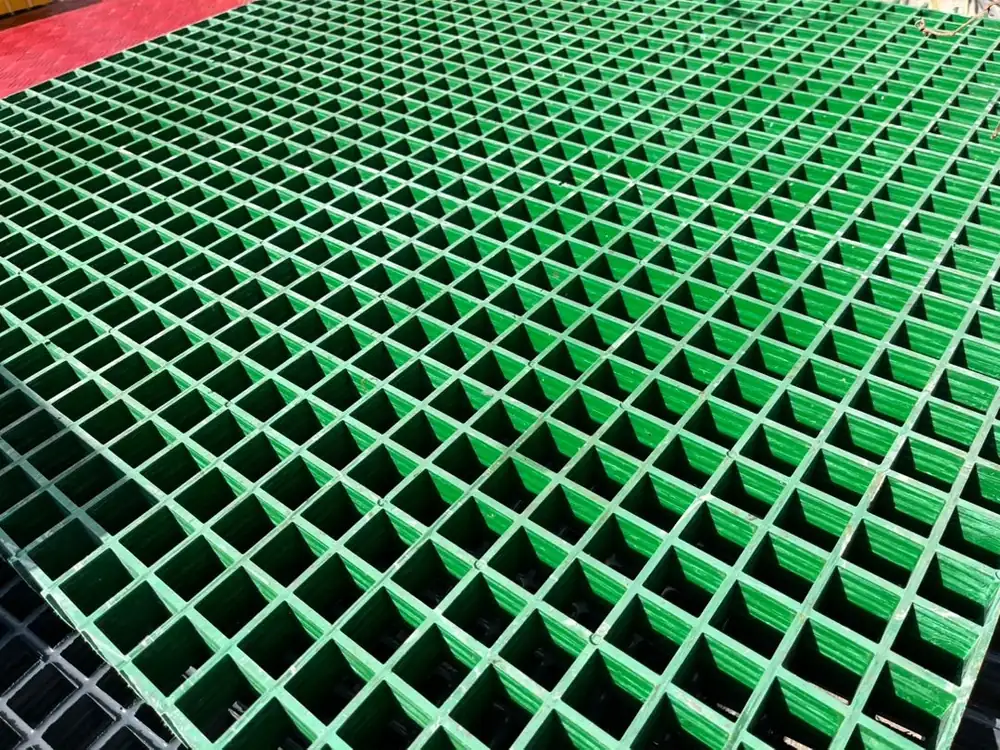
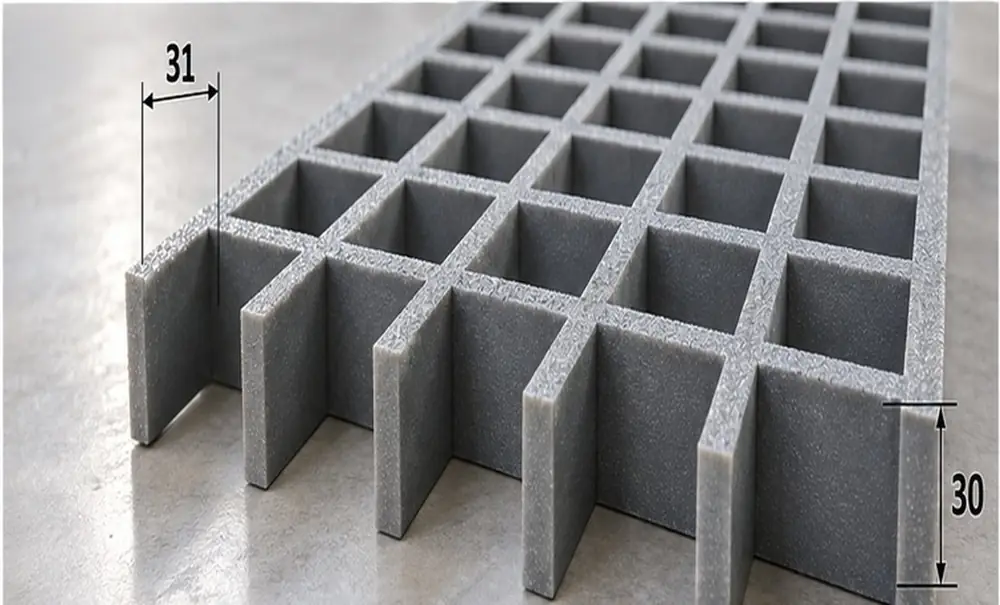
What is fiberglass sheet, or plastic roofing sheet?
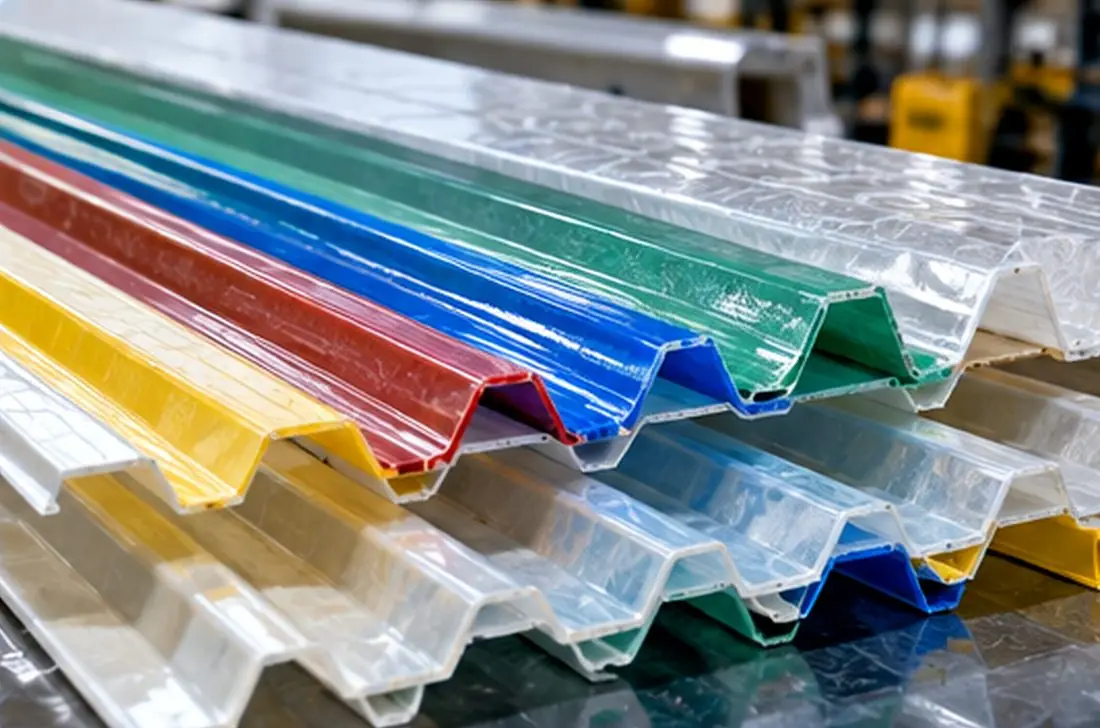
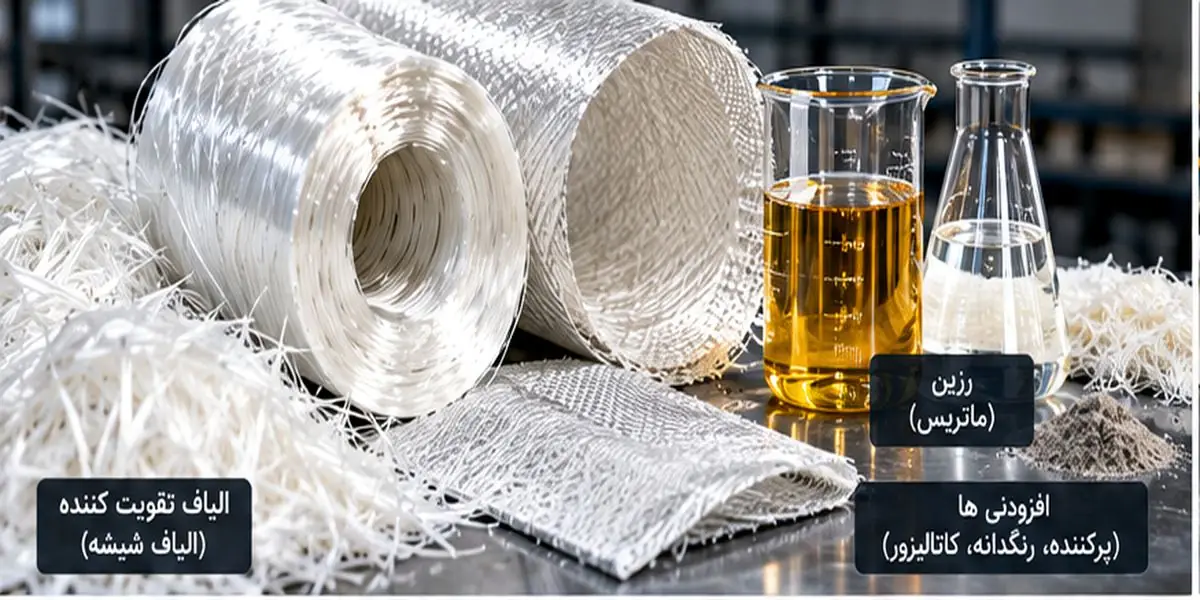
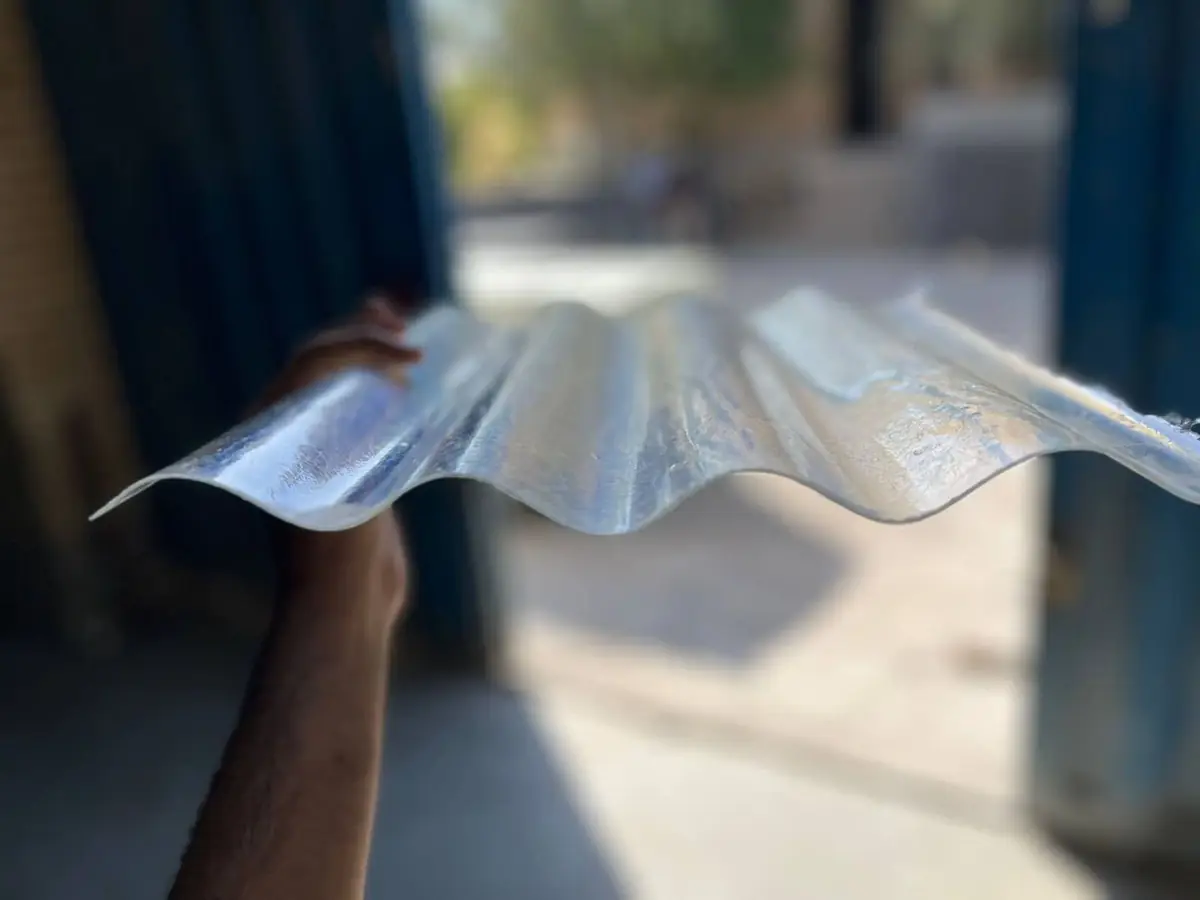
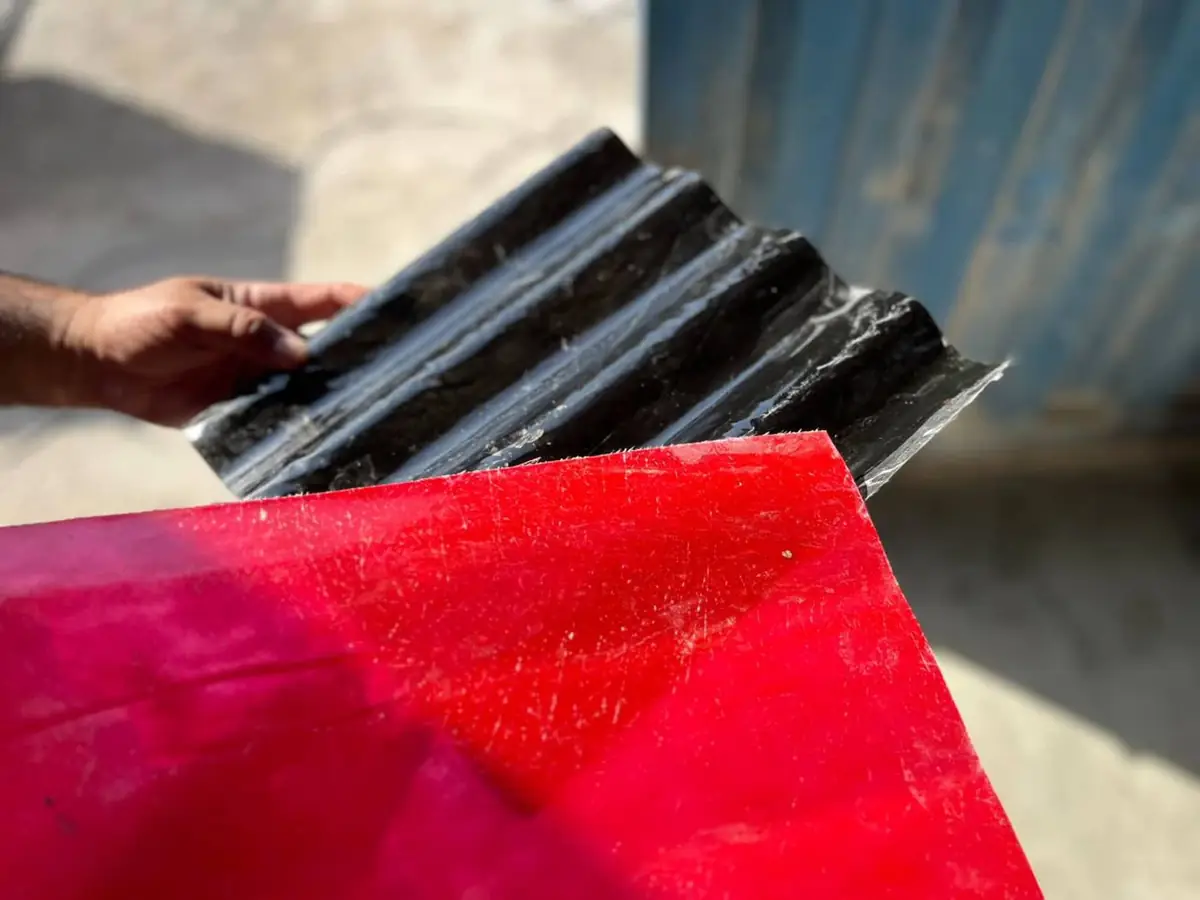
Fiberglass sheet, also known in the Iranian market as plastic roofing sheet and fiberglass corrugated sheet, is a composite sheet of glass fiber and unsaturated polyester resin used for roof and wall cladding, skylights and light industrial coverings. The properties of fiberglass sheet depend on its raw materials — the type and content of fiber and the type of resin and additives — and give a unique combination of light weight, strength, light transmission, and resistance to corrosion and impact.
Nabak fiberglass sheets are made by hand lay-up: a gel coat layer or protective film is first applied to the mold, then glass fiber mat is laid, wetted with polyester resin and de-aired with a roller; after cure, the sheet is released from the mold and cut to size. The intrinsic properties given in this article do not depend on the dimensions, thickness or cross-section shape of the sheet, so they apply to flat, corrugated and trapezoidal fiberglass sheet of any thickness.
Summary of Nabak fiberglass sheet properties
Types of fiberglass sheet
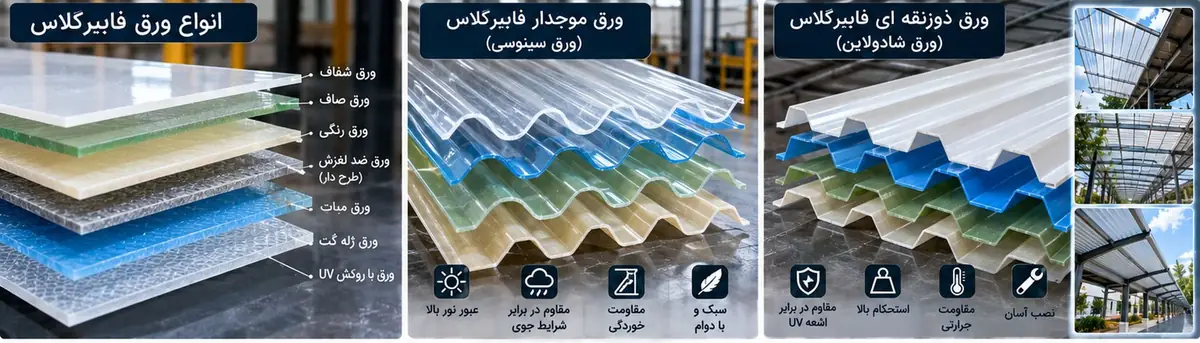
The material properties of fiberglass sheet are the same for all types, but the cross-section shape determines the sheet's structural behavior:
| Fiberglass sheet type | Cross-section shape | Engineering characteristic | Common use |
|---|---|---|---|
| Flat fiberglass sheet | Flat | Low bending stiffness; needs continuous support or short spans | Wall cladding, interior lining of cold stores and portable cabins, anti-slip flooring, tank lining |
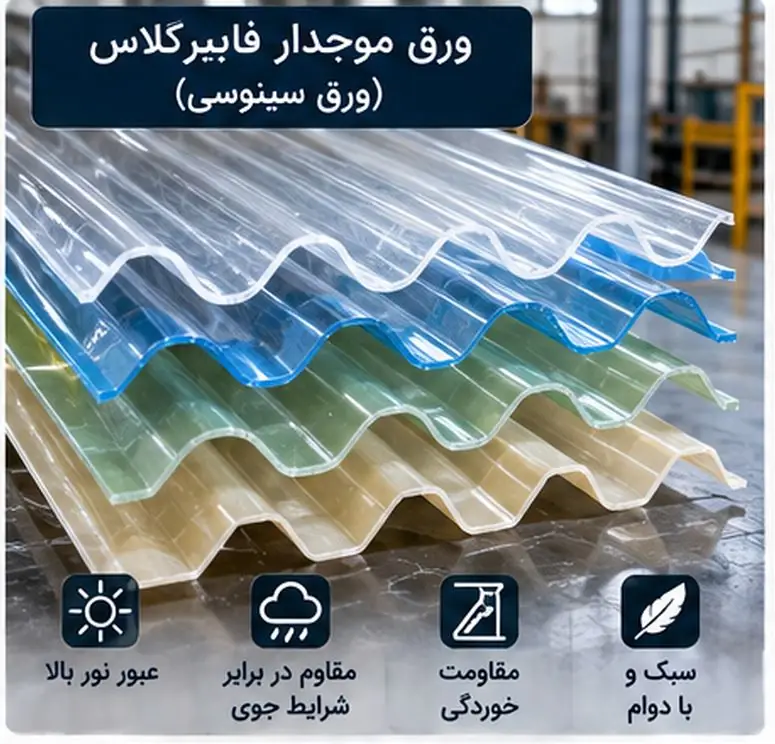
| Corrugated fiberglass sheet (sinusoidal sheet) | Sinusoidal wave | The corrugation increases the moment of inertia by several tens of times; easy water drainage | Roofs of greenhouses, warehouses, carports; shed skylights |
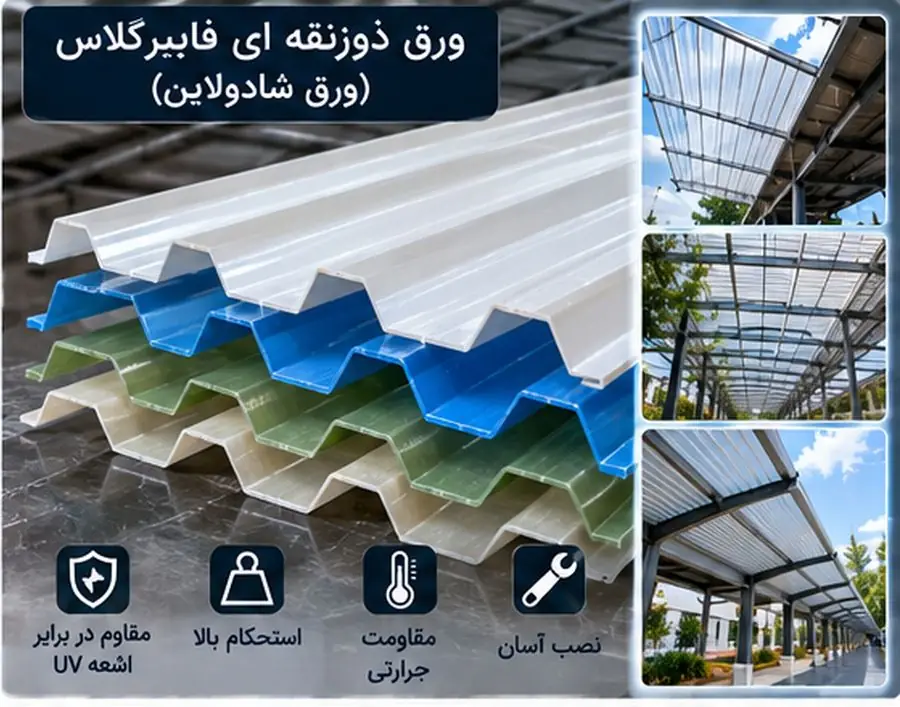
| Trapezoidal fiberglass sheet | Trapezoidal profile | Same profile as metal roof sheets; can directly replace them as a skylight | Skylights for shed and factory roofs, canopies |
Mechanical properties of fiberglass sheet
The table below shows the mechanical properties of fiberglass sheet made by hand lay-up. These properties apply to all flat, corrugated and trapezoidal fiberglass sheets:
| Feature | Test standard | Unit | Average value |
|---|---|---|---|
| Tensile strength at break | ASTM D638 | MPa | 60 |
| Tensile modulus | ASTM D638 | MPa | 4000 |
| Flexural strength at break | ASTM D790 | MPa | 100 |
| Flexural modulus | ASTM D790 | MPa | 4500 |
| Compressive strength | ASTM D695 | MPa | 70 |
| Compressive modulus | ASTM D695 | MPa | 4200 |
| Shear strength | ASTM D2344 | MPa | 85 |
| Elongation at break | — | % | 1 to 4 |
| Izod impact strength | ASTM D256 | kJ/m² | 45 |
| Poisson's ratio (longitudinal / transverse) | ASTM D3039 | — | 0.2 / 0.1 |
Engineering interpretation of fiberglass sheet properties
In hand lay-up fiberglass sheet, the fibers are present as randomly arranged mat at a weight fraction of about 25 percent or more. The result is almost in-plane isotropic properties; unlike pultruded profiles, strength is roughly the same in all directions of the sheet. That is why the sheet's tensile strength (about 60 MPa) is lower than that of pultruded profiles (about 400 MPa longitudinally; see the FRP composite profile datasheet), but it is entirely sufficient for cladding use. This figure agrees with the rule of mixtures prediction with an orientation factor of 0.375 for random fibers (see predicting the properties of polymer composites).
Impact strength of 45 kJ/m² is a major advantage of fiberglass sheet over glass and brittle sheets: the sheet does not break under hail, small falling objects or knocks during installation, and if damaged its cracking is local and it does not collapse. However, roof sheets are not designed to carry a person's weight and must never be walked on directly.
Physical properties and quality of fiberglass sheet
The quality of fiberglass sheet is controlled through the following physical and optical properties. Fiber content, density and Barcol hardness are the three main quality indicators; low-quality sheet with little fiber and poor resin yellows and becomes brittle sooner:
| Feature | Test standard | Unit | Average value |
|---|---|---|---|
| Density | ASTM D792 | g/cm³ | 1.4 |
| Hardness | ASTM D2583 | Barcol | 35 |
| Water absorption | ASTM D570 | % | Max. 1 |
| Fiber weight fraction | ISO 1172 | % | Min. 25 |
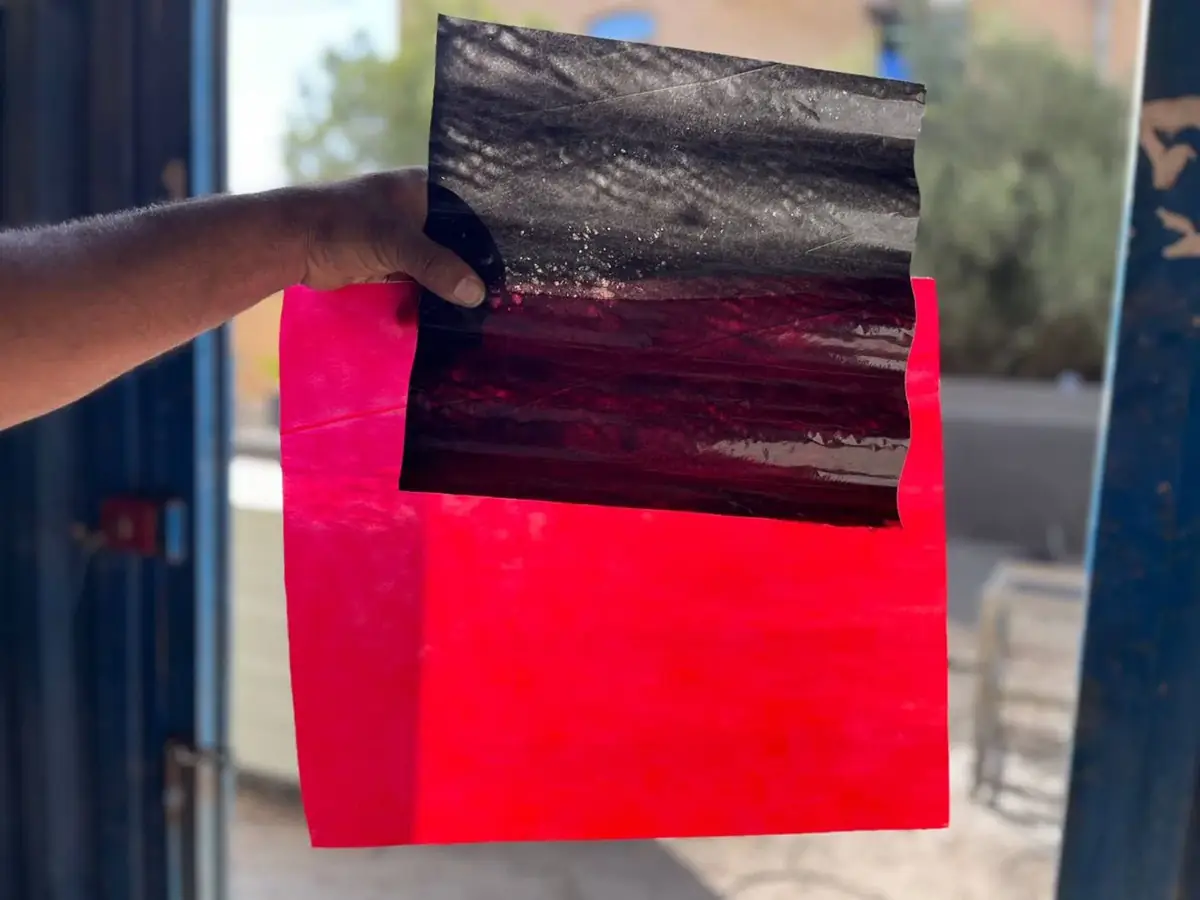
| Visible light transmission | — | % | Over 85 (clear), 60 (light blue), 50 (opal white) |
| Ultraviolet transmission | — | % | Max. 0.01 |
| Constituents | — | — | Unsaturated polyester resin, glass fiber, gel coat and additives (cobalt, peroxide, carbonate powder, etc.) |
| Service life | — | years | Over 15 |
| Color | — | — | Any RAL color; fully clear sheet can be produced |
| Dimensions | — | — | Custom; max. width 3 m, max. length 35 m, thickness 0.5 to 100 mm |
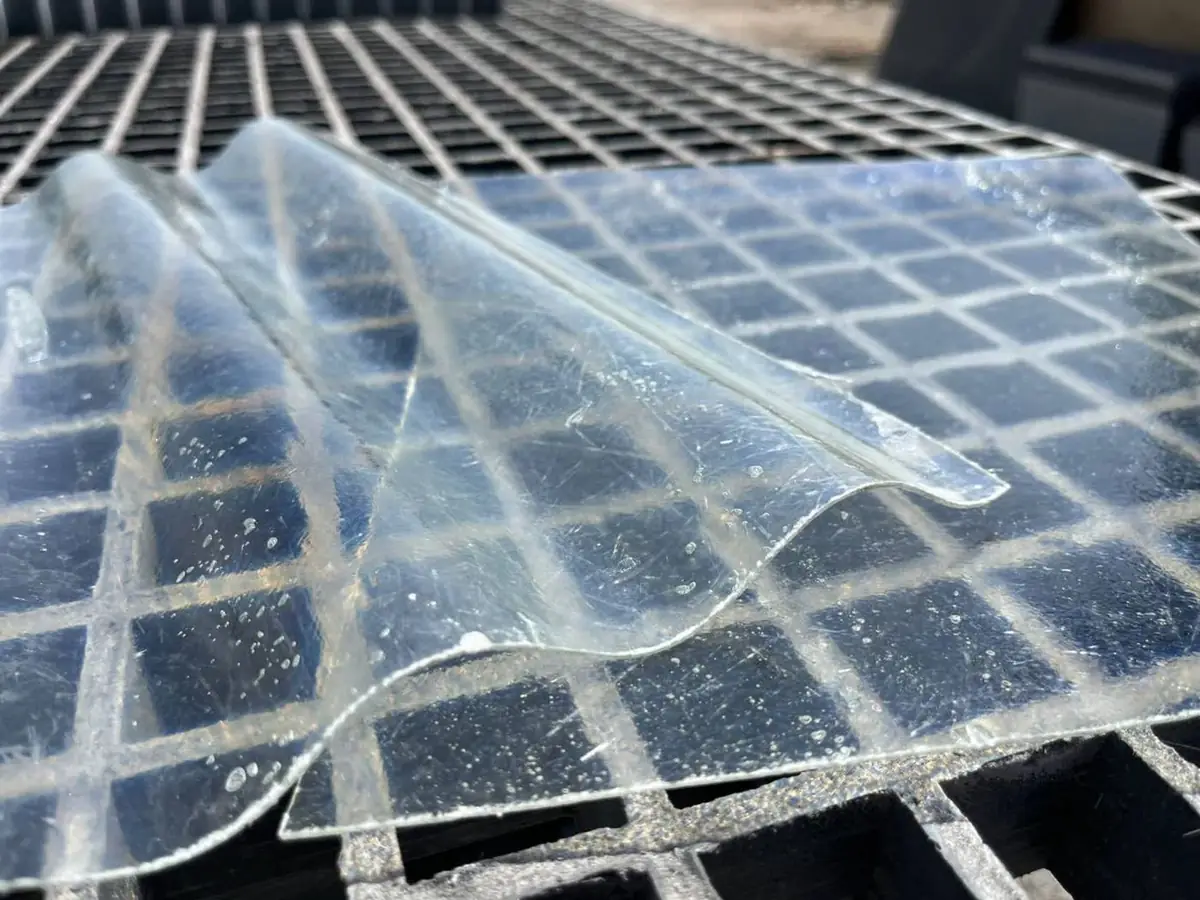
High light transmission with full UV absorption is the most important property of fiberglass sheet as a skylight: clear sheet transmits more than 85 percent of visible light, but less than 0.01 percent of ultraviolet radiation passes through it. The space under the roof is bright, while plants, goods and people are protected from the harmful effects of UV. Because of the fibers, light passing through fiberglass sheet is diffuse and does not cast harsh shadows — a property desirable for greenhouses and work spaces.
Fiberglass sheet weight table by thickness
With a density of 1.4, the weight per square meter of flat sheet is given by W (kg/m²) = 1.4 × t (mm). In corrugated and trapezoidal sheet, because of the developed length of the profile, the weight per square meter of covered area is about 10 to 15 percent higher:
| Fiberglass sheet thickness (mm) | Flat sheet weight (kg/m²) | Approximate corrugated sheet weight (kg per m² covered) |
|---|---|---|
| 0.8 | 1.12 | 1.25 |
| 1 | 1.40 | 1.57 |
| 1.2 | 1.68 | 1.88 |
| 1.5 | 2.10 | 2.35 |
| 2 | 2.80 | 3.14 |
| 3 | 4.20 | 4.70 |
| 5 | 7.00 | 7.84 |
Thermal properties of fiberglass sheet
The thermal properties of fiberglass sheet determine the temperatures at which it can be used and how much heat passes through it:
| Feature | Test standard | Unit | Average value |
|---|---|---|---|
| Service temperature | — | °C | −30 to +100 |
| Longitudinal coefficient of thermal expansion | ASTM D696 | K⁻¹ | approx. 20 to 30 × 10−6 |
| Heat transmission (radiant) | — | % | 75 (clear), 70 (light blue), 60 (opal white) |
| Thermal conductivity | ASTM C177 | W/m·K | 0.2 |
Comparison of light and heat transmission for different fiberglass sheet colors
Given these thermal properties, choosing the color of fiberglass sheet is an engineering decision: clear sheet transmits the most light and is ideal for greenhouses and skylights, but also transmits more radiant heat. Opal white sheet has the lowest heat transmission and is better suited to carport canopies, swimming pools and hot spaces. A thermal conductivity of 0.2 W/m·K is about one 250th that of steel, so in winter the surface of fiberglass sheet does not get as cold as metal sheet, and condensation under the roof is reduced.
Electrical properties of fiberglass sheet
The electrical properties of fiberglass sheet are similar to those of other polyester composites and place it among insulators:
| Feature | Test standard | Unit | Average value |
|---|---|---|---|
| Dielectric strength | ASTM D149 | kV/mm | 5 |
| Dielectric constant (50 Hz) | ASTM D150 | — | 5 |
| Dissipation factor (50 Hz) | ASTM D150 | — | 0.05 |
| Electrical resistivity | ASTM D257 | Ω | 1012 |
| Surface resistivity | ASTM D257 | Ω | 1012 |
| Arc resistance | ASTM D495 | s | 120 |
Given these electrical properties, the insulating nature of fiberglass sheet makes it suitable for covering electrical substations, switchboard rooms and spaces with electrical equipment. Fiberglass sheet also does not block radio waves, which, unlike metal sheet, is an advantage for covering antennas and spaces where mobile and radio coverage matter.
Comparing fiberglass sheet with other skylight sheets
To understand the properties of fiberglass sheet better, we compare it with the most common alternatives:
| Feature | Fiberglass sheet (plastic roofing sheet) | Polycarbonate sheet | PVC sheet | Glass |
|---|---|---|---|---|
| Density (g/cm³) | 1.4 | approx. 1.2 | approx. 1.4 | 2.5 |
| Impact resistance | High | Very high | Moderate | Low |
| Chemical and corrosion resistance | Excellent | Medium; sensitive to some solvents | Good | Excellent |
| High-temperature stability | Up to 100 °C | About 120 °C | About 60 °C | High |
| Type of transmitted light | Diffuse | Direct | Direct | Direct |
| Custom dimensions | Very flexible; up to 35 m long | Standard | Standard | Limited |
| Typical use | Sheds, greenhouses, corrosive environments and livestock buildings | Architectural canopies and skylights | Low-cost covering | Architectural facades |
Engineering notes on installing fiberglass sheet
- Purlin spacing: for corrugated and trapezoidal sheet about 1 mm thick, purlin spacing is usually about 80 to 120 cm depending on roof pitch and regional snow and wind loads; thicker sheets span further.
- Laps: end lap of about 15 to 20 cm and side lap of at least one to one and a half corrugations, facing away from the prevailing wind.
- Fastener position: fix screws through the crest of the profile (not the valley) with EPDM rubber washers to maintain the seal.
- Drilling: make holes with a drill, not a punch or nail, about 3 to 4 mm larger than the screw diameter (see cutting and drilling composites).
- Roof pitch: a minimum pitch of about 5 to 10 degrees to drain rainwater and prevent dust build-up.
- Safety: never walk directly on the sheet; use crawling boards spanning the purlins.
- Maintenance: periodic washing with water and a mild detergent maintains light transmission; do not use strong solvents or wire brushes.
Nabak Composite fiberglass sheet
Nabak Composite produces flat, corrugated (sinusoidal) and trapezoidal fiberglass sheet in any RAL color, in custom thicknesses and sizes. Nabak fiberglass sheets are designed for factory roofs, greenhouses, warehouses, farms and livestock buildings, swimming pools, carports, portable cabins and sheds.
Frequently asked questions about fiberglass sheet properties
Answers to the most common questions about the properties and quality of fiberglass sheet:
Is plastic roofing sheet the same as fiberglass sheet?
Yes. In the Iranian market, corrugated fiberglass sheet made of glass fiber and polyester resin is called plastic roofing sheet or fiberglass corrugated sheet. It is different from fiber-cement sheet and PVC sheet.
How much light does clear fiberglass sheet transmit?
Clear fiberglass sheet transmits more than 85 percent of visible light, while less than 0.01 percent of ultraviolet radiation passes through it. Light blue sheet transmits about 60 percent and opal white sheet about 50 percent of light.
How much does a square meter of fiberglass sheet weigh?
With a density of about 1.4 g/cm³, each square meter of flat sheet weighs about 1.4 kg per millimeter of thickness; corrugated sheet is about 10 to 15 percent heavier because of the developed length of the profile.
How long does fiberglass sheet last?
The service life of quality fiberglass sheet with a gel coat or UV-protective layer is more than 15 years.
What is the service temperature of fiberglass sheet?
Fiberglass sheet can be used in the temperature range −30 to +100 °C.
Summary
In short, the properties of fiberglass sheet are a balanced combination of adequate mechanical strength for cladding, high impact resistance, low weight (about 1.4 kg/m² per millimeter of thickness), light transmission of over 85 percent with full UV absorption, thermal and electrical insulation and corrosion resistance. Choosing the right sheet type (flat, corrugated or trapezoidal), color and thickness, together with correct installation that allows for thermal expansion, ensures a life of more than 15 years. For technical specifications, color samples and fiberglass sheet price quotes, contact the Nabak Composite team.

This article was prepared by the technical team of Nabak Composite, a manufacturer of fiberglass sheet, composite profiles and FRP products.