What is 30 mm fiberglass grating?
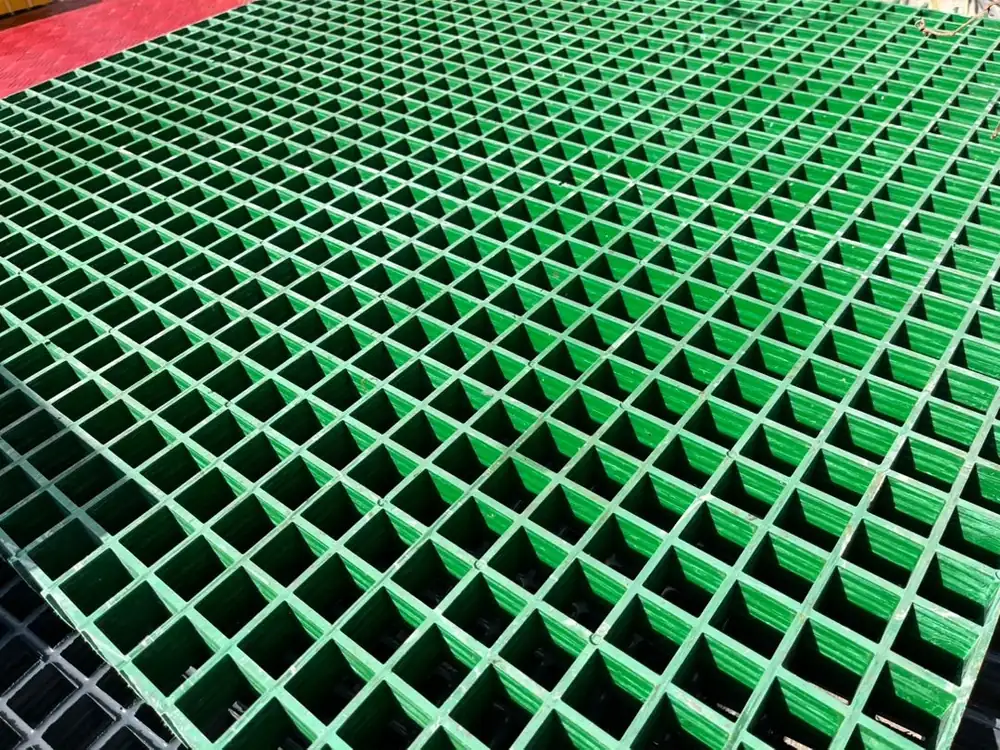
Composite grating refers to open-mesh panels in which hollow cells repeat at a fixed pitch across the whole surface. On the market the product is known as fiberglass grating, FRP grating, GRP grating, GFRP grating, composite mesh panel, polymer grating and sometimes plastic grating. The last name is colloquial: what gives the panel its strength is continuous glass fiber embedded in a polymer resin matrix.
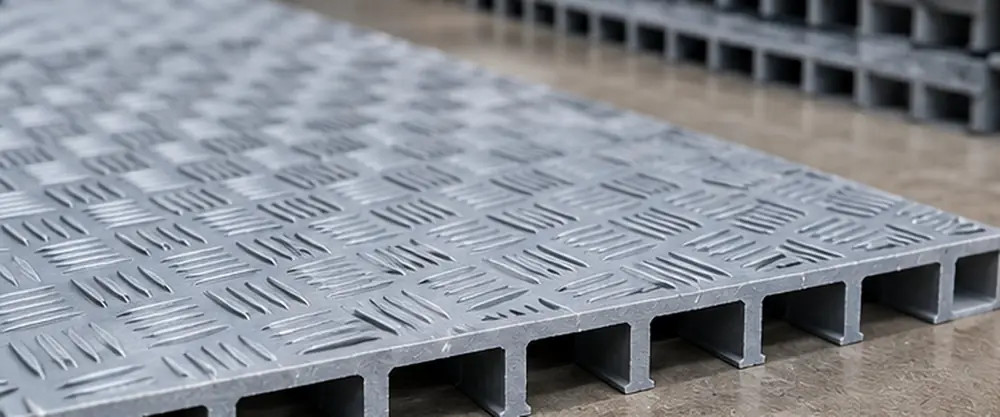
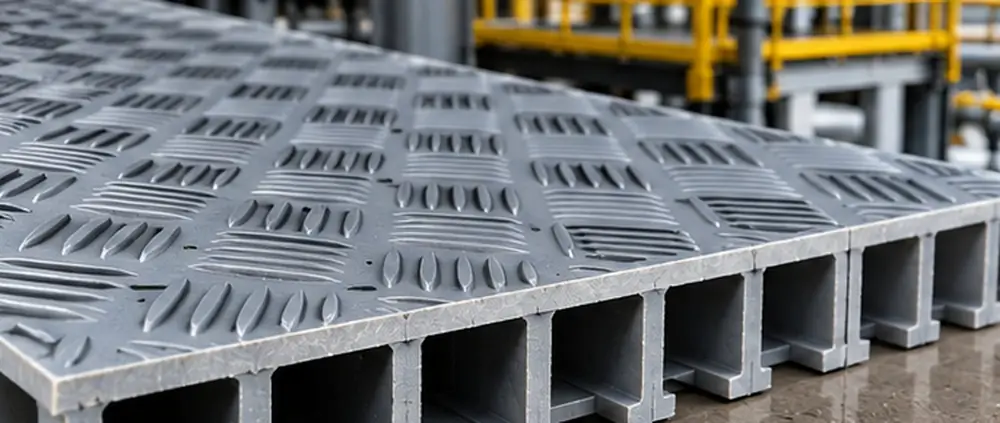
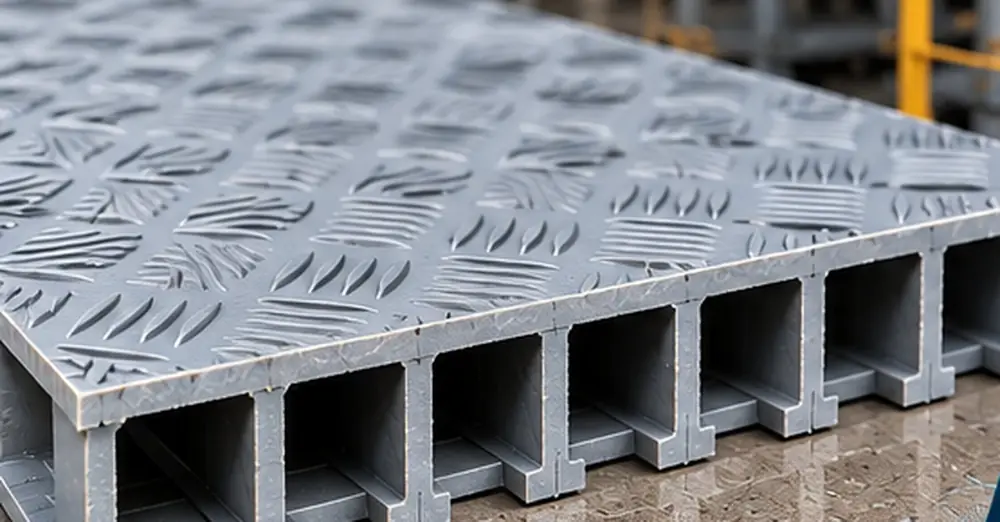
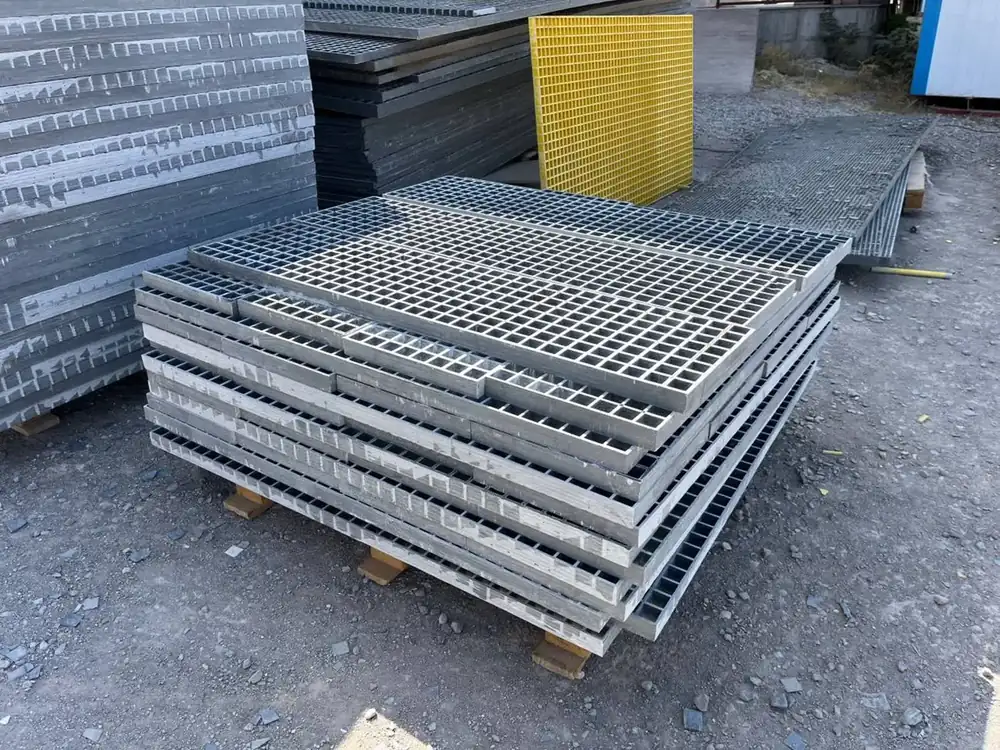
Like other molded grating types, the 30 mm model is made in grooved metal molds: glass roving is laid alternately in two perpendicular directions in the grooves and wetted out with resin, so that after curing a one-piece grid with no joints is obtained. The result is a bidirectional fiberglass grating that transfers load in both directions of the panel. The covered version of this same core with a 3 mm patterned plate is the 33 mm checker plate grating; for comparison with the lighter model, see 25 mm fiberglass grating.
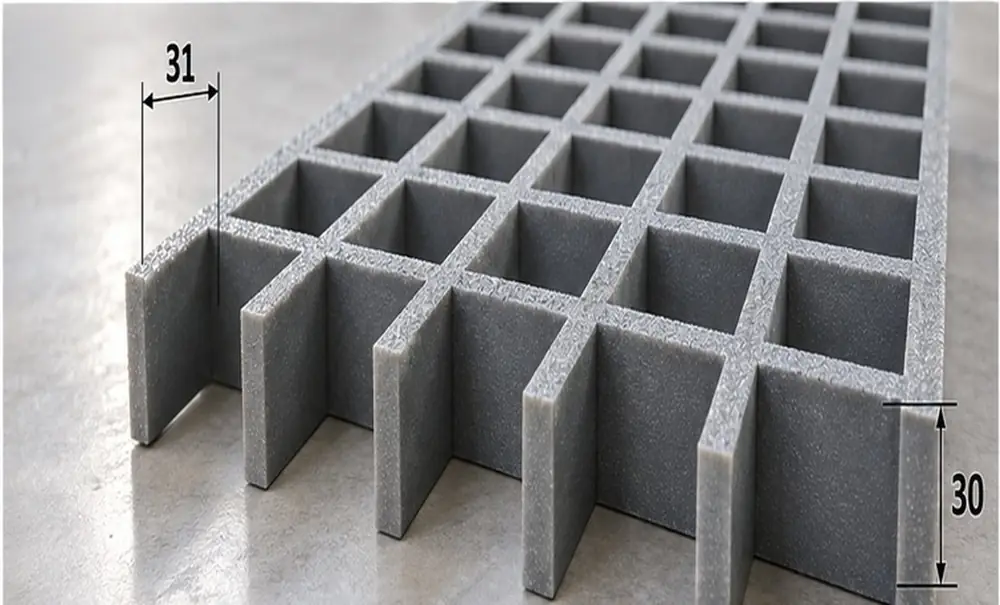
Specifications and dimensions of 30 mm fiberglass grating
Main specifications and dimensions of 30 mm high composite grating:
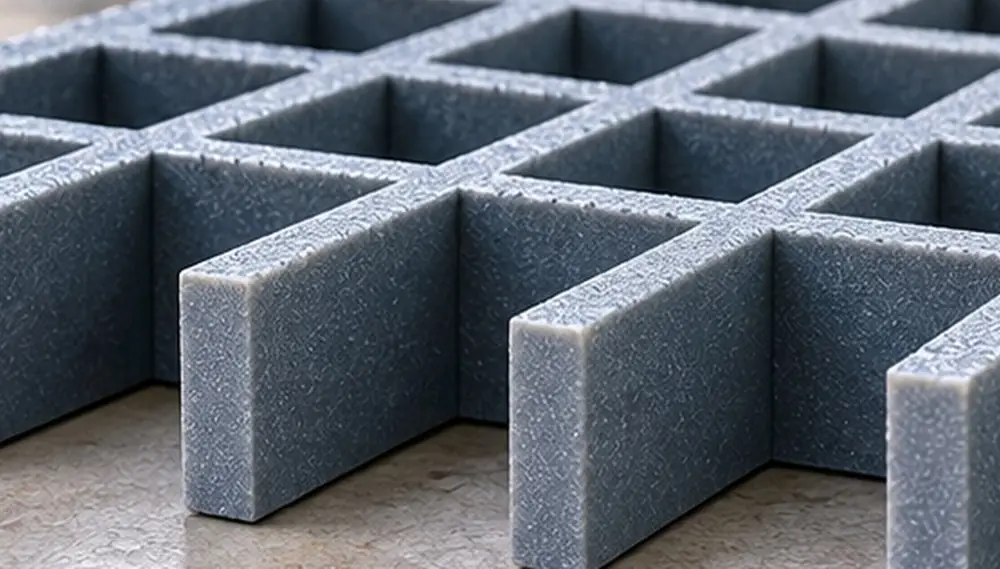
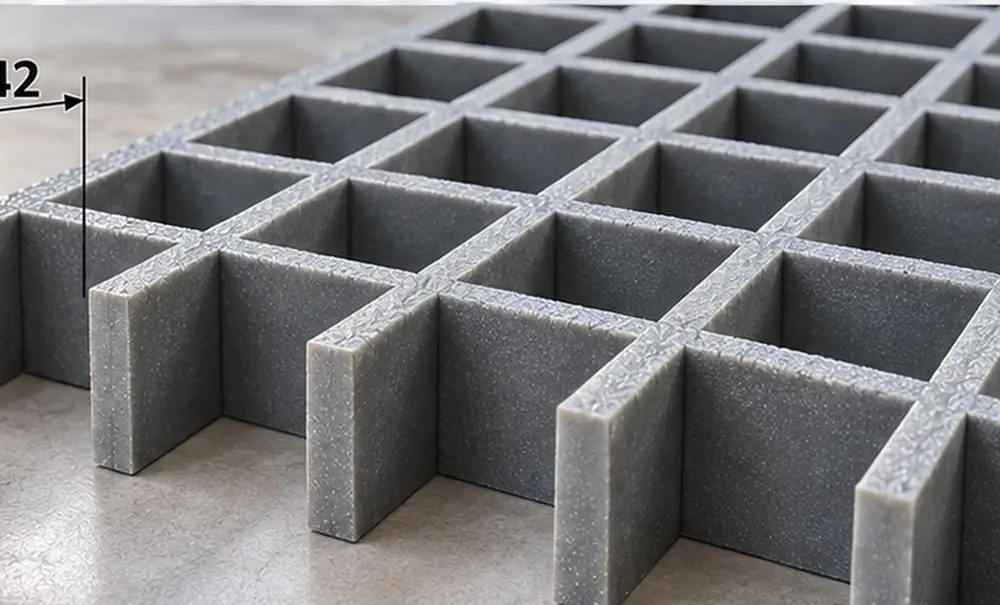
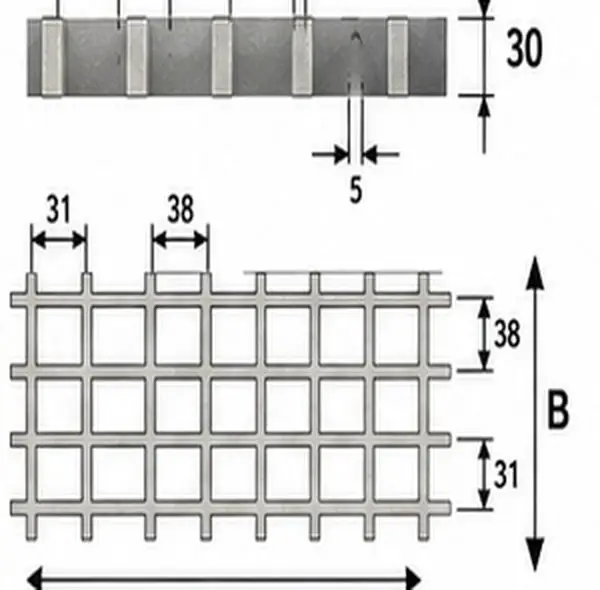
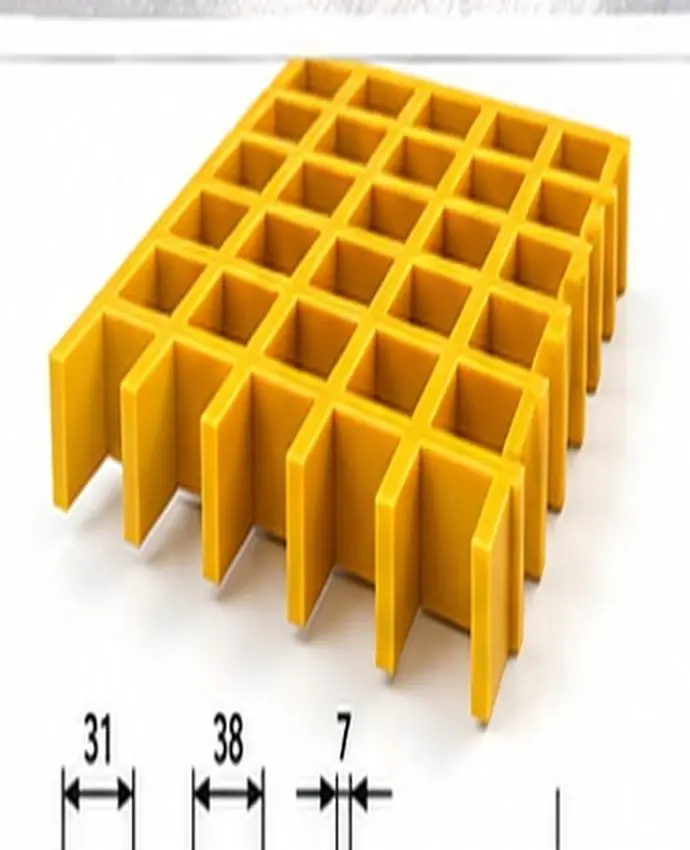
Cell geometry: grating height 30 mm and center-to-center cell spacing 38 mm (38.1 mm, or 1.5 in). The clear opening of each cell at the top is about 31 mm, and with the mold draft the bars taper from about 7 mm at the crown to about 5 mm at the base.
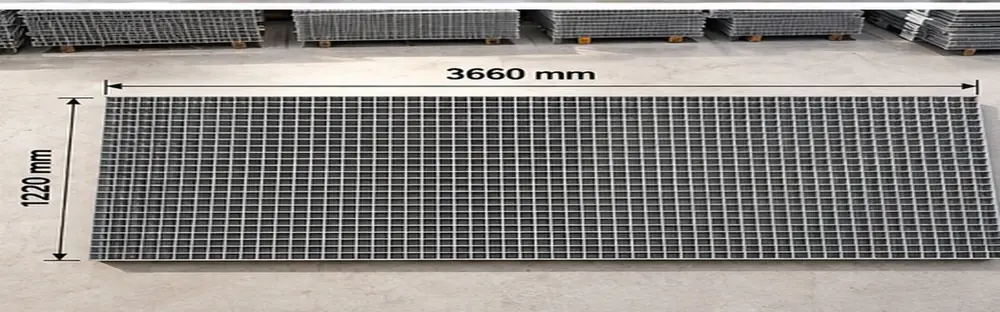
Full sheet (panel) size: 1220×3660 mm — 3660 mm long and 1220 mm wide, about 4.47 m².
Number of cells: 96 full cells along the length and 32 across the width — the same layout as the 25 mm and 38 mm models, which simplifies combined cutting plans.
| Property | Value | Engineering note |
|---|---|---|
| Grating height | 30 mm | Between the 25 mm and 38 mm models |
| Cell center-to-center | 38 mm (38.1) | Square, bidirectional cell |
| Cell opening / bar thickness | 31 / 7 (crown) and 5 (base) mm | Mold draft for releasing the part |
| Full sheet size | 1220×3660 mm | 32 × 96 full cells |
| Open area of the fiberglass grating | 68% | Lets water, air and light through |
| Weight of one full sheet | approx. 61 kg | approx. 13.7 kg/m² |
| Tensile modulus | 15 GPa | Molded glass/resin composite (GFRP) |
| Maximum service temperature | About 100 °C | Standard resin; special grades made to order |
| Fire behavior | Self-extinguishing | Higher fire-rated grade made to order |
Drawing of the 1220×3660 fiberglass grating panel
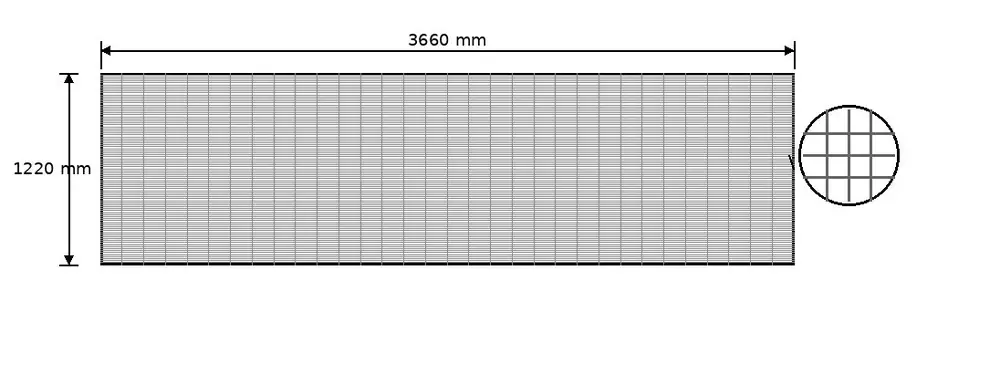
To lay out composite grating panels on a platform plan, the full 1220×3660 mm panel drawing is available from the Nabak Composite technical team in DWG (for AutoCAD and 2D drawings) and STEP (for 3D modeling) formats. The drawing shows the position of all 3,072 cells in a sheet; by drawing cut lines on it, the designer can work out the number of sheets needed and the offcut waste before ordering.
Cut sizes that leave full cells on composite grating
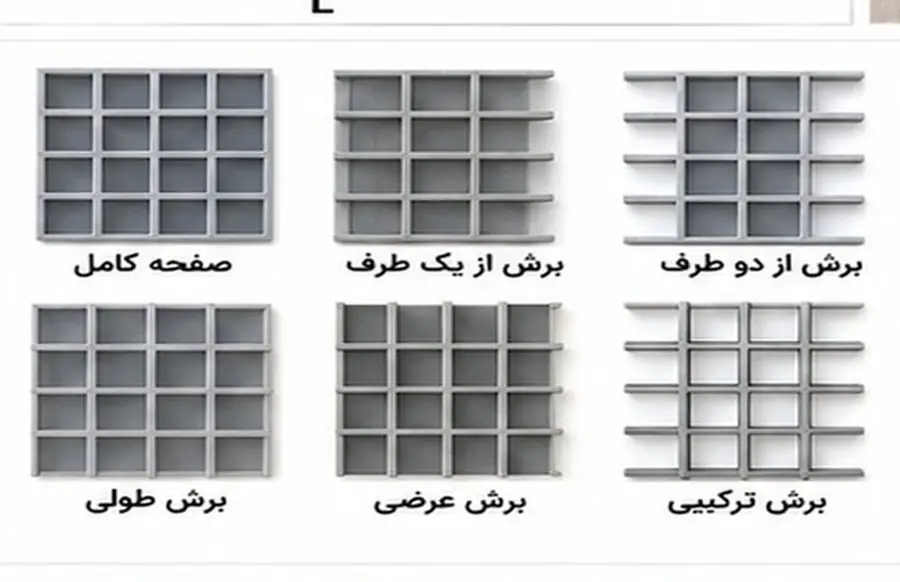
A composite grating panel can be cut on one side, two sides, along its length, across its width or in combination. In every case, if the cut line falls on a bar, the panel edge closes with full cells; otherwise open prongs are left at the edge, which are hazardous for pedestrians and unsuitable for fixing clips. Choose the cut length from the table below; the values are the same for the length and width of FRP and GRP grating.
| Cells | Length (mm) | Cells | Length (mm) | Cells | Length (mm) | Cells | Length (mm) | Cells | Length (mm) | Cells | Length (mm) |
|---|---|---|---|---|---|---|---|---|---|---|---|
| 1 | 42 | 17 | 652 | 33 | 1261 | 49 | 1871 | 65 | 2481 | 81 | 3090 |
| 2 | 81 | 18 | 690 | 34 | 1299 | 50 | 1909 | 66 | 2518 | 82 | 3128 |
| 3 | 118 | 19 | 728 | 35 | 1338 | 51 | 1947 | 67 | 2557 | 83 | 3166 |
| 4 | 156 | 20 | 766 | 36 | 1376 | 52 | 1985 | 68 | 2595 | 84 | 3204 |
| 5 | 195 | 21 | 804 | 37 | 1414 | 53 | 2023 | 69 | 2633 | 85 | 3243 |
| 6 | 233 | 22 | 842 | 38 | 1452 | 54 | 2061 | 70 | 2671 | 86 | 3281 |
| 7 | 271 | 23 | 880 | 39 | 1490 | 55 | 2100 | 71 | 2709 | 87 | 3319 |
| 8 | 309 | 24 | 918 | 40 | 1528 | 56 | 2138 | 72 | 2747 | 88 | 3357 |
| 9 | 347 | 25 | 957 | 41 | 1566 | 57 | 2176 | 73 | 2785 | 89 | 3395 |
| 10 | 385 | 26 | 995 | 42 | 1604 | 58 | 2214 | 74 | 2823 | 90 | 3433 |
| 11 | 423 | 27 | 1033 | 43 | 1642 | 59 | 2252 | 75 | 2862 | 91 | 3471 |
| 12 | 461 | 28 | 1071 | 44 | 1680 | 60 | 2290 | 76 | 2900 | 92 | 3509 |
| 13 | 499 | 29 | 1109 | 45 | 1719 | 61 | 2328 | 77 | 2938 | 93 | 3547 |
| 14 | 537 | 30 | 1147 | 46 | 1757 | 62 | 2366 | 78 | 2976 | 94 | 3585 |
| 15 | 576 | 31 | 1185 | 47 | 1795 | 63 | 2404 | 79 | 3014 | 95 | 3623 |
| 16 | 614 | 32 | 1220 | 48 | 1833 | 64 | 2442 | 80 | 3052 | 96 | 3660 |
Weight of 30 mm fiberglass grating
A full 1220×3660 mm sheet of 30 mm fiberglass grating weighs about 61 kg, which over 4.47 m² is about 13.7 kg/m². That is 10 kg more than the 25 mm model (51 kg per sheet), matching exactly the 20% greater bar height. A 1×1.2 m panel weighs about 16.5 kg and one person can install it; 30 mm galvanized steel grating of the same size is more than twice as heavy.
25 mm or 30 mm fiberglass grating?
The two models are identical in cell size, pitch, open area and cutting plan; the only difference is bar height. But because the bending stiffness of the panel grows roughly with the cube of its height, those 5 mm make a significant difference:
| Property | 25 mm fiberglass grating | 30 mm fiberglass grating | Ratio |
|---|---|---|---|
| Weight (kg/m²) | 11.4 | 13.7 | 1.20 |
| Relative bending stiffness (h³) | 1 | 1.73 | 1.73 |
| Allowable uniform load at 600 span (kg/m²) | 476 | approx. 820 | 1.7 |
| Allowable concentrated load at 600 span (kg) | 125 | approx. 215 | 1.7 |
| Allowable pedestrian span (500 kg/m² + 100 kg) | approx. 550 mm | approx. 700 mm | 1.27 |
| Light service span (250 kg/m²) | approx. 750 mm | approx. 900 mm | 1.2 |
Common names for composite grating
The same product is sold under various names; knowing them avoids confusion when requesting quotations:
| Common name | Technical meaning | Relation to this product |
|---|---|---|
| Fiberglass grating / fibreglass grating | Grating reinforced with glass fibers | Same product |
| FRP grating | Fiber Reinforced Polymer | Same product |
| GRP grating | Glass Reinforced Plastic — the European term | Same product |
| GFRP grating | Glass Fiber Reinforced Polymer — the most precise name | Same product |
| Composite mesh panel / grating mesh | Describes the open-mesh appearance of the panel | Same product |
| Polymer grating | Emphasizes the resin matrix | Same product |
| Plastic grating | Colloquial name | Technically incorrect; plastic without fibers is far weaker |
When requesting composite grating, besides the name always state the height (25, 30 or 38 mm), the cell size and the surface type; the three models look similar, but the capacity of 38 mm composite grating is several times that of the 25 mm model.
Features of 30 mm composite grating
The 30 mm composite grating combines the inherent properties of glass/resin composite with mid-range capacity:
Clips and installation of 30 mm fiberglass grating
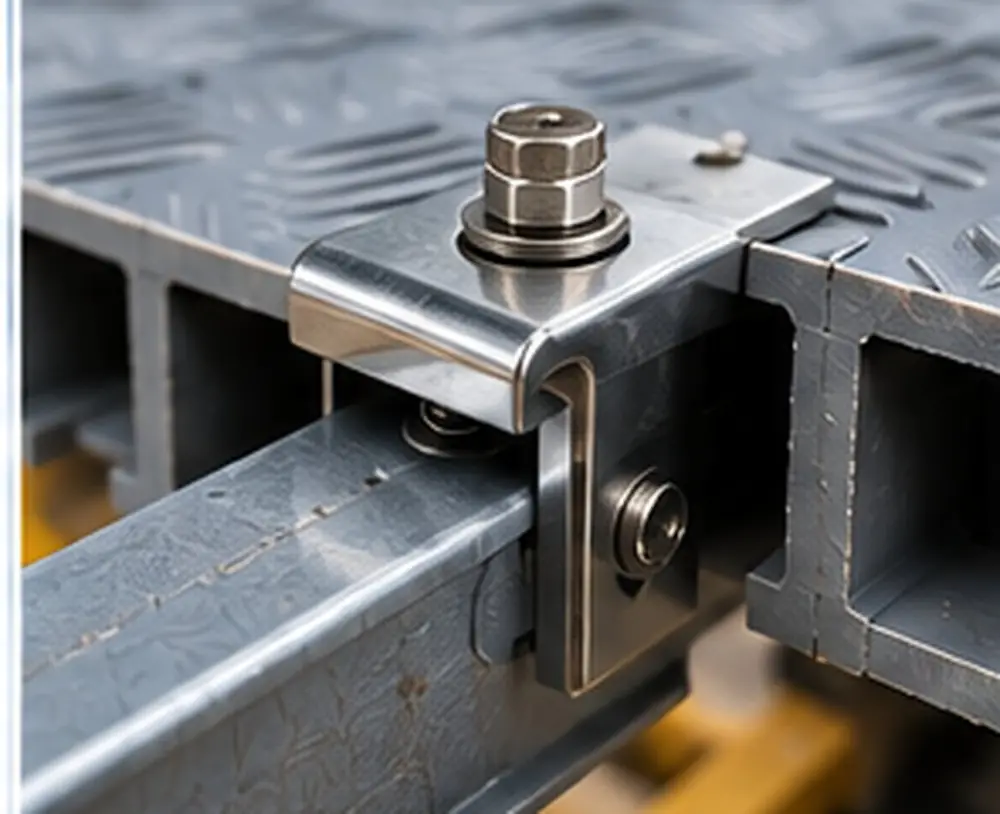
Installing fiberglass grating is straightforward, and the same standard composite grating fixings apply to this model. The panel is locked onto the beam flange with a stainless steel clip; the 30 mm height means a clip made specifically for 30 mm grating must be used so that the clip jaw sits exactly on the bar.
- At least four clips per panel, plus one extra clip for every 600 mm of length.
- A bearing (seat) of at least 25 mm on the support at each edge of the panel.
- Clips must sit on a full bar at the panel edge — full-cell cutting matters.
- Seal cut edges with resin (see cutting and machining composites).
- In highly corrosive environments, specify 316 stainless steel fixings.
Load capacity of 30 mm fiberglass grating
The structural behavior of polymer grating is assessed with a load table, and in both load cases the bidirectional bars of the composite grating share the load. Loading on composite grating is defined in two cases:
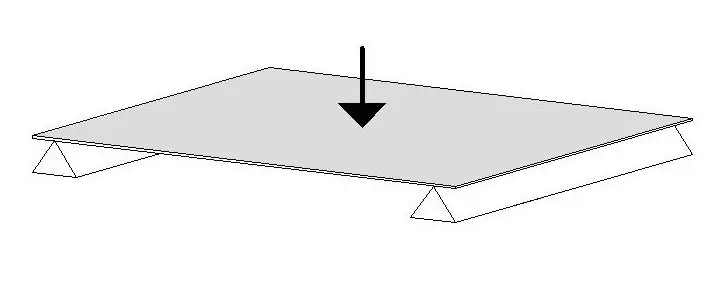
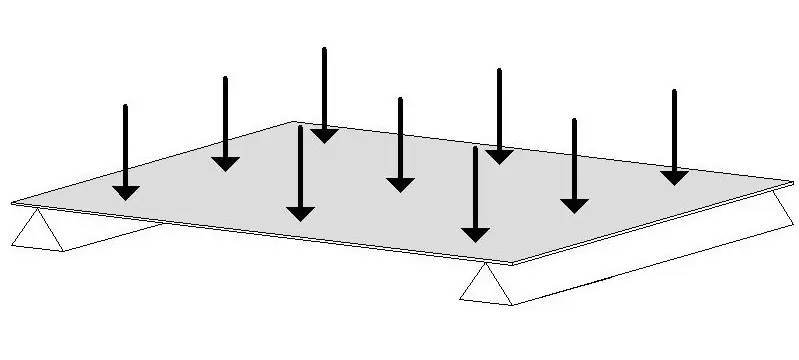
- Allowable load based on deflection: the load that brings the mid-span deflection of the panel to L/200 of the support spacing (0.5% of the span).
- Ultimate (failure) load: the maximum load at which the grating panel will certainly fail.
Estimated load capacity of 30 mm fiberglass grating
The table below gives the concentrated and uniform load capacity of 30 mm fiberglass grating at six common spans. These values are engineering estimates derived from the test table of the 25 mm molded grating (with the same cell and bar) and section scaling rules: deflection-based allowable load proportional to h³ (factor 1.73) and ultimate load proportional to h² (factor 1.44).
| Support spacing (mm) | Concentrated load (kg) | Uniform load (kg/m²) | ||
|---|---|---|---|---|
| Allowable load at L/200 deflection | Ultimate load | Allowable load at L/200 deflection | Ultimate load | |
| 400 | ~485 | ~4,300 | ~2,780 | ~30,000 |
| 600 | ~215 | ~2,900 | ~820 | ~13,000 |
| 800 | ~120 | ~2,150 | ~350 | ~7,200 |
| 1,000 | ~80 | ~1,700 | ~180 | ~4,600 |
| 1,200 | ~55 | ~1,450 | ~105 | ~3,200 |
| 1,400 | ~40 | ~1,000 | ~65 | ~2,300 |
- The allowable uniform load falls roughly with the cube of the span: doubling the span from 600 to 1200 mm reduces capacity about 8 times.
- The gap between the deflection-based allowable load and 40% of the ultimate load is very large (at a 600 mm span: 820 versus 5200); molded grating is deflection-governed and has a large strength reserve before failure.
- The economic range of this model is 500 to 750 mm spans for pedestrian use; for longer spans, 38 mm molded grating or pultruded grating is more suitable.
Comparison with other composite gratings
Where this composite grating sits in the product family, by allowable uniform load at L/200 deflection (kg/m²):
| Grating type | Weight (kg/m²) | 600 span | 800 span | 1000 span |
|---|---|---|---|---|
| Molded grating 25×38×38 | 11.4 | 476 | 201 | 103 |
| Molded grating 30×38×38 (estimate) | 13.7 | ~820 | ~350 | ~180 |
| Checker plate 33 (this core + 3 mm plate) | 18.8 | 1100 | 460 | 240 |
| Pultruded grating 25×15 | 14.5 | 3750 | 1600 | 850 |
See the full tables in FRP grating load capacity tables.
Load design examples for composite grating
The examples below check a composite grating panel step by step against the load estimate.
- Approximate allowable uniform load at 700 ≈ 820 × (600/700)³ ≈ 520 ≥ 500 ✓
- Approximate concentrated at 700 ≈ 215 × (600/700)² ≈ 158 ≥ 100 ✓; the 25 mm model was not sufficient at this span.
- ~215 ≥ 200 ✓; deflection ≈ 3 × 200/215 ≈ 2.8 mm; safety: 0.4 × 2900 ≈ 1160 ✓
Surface types of molded composite grating
Three standard surfaces are produced for this model, each with a different level of roughness and slip resistance.
Molded grating has two faces, each with a different surface. Surface quality determines the safety and durability of composite grating, and the right surface is chosen according to slip risk, the presence of oil and the slope of the route:
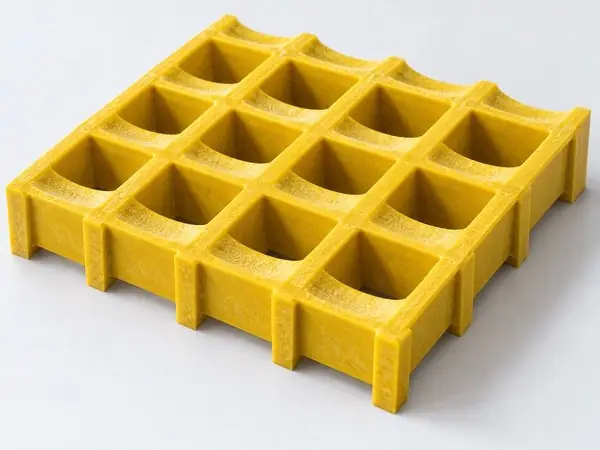
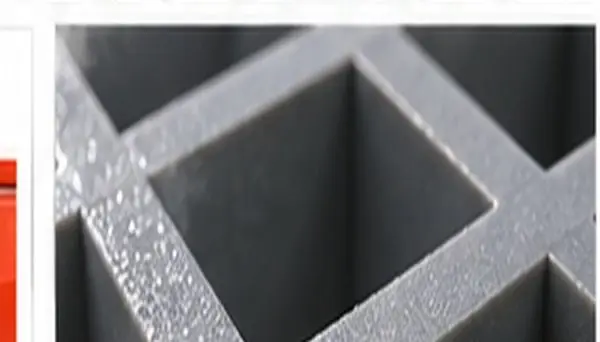
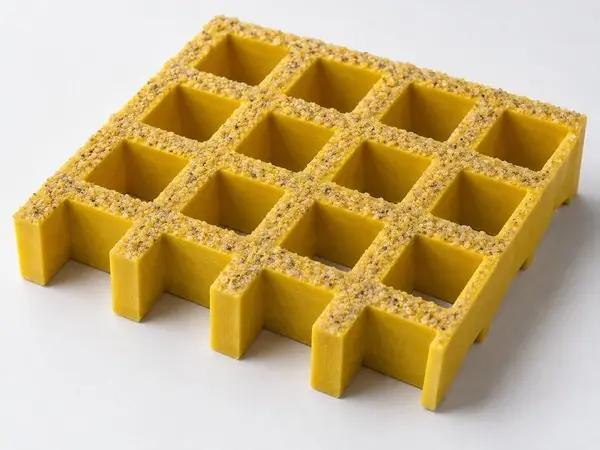
- Concave (meniscus) surface: the face formed in the mold gives the bar crowns a concave, crescent shape. The edges of these crescents grip the sole of the shoe and create natural roughness; this is why the concave surface is the most widely used and prevents slipping on the composite mesh panel.
- Smooth surface: after production the other face of the panel is ground down a few millimetres to give a completely smooth, polished surface that is easy to clean (a polished surface picks up the least dirt); it suits trolley and wheelchair routes in dry environments. Polishing slightly reduces the height.
- Gritted surface: for sloping surfaces, areas exposed to oil spills and permanently wet routes, quartz grit and sand of a specific grading are bonded into resin on the surface, giving the highest slip resistance on the grating mesh. To increase roughness further, the grating panels can also be sandblasted after production; sandblasting a smooth surface also gives a uniform texture.
Applications of 30 mm fiberglass grating
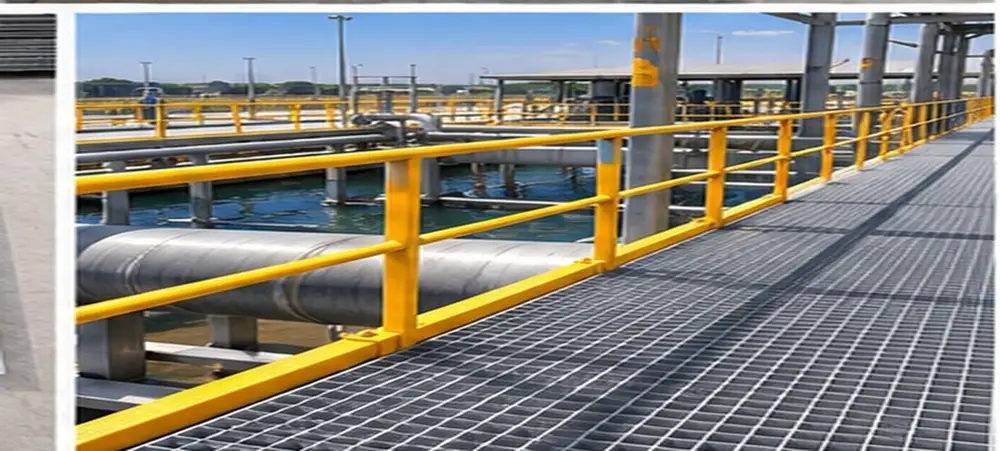
The allowable load range determines the applications of this model, and the choice of surface depends on the environment and corrosion conditions. Low weight, mid-range capacity and chemical resistance make the 30 mm model suitable for these applications:
- Walkways and access platforms with beam spacing of 600 to 700 mm in refineries, petrochemical plants and power plants.
- Walkways in water and wastewater treatment plants and medium-width channel covers.
- Platforms around equipment and pumps with concentrated loads up to about 200 kg.
- Cooling tower platforms and wet environments.
- Floors in livestock buildings, food plants and plating shops with constant washdown.
- Cable trench covers in electrical substations.
Fiberglass grating compared with steel grating
| Feature | 30 mm fiberglass grating (FRP) | 30 mm galvanized steel grating |
|---|---|---|
| Weight | approx. 13.7 kg/m² | About 30 to 35 kg/m² |
| Corrosion | None | Rusts once the zinc layer is damaged |
| Load-bearing behavior | Bidirectional | Mainly one-directional |
| Electrical conductivity | Insulating | Conductive |
| Service temperature | Up to about 100 °C | High |
| Cutting and installation | Simple tools; clip fixing without welding | Thermal cutting, welding and re-galvanizing |
| Maintenance cost | Very low | Periodic painting and repair |
Ordering guide for fiberglass grating
To request a price for 30 mm fiberglass grating (FRP or GRP grating), prepare the following information; the loading conditions and span are the most important inputs for choosing between the 25, 30 and 38 mm models:
- Dimensions: full 1220×3660 sheet, or full-cell cut sizes from the table
- Span and loading: support spacing, uniform and concentrated load
- Surface type: concave, smooth or gritted
- Color and resin: grey, yellow, green, red or custom; isophthalic, vinyl ester or fire-retardant resin
- Clips: clips made for 30 mm grating, and how many
- Drawing: request the DWG or STEP drawing to mark cuts on the panel and plan the panel layout
Fiberglass grating production and delivery at Nabak Composite
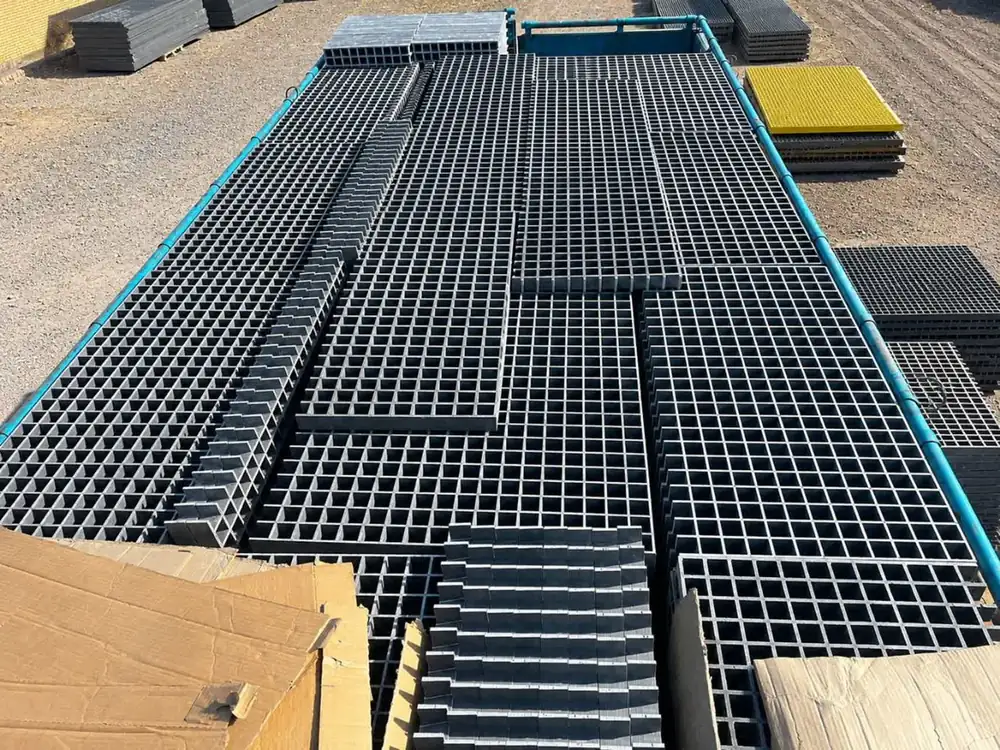
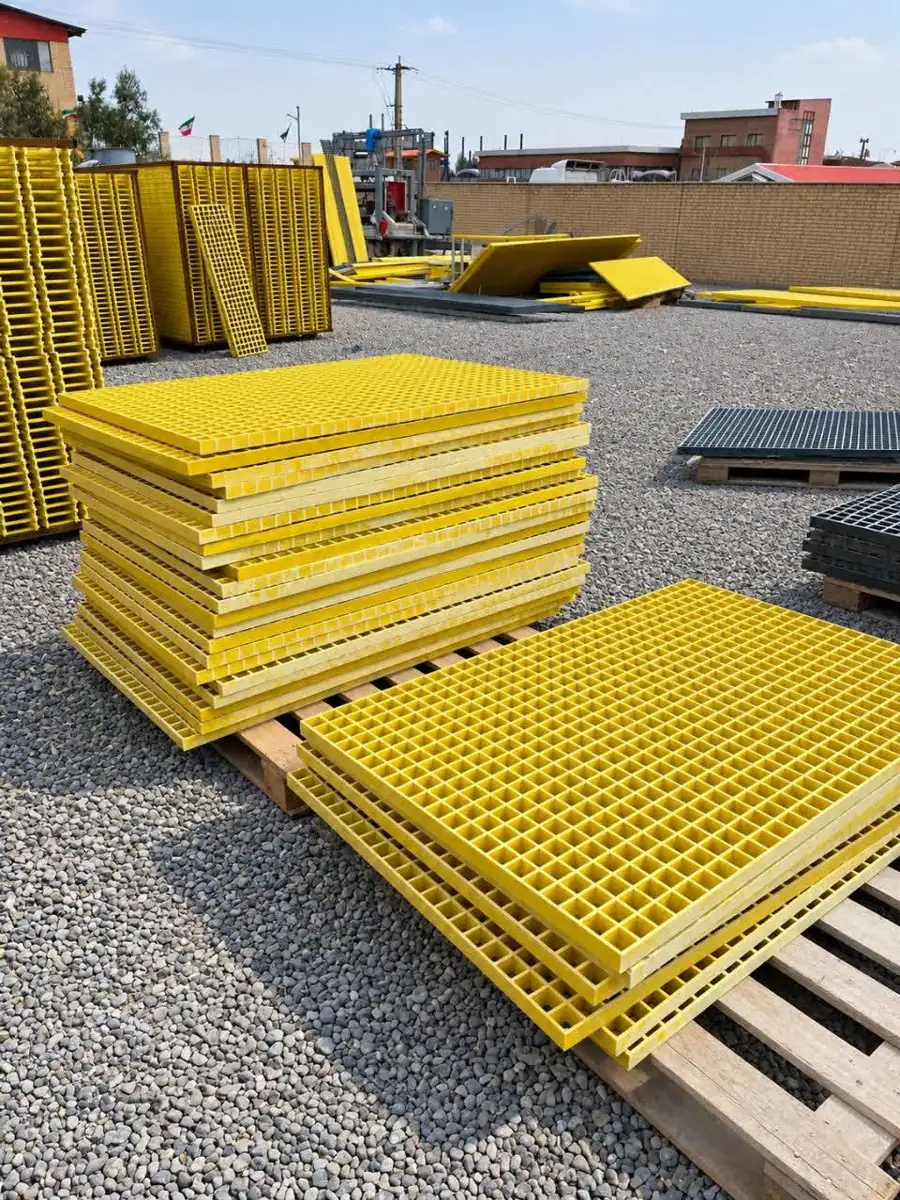
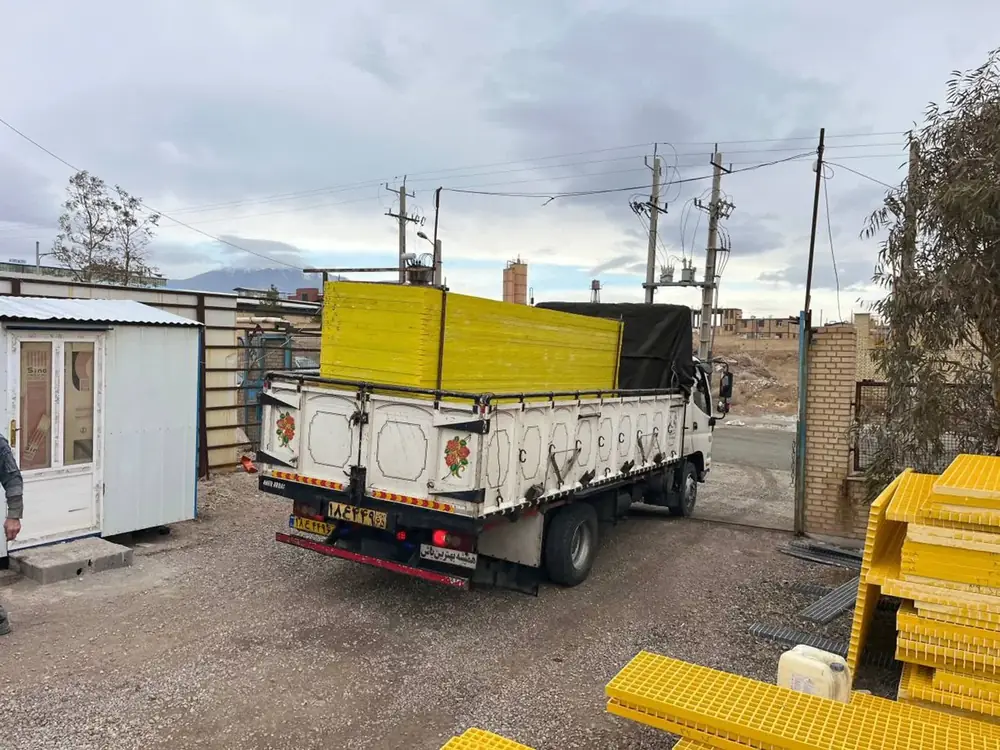
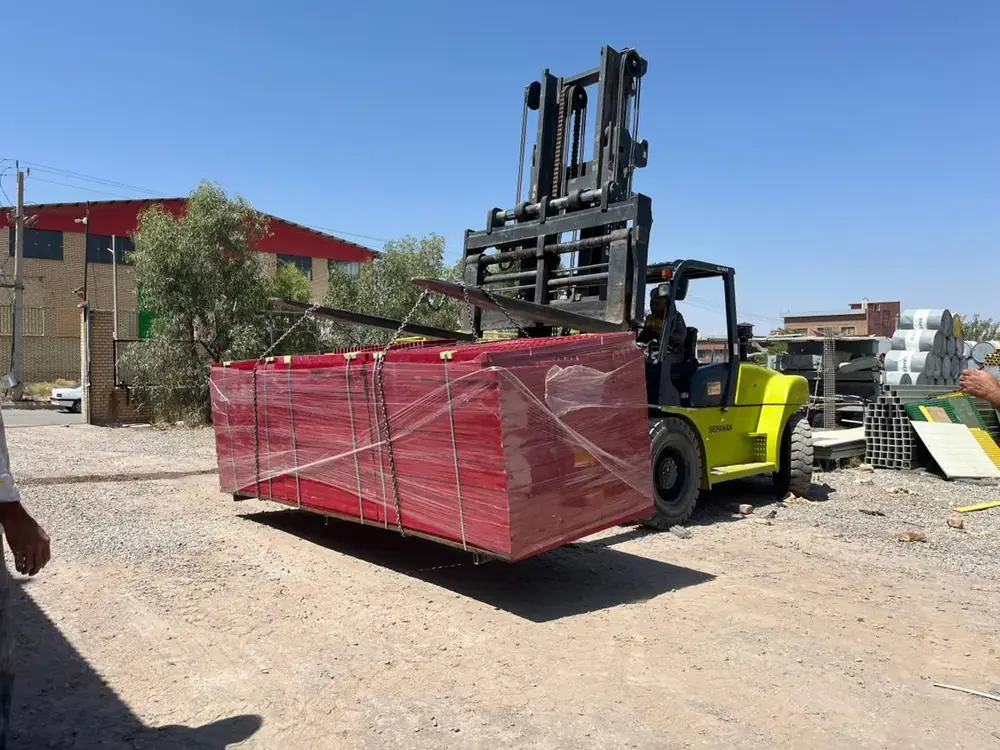
Nabak Composite produces, cuts and packs 25, 30 and 38 mm molded composite grating, covered grating (checker plate) and pultruded grating in grey, yellow, green and red, and supplies them together with other composite products — fiberglass sheet, composite box sections, fiberglass angles, composite channels, composite beams, fiberglass tubes, composite flat bars, polymer rods, composite rods, and cable trays and cable ladders.

Frequently asked questions about 30 mm fiberglass grating
How much does 30 mm fiberglass grating weigh?
A full 1220×3660 mm sheet of 30 mm fiberglass grating weighs about 61 kg, i.e. about 13.7 kg per m².
Is 30 mm or 25 mm fiberglass grating better?
For about 20% more weight, the 30 mm model has about 70% more allowable load (stiffness grows with the cube of the height) and extends the allowable pedestrian walkway span from about 550 mm to about 700 mm.
What span is 30 mm fiberglass grating suitable for?
Up to about 700 mm for a pedestrian walkway with a uniform load of 500 kg/m² and a concentrated load of 100 kg, and up to about 900 mm for a light service walkway with a 250 kg/m² load.
Can a forklift drive on 30 mm fiberglass grating?
No. A forklift wheel applies a concentrated load of several hundred kilograms to several tonnes — far more than the concentrated capacity of this model (about 200 kg at a 600 mm span). Vehicle and forklift traffic requires special thick gratings and a dedicated design.
How thick are the bars of 30 mm molded grating?
The bars are about 7 mm thick at the crown and about 5 mm at the base, and the clear opening of each cell at the top surface is about 31 mm.
Summary
30 mm fiberglass grating (molded grating 30×38×38) is a one-piece glass fiber and resin mesh panel with 38 mm cells, a 31 mm opening, 68% open area and a weight of about 13.7 kg/m². Each 1220×3660 mm sheet with 32 × 96 full cells weighs about 61 kg; its tensile modulus is 15 GPa and it can be used up to about 100 °C. With 20% more weight than 25 mm grating it is about 70% stiffer and covers pedestrian walkways with spans up to about 700 mm. Cut to full cells using the table, with a concave, smooth or gritted surface, correct clip fixing and the 40%-of-ultimate cap respected, this FRP grating is a light, insulating and durable alternative to steel grating.

This article was prepared by the technical team of Nabak Composite, a manufacturer of molded fiberglass grating, checker plate, pultruded grating and other composite products.