
FRP/GRP Fiberglass Grating
What is FRP grating?
FRP grating (also called GRP grating, fiberglass grating or composite grating) is an open-mesh panel made of glass fibers reinforced in a polyester or vinyl ester resin matrix. It replaces steel, galvanized and stainless steel grating in industrial flooring, walkways, footbridges and equipment platforms. Unlike metal grating it does not corrode, resists acids, alkalis and moisture, and does not conduct electricity, which is why it has become the standard alternative to metal grating in oil and gas, petrochemical plants, water and wastewater treatment and power plants.
Advantages of FRP/GRP grating
- Chemical and corrosion resistance: unlike steel and galvanized grating, it does not rust or corrode in acidic, alkaline, humid or coastal environments.
- Light weight: about one-quarter to one-third the weight of equivalent metal grating, which sharply reduces transport and installation costs.
- Electrically insulating and non-magnetic: suitable for high-voltage areas, transformer rooms and environments sensitive to magnetic fields.
- Anti-slip surface: with a quartz grit or ribbed surface, it offers better friction than wet or icy metal.
- Long service life and low maintenance: no painting, re-galvanizing or cathodic protection needed.
- Good mechanical strength: a high strength-to-weight ratio, selected to match the design load of each project.
Types of FRP grating
Depending on the manufacturing method and the application, Nabak Composite produces and supplies the following types:
- Molded grating: made in one piece in a mold, with even strength in both directions; the most widely used type for industrial flooring.
- Pultruded grating: made of pultruded bars that are stronger and stiffer in one (longitudinal) direction; suited to longer spans and concentrated loads.
- Anti-slip (gritted) grating: with a quartz grit top surface for high-traffic routes, stairs and wet or oily surfaces.
- Heavy-duty grating: greater depth and section for heavier loads such as equipment and vehicle traffic.
Full technical details of each type are available in our Technical Center.
Molded vs pultruded grating: which one to choose?
The most common question from buyers is whether to choose molded or pultruded grating. Because molded grating is made in a single mold, it has almost the same strength in both directions, so it is the more economical and common choice for general flooring with distributed loads (foot traffic, light equipment). Pultruded grating, on the other hand, is made of bars reinforced in one direction and has higher stiffness and concentrated-load capacity along that direction; it is the better engineering choice for longer spans between supports or where heavy point loads (such as forklift wheels or wheeled equipment) pass over it. The final decision should be based on support spacing, the type and size of the design load, and the project budget; Nabak’s technical team supports clients and contractors in making this choice.
FRP grating vs metal and galvanized grating
| Property | FRP/GRP grating | Galvanized/metal grating |
|---|---|---|
| Corrosion resistance | Complete, in chemical and coastal environments | Limited; needs periodic re-galvanizing |
| Relative weight | Light (about 1/4 to 1/3 of metal) | Heavy |
| Electrical conductivity | Insulating | Conductive |
| Maintenance | Practically maintenance-free | Needs periodic painting/galvanizing |
| Initial cost | Usually higher | Usually lower |
| Life-cycle cost (maintenance + replacement) | Lower in corrosive environments | Higher in corrosive environments |
Technical specifications and standard sizes
Nabak molded grating is produced in the depths and mesh sizes below. Standard panel sizes are 1 × 4 m and 1.22 × 3.66 m, and custom cutting to the project drawing is also available:
| Depth (mm) | Mesh size (mm) | Typical use |
|---|---|---|
| 25 | 25×25 or 38×38 | Light flooring, walkways |
| 30–32 | 38×38 | General industrial flooring |
| 38 | 38×38 or 50×50 | Industrial platforms |
| 40–50 | 50×50 | Heavy loads, equipment traffic |
Weight of FRP grating
Because grating is an open mesh, its weight depends on the solid-area percentage (set by the mesh size), the depth and the density of the resin and fibers, rather than on a solid cross-section formula. As a rough guide, molded grating weighs between 15 and 30 kg per square meter; a finer mesh and greater depth mean a higher weight. The exact figure for your project is available from Nabak’s technical team.
Fixing and installation
Molded grating is usually fixed to the supporting structure (steel or FRP stringers) with dedicated grating clips. This needs no welding and makes it easy to install and lift panels again for servicing equipment below. Grating can be cut on site with an ordinary abrasive disc cutter, with no special equipment.
Maintenance and cleaning
A practical advantage of FRP grating over metal is its near-zero maintenance cost. It does not rust, and its color is in the resin itself rather than in a surface coat, so it never needs painting or re-galvanizing. Washing with water and ordinary industrial detergents is enough to remove dust or grease; just avoid strong solvents and coarse abrasives that could scratch the anti-slip surface layer (gel coat).
Applications of FRP grating
- Flooring of industrial platforms in oil, gas and petrochemical plants
- Pedestrian footbridges and inspection walkways
- Channel and trench covers in water and wastewater treatment plants
- Stair treads and anti-slip surfaces in wet industrial areas
- Equipment access routes in power plants and marine jetties
- Drilling rig platforms and oil jetties in coastal and offshore areas
- Food and pharmaceutical facilities where frequent washing and surface hygiene matter
How to choose the right grating for your project
Before ordering, define the following:
- Design load: the maximum static or dynamic load the grating must carry (foot traffic, equipment, vehicles).
- Support spacing (span): the longer the span, the greater the depth needed, or the more suitable pultruded grating becomes.
- Service environment: acids or alkalis, permanent moisture or coastal conditions determine the resin type.
- Need for slip resistance: for sloped surfaces, stairs or oily areas, always specify an anti-slip surface.
- Dimensions and cutting: the exact installation dimensions and any custom cutting to the drawing.
If you are not sure about any of these parameters, simply send the general project details to Nabak’s technical team and we will recommend the right type, depth and mesh size.
Quality control
Every stage of Nabak’s molded and pultruded grating production, from the resin-to-catalyst ratio to the mold cure time and temperature, is controlled by our production specialists so that thickness, fiber-to-resin bond and surface finish stay consistent across all panels of an order. Before shipping, panels are inspected visually and dimensionally for size, surface flatness and any bubbles or surface cracks, and any panel that does not match the requested specification is removed from the order before packing.
Why Nabak FRP grating?
Nabak Composite supplies molded and pultruded grating with consistent dimensions and thickness, precise cutting to the structural drawing, and free technical advice on choosing the right type, depth and mesh for each project. Our engineering team works with clients and contractors to match the grating to the design load, the corrosive environment and the project budget, not just to sell a ready-made product. This advisory approach means each order is specified correctly from the start, with no need for replacement or rework after installation.
Technical support before and after purchase
Before you order, Nabak’s technical team reviews your drawing or project description and recommends the grating type and specification so you can decide with confidence. After delivery, if any question comes up about installation or cutting, our technical department answers by phone or through the contact form.
Samples before large orders
For large orders, a physical sample can be sent or viewed before the order is finalized so you can check surface quality, color and dimensional accuracy up close; mention this when you request a quotation.
Frequently asked questions about FRP grating
- How long does FRP grating last? In corrosive environments, usually much longer than metal grating, because it does not corrode and needs no periodic replacement.
- Is FRP grating fire resistant? It depends on the resin selected (standard or self-extinguishing); for fire-sensitive projects, the right resin must be specified from the start.
- Can FRP grating be cut on site? Yes, with an ordinary disc cutter and no special equipment.
- Is molded or pultruded grating better? It depends on the project: molded is more economical for general flooring with distributed loads, while pultruded is stiffer for long spans and concentrated loads.
- Does FRP grating need special maintenance? No. Unlike metal, it needs no periodic painting or galvanizing, and normal washing is enough for cleaning.
Packing, shipping and delivery
To protect edges and surfaces in handling, grating panels are stacked on wooden or steel pallets and wrapped in bubble or stretch film. Because the panels are much lighter than equivalent metal grating, freight costs for the same area (square meters) are noticeably lower. Delivery time depends on order size and stock; please ask our sales team about delivery to your location.
FRP grating price
The price of FRP grating depends on the type (molded/pultruded), depth, mesh size, color and order quantity. For an up-to-date quotation matched to your project specification, contact Nabak Composite’s sales team through the contact form.
How to order
- Define the application, design load and dimensions of your project
- Choose the type (molded/pultruded/anti-slip/heavy-duty), depth and mesh size, with free technical advice if needed
- Request a price and delivery time from our sales team
- Confirm the order; panels are produced or custom-cut to your drawing
- Shipping and delivery
Summary
For any project exposed to moisture, chemicals, coastal conditions or a need for electrical insulation, FRP/GRP grating is a more sensible alternative to metal and galvanized grating: lighter, corrosion-proof and cheaper over the life of the project. Nabak Composite produces both main types (molded and pultruded) in various depths and mesh sizes, and offers free technical advice on choosing the right option for your design load, span and environment. To get started, share your project details with our sales and technical team through the contact form.
For the complete technical specifications, dimensions and engineering tables of the products in this category, see Composite Grating (Molded & Pultruded) — Technical Datasheet and Pultruded FRP/GRP Grating — Technical Datasheet.
Related technical datasheets
Products in this category
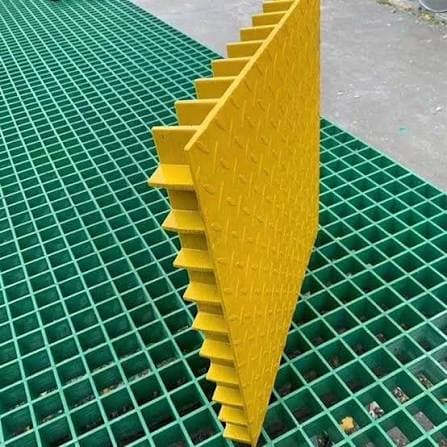
FRP/GRP Grating Cover with Corrugated Anti-Slip Top
A closed-surface FRP/GRP cover for trenches, cable ducts and access pits: a load-bearing fiberglass grating co
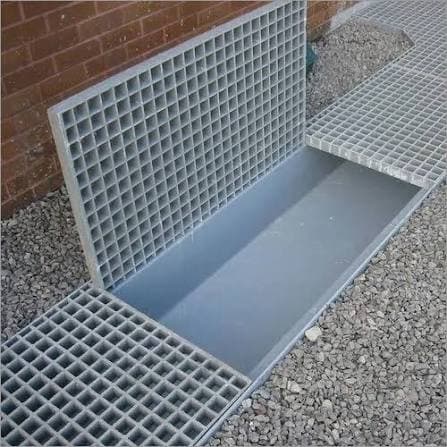
FRP/GRP Trench Cover Grating
Fiberglass (FRP/GRP) grating made to cover utility trenches, cable ducts, water and drainage channels in indus
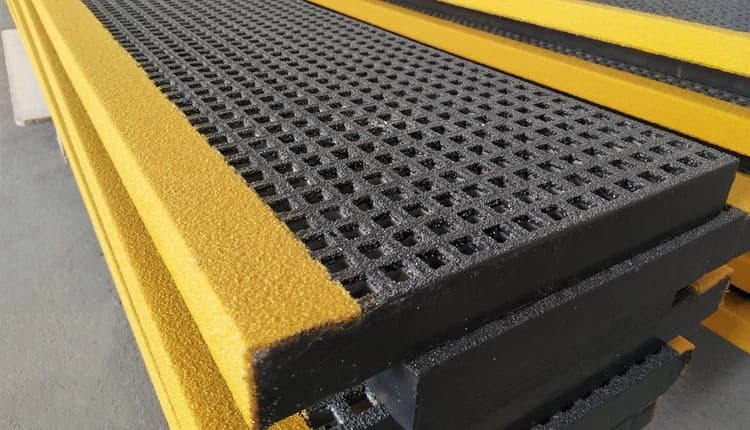
FRP/GRP Anti-Slip Stair Tread Grating
Fiberglass (FRP/GRP) stair tread grating with a gritted anti-slip surface and safety nosing for industrial sta
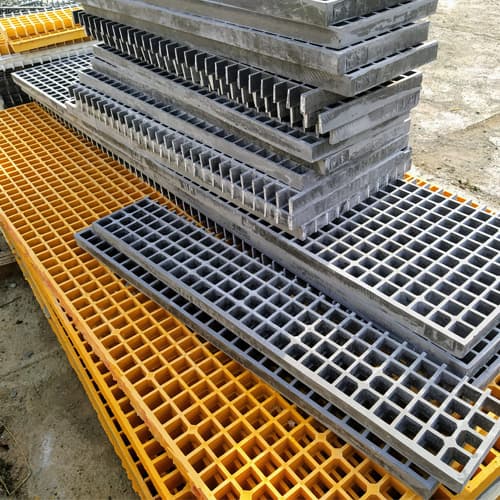
FRP/GRP Stair Tread Grating
Strong, lightweight FRP/GRP stair treads for industrial stairways and access structures. Made of glass fiber a
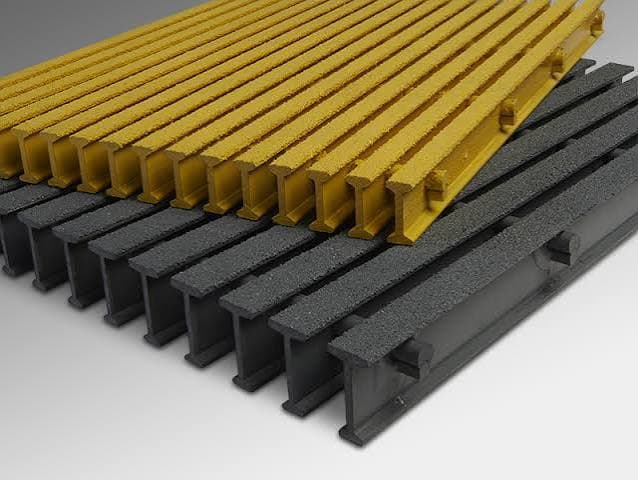
Heavy-Duty FRP/GRP Grating
High-strength FRP/GRP grating for heavy traffic and tough operating conditions. Made from glass fiber and engi
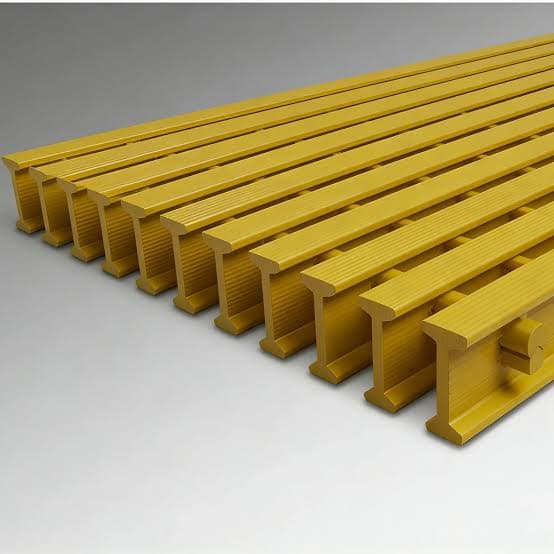
Pultruded FRP/GRP Grating
A light, strong industrial grating built from pultruded glass-fiber bearing bars. It resists corrosion, moistu

Anti-Slip Molded FRP/GRP Grating
A safe, durable composite floor grating for wet, oily and hazardous industrial areas. Its gritted surface keep
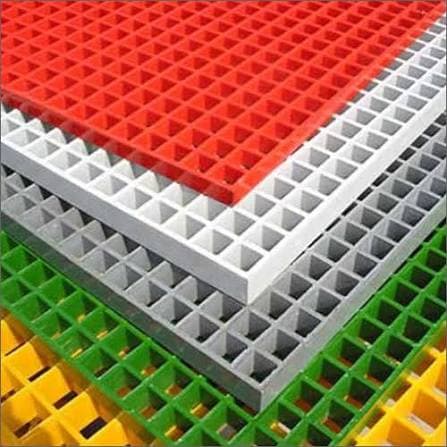
Molded FRP/GRP Grating
A strong, lightweight composite grating made from fiberglass and resin. With high resistance to corrosion, moi