What is 41 mm checker plate grating?
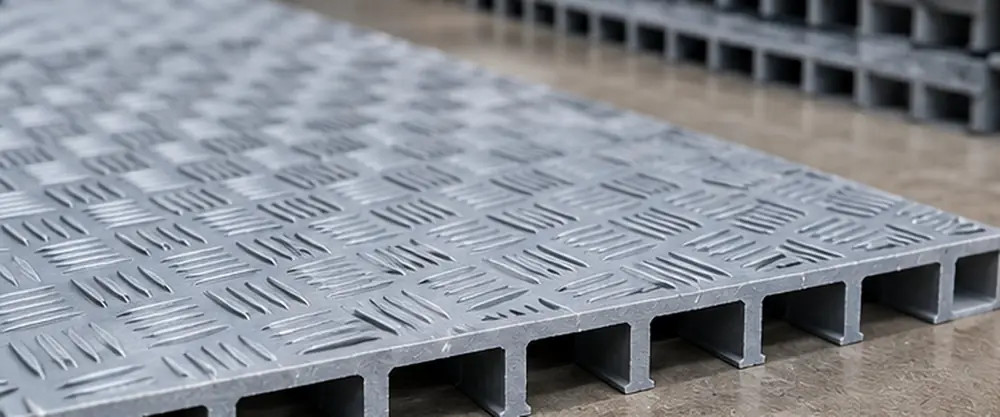
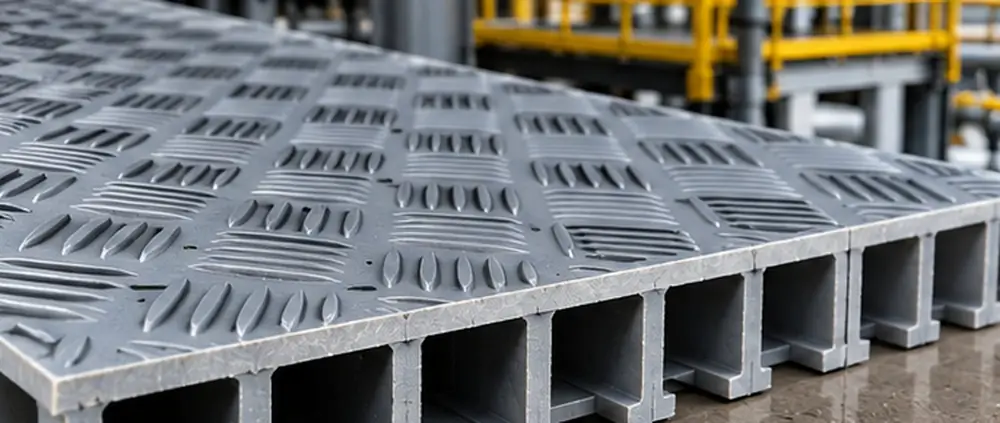
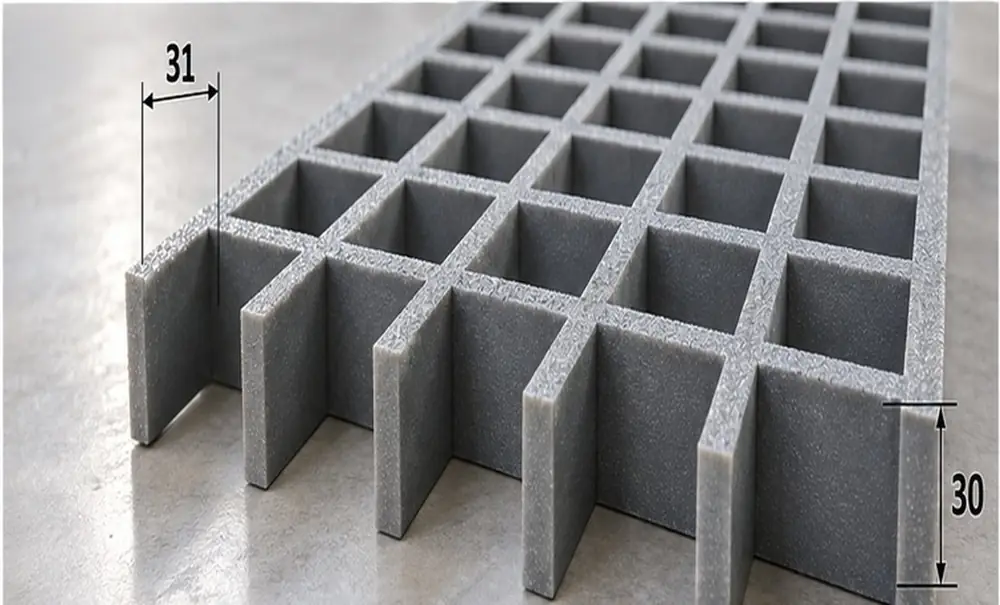
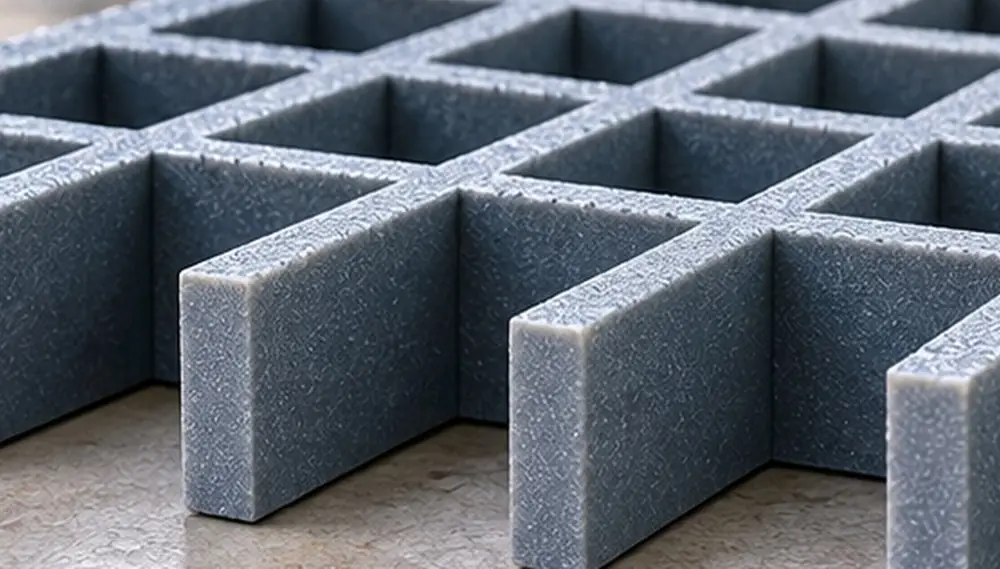
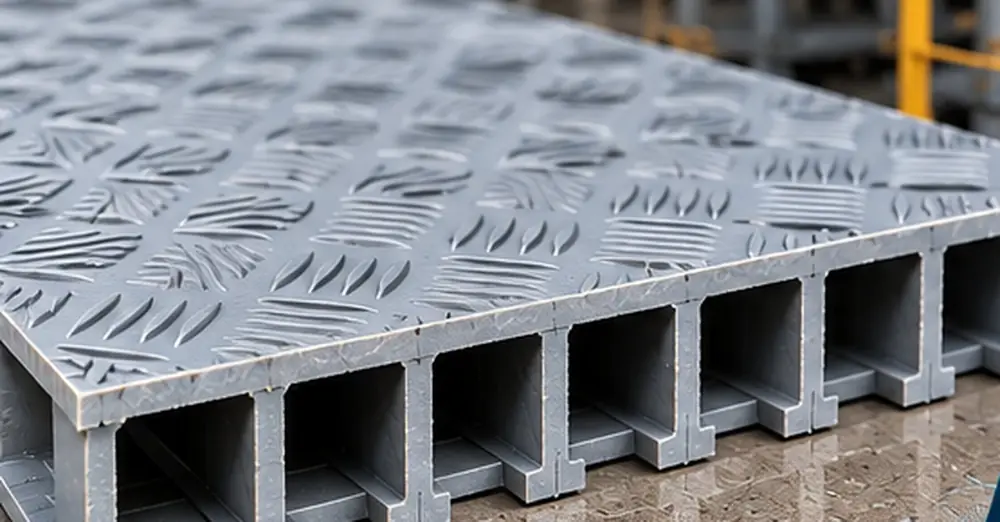
Composite checker plate grating (FRP checker plate), also known as covered composite grating, is a panel with a core of hollow mesh cells (a molded grating) and a skin of composite plate covering the whole top surface. Common market names for the product are composite checker plate, FRP checker plate, composite tread plate, patterned-surface composite grating, covered fiberglass grating, covered FRP grating, covered GRP grating and covered GFRP grating; all of them refer to a glass fiber reinforced polymer grating with a closed surface.
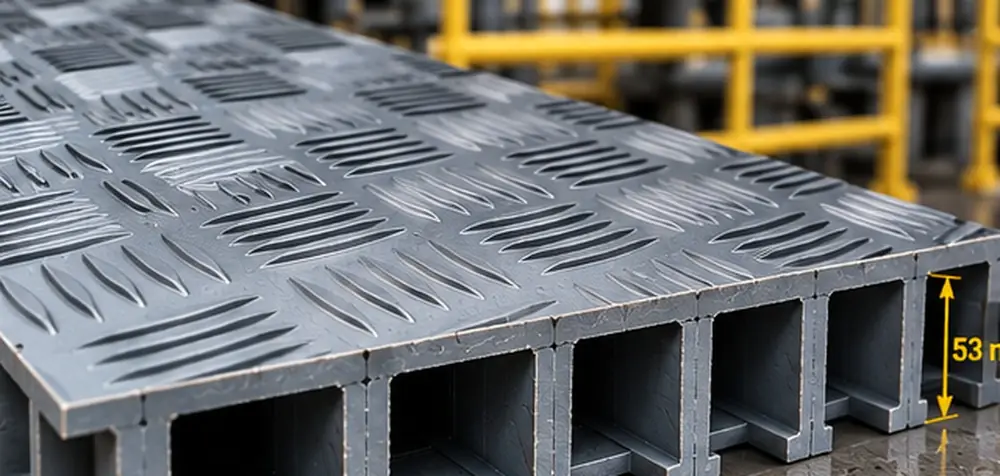
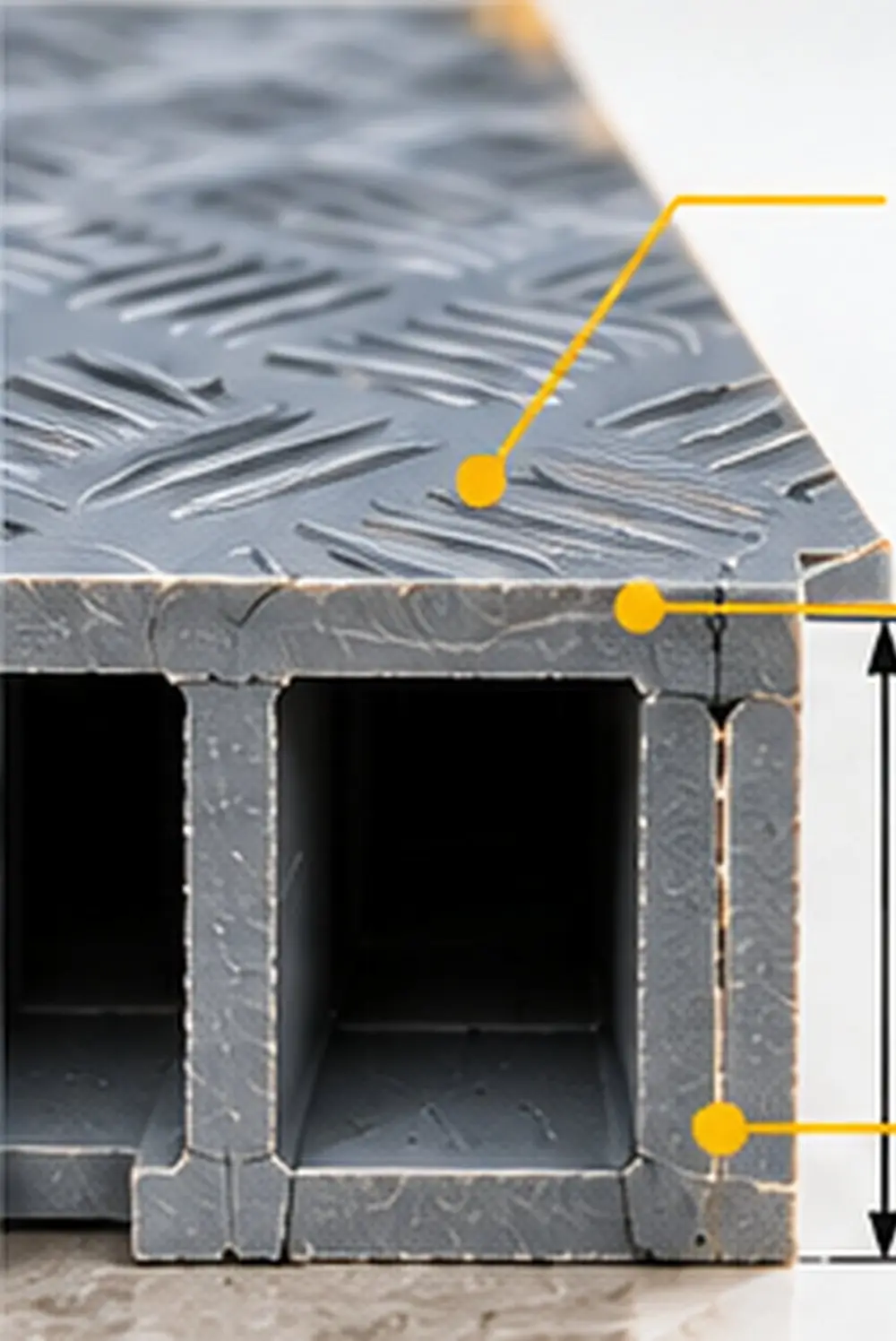
In the 41 mm model, a 3 mm composite cover plate is set on a 38 mm high molded grating, bringing the total height to 41 mm. The fiberglass cover plate is bonded to the core with resin and glass fiber continuously over the whole surface, so the skin and the core bars act as a single sandwich panel. Alongside the 28 mm checker plate and the 33 mm checker plate, this model is the option for long spans and heavy loads.
Specifications and dimensions of 41 mm covered grating
Key specifications and dimensions of 41 mm high covered composite grating:
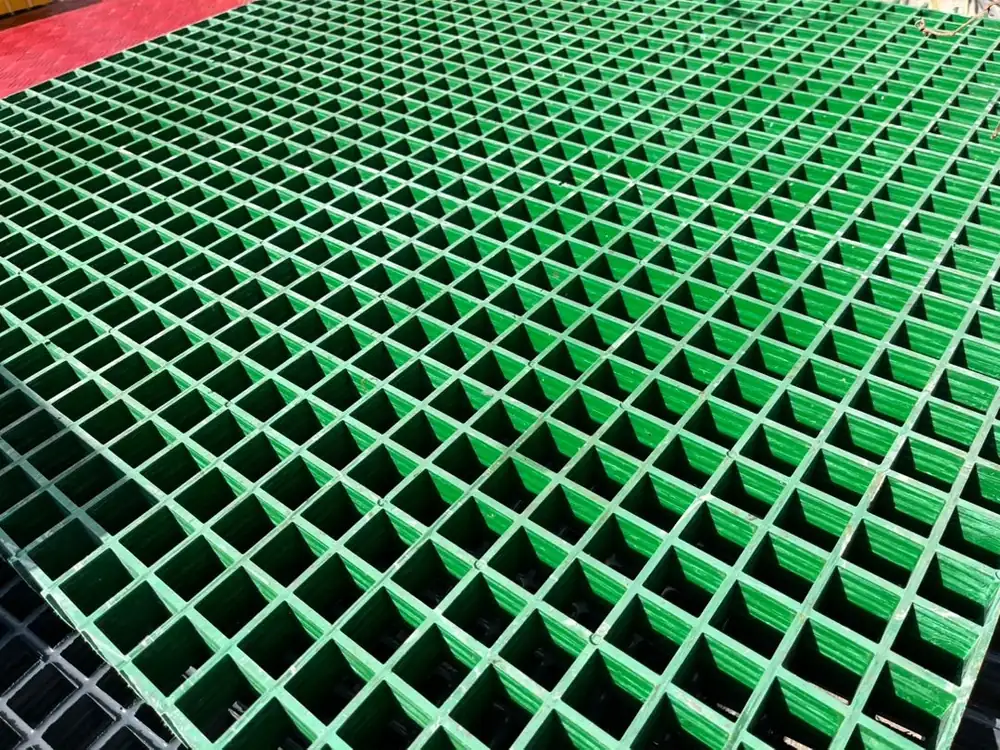
Mesh core: molded grating 38 mm high with 38 mm center-to-center mesh cells — nearly cubic cells that carry load in both directions and give the panel two-way behavior.
Top skin: a 3 mm composite checker plate bonded continuously to the core, acting as the panel's compression flange.
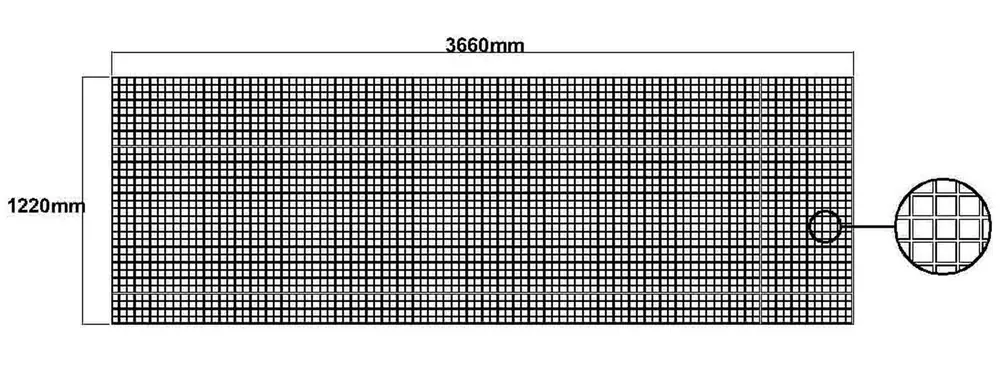
Full sheet (panel) size of the composite grating: each panel is 1220×3660 mm (3660 mm long and 1220 mm wide), with 96 full cells along the length and 32 full cells across the width.
| Property | Value | Engineering note |
|---|---|---|
| Total grating height | 41 mm | 38 mm molded grating + 3 mm cover plate |
| Cell center-to-center | 38 mm (38.1) | Square, bidirectional cells |
| Full sheet size | 1220×3660 mm | 32 × 96 full cells; about 4.47 m² |
| Open area of the molded grating core | 68% | Top surface fully closed (surface open area: zero) |
| Weight of one full sheet | approx. 106 kg | approx. 23.8 kg/m² |
| Tensile modulus | 15 GPa | Molded grating of glass fiber/resin composite (GFRP) |
| Maximum service temperature | About 100 °C | Standard resin; special grades made to order |
| Fire behavior | Self-extinguishing | Higher fire-rated grade made to order |
Patterned surface design
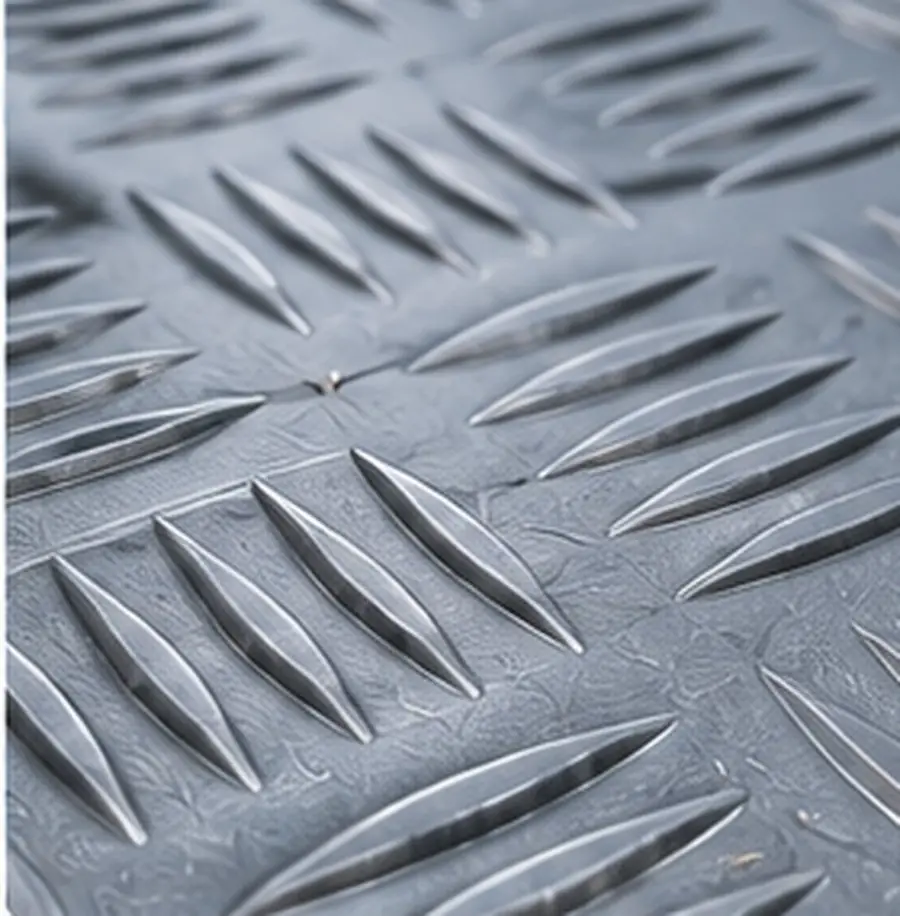
The crossing spindle-shaped ribs on the cover plate are formed in the mold during lamination and are part of the plate itself. The pattern gives friction in every direction of travel, moves water away from the shoe contact area and is easy to wash — a combination that suits busy industrial floors.
Drawing of the 1220×3660 checker plate grating panel
An accurate panel drawing is the basis for planning cuts and laying out panels. The full-grating drawing for the 1220×3660 mm panel shows the 32 by 96 cell layout and is available from the Nabak Composite technical team in DWG (2D drafting) and STEP (3D model) formats. The cell layout is the same in all three models — 28, 33 and 41 mm — and only the section height changes, so one cutting plan can be used for all three.
Cut sizes that leave full cells on composite grating
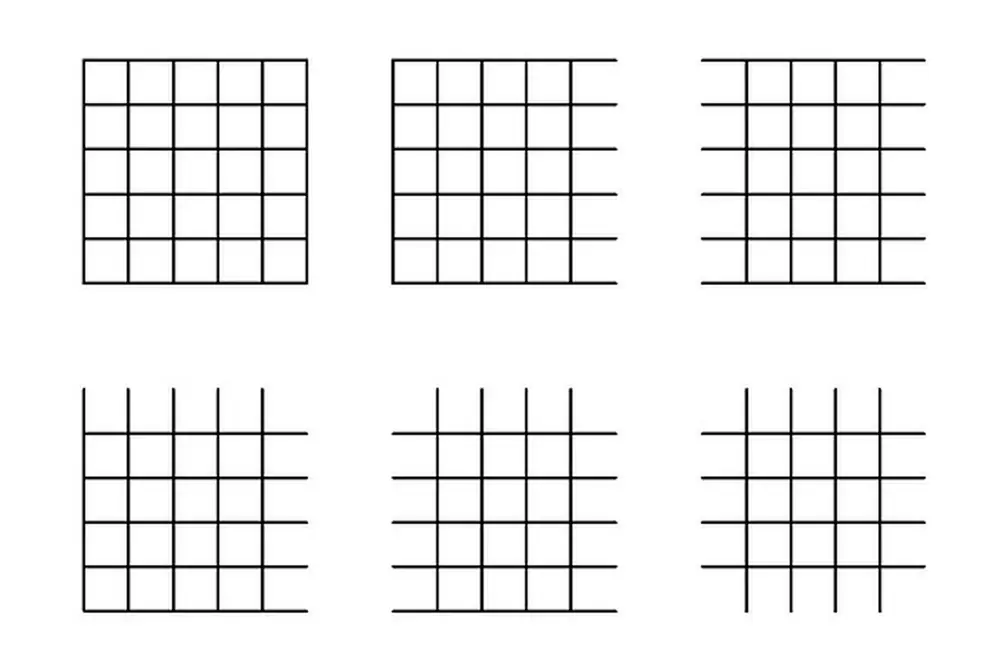
In the 41 mm model the core bars are taller and the panel heavier, so an edge cut through the middle of a cell is weaker than in the other models, both in appearance and for bearing and clip fixing. To keep full cells after cutting, choose the cut length from the table below; the values are the same for the length and width of FRP and GRP grating.
| Cells | Length (mm) | Cells | Length (mm) | Cells | Length (mm) | Cells | Length (mm) | Cells | Length (mm) | Cells | Length (mm) |
|---|---|---|---|---|---|---|---|---|---|---|---|
| 1 | 42 | 17 | 652 | 33 | 1261 | 49 | 1871 | 65 | 2481 | 81 | 3090 |
| 2 | 81 | 18 | 690 | 34 | 1299 | 50 | 1909 | 66 | 2518 | 82 | 3128 |
| 3 | 118 | 19 | 728 | 35 | 1338 | 51 | 1947 | 67 | 2557 | 83 | 3166 |
| 4 | 156 | 20 | 766 | 36 | 1376 | 52 | 1985 | 68 | 2595 | 84 | 3204 |
| 5 | 195 | 21 | 804 | 37 | 1414 | 53 | 2023 | 69 | 2633 | 85 | 3243 |
| 6 | 233 | 22 | 842 | 38 | 1452 | 54 | 2061 | 70 | 2671 | 86 | 3281 |
| 7 | 271 | 23 | 880 | 39 | 1490 | 55 | 2100 | 71 | 2709 | 87 | 3319 |
| 8 | 309 | 24 | 918 | 40 | 1528 | 56 | 2138 | 72 | 2747 | 88 | 3357 |
| 9 | 347 | 25 | 957 | 41 | 1566 | 57 | 2176 | 73 | 2785 | 89 | 3395 |
| 10 | 385 | 26 | 995 | 42 | 1604 | 58 | 2214 | 74 | 2823 | 90 | 3433 |
| 11 | 423 | 27 | 1033 | 43 | 1642 | 59 | 2252 | 75 | 2862 | 91 | 3471 |
| 12 | 461 | 28 | 1071 | 44 | 1680 | 60 | 2290 | 76 | 2900 | 92 | 3509 |
| 13 | 499 | 29 | 1109 | 45 | 1719 | 61 | 2328 | 77 | 2938 | 93 | 3547 |
| 14 | 537 | 30 | 1147 | 46 | 1757 | 62 | 2366 | 78 | 2976 | 94 | 3585 |
| 15 | 576 | 31 | 1185 | 47 | 1795 | 63 | 2404 | 79 | 3014 | 95 | 3623 |
| 16 | 614 | 32 | 1220 | 48 | 1833 | 64 | 2442 | 80 | 3052 | 96 | 3660 |
Weight of 41 mm checker plate grating
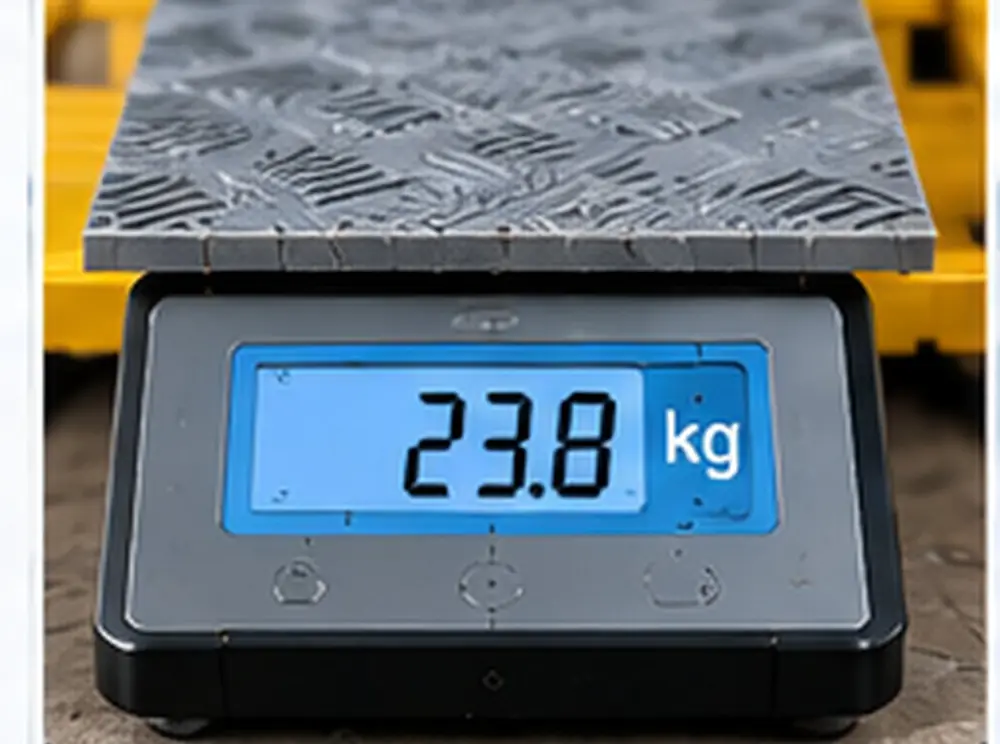
A full 1220×3660 mm sheet of 41 mm checker plate grating weighs about 106 kg; over 4.47 m² that is about 23.8 kg per m². That is about 22 kg more than the 33 mm model (84 kg per sheet) — the share of the 8 mm extra height of the core bars.
A full sheet of this composite grating is handled by two people, and a 1×1.2 m panel weighs about 28.5 kg. An 8 mm steel checker plate — still far less stiff than this panel — weighs about 65 kg per m².
28, 33 or 41 mm checker plate grating?
All three Nabak checker plate models are made with the same cover plate and cell layout; only the height of the molded grating core differs. The table below shows the effect of this difference on weight and on the allowable uniform load at L/200 deflection (kg/m²):
| Property | Checker plate 28 | Checker plate 33 | Checker plate 41 |
|---|---|---|---|
| Molded grating core | 25 mm | 30 mm | 38 mm |
| Weight (kg/m²) | 17 | 18.8 | 23.8 |
| Allowable load at 600 span | 650 | 1100 | 2100 |
| Allowable load at 800 span | 300 | 460 | 930 |
| Allowable load at 1000 span | 150 | 240 | 500 |
| Allowable load at 1200 span | 90 | 140 | 300 |
| Allowable concentrated load at 1000 span (kg) | 60 | 110 | 240 |
| Allowable pedestrian span (500 kg/m² + 100 kg) | approx. 650 mm | approx. 750 mm | 1000 mm |
Selection rule: for spans up to 600 mm, the 28 mm model; 600 to 750 mm, the 33 mm model; and 750 to 1000 mm, or loads heavier than 1000 kg/m² on short spans, the 41 mm model.
Covered or open composite grating?
Open composite grating (molded or pultruded) lets water, air and light through, while covered composite grating provides a closed surface that is safe for heels, tools and chemical splashes. Besides closing the surface, the top plate of the 41 mm model spreads concentrated loads over several core bars, which is why its allowable concentrated load at a 1000 mm span (240 kg) is enough even for heavy trolleys. On large projects, open composite grating on open areas and covered composite grating in sensitive locations are installed side by side with the same clips and fixings.
Features of 41 mm covered composite grating
Clips and installation of 41 mm checker plate
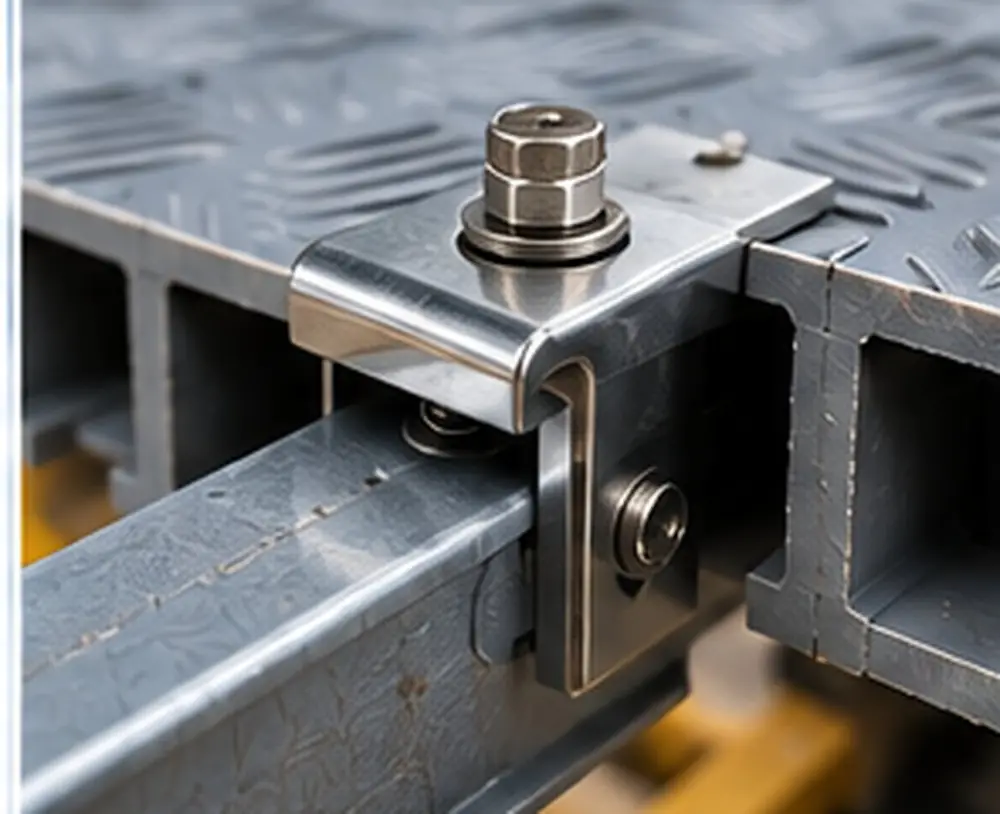
Installing FRP/GRP grating is straightforward, and covered composite grating uses the same fixings as molded grating. Panels are locked onto the beam flange with stainless steel clips; because of the 41 mm height, the clip bolt length must be chosen to suit this height.
- At least four clips per panel, plus one extra clip for every 600 mm of length.
- A bearing (seat) of at least 30 to 40 mm on the support for one-meter spans.
- Clips must sit on a full bar at the panel edge, so full-cell cutting is essential.
- Seal cut edges with resin (see cutting and machining composites).
- In highly corrosive environments, specify 316 stainless steel fixings.
Load capacity of 41 mm checker plate grating
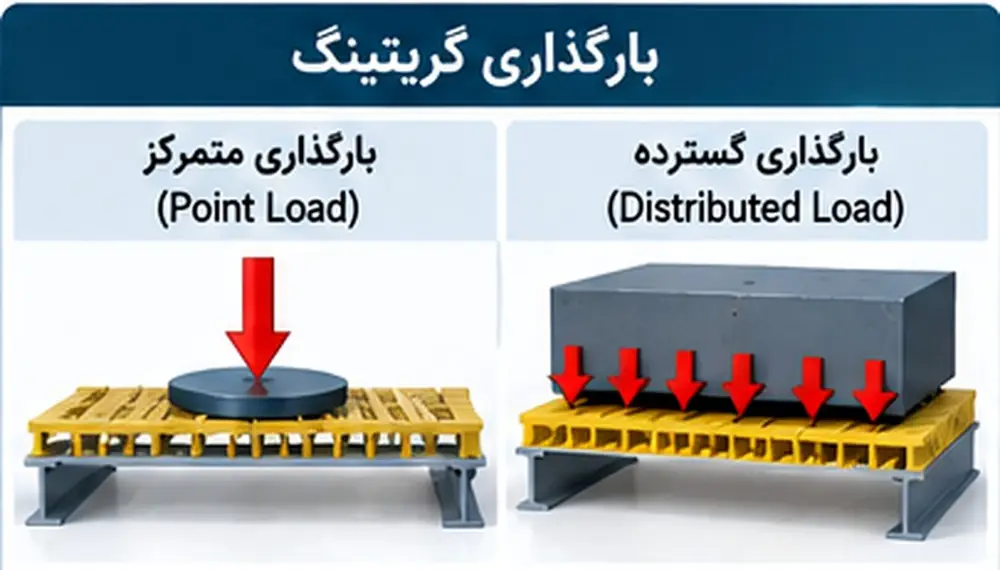
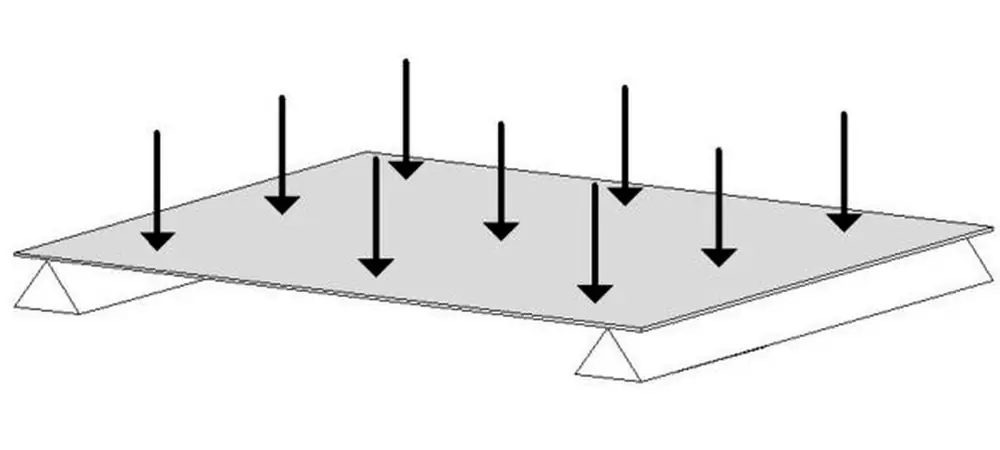
The structural behavior of fiberglass checker plate is assessed with a standard load table. Loading is defined in two cases: concentrated load, where the force is applied at one point (a foot, a wheel, an equipment leg), and uniform load, where the applied force is spread over the whole surface. Two criteria are given for each:
- Allowable load based on deflection: the load that brings the mid-span deflection of the panel to L/200 of the support spacing (0.5% of the span).
- Ultimate (failure) load: the maximum load at which the polymer grating panel will certainly fail.
Load table for 41 mm covered grating
The load table for the 41 mm high composite checker plate grating panel gives the allowable load at L/200 deflection and the ultimate load, for concentrated and uniform loading, at six common support spacings:
| Support spacing (mm) | Concentrated load (kg) | Uniform load (kg/m²) | ||
|---|---|---|---|---|
| Allowable load at L/200 deflection | Ultimate load | Allowable load at L/200 deflection | Ultimate load | |
| 400 | 1,270 | 7,800 | 7,100 | 52,000 |
| 600 | 590 | 5,100 | 2,100 | 22,000 |
| 800 | 340 | 4,000 | 930 | 13,000 |
| 1,000 | 240 | 3,100 | 500 | 9,000 |
| 1,200 | 180 | 2,600 | 300 | 5,800 |
| 1,400 | 140 | 2,300 | 190 | 4,400 |
- The allowable uniform load falls roughly with the cube of the span: from 600 to 1200 mm it drops about 7 times (2100 to 300); the allowable concentrated load falls roughly with the square (590 to 180).
- At every span the deflection-based allowable load is far below 40% of the ultimate load (at a 1000 mm span: 500 versus 3600), so the design is deflection-governed and there is a large strength reserve before failure.
- The economic range of this model is spans of 800 to 1200 mm; at 400 to 600 mm spans the 28 and 33 mm models are usually sufficient and more economical.
Comparison with open molded grating
Comparing the allowable uniform load (kg/m²) of the 41 mm checker plate with open molded grating from the same family shows the contribution of the cover plate:
| Grating type | 600 span | 800 span | 1000 span | 1200 span |
|---|---|---|---|---|
| Molded grating 25×38×38 (open) | 476 | 201 | 103 | 60 |
| Covered grating 33 | 1100 | 460 | 240 | 140 |
| Covered grating 41 | 2100 | 930 | 500 | 300 |
See the tables for other gratings in FRP grating load capacity tables.
Load design examples for 41 mm checker plate
The examples below check a fiberglass checker plate panel step by step against the load table.
- Uniform: 500 ≥ 500 ✓ (exactly at the limit); deflection = L/200 = 5 mm < 6 ✓
- Concentrated: 240 ≥ 100 ✓; deflection ≈ 5 × 100/240 ≈ 2.1 mm; safety: 0.4 × 3100 = 1240 ≫ 100 ✓
- 2100 ≥ 1500 ✓; deflection ≈ 3 × 1500/2100 ≈ 2.1 mm; safety: 0.4 × 22000 = 8800 ✓
- 340 ≥ 300 ✓; deflection ≈ 4 × 300/340 ≈ 3.5 mm; safety: 0.4 × 4000 = 1600 ✓; the 33 mm model, at 170, was not sufficient.
Surface types of covered molded composite grating
The quality of the top surface determines the safety and final appearance of the platform. Covered composite grating is produced with three surface types, and all of them are available on the 41 mm model:
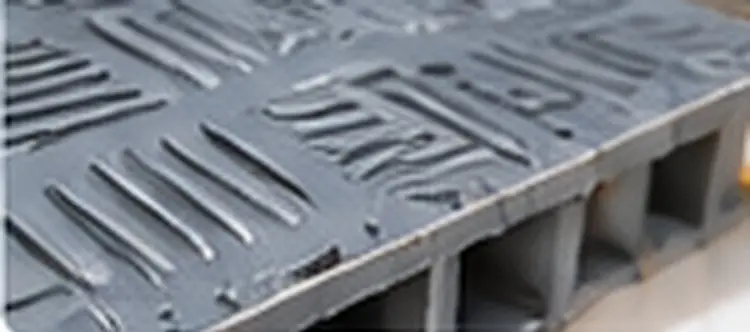
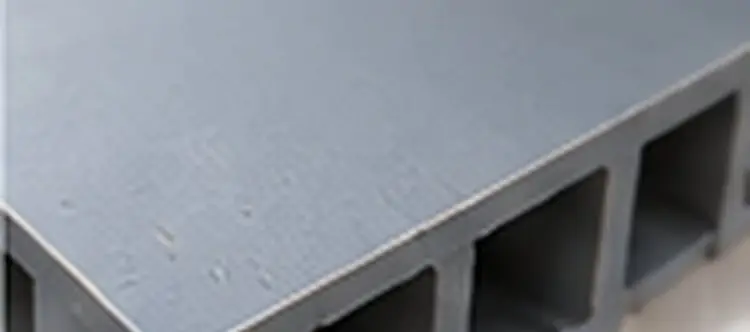
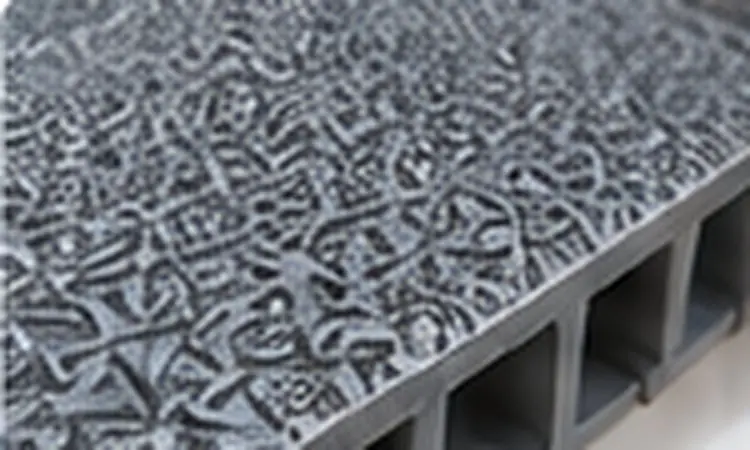
- Patterned surface (checker plate): the most common type of covered grating; raised linear ribs on the surface increase friction and roughness and prevent slipping. The product is also known as checker plate.
- Smooth surface: a completely smooth, polished surface for special uses such as sports halls, food production halls and hygienic areas; not recommended in oily or sloping areas because of the slip risk.
- Gritted surface: for slopes, areas exposed to oil spills and permanently wet routes; quartz grit and sand of a specific grading are bonded into resin, giving the highest slip resistance. The surface can also be sandblasted after production to increase roughness.
Applications of 41 mm checker plate grating
The right surface for each use depends on the environment and corrosion conditions. The high capacity of the 41 mm model makes it suitable for these applications:
- Public walkways and footbridges with one-meter spans on existing structures.
- Covers for wide channels and trenches with trolley and light pallet-truck traffic.
- Floors in equipment areas, pump houses and battery rooms.
- Platforms above switchboards and sensitive equipment.
- Decks of jetties, pontoons and coastal structures exposed to seawater.
- Replacing thick steel checker plate while keeping the existing beam spacing.
Composite checker plate compared with steel checker plate
| Feature | 41 mm composite checker plate grating (FRP) | 8 mm steel checker plate |
|---|---|---|
| Weight | approx. 23.8 kg/m² | approx. 65 kg/m² |
| Bending stiffness | Very high; 41 mm sandwich panel | Limited; needs closely spaced beams |
| Corrosion | None | Rusts; needs painting or galvanizing |
| Electrical conductivity | Insulating | Conductive |
| Service temperature | Up to about 100 °C | High |
| Cutting and installation | Simple tools; clip fixing without welding | Thermal cutting and welding |
| Maintenance cost | Very low | Periodic painting and repair |
Ordering guide for covered grating
To request a price for 41 mm covered composite grating and fiberglass checker plate, prepare the following information; loading conditions and span are the most important inputs for choosing between the 28, 33 and 41 mm models:
- Dimensions: full 1220×3660 sheet, or full-cell cut sizes from the table
- Span and loading: support spacing, uniform and concentrated load
- Surface type: patterned, smooth or gritted
- Color and resin: grey, black, yellow or custom; chemical-resistant or fire-retardant resin
- Clips and frame: number of clips; pultruded frame for hatches
- Drawing: request the DWG or STEP drawing to mark cuts on the panel and plan the panel layout
Covered grating production and delivery at Nabak Composite
Nabak Composite produces and supplies molded grating, 28, 33 and 41 mm covered grating and pultruded grating, together with other composite products — fiberglass sheet, composite box sections, fiberglass angles, composite channels, composite beams, fiberglass tubes, composite flat bars, polymer rods, composite rods, and cable trays and cable ladders.


Frequently asked questions about 41 mm checker plate grating
What is 41 mm checker plate grating made of?
It is a 38 mm high molded composite grating with 38 mm cells, onto which a 3 mm patterned plate is laminated continuously with resin and glass fiber; the total height is 41 mm.
How much does 41 mm composite checker plate weigh?
A full 1220×3660 mm sheet weighs about 106 kg, i.e. about 23.8 kg per m².
What span is 41 mm checker plate suitable for?
It is suitable up to a 1000 mm span for a pedestrian walkway with a uniform load of 500 kg/m² and a concentrated load of 100 kg, and up to 1200 mm for service walkways with a 250 kg/m² load.
What is the difference between 41 mm and 33 mm checker plate?
The core of the 41 mm model is a 38 mm molded grating (instead of 30 mm). It weighs about 26% more, but its allowable uniform and concentrated loads roughly double.
What is the allowable load of 41 mm checker plate at a 1 m span?
The allowable uniform load at L/200 deflection is 500 kg/m² and the allowable concentrated load is 240 kg; the ultimate uniform load is 9,000 kg/m².
Summary
41 mm composite checker plate grating combines a 38 mm molded grating with 38 mm cells and a 3 mm patterned plate, laminated together continuously with resin and glass fiber. Each 1220×3660 mm sheet with 32 × 96 full cells weighs about 106 kg (23.8 kg/m²); its tensile modulus is 15 GPa and it can be used up to about 100 °C. It has roughly twice the capacity of the 33 mm checker plate and is the only checker plate in the family for pedestrian walkways with one-meter spans. Cut to full cells using the table, with correct clip fixing and the 40%-of-ultimate cap respected, this FRP checker plate is a light, insulating and durable alternative to thick steel checker plate.

This article was prepared by the technical team of Nabak Composite, a manufacturer of checker plate grating, molded and pultruded grating and composite products.