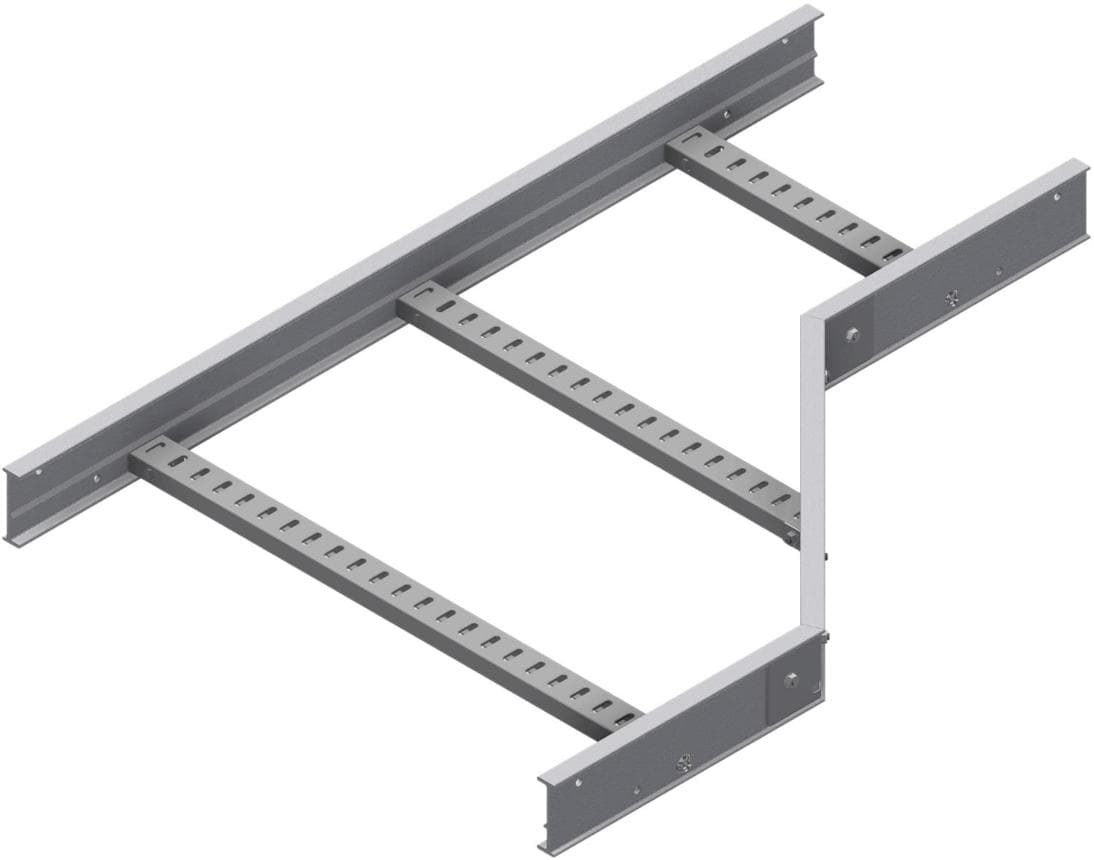
FRP/GRP left-hand cable ladder reducer
The FRP/GRP left-hand cable ladder reducer (left offset fitting) is a specialist industrial cable management fitting used to offset a cable ladder run to the left, together with a change of width or position. It is used where the designed route must shift sideways from its main axis and cannot continue straight.
It is made from fiberglass reinforced polymer and durable engineering resins and gives a standard connection between two FRP/GRP ladder runs with different positions or sizes.
On large industrial projects, using a left-hand reducer instead of modifying the ladder on site keeps the route geometry, reduces installation errors, speeds up work and ensures the cable system performs correctly.
Where a left-hand reducer is used
Cable routes rarely follow one fixed axis. Equipment, steel structures, columns, process pipes and architectural limits often force the ladder route to shift. A left-hand reducer is used to:
- Shift the cable route axis to the left without breaking the route
- Join two ladder runs that are offset sideways
- Route cables past equipment or structural obstacles
- Correct routes on racks, in electrical rooms and in process units
- Align main routes with cable branches
Key advantages
- Accurate, standard offset: shifts the ladder run to the left with no cutting or fitting fabrication on site
- Keeps cable capacity: the fitting does not reduce the space for cables and keeps them neatly laid
- Protects cables: a gradual offset prevents side pressure, twisting and loss of bend radius
- High corrosion resistance: FRP/GRP suits oil and gas, petrochemical, marine, chemical and humid industrial environments
- Light and quick to install: lower structural load than metal fittings and easy handling and assembly
- No anti-corrosion coating needed: no rust and lower repair and maintenance costs over the project life
Industrial applications
Oil, gas and petrochemical
- Routing cables around process equipment
- Passing cables through tight spaces between pipelines and equipment
- Power and instrumentation cable routes
Power plants and electrical
- Correcting cable routes in electrical rooms
- Connecting routes between switchboards and equipment
- Projects with high cable density
Mining and steel
- Heavy machinery cable routes
- Production lines with limited installation space
Marine and coastal
- Port facilities
- Highly humid and corrosive areas
Left-hand reducer vs standard bend
The difference is in the design purpose:
Cable ladder horizontal bend
- Changes route direction only (e.g. 45° or 90°)
- Used to turn the cable route
Left-hand cable ladder reducer
- Shifts the route sideways relative to its main axis
- Used to pass obstacles and align different routes
- Used where the route needs an offset
In design terms: elbow = change of direction; offset / left-hand reducer = shift of route axis.
Design notes for electrical engineers
- Ladder width on both sides of the fitting
- Number and diameter of cables
- Allowable cable bend radius
- Support positions
- Cable weight on the offset section
- Environment and composite resin type
On critical projects, include this fitting in the cable routing layout from the start to avoid site modifications and poor installation quality.
Summary
The FRP/GRP left-hand cable ladder reducer is an engineered fitting for correcting and guiding cable routes in complex site conditions. Combining good mechanical strength, low weight, corrosion resistance, electrical insulation and durability, it suits industrial cable systems in oil, gas, petrochemical, power and heavy industry projects.
Complete your system with matching FRP cable ladders and splice plates and hold-down clamps. For sizes, load classes and a quotation, see our technical documents or use the contact form.
For the complete technical specifications, dimensions and engineering tables of this product, see FRP/GFRP Composite Cable Tray — Technical Datasheet.