What is resin in a composite? The matrix, or continuous phase
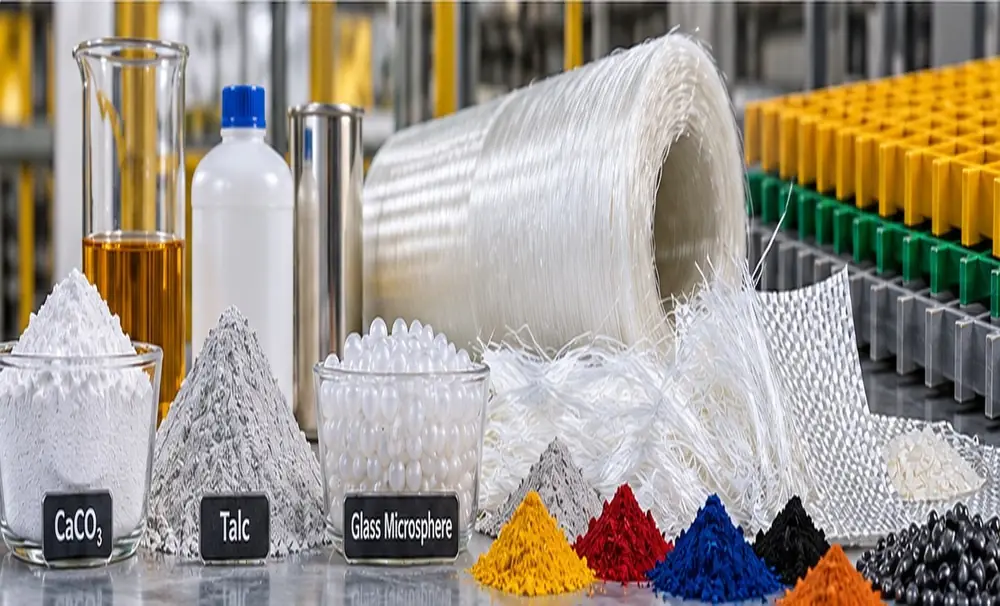
Every composite part is made of two main constituents: reinforcing fibers (glass, carbon, aramid or basalt) and the matrix, which in polymer composites is the resin. The resin is the continuous phase, or matrix, of the composite: it is connected throughout the part and the fibers are embedded in it. For a full introduction to fibers, read composite fibers; this article deals with the types of resin used in the composites industry.
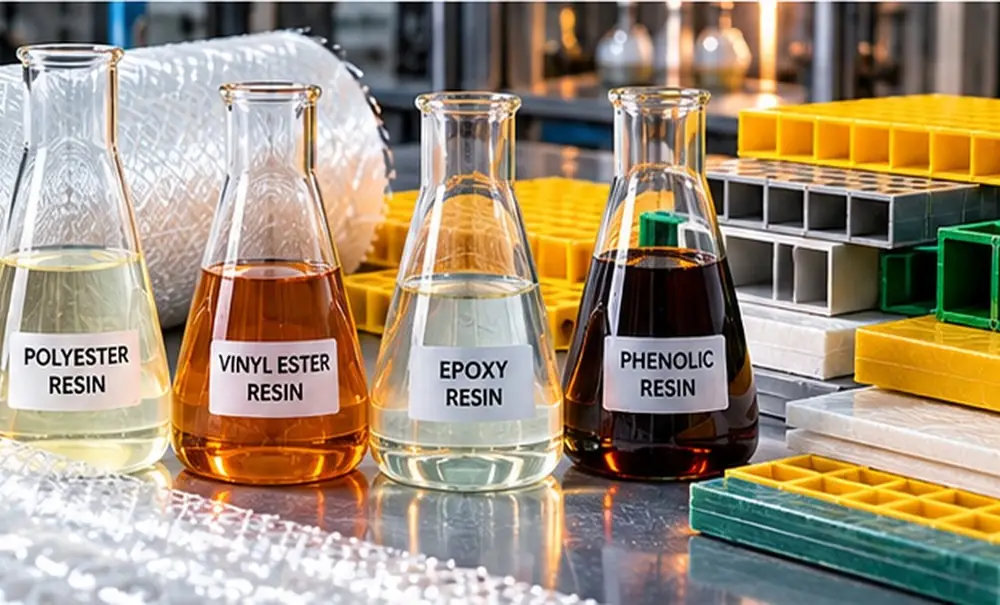
The jobs of the resin in composite products
- Holding the fibers together: keeping the fiber arrangement, orientation and the geometry of the part.
- Transferring stress to the fibers: load on the part is transferred to the fibers by shear at the resin–fiber interface and shared between them; if one filament breaks, the resin passes its load to neighboring filaments.
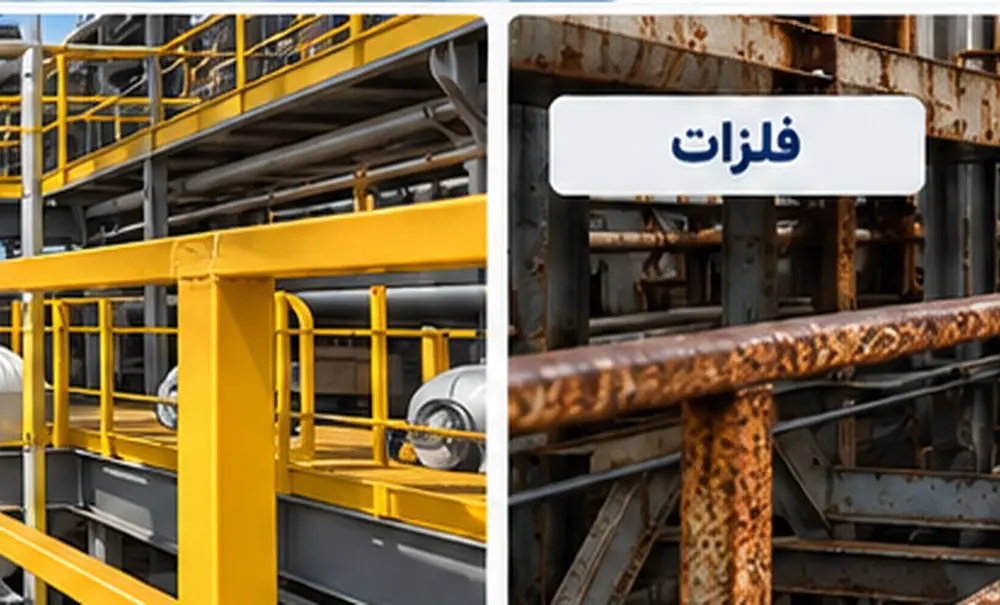
- Protecting the fibers: from moisture, abrasion, impact, chemicals and ultraviolet radiation.
- Supporting the fibers in compression: the resin prevents local buckling of the fibers, which is why the compressive strength of a composite depends on the resin modulus.
- Determining the transverse and shear properties of composite parts: transverse strength, interlaminar shear strength, maximum service temperature, chemical resistance and fire behavior are mainly properties of the resin.
Thermoset resins and thermoplastic polymers
Polymers used as the composite matrix fall into two main groups: thermosets and thermoplastics. In other words, every heat-curing resin is a thermoset and every heat-softening polymer is a thermoplastic. The difference lies in their molecular structure, and that difference determines the manufacturing method, the properties and the recyclability of the part.
Thermoset resins
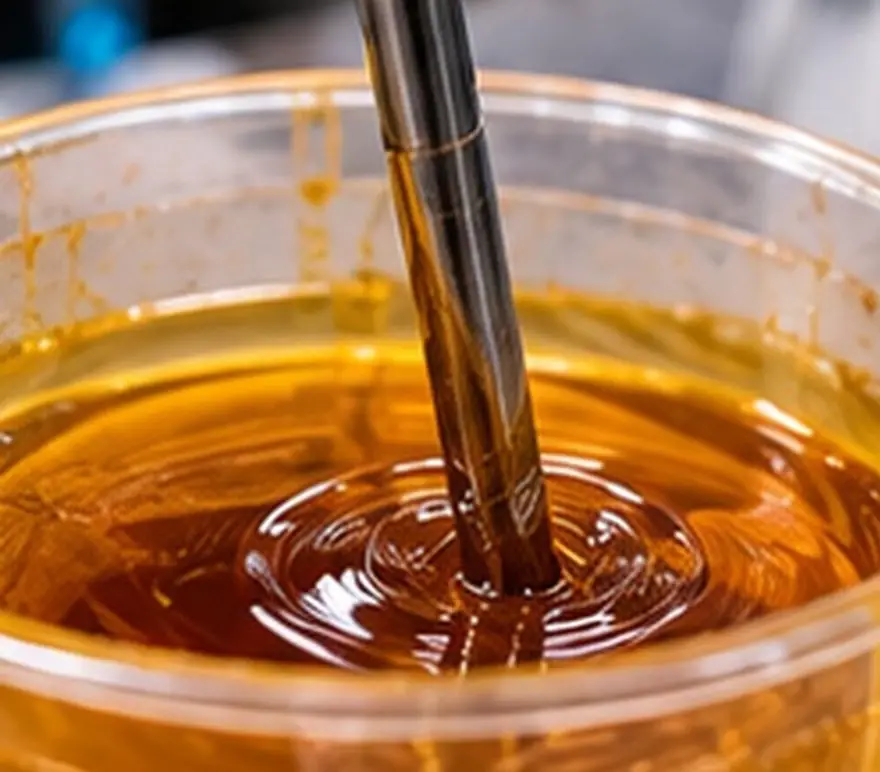
A thermoset resin starts out as a liquid. When curing agents (initiator, accelerator or hardener) and sometimes heat are added, the polymer chains are joined by covalent cross-links and form a three-dimensional, networked, solid and strong structure. This irreversible change from liquid to solid is called curing. The cured network does not melt when heated; above its glass transition temperature it becomes soft and rubbery, and at higher temperatures it degrades and decomposes.
The low viscosity of thermoset resins (typically 0.2 to 2 Pa·s) makes complete wet-out of the fibers easy at room or moderate temperature — the main reason more than 90% of industrial composite parts are made with thermoset resins.
Thermoplastic polymers
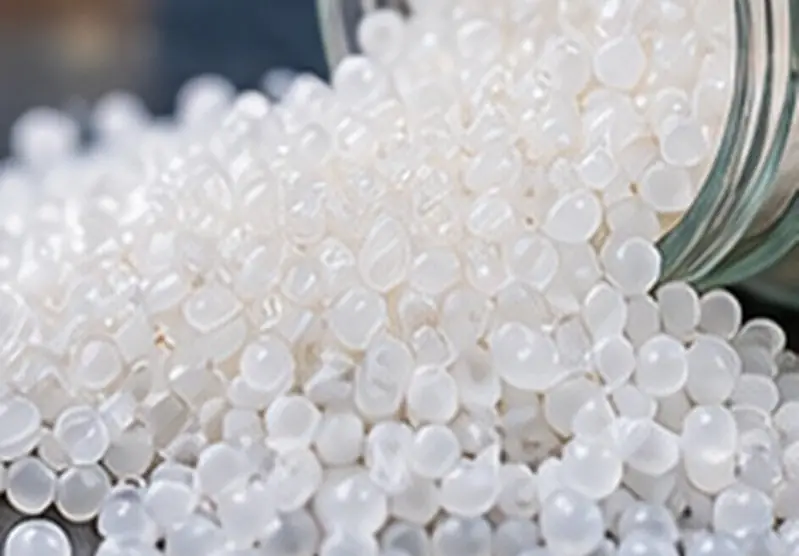
Thermoplastic polymers are made of long, separate chains held together by weak intermolecular forces (van der Waals forces and hydrogen bonds) and chain entanglement. No initiator or catalyst is needed to process them: they are solid at room temperature, soften and melt when heated, are shaped, and solidify again on cooling — and this cycle can be repeated. Polyethylene, polypropylene, polyamide (nylon), saturated polyesters (PET and PBT), polycarbonate and advanced polymers such as PEEK and PPS are examples of thermoplastics.
Advantages of thermoplastic composites: high toughness and impact resistance, weldability and reshaping, easier recycling and no shelf-life limit. Their main challenge is the very high melt viscosity (typically hundreds to thousands of Pa·s), which makes fiber impregnation difficult and requires high temperature and pressure.
| Feature | Thermoset resin | Thermoplastic polymer |
|---|---|---|
| Molecular structure | 3D network with covalent cross-links | Separate linear or branched chains |
| Initial state | Liquid (resin) | Solid (pellets, sheet, film, fibers) |
| Conversion into a part | Chemical curing reaction (irreversible) | Melting and cooling (reversible) |
| Viscosity during impregnation | Low (0.2 to 2 Pa·s) | Very high (100 to 5000 Pa·s) |
| Process temperature | Ambient to about 180°C | 200 to 400°C |
| Behavior under heat after manufacture | Does not melt; degrades | Softens and melts |
| Toughness and impact | Medium to low (brittle) | High |
| Creep and heat resistance | Good | Medium (except advanced grades) |
| Recycling | Difficult (mechanical, thermal, chemical) | Easier (remelting) |
| Examples | Polyester, vinyl ester, epoxy, phenolic | Polypropylene, polyamide, PET, PEEK |
For the consequences of this difference for recycling, see the article environmental benefits of composites.
How to tell a thermoset resin from a thermoplastic
The simplest workshop method is the heat test: bring the tip of a hot soldering iron (about 300 degrees) or a small flame close to a small corner of the part. If the material softens, melts, strings or drips, it is a thermoplastic. If it only darkens, smokes, burns and chars without softening or melting, it is a thermoset resin.
The most important thermoset resins in the composites industry
Among the resin types used in the composites industry, the four main thermosets are: 1) unsaturated polyester resin, 2) vinyl ester resin, 3) epoxy resin and 4) phenolic resin. Polyester and vinyl ester resins are the most common resins for producing composite products, including fiberglass sheet (corrugated fiberglass roofing), composite grating, composite box sections, fiberglass angles, composite channels, composite beams, fiberglass tubes, composite flat bars, polymer rods, composite rods, and cable trays and ladders.
1) Unsaturated polyester resin (UP)
Unsaturated polyester resin is made by reacting difunctional acids (some of which, such as maleic anhydride, contain double bonds) with glycols, and is dissolved in styrene monomer (typically 30 to 45 percent). The double bonds in the chain cross-link with styrene in a free-radical cure. Curing is done at room temperature with a peroxide initiator (such as MEKP) and a cobalt accelerator, or with high-temperature peroxides in heated processes such as pultrusion.
- Orthophthalic: the cheapest and most general-purpose; moderate chemical and heat resistance; for general and non-structural parts.
- Isophthalic: better resistance to water, moisture and mild chemicals and higher mechanical properties; the standard resin for pultruded profiles and general-purpose composite grating.
- DCPD and terephthalic: lower shrinkage and better surface (DCPD) or higher chemical resistance (terephthalic).
- Fire-retardant polyester: halogenated or with ATH filler; for self-extinguishing grades.
Advantages: low price, easy processing, fast room-temperature cure and wide variety. Limitations: high volume shrinkage (7 to 9 percent), low elongation (about 2 percent), sensitivity of the ester groups to hydrolysis in alkaline environments and hot water, and styrene emissions. For further reading, see the polyester and vinyl ester resins section of the article composite manufacturing methods.
2) Vinyl ester resin (VE)
Vinyl ester resin is made by reacting an epoxy resin with methacrylic acid, so its backbone resembles epoxy, but like polyester it is dissolved in styrene and cured by free radicals. The key difference: the reactive double bonds sit only at the two ends of the chain, and there are far fewer ester groups. The result:
- Excellent resistance to acids, alkalis, hot water, chlorine and solvents; the standard resin for tanks, pipes, scrubbers and gratings in chemical environments.
- Higher elongation at break (about 4 to 6 percent) and better toughness and fatigue resistance than polyester.
- Better adhesion to fibers and lower water absorption.
- The novolac type (epoxy novolac vinyl ester) has a higher service temperature and better resistance to solvents and oxidizing acids.
Vinyl ester typically costs 1.5 to 2 times as much as polyester, so in large parts sometimes only the chemical-resistant layer (the inner liner) is made of vinyl ester and the structural layer of polyester.
3) Epoxy resin (EP)
Epoxy resin (most commonly DGEBA, diglycidyl ether of bisphenol A) is cured with a hardener (amines, anhydrides or polyamides). Unlike polyester, the epoxy hardener is not a "catalyst" but part of the final network, and it must be mixed at an exact stoichiometric ratio (for example 100 to 30 by weight); a ratio error causes incomplete cure and a sharp loss of properties.
- The best mechanical properties and fiber adhesion among common resins; the standard resin for carbon composites, aerospace, wind turbine blades and structural adhesives.
- Low cure shrinkage (1 to 3 percent) and high dimensional accuracy.
- Excellent electrical properties; widely used in electrical rods and insulators.
- Service temperature from about 60 degrees (room-temperature cure) to more than 180 degrees (heat cure with anhydrides or aromatic amines).
Limitations: higher price (3 to 5 times polyester), higher viscosity, sensitivity to mix ratio, and skin sensitization (allergenicity) of amine hardeners.
4) Phenolic resin (PF)
Phenolic resin is made by reacting phenol and formaldehyde and comes in two types: resol (cured by heat or acid) and novolac (cured with hexamine). Phenolic curing is a condensation reaction that releases water; if pressure and temperature are not controlled, this water creates voids and porosity.
- The best fire behavior: inherently self-extinguishing without halogenated additives, very low and low-toxicity smoke, and formation of a protective char layer; the standard resin for composites in metros, tunnels, ships, offshore platforms and aircraft interiors.
- High heat resistance and retention of properties at high temperatures.
- Limitations: dark (brown) color, greater brittleness, more difficult processing and the need for heat cure or an acid catalyst.
Other composite resins
| Resin | Main feature | Application |
|---|---|---|
| Pultrusion polyurethane (PU) | High toughness and strength, fast cure, styrene-free | Window profiles, highly stressed beams |
| Acrylic (methacrylate) | Low smoke, UV resistance, fast cure | Transportation parts, translucent sheets |
| Bismaleimide (BMI) and cyanate ester | Service temperature 200 to 300 degrees | Aerospace, radomes |
| Furan | High chemical and fire resistance, bio-based origin | Chemical tanks, fire-resistant parts |
Property comparison table of composite resin types
The table below compares typical properties of cured neat resins (without fibers). The values are approximate and depend on the grade, cure system and post-cure; the properties of the final composite depend strongly on the fibers and their content:
| Property (neat resin) | Isophthalic polyester | Vinyl ester | Epoxy | Phenolic |
|---|---|---|---|---|
| Density (g/cm³) | 1.2 | 1.15 | 1.2 | 1.25 |
| Tensile strength (MPa) | 55–75 | 70–85 | 60–90 | 35–50 |
| Tensile modulus (GPa) | 3.2–3.8 | 3.0–3.5 | 2.8–3.6 | 3.0–4.0 |
| Elongation at break (%) | 2–3 | 4–6 | 3–6 | 1–1.5 |
| Heat deflection temperature HDT (°C) | 75–110 | 100–165 | 50–200 | 150–250 |
| Volume cure shrinkage (%) | 7–9 | 6–8 | 1–3 | High (condensation) |
| Chemical resistance | Moderate | Excellent | Good to excellent | Good (acidic) |
| Fire behavior (no additives) | Flammable | Flammable | Flammable | Self-extinguishing, low smoke |
| Relative price | 1 | 1.5–2 | 3–5 | 1.2–2 |
| Cure system | Peroxide + cobalt / heat | Peroxide + cobalt / heat | Amine or anhydride hardener | Heat or acid |
Practical terms for thermoset resins
To work correctly with thermoset resins, these terms are essential — especially shelf life before purchase and pot life before making composite parts. The curve below shows how the resin temperature changes after the curing agents are added:
| Term | Equivalent | Engineering definition |
|---|---|---|
| Shelf life / Storage time | Shelf life (storage life) | The time an unactivated resin keeps its properties in a sealed container under the recommended storage conditions. |
| Pot life / Working time | Pot life (working time) | The time a mixture of resin and curing agents remains usable; usually defined as the time for the initial viscosity to double or reach a specified value. |
| Gel time | Gel time | The time from adding the curing agents to the moment the resin loses its fluidity and becomes gel-like and unworkable (a continuous network forms). |
| Exotherm / Peak exotherm | Peak temperature (exotherm temperature) | The highest temperature the resin reaches because the curing reaction is exothermic; the point of maximum reaction rate. |
| Post-cure | Post-cure | Heating after the initial cure to complete cross-linking and reach the final properties and maximum HDT. |
| Tg / HDT | Glass transition temperature / heat deflection temperature | The temperature at which the resin changes from a hard, glassy state to a soft, rubbery state; the upper limit of the part's service temperature. |
| Barcol hardness | Barcol hardness | A quick indicator of complete cure; usually at least 90% of the value stated by the resin manufacturer. |
How to store resins
Resins should be kept in their original sealed containers, in a dark place (away from direct sunlight), dry and well ventilated, at about 15 to 25 °C. Higher temperatures shorten shelf life sharply (roughly, every 10 degrees of temperature rise halves the shelf life of polyester resin). Peroxide initiators must be stored separately from resin and accelerator, in a cool place.
| Resin | Typical shelf life (20 to 25°C) | Storage note |
|---|---|---|
| Unsaturated polyester | 3 to 6 months | Pre-accelerated resin has a shorter life; first in, first out |
| Vinyl ester | 3 to 6 months | Like polyester; away from heat and light |
| Epoxy (resin and hardener) | 12 to 24 months | Prevent moisture uptake by the hardener; resin that crystallizes in the cold can be restored by gentle warming |
| Resol phenolic | 1 to 3 months | Often requires refrigerated storage (about 5 to 10°C) |
Resin in pultrusion and in Nabak composite products
In pultrusion, the resin must have low viscosity for fast wet-out of roving and mat, a short gel time at die temperature, and a long bath life at room temperature. For this reason a heat-cure system with low- and high-temperature initiators is used, together with internal release agent, fillers and low-profile additives. See the details of additives in the article types of composite additives and the process in what is pultrusion.
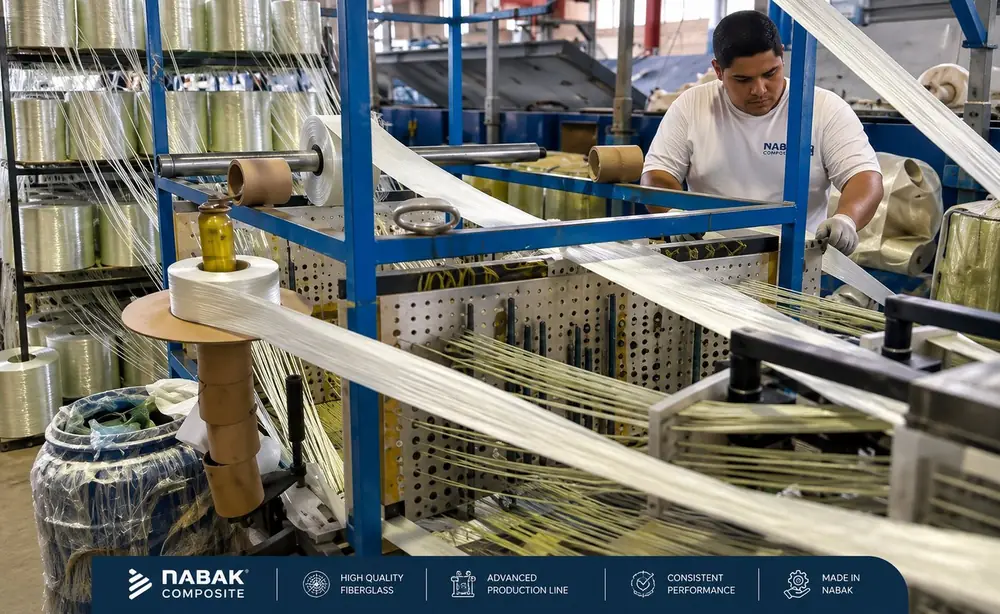
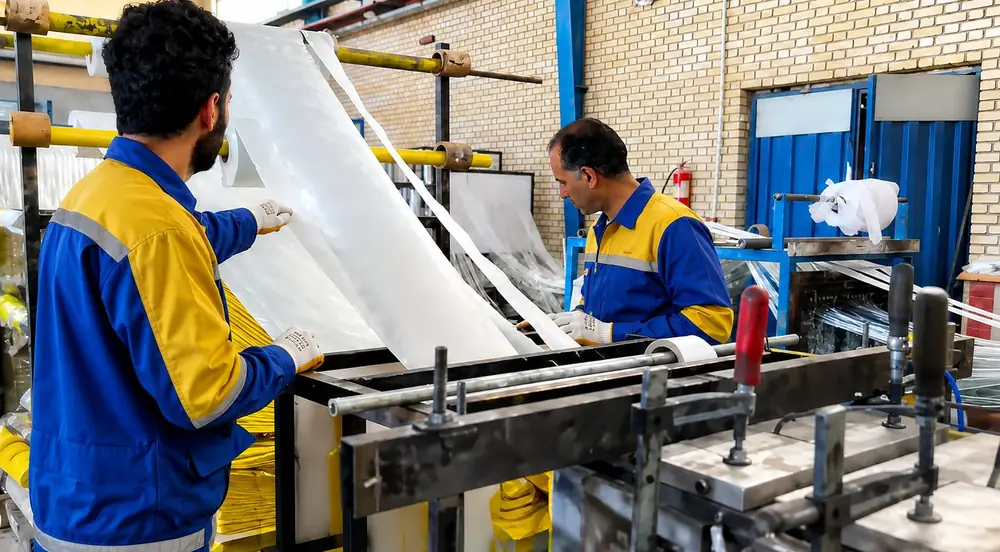
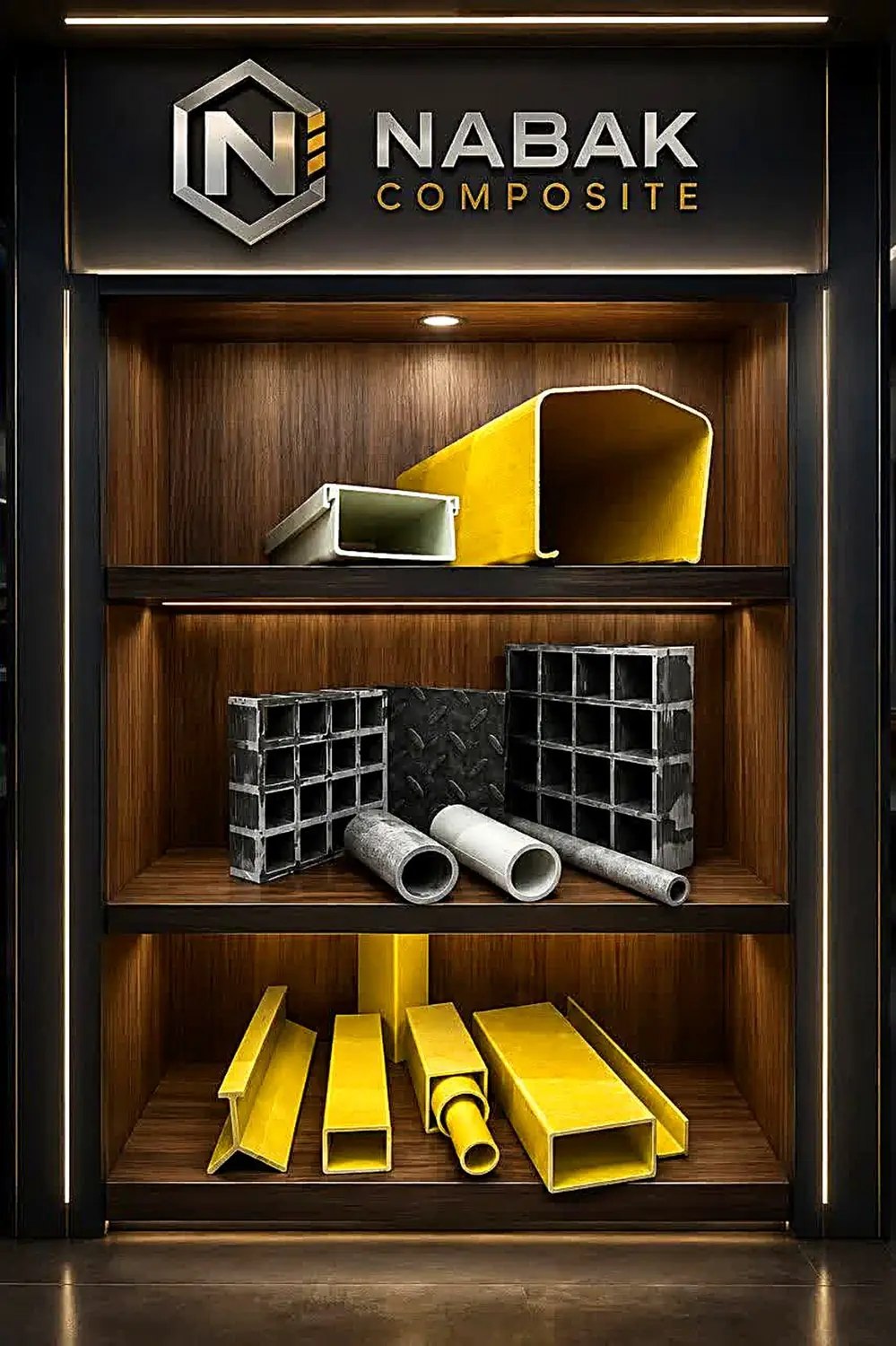
At Nabak Composite, the resin for each product is chosen according to the service environment: isophthalic polyester for general-purpose profiles, sheets and gratings; vinyl ester for treatment plants, chemical units and acidic and alkaline environments; fire-retardant grades for spaces with safety requirements; and resins with high electrical properties for polymer rods, composite rods and insulating equipment.
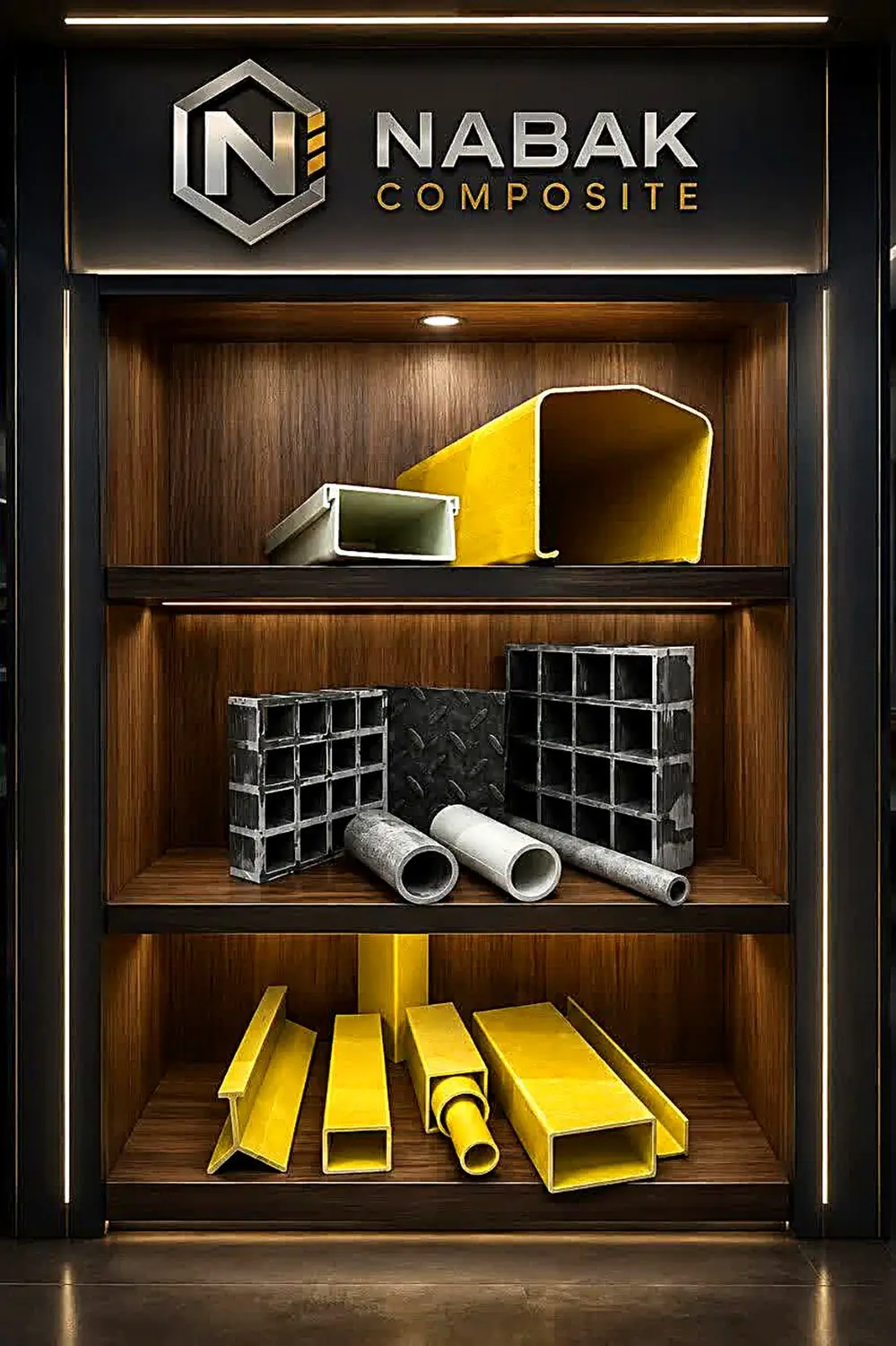
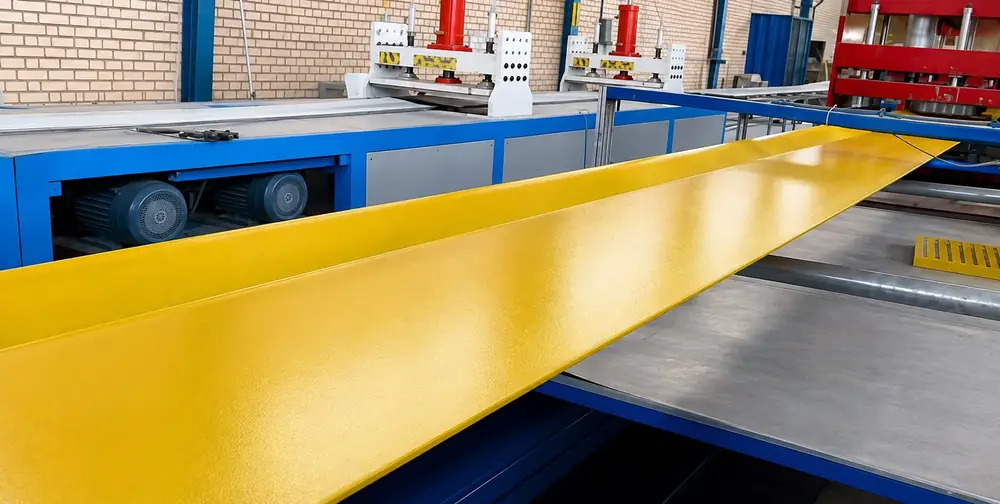
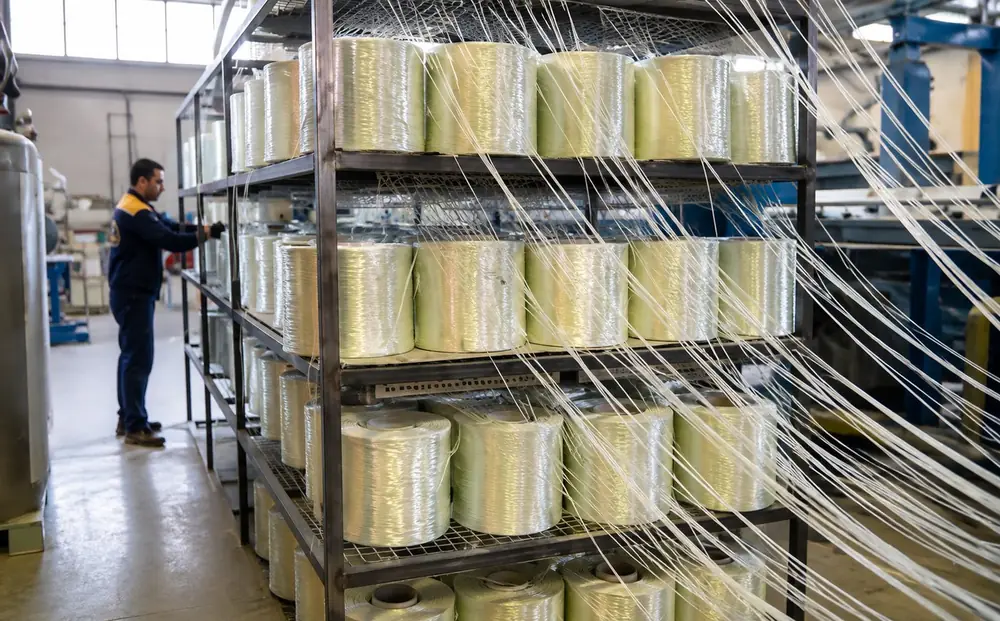
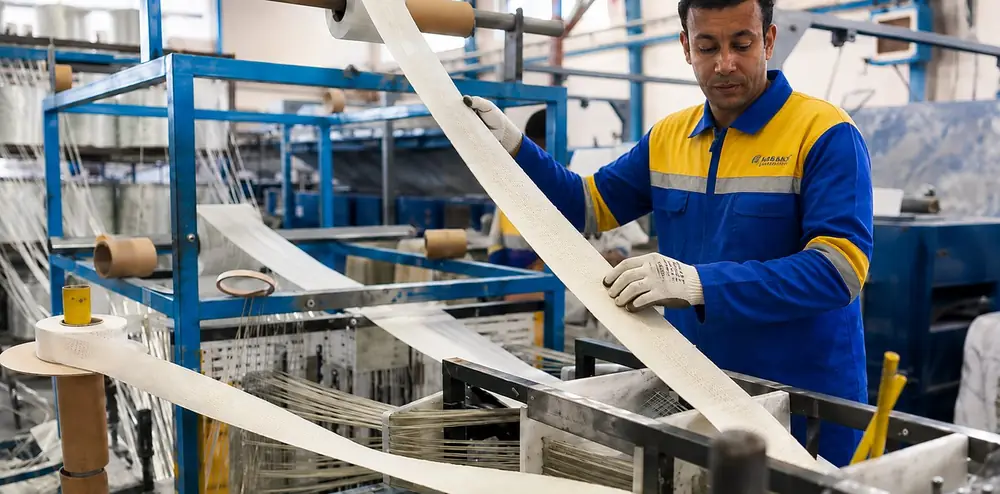
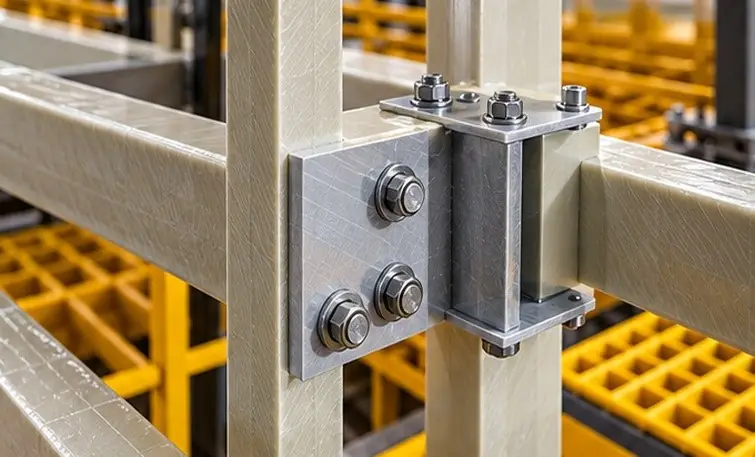
In this way, polyester and vinyl ester thermoset resins are the basis for producing Nabak's full range of composite parts: fiberglass sheet and corrugated fiberglass roofing, composite grating, composite box sections, fiberglass angles, composite channels, composite beams, fiberglass tubes, composite flat bars, polymer rods, composite rods, and cable trays and ladders. In all these composite parts, the quality of the resin cure is controlled by Barcol hardness and standard tests.
Guide to choosing a resin by service conditions
| Service conditions of composite parts | Recommended resin | Reason |
|---|---|---|
| General structures, outdoors, normal humidity | Isophthalic polyester + UV | Economical, sufficient properties |
| Acid, alkali, chlorine, hot water | Vinyl ester (novolac for severe conditions) | Hydrolysis and chemical resistance |
| Severe fire and smoke requirements (tunnels, metro, marine) | Phenolic or fire-retardant polyester/vinyl ester | Self-extinguishing, low smoke |
| Maximum strength and stiffness, carbon fibers | Epoxy | Superior adhesion and mechanical properties |
| Electrical insulation and high voltage | Epoxy or vinyl ester | Dielectric properties and low water absorption |
| Severe impact, automotive parts, recyclability | Thermoplastic polymers (PP, PA) | High toughness, fast forming |
Frequently asked questions about composite resin types
What is the difference between a thermoset resin and a thermoplastic polymer?
A thermoset resin forms a three-dimensional network with covalent cross-links through a curing reaction, and once cured it does not melt when heated but degrades. A thermoplastic polymer has separate chains held together by weak intermolecular forces; it softens and melts with heat and solidifies again on cooling, and this cycle can be repeated.
Which resin is used most in the composites industry?
Unsaturated polyester resin is the most widely used resin because of its reasonable price, easy processing and room-temperature cure, followed by vinyl ester for chemical-resistant applications and epoxy for structural and advanced applications.
What advantages does vinyl ester resin have over polyester?
Vinyl ester has fewer ester groups and reactive bonds only at the chain ends, so it has much better resistance to hydrolysis, acids, alkalis and chemicals, higher elongation at break (about 4 to 6 percent) and greater toughness than polyester.
What are gel time and peak exotherm in a resin?
Gel time is the interval from adding the curing agents to the moment the resin loses its fluidity and becomes gel-like. Peak exotherm is the highest temperature the resin reaches because the curing reaction is exothermic, and it is the point of maximum reaction rate.
How and for how long should resin be stored?
Resins should be stored in sealed containers, away from direct light, at about 15 to 25 °C. The shelf life of polyester and vinyl ester resin is usually 3 to 6 months, epoxy 12 to 24 months, and resol phenolic resin shorter, often requiring refrigerated storage; the exact figure is given in the manufacturer's technical data sheet.
Summary
Resin types in the composites industry fall into two large families: thermoset resins, which form a solid, infusible network by curing and cross-linking, and thermoplastic polymers, which melt with heat and solidify on cooling. In industrial structural products thermosets dominate, and the four main thermoset resins are: unsaturated polyester (economical and general-purpose), vinyl ester (chemical resistant and tough), epoxy (highest strength, adhesion and dimensional accuracy) and phenolic (best fire behavior). Understanding terms such as shelf life, pot life, gel time and peak exotherm, and following proper storage conditions, are prerequisites for part quality. Knowing the resin types in the composites industry and choosing the right resin for the environment, temperature, fire requirements and cost is what ensures the long life of Nabak composite products.

This article was prepared by the technical team of Nabak Composite, a manufacturer of grating, pultruded profiles, sheets and composite products.