FRP composites from an environmental perspective: why look at the life cycle?
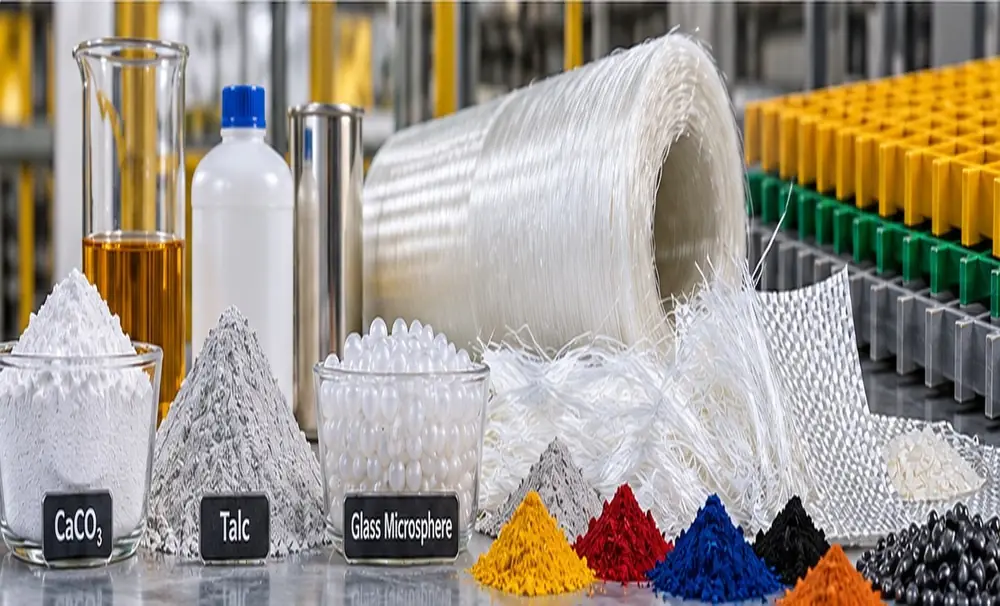
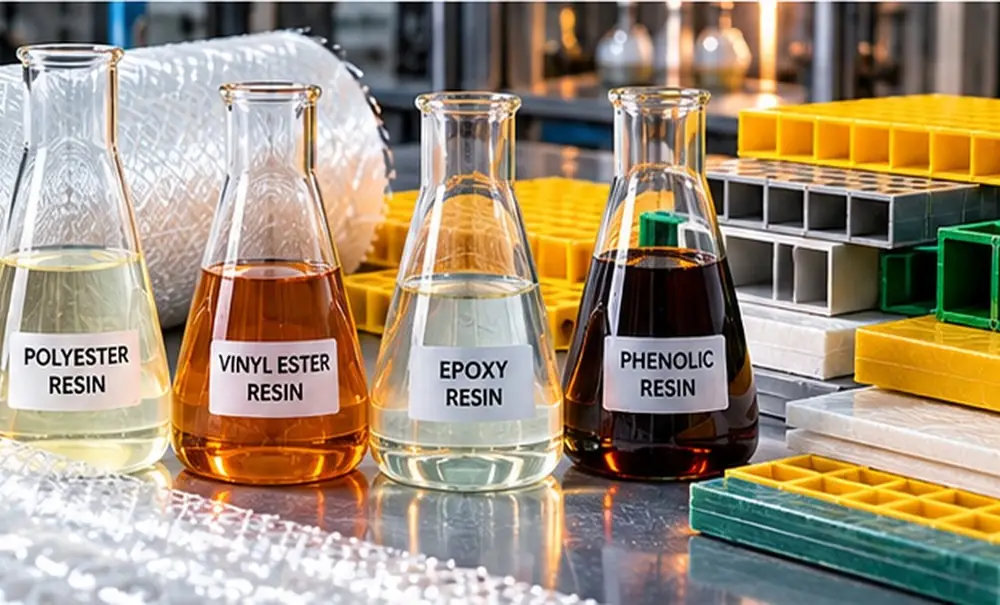
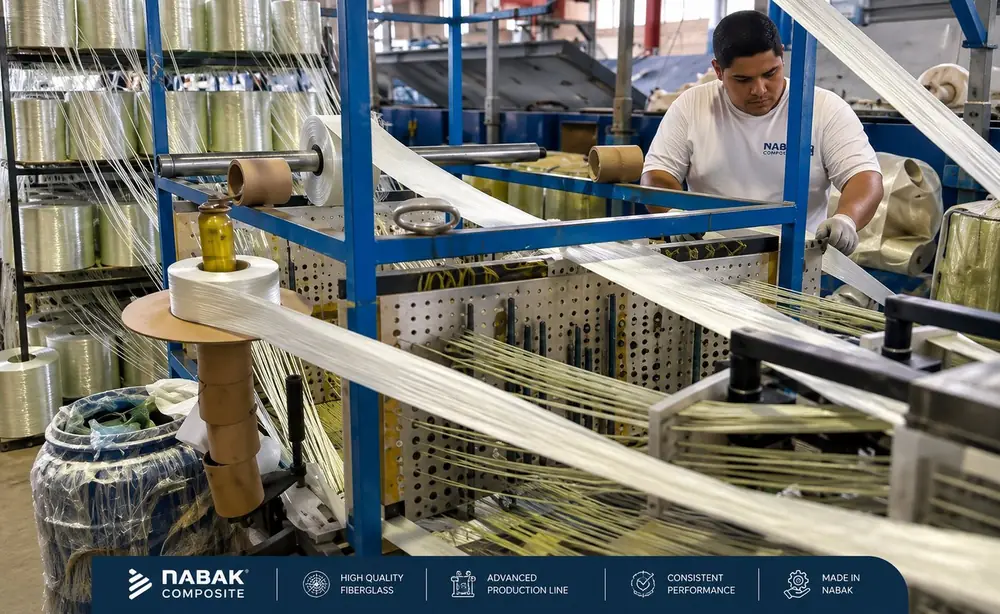
FRP composite (fiber-reinforced polymer) is made of glass fibers and a thermoset resin (polyester, vinyl ester or epoxy). The environmental impact of any material, including polymer composites, is assessed under ISO 14040 and ISO 14044 by life-cycle assessment (LCA) — covering every stage "from cradle to grave": raw material extraction, manufacture, transport, installation, use, repair and maintenance, and at end of life, landfill, incineration or recycling. EN 15804 labels these stages with modules A to D and is the basis of the "Environmental Product Declaration" (EPD).
The key point is that the unit of comparison must be "function", not weight. One square meter of working platform serving 50 years beside a cooling tower is the right unit for comparing composite and steel grating; one kilogram of material is not. The environmental benefits of composites lie precisely in this difference. For the structure of these materials, see what is a composite and its types.
| Life-cycle stage (EN 15804) | Description | FRP composite | Galvanized steel |
|---|---|---|---|
| A1–A3: production | Raw materials, energy and manufacturing process | More carbon per kilogram; less per liter | Less carbon per kilogram; 4 times the density |
| A4–A5: transport and installation | Truck, crane, welding and cutting | Light; manual installation with no hot work | Heavy; crane and welding |
| B: use | Repair and maintenance, painting, replacement | Almost zero; no painting or replacement | Periodic painting and replacement in corrosive environments |
| C: end of life | Demolition, landfill, incineration | Landfill or cement kiln | Scrap collection |
| D: beyond the system boundary | Recycling and reuse credit | Reuse, recycling of composite in cement kilns | High scrap recycling credit |
Put simply, a material's sustainability is measured in three parts: energy use and greenhouse gas emissions in production, resource use during service (repair, maintenance and replacement), and the fate of the material at end of life. FRP composites score moderately on the first, excellently on the second and, because of recycling limitations, improving on the third. The balance of these three determines the overall sustainability of composite products and shows why fiberglass composites are the better environmental choice in corrosive industries.
Environmental benefits of composites: eight main areas
The environmental benefits of FRP composites can be grouped into eight areas. For each one we give the physical mechanism behind the benefit and the relevant engineering figure, to make clear which claim is true under which conditions:
1) Less energy and CO2 per unit volume and per unit of function
Polymer composites have an embodied energy of about 60 to 90 MJ per kilogram — more than steel (20 to 35) and much less than primary aluminum (150 to 220). But the density of FRP composite is about 1.9, not 7.85; so each liter of composite has about 30 percent less energy and about 60 percent less CO2 than a liter of steel, and against primary aluminum the reduction reaches about 70 to 80 percent. In other words, the energy use and greenhouse gas emissions for building a given volume of structure are lower with FRP composites, which lowers the carbon footprint of composite products. The figures are given in the embodied energy and carbon footprint table.
2) Light weight: less fuel in transport, installation and vehicles
Less weight means fewer trucks, fewer cranes and less energy in transport. The effect of light weight is far greater in vehicles, because the energy to move the mass is spent over the vehicle's whole life: roughly, every 10 percent cut in vehicle weight reduces fuel consumption and CO2 emissions by 5 to 7 percent. That is why composites have become a main tool for cutting emissions in the bodies of buses, trains, refrigerated trucks, boats and aircraft.
3) Long life and no maintenance
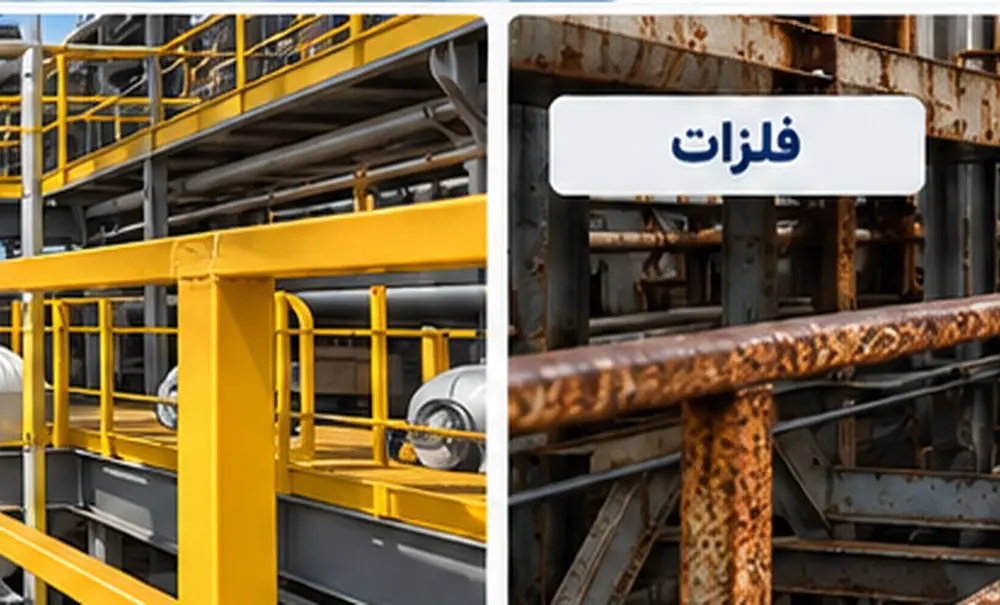
FRP composites do not rust or rot. In environments such as wastewater treatment plants, cooling towers, swimming pools, jetties and chemical units, the service life of galvanized steel is usually 15 to 20 years, whereas composite products are built for a design life of 50 years or more. Every replacement avoided is a complete cycle of mining, smelting, transport and installation that no longer happens. This is the most important environmental benefit of composites.
4) No paint, zinc or solvents: less soil and water pollution
Steel is protected against corrosion with galvanizing (zinc) and industrial paints. Runoff from galvanized surfaces carries zinc into soil and water, and periodic painting produces volatile organic compounds (VOC) and blasting waste. Composite products are colored through (the color is in the resin) and need none of these in service. They also release no metal ions into water when permanently immersed — a valuable property in aquaculture and marine structures.
5) A low-energy manufacturing process: the example of pultrusion
In pultrusion, resin-wetted fibers are pulled continuously through a hot die (about 120 to 180 °C). The resin cure reaction is exothermic and supplies part of the heat itself; the die is very small compared with a metal smelting furnace and the process runs at low temperature. As a result, the energy used by the pultrusion process itself is low; its share of the total embodied energy of composite profiles is usually less than 15 percent, the rest coming from producing the glass fiber and resin.
6) Longer life for concrete structures with GFRP rebar
Concrete is the cheapest material in carbon per kilogram, but concrete structures are massive and their life often ends with corrosion of the steel rebar — especially in coastal areas and structures exposed to de-icing salts. Replacing steel rebar with GFRP composite rebar removes the main cause of deterioration and allows the concrete cover over the rebar to be reduced. Every extra decade of life for a bridge or jetty means hundreds of tonnes of cement and steel that are not produced again.
7) The role of composites in renewable energy and clean industries
Wind turbine blades, solar panel support structures in corrosive environments, water treatment pipes and tanks, power plant cooling towers and power plant cable trays all use fiberglass composites. In these applications, composites are a tool for cutting emissions at the scale of the energy system, not just at the scale of one part.
8) Reassembly and reuse
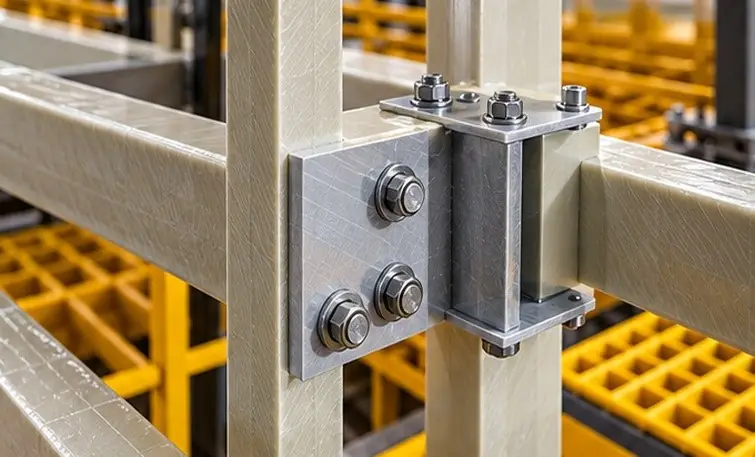
Composite structures are usually bolted rather than welded. So a composite platform, handrail or profile structure can be dismantled, moved to another site and reinstalled in a new layout. Because composite properties remain almost constant over its life, reusing composite parts is practical — the highest level of the waste management hierarchy (ahead of recycling).
Embodied energy and carbon footprint of composites compared with steel, aluminum and concrete
The table below shows the range of embodied energy and CO2-equivalent emissions "from cradle to factory gate" (A1–A3) for common structural materials. The figures are typical ranges from LCA databases (such as the ICE database and published EPDs) and vary with the energy source, technology and recycled content; the last column shows carbon "per liter" of material for a fair comparison:
| Material | Density (g/cm³) | Embodied energy (MJ/kg) | Carbon (kgCO₂e/kg) | Carbon per liter (kgCO₂e/dm³) |
|---|---|---|---|---|
| FRP composite (glass–polyester, pultruded/molded) | 1.8–1.9 | 60–90 | 2.5–3.5 | ~5.7 |
| Structural steel (global average) | 7.85 | 20–35 | 1.5–2.3 | ~15 |
| Galvanized steel | 7.85 | 25–40 | 1.8–2.8 | ~16 |
| Primary aluminum | 2.7 | 150–220 | 8–16 | ~32 |
| Recycled aluminum | 2.7 | 10–20 | 0.6–1.5 | ~3 |
| Ordinary reinforced concrete | 2.4 | 1.5–2.5 | 0.15–0.25 | ~0.5 |
| Rigid PVC | 1.4 | 70–80 | 2.5–3.2 | ~4 |
A 50-year life-cycle assessment: composite grating versus steel grating
To see the environmental benefits of composites in numbers, consider a simple but realistic scenario: a working platform of similar load capacity in a corrosive environment (for example a treatment plant or cooling tower) with a 50-year service life. Option one is 38 mm molded composite grating weighing 18.4 kg/m²; option two is 30×3 galvanized steel grating weighing about 23 kg/m².
Galvanized steel: 23 kg/m² × 2.0 kgCO₂e/kg ≈ 46 + transport ≈ 1 ⇒ ~47 kgCO₂e/m² per installation
Steel life in a corrosive environment ≈ 17 years ⇒ 3 installations in 50 years + coating repairs ≈ ~145 kgCO₂e/m²
Scrap recycling credit (module D) ≈ 1.0 kgCO₂e/kg × 23 × 3 ≈ 69 ⇒ ~76 kgCO₂e/m²
The result is an honest picture of the environmental benefits of composites: on installation day, steel grating has about 15 percent less carbon; but over a 50-year life cycle, composite grating produces about 26 percent less carbon even when full credit is given for steel scrap recycling, and about 61 percent less without it. In dry, non-corrosive environments where galvanized steel lasts 50 years, this advantage shrinks; so the service environment is the main factor in the environmental judgment. The same logic can be applied to other composite products such as handrail profiles, cable trays and cladding sheet. For choosing grating sizes, see the grating selection guide.
Lighter composites = lower CO2 emissions
The strength-to-weight ratio of FRP composites is about 4.8 times that of steel (details in advantages of composite products). This property reduces CO2 at three stages of the life cycle:
- Transport (A4): 1000 m² of 38 mm composite grating weighs about 18 tonnes, its steel equivalent about 23 tonnes. For profiles the weight difference reaches 75 percent, and the number of truck trips falls accordingly.
- Installation (A5): composite profiles are installed without heavy cranes, welding sets or generators; two people do the job with hand tools. Both installation time and machinery energy use fall.
- Supporting structure: less dead load needs a lighter foundation and supporting structure — less concrete and steel in the substructure.
- Vehicles (B): in vehicle parts, fiberglass composite reduces the weight of the "part" by 25 to 40 percent compared with steel; carbon composite by up to 50 to 60 percent.
Long life: the most important environmental benefit of composites
The cleanest material is the one that is not produced twice. Properly designed FRP composites are built for a design life of 50 years or more without noticeable loss of performance; for example, GRP pipes and tanks are designed to ISO 14692 and AWWA M45 for a 50-year life, and real installations more than 40 years old are still in service in the chemical and water industries. Composite profiles keep working in swimming pools, cooling towers and coastal outdoor settings where steel corrodes quickly.
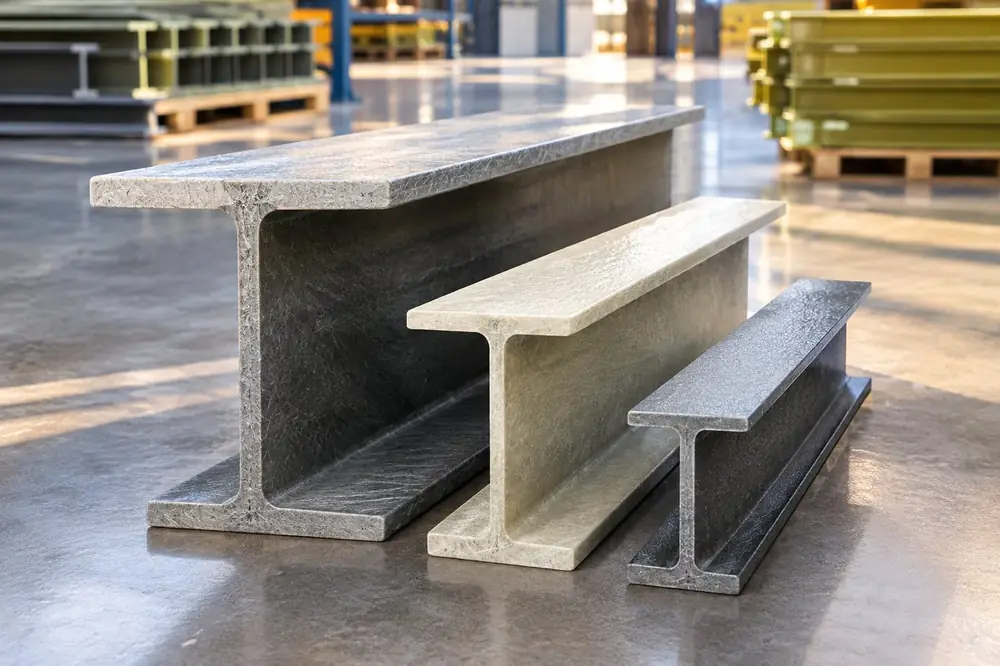
To achieve real durability — and so realize the environmental benefits of composites in practice — three technical points must be observed: (1) choosing the resin to suit the chemical environment (vinyl ester for strongly acidic and alkaline environments); (2) UV protection with UV absorber additives and a gelcoat surface layer or surface veil; (3) sealing cut edges with resin so the fibers are not exposed to moisture. See the cutting guide in cutting and machining composites.
Composite recycling: methods, industrial status and limitations
Recycling engineering materials is a pillar of the circular economy. Metals, glass and thermoplastics are widely recycled because they can be remelted. The main challenge in recycling composites lies in the resin: once cured, thermoset polymers (polyester, vinyl ester, epoxy) form a three-dimensional cross-linked network that does not soften or melt with heat, only decomposes. In addition, a composite is a combination of fibers, resin, filler and sometimes a foam or balsa core, which makes separating them difficult.
Even so, extensive research and development has been done on composite recycling, and the technologies fall into three main groups: mechanical recycling, thermal recycling and chemical recycling. Before any method, composite waste and end-of-life composite products must be collected, sorted and separated from metal parts (bolts, inserts).
Mechanical recycling of composites
Mechanical recycling is the simplest and least energy-intensive way to recycle composites. The waste is first cut or shredded in a slow-speed shredder into pieces of 50 to 100 mm, then ground in a hammer mill or high-speed mill into particles ranging from fine powder (below 0.1 mm) to short fibers a few millimeters long. Screening splits this mixture into two fractions: a powder fraction (rich in resin and filler) and a fibrous fraction (rich in short glass fibers).


These materials are used as fillers or short reinforcement in molding compounds (BMC/SMC), concrete, mortar, asphalt, composite boards and polymer parts. The environmental benefit of mechanical recycling is that it replaces virgin mineral fillers (such as calcium carbonate) and part of the virgin fiber.
Thermal recycling of composites
Thermal recycling of composites involves high-temperature processing to decompose or burn off the organic part (the resin). Composite waste is processed thermally in four ways:
- Incineration for energy recovery: the calorific value of glass composite is low (about 10 to 15 MJ/kg, because 60 to 70 percent of its weight is incombustible glass) and about 60 percent remains as ash; on its own, this route is the lowest-value option.
- Co-processing in cement kilns: the resin burns as fuel in place of coal, and the glass fibers and fillers (silica, alumina, calcium) become clinker raw material — with almost no residue. This method is used today on an industrial scale, especially for wind turbine blades.
- Pyrolysis: decomposition of the resin at 450 to 700 °C in the absence of oxygen; the products are clean fibers, liquid fuel and secondary gas. At these temperatures glass fibers lose about half their strength; for carbon fiber, however, pyrolysis is a commercial and economical method.
- Fluidized bed: burning off the resin in a hot sand bed (about 450 to 550 °C) and separating clean fibers in the air stream; suitable for contaminated and mixed waste.
Chemical recycling of composites
In chemical recycling (solvolysis), the polymer matrix is broken down and separated from the fibers using solvents such as water or alcohol under supercritical conditions, or acidic and alkaline solutions. This method preserves fiber quality best and can recover the resin as monomers or petrochemical feedstock; but it needs high temperature and pressure, resistant equipment and solvent management, and for now it is mostly economical for expensive carbon–epoxy composites. A new generation of "recyclable" resins (epoxies with cleavable hardeners, and vitrimers) has been designed to simplify this route. Composites with a thermoplastic matrix (such as fiber-reinforced polypropylene or polyamide) can be remelted, and their chemical or mechanical recycling is simpler.
| Composite recycling method | Product | Recycled fiber quality | Industrial status |
|---|---|---|---|
| Mechanical recycling | Powder and short fibers (filler) | Short; suitable as filler | Commercial on a limited scale |
| Cement kiln | Fuel + clinker raw material | Fibers not recovered (turned into clinker) | Industrial and expanding |
| Pyrolysis | Fibers + oil and gas | Glass: ~50% loss; carbon: good | Commercial for carbon fiber |
| Fluidized bed | Clean fibers + energy | Moderate | Semi-industrial |
| Chemical recycling | Fibers + monomer | High | Pilot and semi-industrial |
Environmental limitations and challenges of composites
An engineering article on the environmental benefits of composites is not complete without stating the limitations. The table below shows the challenges and a solution for each:
| Challenge | Description | Solution |
|---|---|---|
| More carbon per kilogram | Producing FRP composites emits more carbon per kilogram than steel | Compare by functional unit and life cycle; use in corrosive environments |
| Thermoset resin cannot be melted | Cannot be reused like metal | Bolted design for reuse; cement kilns; recyclable resins |
| Styrene emissions in production | Higher in open-mold methods | Pultrusion and closed methods; low-styrene resin; ventilation |
| Cutting dust | Fiber and resin particles during cutting | Wet cutting, extraction and masks; collecting waste for recycling |
| Low value of recycled glass fiber | Short or weakened fibers | Use as filler or cement raw material |
Read about production and cutting safety in safety when working with composites. Environmental regulations (such as the ban on landfilling composites in some European countries) are driving the development of composite recycling, but technological progress is also needed in the long term.
Responsible production: how can the environmental impact of composite products be reduced?
Nabak Composite aims to use resources as well as possible and, by describing composite products accurately and promoting their correct use, to play its part in protecting the environment. Effective measures in the production and use chain include:
- Cut optimization: planning profile cut lengths and sheet and grating cutting layouts to minimize waste; using offcuts for smaller parts.
- Design for long life: correct resin selection, UV protection and edge sealing; every extra year of life means a lower annual environmental impact.
- Design for disassembly: bolted connections instead of permanent adhesive where possible; the option of reassembly at the end of a project.
- Waste separation: collecting clean composite waste and end-of-life composite products, free of metal, for mechanical recycling or cement kilns instead of landfill.
- Emission control: using more closed processes such as pultrusion and controlling ventilation in production.
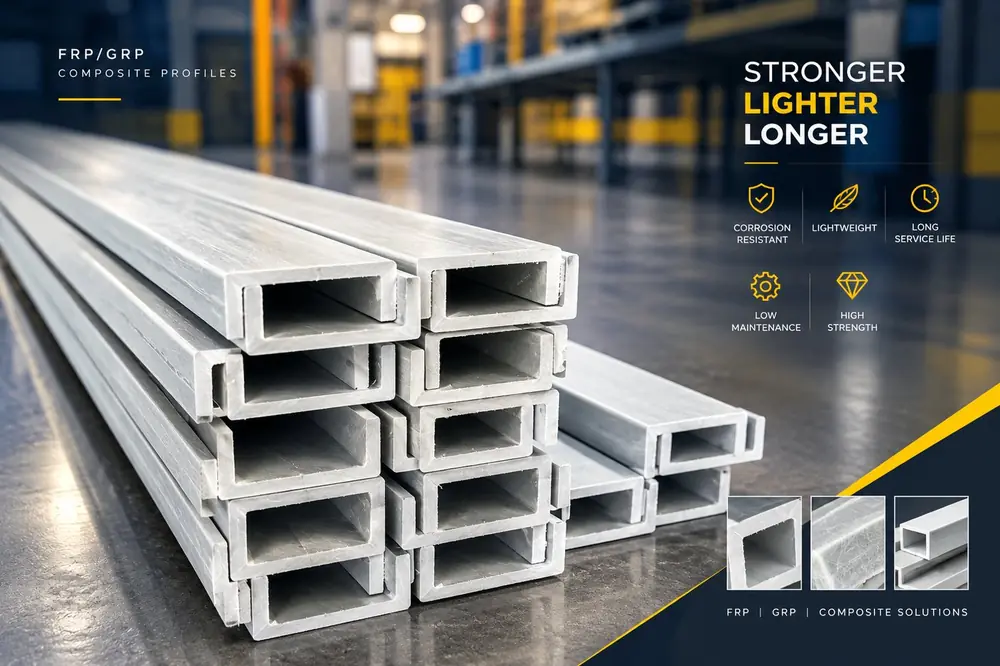
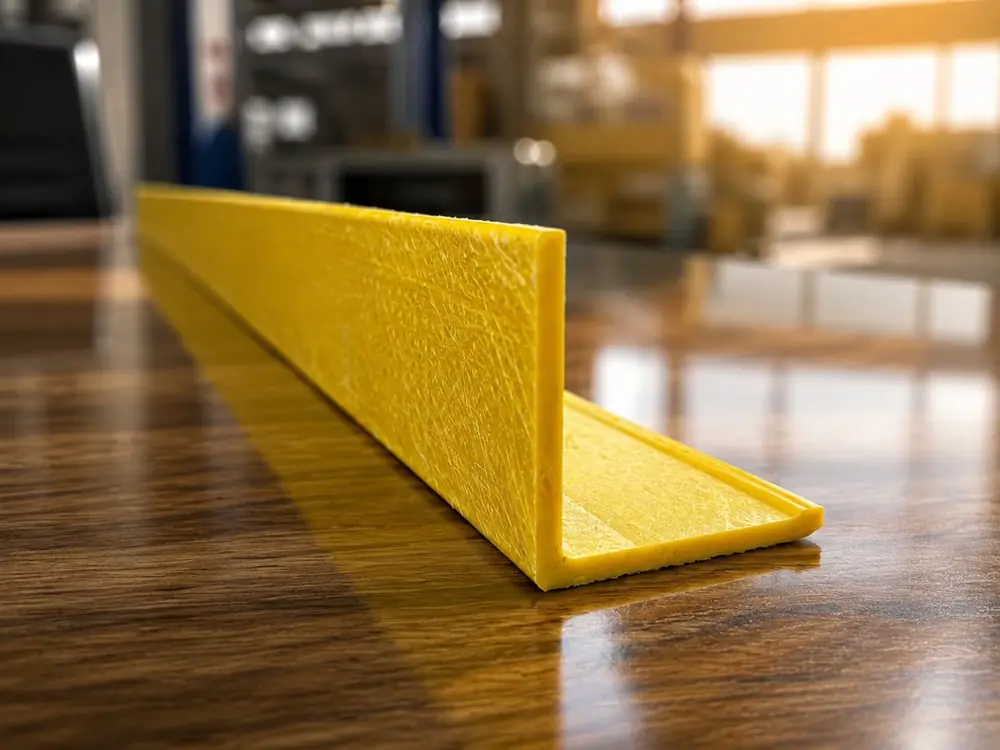
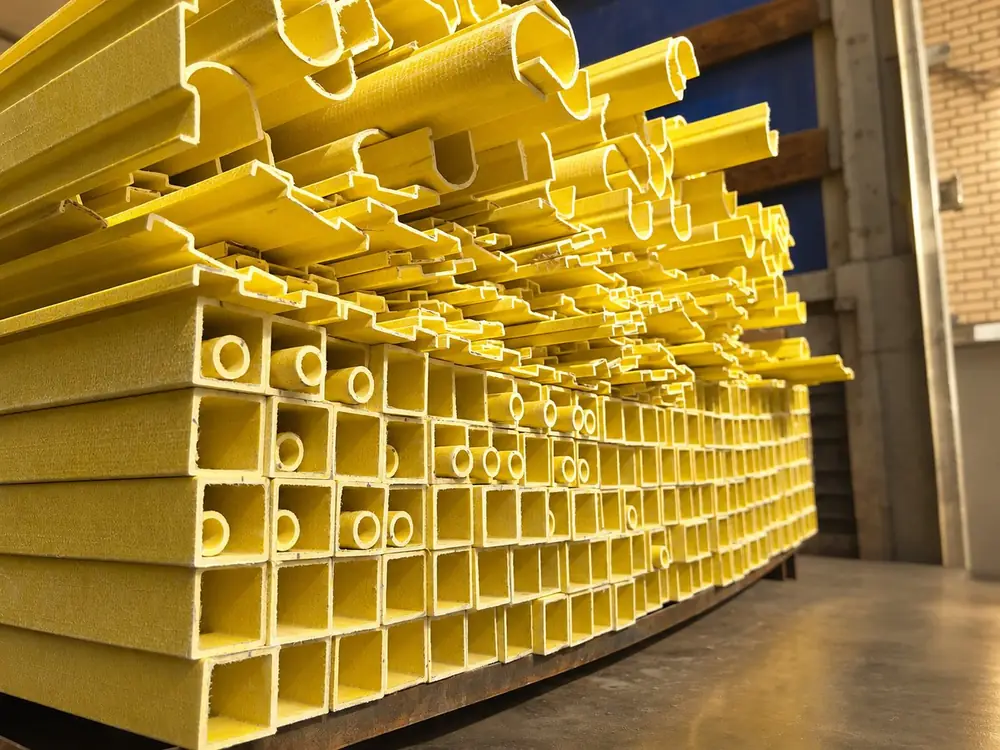
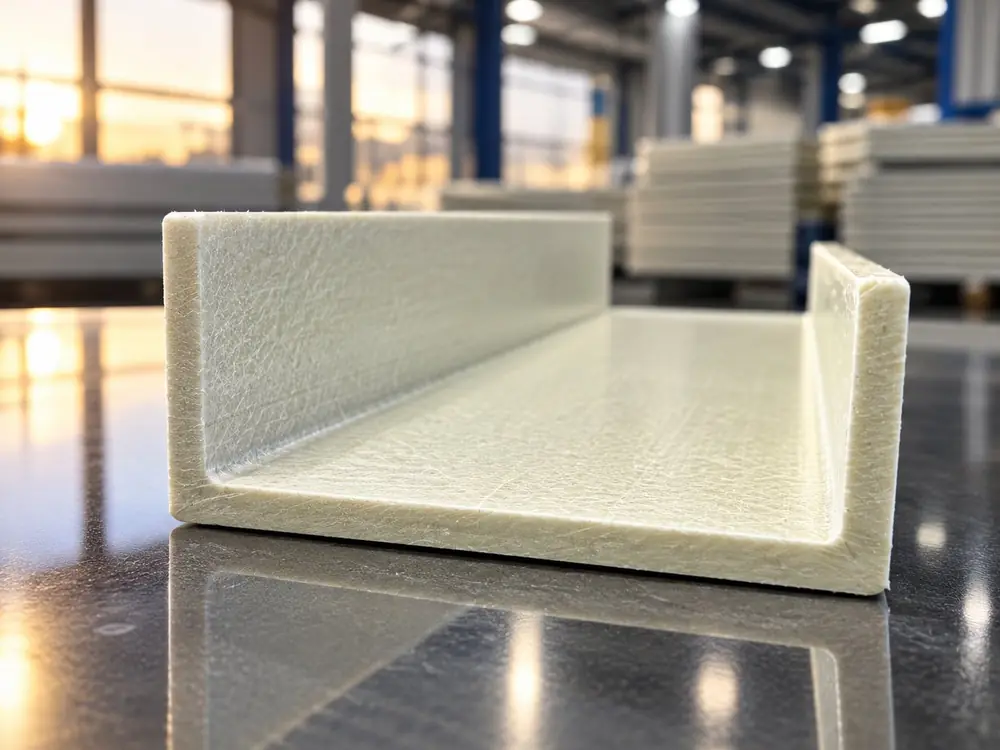
In pultrusion, high dimensional accuracy reduces waste; meeting pultrusion dimensional tolerances means fewer parts are rejected. Profiles such as fiberglass angles, composite channels and composite box sections are also produced in standard lengths to minimize on-site cutting and material waste. See the profile specifications in the FRP profile technical datasheet.
Nabak composite products and their environmental benefits
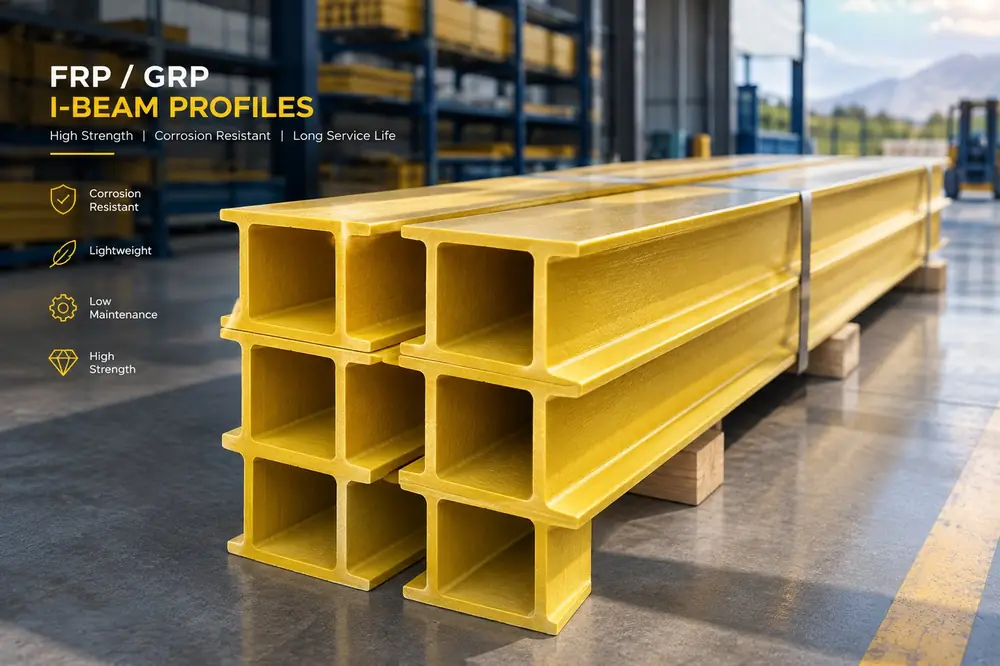
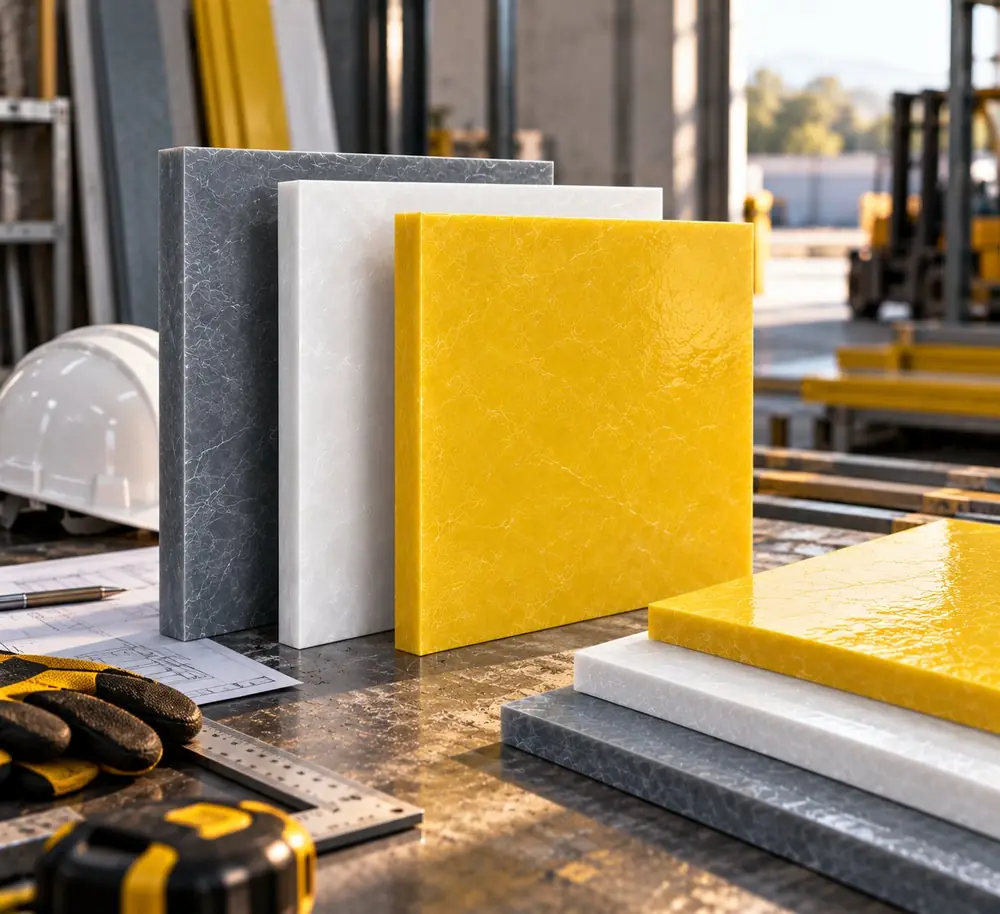
The environmental benefits of composites show in products that work for years without painting, repair or replacement. Nabak Composite produces a wide range of composite products, including fiberglass sheet (corrugated fiberglass), composite grating, composite box sections, fiberglass angles, composite channels, composite beams, fiberglass pipe, composite flat bars, polymer rods, composite wire and cable trays and ladders. For the properties and price of each product, click its page.
Green buying checklist: when is a composite the better environmental choice?
To make sure the environmental benefits of composites are really achieved on your project, check these questions before buying composite products:
- Environment: corrosive, wet, coastal or chemical? → composite wins the life cycle by a wide margin.
- Design life: more than 25 years? → the composite advantage grows with every replacement avoided.
- Movement: is the part mobile, or is the transport distance long? → composite's light weight cuts CO2.
- Maintenance: is periodic painting and galvanizing difficult or expensive? → colored-through composite.
- Dry, non-corrosive environment with long spans? → compare with an LCA; steel may be the lower-carbon option.
- Documentation: ask the supplier for an EPD or life-cycle data, and define the end-of-life plan (reuse or recycling) from the start.
Frequently asked questions about the environmental benefits of composites
What are the most important environmental benefits of FRP composites?
Long life with no need for painting or galvanizing, no periodic replacements in corrosive environments, light weight that cuts fuel use in transport and installation, lower CO2 emissions per unit volume than steel and aluminum, no leaching of zinc and heavy metals into soil and water, and the possibility of reassembly and recycling.
Does producing a kilogram of composite emit less carbon than steel?
No. The carbon footprint per kilogram of glass–polyester composite is about 2.5 to 3.5 kg CO2-equivalent, whereas steel is about 1.5 to 2.3. But because composite has about a quarter of the density of steel and lasts several times longer in corrosive environments, its carbon per unit volume and over the whole life cycle is lower.
Can composites be recycled?
Yes. Composites are recycled by three methods: mechanical (grinding and use as filler), thermal (pyrolysis, fluidized bed and co-processing in cement kilns) and chemical (solvolysis). Cement kiln co-processing is used today on an industrial scale for glass composites; the other methods are still more expensive than landfill.
Why can't composite resin be melted and recycled like ordinary plastic?
Polyester, vinyl ester and epoxy resins are thermosets; once cured, they form a three-dimensional cross-linked network that does not melt with heat, only decomposes. That is why recycling thermoset composites requires mechanical, thermal or chemical methods.
How does the light weight of composites reduce CO2?
In fixed structures, light weight mainly helps in transport and installation (fewer trucks and no crane). In vehicles the effect is much greater: roughly, every 10 percent cut in vehicle weight reduces fuel consumption and CO2 emissions by 5 to 7 percent.
Summary
The environmental benefits of FRP composites do not start at the factory; they build up over the product's life. Each kilogram of composite carries more carbon than steel, but each liter carries about 60 percent less; and more importantly, composites last several times longer than steel in corrosive environments, need no paint, zinc or maintenance, and their light weight cuts transport and installation fuel. The 50-year grating life-cycle assessment showed that this combination reduces total carbon by 26 to 61 percent. The main challenge is recycling thermoset composites, which is being met today by cement kilns on an industrial scale and by developing mechanical, thermal and chemical methods. Choosing composites in the right place, designing for long life and planning for end of life make Nabak composite products a responsible choice for the environment and industrial sustainability.

This article was prepared by the technical team of Nabak Composite, a manufacturer of grating, pultruded profiles, sheets and composite products.