What is pultrusion, and why do engineers choose it?
Pultrusion combines the words pull and extrusion and is the name of a continuous, automated process for making fiber-reinforced polymers (FRP). In the pultrusion method, bundles of reinforcing fiber are continuously unwound from a bobbin creel, impregnated in a resin bath, passed through preforming guides and finally enter a heated steel die that forms the final cross-section. The resin cures inside the die, producing a solid composite profile with a perfectly constant cross-section, which is drawn out by the puller and cut to any length.
The key feature of pultrusion production is that if you cut the product at any point along its length, the cross-section will be the same. This is what makes pultrusion the most economical method for mass-producing linear sections such as composite tubes, composite box sections, fiberglass angles, polymer channels, composite flat bars, composite rebar, composite I-sections and composite cable tray components. At Nabak Composite, this process is the backbone of our production lines for industrial composite profiles.
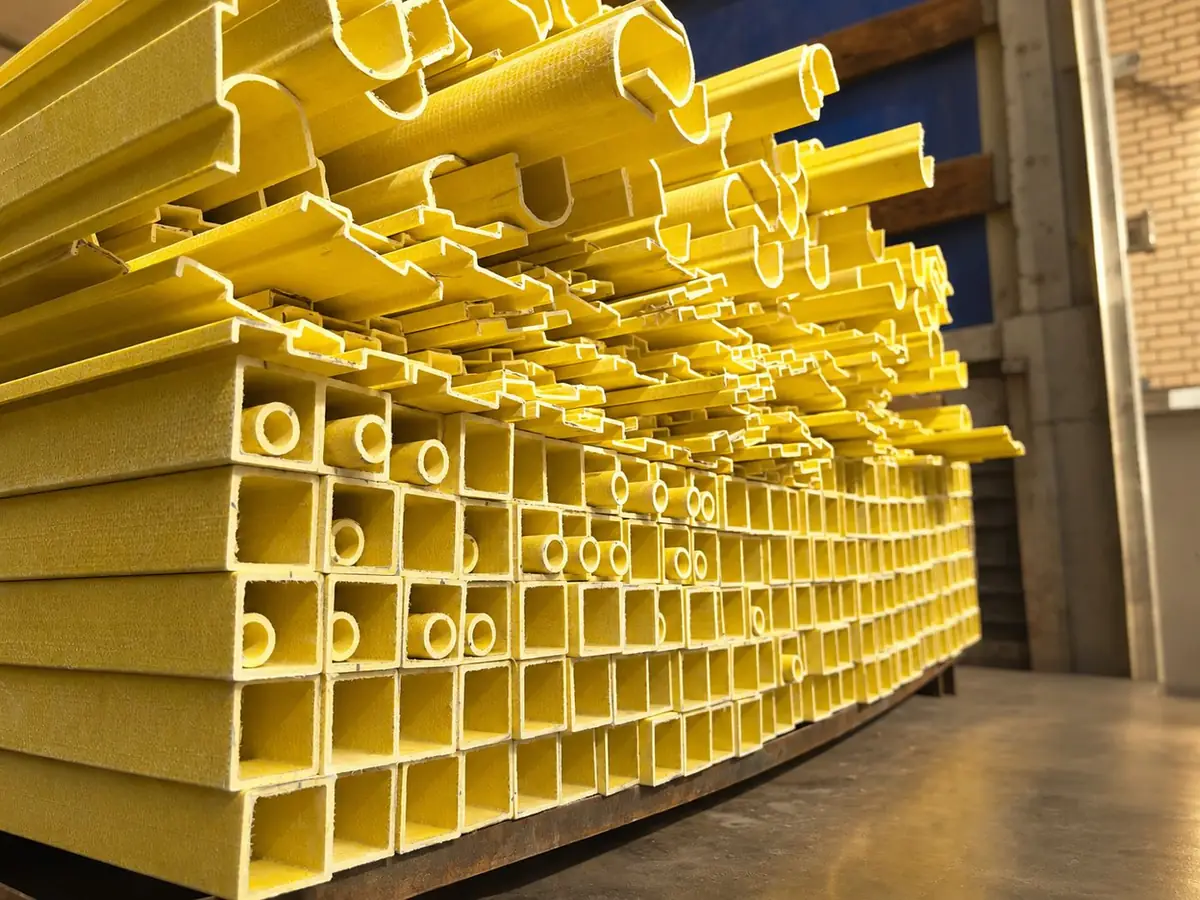
From an engineering standpoint, what sets pultrusion apart from other composite manufacturing methods is its high fiber fraction (usually 50 to 70 percent by weight and up to about 80 percent in rebar), precise alignment of fibers in the longitudinal direction and very high repeatability of properties. Simply put, on a pultrusion line quality does not depend on the operator's hand skill but on the stability of the machine's parameters: temperature, pulling speed, resin bath formulation and reinforcing fiber layout.
The evolution of the pultrusion method
The roots of pultrusion go back to the 1940s and 1950s, when thermoset resins such as unsaturated polyester became commercially available and a number of researchers independently sought to turn them into continuous products. The first patents related to the process were filed in the mid-1940s and early 1950s, aimed mainly at making glass-fiber-reinforced rods. In the early versions, product length was limited to the length of the die and the process was batch.
The main leap came with the idea of continuous cure inside a heated die combined with a continuous pulling system — a concept generally credited to W. Brandt Goldsworthy, known as the "father of pultrusion". Since then the basis of pultrusion has remained almost unchanged, and progress has been mostly in digital temperature control, resin injection systems, hydraulic and servo pullers, and new resin formulations. Today pultrusion is one of the key composite industries worldwide, and composite profiles are used in oil and gas, electricity, construction, transportation and renewable energy.
Pultrusion vs extrusion
The similar appearance of the products misleads many people, but the force mechanism in the two methods is completely different. In extrusion (for example of aluminum or PVC profiles), material is pushed through the die inlet by a pump or ram. In pultrusion, by contrast, no pressure is applied at the die inlet; instead, the cured profile is gripped and pulled at the die outlet, and it is this pulling force that draws the resin-impregnated fibers into the die. The result of this difference is the ability to use long, continuous fibers, which is practically impossible in extrusion.
| Criterion | Pultrusion | Extrusion |
|---|---|---|
| Where force is applied | Pulling at the die outlet by the puller | Pressure at the die inlet |
| Material type | Continuous fiber + thermoset resin (composite) | Metal or molten thermoplastic |
| Material behavior in the die | Chemical cure reaction and resin crosslinking | Hot forming and cooling |
| Mechanical properties | Very high longitudinally (anisotropic) | Almost isotropic |
| Line speed | Low to medium (a few tens of centimeters to about 1.5 m per minute) | High |
| Product length | Unlimited and continuous | Unlimited and continuous |
Overview of the pultrusion process steps
In pultrusion, a complete line consists of seven main stations. The diagram below shows the path of materials through the pultrusion machine from the fiber creel to the cutting station:
- Feeding: unwinding roving and mat from the creel
- Impregnation: passing fibers through the resin bath
- Preforming: arranging fibers and removing excess resin
- Heated die: shaping and curing the resin
- Cooling: dimensional stability of the profile
- Pulling: caterpillar or reciprocating puller
- Cutting: diamond saw to any length
Raw materials in pultrusion
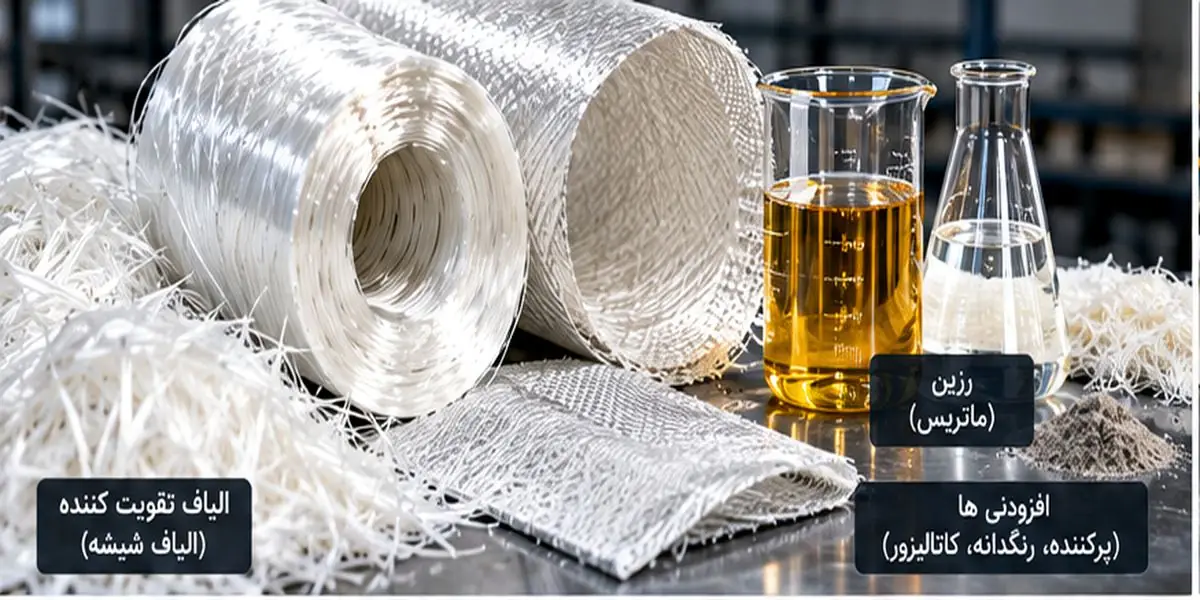
In pultrusion, the quality of every composite profile is determined before it enters the machine, at the material selection stage. A pultruded product is made of two main components: reinforcing fibers, which carry the mechanical load, and the resin matrix, which holds the fibers together, distributes load between them and protects them from the environment.
Reinforcing fibers and their arrangement
Reinforcing fibers are used in several forms in pultrusion, and designing their arrangement (laminate schedule) is the most important engineering decision in designing any composite profile:
- Roving: continuous, parallel bundles of glass fiber, commonly 2400 to 9600 tex, providing longitudinal strength and stiffness. In composite rebar almost all the fiber is roving.
- Continuous filament mat (CFM): randomly looped fibers that increase transverse strength and prevent longitudinal cracking of the profile.
- Stitched mat and multiaxial fabrics (stitched / combo mat): layers at 0, 90 and ±45 degrees for structural profiles such as composite I-sections and load-bearing box sections.
- Woven roving: to increase shear and impact resistance.
- Surface veil: a thin polyester or glass layer on the profile surface that creates a resin-rich, smooth surface resistant to UV and corrosion, and prevents fiber blooming.
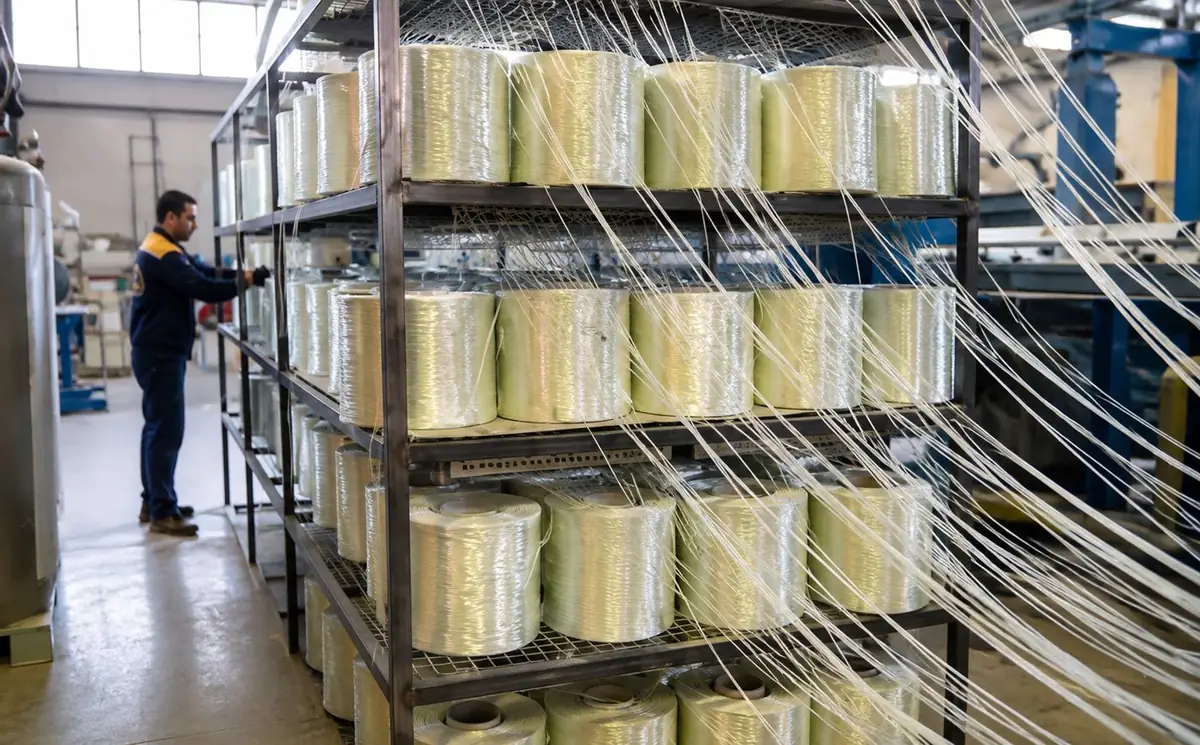
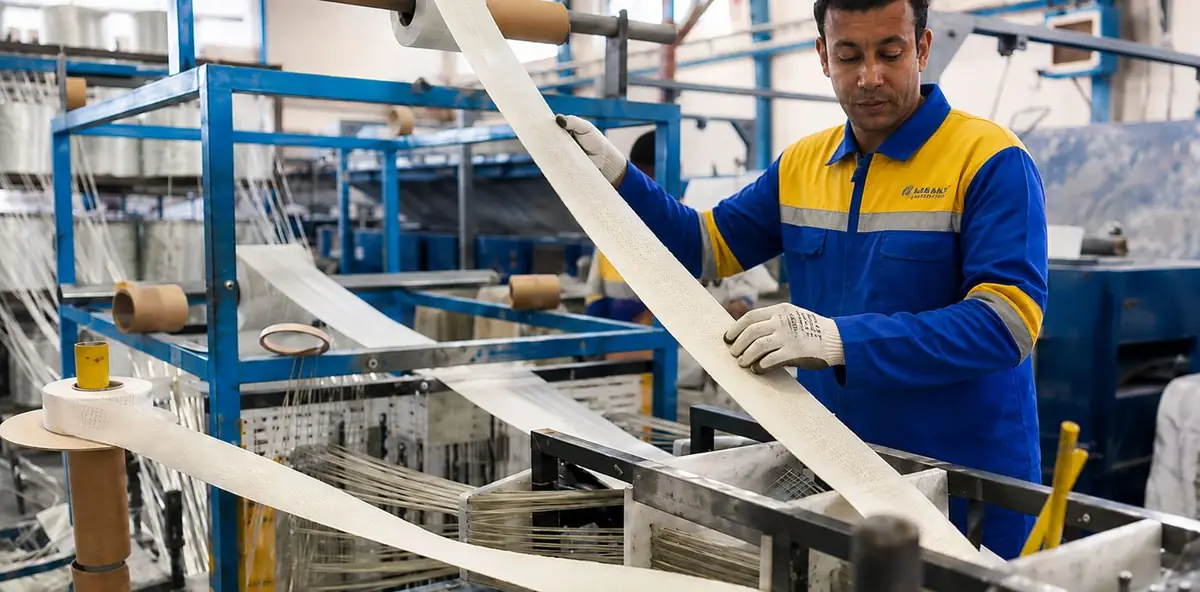
The fiber used in industrial pultrusion is mainly E-glass or ECR glass, because it has a very good price-to-performance ratio and is an electrical insulator. For special applications, carbon fiber (very high stiffness and low weight), aramid (Kevlar; impact resistance) and basalt (thermal and chemical resistance) are also used. That is why the terms fiberglass profile and fiberglass angle are common in the market, referring to products made by pultrusion with glass fiber.
Resin bath formulation
The resin bath contents are a multi-component system, and the proportion of each component directly affects cure speed, surface quality, chemical resistance and fire behavior. The main components are:
- Base resin: orthophthalic or isophthalic unsaturated polyester, vinyl ester, epoxy, polyurethane or phenolic.
- Mineral fillers: calcium carbonate, kaolin and talc to reduce shrinkage and cost, and aluminum trihydroxide (ATH) as a flame retardant.
- Initiator (catalyst) system: a combination of low- and high-temperature peroxides such as benzoyl peroxide and tert-butyl perbenzoate (TBPB), which advance the cure in stages along the die.
- Internal mold release: additives that stop the resin sticking to the die wall and reduce the pulling force.
- Other additives: pigment (color), UV absorbers, low profile additives (anti-shrinkage) and flame-retardant additives.
| Resin type | Technical advantages | Limitation | Common use in pultrusion |
|---|---|---|---|
| Orthophthalic polyester | Economical, fast cure, easy processing | Moderate chemical resistance | General profiles, composite flat bars, ladders |
| Isophthalic polyester | Better resistance to water and chemicals | More expensive than ortho | Composite box sections, fiberglass angles, composite cable trays |
| Vinyl ester | Excellent resistance to corrosion and acids, high toughness | Higher shrinkage, high price | Chemical industries, petrochemicals, cooling towers |
| Epoxy | Highest mechanical properties and fiber adhesion | Low line speed, high cost | Carbon composites, structural composite rebar |
| Polyurethane | Very high toughness and impact resistance | Requires a closed injection system | Window profiles and impact-resistant parts |
| Phenolic | Very low smoke and toxicity in fire | Difficult to process | Tunnels, metros, offshore platforms |
Pultrusion machine components by station
In pultrusion, a standard machine is about 12 to 20 m long depending on the type of puller and product size. Below we review each station with its engineering points.
1. Fiber and mat creel
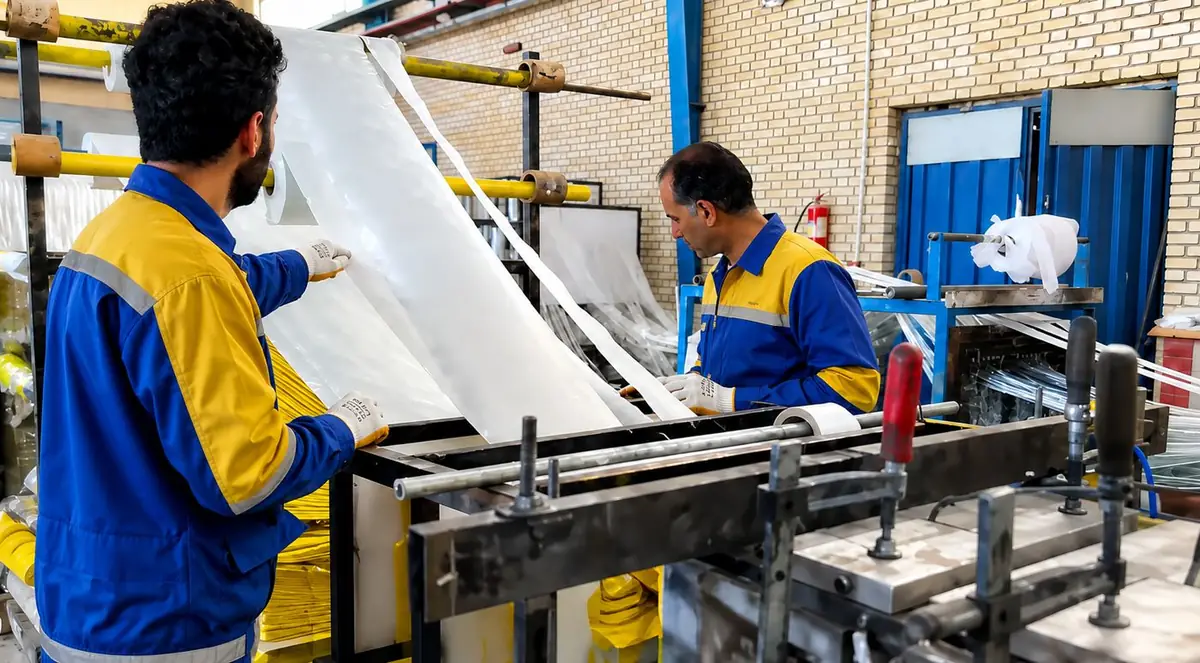
In pultrusion, the creel is where roving bobbins and mat rolls are mounted. Bobbins are usually unwound from the inside (center-pull) so the fibers enter the line without twisting. Perforated guide plates (cards) with ceramic or PTFE bushings guide the reinforcing fibers without abrasion. Differences in tension between strands are one of the main causes of bow in the final composite profile, so equal strand path lengths and setting the initial tension are very important. Hall humidity must also be controlled, because damp glass fiber bonds less well to resin.
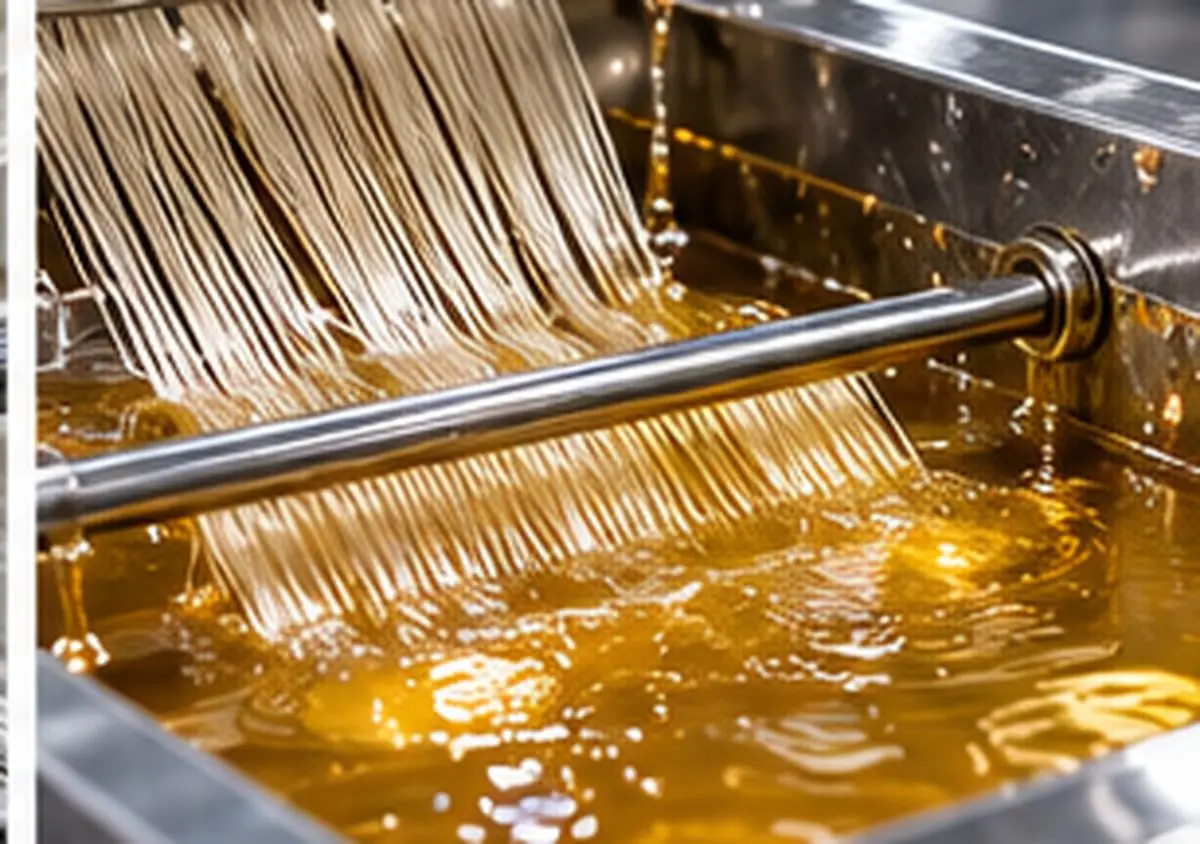
2. Resin bath and impregnation station
At this stage of pultrusion, the fibers are fully wetted with resin by passing under wet-out bars in the resin bath. The aim is complete wet-out, i.e. the air between the fibers is completely replaced by resin. The fibers' dwell time in the bath, resin viscosity (usually 800 to 3000 centipoise) and bath temperature are the three main variables at this station. In highly filled formulations or in winter, the resin bath is sometimes heated to reduce viscosity.
There are two main arrangements for this station:
- Open bath: the most common and simplest method; suitable for polyester and vinyl ester resins.
- Resin injection pultrusion: resin is injected under pressure into a tapered chamber at the start of the die. This method greatly reduces styrene emissions and is essential for resins with a short working life such as polyurethane.
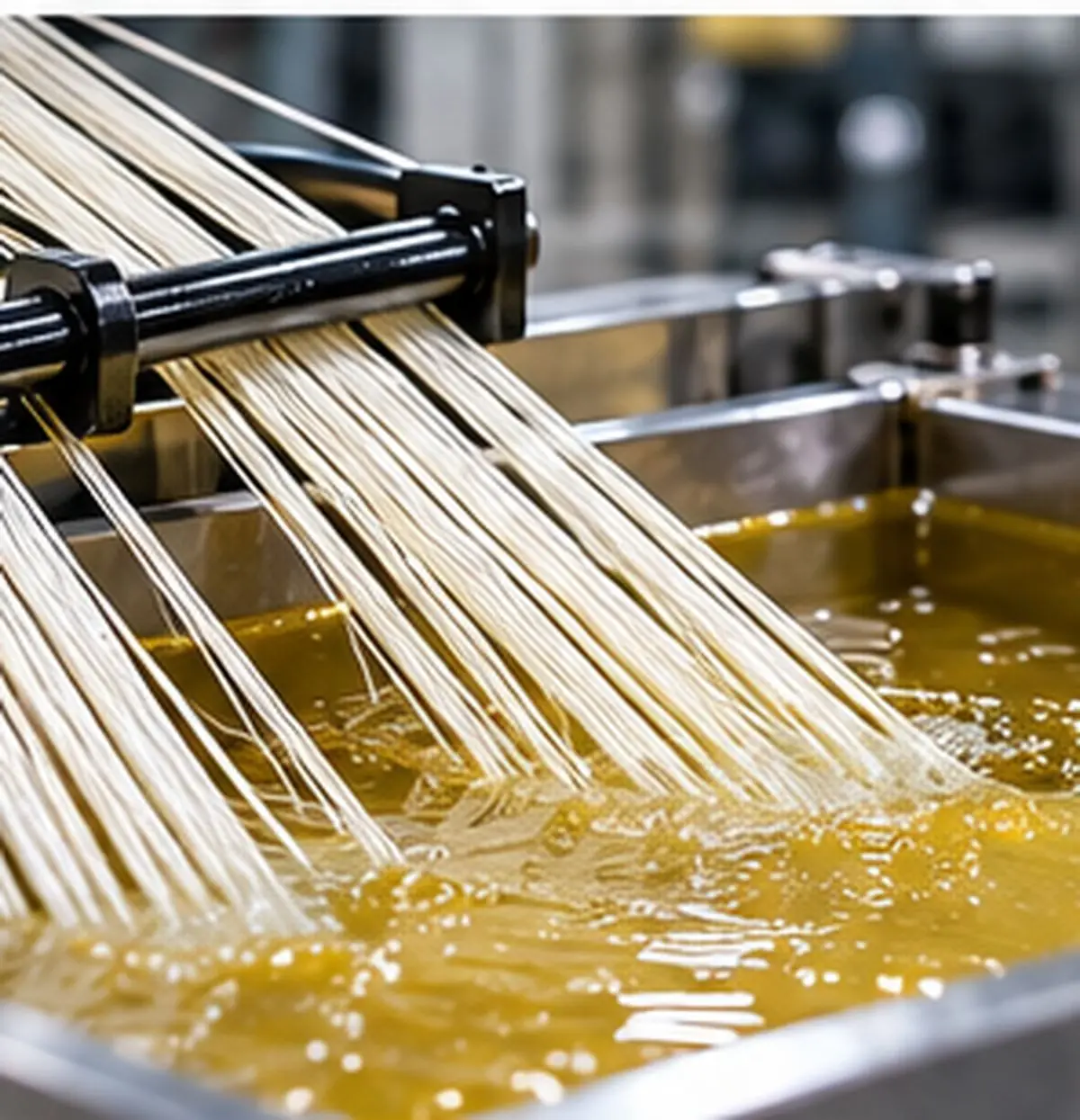
3. Preforming station
In pultrusion, the impregnated fibers must be gradually brought close to the final cross-section shape before entering the die. This is done with a series of guide plates made of PTFE, ultra-high-molecular-weight polyethylene (UHMWPE) or chrome-plated steel. The preforming station's tasks are: placing each fiber layer in its exact position in the cross-section, wrapping mats around the mandrel in hollow sections, and removing excess resin before the die. Poor preforming causes fiber to bunch in one corner and be lacking in another, resulting in cracks, warping and reduced strength.
4. The pultrusion die: the heart of the machine
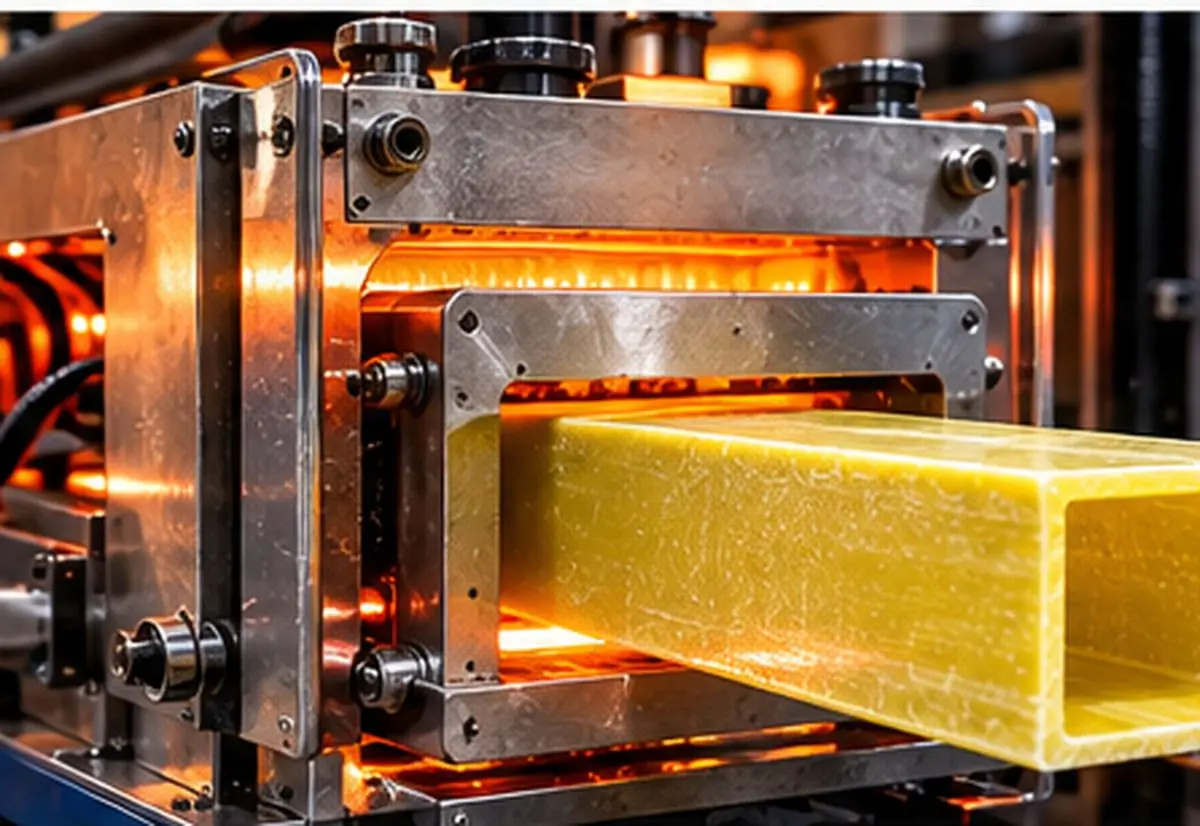
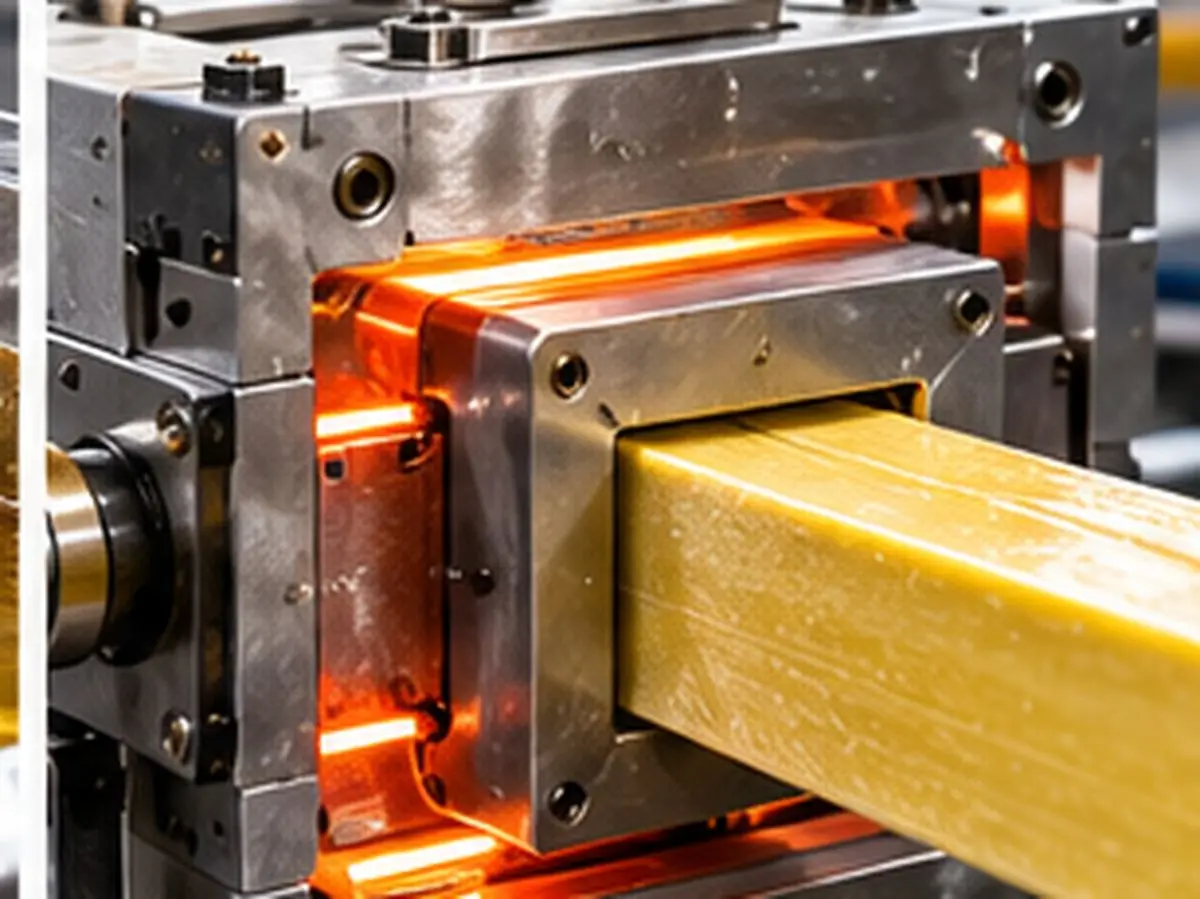
The die is the most important and most expensive component of the pultrusion machine and the most decisive quality factor in pultrusion. The shape of the die cavity is exactly the cross-section of the composite profile, and the impregnated fibers take their final shape by filling this cavity. Die length is usually 60 to 150 cm, depending on profile thickness and resin type. The die is made of alloy tool steel (such as 1.2311 or 1.2738); its inner surface is polished to a very low roughness and usually coated with hard chrome a few tens of microns thick, giving both wear resistance against glass fiber and a glossier surface on the product.
Die types by construction
- One-piece die: for simple, solid sections such as composite rebar and flat bar.
- Two-piece or multi-piece die (punch and matrix): for more complex sections such as fiberglass angles, polymer channels and I-sections; the pieces are fastened with bolts and dowel pins, allowing cleaning and re-polishing.
- Die with mandrel: for hollow sections; the mandrel is attached from behind the die to a fixed support and floats in the cavity.
Die design considerations
- Shrinkage compensation: polyester resins shrink 6 to 9 percent by volume during cure (less with fillers and LPA). The die cavity dimensions must be designed allowing for this shrinkage and the thermal expansion of the steel.
- Taper entry: the first few centimeters of the die are tapered or radiused so that excess resin flows back and the hydrostatic pressure needed for complete wet-out is created.
- Corner radii: sharp corners cause resin-rich areas, fiber shortage and premature failure; a minimum inside radius of about 0.5 to 1 mm is recommended.
- Die wall thickness: must give enough rigidity against internal pressure while transferring heat evenly from the heating platens to the resin.
5. Die heating system and cure mechanism
In pultrusion, a defined temperature profile is applied along the die to crosslink the resin inside it. Heating is usually by electric platen heaters or hot oil circulation, and the die is divided into two to four independent temperature zones with thermocouples and PID controllers. Die temperature is usually 120 to 180 °C, depending on resin type and profile thickness.
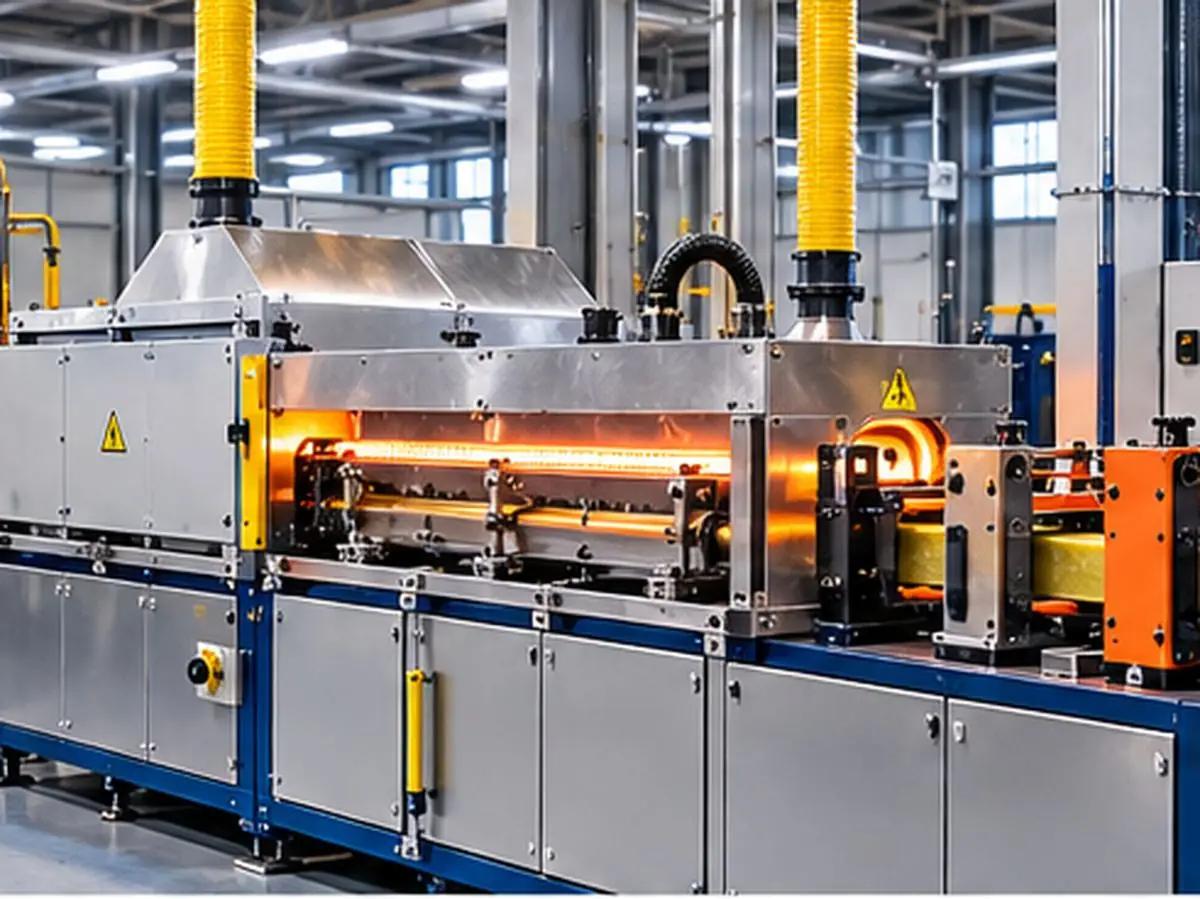
Resin behavior inside the die can be divided into three zones:
- Liquid zone (die entry): the resin heats up and its viscosity at first falls; this zone completes fiber wet-out. Friction here comes from viscous shear of the resin.
- Gel zone (middle of the die): polymerization begins, the resin turns from liquid to gel, and adhesion to the die wall is greatest. Most of the pulling force arises in this zone.
- Solid zone (end of the die): the exothermic reaction has peaked and the resin has solidified. Because of shrinkage, the profile separates from the die wall and friction falls.
6. Puller system
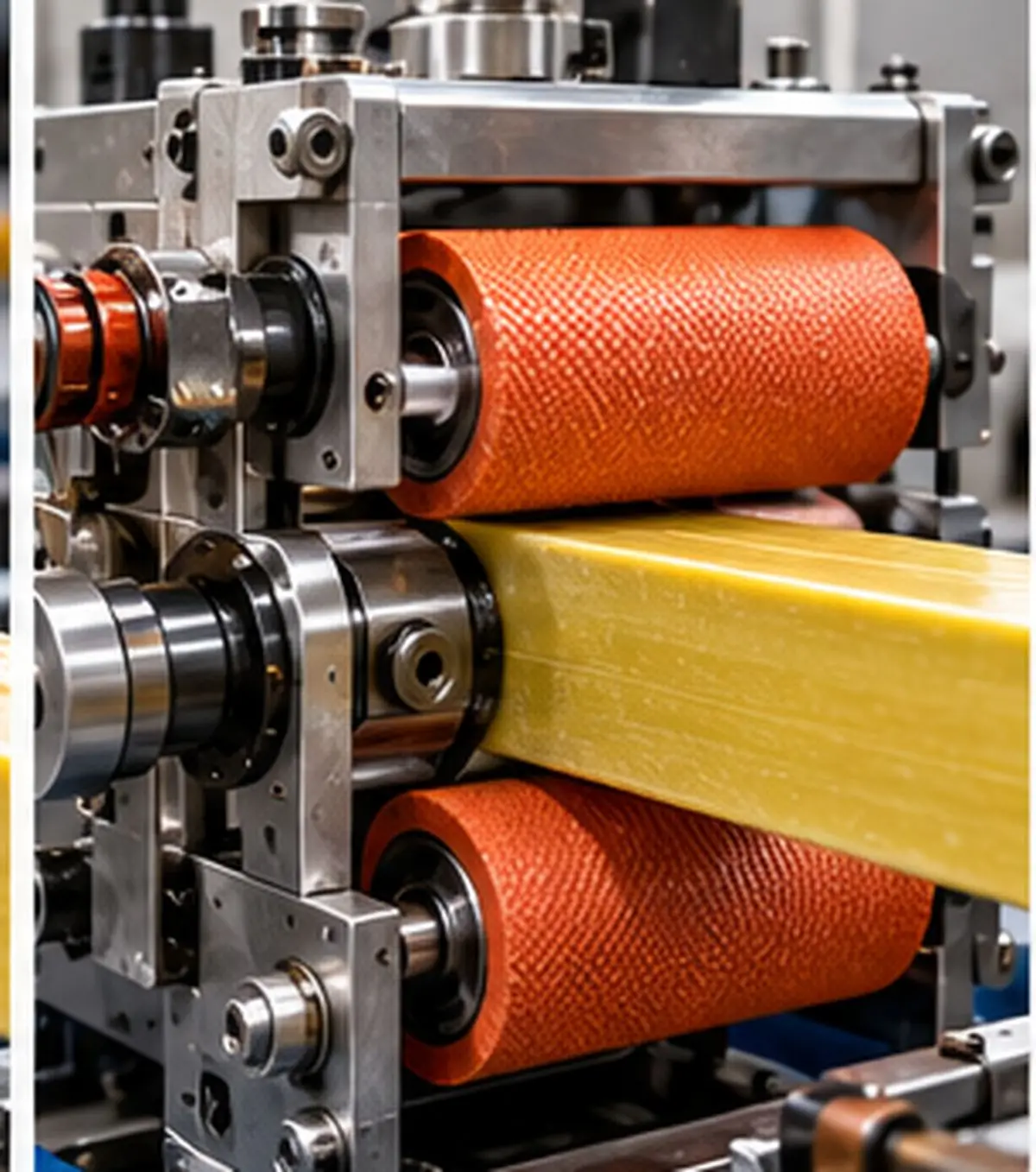
In pultrusion, after leaving the die the profile cools in open air for a few meters and then reaches the puller. Puller speed is the line speed, and its force must overcome the total friction inside the die. Depending on die size and contact area, pulling force capacity ranges from about 5 tonnes to over 40 tonnes on common machines and up to several hundred tonnes on special lines for wide profiles.
- Caterpillar puller: two continuous chains or belts with rubber pads that grip the profile between them; motion is fully continuous and smooth, suitable for small and medium sections.
- Reciprocating (hand-over-hand) puller: two hydraulic clamps that alternately grip and pull the profile; it generates very high force and, with interchangeable jaws for different shapes, is more flexible.
7. Cutting station
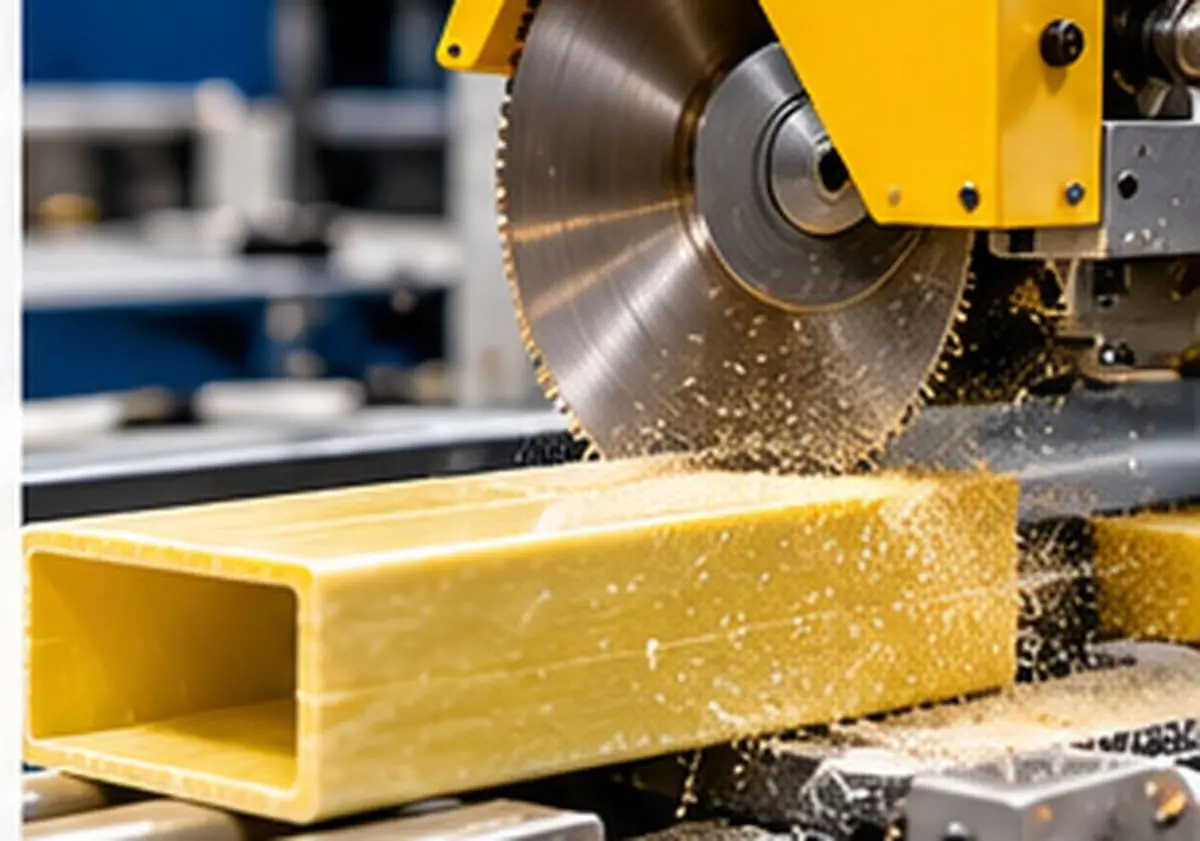
In the final stage of pultrusion, the composite profile is cut with a diamond circular saw to standard lengths (usually 6 m or a custom length). Modern lines use a flying saw that travels with the profile so cutting is done without stopping the line. Water or dust extraction to control glass fiber dust is essential for both staff safety and cut edge quality.
General technical specifications of a pultrusion machine
| Parameter | Typical range |
|---|---|
| Overall machine length | 12 to 20 m |
| Machine width | 80 to 200 cm |
| Machine weight | About 5 to 10 tonnes |
| Pulling force capacity | 5 to 40 tonnes (special lines up to several hundred tonnes) |
| Die length | 60 to 150 cm |
| Number of heating zones | 2 to 4 independent zones |
| Die temperature | 120 to 180 °C |
| Line speed | About 4 to 90 m per hour depending on cross-section and resin |
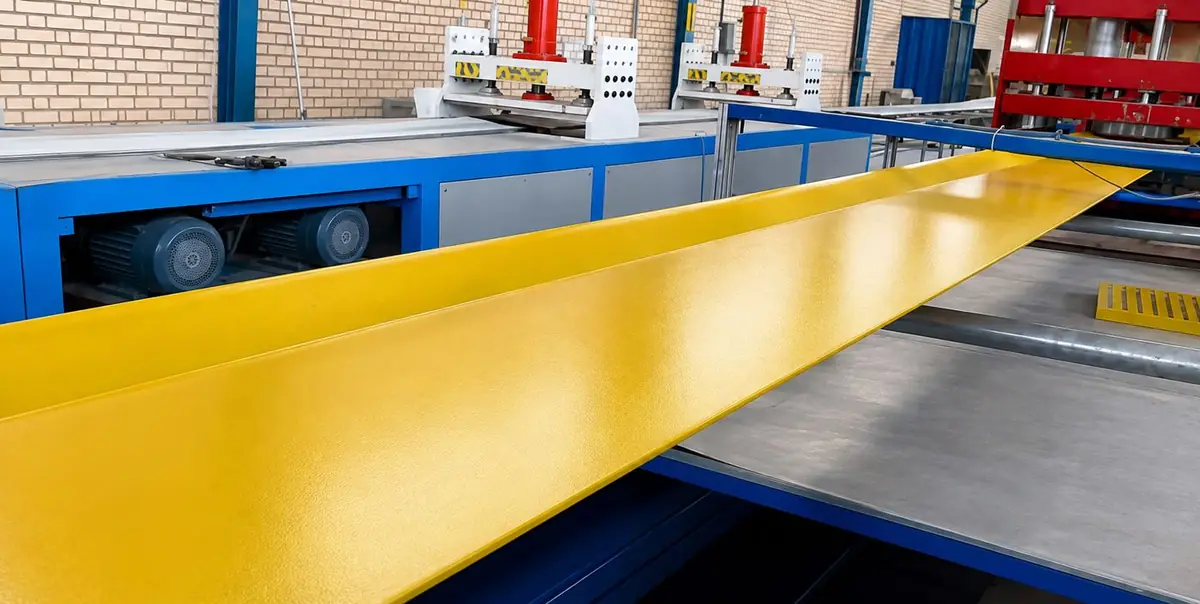
Key process parameters and the operating window
Pultrusion is a multivariable process, and changing any parameter affects the others. The process engineer must define a stable operating window for each composite profile:
| Parameter | Effect of increasing | Risk if set incorrectly |
|---|---|---|
| Pulling speed | Higher output, shorter dwell time in the die | Incomplete cure, internal cracks, tacky surface |
| Die temperature | Faster cure, exotherm peak moves toward the entry | Thermal cracking, higher pulling force, surface sloughing |
| Fiber content | Higher strength and stiffness | Incomplete wet-out, excessive pulling force, fiber breakage |
| Filler content | Lower shrinkage and cost, better fire behavior | Higher resin bath viscosity and poor wet-out |
| Initiator concentration | Greater reactivity | Shorter resin bath pot life, premature gelling |
| Internal release | Lower friction and better surface | Reduced adhesion for painting and adhesive bonding |
The relationship between line speed and die length can be expressed by the concept of dwell time:
That is, if the die is one meter long and the pulling speed is 0.5 m per minute, each section of the profile stays in the die for about 2 minutes. This time must exceed the time needed for the resin to reach the target degree of cure (usually over 90 to 95 percent) at the thickest point of the cross-section. That is why thick sections such as large-diameter composite rebar or thick-walled structural profiles are produced at lower speeds.
Quality control of composite profiles
At Nabak Composite, quality control starts with incoming raw materials and continues through to packing. Common tests for composite profiles made by pultrusion are:
| Test | Reference standard | Purpose |
|---|---|---|
| Barcol hardness | ASTM D2583 | Quick assessment of degree of cure on the line |
| Fiber content (burn-off) | ISO 1172 / ASTM D2584 | Verifying fiber-to-resin ratio |
| Flexural strength and modulus | ISO 14125 / ASTM D790 | Flexural stiffness and strength |
| Tensile strength | ISO 527-4 / ASTM D638 | Longitudinal and transverse tensile properties |
| Short-beam interlaminar shear | ISO 14130 / ASTM D2344 | Quality of wet-out and fiber–resin adhesion |
| Glass transition temperature and degree of cure | DSC / DMA | Assuring complete resin cure |
| Dimensional tolerances and basic properties | EN 13706 | Dimensional compliance and E17/E23 classification |
The European standard EN 13706 classifies pultruded composite profiles by minimum longitudinal elastic modulus into two grades, E17 (min. 17 GPa) and E23 (min. 23 GPa); grade E23 is suitable for structural and load-bearing applications.
Common pultrusion defects and how to fix them
| Defect | Likely cause | Corrective action |
|---|---|---|
| Longitudinal or internal cracks | Severe exotherm peak, high die temperature, lack of transverse mat | Lower entry zone temperature, adjust initiator system, add CFM |
| Surface blisters and bubbles | Fiber moisture, late cure, free monomer | Dry the fibers, raise end zone temperature, reduce speed |
| White, dry fibers | Incomplete wet-out in the resin bath, high viscosity | Longer immersion time, less filler, heat the resin bath |
| Surface sloughing and roughness | Resin sticking to the die, insufficient release, die wear | More internal release, clean and re-chrome the die |
| Profile bow and twist | Asymmetric fiber distribution, temperature difference between top and bottom of the die | Correct preforming, balance platen temperatures |
| Pulling force spikes | Premature gelling at the start of the die | Lower first zone temperature, check resin bath pot life |
Mechanical and physical properties of pultruded composite profiles
Composite profiles made by pultrusion are anisotropic; that is, their properties in the longitudinal direction (the roving direction) are far higher than in the transverse direction. For the design engineer this is an advantage, because fibers can be placed exactly along the load path. The table below gives typical values for polyester fiberglass profiles compared with steel and aluminum:
| Property | Composite profile (glass/polyester) | Structural steel | Aluminum |
|---|---|---|---|
| Density (g/cm³) | About 1.8 to 2.0 | 7.85 | 2.7 |
| Longitudinal tensile strength (MPa) | 200 to 400 (rebar up to 800 and more) | 370 to 500 | 150 to 300 |
| Longitudinal elastic modulus (GPa) | 17 to 30 | 200 | 70 |
| Thermal conductivity (W/m·K) | approx. 0.3 | approx. 50 | approx. 200 |
| Electrical conductivity | Insulating | Conductive | Conductive |
| Corrosion resistance | Excellent | Requires coating | Moderate |
Calculating the weight per unit length of composite profiles
Each composite profile has a specific weight depending on its cross-section. For a quick calculation, the density of pultruded products is taken as about 1.9 g/cm³:
Example: for a 50×50 composite box section with a 5 mm wall, the cross-sectional area is 50² − 40² = 900 mm², i.e. 9 cm². So each meter of this profile weighs about 9 × 100 × 1.9 = 1710 g, or roughly 1.7 kg, whereas the same section in steel weighs about 7 kg.
How pultruded products are priced
In the pultruded products market, unlike steel sections, which are usually priced per kilogram, pultruded products are priced per meter of length, and each cross-section has its own price. Factors affecting the price per meter of a composite profile are:
- Weight of material per meter (cross-sectional area);
- Resin type (polyester, vinyl ester or epoxy) and type of reinforcing fiber;
- Need for surface veil, special color, flame-retardant or UV-resistant additives;
- Die complexity and the speed achievable on the pultrusion machine;
- Order volume and requested cut length.
For price lists and producible dimensions of each product, contact the Nabak Composite sales team.
Products that can be made by pultrusion
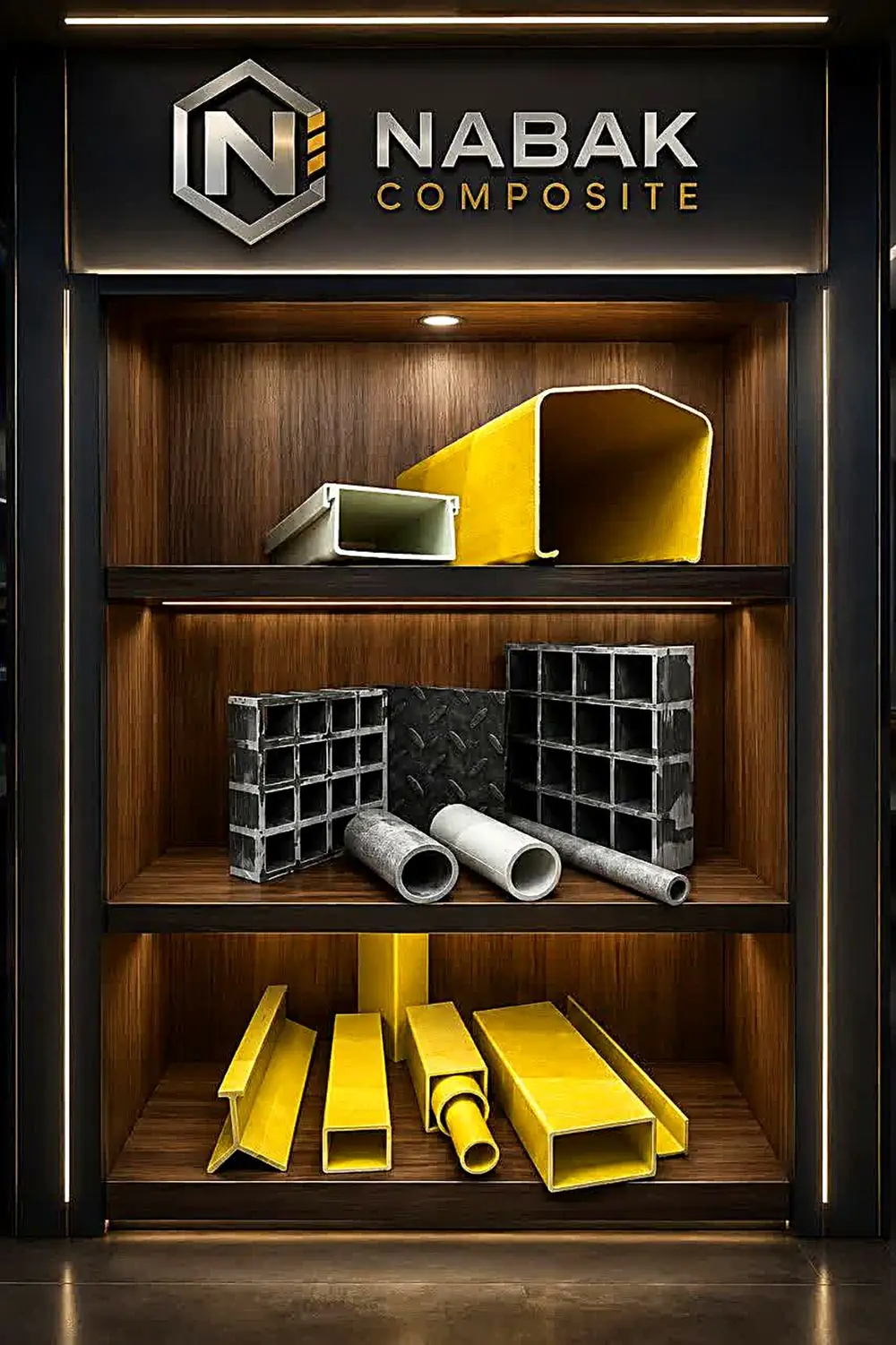
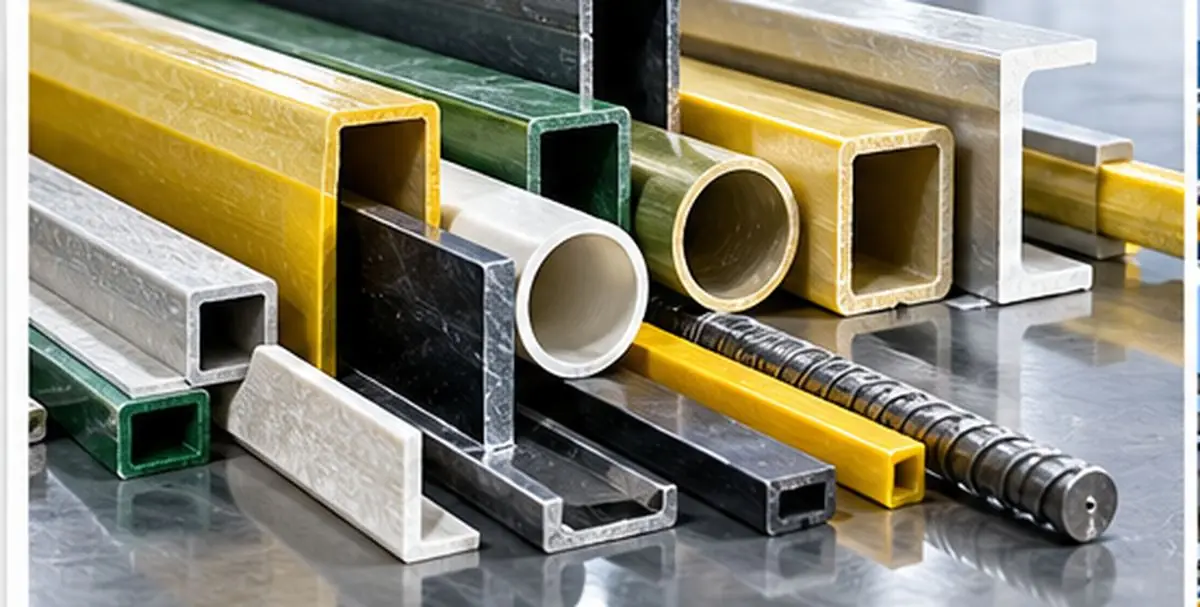
By changing the die and the reinforcing fiber layout, a wide range of sections can be produced on one pultrusion machine. The main Nabak Composite pultruded products are:
Industrial applications of pultruded composite profiles
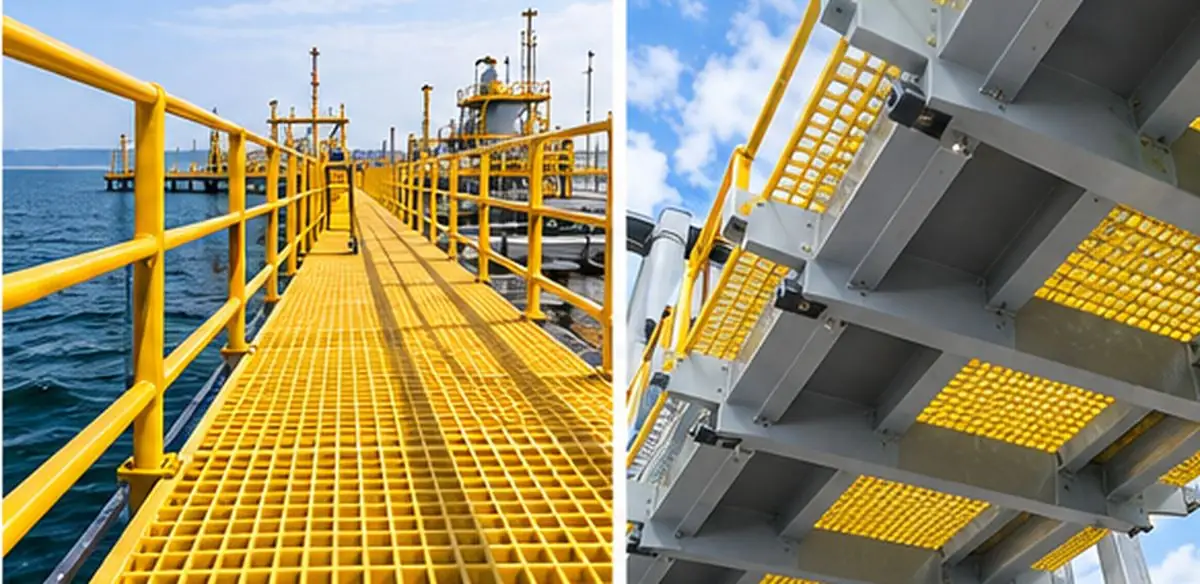
Because they combine light weight, insulation and corrosion resistance, pultruded products have replaced steel, aluminum and wood in many industries:
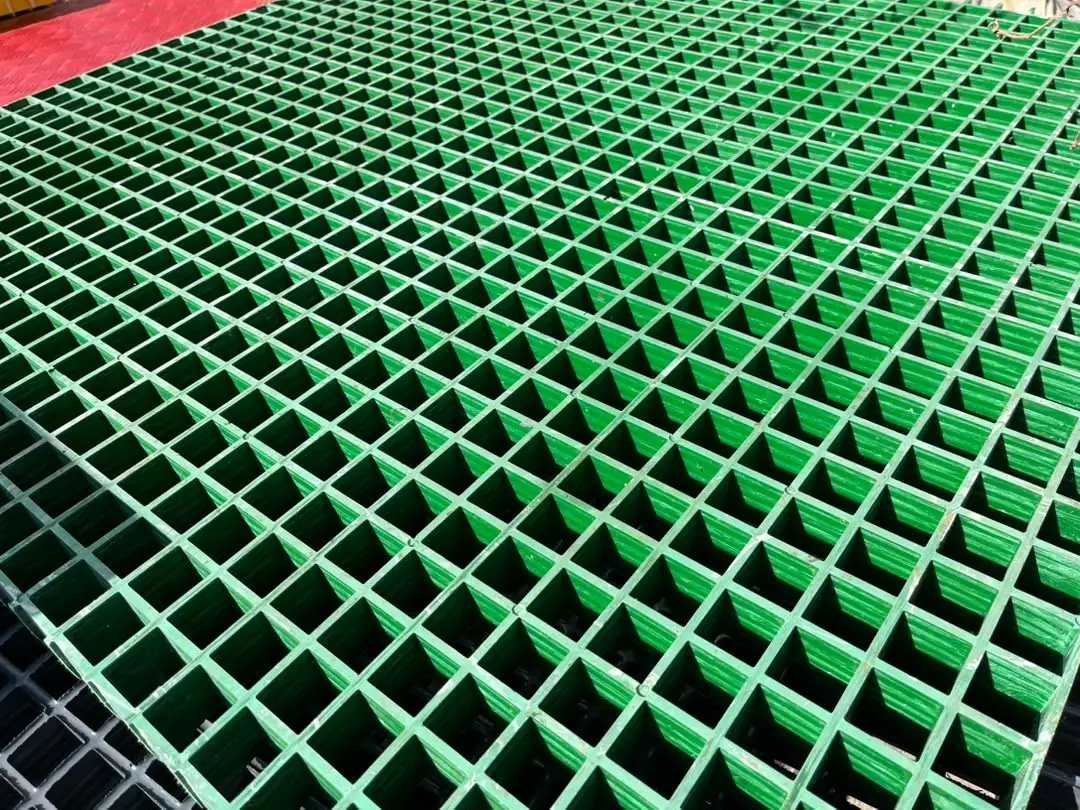
- Oil, gas and petrochemicals: access platforms, railings, grating and composite cable trays that do not corrode in acids, alkalis and marine humidity.
- Electrical industry: insulating arms, insulating ladders, composite flat bars and fiberglass angles in switchboards and substations, because they are fully insulating.
- Building and infrastructure: composite rebar for concrete in coastal structures, bridges and tunnels; high thermal performance window profiles.
- Cooling towers and treatment plants: composite I-sections, box sections and polymer channels in permanently wet environments.
- Renewable energy: spar caps for wind turbine blades and solar panel support structures.
- Transportation and agriculture: lightweight body parts, greenhouse posts, tree stakes and fencing.
Advantages and limitations of pultrusion
Advantages
- Continuous, automated production: pultrusion is fully mechanized, with little dependence on labor and highly uniform quality along the entire product.
- High fiber fraction: the highest strength-to-weight ratio among composite manufacturing methods.
- Economical for mass production: good production speed and low cost per meter.
- Very little waste: almost all raw material becomes product.
- Unlimited length: can be cut to any length without joints.
Limitations
- Pultrusion is suitable only for sections with a constant cross-section along their length (although curved pultrusion and pullwinding have been developed).
- High die cost, which makes low-volume production uneconomical.
- Transverse properties lower than longitudinal; requires careful design of the mat layout.
- Many influencing parameters, so achieving an optimal product requires considerable technical experience.
Dimensional limits of parts in pultrusion
- Producible outer dimensions from about 1 mm (very thin rods) to over 1000 mm wide (panels and wide profiles).
- Wall thickness usually from 1.5 to about 25 mm, and larger diameters in solid rebar.
- Corners should not be sharp; minimum radius about 0.5 to 1 mm.
- Wall thicknesses should be as uniform as possible for even cure and symmetrical shrinkage.
Pultrusion at Nabak Composite
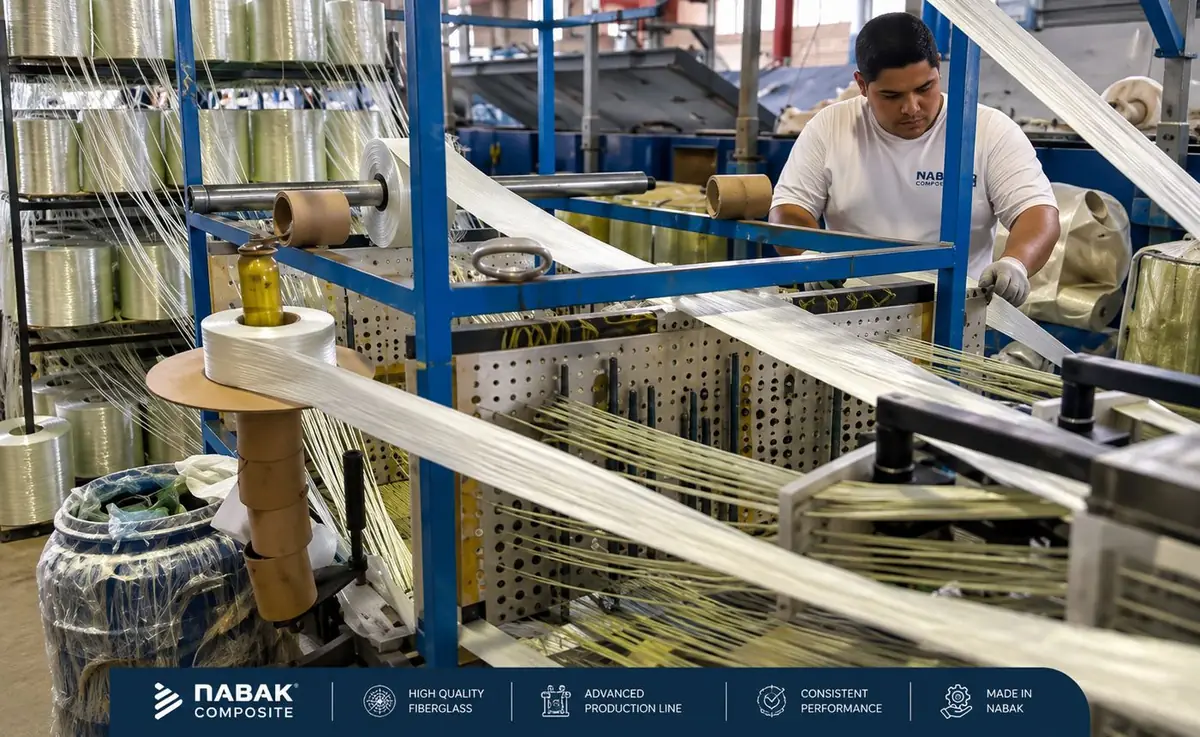
With equipped pultrusion lines, a process engineering team and a quality control laboratory, Nabak Composite produces composite profiles for various industries. On our lines, the choice of reinforcing fiber, resin bath formulation, die design and the temperature profile of the pultrusion machine are tailored to each product so that the final product matches your project's needs exactly.
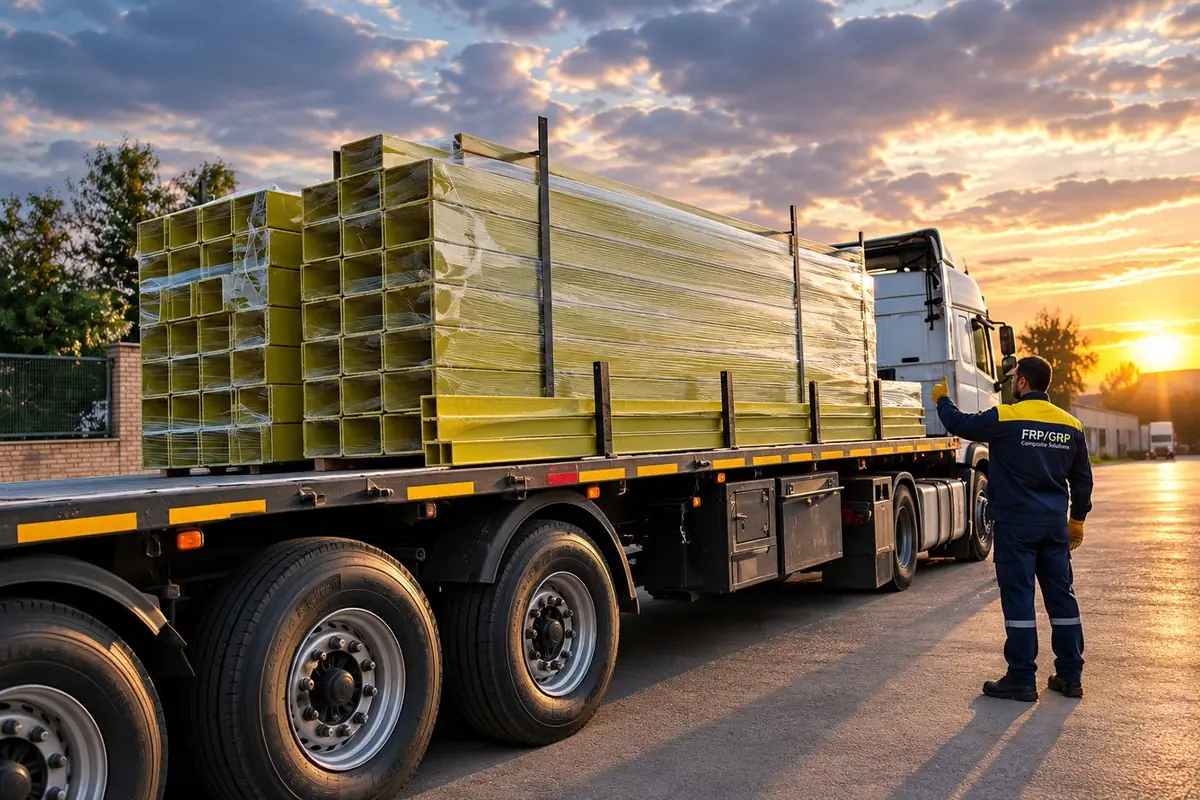
After final quality control, profiles are packed and shipped to the project site with protection against scratches and direct sunlight. The light weight of composite profiles compared with steel noticeably reduces transport and installation costs.
Frequently asked questions about pultrusion
What is pultrusion?
Pultrusion is a continuous process for producing constant-section composite profiles, in which reinforcing fibers pass through a resin bath and are then pulled through a heated die where they cure.
What is the difference between pultrusion and extrusion?
In extrusion, material is pushed under pressure through the die inlet, whereas in pultrusion no pressure is applied at the inlet and the cured profile is pulled from the die outlet by the puller.
How is the weight per meter of a composite profile calculated?
Multiply the cross-sectional area in cm² by 100 and then by the density of about 1.9 g/cm³; the result is the weight per meter in grams.
What is the die temperature in a pultrusion machine?
Depending on resin type and profile thickness, die temperature is usually set between 120 and 180 °C in two to four zones.
What products are made by pultrusion?
Composite tubes, composite rebar, fiberglass angles, composite box sections, polymer channels, composite flat bars, composite I-sections and composite cable trays are among the most important pultruded products.
How fast is pultrusion?
Line speed in pultrusion depends on the thickness and complexity of the cross-section, resin type and die length, and is usually 4 to 90 m per hour; thin sections such as composite flat bar run faster and thick sections such as large-diameter composite rebar run slower.
Are pultruded products resistant to sunlight?
Yes. By adding UV absorbers to the resin bath and using surface veil, the composite profile is made resistant for long-term outdoor use.
Summary
Pultrusion combines materials science, polymer chemistry, heat transfer and mechanical engineering. Success in pultrusion depends on precise coordination of the machine's components: reinforcing fibers in the right layout, a resin bath with a stable formulation, a die with accurate design and surface finish, an optimal temperature profile and a puller running at constant speed. The result is light, strong, insulating and corrosion-resistant composite profiles that are a superior alternative to steel, aluminum and wood in many applications. For technical advice, section selection and prices, contact the Nabak Composite engineering team.

This article was prepared by the technical team of Nabak Composite, a manufacturer of composite profiles by pultrusion.