What are composite products and why are they replacing metals?
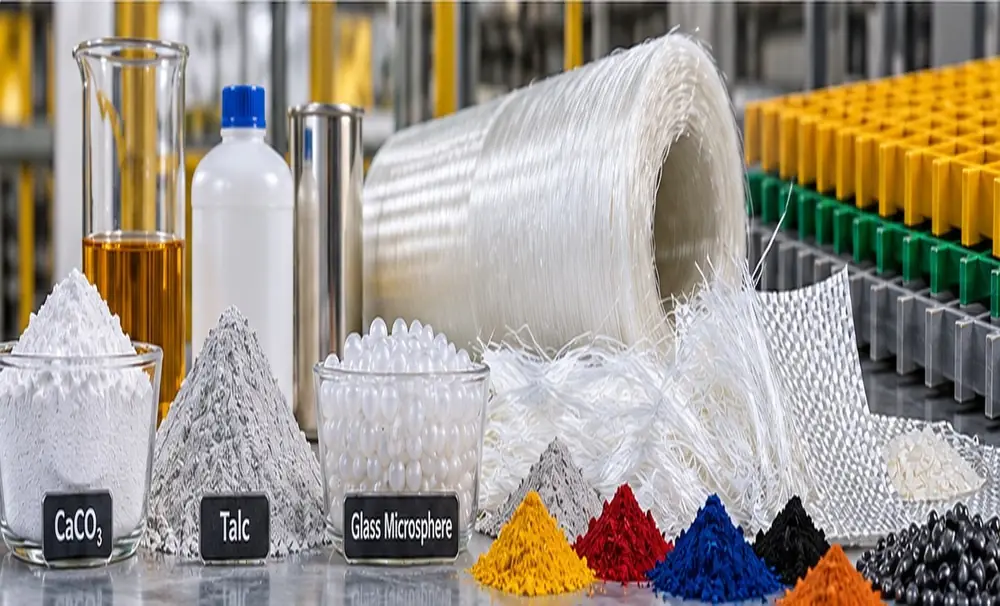
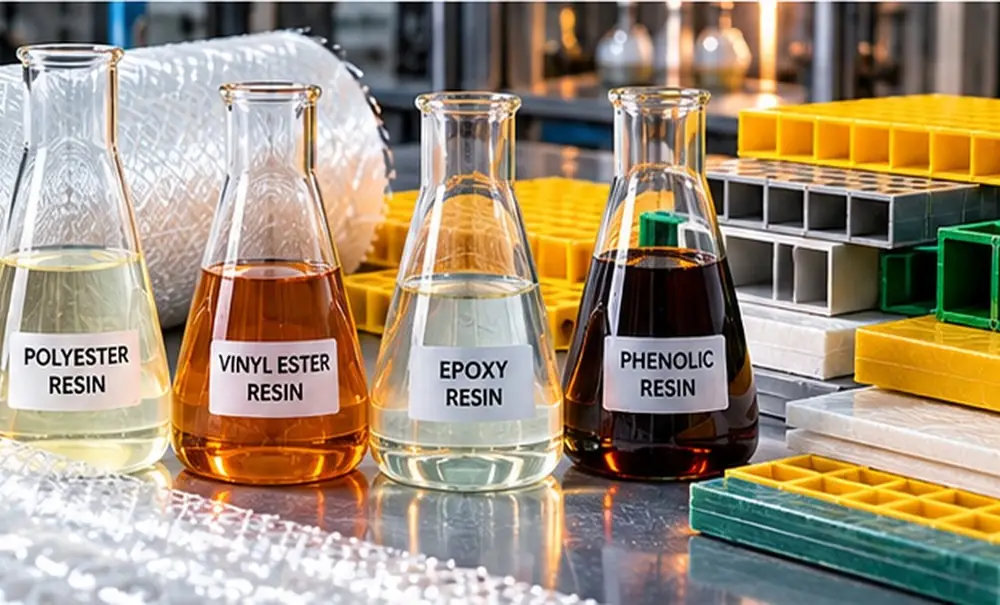
Composite products (FRP or GRP) are made of two components: reinforcing fibers (usually glass fiber) that carry the load, and a polymer resin (polyester, vinyl ester or epoxy) that holds the fibers together, distributes the load between them and protects them from the environment. The result is a material whose properties can be "designed" by choosing the type, direction and content of the fibers — something uniform metals cannot offer. For a basic introduction to these materials, see what is a composite and its types.
If you too are asking why you should use composites instead of iron, steel and other metals, the short answer is: in any application where corrosion, weight, electrical conductivity or maintenance cost is the main issue, composites usually win. The longer answer is the subject of this article. Fiberglass products today cover a wide range of industrial structures, from grating and pultruded profiles to pipe, sheet and ladders.
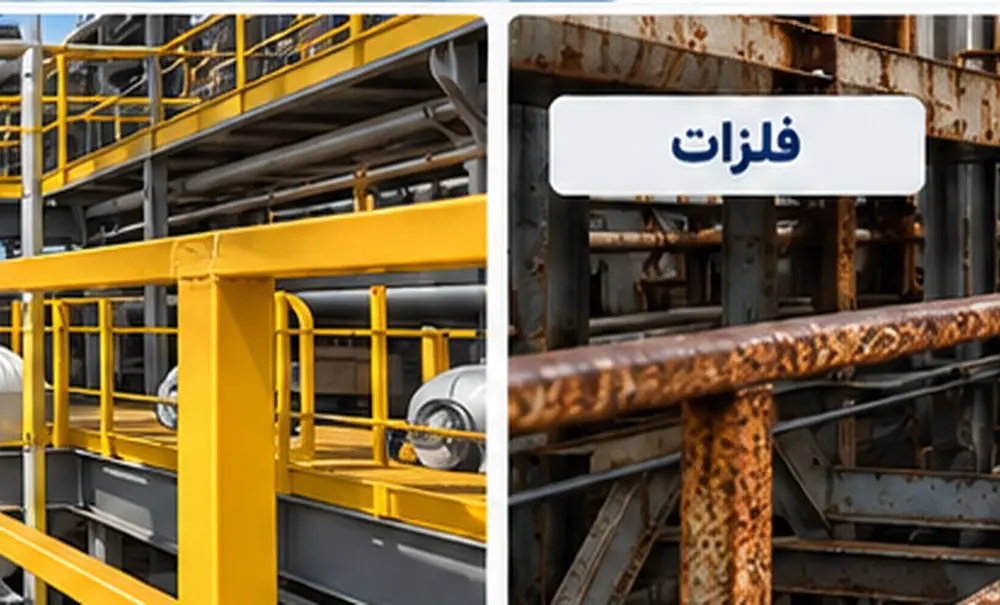
Advantages of using composite products
The full list of composite advantages compared with metal, wood and concrete is long; the advantages of using composite products can be grouped into eight main categories. For each one, besides the explanation, we give the relevant engineering figure:
1) Light weight: a quarter of the weight of steel
The density of pultruded FRP composite is about 1.8 g/cm³, against 7.8 for steel and 2.7 for aluminum. So composite is about 75 percent lighter than ferrous metals and about 33 percent lighter than aluminum. One cubic meter of steel weighs about 7800 kg, while the same volume of composite weighs about 1800 kg — a difference that shows in every fiberglass composite. Light weight means less dead load on the structure, a lighter foundation, cheaper transport and installation without a crane — and, on many platforms, greater safety for installers.
2) High strength and an excellent strength-to-weight ratio
The longitudinal tensile strength of pultruded profiles is about 500 MPa — more than ordinary structural steel (about 400 to 450 MPa). Dividing this strength by density, the strength-to-weight ratio of composite is about 4.8 times that of steel, 2.5 times aluminum and 2.4 times wood, and far higher than concrete (whose tensile strength is only a few MPa and which does not work in tension without steel reinforcement). This means far less material weight is needed to carry a given load.
3) Resistance to corrosion, chemicals and the environment
Composites do not rust like metal or rot like wood. They resist fresh water, salt water (even hot, concentrated brine), a wide range of chemicals (acids, alkalis, salts) and the sun's ultraviolet radiation (with UV absorber additives and a gelcoat surface layer), and they are not damaged by insects, termites or pests. Composite products are even designed for permanent immersion in water. That is why in humid, coastal and chemical environments composites are the best choice and keep their appearance and strength for years.
4) Economical over its life
Using composites is economical from a life-cycle perspective. The initial price per kilogram of composite is usually higher than steel, but because far less weight is needed and the costs of transport, installation, labor, cranes and especially periodic repair and painting are eliminated or reduced, the total cost of the structure over its life is lower. Composite products have a long life and need almost no maintenance; their maintenance program is limited to simple washing and visual inspection.
The color of fiberglass products is added to the resin during production, so the product is "colored through" and scratches do not reveal a different color underneath. Special colored surfaces (even a wood pattern) can also be produced, and if needed, repainting with an excellent surface finish is possible.
5) Fast installation and customization
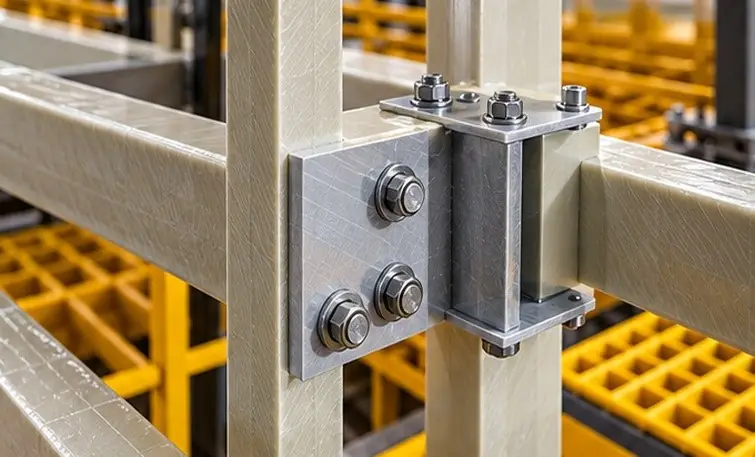
Composites install quickly and need less equipment. Cutting and drilling composites is done with common tools (an angle grinder with a diamond disc and a diamond drill), and connections are made with bolts and nuts or rivets (stainless or composite rivets for light connections and bolts for structural ones); using structural epoxy adhesive alongside bolts improves the adhesion and stiffness of the joint. There is no need for welding, hot work permits or re-galvanizing of edges — a point that matters greatly in operating refinery units. See the full cutting guide in cutting and machining composites.
With composites, almost every key feature of a profile can be customized: section size and shape, thickness, fiber and resin type, color, and physical and mechanical properties. Custom design means more fibers can be placed at critical points without increasing the overall weight of the part.
6) Electrical and thermal insulation, with no sparks
Composites are electrical insulators (high dielectric strength, with antistatic grades available) and also thermal insulators (which also reduces sweating and condensation on the surface): the thermal conductivity of FRP composite is about 0.3 W/m·K, against 40 for steel and 170 for aluminum. Tools striking composite do not create sparks — a vital advantage in flammable environments. These materials are also non-magnetic and can be used next to sensitive equipment and MRI.
7) Dimensional stability and fire behavior
The coefficient of thermal expansion of pultruded composite in the longitudinal direction is about 11×10⁻⁶ per K — on a par with steel, half that of aluminum and far below PVC (85×10⁻⁶). So the dimensions of the structure stay stable through temperature swings, and no thermal stress arises where it connects to a steel structure. In fire, composites made with the right resin are self-extinguishing, and fire-retardant grades are produced to order; note, however, that polymer composites are not fireproof and the service temperature of common resins is about 80 to 100 °C.
8) Transparency to radio waves and impact absorption
Glass composites are transparent to radio and radar waves and do not attenuate them, which is why they are used in radomes, antenna covers and telecom structures. They also behave well under impact: impact energy spreads through the fiber network, and unlike metals no dents or permanent deformation occur; the part returns to its original shape after impact.
Comparison of composite properties with traditional materials
The table below compares the properties of pultruded FRP composite with iron (steel), aluminum, wood and rigid PVC. The values are approximate and for general comparison:
| Feature | FRP composite (pultruded) | Iron / steel | Aluminum | Wood | Rigid PVC |
|---|---|---|---|---|---|
| Density (g/cm³) | 1.8 | 7.8 | 2.7 | 0.7 | 1.4 |
| Tensile strength (MPa) | 500 longitudinal / 200 transverse | 450 (isotropic) | 300 (isotropic) | 80 | 30 |
| Specific strength (MPa ÷ g/cm³) | ~278 | ~58 | ~111 | ~114 | ~21 |
| Elongation at break (%) | 2 | 25 | 35 | 1 | 25 |
| Impact strength (kJ/m²) | 200 | 400 | 200 | 30 | 40 |
| Coefficient of thermal expansion (1/K) | 11×10⁻⁶ | 12×10⁻⁶ | 22×10⁻⁶ | 14×10⁻⁶ | 85×10⁻⁶ |
| Thermal conductivity (W/m·K) | 0.3 | 40 | 170 | 0.1 | 0.1 |
| Electrical conductivity | Very low (insulating) | High | High | Low (conductive when wet) | Low |
| Difficulty of fabrication, cutting, drilling and installation | Low | Moderate | Moderate | High | Moderate |
| Life-cycle cost | Low | High | High | Low to medium | Moderate |
| Corrosion resistance | Excellent | Low | Good | Low | Good |
Note 2: composite properties depend on fiber direction (they are anisotropic); the longitudinal strength of a pultruded profile is about 2.5 times its transverse strength. The designer must align the main load with the fibers.
Iron versus composite
Steel holds an iconic place in industry, from skyscraper frames to bridges and pipelines. Iron is still one of the most widely used materials in the world, but today it faces stiff competition from composites in many applications. From vehicle parts and bridge decks to platforms, handrails and industrial cable trenches, composites are increasingly replacing steel. Advantages of composites over steel:
- Lighter than steel: one cubic meter of steel weighs about 7800 kg; the same volume of composite is 70 to 77 percent lighter, depending on the formulation.
- Targeted strength: in a composite, more fibers can be placed only at critical points (where bending or wear occurs); in steel, increasing local strength means adding metal and increasing overall weight.
- Corrosion resistant: unpainted or ungalvanized steel rusts quickly, and the annual cost of corrosion in industry is very high; composites are stable against moisture, salt water and temperature changes.
- Non-conductive: metals are inherently conductive; composites are insulating and reduce the risk of electric shock in substations and cable trenches.
- Part integration: composite parts can be joined with structural adhesive instead of welding; one composite part can replace an assembly of welded or bolted metal parts, simplifying production and shortening build time.
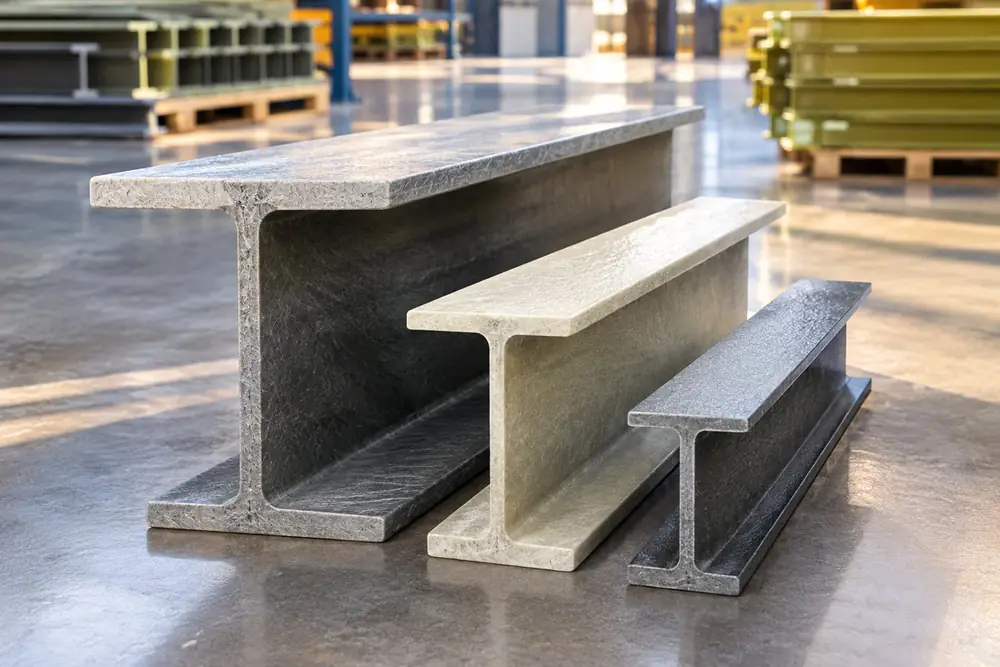
Of course, steel is still the logical choice where very high stiffness, high service temperature or ductility is required. But on refinery platforms, coastal structures, treatment plants and substations, the advantages of composites over steel are so clear that many owners have put converting steel to composite on their agenda. See the specifications of replacement profiles in the composite profile datasheet.
Wood versus composite
Wood has a history as old as humanity, from Stone Age tools to timber-frame houses and utility poles. But wood has clear drawbacks: vulnerability to pests, moisture absorption, rot and warping. Composites have clear advantages in these respects:
- Long life: every kind of wood eventually rots, but composite is durable. In the marine industry, wooden boats need constant care, while many composite boats stay afloat for decades with routine maintenance.
- Dimensional stability: composite keeps its shape and size in heat and cold, dry and wet; wood swells and shrinks with changes in moisture and cracks.
- Low maintenance: compared with wood, composite decks are cleaned with soap and water; wooden decks must be regularly inspected for rot, sanded and varnished.
- Easy transport and installation: because it is light, composite is an ideal replacement for wood in utility poles and structures in remote areas — cheaper transport and simpler installation.
- Pest resistant: wood pests cause heavy damage to structures every year; termites, carpenter ants, wood-boring beetles and fungi do not damage composites — suitable for window frames, retaining walls and outdoor structures.
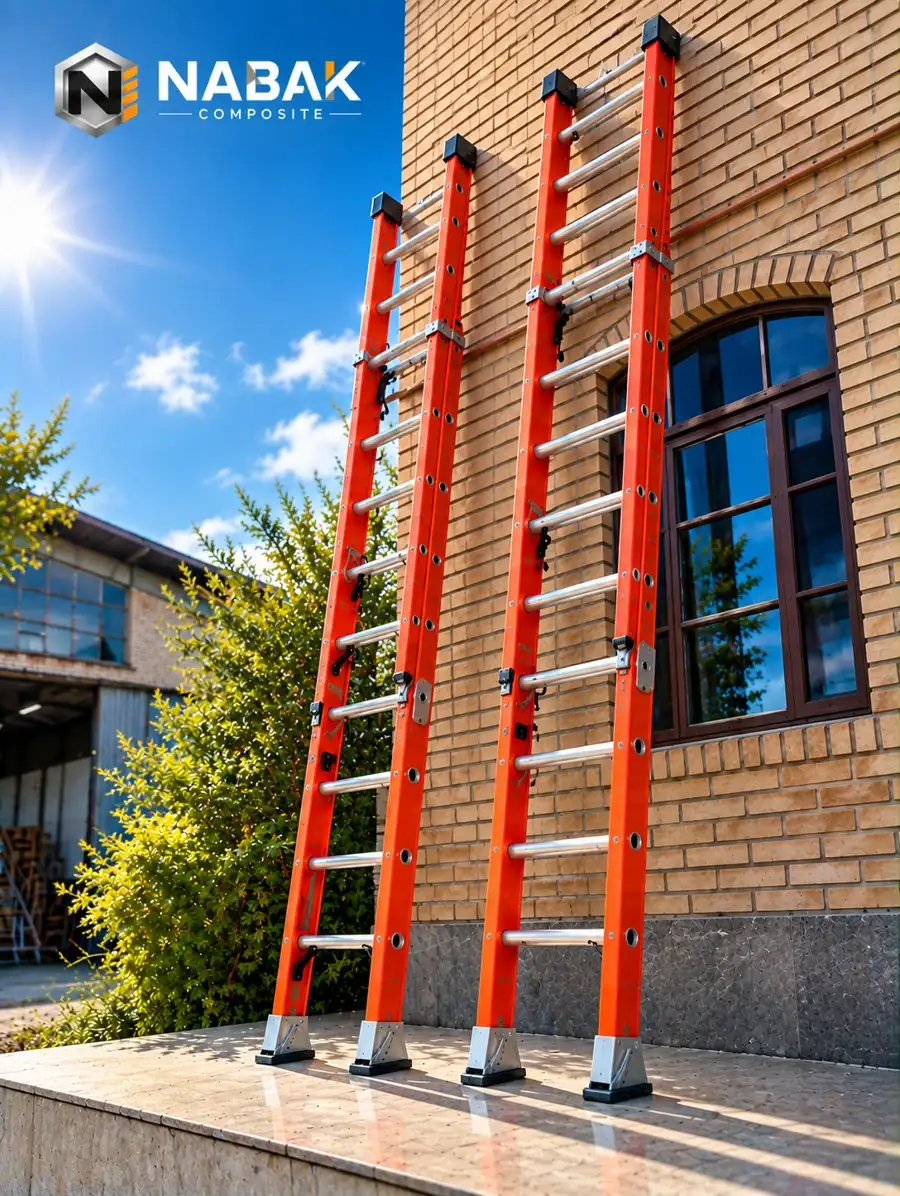
- Lasting insulation: dry wood is an insulator but becomes conductive when wet; composite stays electrically insulating in all conditions. That is why fiberglass ladders have replaced wooden and aluminum ladders for electricians.

Aluminum versus composite
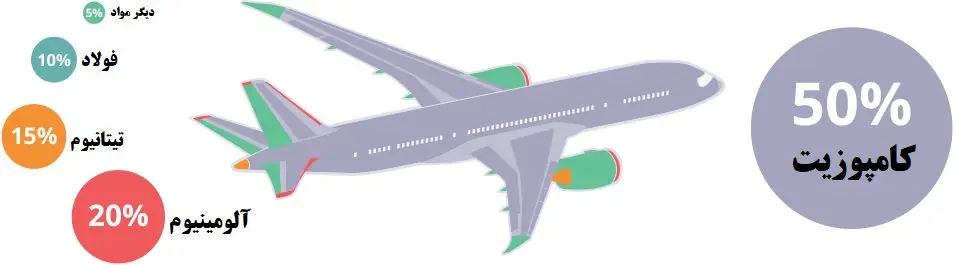
Aluminum is one of the lightest and most malleable metals and was for years the main material of the aerospace industry. But in recent decades composites have taken aluminum's place in primary aircraft structures. The landmark example in aerospace is the Boeing 787: about 50 percent of its structural weight is advanced composites and aluminum's share has fallen to about 20 percent; according to the manufacturer, this change brought a weight saving of about 20 percent compared with conventional aluminum designs.
Advantages of composites over aluminum:
- Better tensile and fatigue performance: in structures with repeated tensile loads, such as aircraft fuselages and wind turbine blades, composite has better fatigue resistance than aluminum.
- One-piece design: making a part in one piece (a wing, turbine blade or panel) eliminates joints and reduces maintenance.
- Precise distribution of weight and stiffness: by changing fiber direction and layup, stiffness and mass can be placed exactly where needed — something an isotropic metal cannot do.
- Strength with flexibility: elastic flexibility is one of the lesser-known properties of composites. Composites can take large elastic deformations without breaking or bending permanently, which is why they have replaced aluminum in sports equipment such as skis, golf clubs and pole-vault poles (which need high flexibility and energy return).
- Vibration damping: polymer resin is viscoelastic and converts part of the vibration energy into heat, damping it; composite damping is far higher than aluminum's, making it suitable for equipment bases and structures exposed to vibration (such as pump and compressor platforms); reduced vibration also extends the life of connections.
- No galvanic corrosion: aluminum suffers galvanic corrosion in contact with steel or salt water; composite has no such problem and is stable when joined to any metal.
- Insulation: unlike metals — the thermal conductivity of aluminum is 170 and of composite 0.3 W/m·K; composite can be touched even in hot sun.
Granite versus composite
The comparison of granite and composite arises mostly in domestic and architectural applications.
Granite is especially popular for kitchen worktops and sinks. But granite has drawbacks: a porous structure that holds stains and bacteria, the need for periodic sealing, very high weight and brittleness under impact. Polymer-matrix composites (such as composite worktops and sinks) have these advantages over granite:
- Non-porous and hygienic: unlike granite, a composite surface has no pores, so food particles and bacteria cannot lodge in it; porous granite absorbs contamination without regular sealing.
- Easy maintenance: a composite sink and worktop are simple to maintain and need no periodic sealing.
- Lighter and cheaper: a composite sink and worktop are much lighter than granite ones, need no reinforced cabinet structure and cost less to buy and install.
- Unlimited appearance options: composite sinks and worktops can be molded in any color and shape, whereas granite must be carefully selected and cut and is limited in color and pattern.
- Impact resistance: a heavy pan dropped on a granite worktop may chip the edge; composite absorbs the impact energy.
Advantages of composite products in different industries
The advantages of composite products take a different form in each industry. The table below shows which traditional material composites have replaced in each field and which advantage was decisive:
| Industry | Traditional material replaced | Composite product | Decisive advantage |
|---|---|---|---|
| Oil, gas and petrochemicals | Galvanized steel | Grating, handrails, platforms, cable trays | Corrosion and chemical resistance; non-sparking |
| Water and wastewater | Steel, concrete and wood | Channel covers, walkways, hatches | Resistant to H₂S and constant moisture; no rot |
| Power and transmission | Wood and iron | Utility poles, insulating ladders, marker balls, cable trays | Electrical insulation; light weight for transport to remote areas |
| Marine and coastal | Wood and steel | Boat decks, jetties, coastal handrails | Resistance to salt water and marine pests |
| Aerospace and transport | Aluminum | Aircraft fuselages, car and train panels | Strength-to-weight ratio and fatigue resistance |
| Building and architecture | Wood, granite and metal | Window frames, facades, sinks and worktops | Variety of color and shape; low maintenance; termite resistance |
Advantages of composite products in the oil and petrochemical industry
In refinery units, metals are exposed to acid vapors, salt water and corrosive gases, and galvanized steel platforms sometimes need replacing in less than ten years. A composite structure works for decades in the same conditions without painting. No sparks when tools strike it and installation without hot work are advantages no metal offers.
Advantages of composite products in the power industry
Wooden utility poles are vulnerable to moisture, fungi and pests, and metal poles are conductive and heavy. Composite utility poles are light and easy to transport to mountainous areas, insulating and immune to rot. Fiberglass ladders and composite marker balls have become standard on transmission networks for the same reasons.
Advantages of composite products in the marine industry
The decks of wooden boats need sanding, varnishing and replacement of rotten planks; a composite deck is washed with water. Most leisure boats in the world today are built with composite hulls, and composite jetty decks, handrails and coastal stairs last several times longer than wood and steel against salt water and UV radiation.
Advantages of composite products in aerospace and transport
In aerospace, every kilogram cut from an aircraft's structure leads to a considerable fuel saving over the aircraft's life. Besides the Boeing 787, the Airbus A350 also has more than half of its structure made of composites. In cars, trains and buses too, composite panels are replacing aluminum and steel to cut weight and energy use.
Advantages of composite products in building
In buildings, composite window frames resist termites and moisture and insulate better than aluminum; composite sinks and worktops have become a light, hygienic alternative to granite; and composite profiles have taken the place of rusting metals on the facades of coastal buildings. The ability to produce in any color, even with a wood or stone pattern, gives the architect a free hand.
Limitations of composites: when is a composite not the right choice?
Knowing the limitations is part of using composites correctly. The table below lists the most important limitations and the engineering solution for each:
| Limitation | Description | Engineering solution |
|---|---|---|
| Low elastic modulus | The stiffness of glass composite is about one seventh that of steel | Design for deflection; deeper section or shorter span |
| Brittle behavior | Elongation at break ~2%; no yield | Safety factor of 2.5 to 4; load capped at 40% of ultimate |
| Limited service temperature | About 80 to 100 °C for common resins | Vinyl ester or phenolic resin for higher temperatures |
| Anisotropic properties | Transverse strength lower than longitudinal | Align the main load with the fibers; transverse mat layers |
| Initial cost | Price per kilogram higher than steel | Calculate life-cycle cost instead of purchase price |
With these points observed, composites perform unrivaled within their correct range of use. Read the design principles in design and analysis of polymer composites.
Nabak composite products: the advantages in practice
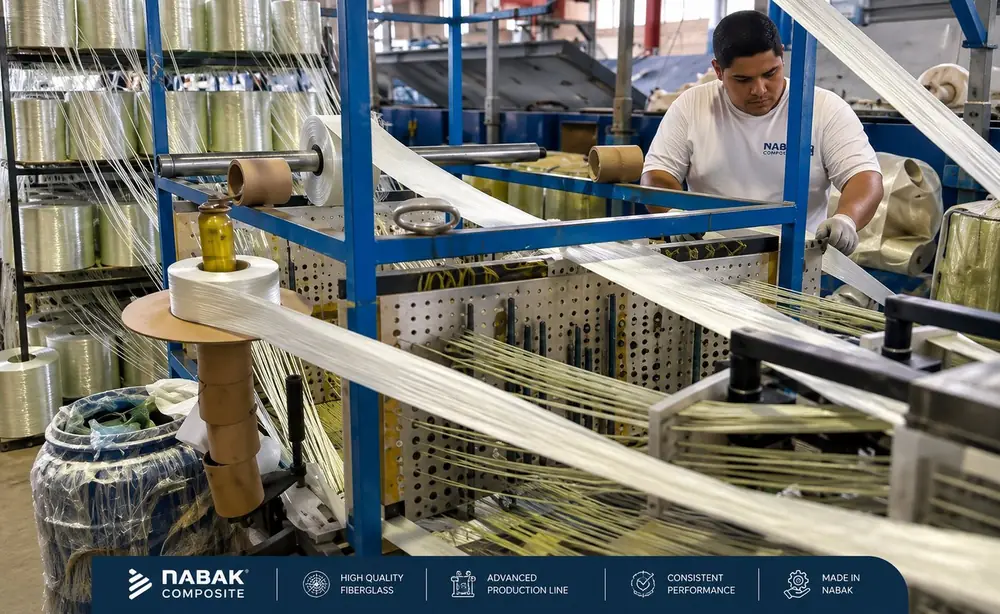
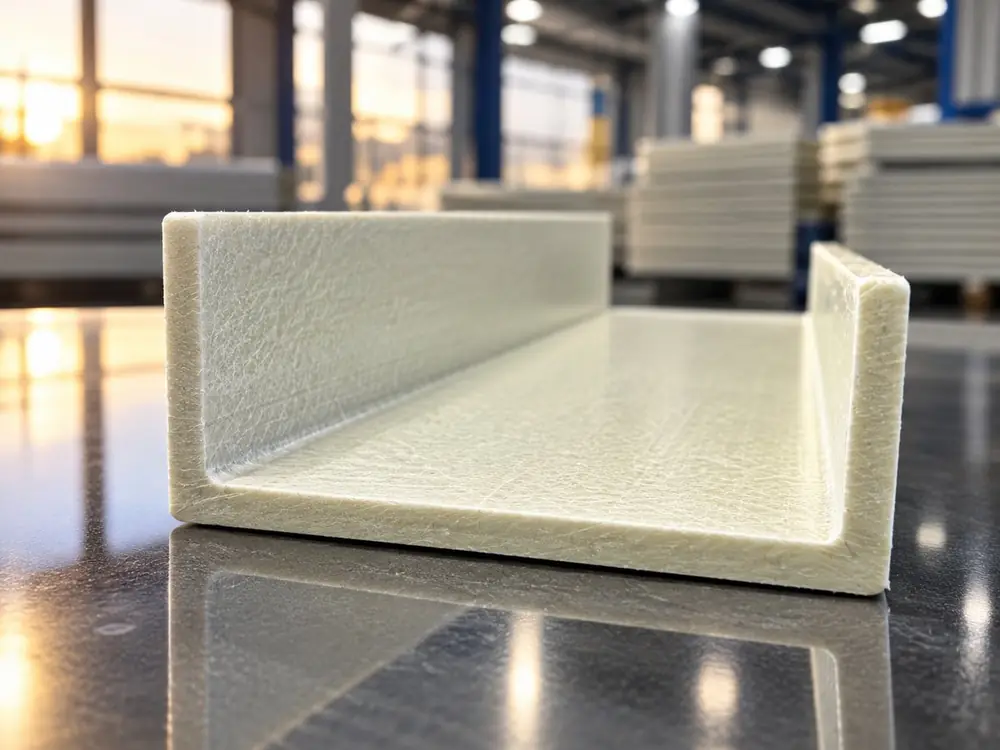
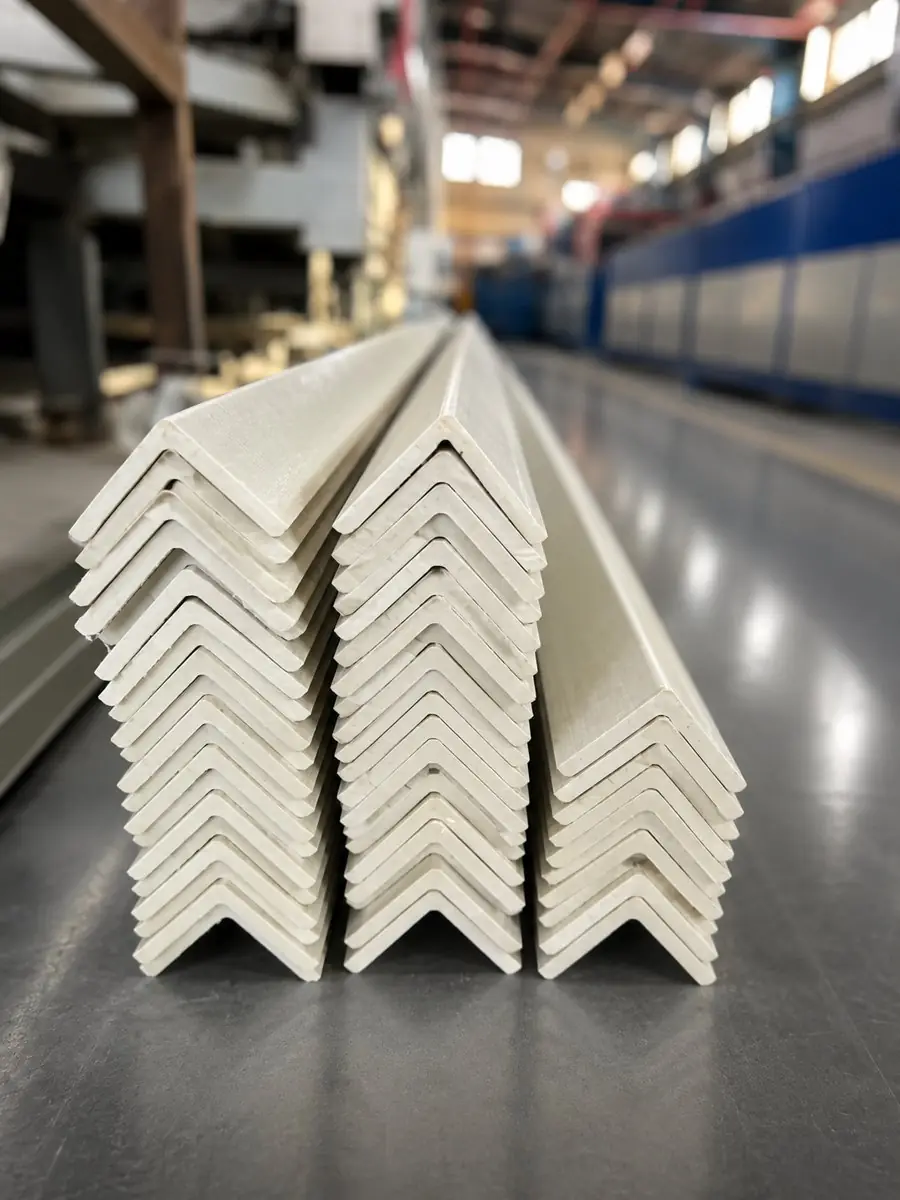
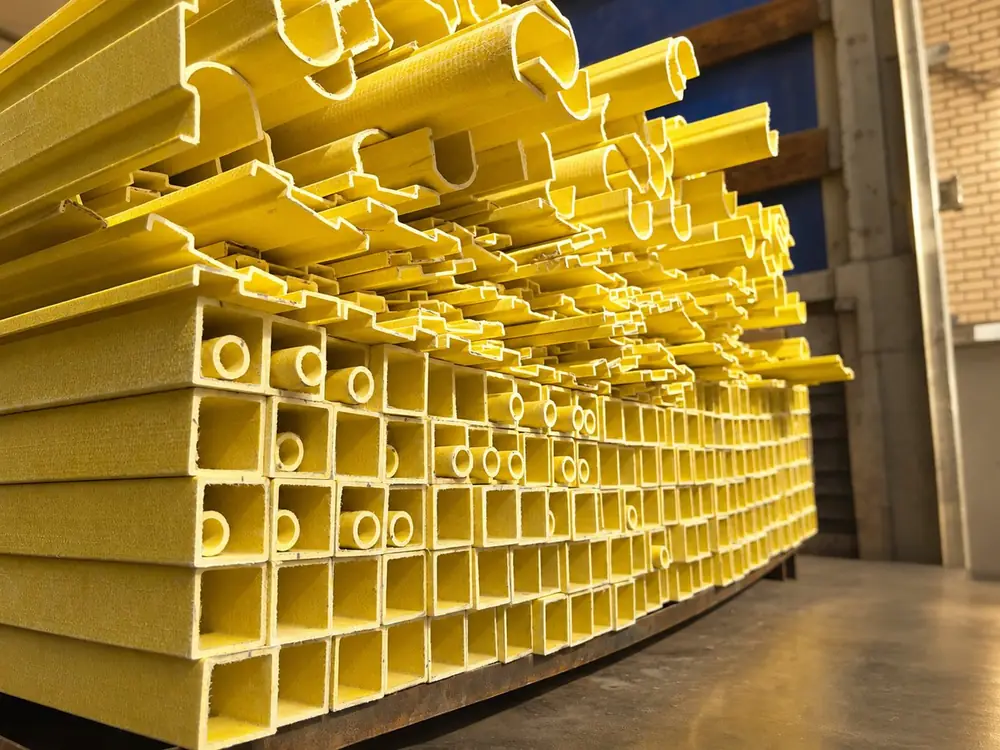
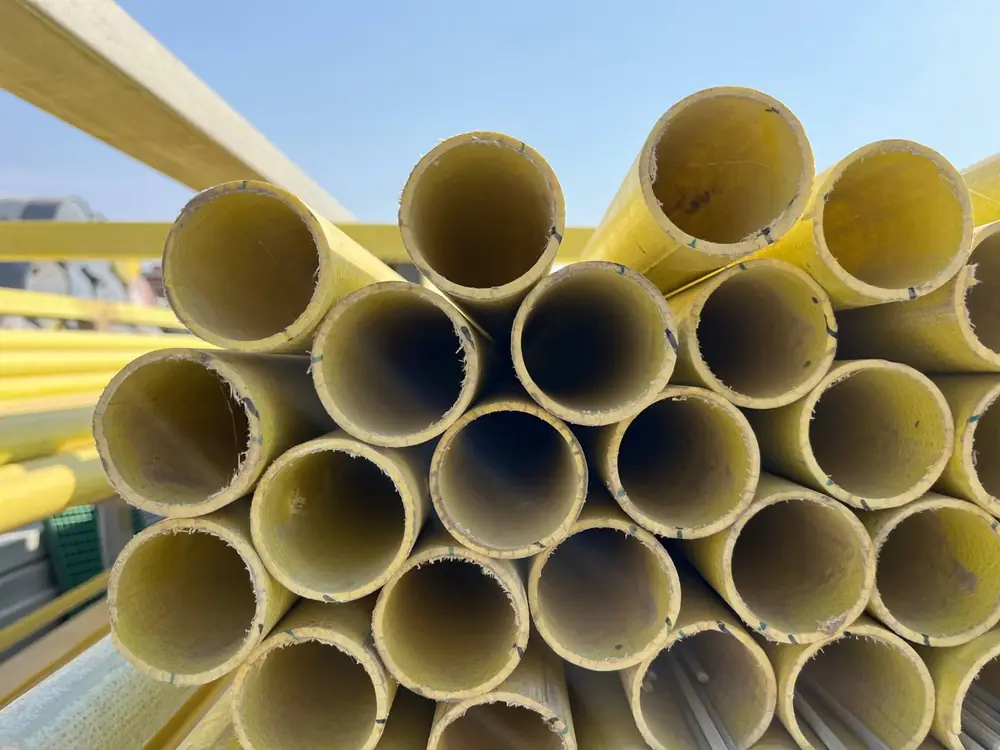
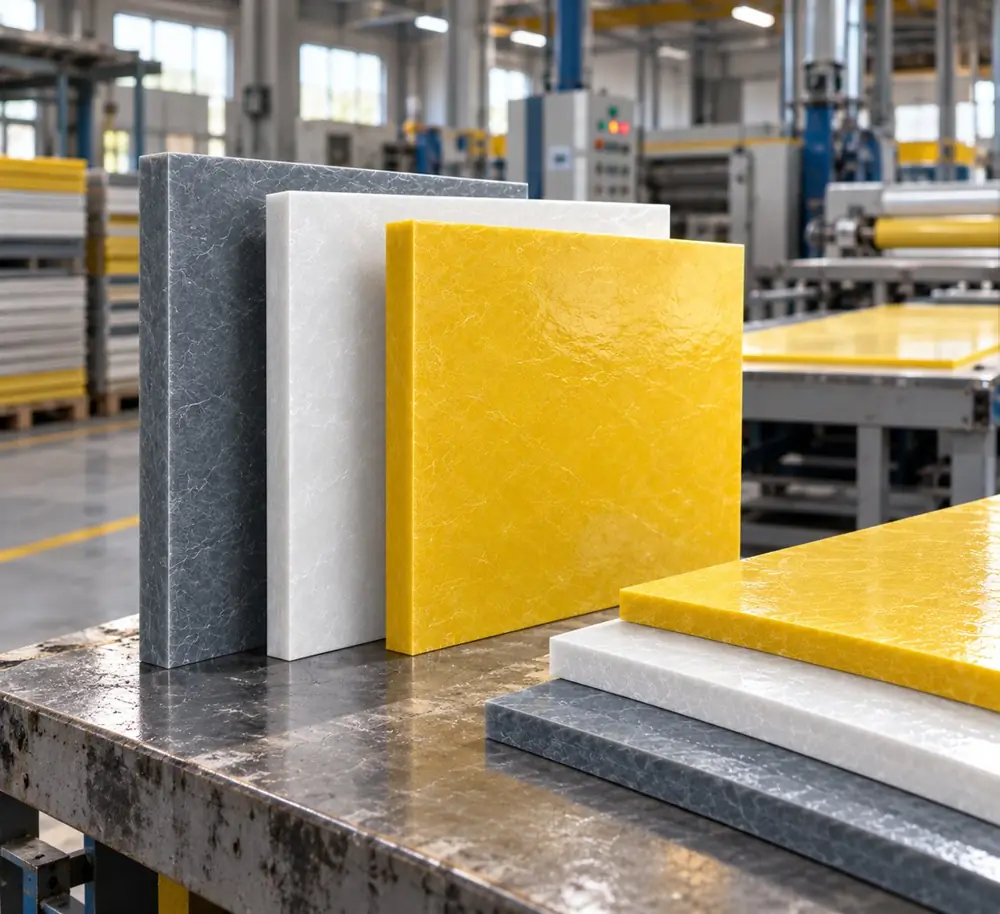
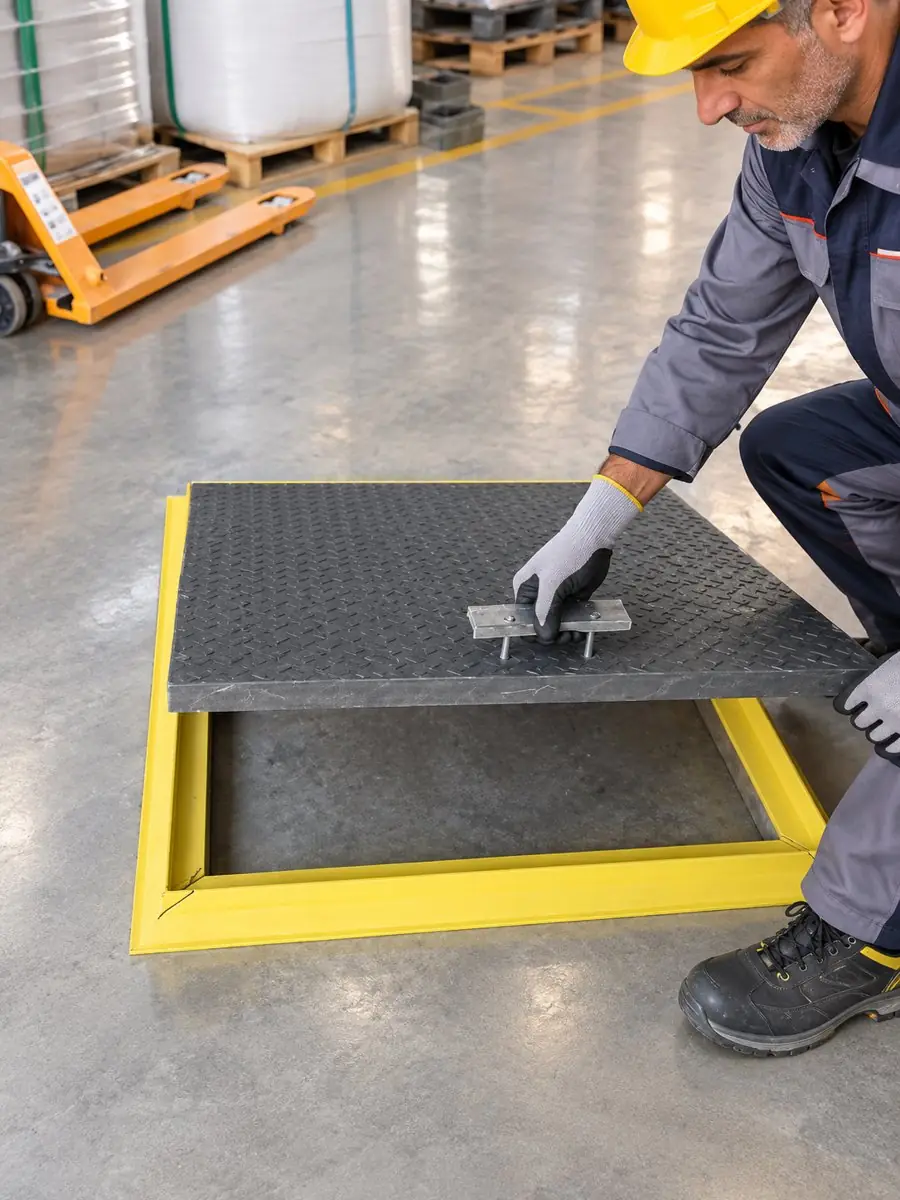
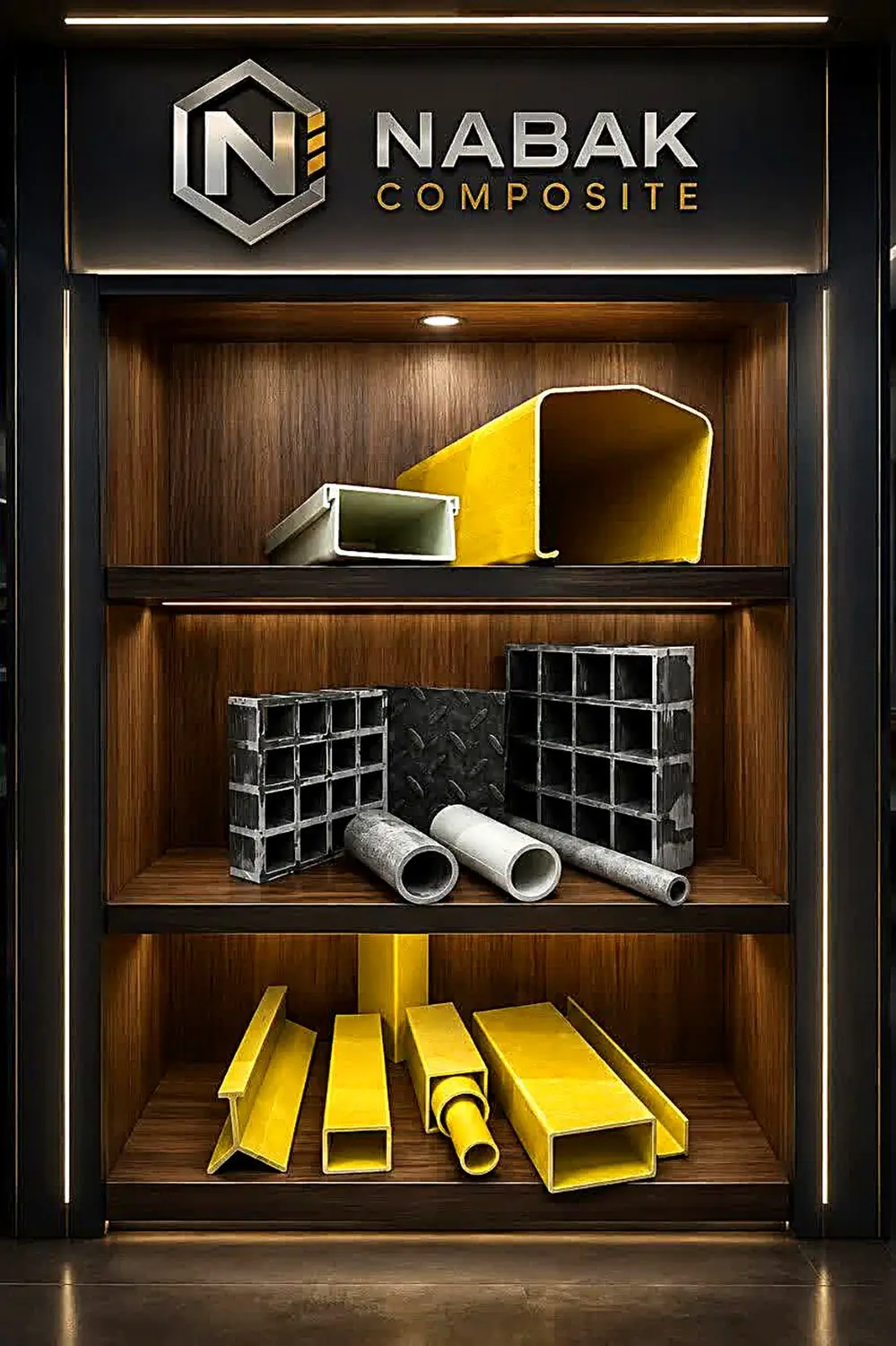
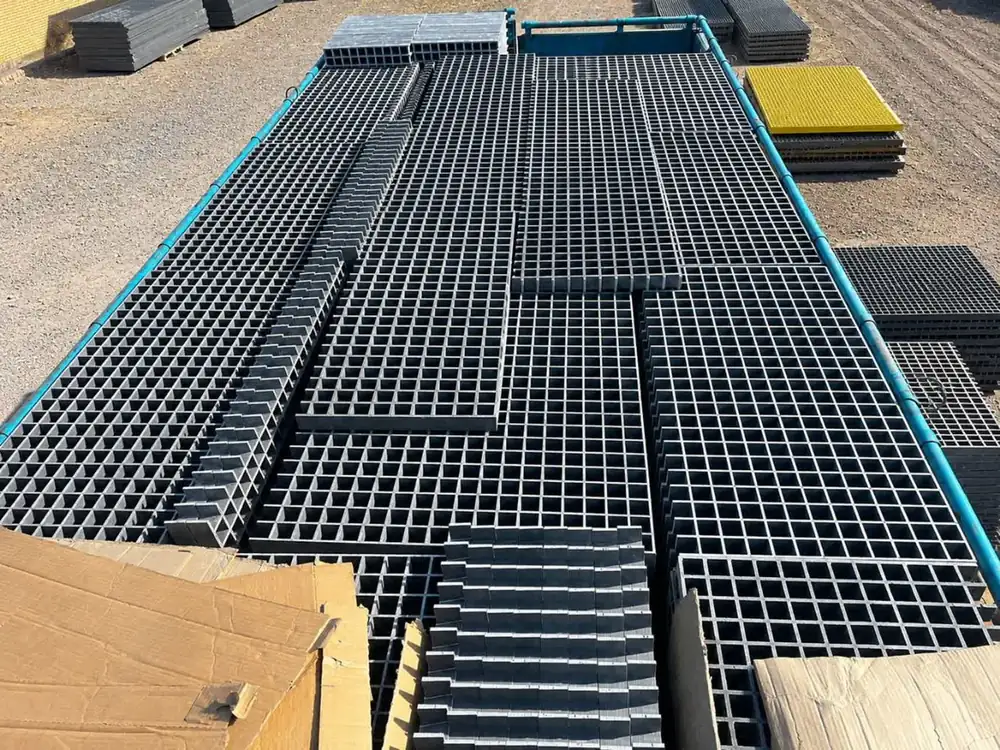
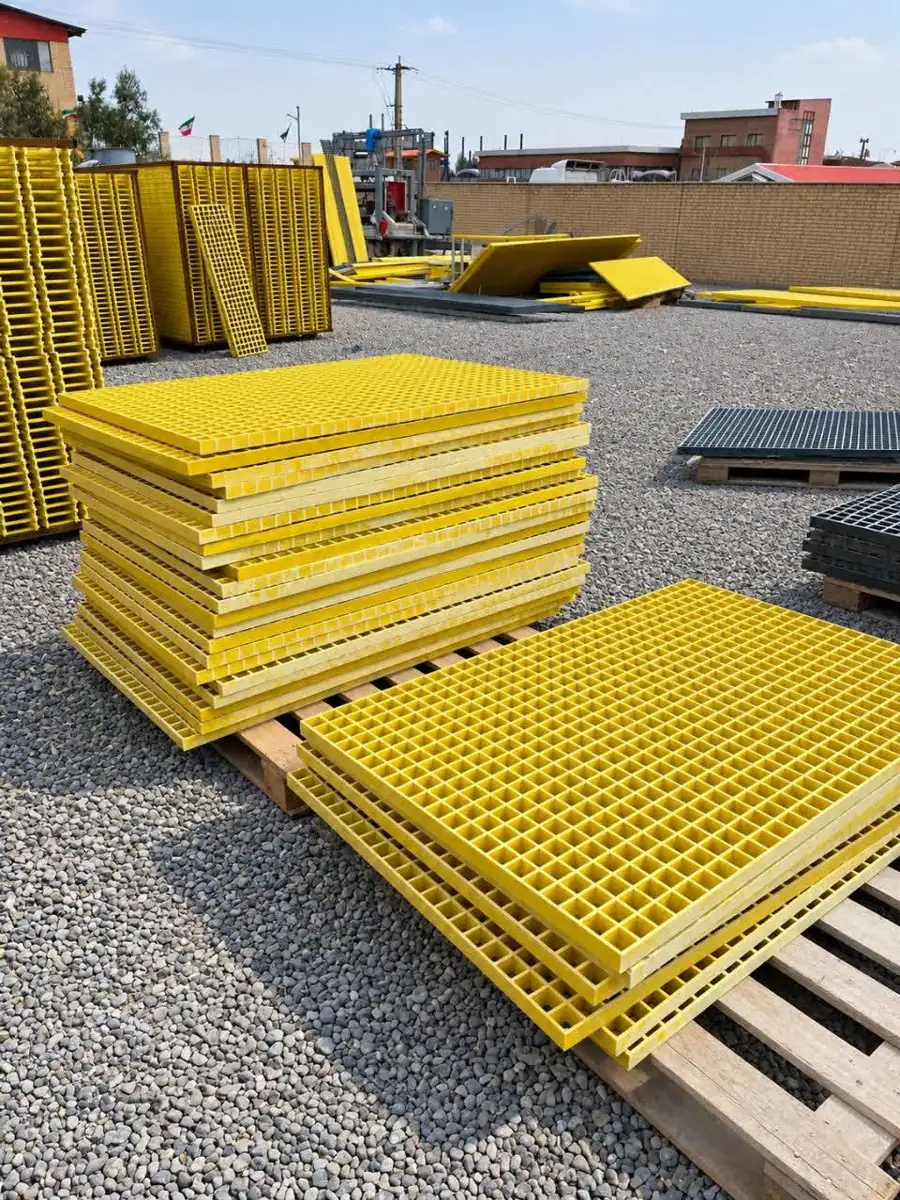
The advantages of composite products are not just in tables; they show in products installed on projects every day. Nabak Composite produces a wide range of composite products, including fiberglass sheet (corrugated fiberglass), composite grating, composite box sections, fiberglass angles, composite channels, composite beams, fiberglass pipe, composite flat bars, polymer rods, composite wire (GFRP wire and rods for anchoring and reinforcement), cable trays and ladders, insulating ladders and aerial marker balls for power lines.
Selection guide: composite or traditional materials?
To make sure the advantages of composite products are really achieved on your project, check these questions in order:
- Environment: corrosive, wet, coastal or chemical? → composite
- Electricity: need electrical insulation or non-sparking? → composite
- Weight and installation: weak existing structure, difficult access or hot work prohibited? → composite
- Temperature: service temperature above 100 °C or direct fire? → steel or a special resin
- Stiffness: very long span with a strict deflection limit? → check by calculation; larger section or steel
- Cost: compare on life-cycle cost, not initial price
Frequently asked questions about the advantages of composite products
What are the most important advantages of composite products?
Light weight (about 75% lighter than steel), a high strength-to-weight ratio, complete resistance to corrosion and chemicals, electrical and thermal insulation, dimensional stability, fast installation with simple tools and very low maintenance cost over the product's life.
How much lighter than steel is composite?
The density of pultruded FRP composite is about 1.8 and of steel about 7.8 g/cm³, so composite is about 75 to 77 percent lighter than steel and about 33 percent lighter than aluminum.
Are composite products cheaper than steel?
The initial price per kilogram of composite is usually higher than steel, but because of the lower weight, cheaper transport and installation and no periodic painting and repairs, the total life-cycle cost of a composite structure in corrosive environments is usually lower.
What are the limitations of FRP composites?
The elastic modulus of FRP composite is about one seventh that of steel and its design is usually deflection-governed; its elongation at break is low (brittle behavior), the service temperature of common resins is about 80 to 100 °C, and its properties are not the same in all directions.
Are composites fire resistant?
Composites made with additive-modified resins are self-extinguishing, and fire-retardant grades are also produced to order; but polymer composites are not fireproof, and a suitable resin must be chosen for high-temperature applications.
Summary
The advantages of composite products can be summed up in one sentence (which is also the answer to why composites are replacing metals): at a quarter of the weight of steel, FRP composite offers up to 4.8 times its specific strength and is immune to rust, rot, chemicals, pests and electric current. Compared with iron it is lighter, insulating and needs no paint; compared with aluminum it puts stiffness and mass exactly where needed and damps vibration better; compared with wood it is durable, stable and pest-resistant; and compared with granite it is light, hygienic and inexpensive. Alongside these advantages, its lower modulus, brittle behavior and temperature limit must be considered in design. Chosen correctly on the basis of environment and life-cycle cost, Nabak composite products are a light, durable and economical alternative to traditional materials.

This article was prepared by the technical team of Nabak Composite, a manufacturer of grating, pultruded profiles, sheets and composite products.