Classifying polymer composite manufacturing methods
There are many methods for producing composite parts, and different sources classify them by various criteria such as type of machinery, type of mold (open or closed), whether the process is continuous or batch, and type of matrix (thermoset or thermoplastic). In this article we use the most practical classification, which places composite manufacturing methods in two broad groups according to whether they need industrial machinery:
1. Manual methods
Methods that do not need advanced industrial machinery: contact molding (hand lay-up and spray-up), casting in one-piece or two-piece molds, and vacuum bag lay-up (vacuum bag and VIP). Low initial investment; suitable for large parts and low to medium volumes.2. Machine-based methods
Methods using industrial machinery: pultrusion, filament winding, resin transfer molding (RTM/RIM), compression molding (SMC and BMC), centrifugal casting, pullwinding, continuous lamination and thermoplastic composite production. Higher investment, better quality and repeatability; suitable for mass production.All composite manufacturing methods pursue three common goals: complete wet-out of the fibers with resin, placing the fibers in the designed direction and amount, and curing the resin with minimum porosity. The methods differ in how they achieve these three goals, and that difference determines the part's mechanical properties, surface quality and price.
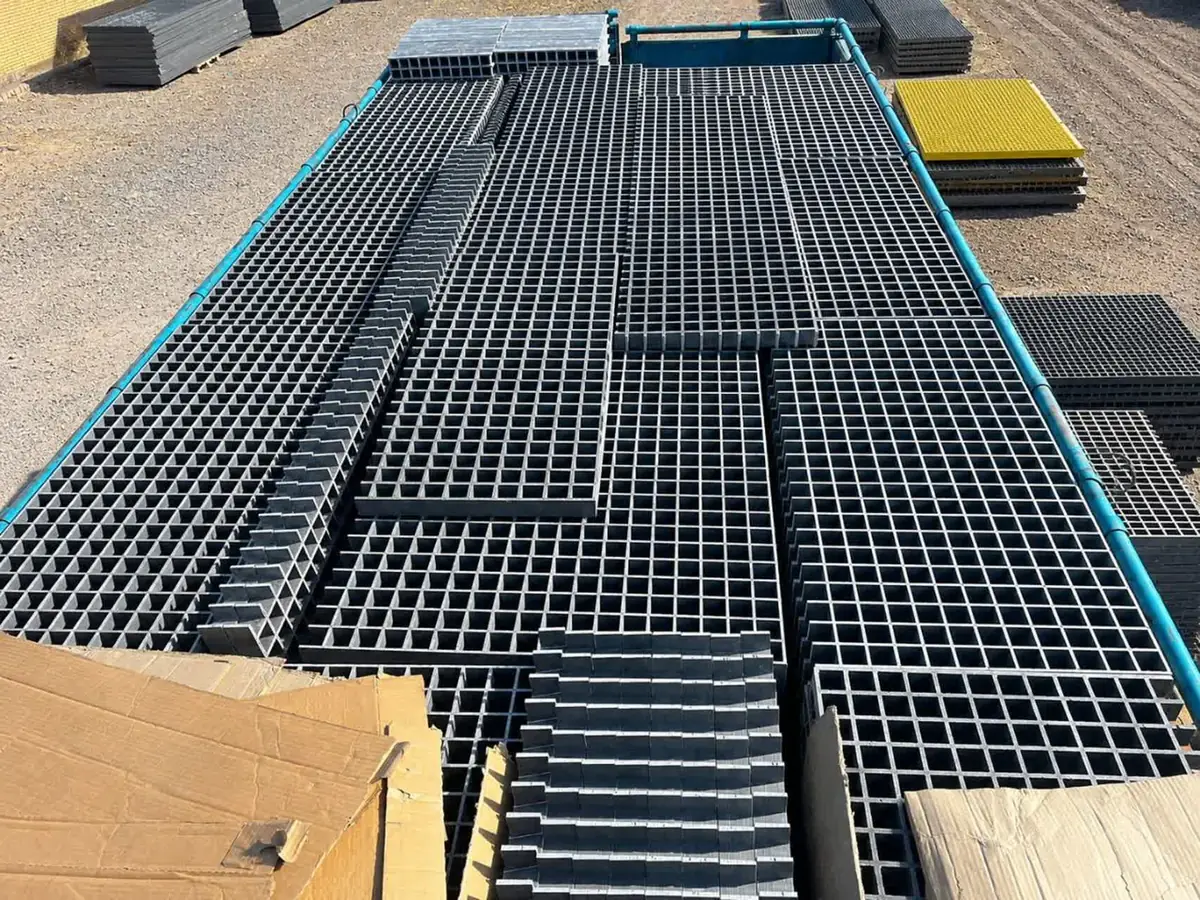
Glossary of composite manufacturing methods
Many composite manufacturing methods are known by several names in technical sources. The table below lists the common names of each method for quick reference:
| Method | English name | Group |
|---|---|---|
| Contact molding | Contact Moulding | Manual |
| Hand lay-up / spray-up | Hand lay-up / Spray up | Manual |
| Mold casting | Casting process | Manual |
| Vacuum bag / vacuum infusion | Vacuum Bag / Vacuum Infusion (VIP) | Manual |
| Pultrusion | Pultrusion | Machine |
| Filament winding | Filament Winding | Machine |
| Resin transfer molding / resin injection | Resin Transfer Moulding / Resin Injection Moulding | Machine |
| Compression molding | Compression Moulding (SMC: Sheet Moulding Compound, BMC: Bulk Moulding Compound) | Machine |
| Centrifugal casting | Centrifugal casting | Machine |
| Pullwinding | Pullwinding | Machine |
| Continuous lamination | Continuous lamination | Machine |
| Thermoplastic composite | Thermoplastic Composite | Machine |
Part one: composite manufacturing methods without advanced industrial machinery (manual)
In this group of composite manufacturing methods, production is carried out without advanced industrial machinery and needs less investment. In most of these methods the mold is open (single-sided) and the resin cures at ambient temperature. Part quality in these methods depends largely on operator skill.
1. Contact molding
Contact molding is the oldest and most widely used composite manufacturing method. The materials touch only one mold surface, and no external pressure is applied other than that of a hand roller; as a result only one surface of the part (the one against the mold) is smooth and glossy. Contact molding has two main sub-methods:
1-1) Hand lay-up
In hand lay-up, after waxing the mold and applying gel coat, layers of fiber (chopped strand mat or woven roving) are placed on the mold and wetted with resin and de-aired with brush and roller. This is repeated until the required thickness is reached, and the part cures at ambient temperature. Hand lay-up is the simplest composite manufacturing method and the best option for large, complex parts in low volumes, such as boat hulls, tanks, kiosks and vehicle parts.
Full details of this method, from making the pattern and mold to calculating laminate thickness, are given in the article What is hand lay-up?.
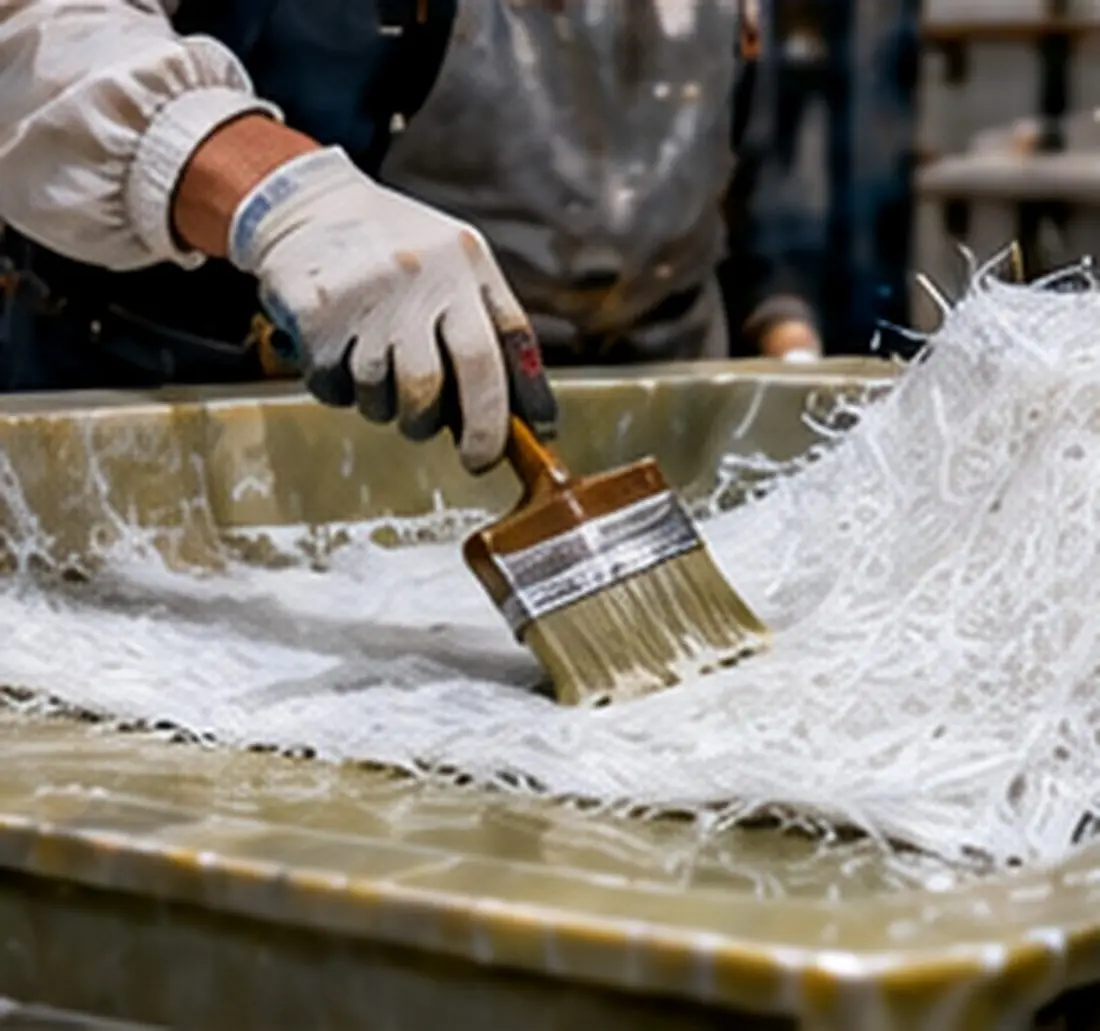
1-2) Spray-up
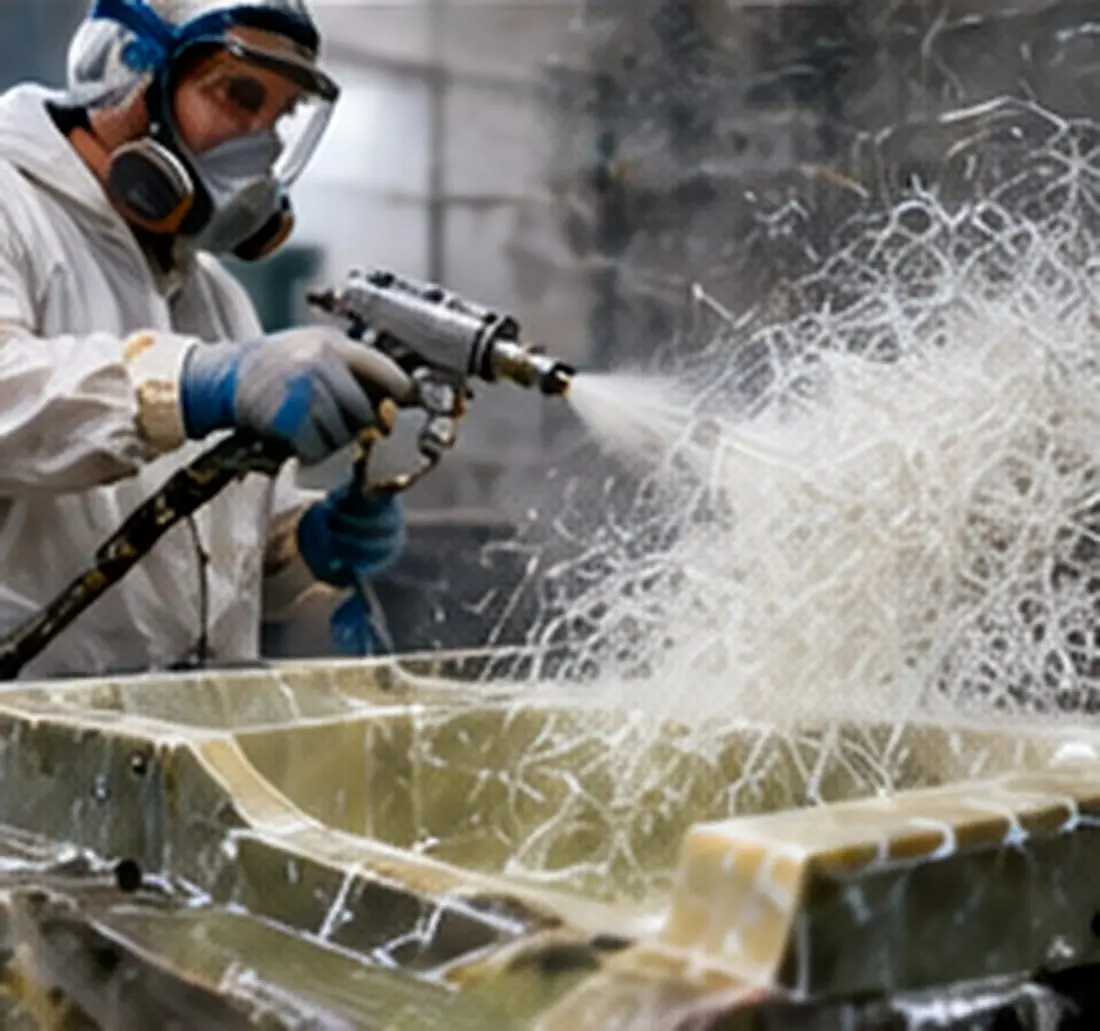
In spray-up, a chopper gun cuts continuous roving into 20 to 50 mm lengths and sprays them onto the mold together with catalyzed resin. The sprayed layer is then consolidated and de-aired with a roller. Spray-up is much faster than hand lay-up and suits large parts of moderate strength such as bathtubs, Jacuzzis, air ducts and tanks.
Because the fibers are short and randomly oriented and resin content is high, a sprayed part is weaker than a hand lay-up with fabric. Controlling thickness uniformity and styrene vapor emissions in the workplace are the two main challenges of this method.
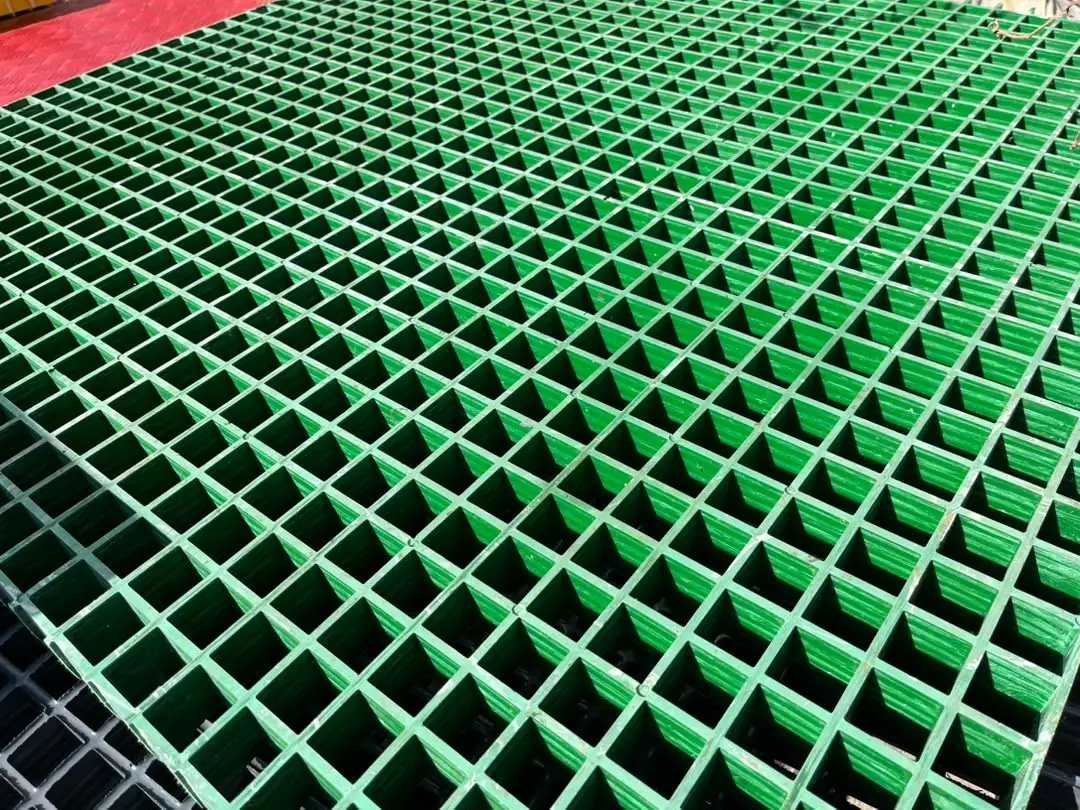
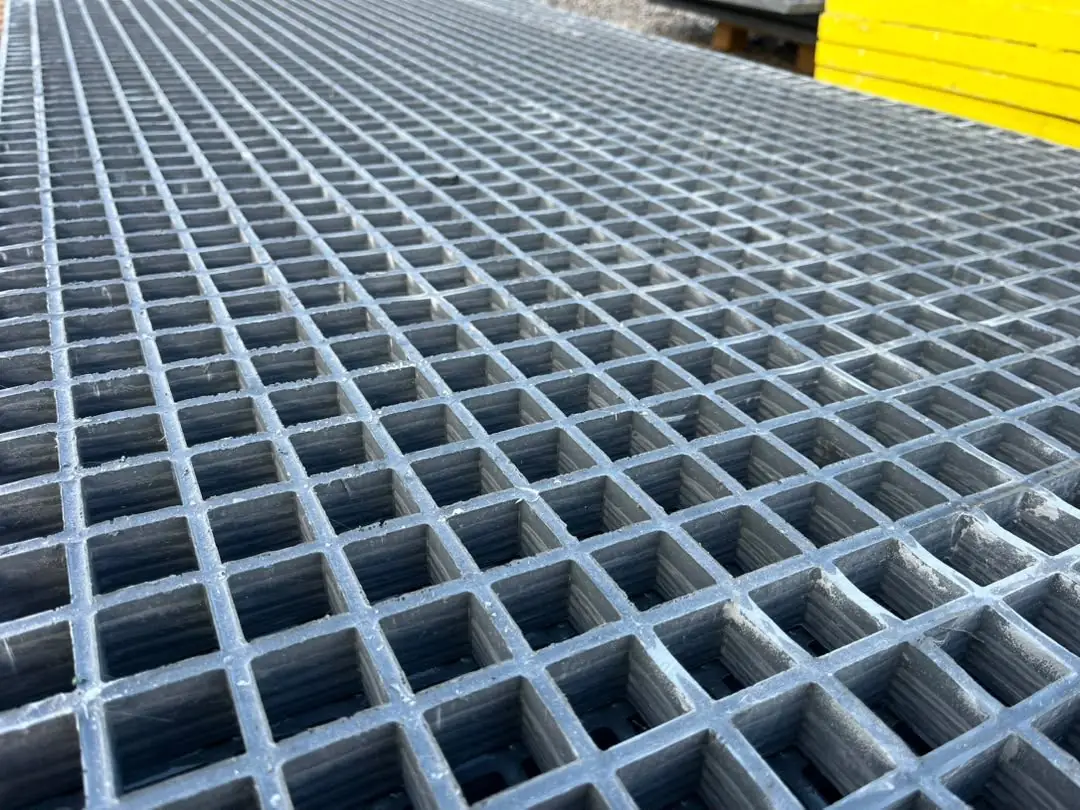
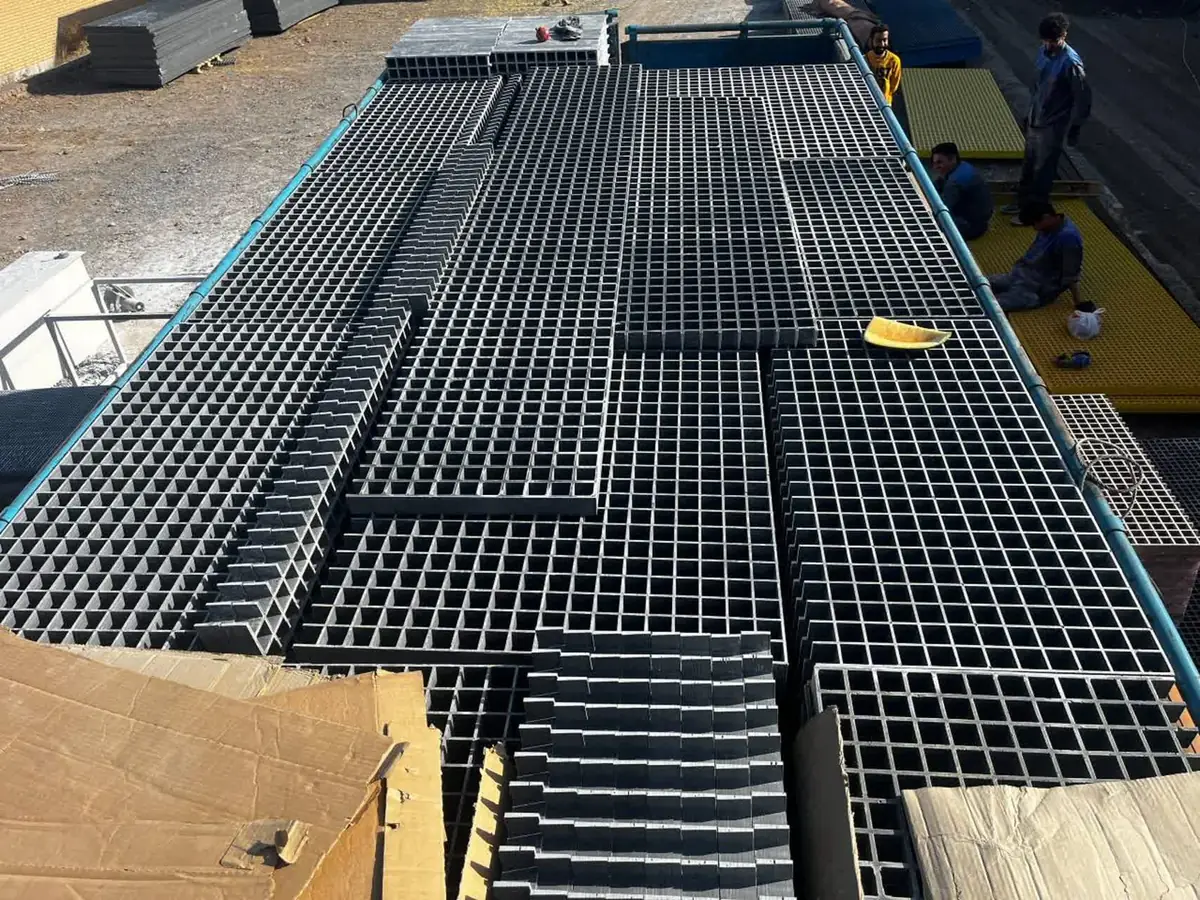
Molded grating production: a combination of contact molding and pressing: molded composite grating is also classified under contact molding and manual methods, except that continuous roving is laid between the cores of a metal mold, resin is forced into the fibers by pressing, and the mold is cured with hot water or hot oil. The full description is in the article FRP grating manufacturing steps.
2. Casting in one-piece or two-piece molds (casting process)
In casting, liquid resin, usually with mineral fillers and sometimes short chopped fibers, is poured into a one-piece (open) or two-piece (closed) mold and cures without external pressure. In a two-piece mold both surfaces of the part are smooth. Engineered stone, countertops and washbasins, cast-resin electrical insulators, sculptures and decorative parts are made this way.
Because continuous fibers are not used in casting, the part is more a filled polymer than a structural composite, so the method suits non-load-bearing parts. De-airing the resin before pouring (by vacuum or vibration) and controlling cure heat in thick parts are the keys to quality in casting. In vacuum casting, both mold and resin are placed in a vacuum chamber to remove bubbles completely; this type of casting is common for high-voltage epoxy insulators.
3. Vacuum bag lay-up
In this group, covering the laminate with a plastic bag and evacuating the air beneath it applies atmospheric pressure (up to about one bar) to the part. This uniform pressure removes excess resin, consolidates the layers and greatly reduces porosity.
3-1) Vacuum bag molding
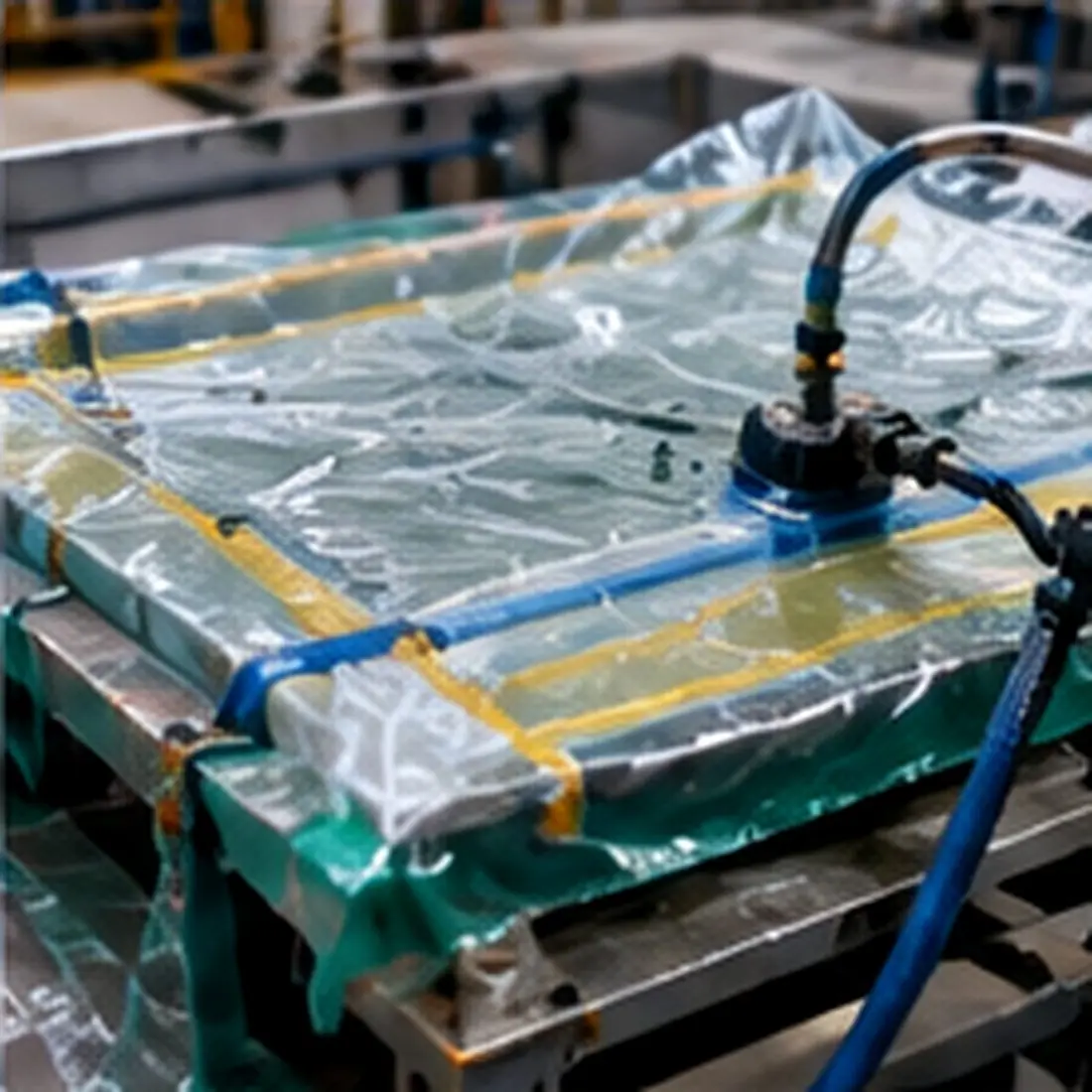
In vacuum bagging, lay-up is first done as in the manual method; then a peel ply, a perforated film, a breather layer and the vacuum bag are placed in turn over the wet laminate, and the bag edges are sealed to the mold with sealant tape. When the vacuum pump is switched on, atmospheric pressure keeps the layers consolidated until cure is complete.
Vacuum bagging is also the basis of vacuum infusion. The result is a part with higher fiber content, lower porosity and greater strength than hand lay-up. The method is widely used in marine, light aircraft, racing car and epoxy-carbon parts.
3-2) Vacuum infusion processing (VIP)
Over the past two decades vacuum infusion processing has replaced many hand lay-up applications, because infusion brings laminate quality close to advanced-industry levels without an autoclave.
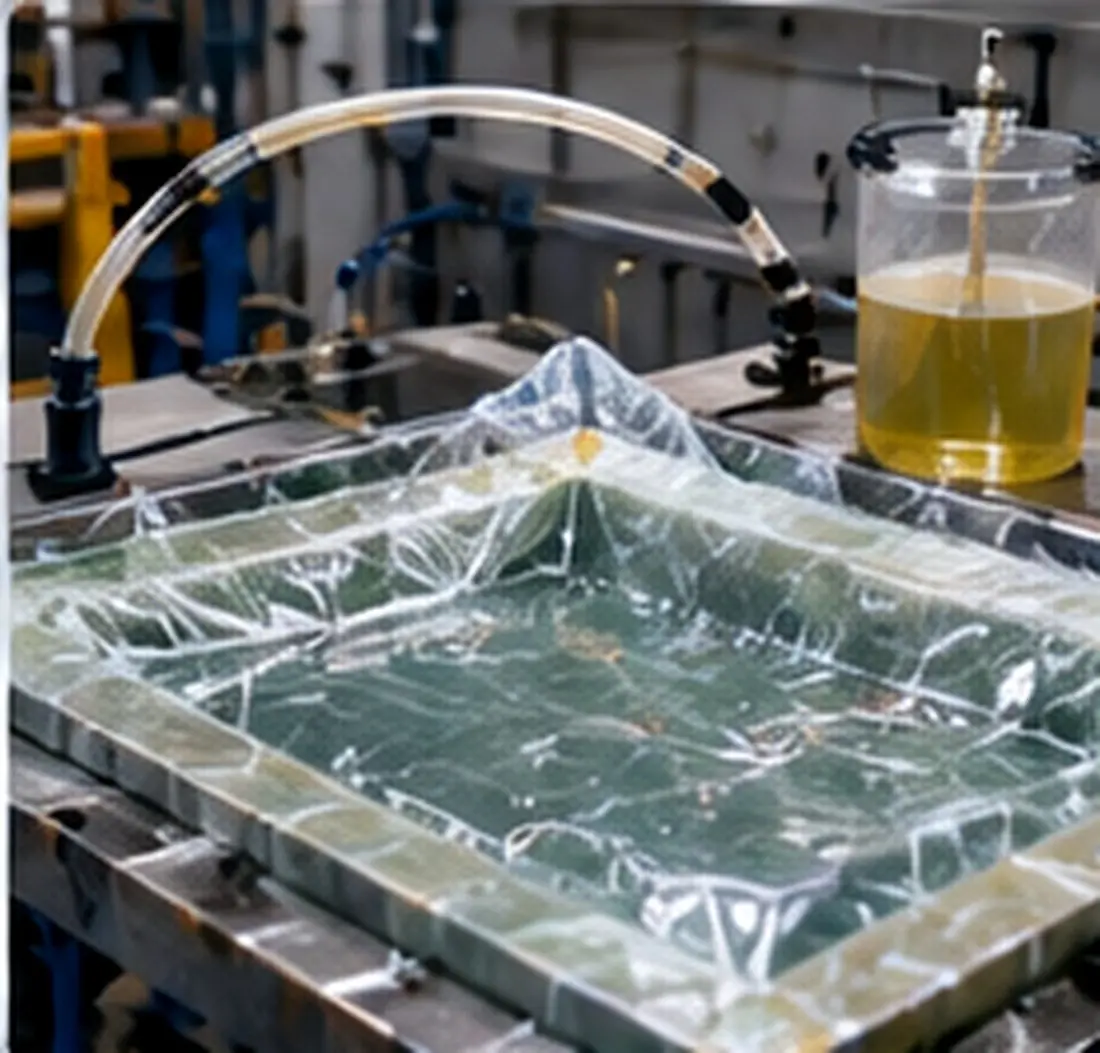
In vacuum infusion (VIP), the fibers are laid dry on the mold and placed under a vacuum bag together with a resin distribution layer (flow mesh) and feed channels. After full vacuum and a leak test, the feed valve is opened and the pressure difference draws resin from the container into the fibers, wetting the whole laminate. The part then cures under vacuum.
Vacuum infusion gives the highest fiber content of the open-mold methods, almost eliminates styrene emissions, and suits very large parts such as wind turbine blades, boat hulls and composite footbridges. Designing the resin flow path (inlet and outlet positions) is the most important engineering task in this method; in infusion, according to Darcy's law, resin flow front speed falls with the square of the path length, so several infusion feed lines are used in long parts.
Part two: composite manufacturing methods using industrial machinery
In this group of composite manufacturing methods, most of the production process is carried out by industrial machinery. The initial investment is higher, but quality, repeatability, production speed and fiber content increase dramatically, and the cost per part falls at high volumes.
1. Pultrusion
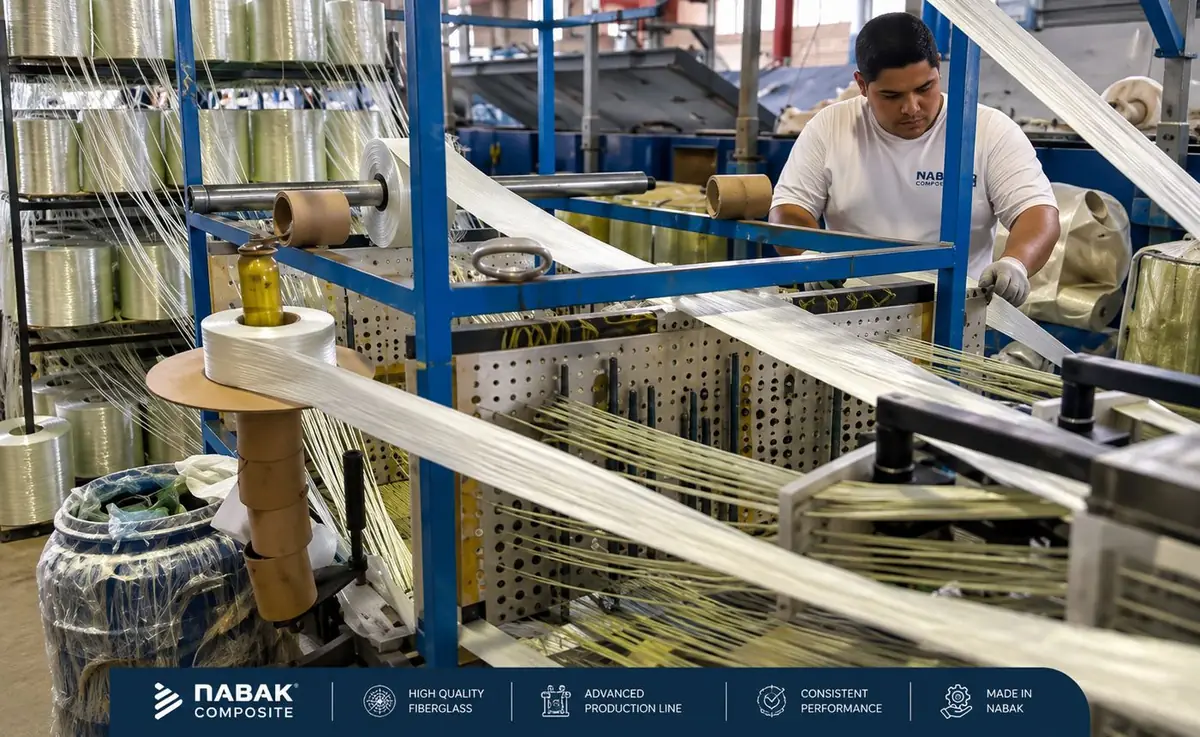
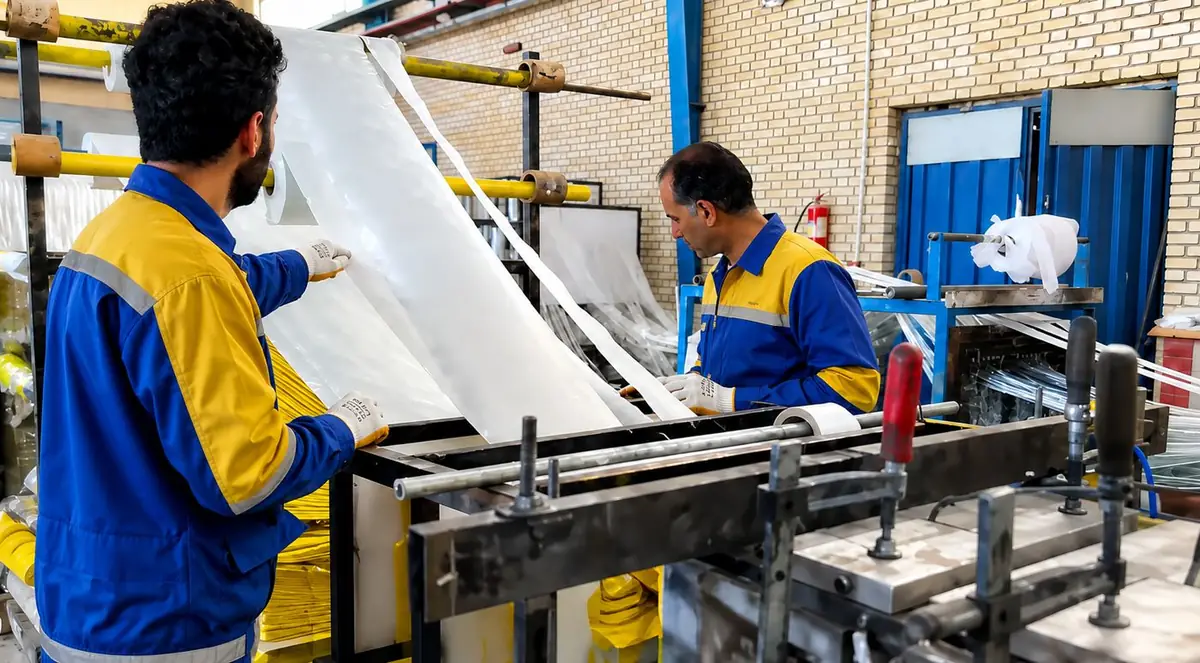
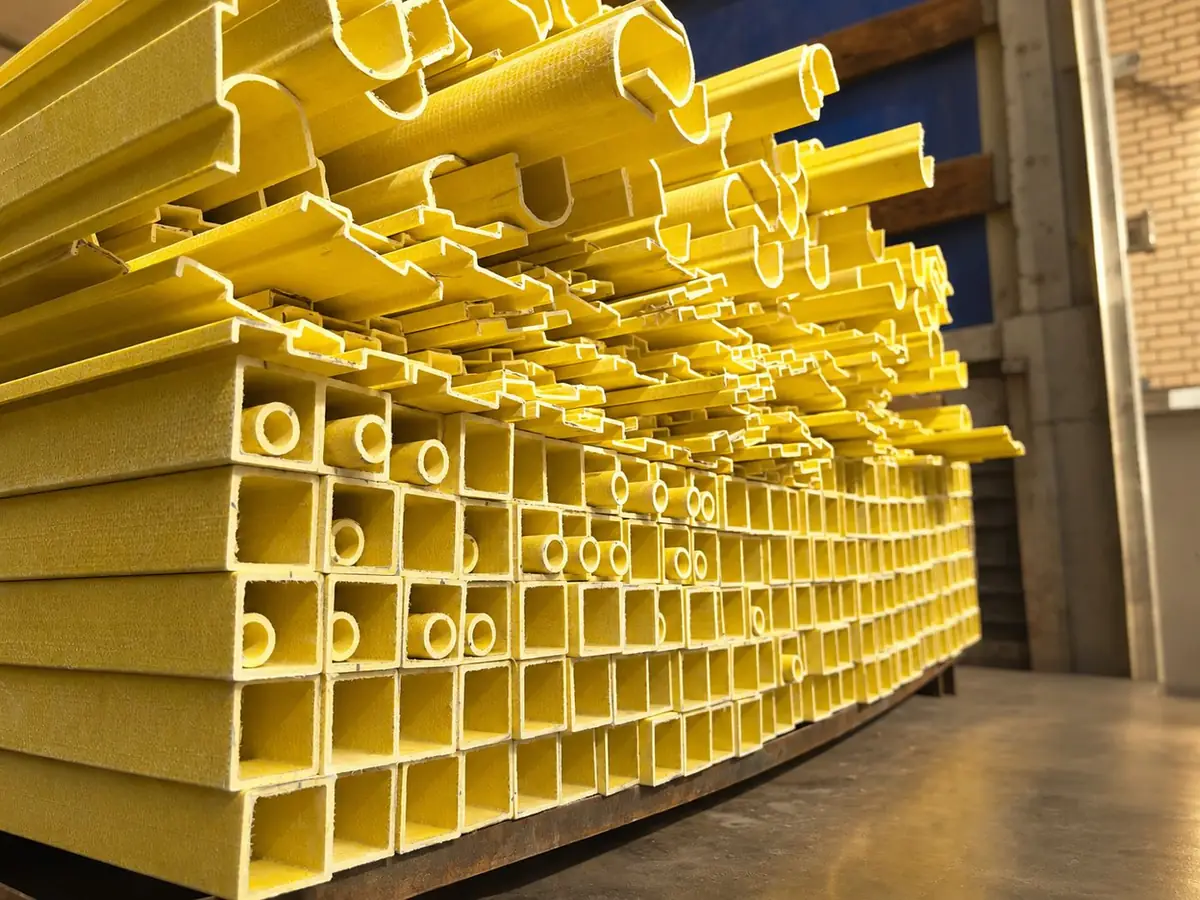
Pultrusion is a continuous production method for constant-section composite profiles. Roving and mat are unwound from the creel, pass through a resin bath, are arranged in preforming guides and enter a heated steel die where they take their final shape and cure. A puller draws the cured profile out of the die at constant speed, and an automatic saw cuts it to the required length. The name reflects this principle: the material is pulled, not pushed — the word pultrusion combines pull and extrusion.
Pultrusion is Nabak Composite's core specialty. Profiles such as composite box sections, fiberglass angles, composite channels, composite beams, composite flat bars, polymer rods, composite wire, pultruded grating components and cable trays and ladders are made by this method. The full description is in the article pultrusion manufacturing.
2. Filament winding
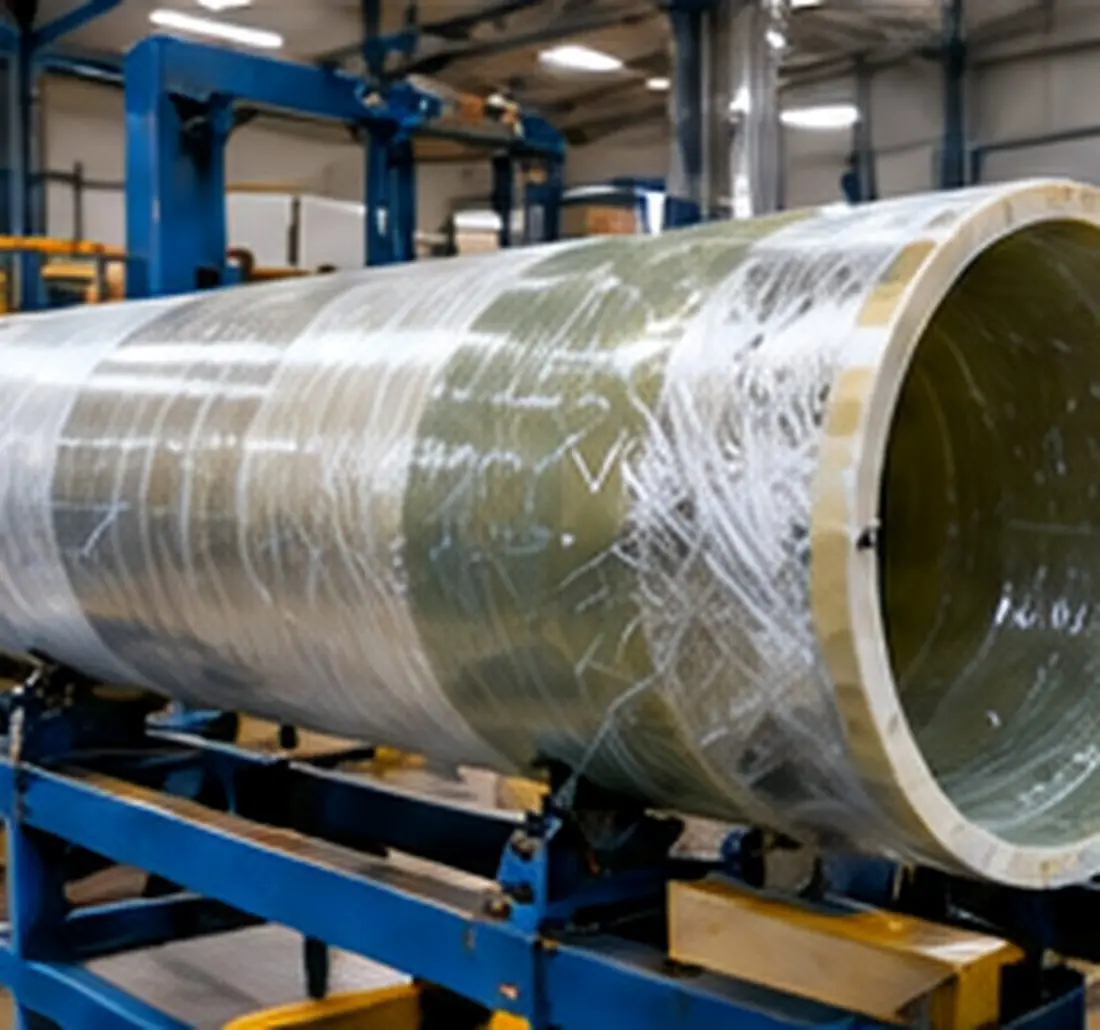
In filament winding, continuous fiber strands pass through a resin bath and are wound under controlled tension onto a rotating cylindrical mold (mandrel). A carriage traveling back and forth along the mandrel sets the winding angle: an angle close to 90 degrees (hoop) to resist internal pressure, and smaller (helical) angles to resist axial and bending loads. After cure, the mandrel is extracted.
Filament winding is the main method for producing fiberglass pipe, pressure vessels, chemical storage tanks, CNG cylinders and rocket motor cases. The ability to design the fiber angle precisely for hoop and axial stresses gives the best strength-to-weight ratio for rotationally symmetric structures.
3. Resin Transfer Moulding (RTM) or Resin Injection Moulding (RIM)
In resin transfer molding (RTM), dry fibers or a preform are placed in a closed two-piece mold, the mold is closed and clamped, and catalyzed resin is pumped in at low to medium pressure through injection ports. Air escapes through vents, and after complete filling and cure the part comes out with two smooth surfaces. Its vacuum-assisted variant (VARTM or Light RTM) works with lighter molds. In resin transfer molding, the low injection pressure also allows composite molds to be used.
In Resin Injection Moulding (RIM), or Reaction Injection Moulding, two reactive resin components (such as polyurethane) are mixed at the moment of injection, enter the mold at high speed and cure within a short time. Its reinforced variant (RRIM or SRIM) is used in vehicle body parts. Overall, resin transfer molding suits vehicle parts, doors and panels, composite seats and industrial parts in medium volumes.
4. Compression molding
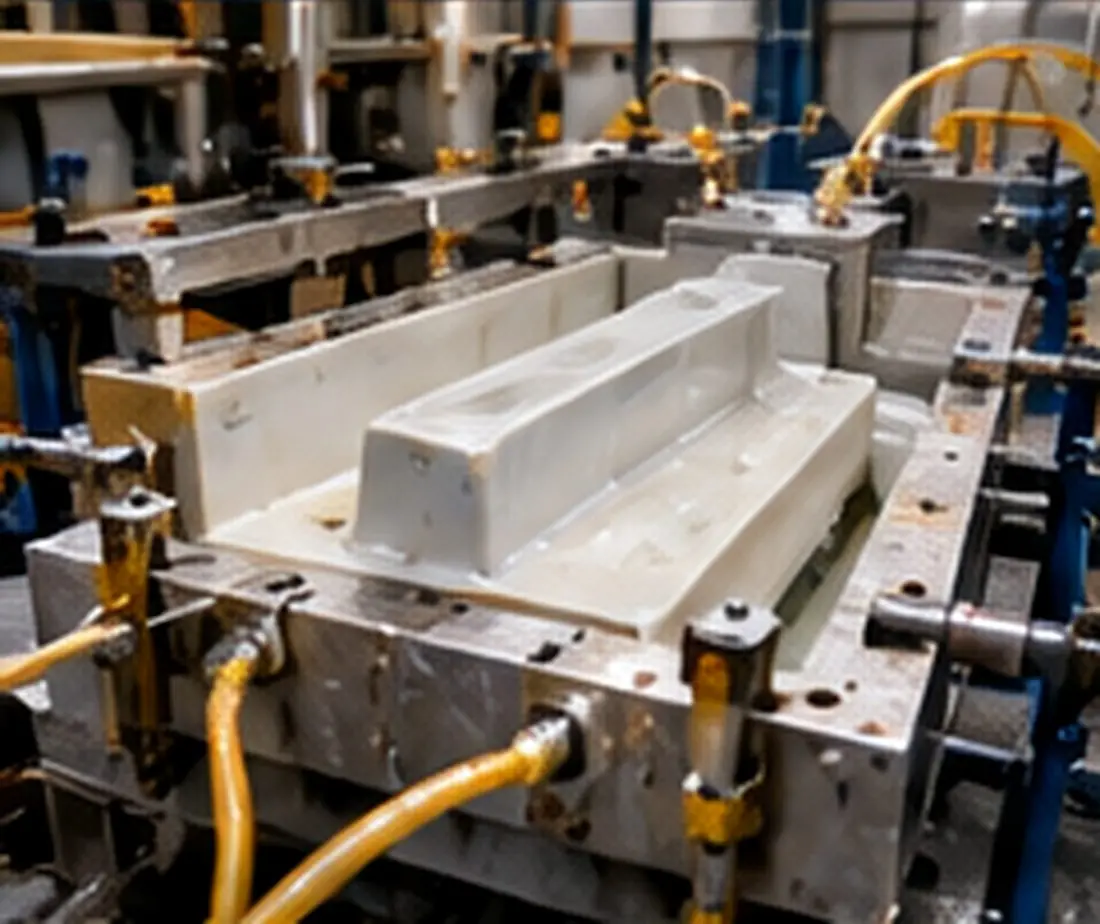
In compression molding, a measured amount of molding compound (resin, chopped fiber, filler and additives) is placed in a heated two-piece metal mold, and a hydraulic press at high pressure (usually 50 to 150 bar) and about 130 to 160 °C makes the material flow through the whole mold cavity and cure. The cycle time is a few minutes, making it very suitable for mass production. Two main compounds are used in compression molding:
1-4) SMC (Sheet Moulding Compound)
Sheet Moulding Compound (SMC) is a sheet of polyester resin filled with chopped glass fiber (about 25 mm long), produced between two plastic films; after a maturation (thickening) period it is cut to suitable pieces and pressed in the mold. Vehicle body panels, electrical enclosures, meter boxes, sectional water tanks and industrial doors are made with SMC.
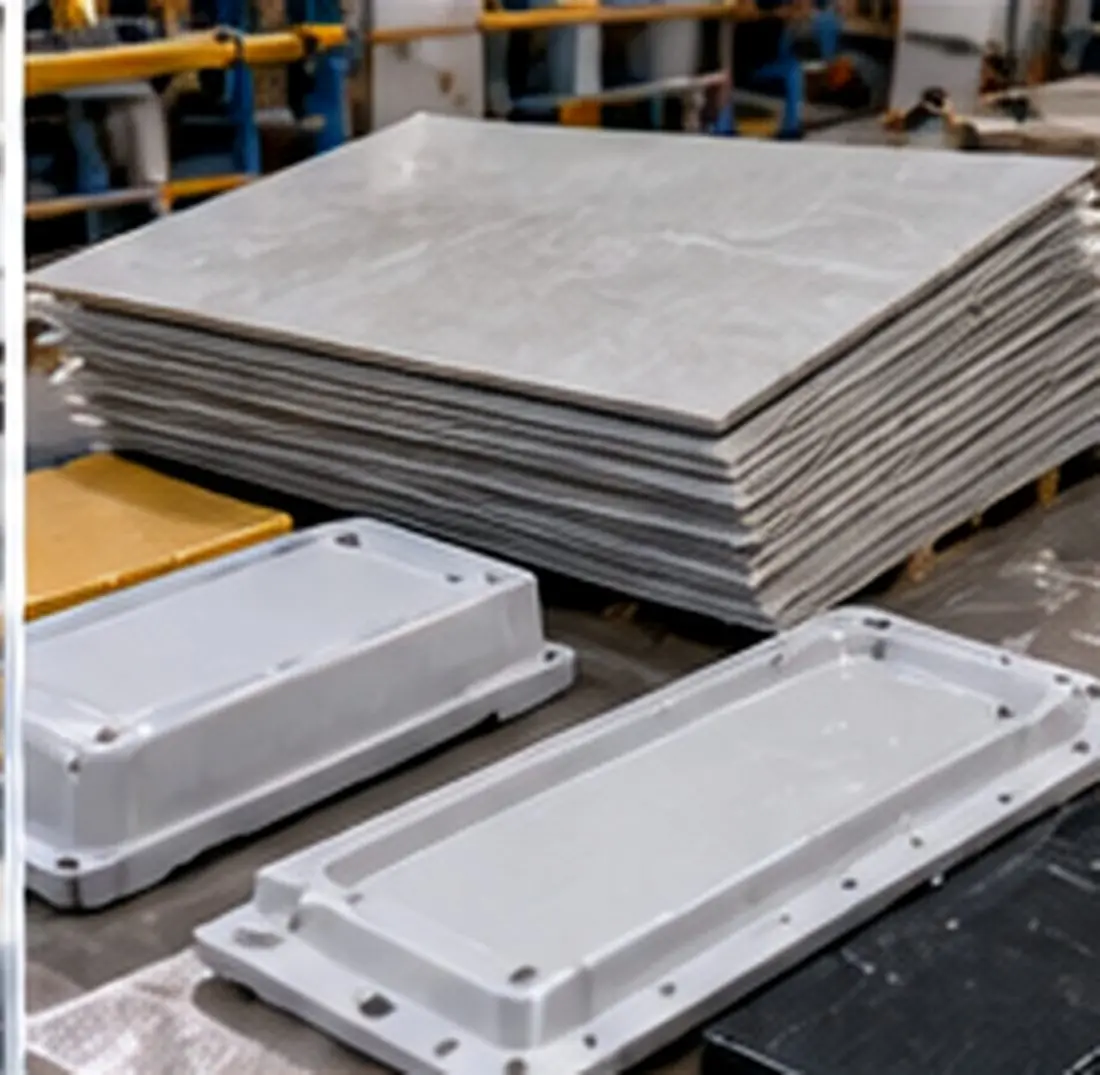
2-4) BMC (Bulk Moulding Compound)
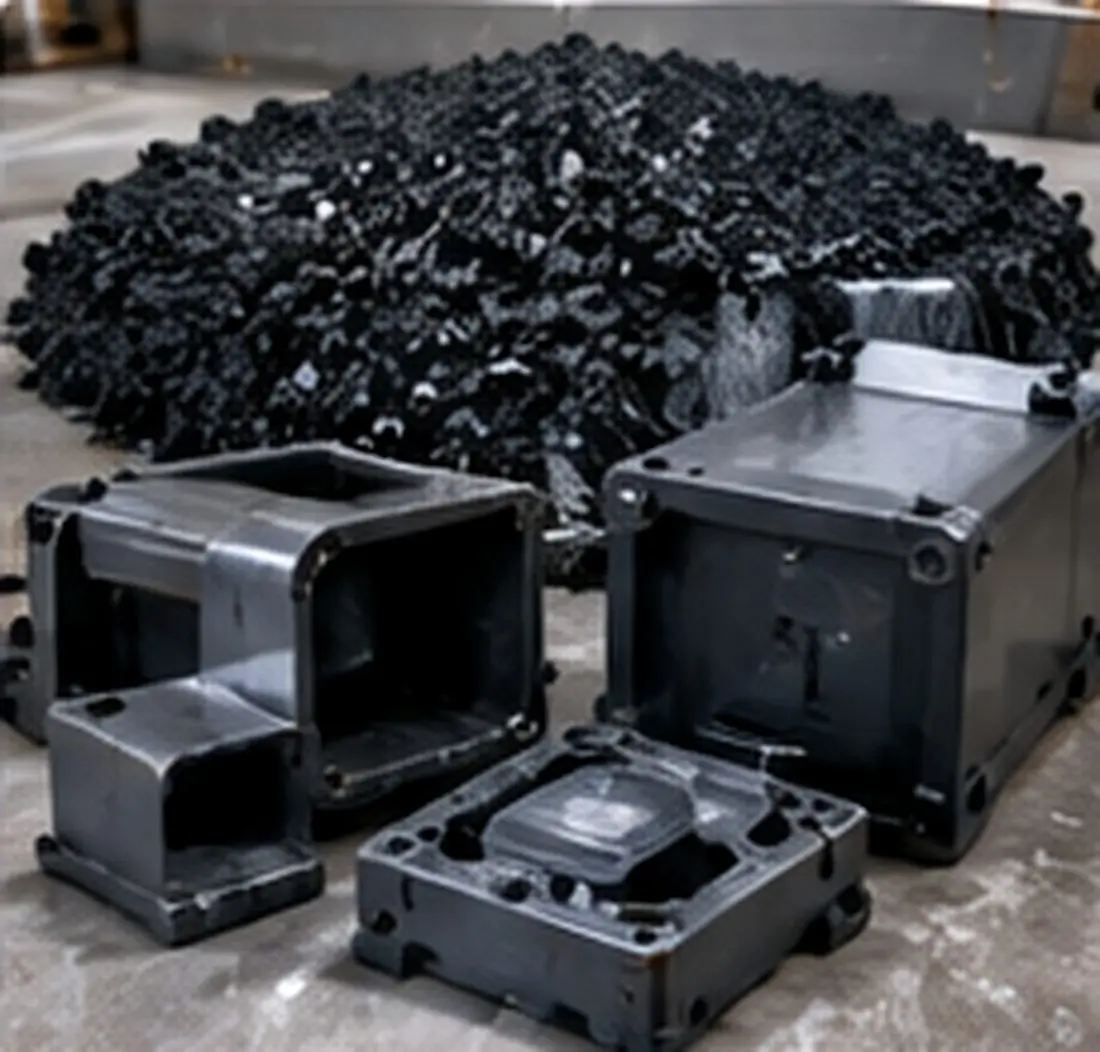
Bulk Moulding Compound (BMC) is a bulky dough of resin, a high filler content and shorter glass fibers (about 6 to 12 mm). Because it flows better, BMC suits small parts with complex details, ribs and thin walls, and besides compression molding it is also formed by injection molding. Electrical parts (switches, motor housings, insulators), vehicle lamps and household appliance parts are among its applications.
5. Centrifugal casting
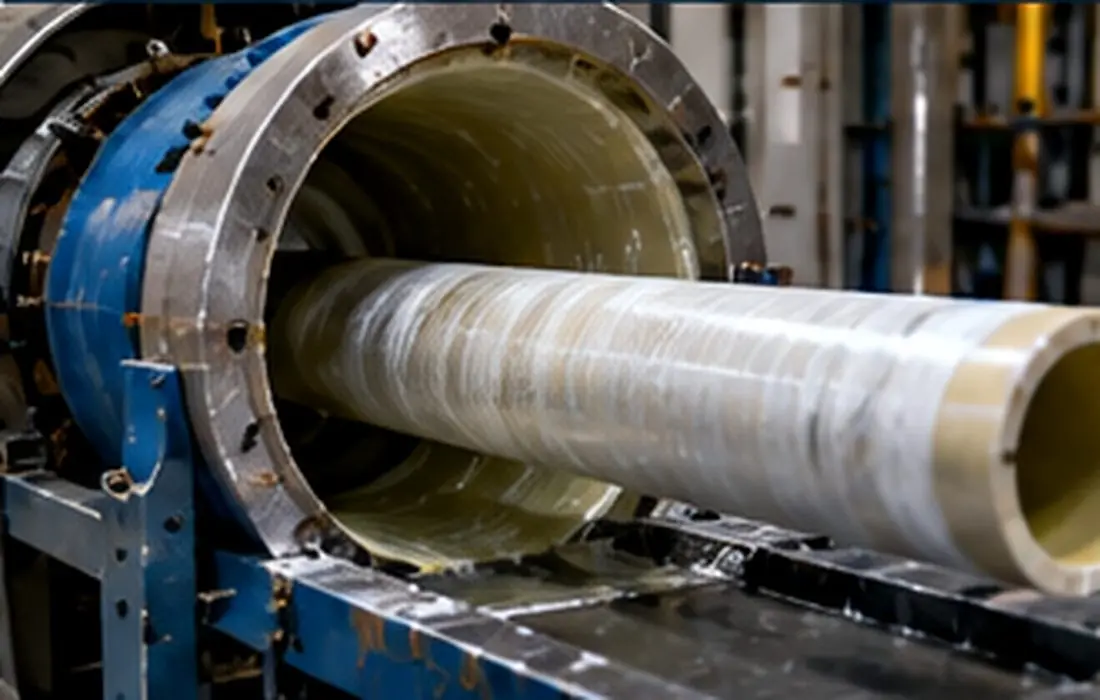
In centrifugal casting, a hollow cylindrical mold spins at high speed about its axis while chopped fiber, resin and filler (such as silica sand) are fed onto the mold wall from inside. Centrifugal force presses the material against the mold wall, expels air and creates a dense layer with a very smooth outer surface. Unlike filament winding, in this method the outer surface of the pipe (against the mold) is accurate and smooth.
In centrifugal casting, wall thickness is controlled by the amount of material fed, and rotation speed is usually chosen so that centrifugal acceleration is several tens of times gravity. Large-diameter sewer and water pipes, jacking pipes, columns and cylindrical tanks are made by this method.
6. Pullwinding
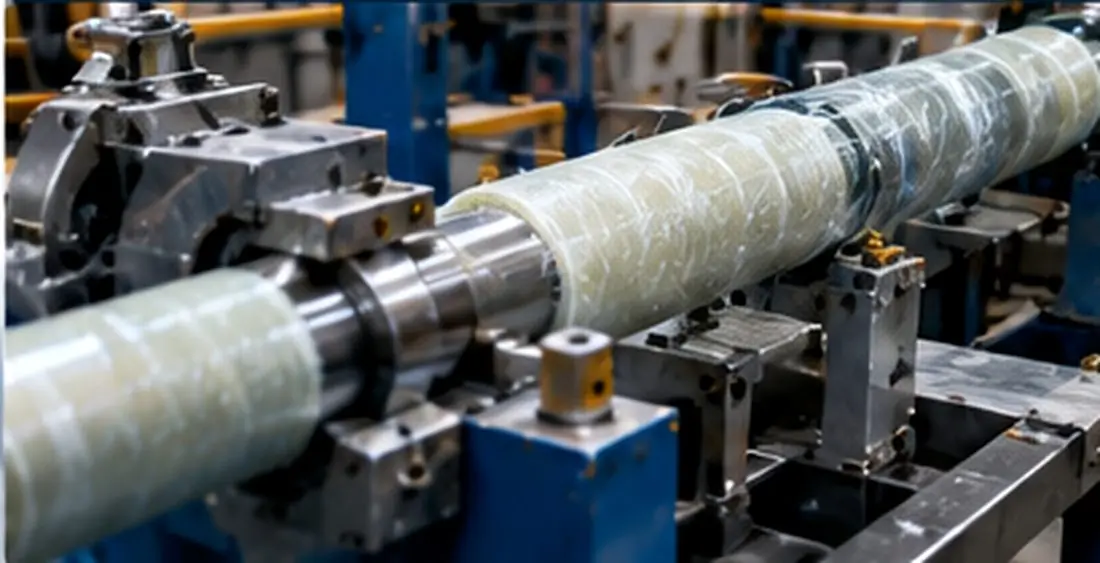
Pullwinding combines pultrusion and filament winding. As the longitudinal fibers pass through (as in pultrusion), one or more rotating heads wind layers of fiber around them at a helical angle, and the whole assembly then enters the heated pultrusion die and cures. The result is a tube or hollow profile with both the high longitudinal strength of pultrusion and the hoop strength and torsional resistance of filament winding.
Pullwinding is in effect a pultrusion that solves the problem of transverse weakness in profiles. Fishing rods, tool handles, power transmission shafts, lightweight tubes and composite masts are made by pullwinding.
7. Continuous lamination of sheets
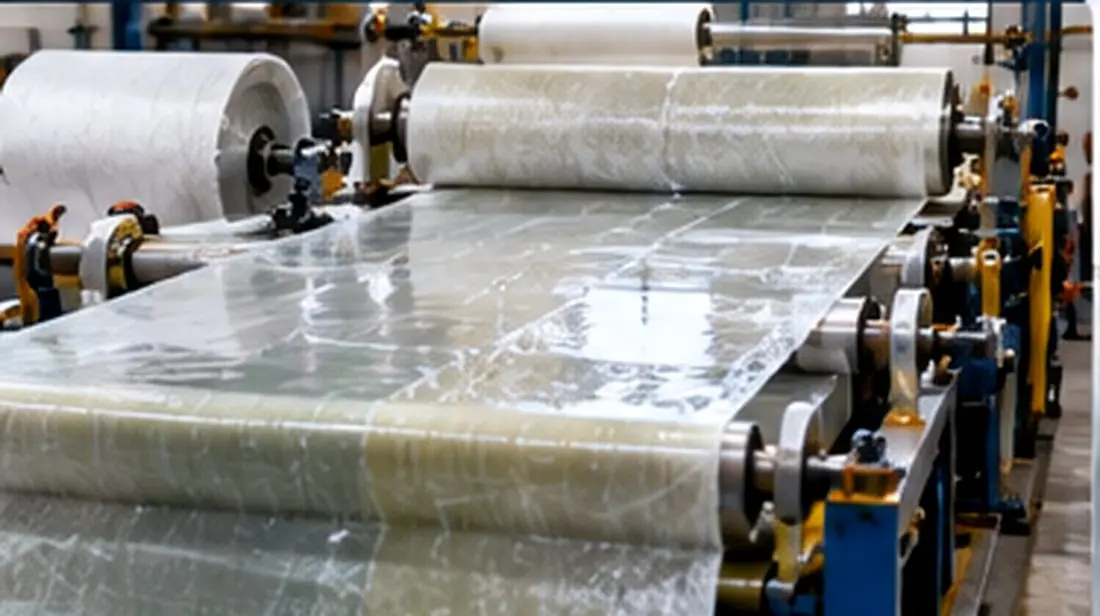
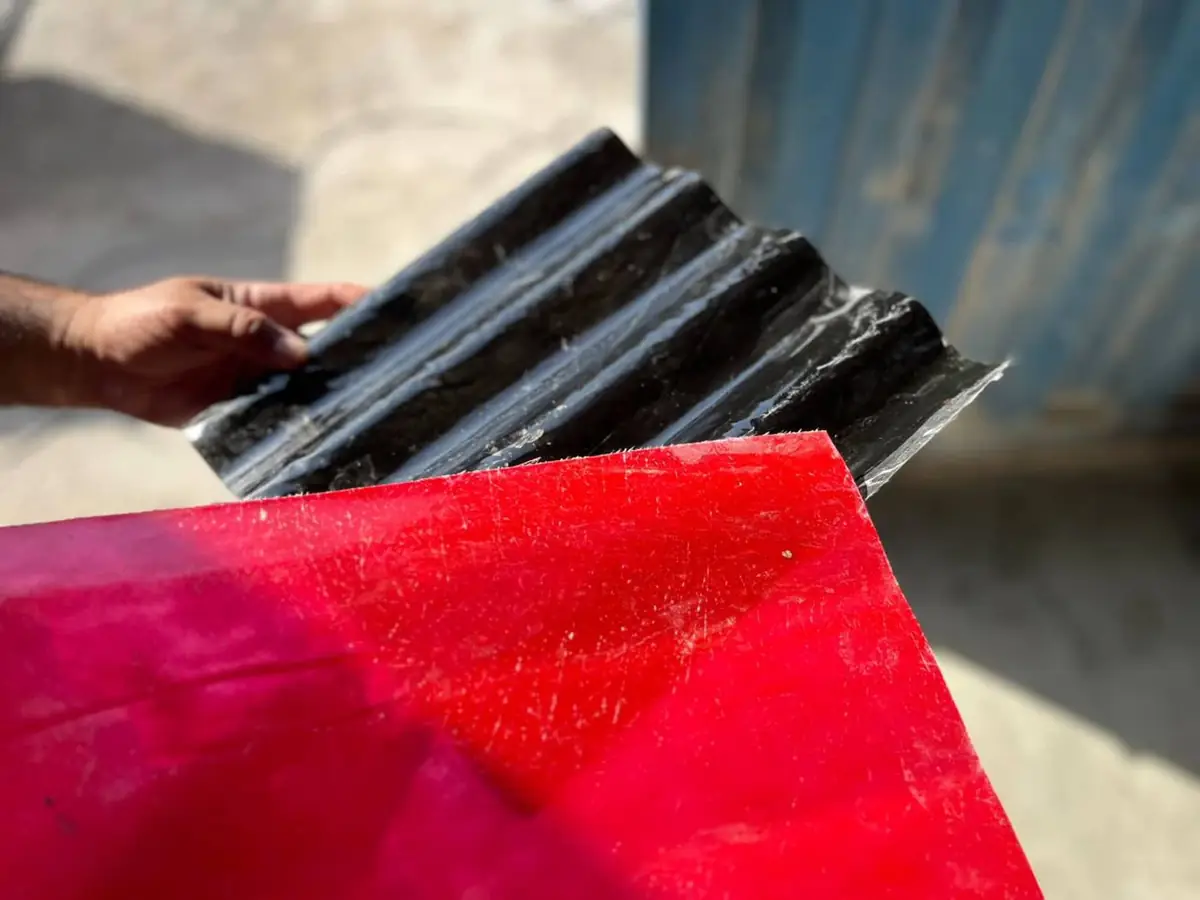
In continuous lamination, a carrier film (such as polyester or cellophane film) moves along a long table; resin is spread on it, chopped fiber or mat is laid on the resin, and a second film is placed on top. The assembly passes through rollers to remove air and set thickness, is shaped with corrugated sinusoidal or trapezoidal forms if required, passes through a heated tunnel to cure, and is finally cut lengthwise and crosswise.
Continuous lamination is the industrial, continuous way of producing flat, corrugated and trapezoidal fiberglass sheet, and gives much better thickness and color uniformity than manual sheet production. See the specifications of sheet types in the article fiberglass sheet technical specifications.
8. Thermoplastic composites
In all the previous methods the matrix is a thermoset resin (polyester, vinyl ester or epoxy) that cures by chemical reaction and cannot be melted again. In thermoplastic composites, the matrix is a thermoplastic polymer such as polypropylene (PP), polyamide (nylon), PET or advanced polymers such as PEEK, which melts when heated and solidifies when cooled. The main methods of producing thermoplastic composites are:
- Injection molding with short or long fibers (LFT): injecting glass-fiber-reinforced polymer pellets for small, high-volume parts.
- GMT (Glass Mat Thermoplastic): heating mat-reinforced sheets and forming them quickly in a cold press.
- Thermoforming organosheets: fabric sheets pre-impregnated with thermoplastic polymer, formed by heat and pressing.
- Thermoplastic pultrusion and filament winding: with pre-impregnated tapes and local melting.
The advantages of thermoplastic composites include a very short production cycle (seconds to minutes), high toughness and impact resistance, weldability and recyclability; but the very high melt viscosity makes fiber wet-out difficult and the equipment expensive.
Comprehensive comparison table of composite manufacturing methods
The table below compares composite part and polymer composite manufacturing methods by key engineering and economic criteria:
| Manufacturing method | Mold type | Suitable volume | Investment | Smooth surfaces | Typical products |
|---|---|---|---|---|---|
| Hand lay-up | Open | Low | Very low | One | Boats, tanks, kiosks |
| Spray-up | Open | Low to medium | Low | One | Bathtubs, Jacuzzis, ducts |
| Casting | One-piece or two-piece | Low to medium | Low | One or two | Engineered stone, insulators |
| Vacuum bag | Open + bag | Low | Low to medium | One | Marine and sports parts |
| Vacuum infusion (VIP) | Open + bag | Low to medium | Moderate | One | Wind turbine blades, boat hulls |
| Pultrusion | Continuous heated die | Continuous mass | High | All surfaces | Profiles, grating, rebar |
| Filament winding | Mandrel | Medium to high | Medium to high | Inner | Pipes, pressure vessels |
| Resin transfer molding RTM / RIM | Closed two-piece | Moderate | High | Two | Automotive and industrial parts |
| Compression molding (SMC / BMC) | Closed heated metal | Mass | Very high | Two | Electrical enclosures, automotive parts |
| Centrifugal casting | Spinning cylinder | Moderate | High | Outer | Large-diameter pipes |
| Pullwinding | Continuous heated die | Continuous mass | High | All surfaces | Lightweight tubes, shafts |
| Continuous lamination | Film and rollers | Continuous mass | High | Two | Fiberglass sheet |
| Thermoplastic composite | Closed metal | Mass | Very high | Two | Automotive parts, household appliances |
Comparing fiber content across methods
Fiber content is the most important indicator of a composite part's mechanical quality, because strength and stiffness rise roughly in proportion to the fiber fraction. The chart below shows the typical range of fiber weight fraction for each manufacturing method. The orange methods (over 55%) are best suited to highly loaded structural parts:
To convert fiber content into mechanical properties with the rule of mixtures, read the article predicting the properties of polymer composites.
How to choose the right manufacturing method
Choosing a composite manufacturing method is an engineering and economic decision, and also depends on the industrial machinery available. The five questions below narrow the options quickly:
- Geometry: constant section → pultrusion; cylinder → filament winding or centrifugal casting; sheet → continuous lamination; free form → molding.
- Volume: a few parts → manual methods; hundreds → VIP or RTM; thousands → SMC, BMC or thermoplastic.
- Size: very large parts → hand lay-up, spray-up or VIP.
- Strength: structural → high fiber content (pultrusion, VIP, filament winding).
- Surface: two smooth surfaces → closed mold (RTM, SMC).
Nabak Composite and composite products
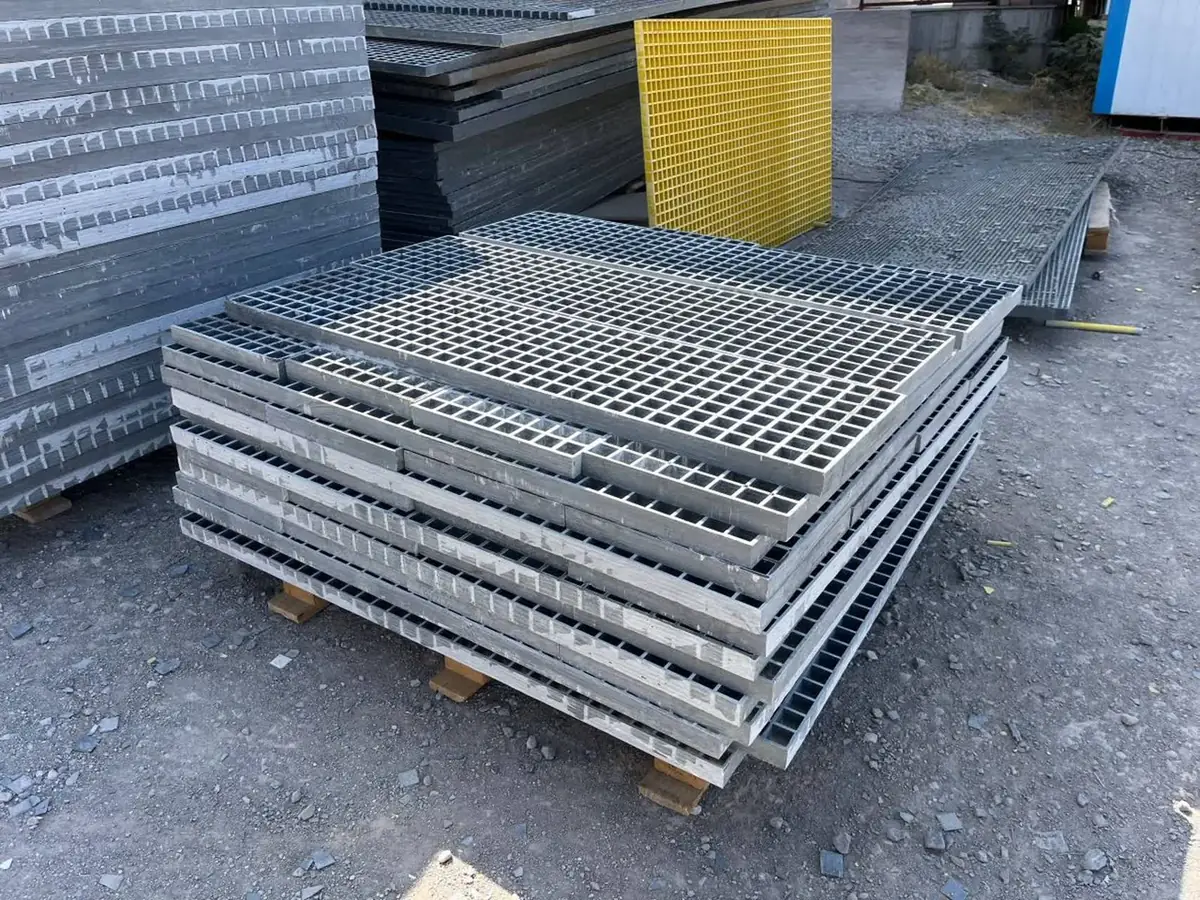
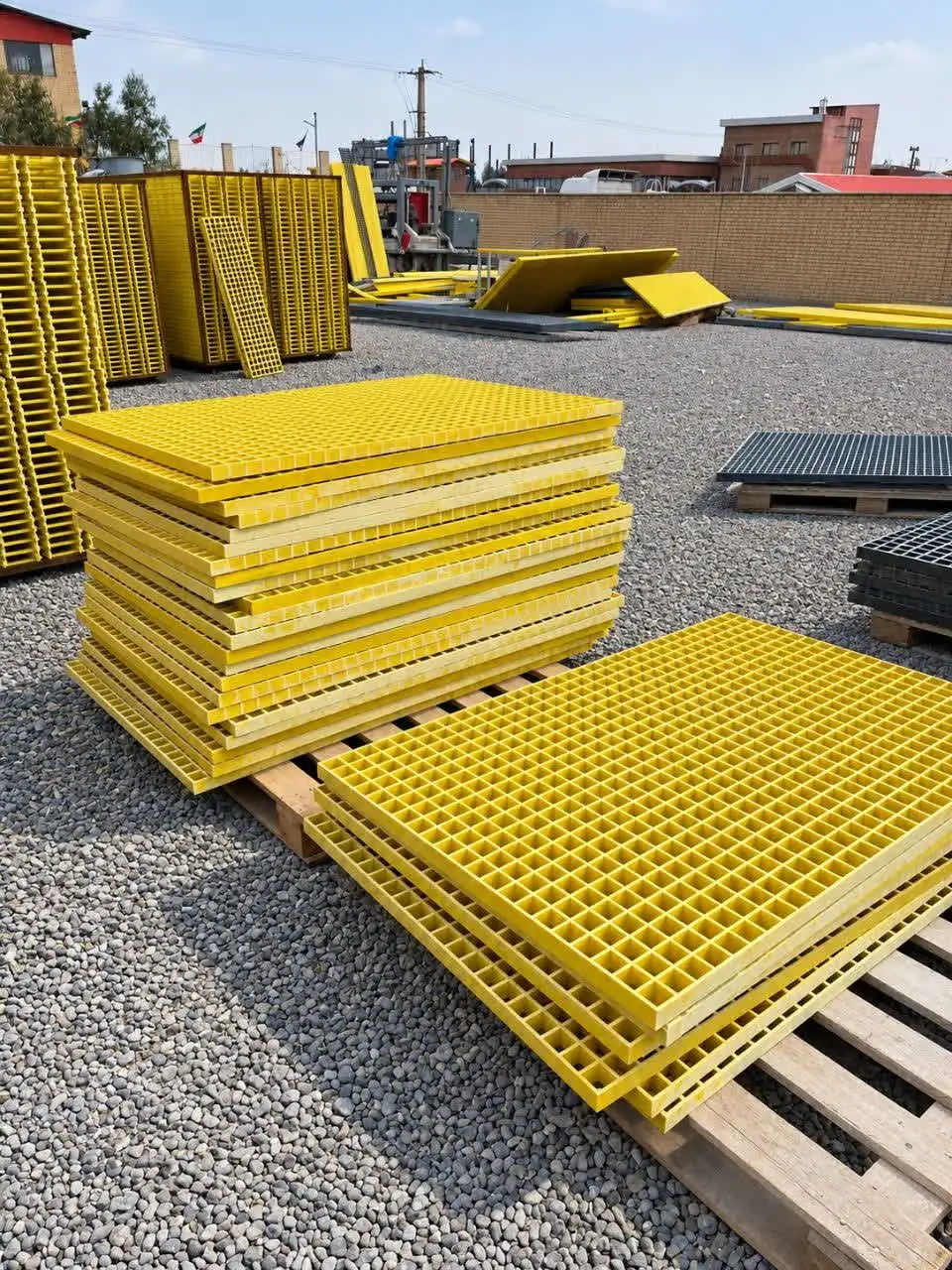
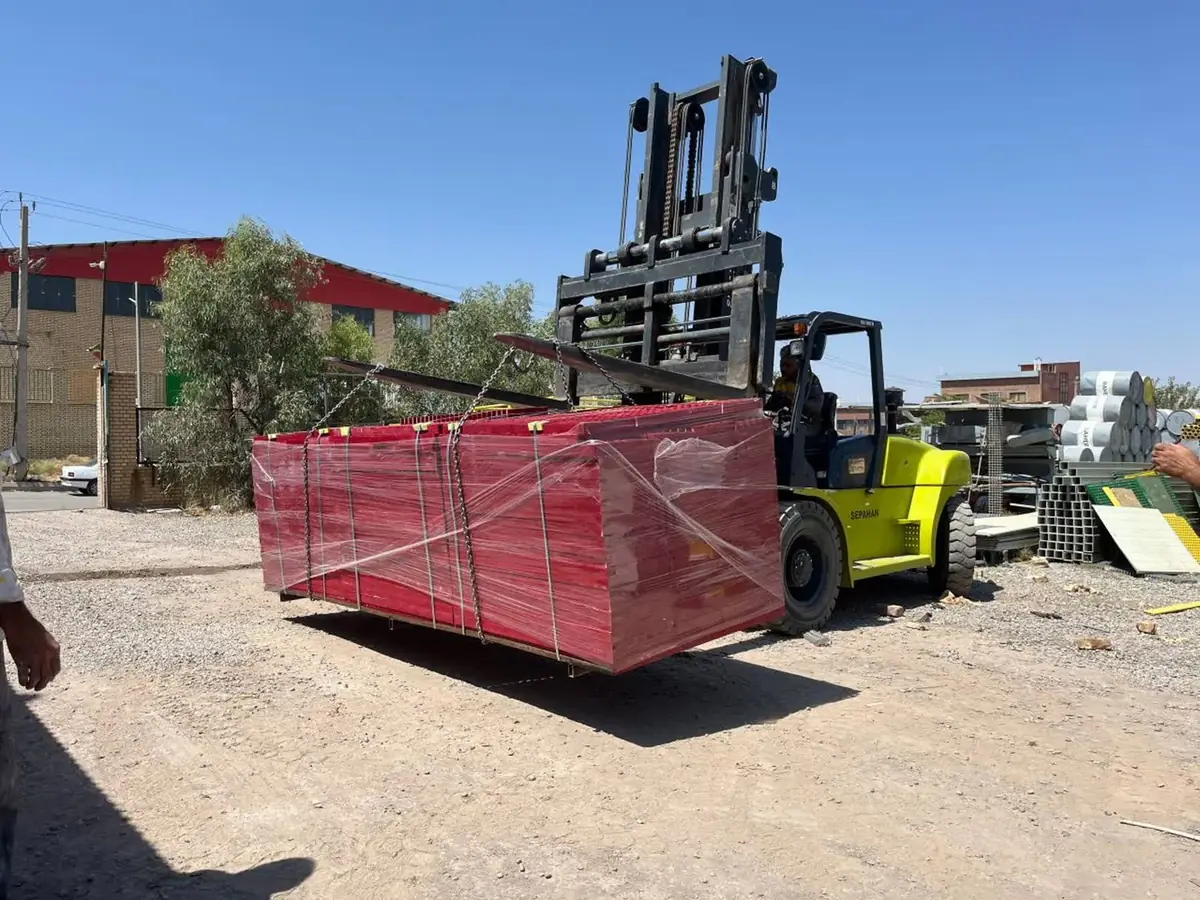
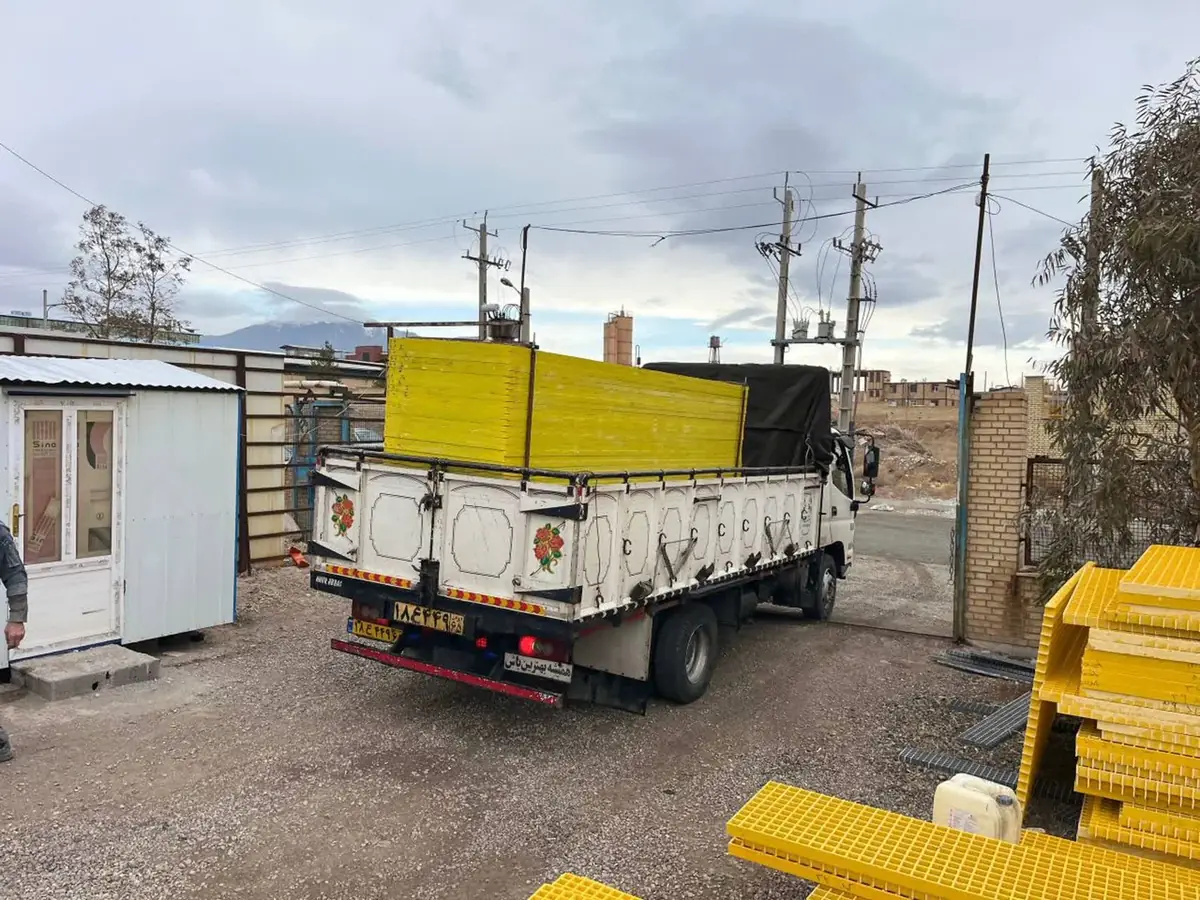
Focusing on the industrial methods of pultrusion and molding, and using advanced industrial machinery, Nabak Composite produces composite products of consistent quality at competitive prices. Fiberglass sheet, composite grating, composite box sections, fiberglass angles, composite channels, composite beams, fiberglass tubes, composite flat bars, polymer rods, composite wire and cable trays and ladders are among Nabak's composite products. For price quotes and advice on product selection, contact our team.
Frequently asked questions about composite manufacturing methods
Into how many groups are composite manufacturing methods divided?
Composite manufacturing methods can be placed in two broad groups: manual methods that do not need advanced industrial machinery (contact molding, casting and vacuum bag lay-up) and methods carried out with industrial machinery (pultrusion, filament winding, RTM, SMC and BMC compression molding, centrifugal casting, pullwinding, continuous lamination and thermoplastic composite production).
What is the cheapest composite manufacturing method?
Hand lay-up and spray-up need the lowest initial investment, because they require only an open mold and simple tools; but for high volumes, machine methods such as pultrusion or SMC lower the cost per part.
Which composite manufacturing method gives the highest fiber content?
Pultrusion, filament winding and pullwinding, with a fiber weight fraction of about 60 to 80 percent, and vacuum infusion (VIP), with about 55 to 70 percent, give the highest fiber content and therefore the highest strength.
How are composite profiles produced?
Constant-section composite profiles such as box sections, angles, channels, beams, flat bars, rods and composite wire are produced continuously by pultrusion.
What is the difference between thermoplastic and thermoset composites?
In a thermoset composite the resin (such as polyester, vinyl ester or epoxy) cures by chemical reaction and cannot be melted again; in a thermoplastic composite the matrix, such as polypropylene or nylon, melts when heated and solidifies when cooled, so it can be reshaped and recycled.
Summary
Polymer composite manufacturing methods range from the simplest manual techniques to the most advanced automated lines. Manual methods (contact molding by hand lay-up and spray-up, casting, and vacuum bag lay-up and VIP) need little investment, are highly flexible and suit large parts in low volumes. Machine methods (pultrusion, filament winding, RTM and RIM, SMC and BMC compression molding, centrifugal casting, pullwinding, continuous lamination and thermoplastic composites) offer better quality, higher fiber content and greater speed. The right choice, based on geometry, volume, size, strength and surface quality, gives the best balance between performance and final cost.

This article was prepared by the technical team of Nabak Composite, a manufacturer of pultruded profiles, FRP grating and composite products.