What are reinforcing fibers and what role do they play in a composite?
A polymer-matrix composite (FRP) is made of three groups of material: reinforcing fibers, the matrix or resin, and additives and fillers. In this combination, the resin acts as the "glue" holding the fibers in place, but it is the fibers that carry most of the mechanical load. That is why, when a composite part is in tension, bending or compression, its mechanical properties — strength and stiffness — depend first and foremost on the type, amount and orientation of the fibers.
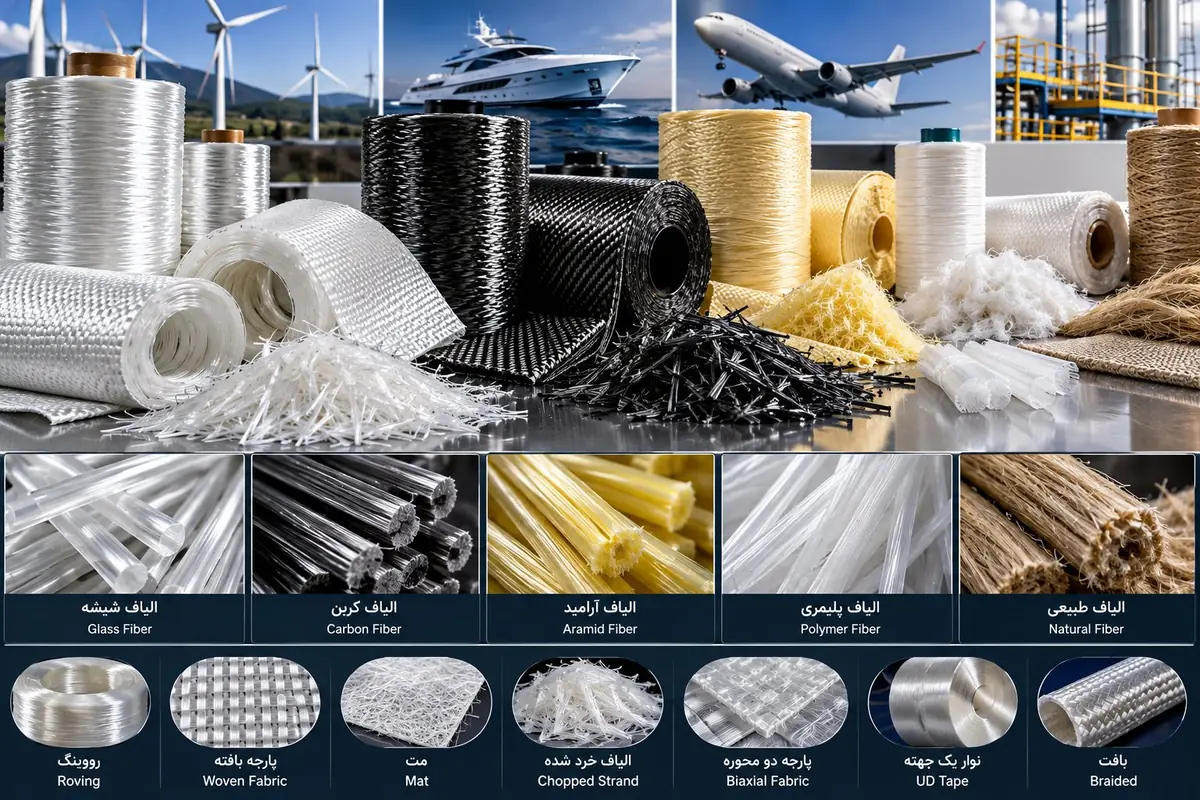
Choosing correctly among the types of fiber is one of the first and most important engineering decisions in designing any composite product. Glass, carbon, aramid and polyethylene fibers each offer a different combination of strength, stiffness, weight, chemical resistance, electrical behavior and price. Besides the material, the form in which reinforcing fibers are supplied also matters: roving, needle mat, tissue, woven fabrics or chopped fibers each suit a particular production method and application.
How load is transferred from resin to fiber
External load is first applied to the resin and then transferred to the fibers through shear stress at the fiber–resin interface. If fiber-to-resin adhesion is weak, the fibers pull out of the resin before reaching their ultimate strength (fiber pull-out). That is why the surface of glass and carbon fibers is modified with a chemical coating called sizing to make it compatible with the resin.
How fibers are classified in the composites industry
Composite reinforcing fibers can be classified from three independent viewpoints. They complement one another; for example, "450 g needle mat of E-glass fiber" specifies the material, the form and the continuity of the fibers.
Glass fiber (fiberglass): the most widely used composite fiber
Glass fiber, or fiberglass, is an inorganic, amorphous (non-crystalline) material based on silica (SiO₂). Combined with oxides such as alumina (Al₂O₃), calcium oxide (CaO), boron oxide (B₂O₃) and magnesium oxide (MgO), silica forms a glass whose mechanical, chemical and electrical properties vary with the proportion of each component. Silica usually makes up 50 to 70 percent of commercial glass fibers. Thanks to its excellent performance-to-price ratio, glass fiber accounts for more than 90 percent of reinforcing fiber consumption in the composites industry.
How glass fiber is made
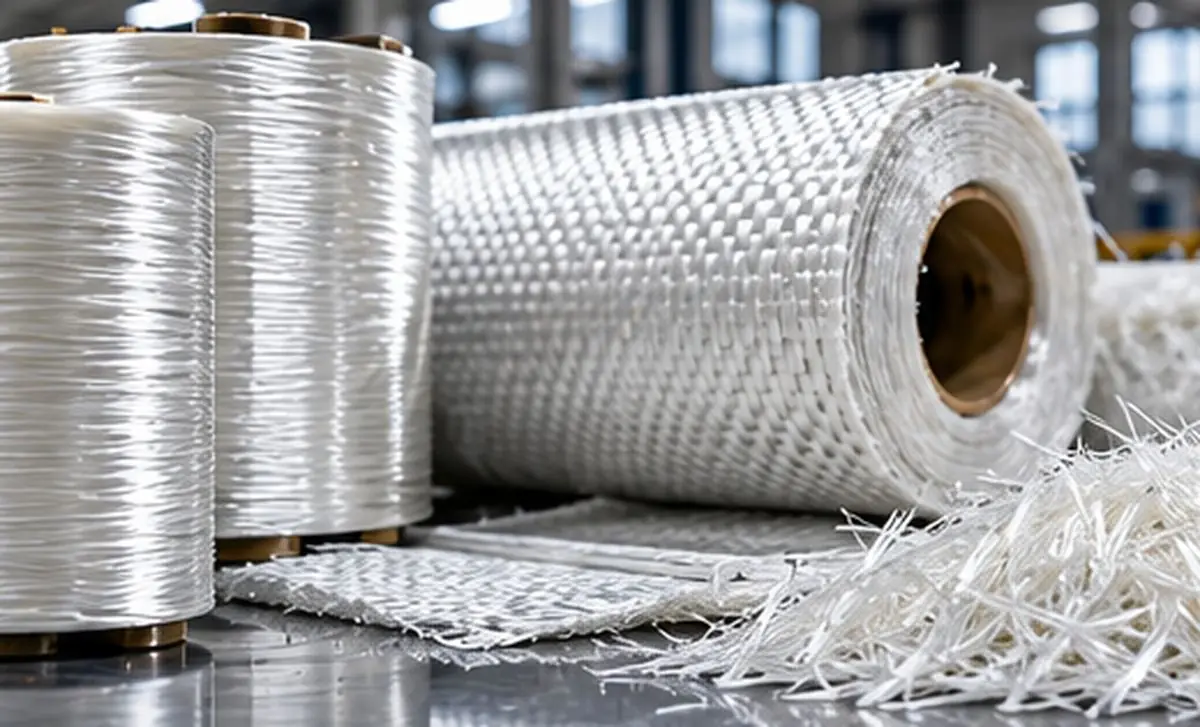
Industrial glass fiber production is a continuous, energy-intensive process carried out in several stages:
- Batch preparation: precise weighing of silica sand, limestone, kaolin, colemanite and other minerals
- Melting: melting the materials in a furnace at about 1400 to 1600 °C
- Fiber drawing: passing molten glass through a platinum–rhodium alloy bushing with hundreds to thousands of holes
- Sizing: applying a silane coating for protection and compatibility with the resin
- Gathering: combining filaments into strands and winding them onto bobbins or chopping them
- Drying: setting the sizing and preparing for conversion into roving, mat or fabric
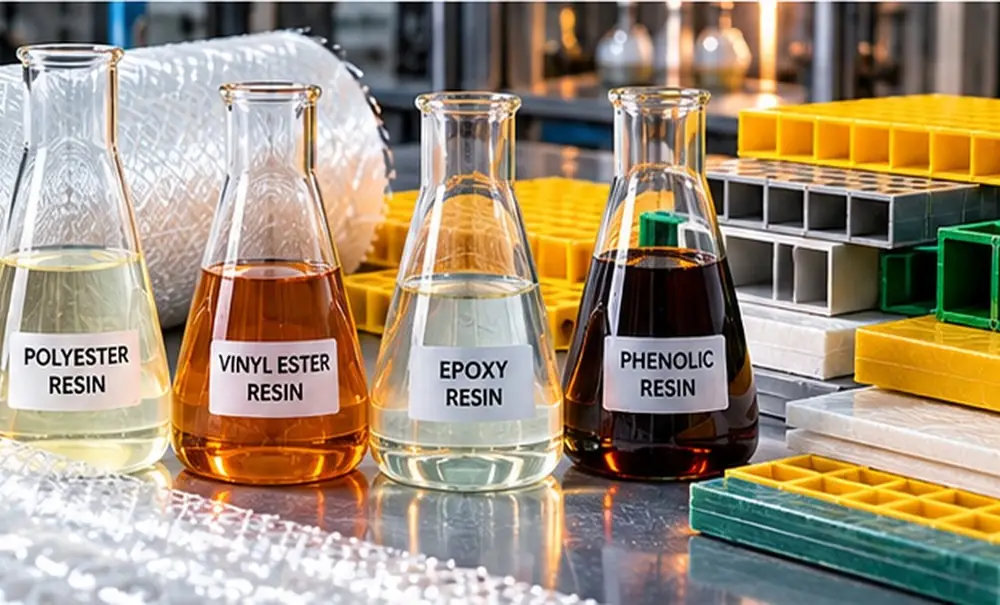
Each glass fiber filament is usually 9 to 24 microns in diameter. Finer filaments are used for yarn and woven fabrics, and thicker filaments for direct roving in pultrusion and filament winding. The silane coupling agent in the sizing bonds chemically with the hydroxyl groups on the glass surface on one side and with the resin on the other; choosing a sizing compatible with the resin (polyester, vinyl ester or epoxy) is therefore vital for optimum glass fiber performance.
A brief history of fiberglass
Today fiberglass is one of the most widely used industrial materials in the world, with annual global demand in the millions of tonnes, whereas about a century ago there was no market for it. Drawing molten glass into fine strands had long been known, but mass production of glass fiber is another story. In the late 19th century, steam-jet methods were invented to produce glass strands for insulation, and flame-resistant glass fabrics were also patented.
The main turning point came in the 1930s, when researchers discovered by accident that directing a high-pressure air jet at molten glass produced large amounts of fine fiber. Shortly afterwards, commercial production of continuous glass fiber began, and unsaturated polyester resin was developed at the same time. Combining the two produced the first FRP composites during the Second World War for aircraft parts and radomes. From then on, glass fiber became the backbone of the composites industry in boatbuilding, construction, transportation, energy and the chemical industries.
Types of glass fiber and their applications
Fiberglass types are classified by chemical composition and mechanical properties. Glass fiber types are usually named after the first letter of their defining property:
- E-glass (Electrical): an alumino-borosilicate composition with very low alkali content; excellent electrical insulation, good mechanical properties and economical. The most widely used type of glass fiber in the composites industry.
- ECR-glass (E-glass Corrosion Resistant): a boron-free version of E-glass with much better resistance to acids and stress corrosion; a common choice for fiberglass pipe, tanks and chemical environments.
- C-glass (Chemical): high resistance to acids and corrosive substances; used mainly as tissue and surface veil in the surface layer of corrosion-resistant parts.
- S- and R-glass (Strength / Resistance): magnesium-aluminosilicate glass with about 30 to 40 percent higher tensile strength and a higher modulus than E-glass; for aerospace, defense and wind turbine blades. R-glass is the European equivalent of S-glass.
- AR-glass (Alkali Resistant): contains zirconium oxide for resistance in the alkaline environment of concrete; mainly used in glass fiber reinforced concrete (GRC).
- D-glass (Dielectric): low dielectric constant for radomes and parts that must transmit radio waves.
- A- and M-glass: A-glass (alkali glass) is little used today, and M-glass has a higher elastic modulus.
| Glass fiber type | Density (g/cm³) | Filament tensile strength (MPa) | Elastic modulus (GPa) | Elongation at break (%) | Defining feature |
|---|---|---|---|---|---|
| E-glass | 2.54 to 2.60 | 3100 to 3800 | 72 to 80 | 4.5 to 4.9 | Insulating, economical, general-purpose |
| ECR-glass | 2.62 | 3100 to 3500 | 74 to 80 | 4.5 to 4.9 | Resistant to acid and corrosion |
| C-glass | 2.52 | approx. 3300 | approx. 69 | approx. 4.8 | Chemical resistance, surface layer |
| S / R-glass | 2.46 to 2.55 | 4400 to 4800 | 86 to 90 | 5.2 to 5.7 | High strength and modulus |
| AR-glass | 2.68 | approx. 3000 | approx. 72 | approx. 4.3 | Resistant to the alkaline environment of concrete |
| D-glass | 2.14 | approx. 2400 | approx. 52 | approx. 4.6 | Low dielectric constant |
Glass fiber vs glass wool
Glass fiber and glass wool are both made from silicate glass, but their structure and use are completely different. Glass wool consists of short, tangled fibers of uneven diameter produced by centrifugal or blowing methods, and the air trapped between its fibers provides very good thermal and acoustic insulation. Reinforcing glass fibers, by contrast, are continuous, long and of controlled diameter, and their surface is prepared with sizing for adhesion to resin.
| Criterion | Glass fiber (reinforcing fiberglass) | Glass wool |
|---|---|---|
| Fiber length | Continuous or chopped to a controlled length | Short and tangled |
| Fiber diameter | Uniform (9 to 24 microns) | Uneven |
| Fiber surface | Sizing compatible with resin | Phenolic or acrylic binder |
| Main use | Mechanical reinforcement of composites | Thermal and acoustic insulation of buildings and installations |
| Supply form | Roving, mat, tissue, woven fabrics | Rolls, blankets, boards and pipe insulation |
Confusing glass wool with reinforcing fiberglass when buying raw materials is common; note that because of its short fibers and lack of suitable sizing, glass wool is never used to reinforce composite parts.
Glass fiber supply in the Iranian market
Most of the glass fiber used in Iran's composites industry is imported, mostly from large Asian producers, especially China. Domestic producers work mainly in fiber conversion, using imported roving to make chopped strand mat, needle-punched fabric, woven fabrics and combination mats. Incoming quality control of fiber (tex, moisture, sizing type and resin compatibility) is therefore very important in composite product factories.
Carbon fiber: high stiffness and low weight
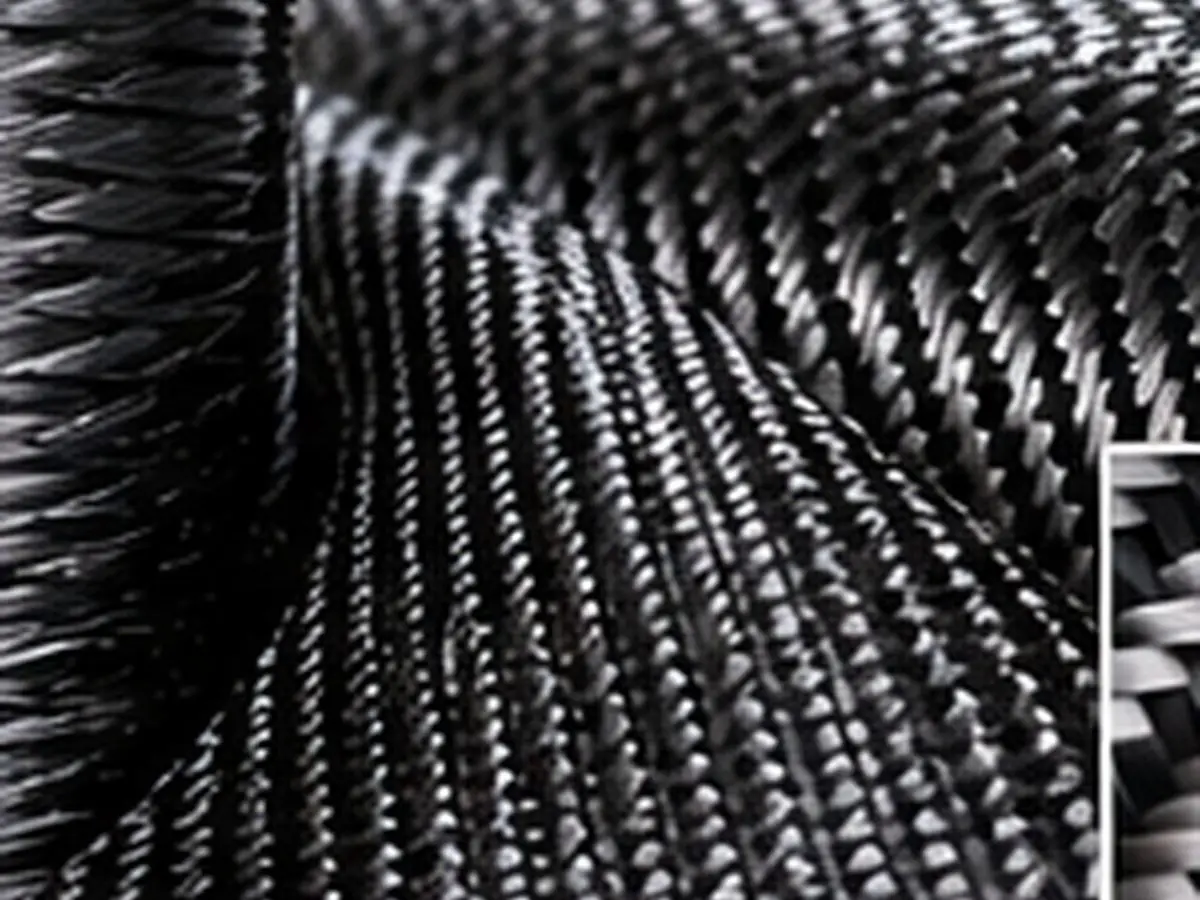
Carbon fiber (also called graphite fiber in high-modulus grades) is a fiber of which 85 to over 99 percent is the element carbon. The carbon atoms in these fibers are arranged in graphitic planes aligned with the fiber axis, and this structure gives very high mechanical properties, especially elastic modulus and strength in the longitudinal direction. Carbon fiber conducts electricity and heat, and its longitudinal coefficient of thermal expansion is close to zero or even slightly negative — a property that makes it ideal for dimensionally precise structures such as space equipment and measuring instruments.
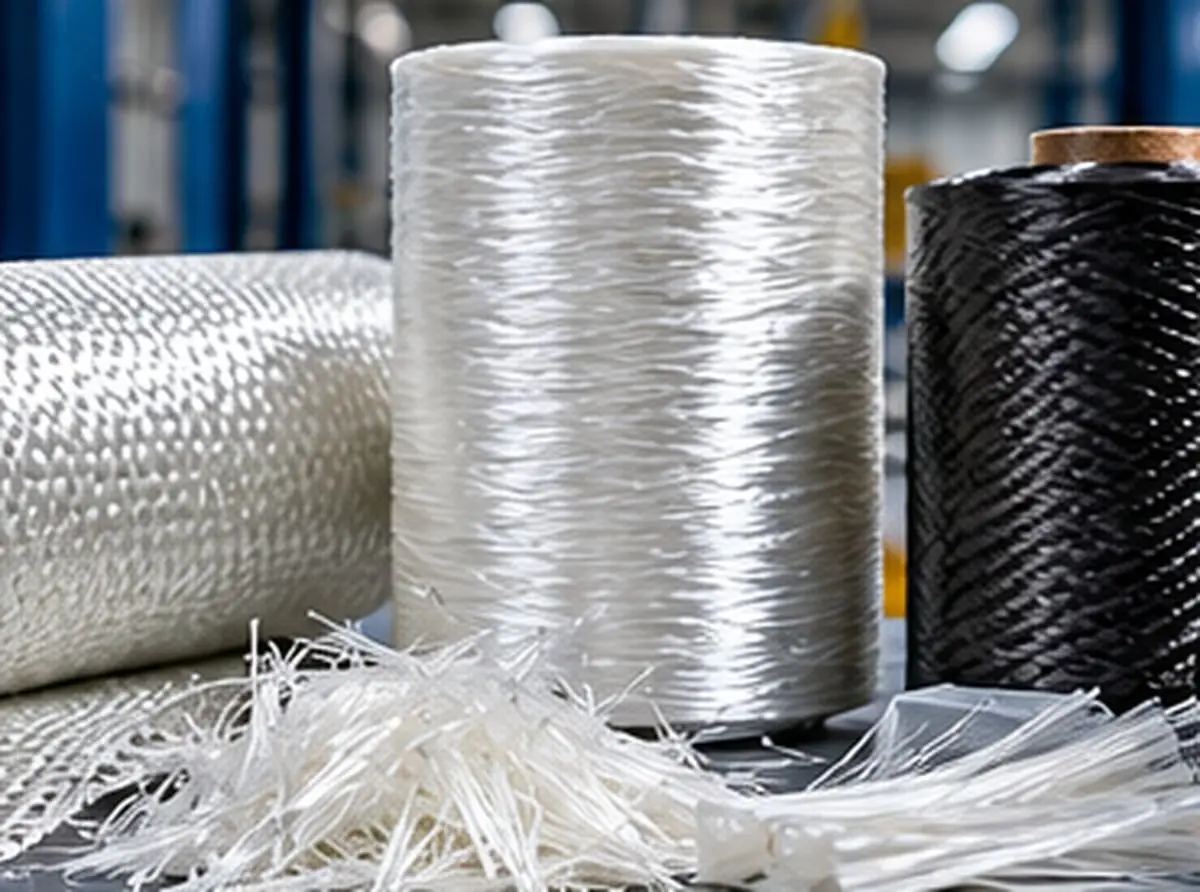
Producing carbon fiber from a precursor
More than 90 percent of the world's carbon fiber is made from a polyacrylonitrile (PAN) precursor, and the rest from pitch or rayon. The process has three main thermal stages:
- Oxidative stabilization: heating PAN fibers in air at about 200 to 300 °C under tension to create a cyclic, melt-resistant molecular structure.
- Carbonization: heating in an inert (nitrogen) atmosphere at about 1000 to 1500 °C, which drives off non-carbon elements and gives high-strength fiber.
- Graphitization (optional): treatment at 2000 to 3000 °C, which greatly increases the modulus but slightly reduces tensile strength.
The fiber surface is then activated electrochemically and sized. Carbon fiber is supplied as tow with a defined number of filaments, such as 1K, 3K, 6K, 12K, 24K and 50K (K meaning a thousand filaments). Small tows are used for fine fabrics, and large tows are more economical for pultrusion and filament winding.
| Carbon fiber grade | Density (g/cm³) | Tensile strength (MPa) | Elastic modulus (GPa) | Elongation (%) | Filament diameter (µm) |
|---|---|---|---|---|---|
| Standard modulus (e.g. T300) | 1.76 | approx. 3500 | approx. 230 | approx. 1.5 | 7 |
| Standard modulus, high strength (e.g. T700) | 1.80 | approx. 4900 | approx. 230 | approx. 2.1 | 7 |
| Intermediate modulus (IM) | 1.78 to 1.80 | 5500 to 6400 | 280 to 300 | approx. 2.0 | 5 |
| High modulus (HM) | 1.84 to 1.94 | 4000 to 4500 | 350 to 500 | Less than 1 | 5 to 7 |
Polymer fibers: aramid and polyethylene fibers
Reinforcing polymer fibers are produced by spinning organic polymers with highly aligned chains. Aramid fibers are made by solution spinning (in concentrated sulfuric acid), and ultra-high-molecular-weight polyethylene fibers by gel spinning. The main advantages of this group are very low density and excellent energy absorption and impact resistance.
Aramid fiber (Kevlar)
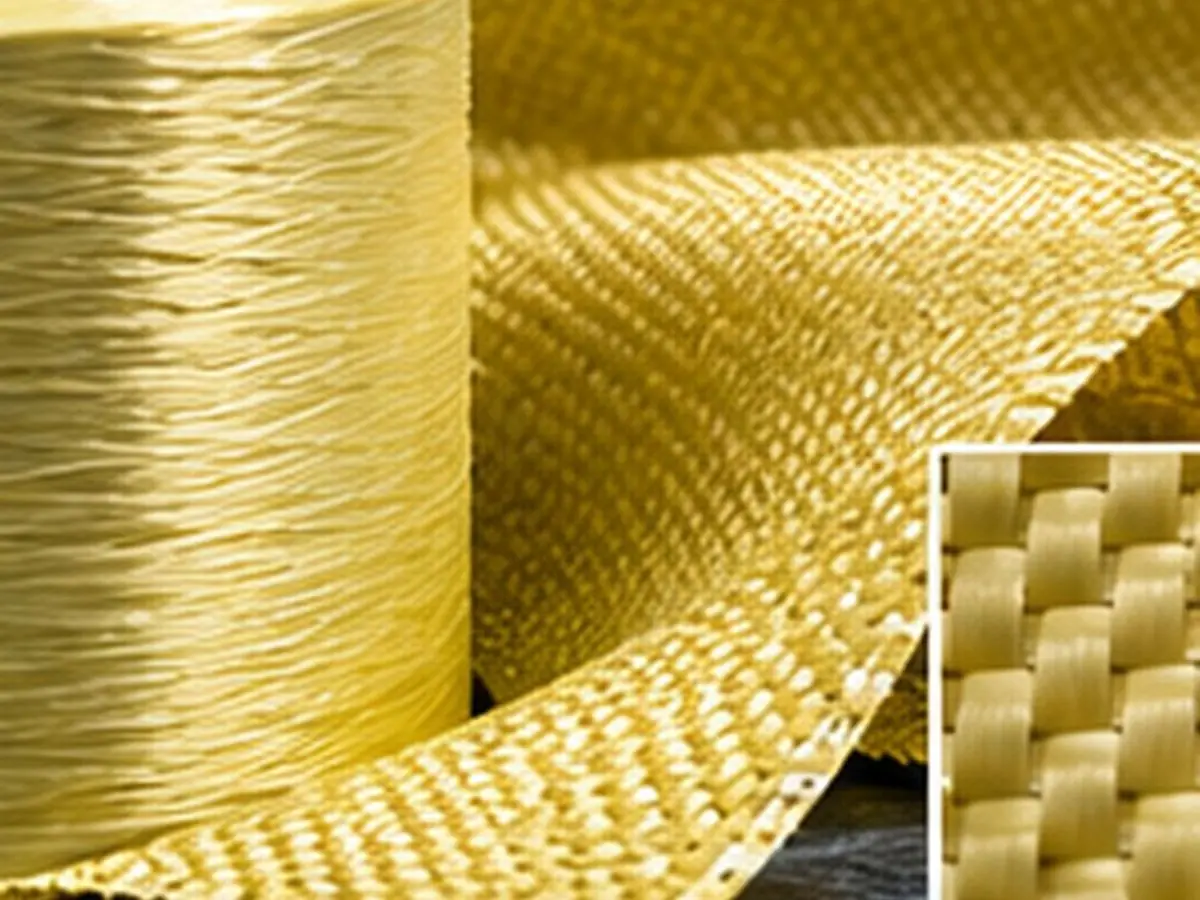
Aramid fiber is made from aromatic (ring-structured) polyamides and is usually golden yellow. Its best-known trade name is Kevlar; other trade names such as Twaron and Technora are also on the market. Aramid fiber has a density of about 1.44 g/cm³ and a much higher strength-to-weight ratio than glass fiber.
| Aramid fiber grade | Density (g/cm³) | Tensile strength (MPa) | Elastic modulus (GPa) | Elongation (%) | Application |
|---|---|---|---|---|---|
| Kevlar 29 | 1.44 | approx. 2900 | approx. 70 | approx. 3.6 | Body armor and ballistic helmets, rope, cable |
| Kevlar 49 | 1.44 | approx. 3000 | approx. 112 | approx. 2.4 | Composite reinforcement in aerospace and boatbuilding |
The engineering limitations of aramid fiber are: low compressive strength (about one fifth of its tensile strength), sensitivity to ultraviolet light, moisture absorption, and difficulty in cutting and machining, which needs special tools. For this reason aramid fiber is often used as a hybrid with carbon or glass fiber to provide both impact resistance and compressive stiffness.
Ultra-high-molecular-weight polyethylene (UHMWPE) fiber
Reinforcing polyethylene fibers are sold under well-known trade names such as Spectra and Dyneema. These fibers have a density of about 0.97 g/cm³, lower than water, making them the lightest commercial reinforcing fiber with the highest specific strength. However, a low melting point (about 150 °C), high creep and poor adhesion to resins limit their use to ballistic protection, marine ropes and impact-resistant parts.
Other fibers: basalt and natural fibers
- Basalt fiber: made by melting volcanic basalt rock without additives. Its strength and modulus are slightly higher than E-glass, it has better thermal and chemical resistance, and its price lies between glass fiber and carbon fiber. It has a growing use in composite rebar and concrete reinforcement.
- Natural fibers: fibers such as flax, hemp, jute and sisal have low density (about 1.2 to 1.5), low cost and a low carbon footprint, but high moisture absorption and wide scatter in properties. They are used mostly in automotive interior parts and non-structural products.
- Polyester (PET) fibers: mainly as tissue and surface veil to improve surface quality and the chemical resistance of the outer layer of composite parts.
Comprehensive comparison of reinforcing fibers
The table below puts typical values for common fibers side by side. Specific strength (strength divided by density) shows how much load each fiber carries per unit weight — a decisive parameter in aerospace and transportation.
| Fiber type | Density (g/cm³) | Tensile strength (MPa) | Modulus (GPa) | Specific strength (MPa/(g/cm³)) | Electrical conductivity | Relative cost |
|---|---|---|---|---|---|---|
| E-glass fiber | 2.58 | 3400 | 72 | approx. 1320 | Insulating | Low |
| S-glass fiber | 2.49 | 4600 | 87 | approx. 1850 | Insulating | Moderate |
| Basalt fiber | 2.65 | 3000 to 4000 | 85 to 90 | approx. 1300 | Insulating | Moderate |
| Carbon fiber (T300) | 1.76 | 3500 | 230 | approx. 2000 | Conductive | High |
| Aramid fiber (Kevlar 49) | 1.44 | 3000 | 112 | approx. 2080 | Insulating | High |
| Polyethylene fiber (UHMWPE, Spectra) | 0.97 | 3000 to 3500 | 100 to 120 | Over 3000 | Insulating | High |
| Natural fiber (flax) | 1.4 to 1.5 | 500 to 900 | 50 to 70 | approx. 500 | Insulating | Very low |
Classifying fibers by form and supply
After production, reinforcing fibers are converted into various forms to suit the composite part's manufacturing method. Below we review these forms, from the simplest (filament and roving) to the most advanced (woven fabrics and 3D weaves).
1. Filament
The filament is the smallest unit of fiber: a continuous strand a few microns in diameter, drawn directly from the bushing. A filament on its own has no industrial use and is always used as a bundle of thousands of filaments in secondary products.
2. Strand
A bundle of filaments lying side by side without twist and not yet wound onto a bobbin. The strand is the raw material for roving, yarn and chopped fiber.
3. Roving and tow
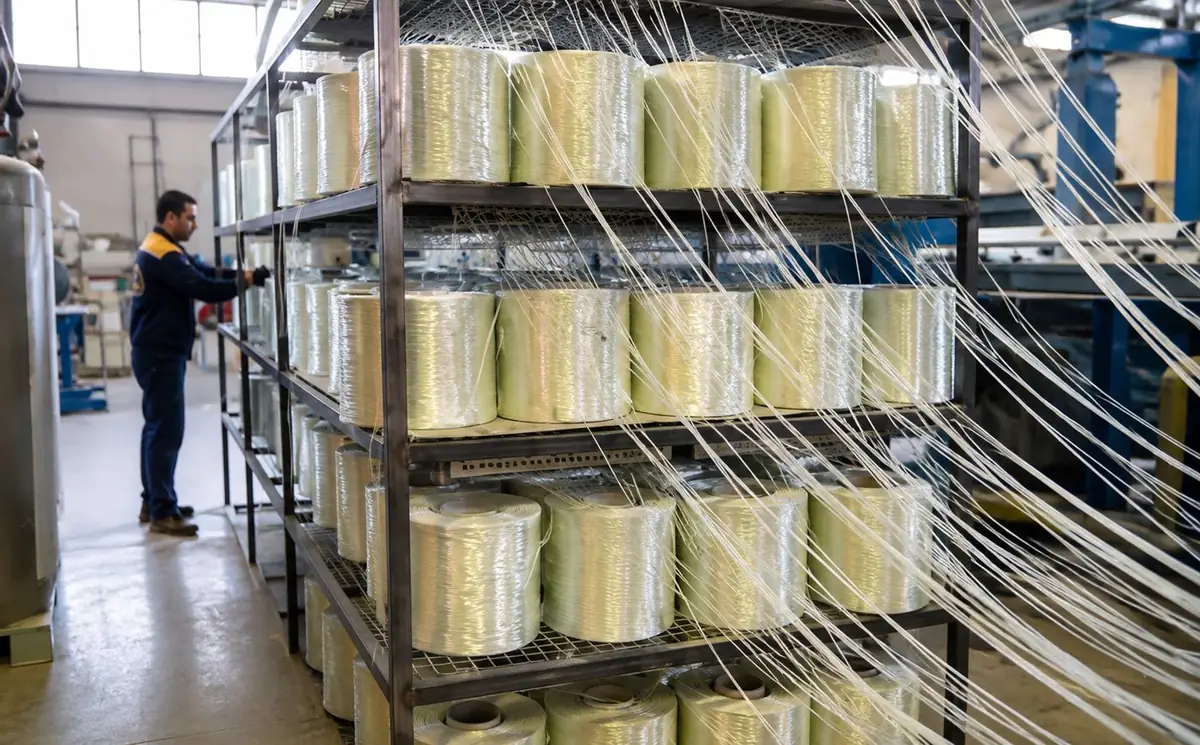
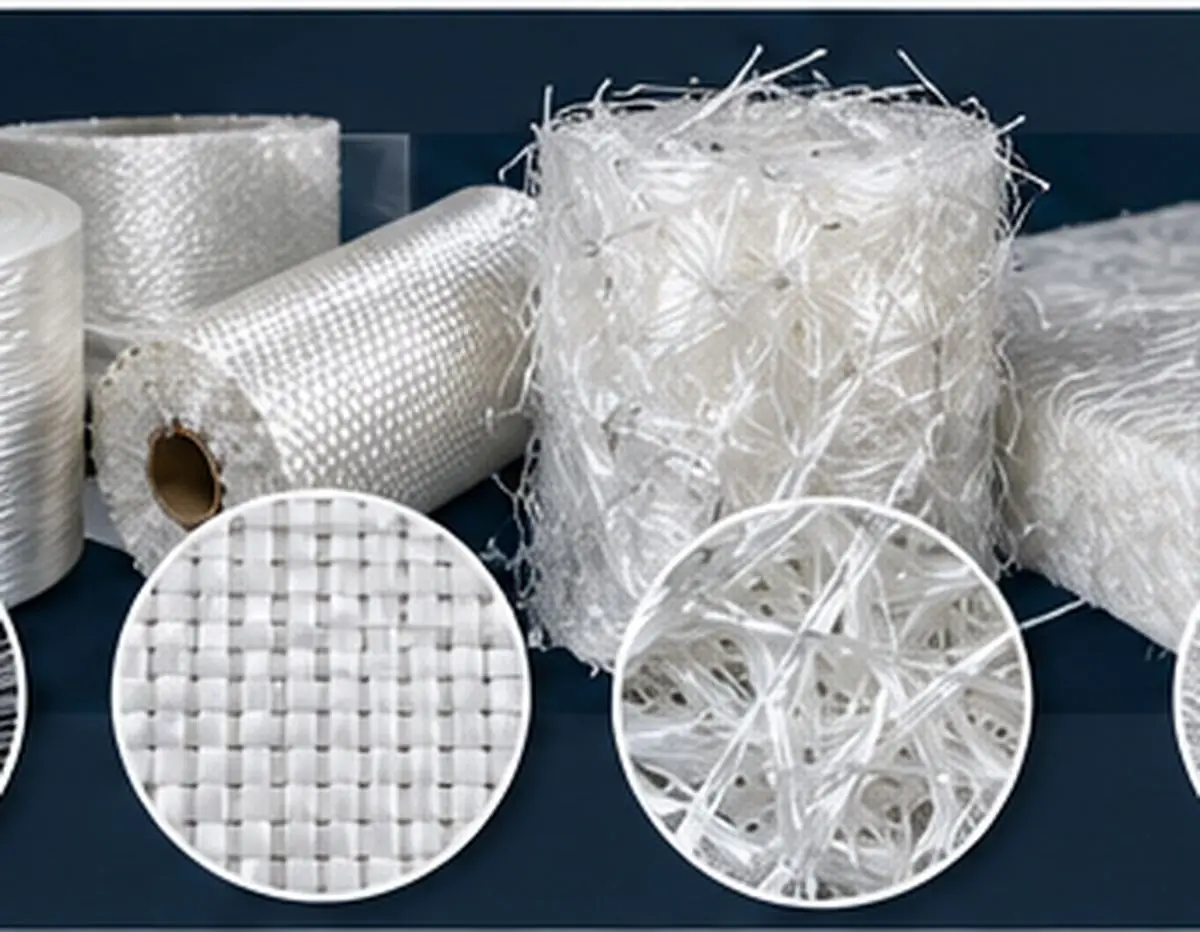
Roving is a bundle of parallel, untwisted strands or filaments wound onto a bobbin, and it is the simplest commercial form of reinforcing fiber. The term roving is common for glass fiber and tow for carbon fiber. Direct roving is used directly in methods such as pultrusion and filament winding, and assembled roving is used for spray-up, SMC and the production of woven fabrics.
4. Yarn
Yarn is made by twisting fiber strands and winding them onto a spindle. Twisting increases the integrity and weavability of the strand, so yarn is the raw material for fine woven fabrics, tapes and electronic fabrics (such as printed circuit board fabric).
5. Chopped strand
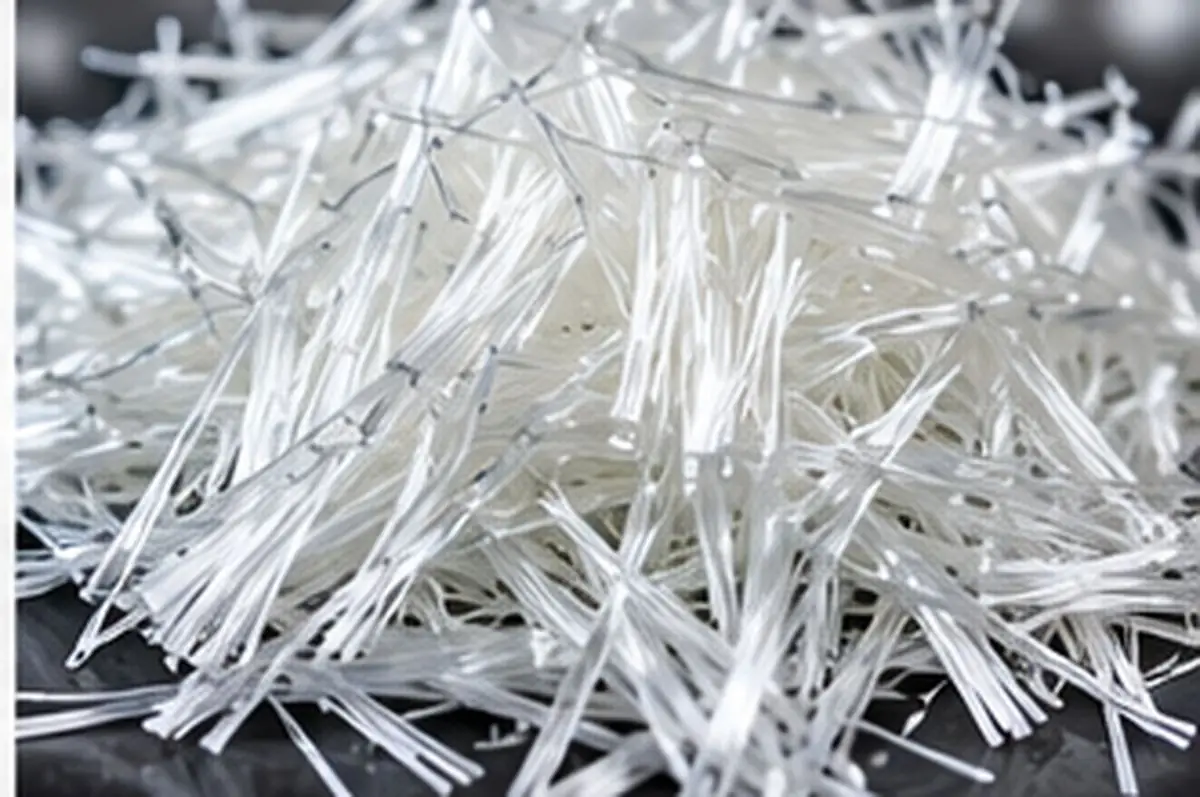
Chopped strand, or short fiber, is made by cutting fiber strands into short lengths, usually 3 to 50 mm. These short fibers are used as reinforcement in thermoplastics (such as glass-fiber-reinforced nylon and polypropylene, usually up to about 30 percent by weight and sometimes more), in BMC and SMC molding compounds, and in making chopped strand mat. Because of their random distribution, chopped fibers produce almost isotropic properties.
6. Milled fiber
Milled fibers are very short fibers less than one millimeter long. Because they are shorter than the critical length, they have little reinforcing effect and are used mostly as fillers, shrinkage control agents, viscosity builders in composite putties and adhesives, and to improve abrasion resistance.
7. Chopped strand mat (CSM)
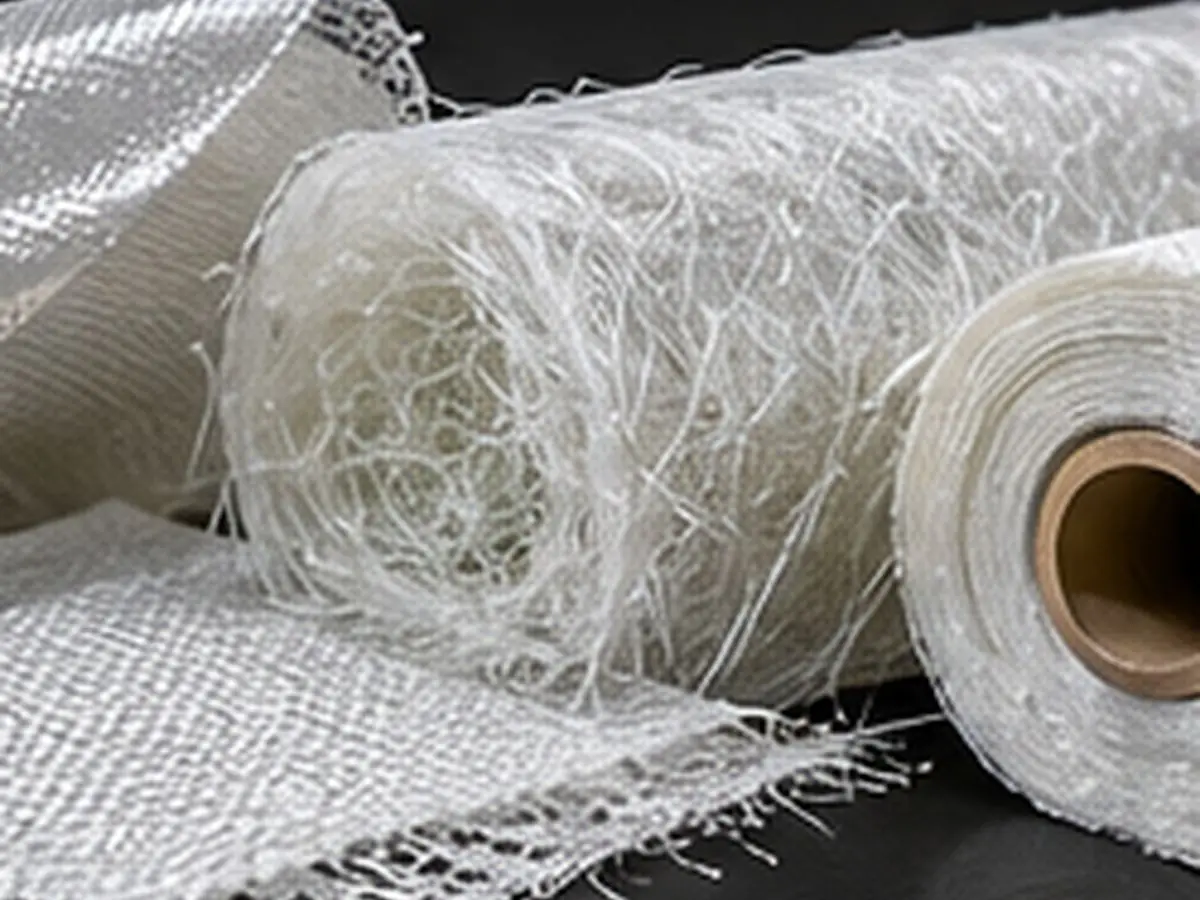
Chopped strand mat is the most common form of glass fiber in the composites industry, especially in hand lay-up. In CSM, chopped fibers about 50 mm long are spread randomly over a surface and held together by a binder. CSM areal weight is usually 100 to 900 g/m², with 300, 450 and 600 g grades the most used. Because of its low price, compatibility with polyester resin and ease of use, fiberglass CSM is the best-selling fiber product in composite workshops. Some domestic producers also make needle-punched fabric by mechanically entangling chopped strands; it is thicker and bulkier than ordinary CSM.
Chopped strand mat is divided into two groups by binder type:
- Emulsion-bound mat: its binder dissolves slowly in styrene, the fibers stay more cohesive and it is easier to handle; suitable for flat surfaces.
- Powder-bound mat: its powder binder dissolves faster in styrene, giving better wet-out and conformability to complex molds and greater compatibility with epoxy resin, but its fibers separate more easily and cause more itching.
8. Continuous filament mat (CFM)
CFM looks like CSM, except that its fibers are continuous and laid in tangled loops. The CFM binder does not dissolve in styrene, so the mat does not fall apart while being pulled or during resin injection. That is why CFM is the standard mat for pultrusion, RTM and vacuum infusion, and in pultruded profiles it provides transverse strength and resistance to longitudinal cracking.
9. Combination mats and stitched fabrics (Combo Mat / NCF)
A combination mat is made by joining a layer of CSM or CFM to a woven fabric or unidirectional fiber layers, usually by stitching. This group includes non-crimp stitched fabrics (NCF) such as biaxial (±45° or 0/90°), triaxial and quadriaxial fabrics. Because the fibers in NCF are not crimped, their mechanical properties are higher than woven fabrics of the same weight, and they are widely used in wind turbine blades, boatbuilding and structural profiles.
10. Tissue or surface veil
Tissue, also known as surface veil, is a very thin mat with a low areal weight, usually 20 to 60 g/m². Tissue is made from C- or E-glass or polyester fibers and creates a resin-rich surface in the outer layer of the part. The result is a smooth, glossy surface, no fiber blooming, and greater resistance to corrosion and ultraviolet radiation. Tissue is essential in producing pultruded profiles for outdoor use.
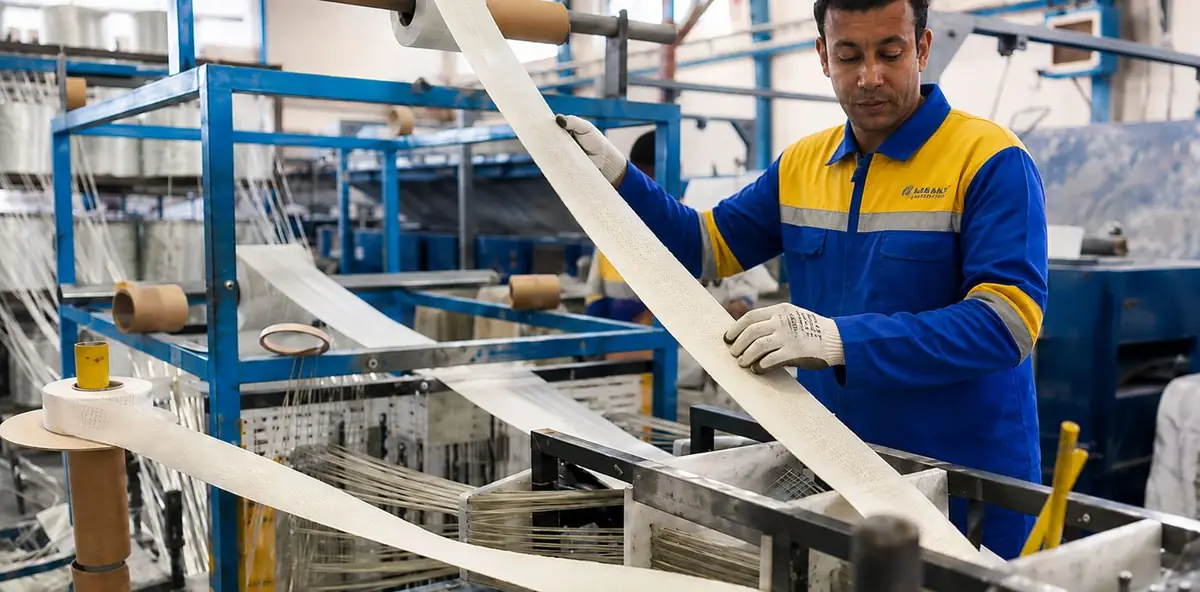
11. Woven fabrics
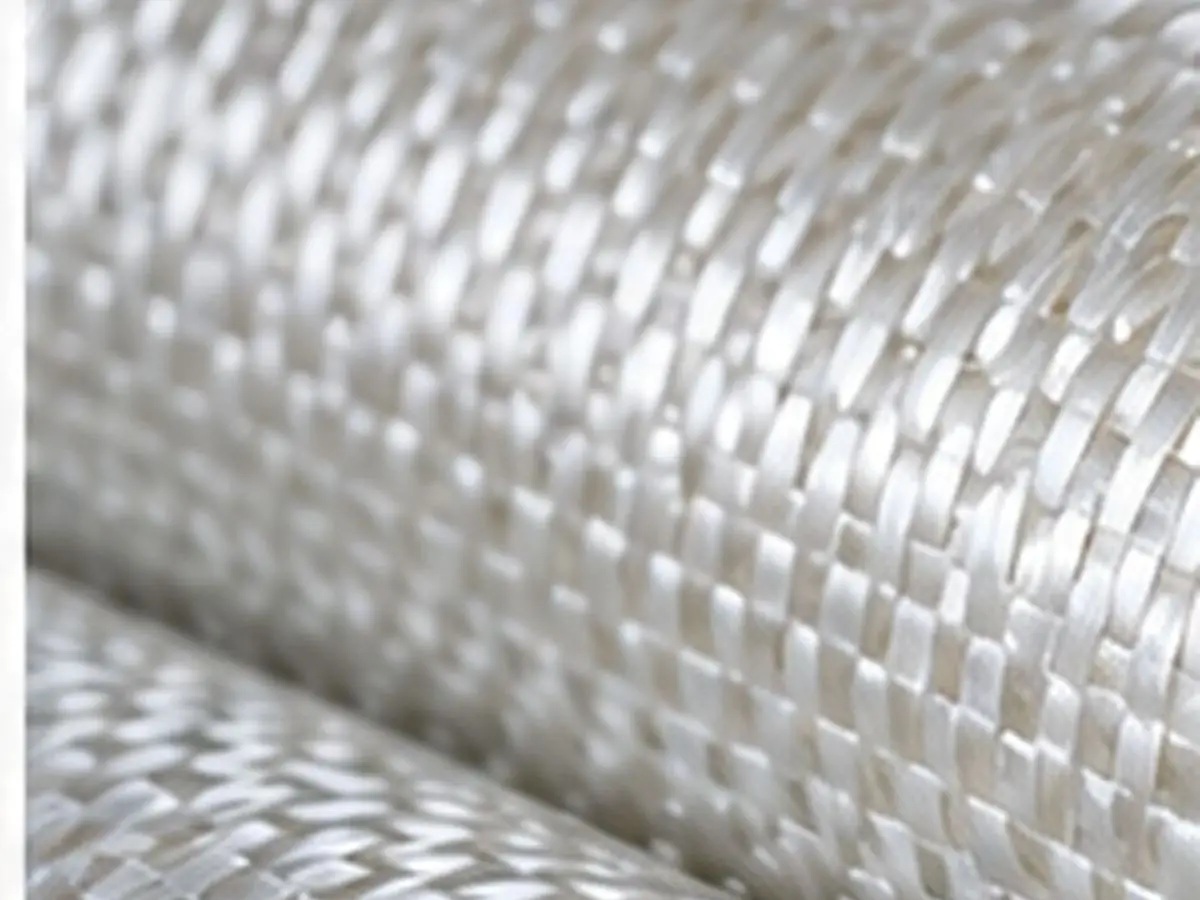
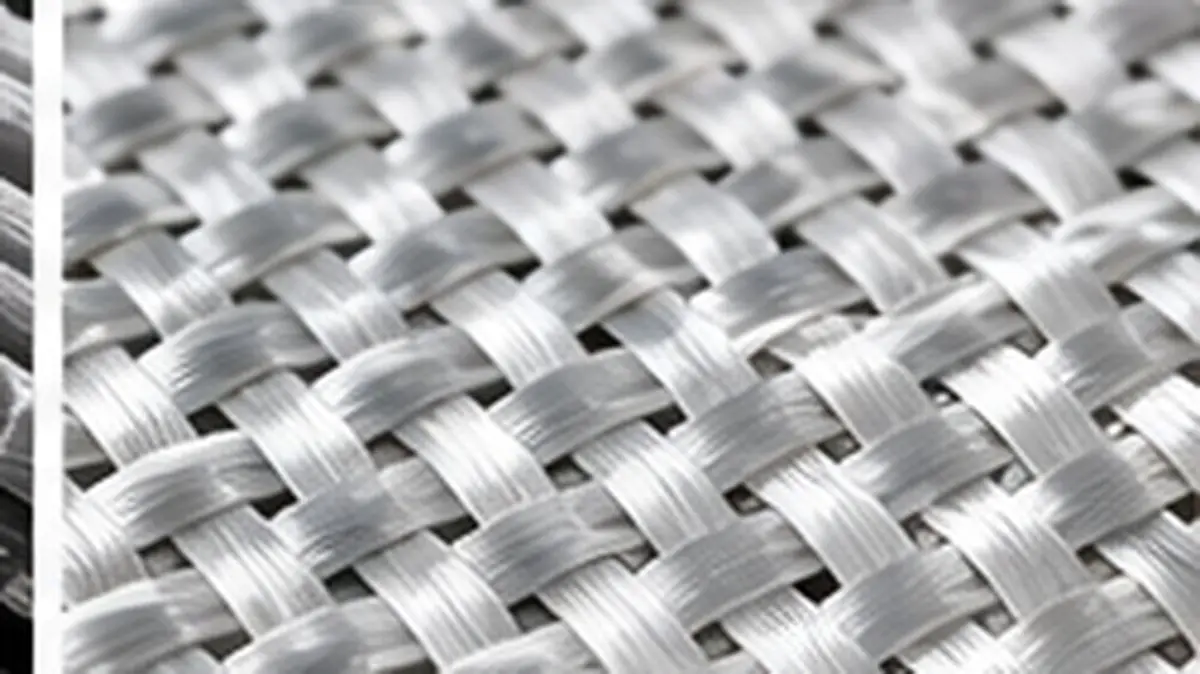
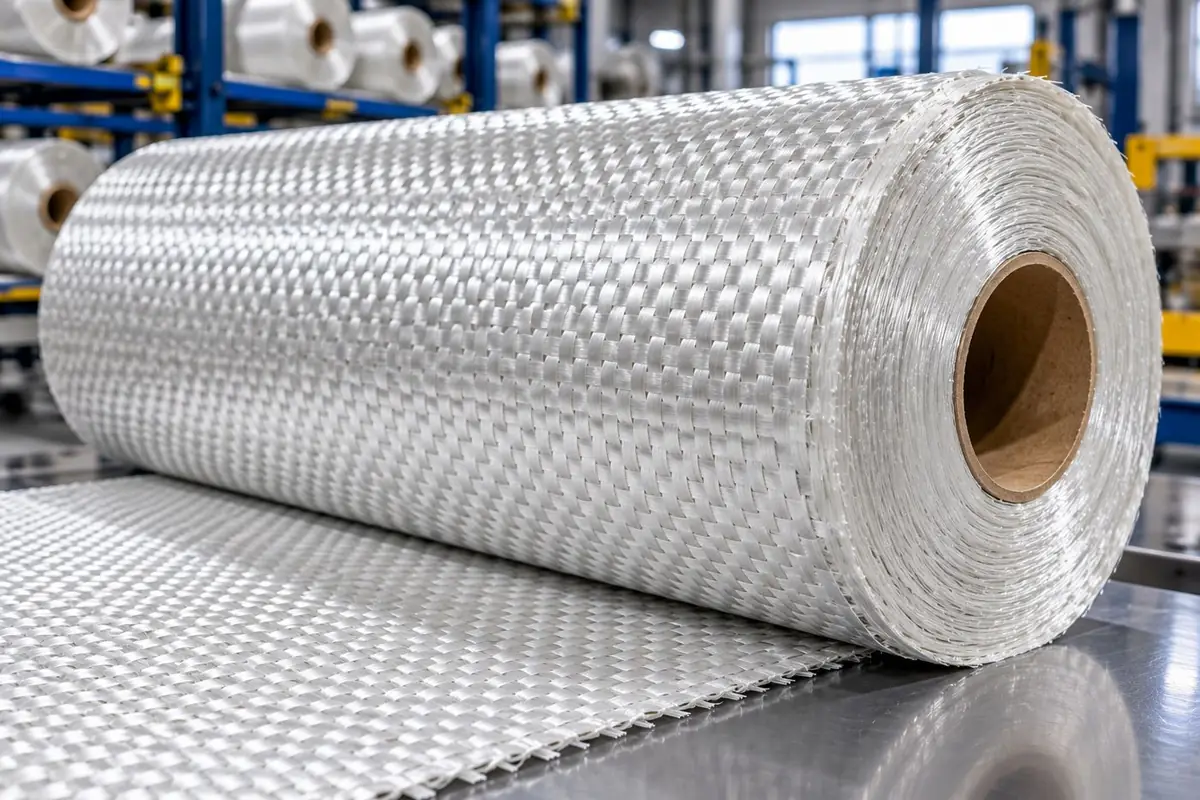
Woven fabrics are made by interlacing two sets of perpendicular fibers (warp and weft). Woven roving is thick and inexpensive, while fabric woven from yarn is finer with a smoother surface. The weave type determines how drapeable the fabric is over a mold and how much the fibers are crimped:
| Weave type | Structure | Dimensional stability | Drapeability | Application |
|---|---|---|---|---|
| Unidirectional | Most fibers in one direction, with a holding thread | Moderate | Good | Local reinforcement, spars, structural reinforcement |
| Plain | Each warp passes over one weft and under the next | Very high | Poor | Flat surfaces, hand lay-up |
| Basket | Two or more warps together over two or more wefts | Moderate | Moderate | Heavy, thick fabrics |
| Twill | Diagonal pattern with a float of 2 or more | Moderate | Good | Curved parts, visible carbon fiber fabric |
| Satin | Long floats, least crimp | Low | Very good | Complex aerospace parts |
| Leno | Paired warps twisted around the weft | Very high with an open weave | Poor | Fabric edges, reinforcing meshes |
Several fiber types can also be woven together in one fabric — for example carbon–aramid or glass–carbon hybrid fabric, which combines stiffness, impact resistance and reasonable price.
12. 3D weaves and braids
In 3D weaves, fibers are placed in the thickness direction (Z) as well as X and Y. This structure largely overcomes the main problem of layered laminates, delamination. The two main types in this group are:
- Braiding: fibers are interlaced helically around a core; suitable for tubes, shafts, hollow parts and pultruded profiles with high torsional strength.
- 3D spacer fabric (such as Parabeam): two fabric layers joined by vertical fibers which, after impregnation, form a light, integral sandwich structure; suitable for double-walled tanks and lightweight panels.
In general, 3D weaves are more expensive than 2D fabrics, but in impact- and fatigue-sensitive parts they reduce life-cycle cost by eliminating the risk of delamination. Producing 3D weaves requires special weaving machinery.
Classifying reinforcements by size
- Nano reinforcement (nanocomposite): when at least one dimension of the reinforcement is on the nanometer scale, the resulting material is called a nanocomposite. Instead of ordinary fibers, this field generally uses nanoclay, carbon nanotubes, graphene and silver nanoparticles to improve properties such as gas barrier, conductivity or antibacterial behavior. In a nanocomposite, even a few percent by weight of nano reinforcement can have a noticeable effect on properties because of its very high specific surface area.
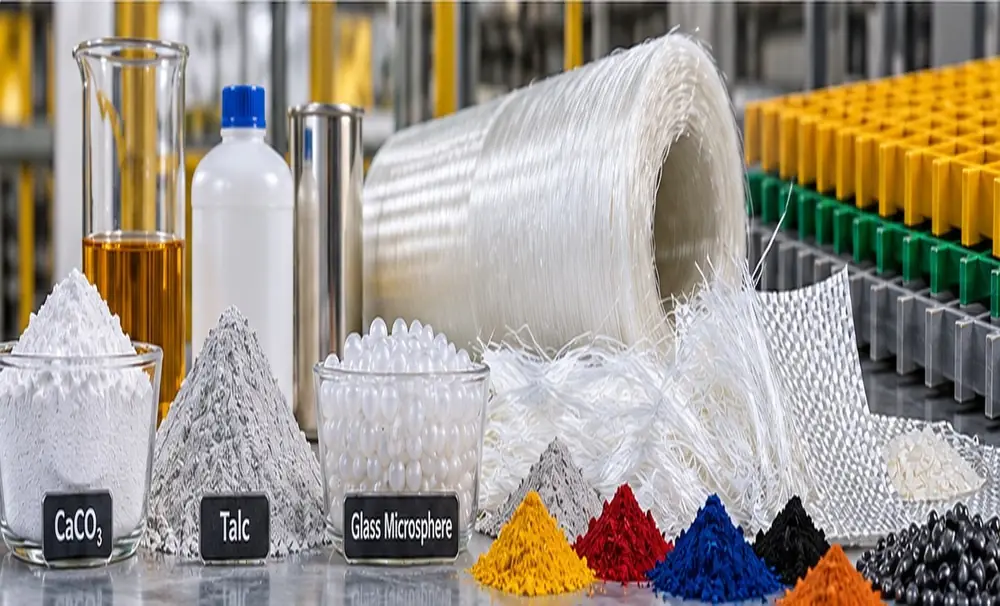
- Particulate (powder) reinforcement: particles of roughly equal dimensions in all directions, such as silica, talc, calcium carbonate and aluminum trihydroxide (ATH). These particles have a limited mechanical reinforcing effect and are used mostly to reduce cost, control shrinkage, or for fire behavior or electrical and magnetic properties.
- Fibrous reinforcement: because of its very high length-to-diameter ratio, this is the most effective form of reinforcement. Randomly arranged discontinuous fibers (such as chopped fibers and chopped strand mat) give almost isotropic in-plane properties, whereas continuous fibers (roving and fabric) give the product very high anisotropic properties in a defined direction.
Guide to choosing fiber by composite manufacturing method
Each composite manufacturing method calls for a particular form of reinforcing fiber. The table below provides a practical selection guide:
| Manufacturing method | Suitable fiber form | Typical fiber weight fraction | Example product |
|---|---|---|---|
| Pultrusion | Direct roving + CFM or stitched mat + tissue | 55 to 80 percent | Composite box section, fiberglass angle, polymer rod |
| Filament winding | Direct roving or carbon tow | 60 to 75 percent | Fiberglass pipe, pressure vessels |
| Hand lay-up and spray-up | Chopped strand mat, woven roving, spray roving | 25 to 40 percent | Boats, pools, large parts |
| RTM and vacuum infusion | CFM, NCF, woven fabrics | 45 to 60 percent | Automotive parts, wind turbine blades |
| SMC and BMC | Chopped fibers 12 to 50 mm | 15 to 30 percent | Electrical enclosures, automotive body parts |
| Thermoplastic injection molding | Short chopped fibers | 10 to 40 percent | Industrial and engineering parts |
- What is the dominant load and in which direction does it act? (tension, bending, compression, impact, torsion)
- Is the governing design criterion strength or stiffness and deflection? (if stiffness governs, carbon fiber or a higher section moment of inertia)
- Must the part be electrically insulating? (glass, aramid or basalt fiber)
- Does the service environment include acid, alkali or seawater? (ECR glass fiber, C-glass tissue and vinyl ester resin)
- What are the project's weight and budget limits?
- What form of fiber does the manufacturing method accept, and is the fiber sizing compatible with the chosen resin?
Storage, quality control and safety when working with fiber
- Storage conditions: glass fiber, mat and fabrics should be kept in their original packaging, away from moisture, at about 15 to 35 °C and below 65 percent relative humidity. Before use, it is best to keep the fiber in production hall conditions for 24 hours so that moisture does not condense on it.
- Incoming quality control: measuring roving tex, areal weight of mat and fabrics, sizing content (LOI, loss on ignition), moisture, and the dissolution rate of the mat binder in styrene.
- Safety: glass fiber causes skin itching and eye and respiratory irritation; gloves, long-sleeved clothing, goggles and a respirator are mandatory (especially when cutting and sanding composite parts). Carbon fiber dust is also a hazard to electrical equipment because it is conductive.
Fibers in Nabak Composite products
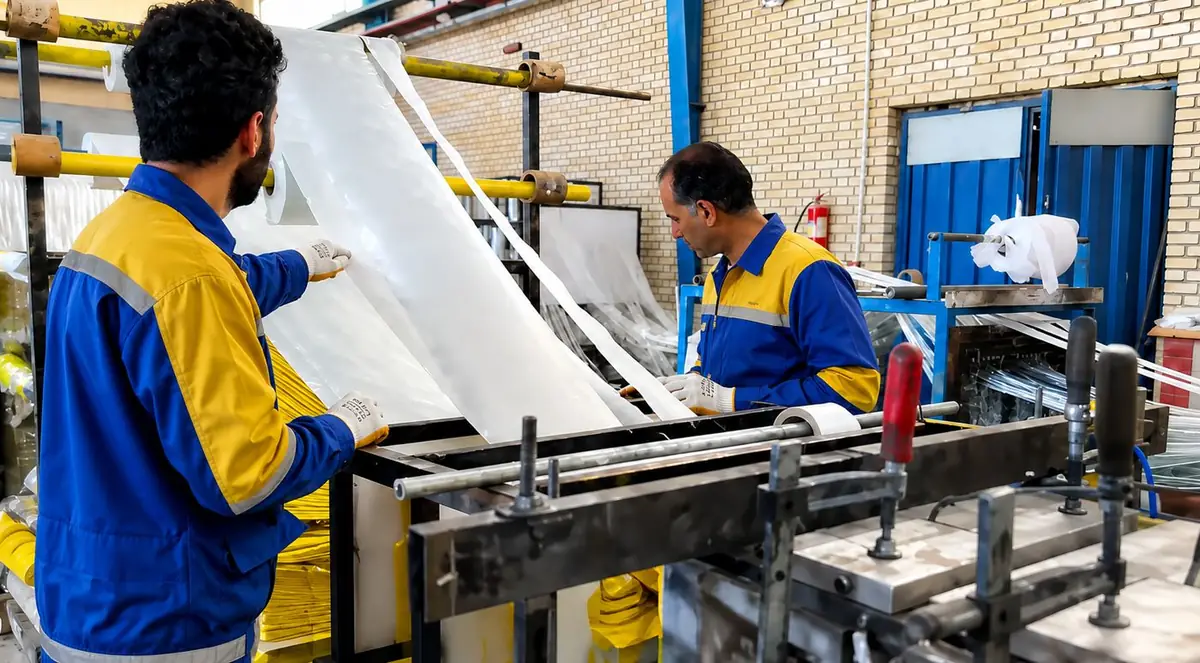
At Nabak Composite, composite products are made by pultrusion with an engineered combination of reinforcing fibers: glass fiber roving for longitudinal strength and stiffness, CFM or stitched mat for transverse strength, and tissue for surface quality and resistance to UV and corrosion. The fiber layout and content are designed specifically for each section so that the final product matches the project's loading requirements exactly. For details of the process, read Nabak Composite's article on the pultrusion manufacturing method.
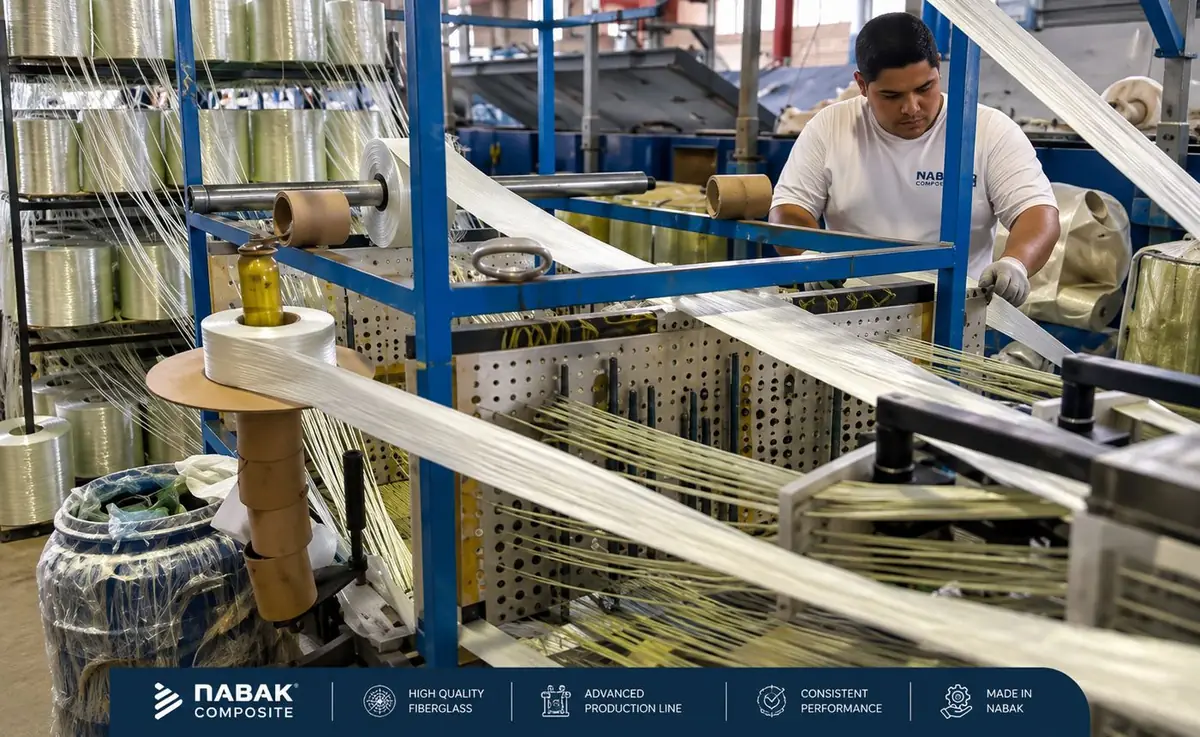
Nabak composite products made with these fiberglass reinforcements include:
In all these composite products — from composite beams and channels to composite flat bars, composite wire, composite grating and fiberglass cable trays — the ratio of glass fiber to resin matrix is set so that the required mechanical properties are achieved with the lowest weight and the greatest durability.
Frequently asked questions about composite fibers
Which fiber is most widely used in composites?
E-glass fiber (fiberglass) is the most widely used reinforcing fiber in the composites industry because of its reasonable price, good mechanical properties and electrical insulation, accounting for more than 90 percent of fiber consumption.
What is the difference between glass fiber and glass wool?
Both are made from silicate glass, but glass fibers are continuous, long and of uniform diameter and are used to reinforce composites, whereas glass wool consists of short, uneven fibers and is used for thermal and acoustic insulation.
What is the difference between chopped strand mat (CSM) and woven fabric?
In CSM, chopped fibers are spread randomly and give almost isotropic properties; in woven fabrics, continuous fibers are woven in two perpendicular directions and have much higher strength in those directions.
What does tex mean for roving?
Tex is the weight in grams of 1000 m of fiber strand; for example, 4800 tex roving means 1000 m of it weighs 4800 g.
Is carbon fiber better than glass fiber?
Carbon fiber has much higher specific stiffness and strength but costs several times more and conducts electricity; glass fiber is the most economical choice for most industrial, insulating and corrosion-resistant applications.
Is needle mat the same as chopped strand mat?
In the Iranian market, "felt mat", "needle mat" and CSM are different names for the same product: short chopped glass strands spread randomly and bonded with a binder. Needle-punched fabric is a different product whose fibers are mechanically entangled instead of bonded.
Summary
Reinforcing fibers are the heart of every composite, and knowing the types of fiber is the key to designing a light, strong and durable product. Glass fiber, with its reasonable price, insulating properties and range of grades, is the first choice for most industrial applications; carbon fiber is used for structures where stiffness and low weight are the priority, and aramid and polyethylene fibers for energy absorption and impact resistance. Alongside material, the form of the fiber (roving, chopped strand mat, CFM, tissue, woven fabrics, 3D weaves or chopped fibers) must suit the manufacturing method and load path. For technical advice on choosing the right composite product for your project, contact the Nabak Composite team.

This article was prepared by the technical team of Nabak Composite, a manufacturer of glass-fiber-reinforced composite products.