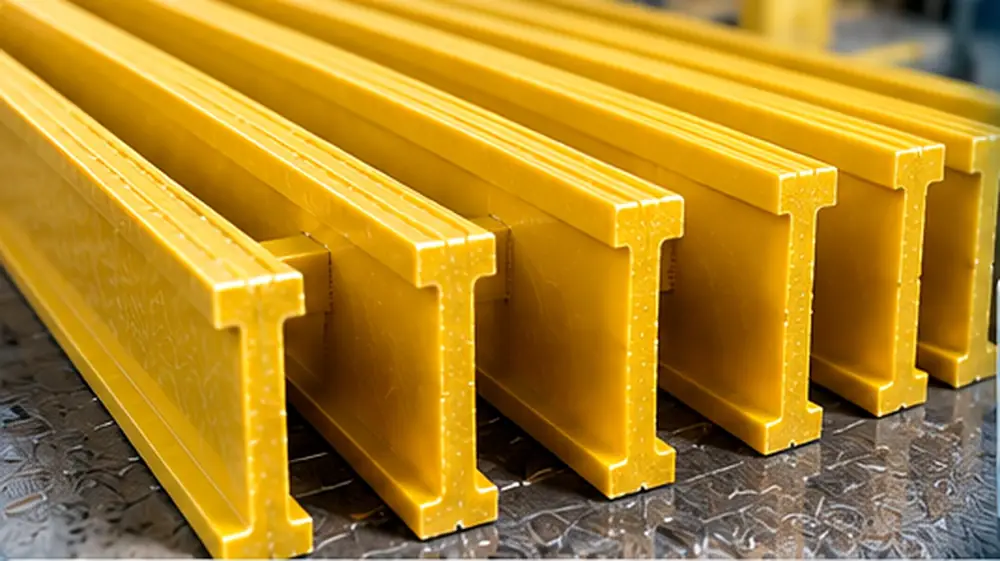
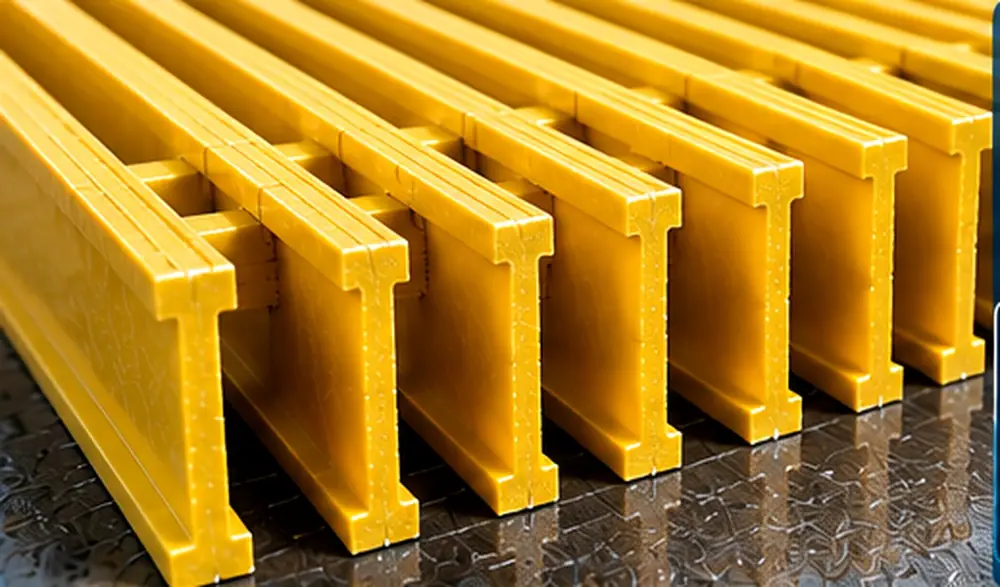
What are pultruded products, and why are they so widely used?
Pultrusion is a continuous production method in which resin-impregnated glass fibers are pulled through a heated die to produce a profile with a constant cross-section, uniform quality and any length. This method produces all kinds of composite profile sections, including composite tubes, composite rebar, fiberglass angles, composite box sections, polymer channels, composite flat bars, composite I-sections, cable tray components and many other custom sections. Read the full process description in the article pultrusion production from A to Z.
The secret of the wide use of pultruded products is that an FRP profile combines several properties that no traditional material has together: light like aluminum, corrosion-resistant like plastic, insulating like dry wood, and stronger than structural steel in the longitudinal direction.
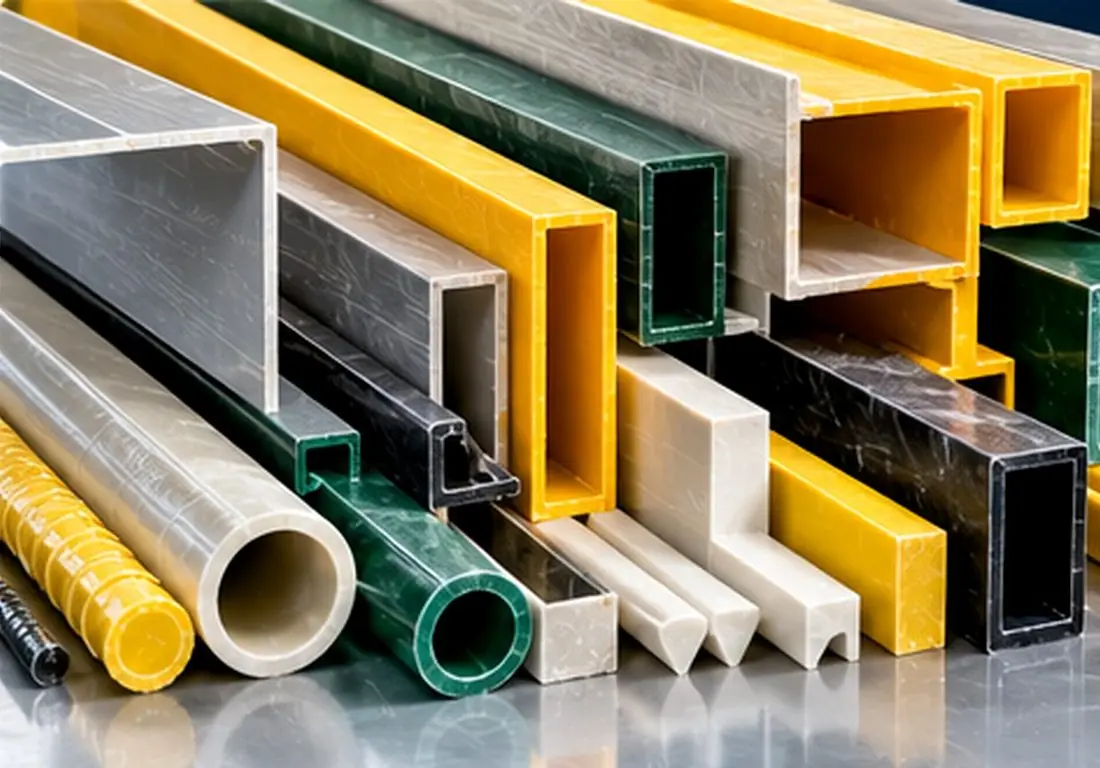
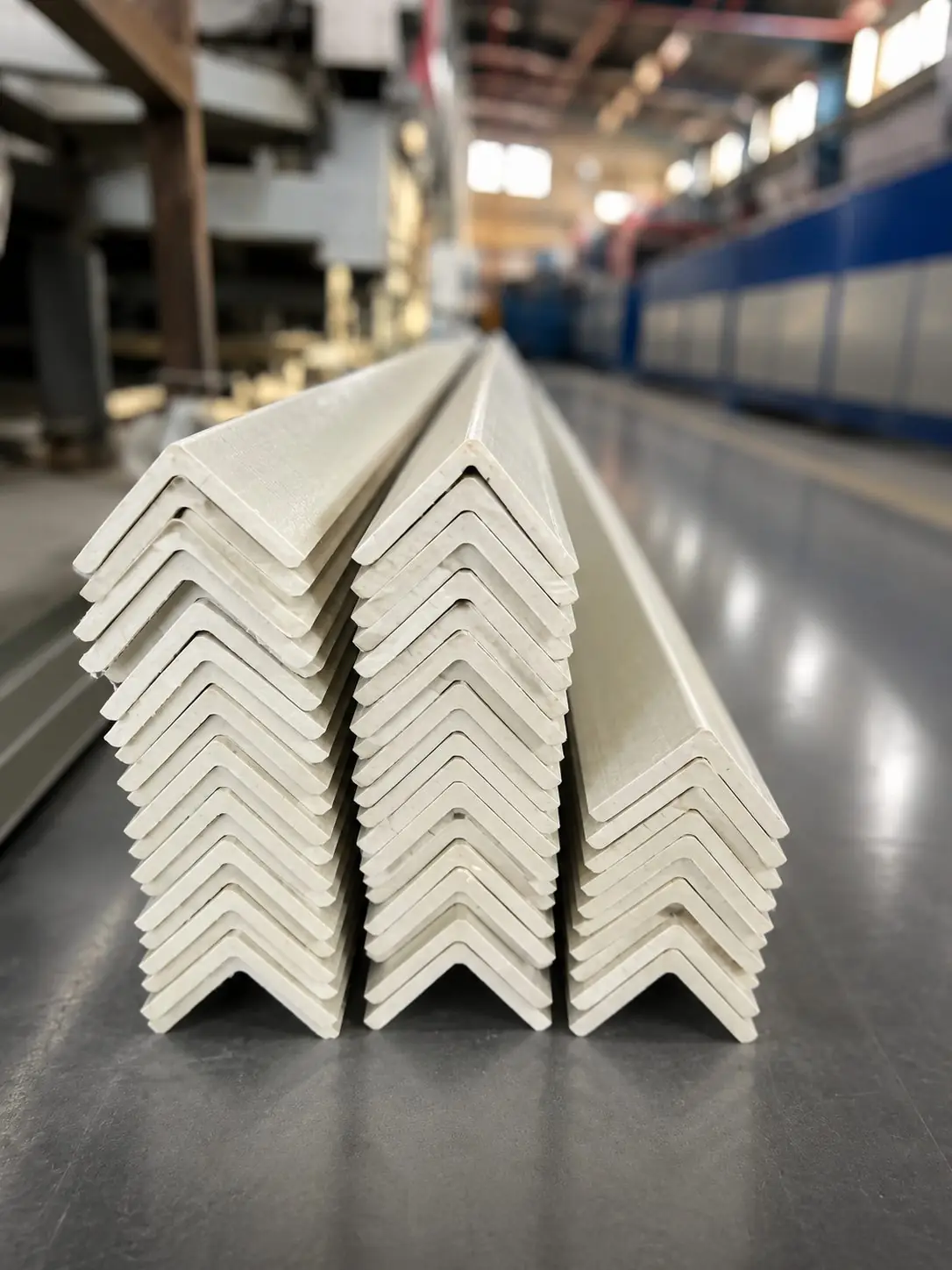
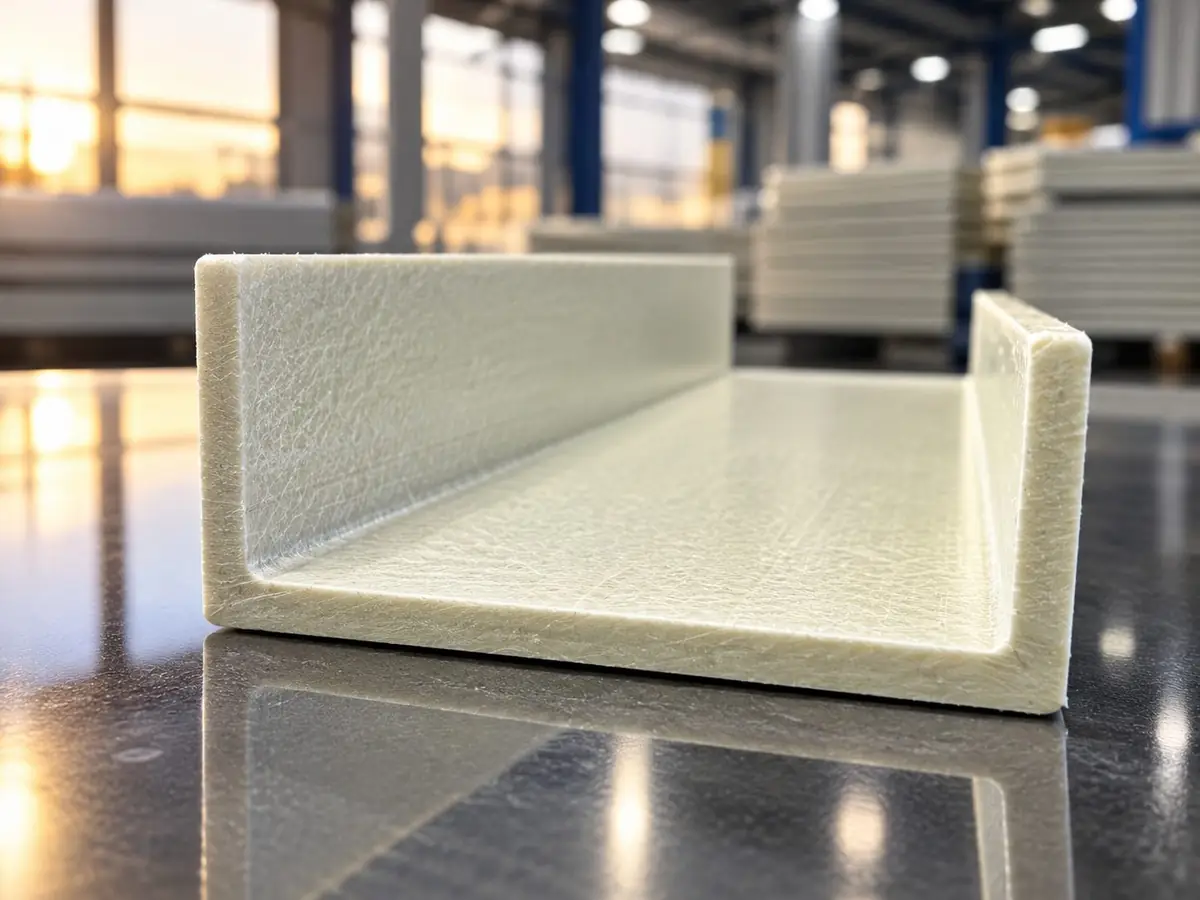
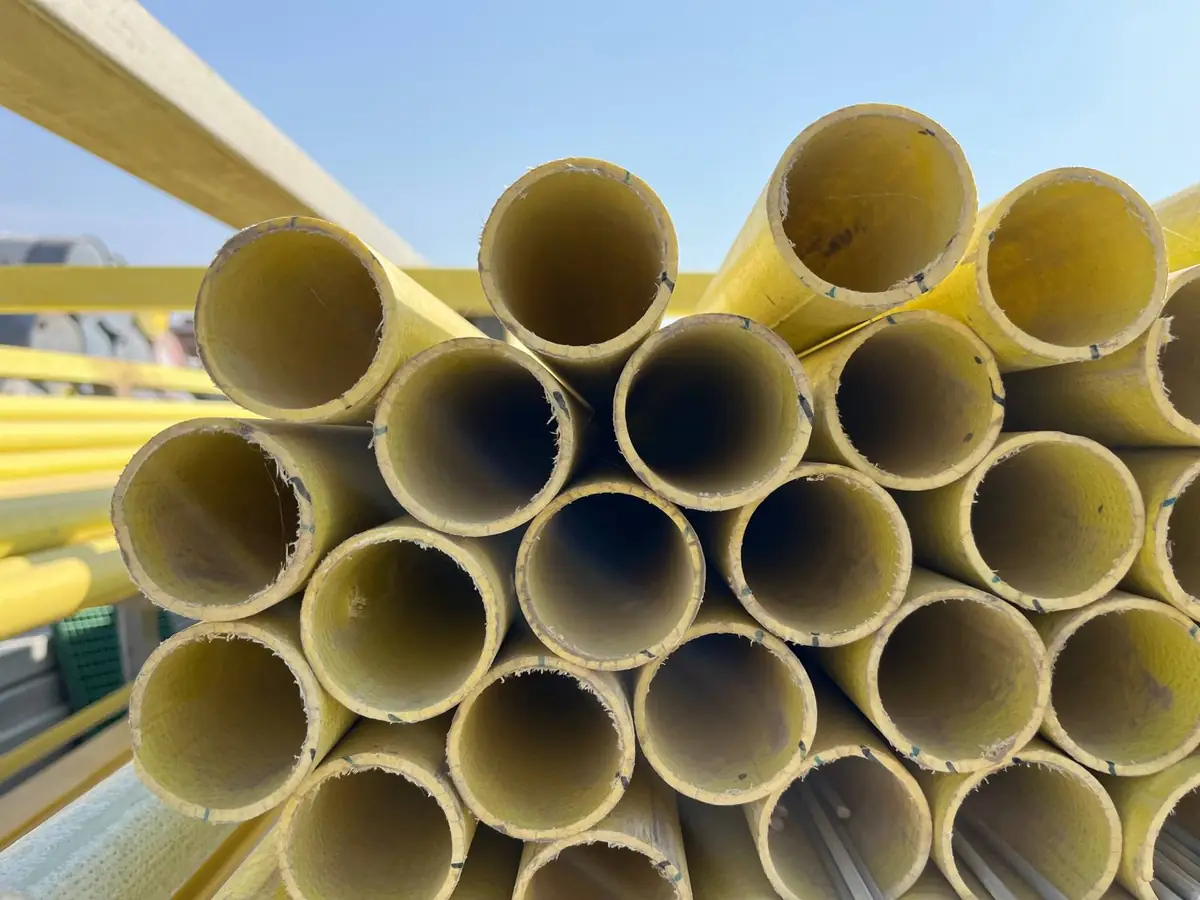
There are three common ways to classify the applications of pultruded products, and we review all three below: a) by the main properties of the profiles, b) by the consuming industries and c) by type of use.
a) Market segmentation by the main properties of pultruded profiles
In this classification, the FRP composite products market is divided by the advantage the customer is looking for. The four main advantages of pultruded products are:
1. Electrical insulation
Electrical non-conductivity and transparency to radio waves; the basis of electrical uses: electricians' ladders, cable trays, insulators, cutout fuse tubes, transformer and switchboard insulation.2. Corrosion resistance
No rusting in acidic, alkaline, saline and humid environments; used in water and wastewater treatment, petrochemicals, marine, cooling towers and livestock buildings.3. Light weight
About a quarter of steel and two thirds of aluminum; handling and installation by hand, lower dead load, and suited to portable structures such as ladders and tents.4. High strength
Longitudinal tensile strength of 300 to over 600 MPa; structural use in bridges, platforms, beams and ribbed composite rebar.The chart below shows why pultruded profiles excel in applications where weight matters. The specific strength (strength divided by density) of FRP profiles in the longitudinal direction is more than four times that of structural steel:
Besides these four properties, sound damping makes it possible to build frames for acoustic panels; thermal insulation (thermal conductivity about one 200th that of aluminum), non-magnetic behavior, dimensional stability and through-color have also enabled other specialized uses such as door and window profiles, military equipment and street furniture.
b) Market segmentation by consuming industries
Given the variety of FRP composite products, pultruded products can be said to find applications in almost every industry. The main industries and example applications in each:
c) Classification by type of use
In this classification, each use is introduced specifically — a list that grows longer every day.
1. Access and safety structures: handrails, ladders, stairs, walkways, platforms and bridges
Composite handrails and railings
Railings and guardrails for platforms, walkways and stairs made of composite tube and box section with molded fittings; no painting, no rust, and insulating.Pultruded tube and box section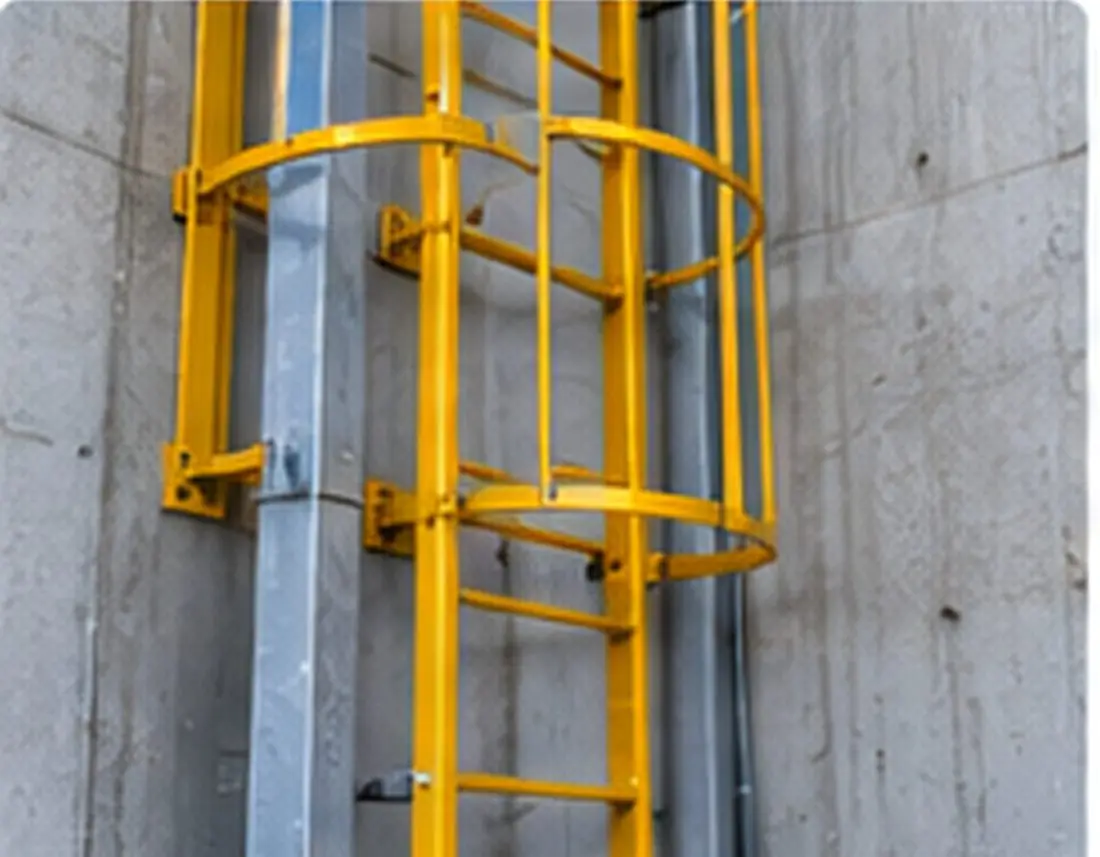
Composite ladders
Fixed caged ladders for tanks and towers, and portable ladders; in electrical use, the only safe option because they are non-conductive.Pultruded channel and tube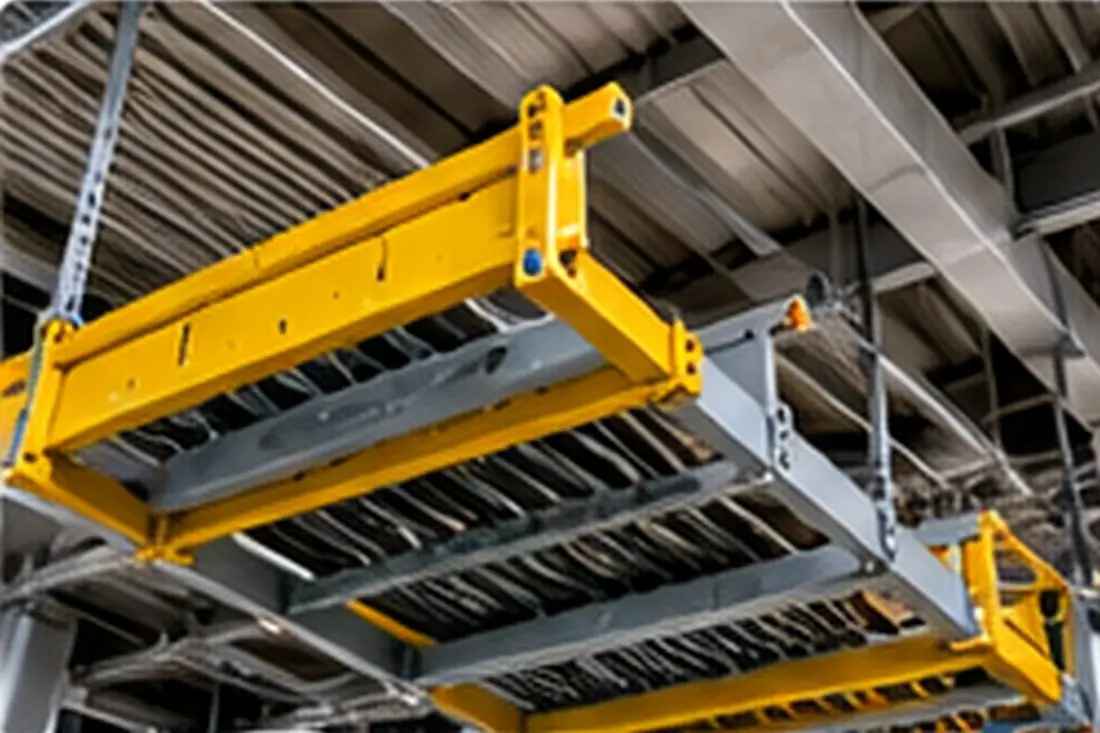
Cable trays and ladders
Cable routes in power plants, refineries, tunnels and marine environments; insulating, light and corrosion-resistant.C-sections and channels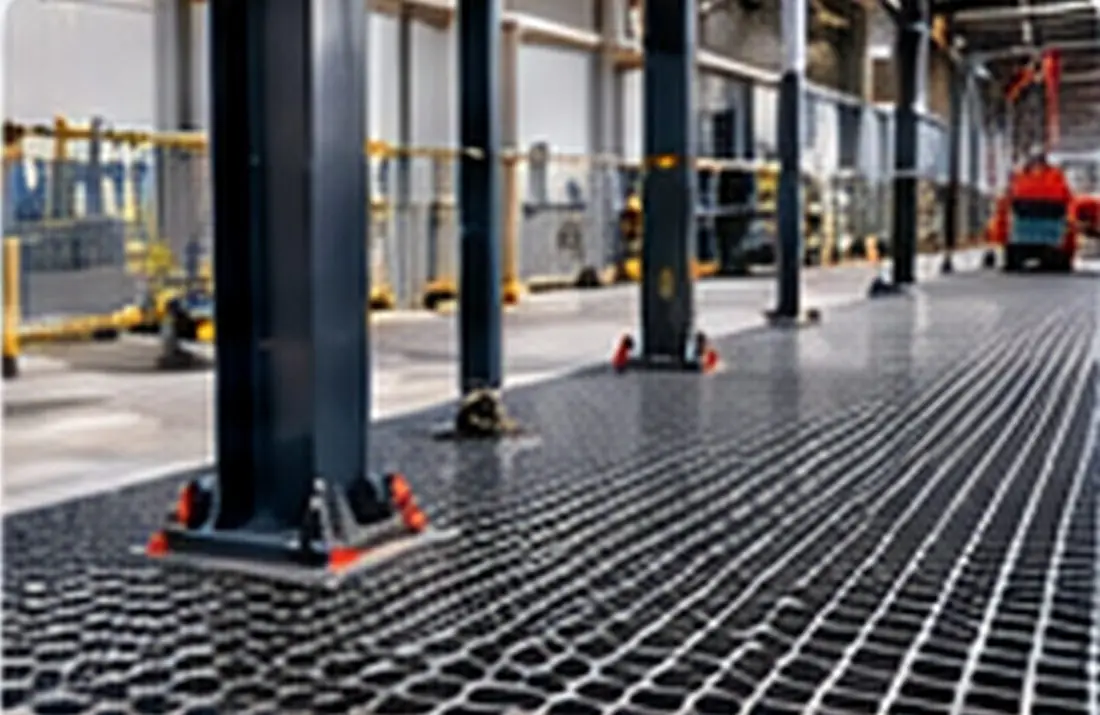
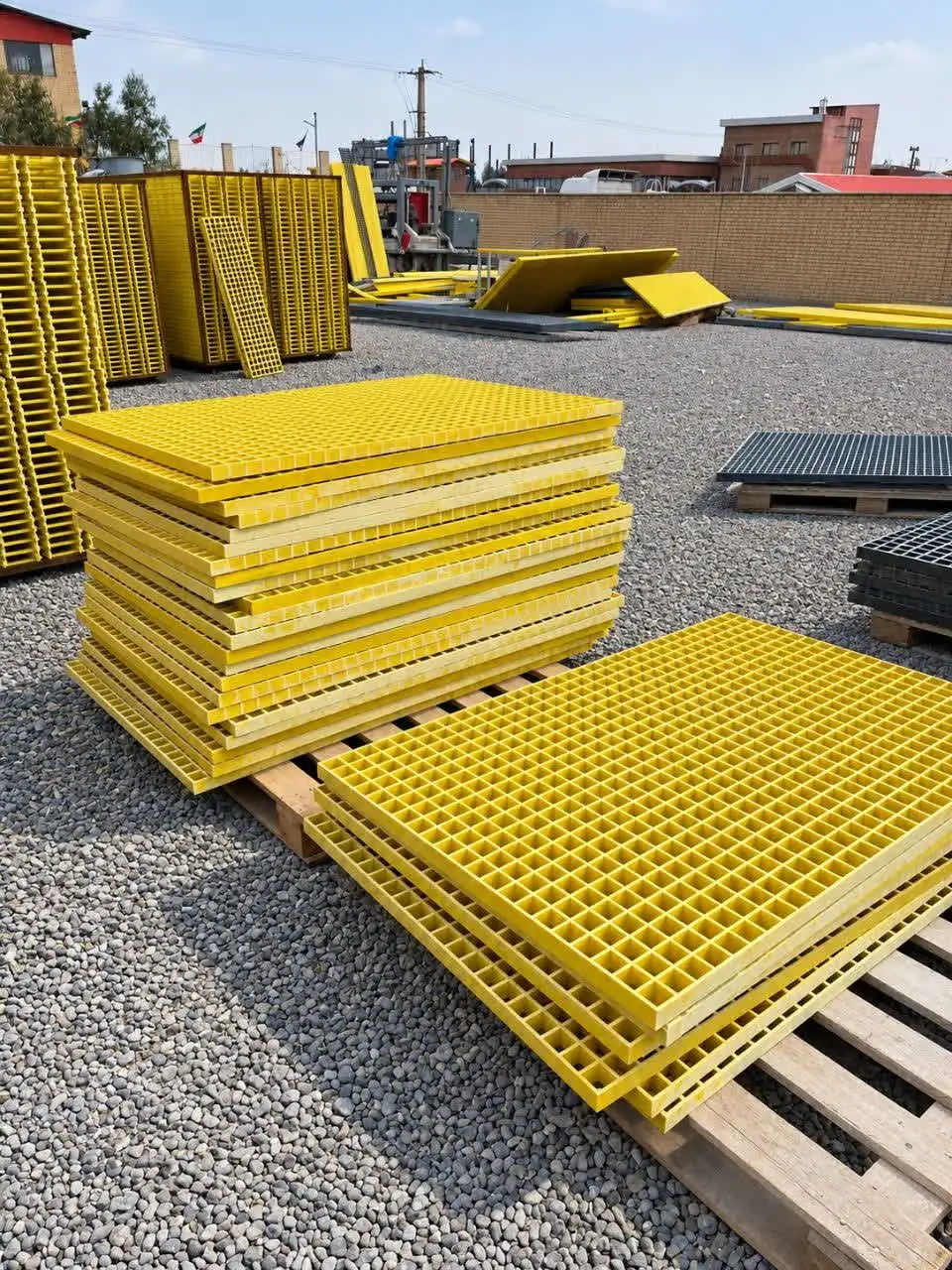
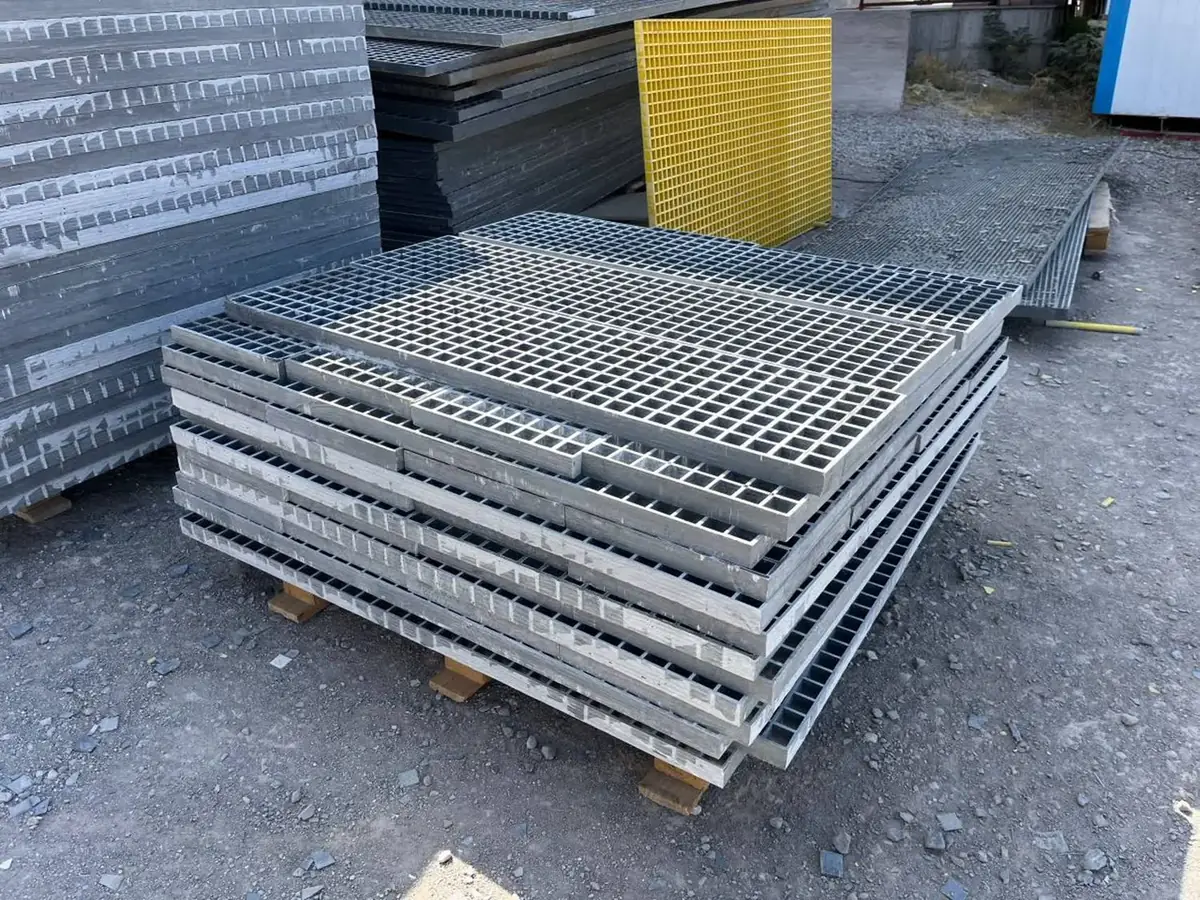
Pultruded flooring
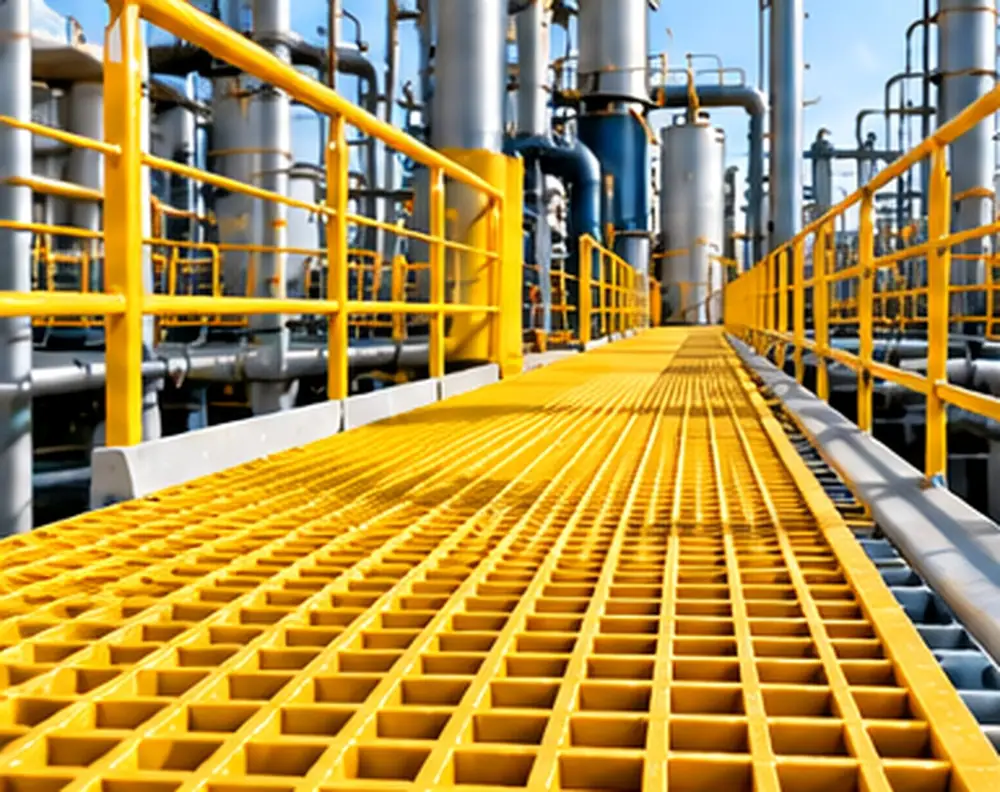
Floor panels of interlocking profiles or pultruded grating; for platform floors, decks and long-span bridges.Pultruded panels and grating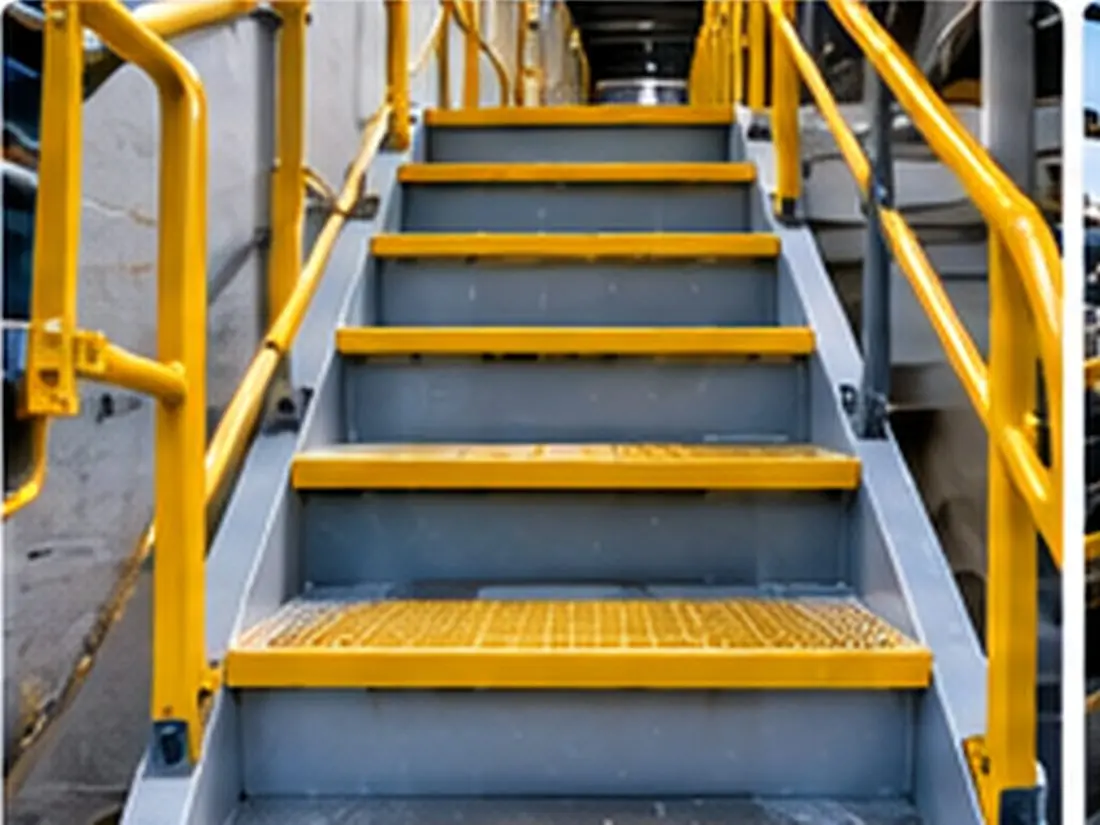
Composite stairs
Stringers of composite channel, grating treads and tubular railings; a complete corrosion-proof structure for access to equipment.Channel + grating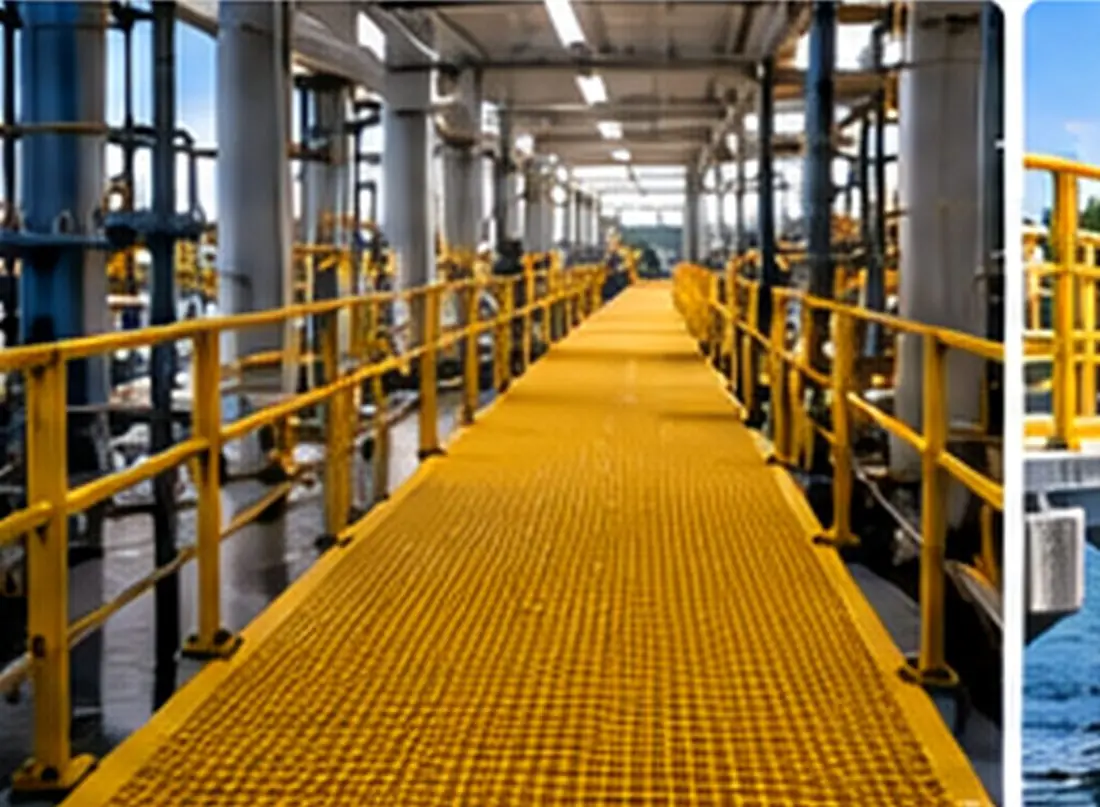
Composite walkways and platforms
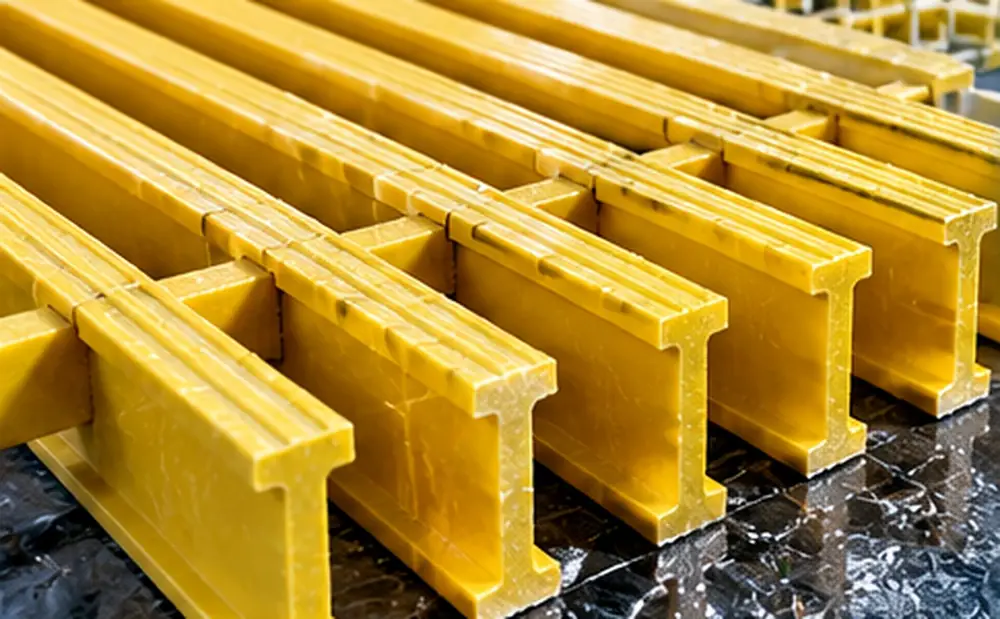
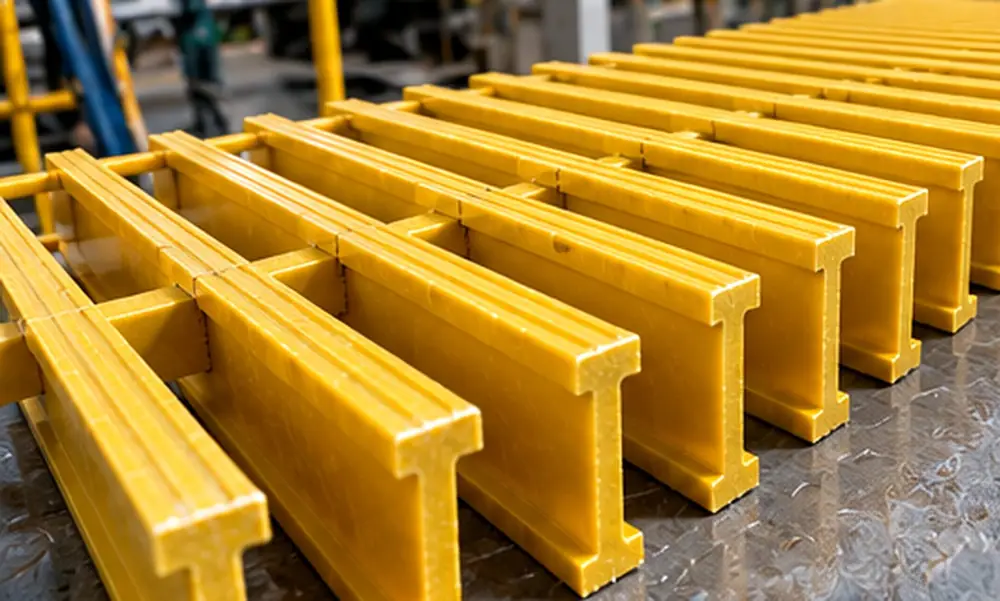
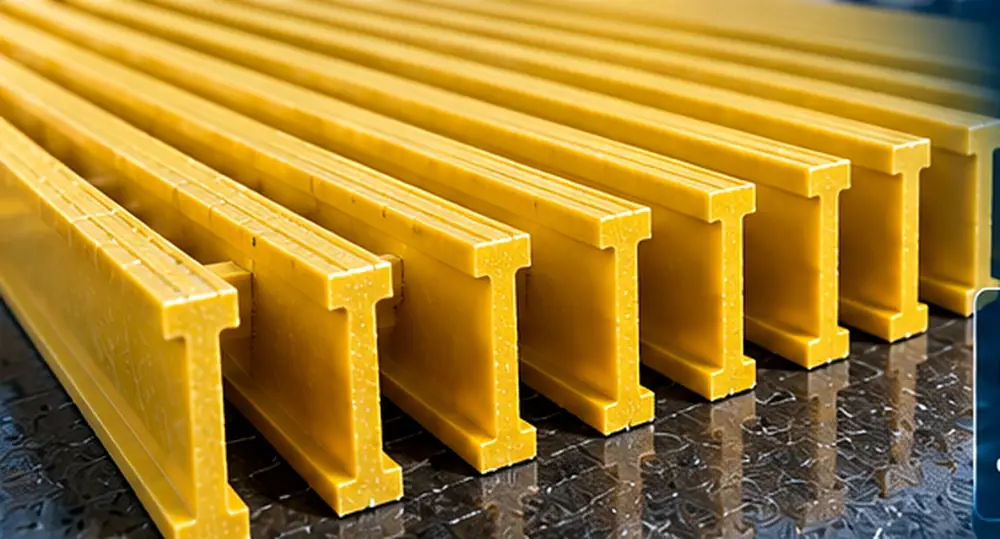
Access walkways in industrial halls and treatment plants; I-beam and composite box section supports with grating floors.I-beam, box section, grating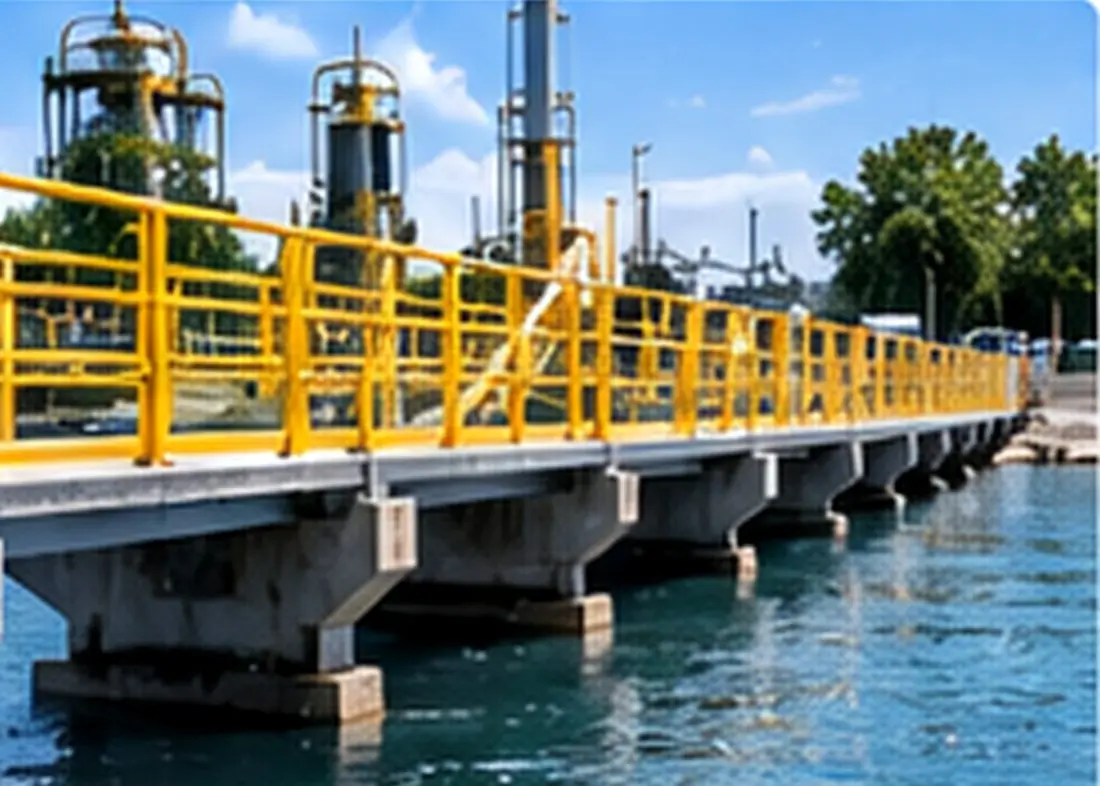
Bridges
Footbridges, industrial access bridges and jetties; quick installation with a light crane and long life near water.I-beams and large profiles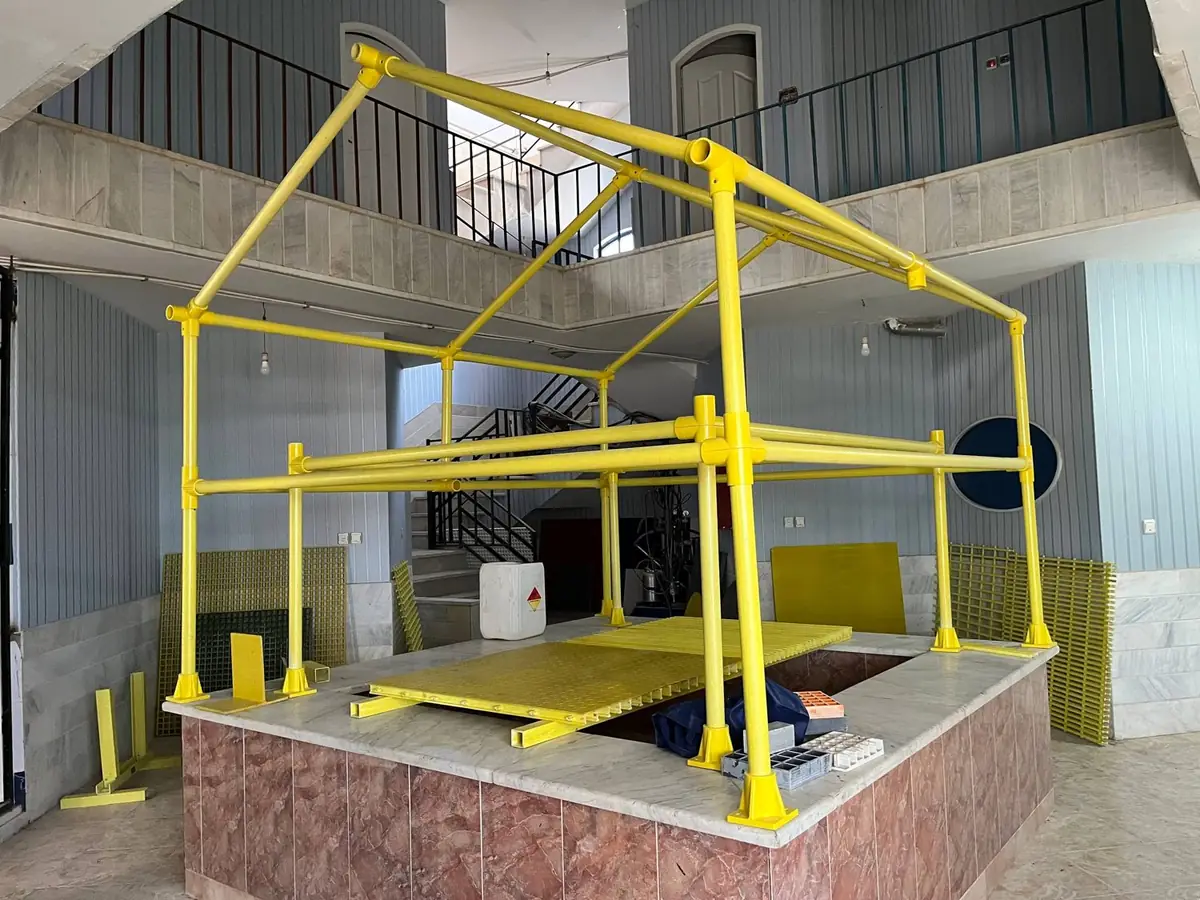
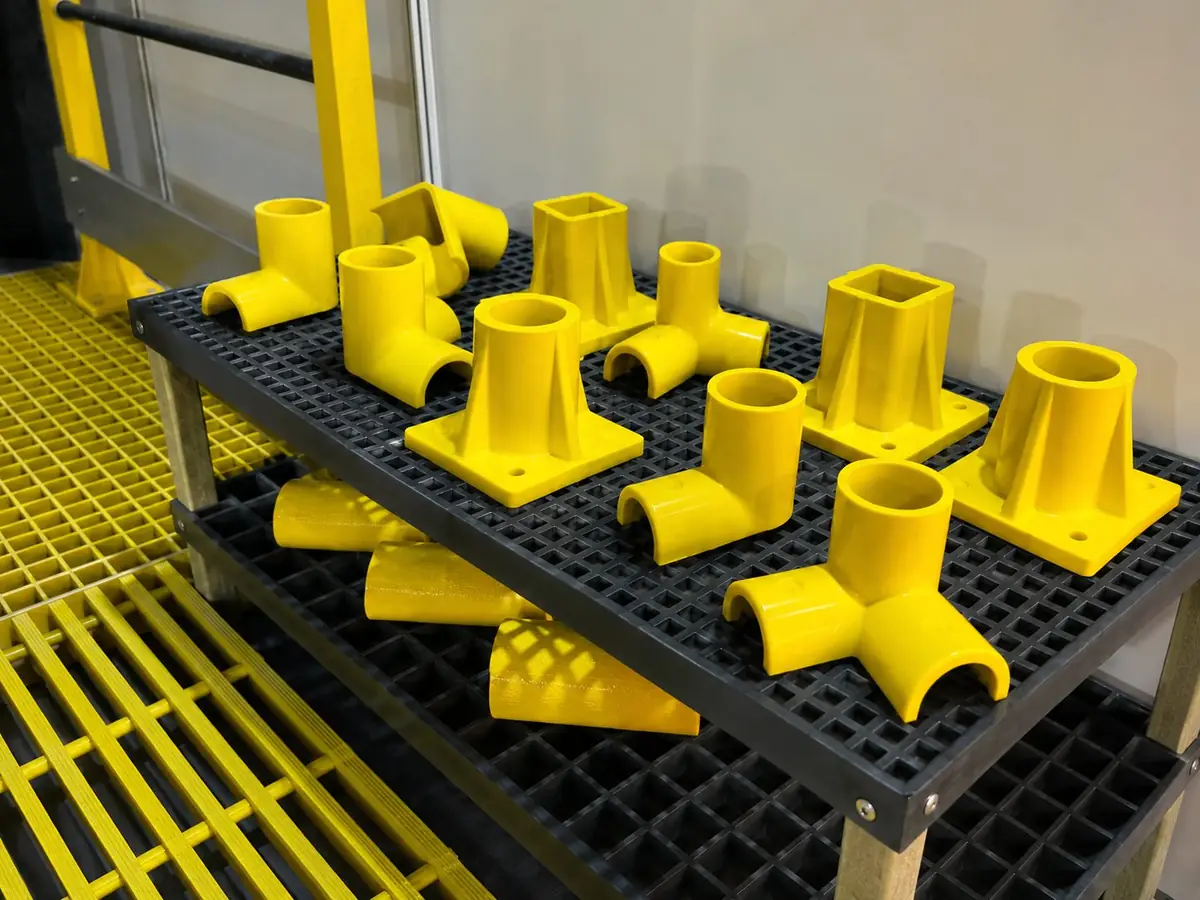
In composite handrails, pultruded tube or box section is assembled with molded fittings and adhesive or rivets. Because no welding is needed, installation in flammable environments can proceed without a hot work permit — an important advantage in refineries and petrochemical plants.
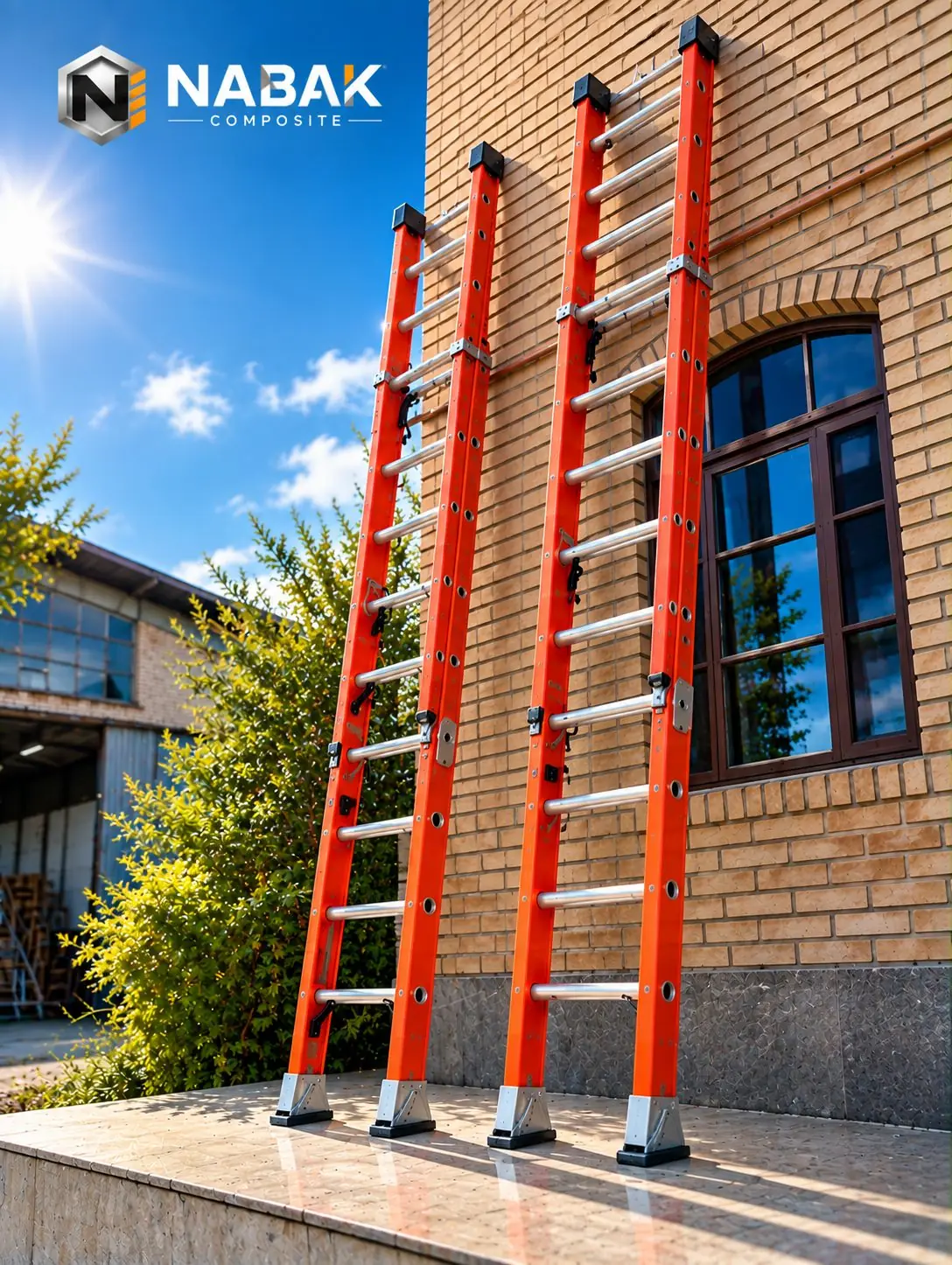
Composite ladders are used in two groups: ordinary ladders, for their light weight and corrosion resistance, and electrical ladders, for their insulation and non-conductivity. The ladder rail is usually a pultruded polymer channel and the rungs are aluminum or composite tube.
2. Building, agricultural and urban structures
Support structures
Structures for greenhouses, slaughterhouses, livestock buildings and solar panels; resistant to moisture, ammonia, manure and disinfectants.Box section and angle
Building facades and louvers
Shading louvers and profile facades; thermal expansion close to glass and lasting color.Custom profiles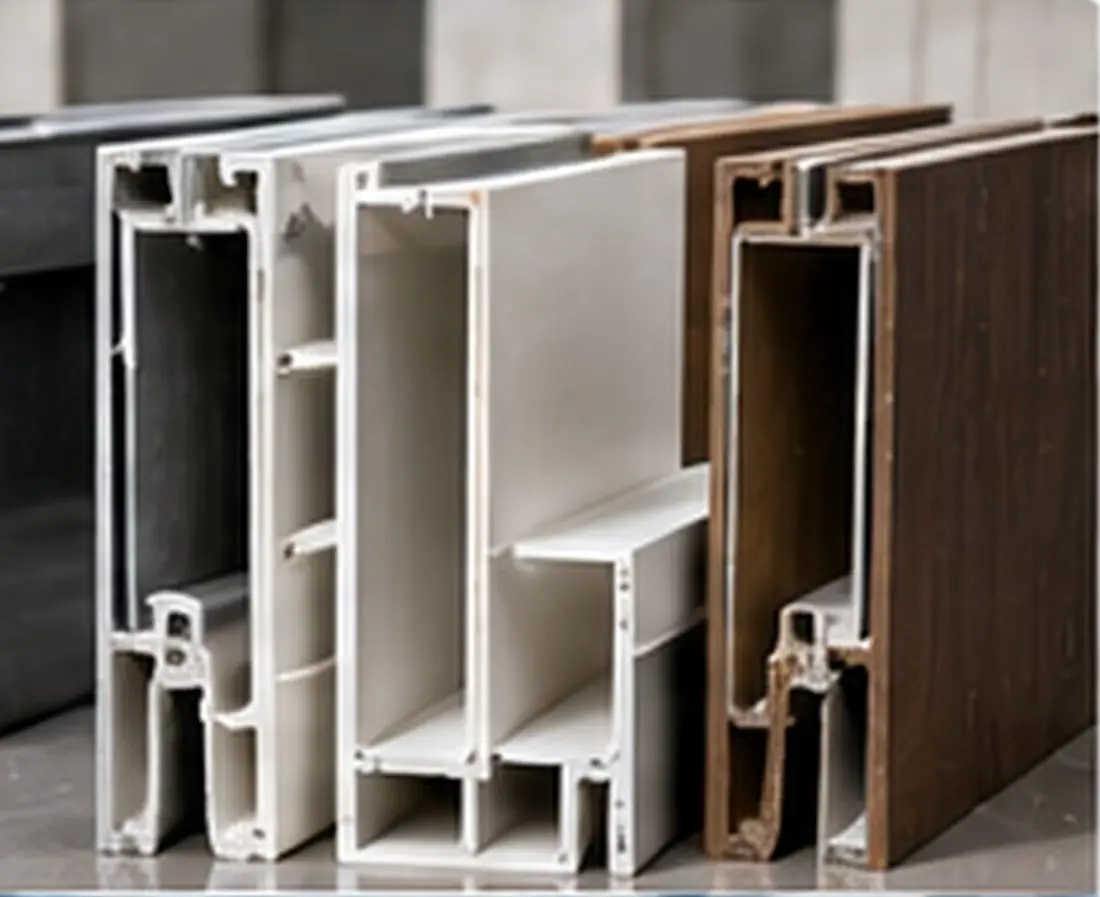
Door and window frames
Pultruded door and window profiles with very low thermal conductivity and high dimensional stability; no deformation in heat.Hollow profiles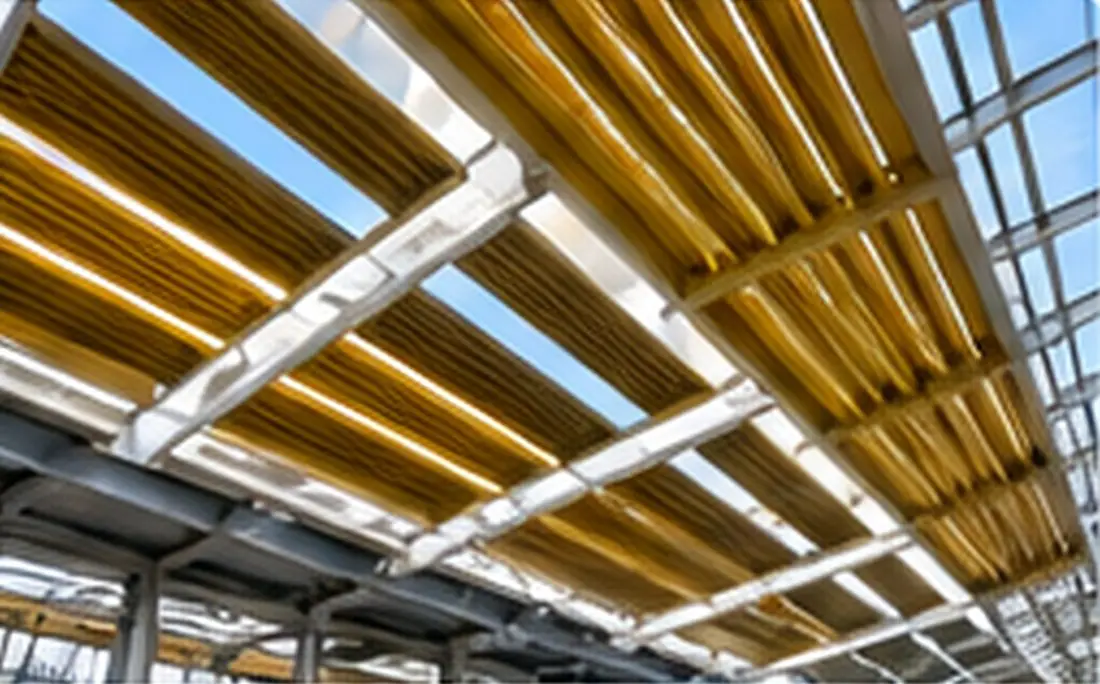
Canopies and false ceilings
Carport canopies, industrial false ceilings and pergolas; light and sun-resistant with UV additive.Flat bar and box section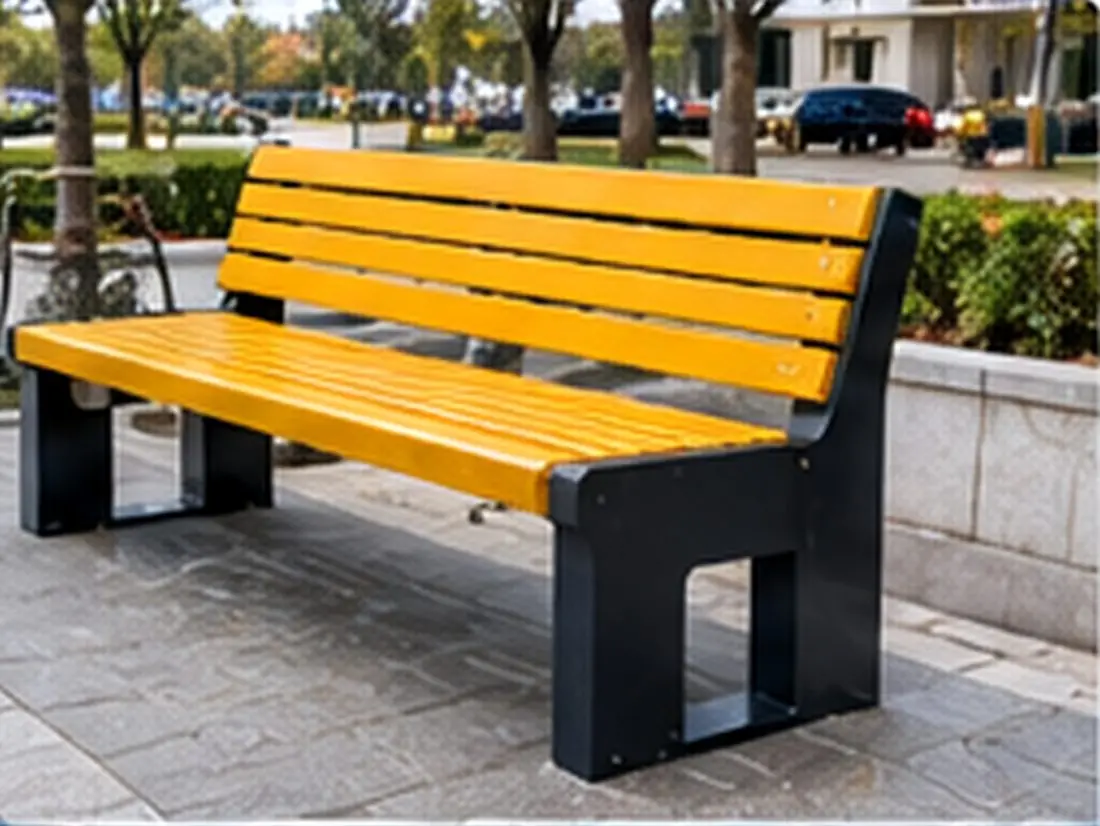
Street furniture
Benches, signs, sign posts, guardrails and highway delineators; theft-proof (no scrap value) and no periodic painting.Flat bar and profile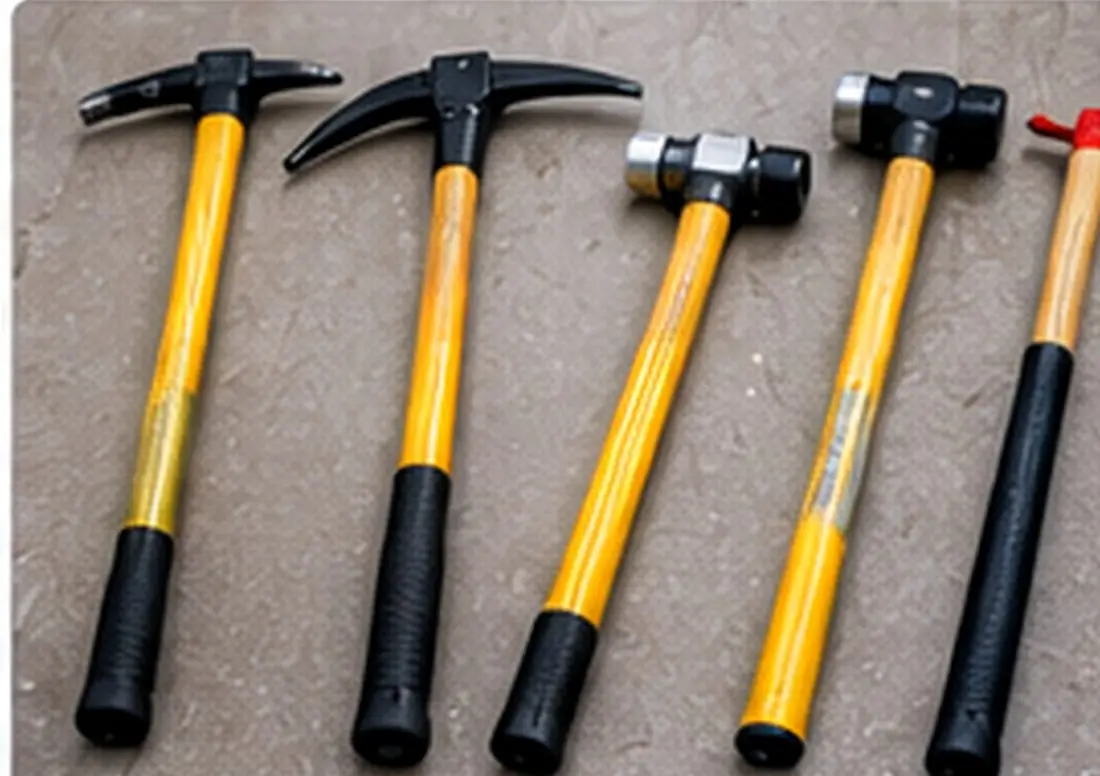
Composite tool handles
Handles for shovels, pickaxes, hammers, axes and garden shears; light, vibration-absorbing and electrically insulating.Pultruded rod and tube3. Electrical, utility and special structure applications
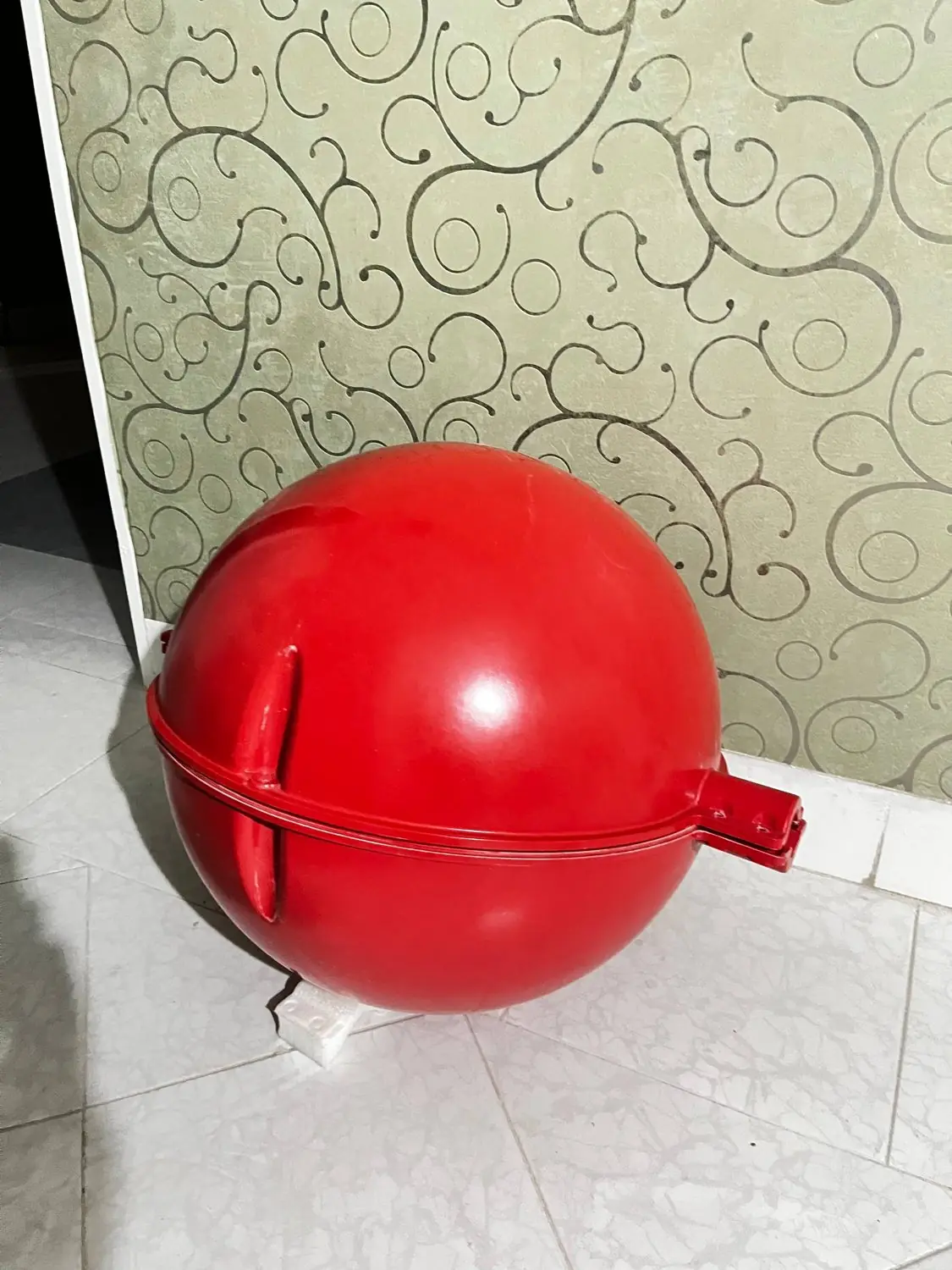
- Composite lighting columns and utility poles: composite utility poles replace concrete and wooden poles in coastal and humid areas; light, insulating and free of rot (unlike wood) or rust (unlike steel); they also behave more safely in vehicle collisions.
- Structural supports in cooling towers: composite cooling towers have columns, beams and bracing of pultruded profiles in an environment constantly in contact with hot water and steam, replacing wood and galvanized steel.
- Ribbed composite rebar: concrete reinforcement in coastal structures, bridges and chloride environments; full description in the article GFRP composite rebar technical specifications.
- Insulating stools: composite insulating stools provide an insulated platform for electricians working on switchboards and live equipment.
- Insulator rods and cutout fuse tubes: cores of composite insulators for transmission lines and insulating fuse tubes.
- Electrical insulation for transformers and switchboards, and insulating support rods in trolleybuses and urban metros; in trolleybuses, these rods isolate the chassis from the power supply system.
4. Consumer goods, sports goods and tools
From flagpoles to paddle shafts, small-diameter pultruded rods and tubes are the raw material of many everyday goods:
In tool handles, pultruded profiles absorb impact vibration better than steel, do not crack like wood, and are electrically insulating — important when working near buried cables.
Other applications of pultruded products
Pultruded products are also used in the following:
| Group | Applications |
|---|---|
| Urban and road | Composite signs (direction and municipal signs), composite sign posts, raised highway delineators (flexible guide posts), entry and exit gate arms (light gate arms that suffer no serious damage when hit by a vehicle) |
| Electrical | Insulator rods, cutout fuse tubes, composite bolts and nuts, transformer and switchboard insulation |
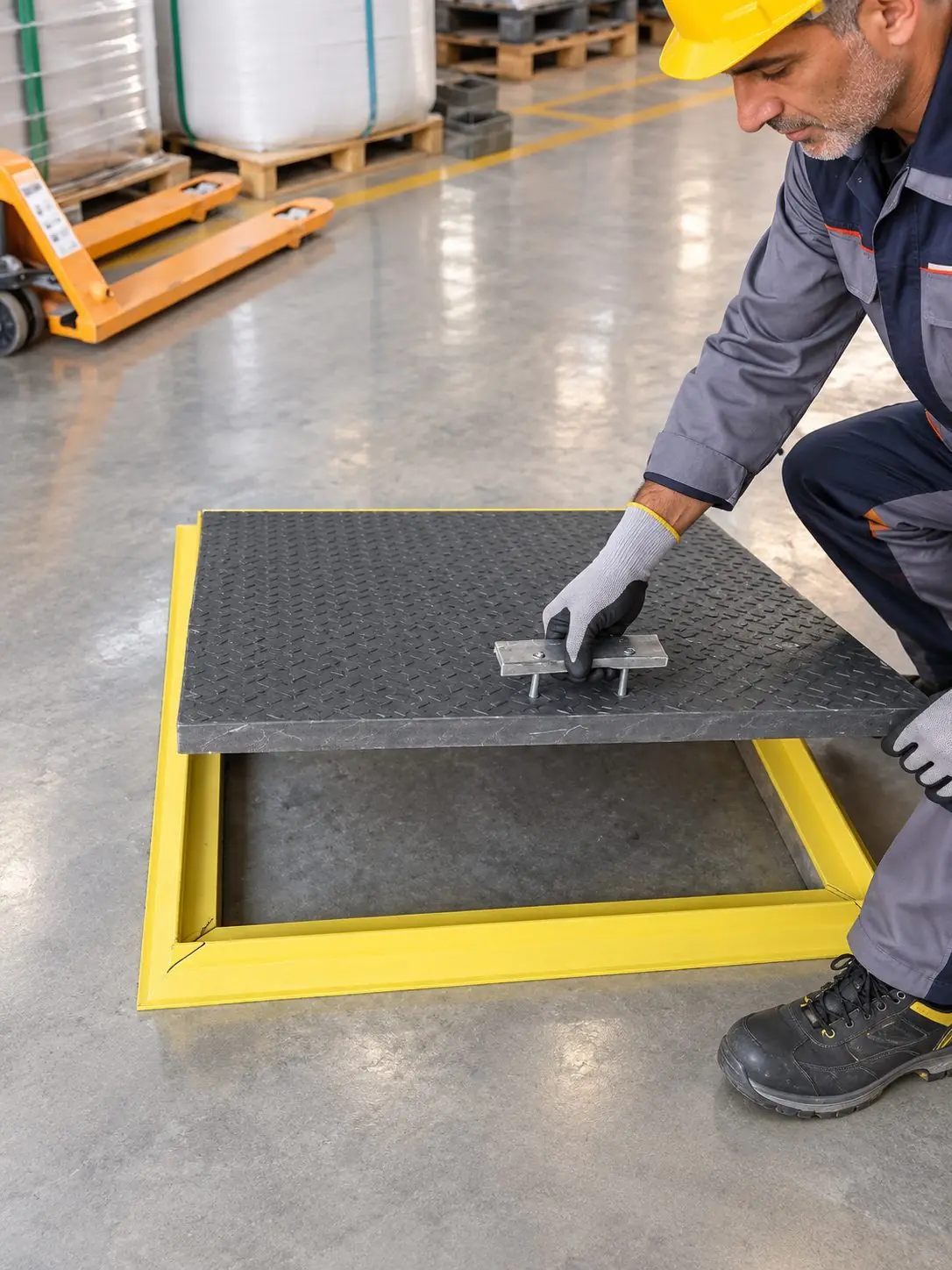
| Water and wastewater | Trash racks in water and wastewater treatment, hatch covers |
| Fencing and grounds | Composite fence posts (insulating fences around electrical substations), water park structures, coastal protection fenders |
| Industrial and logistics | Transport pallets, acoustic panels for highway noise walls, thermal insulation panels, composite ballistic panels |
The market for pultruded composite products: trends and drivers
The market for FRP composite products has grown steadily over the past two decades, and the share of pultruded profiles is increasing. The three main drivers of this growth are:
- Life-cycle cost: the initial price of FRP profiles may be higher than steel, but eliminating periodic painting, corrosion repairs and production shutdowns dramatically reduces total life-cycle cost in corrosive environments (chemical, food, mining and marine industries).
- Electrical safety: in the power grid, composite utility poles, insulating stools, ladders and cable trays eliminate the risk of electric shock; that is why electrical applications form the largest segment of the pultruded products market.
- Light, fast construction: in civil engineering and construction, the light weight of profiles allows installation without heavy cranes, from footbridges to cooling towers.
Alongside traditional industries, new markets such as the nuclear industry (because of non-magnetic properties), the textile industry (resistance to dyes and chemicals), military and security uses and aerospace have also turned to pultruded composite products. The use of pultruded products in sports goods such as golf club shafts, sail battens and flagpoles is also a growing consumer segment of this market.
Pultruded profile selection table by application
For the most common applications, the table below summarizes the main profile, the deciding property and the technical selection note:
| Application | Main pultruded profile | Decisive property | Technical note |
|---|---|---|---|
| Handrails and railings | Ø50 tube and 50×50 box section | Corrosion, no hot work | Check horizontal handrail load |
| Composite ladders | Polymer channel | Electrical insulation | UV additive and surface veil |
| Cable trays and ladders | C-sections and channels | Insulation and corrosion | Fire-retardant resin |
| Platform flooring | Pultruded grating and panels | Strength and anti-slip | Load-bearing bars perpendicular to the beams |
| Stairs and platforms | Channel and I-beam | Strength and corrosion | Deflection criterion governs |
| Footbridges | Large I-beams and pultruded grating | Light weight and durability | Vibration and deflection control |
| Cooling towers | Box section, I-beam and angle | Corrosion in hot water | Vinyl ester or isophthalic resin |
| Greenhouses and livestock buildings | Box section and angle | Ammonia resistance | Stainless steel bolted connections |
| Lighting columns | Tapered tube or box section | Insulation and light weight | Check wind load |
| Tool handles | Small rod and tube | Vibration absorption, insulation | High fiber content |
| Doors and windows | Custom hollow profiles | Thermal insulation | Dedicated die |
| Concrete reinforcement | Ribbed rebar | Corrosion and non-magnetic | Design to ACI 440 |
Nabak Composite pultruded products
As a manufacturer of FRP composite products with pultrusion lines, Nabak Composite produces standard and custom profiles in various colors and resins, and supports clients in designing and building complete composite structures, from railings and stairs to platforms and cable trays.
Frequently asked questions about pultruded product applications
What are pultruded products used for?
Pultruded products such as composite angles, box sections, channels, I-beams, flat bars, tubes and rebar are used in handrails and railings, ladders, cable trays and ladders, stairs, walkways and platforms, bridges, greenhouse and livestock structures, cooling towers, lighting columns and utility poles, tool handles, sports goods, door and window frames, insulators and electrical equipment, and dozens of other applications.
Why are pultruded profiles replacing steel?
A pultruded FRP profile weighs about a quarter as much as steel, does not rust, is electrically and thermally insulating, and needs no painting or maintenance. Its specific strength (strength to weight) in the longitudinal direction is several times that of structural steel.
Is a composite ladder safe for electrical work?
Yes. The rails of composite ladders are made from non-conductive pultruded glass fiber profiles. That is why the fiberglass ladder is the common standard for electricians and work near live equipment, provided its surface is kept clean and dry.
Which industries use the most pultruded products?
The oil, gas and petrochemical industries, water and wastewater treatment, electricity and power generation, cooling towers, building and architecture, marine and ports, agriculture and livestock, rail transport and renewable energy are the largest users.
Are pultruded products durable outdoors?
Yes. With UV-absorbing additives, a surface veil and, if needed, a polyurethane topcoat, pultruded profiles last for years outdoors without significant loss of properties.
Summary
The applications of pultruded and FRP composite products can be seen from three angles: by properties (electrical insulation, corrosion resistance, light weight and high strength), by industry (from oil and gas and water treatment to cooling towers, agriculture, telecommunications and renewable energy) and by type of use (handrails, ladders, cable trays, flooring, stairs, walkways and platforms, bridges, support structures, lighting columns, tool handles, sports goods, door and window frames and ribbed rebar). Wherever steel rusts, wood rots or aluminum conducts electricity, a pultruded FRP profile is a light, safe and durable alternative, and the list grows longer every day.

This article was prepared by the technical team of Nabak Composite, a manufacturer of pultruded profiles and composite products.