Why is composite grating used more and more widely?
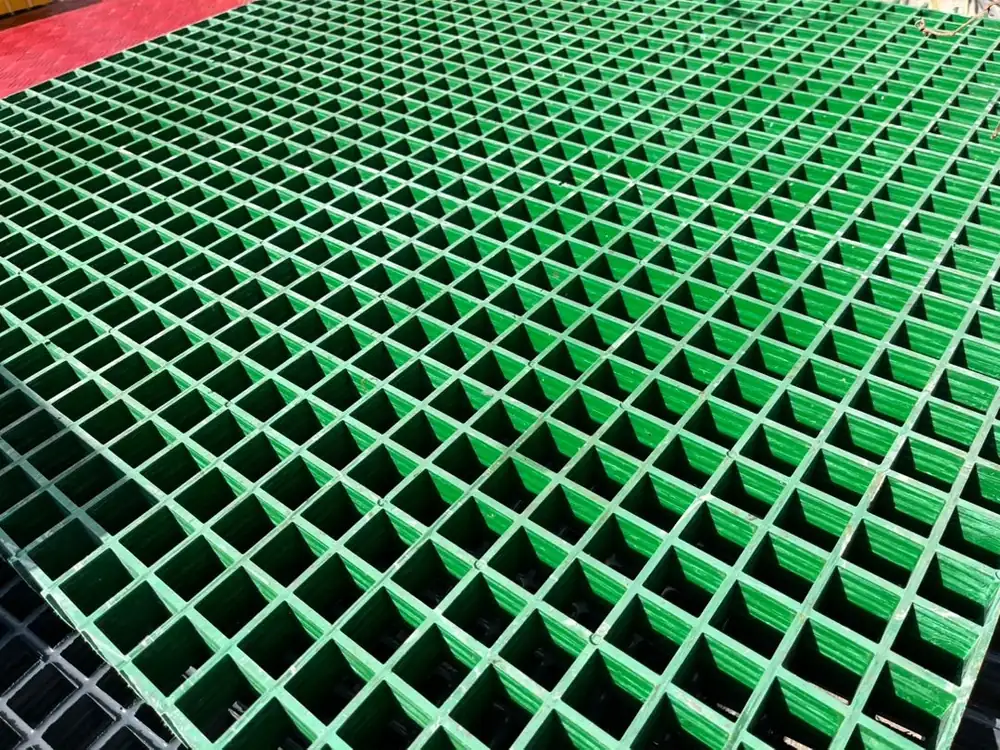
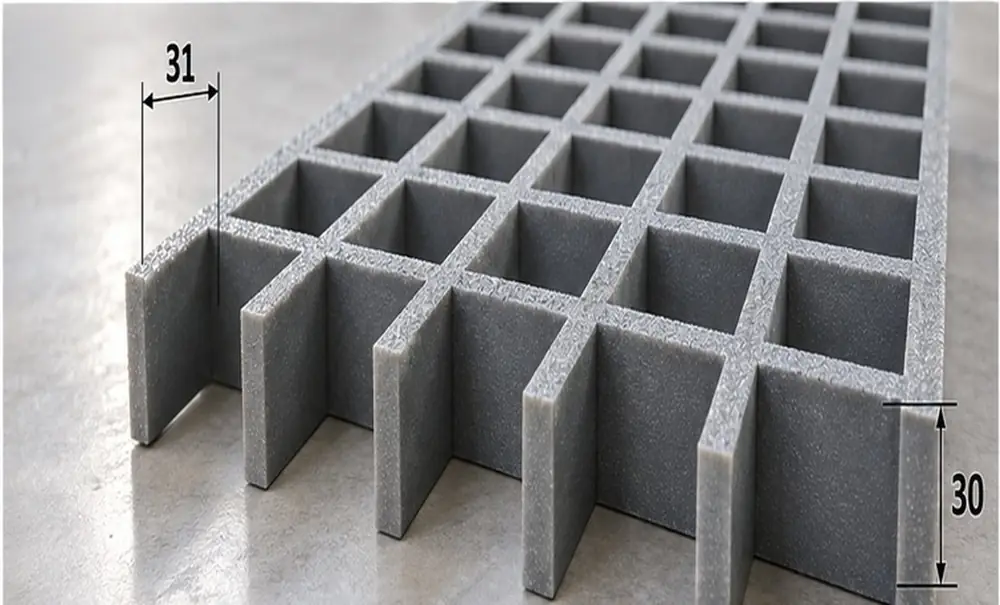
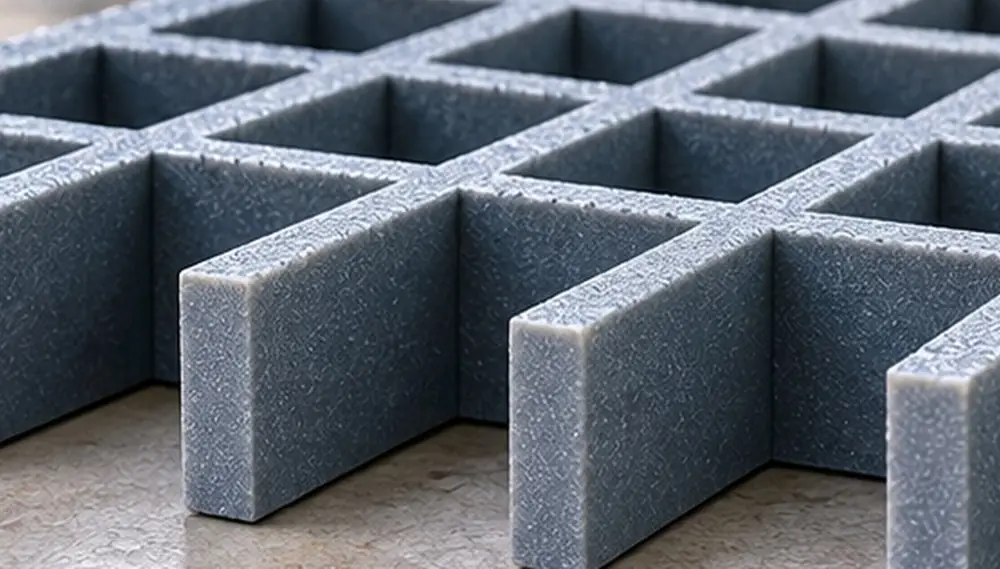
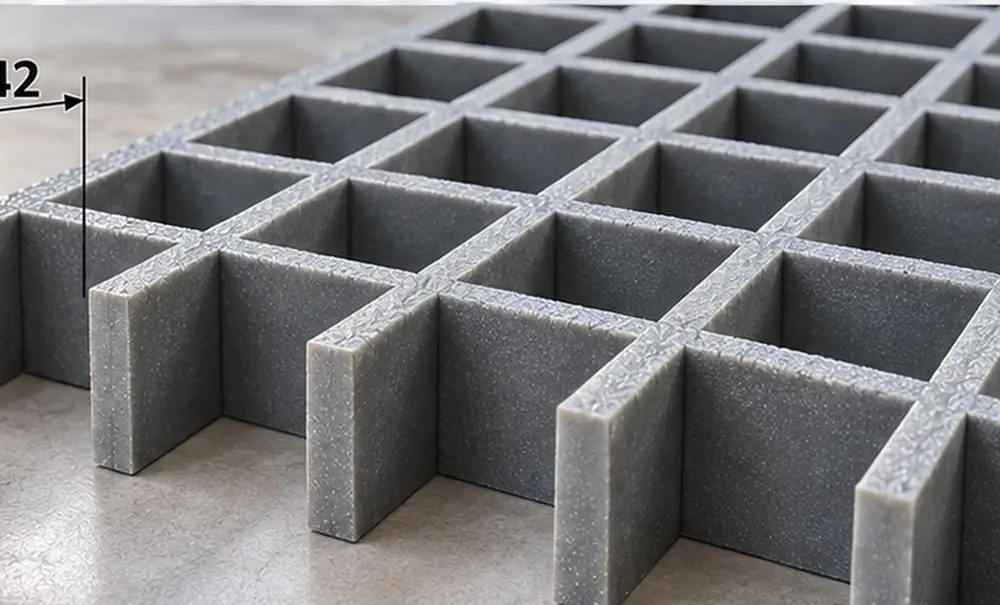
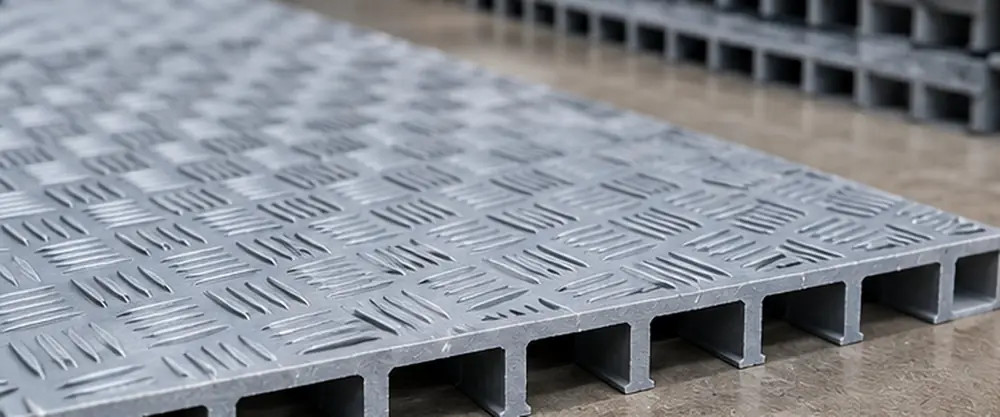
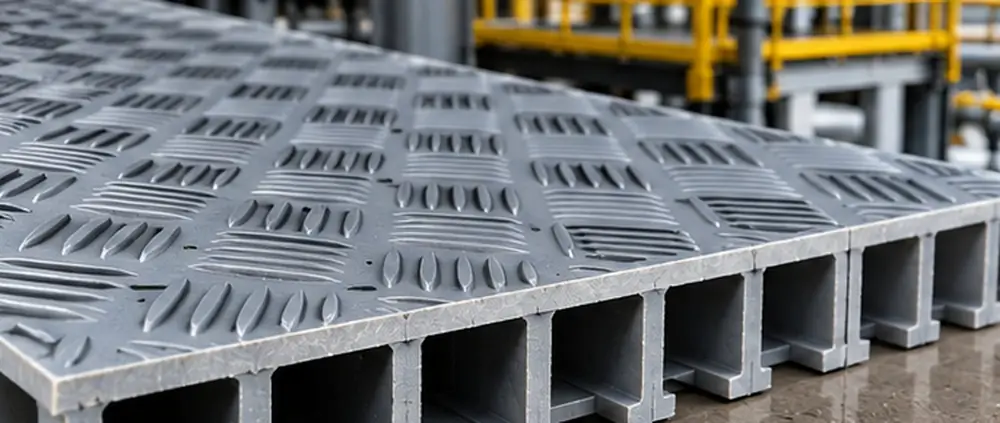
Composite gratings (fiberglass gratings) are made of glass fiber and polyester or vinyl ester resin and combine properties that no traditional material has alone: light weight (about one third to one quarter the weight of the same volume of steel), high strength, no corrosion or rust, electrical insulation, non-magnetic, non-sparking, an anti-slip surface and a choice of colors. As a result, composite grating has moved beyond heavy industry and is now found in airports, metros, swimming pools, food plants, greenhouses and even building facades. See the grating types and their differences in comparing composite grating types.
How the properties of FRP grating relate to its applications
Every application of composite grating relies on one or more of its inherent properties. Understanding this link helps you identify the decisive property on each project and choose the product accordingly:
| Composite grating property | Engineering benefit | Typical applications |
|---|---|---|
| No corrosion or rust | Long life without painting in wet and chemical environments | Water and wastewater treatment, petrochemicals, jetties, swimming pools, car washes, food industry |
| Light weight | Manual installation without a crane; less dead load on the structure | Channel and manhole covers, facades, suspended ceilings, composite bridges, aircraft stairs |
| Electrically insulating and non-magnetic | Safety against electric shock and stray currents; no magnetic interference | Power plants, substations, cable trenches, metro and rail transport, MRI rooms |
| Non-sparking | Safety in flammable and explosive atmospheres | Oil and gas platforms, refineries, mines, airport fuel depots |
| Anti-slip surface | Less slipping in the presence of water, oil and detergents | Walkways, ramps, stairs, industrial flooring, pool surrounds |
| Hygienic and washable | Non-porous surface, resistant to disinfectants | Food and dairy, pharmaceutical, slaughterhouses, greenhouses |
| Range of colors | Visual safety and architectural harmony | Stairs, tree grates, facades, street benches, safety routes |
| No scrap value | Less theft in public areas | Gutter covers, hatches and municipal manholes |
See the full technical properties in advantages of composite products and chemical behavior in the composite chemical resistance chart.
Applications of grating and FRP products in different industries
Because of their high strength-to-weight ratio and durability, composite gratings and FRP products are used across a wide range of industries. Below we look at the main user industries, the composite products they use and why FRP grating is chosen in each.
1) Power plants, substations and electrical installations
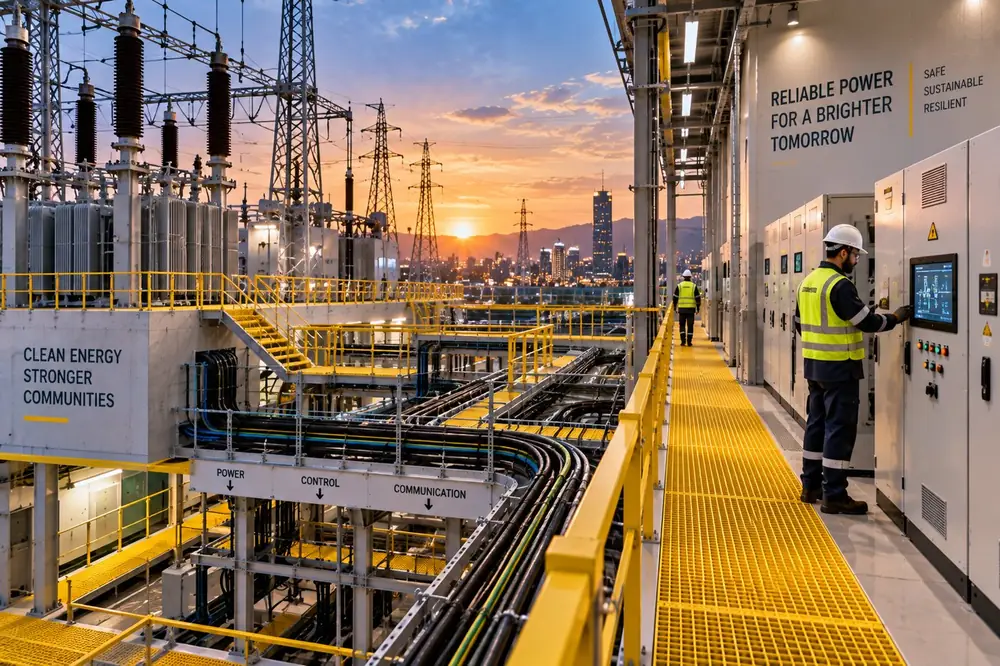
In substations, transformer platforms, switch rooms and cable routes, using composite grating is a safety requirement, not just an economic choice. FRP grating, composite handrails and composite cable trays and ladders do not conduct electricity, so accidental contact with a live cable does not pass voltage to personnel; a composite fence around a transformer, unlike a metal one, also needs no earthing. In addition, FRP products are non-magnetic, do not heat up in strong electromagnetic fields and carry no induced currents.
- Products: walkway and platform grating, handrails, cable trench covers, cable trays and ladders, insulating ladders, safety fences.
- Recommended grade: 38 mm molded grating, fire-retardant isophthalic or vinyl ester resin, yellow or grey.
2) Metro, tunnels and rail transport
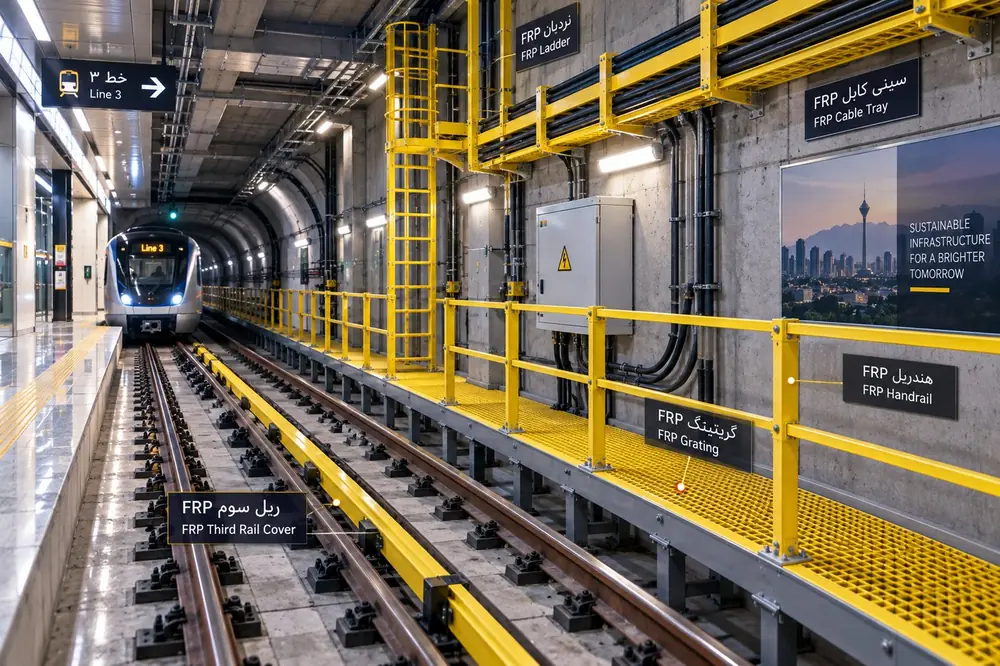
In metro tunnels, constant humidity, seepage water and stray currents from the electric traction system accelerate steel corrosion. Using composite grating on escape and service walkways beside the track, together with FRP handrails, composite ladders and FRP cable trays, creates a complete insulating, corrosion-proof system. Third-rail covers made from pultruded composite profiles are another special FRP application in rail transport.
- Reasons for selection: insulation beside the live rail, no rust in tunnel humidity, light weight for transport and installation in confined spaces, good fire behavior with fire-retardant, low-smoke resin.
- Recommended grade: fire-retardant, low-smoke resin (to EN 45545 or ASTM E84 requirements), safety yellow.
3) Airports and aviation
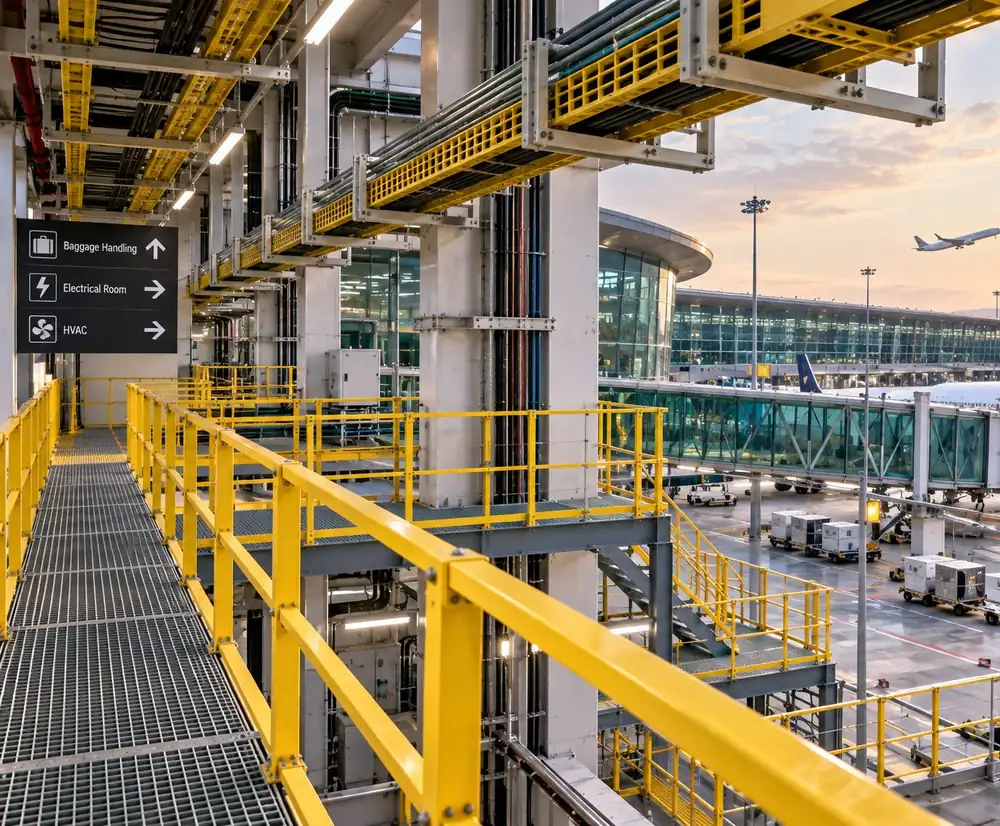
In airports, utility service walkways, access platforms for ventilation and baggage equipment, cable routes and aircraft boarding stairs are growing applications for FRP products. The light weight of composite grating on mobile aircraft stairs reduces the vehicle's weight and fuel use, and the anti-slip surface keeps passengers safe in rain and frost. In refueling areas, the non-sparking nature of FRP grating is also a safety advantage.

4) Swimming pools, water parks and car washes
Chlorinated water, constant humidity and detergents create a corrosive environment for metals. Pool grilles (composite gutter grating) over the overflow channel around a pool, walkway flooring, access stairs to slides, water-tower platforms and car wash floors are typical applications of composite grating. The surface of FRP grating does not get hot underfoot, is not sharp, does not rust and leaves no rust stains on tiles.
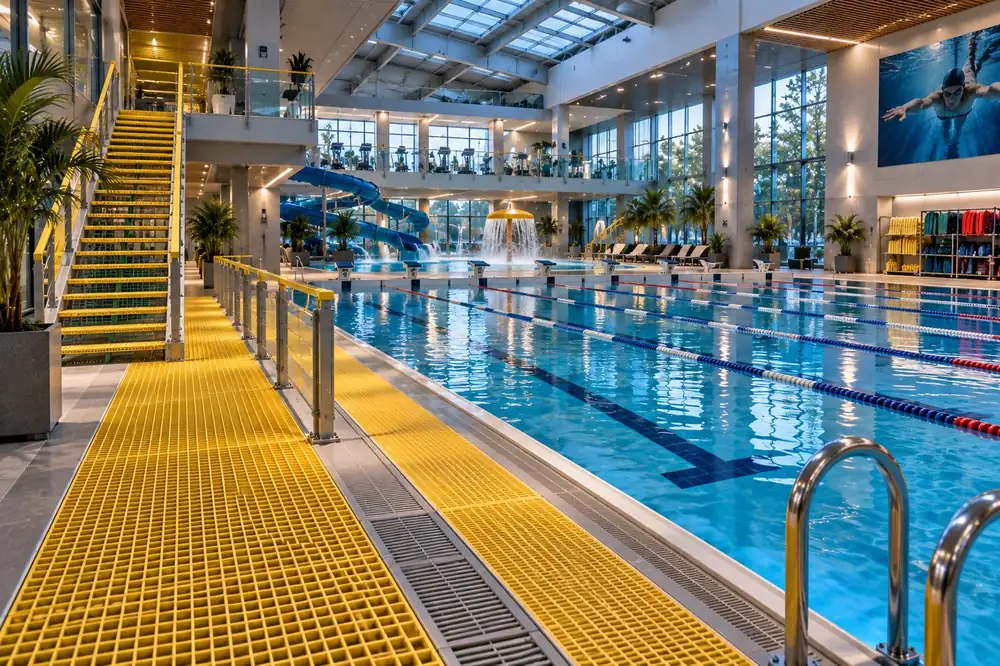
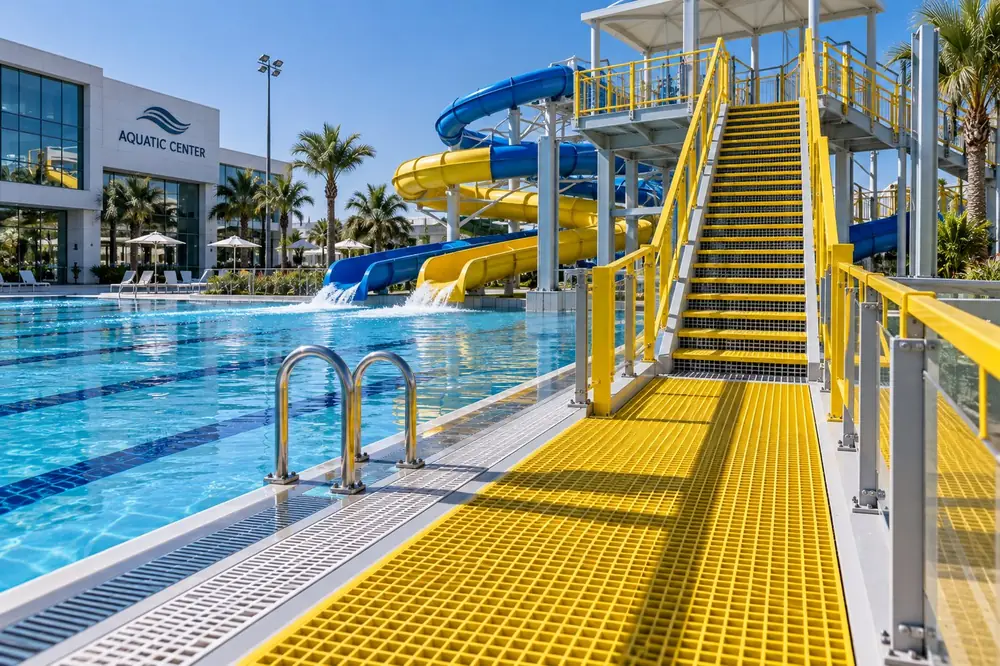
- Recommended grade: 25 to 30 mm molded grating for pool grilles and flooring, 38 mm for stairs and platforms; isophthalic resin with UV stabilizer outdoors; white, blue, yellow or grey.
5) Food, dairy and pharmaceutical industries
In dairy, soft drink, canning, slaughterhouse and pharmaceutical plants, daily washdown with hot water, acids, alkalis and disinfectants is routine. In this environment composite grating and FRP handrails do not rust, shed no rust particles into the product and need no painting; the closed, smooth surface of covered grating (checker plate) also makes cleaning easier. Composite grating pallets for moving and storing materials in cold stores and warehouses are another hygienic application.
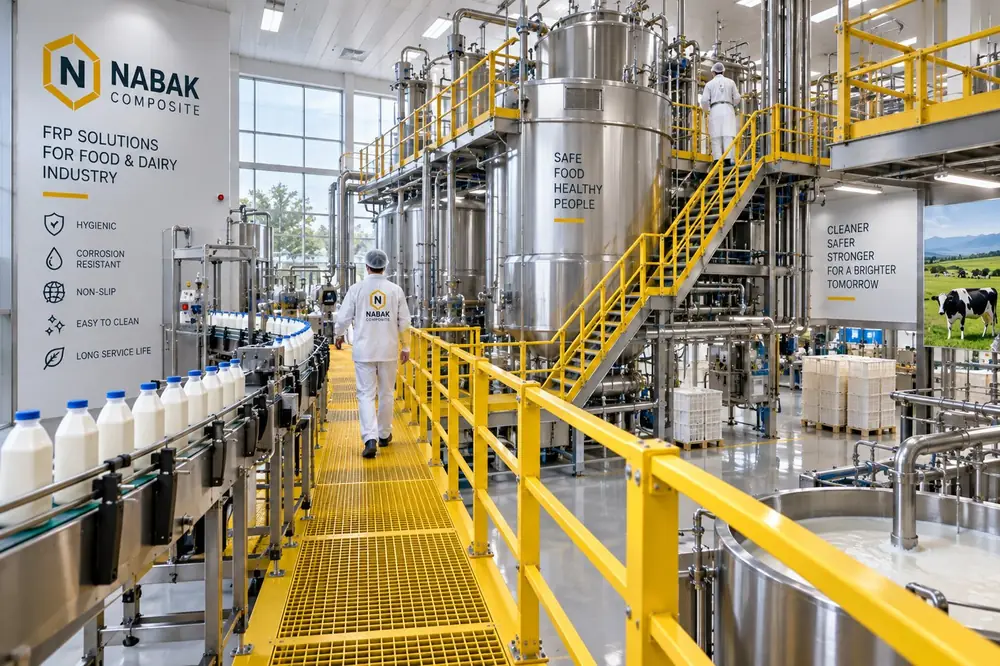
- Recommended grade: molded or covered grating with isophthalic or vinyl ester resin (for hot alkaline washdown), yellow, white or grey.
6) Agriculture, greenhouses and livestock
High humidity, fertilizers, pesticides and animal waste create a highly corrosive environment. Greenhouse service walkways, livestock and poultry house floors, fish farm pond flooring and produce pallets are applications of composite grating in agriculture. Polymer rods and composite wire for plant stakes and orchard trellises, and translucent fiberglass sheet (corrugated fiberglass) for greenhouse roofs, are also used alongside grating.

7) Building, civil engineering and architecture
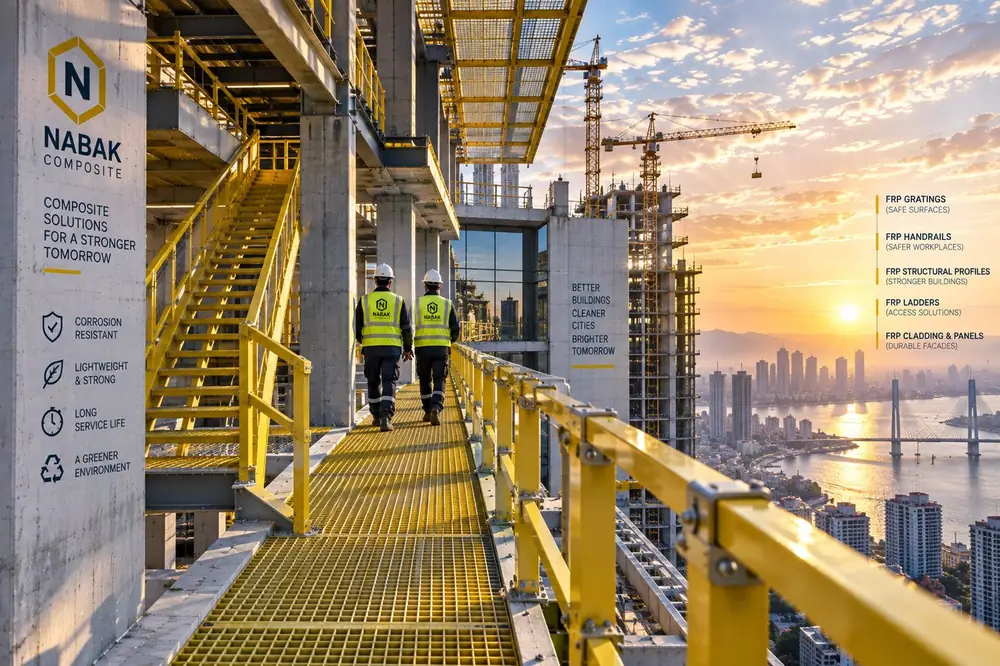
In buildings, temporary and permanent access platforms, emergency stairs, facade walkways, open-mesh suspended ceilings, rooftop plant screens, sunshades and building facades are applications of FRP grating. Light weight reduces the dead load on the structure and makes installation at height safer; the range of colors has also turned composite grating into an architectural material.
8) Oil, gas, petrochemicals, water and wastewater treatment
In the oil and gas industry, fiberglass grating is used on offshore platforms, in refineries, gas compressor stations and oil storage tanks.
These industries are the oldest and largest users of FRP grating. On offshore platforms and in refineries, the main reasons for choosing composite grating are its non-sparking nature and resistance to salt water and hydrocarbons; in petrochemical units, the chemical resistance of vinyl ester resin; and in treatment plants, resistance to H₂S, chlorine and humidity. Walkways over aeration and settling basins, platforms around tanks, cooling tower stairs and inlet screens at treatment plants are typical applications. More details in applications of composite grating.
| Industry | Most-used FRP products | Decisive property |
|---|---|---|
| Power plants and substations | Grating, handrails, cable trays and ladders, fences | Electrical insulation |
| Metro and rail | Escape-route grating, handrails, ladders, cable trays, third-rail cover | Insulation, corrosion resistance, fire |
| Airports | Stair and platform grating, handrails, cable trays | Light weight, anti-slip, non-sparking |
| Swimming pools and water parks | Pool grilles, flooring, stairs | Chlorine resistance, anti-slip |
| Food and pharmaceutical industries | Grating, checker plate, handrails, pallets | Hygienic, washable |
| Agriculture and greenhouses | Flooring, walkways, polymer rods, fiberglass sheet | Resistance to humidity and pesticides |
| Building and architecture | Stairs, facades, suspended ceilings, sunshades | Light weight, range of colors |
| Oil, gas and petrochemicals | Platforms, stairs, flooring, handrails | Non-sparking, chemical resistance |
| Water and wastewater treatment | Walkways, channel covers, screens, tank platforms | Corrosion resistance |
| Marine and shipbuilding | Engine room flooring, service decks, jetties | Salt water resistance, light weight |
Main groups of composite grating applications
Looking at grating applications by how the grating is used, almost all fall into three groups: walking surfaces, covers, and architectural and urban applications.
Group one: walkways, platforms, stairs, ramps and flooring
The largest use of composite grating is for walking and access surfaces. In this group, the grating must carry pedestrian and equipment loads with limited deflection, and its surface must not be slippery with water and oil:
- Composite walkway: the industrial walkway is the most common application of FRP grating — industrial routes over basins, beside equipment and between platforms; usually 30 to 38 mm molded grating with handrails.
- Platforms and stairs: equipment access platforms, oil and gas platforms, composite stairs and platforms around tanks.
- Stair treads: treads with a colored safety nosing so the edge of each step is visible.
- Ramps: wheelchair and loading ramps, with covered grating or a gritted (sand-coated) surface.
- Composite flooring: floors of chemical halls, washdown areas and spaces exposed to water and humidity.
To choose the height and type of grating for walkways, platforms and stairs by span and load, see the FRP grating selection guide and grating load capacity tables.
Composite platform and walkway details: a complete example
A standard composite walkway in a treatment plant or oil and gas refinery consists of: composite beams or composite channels as the main substructure beams, composite box sections for the columns, fiberglass angles for connections and edge framing, 38 mm molded composite grating for the floor, and fiberglass tube or box section for the handrail with a toe board. In this system the substructure beams are usually 600 to 900 mm apart and the handrail is at least 1100 mm high. A composite footbridge follows the same logic with pultruded grating and a longer span. In architectural settings, the same system in various colors is used for balconies, benches, fences and facade stairs.
Group two: covers, channels, gutters, hatches, manholes and screens
Gutter covers, inspection hatches and manhole covers in streets and industrial yards use the largest number of grating pieces. In these applications the grating sits over a channel or opening and must both carry traffic loads and be easy to lift for inspection and cleaning; the light weight of composite grating makes this possible without heavy tools, and having no scrap value almost eliminates the theft that is common with metal covers:
- Gutter grating and gutter covers: safe pedestrian passage and surface water flow.
- Gutter covers and pool grilles: covering overflow and drainage channels.
- Channel grating and channel covers: cable trenches, drainage channels in industrial halls.
- Hatch and manhole grating: utility inspection hatches and sewer manholes; with a fiberglass angle frame.
- Screen grating: at treatment plant inlets and water channels; usually pultruded grating.
Group three: architecture, public spaces and light structures
Composite benches, composite footbridges, handrails and fences, together with facade grating and tree grates, are examples of grating in street furniture and urban structures. The range of colors, light weight and outdoor durability of composite grating have made it an architectural and urban material:
- Facade grating and suspended ceilings: colored mesh facades and light suspended ceilings that let light and air through.
- Composite benches: street furniture with no rust or painting — park benches, bus stops and poolside seating.
- Tree grates: protecting the roots and soil around trees in sidewalks; usually green.
- Composite bridges: pedestrian footbridges with pultruded profiles and grating decks.
- Handrail and fence grating (guard grating): edge protection for platforms and bridges and enclosures for equipment and transformers; a composite fence is electrically insulating and needs no earthing.
See the right color for each application in the FRP grating color guide.
Grating in streets: gutters, hatches, manholes and drains
Municipalities are among the largest users of grating covers. Metal gutter and manhole covers are stolen for their scrap value, and the empty openings they leave are a danger to pedestrians; FRP grating covers have no scrap resale value, do not rust and, being light, can be lifted by one person to clean the gutter. The table below summarizes grating selection for these municipal applications:
| Municipal application | Recommended grating | Practical note |
|---|---|---|
| Sidewalk gutter cover | 25 to 30 mm molded grating | Fiberglass angle frame at the gutter edge; seat width ≥ 25 mm |
| Gutter cover with vehicle traffic | 50 mm molded grating or pultruded grating | Check the concentrated wheel load; short span |
| Utility inspection hatch | Molded or covered grating | Hinged hatch, or frame with a retaining lip |
| Sewer manhole cover | 38 to 50 mm molded grating with vinyl ester resin | Circular cut to the manhole diameter; sealed edges |
| Gutter and drainage channel cover | 25 to 38 mm molded grating | Short panels for easy lifting |
| Water channel inlet screen | Pultruded grating | Load-bearing bars in the direction of water flow |
In all these cases, composite gutter covers, hatches and manholes in grey or black blend with their surroundings, and in yellow mark a hazard. Unlike steel, composite gratings in municipal gutters do not corrode from the salt water caused by winter road salting.
Composite street furniture: benches, tree grates, handrails and sunshades
A composite bench is made of a profile frame with a seat of grating or composite flat bar; it does not get hot in the sun, its color does not peel and it has neither the cracks of wood nor the rust of steel. A tree grate protects the soil around the roots from being compacted underfoot while letting rainwater reach the roots; its green color blends with planting. Composite sunshades and grating fences are also used in parks, car parks and play areas. In these architectural and urban applications, resin with UV stabilizer is essential so that FRP grating keeps its color and gloss for years.
| Street furniture | Composite product | Advantage over traditional materials |
|---|---|---|
| Composite bench | Composite box section frame + grating or composite flat bar seat | No rust or rot; does not get hot in the sun |
| Tree grate | Green molded grating with a circular cut-out | Light, no scrap value, lasting color |
| Park handrails and fences | Fiberglass tube, composite box sections and guard grating | No periodic painting |
| Sunshade | Light grating + fiberglass sheet | Controlled passage of light and air |
| Composite park bridge | Composite beams and channels + pultruded grating deck | Fast installation without heavy cranes |
Other applications of composite grating
- Transport and packaging pallets: light, hygienic pallets for the food and pharmaceutical industries that are washable and rust-free.
- Sunshades: car park and yard sunshades with controlled passage of air and light.
- Covers and decorative screens: screening rooftop plant and air conditioners while keeping ventilation.
- Coastal protection shields: protecting coastal structures and breakwaters against salt water and dissipating wave energy.
- Ship flooring: engine room floors and service decks on vessels; light and durable in the marine environment.
- Acoustic panels: the protective facing and support frame for sound-absorbing materials in highway noise barriers.
Grating selection table by application
Each of the three types of composite grating — molded, covered (checker plate) and pultruded — suits a group of applications. The table below summarizes the recommended type, height, resin and color of composite grating for the most common uses. The values are a starting point for selection, and the final choice should be based on the span, load and environmental conditions of each project:
| Grating application | Recommended type | Height (mm) | Resin | Common color |
|---|---|---|---|---|
| Industrial walkway | Molded | 30 to 38 | Isophthalic | Yellow or grey |
| Oil and gas platforms and stairs | Molded or pultruded | 38 | Fire-retardant vinyl ester | Yellow |
| Substation and power plant walkways | Molded | 38 | Fire-retardant isophthalic | Yellow or grey |
| Metro tunnel service route | Molded | 38 | Fire-retardant, low smoke | Yellow |
| Stair treads | Molded with safety nosing | 30 to 38 | Isophthalic | Yellow |
| Ramps | Covered or gritted surface | 38 | Isophthalic | Grey |
| Industrial and chemical flooring | Molded | 38 | Vinyl ester | Grey |
| Treatment plants and tank surrounds | Molded | 38 | Vinyl ester | Grey or blue |
| Food and dairy industries | Molded or covered | 30 to 38 | Isophthalic / vinyl ester | Yellow or white |
| Pedestrian channel cover | Molded | 25 to 30 | Isophthalic | Grey |
| Channel cover with vehicle traffic | Molded or pultruded | 50 | Isophthalic | Grey |
| Screens | Pultruded | 38 to 50 | Vinyl ester | Grey |
| Pool grilles and car washes | Molded | 25 to 30 | Isophthalic | White or blue |
| Tree grate | Molded | 30 to 38 | Isophthalic + UV | Green |
| Facades and suspended ceilings | Light molded | 25 | Isophthalic + UV | Any RAL color |
| Composite footbridge | Pultruded | 38 to 50 | Isophthalic + UV | Grey or green |
See the specifications for each height on the pages for 25, 30, 38 and 50 mm grating, pultruded grating and checker plate grating. Read about resin selection in polyester and vinyl ester resin.
FRP grating or steel grating: a comparison across applications
In each application, the choice between FRP grating and galvanized steel grating depends on the environment and the load. The table below shows where composite grating has a decisive advantage:
| Application | FRP grating | Galvanized steel grating | Result |
|---|---|---|---|
| Water and wastewater treatment | No corrosion, 20+ year life | Corrodes in H₂S and humidity | FRP |
| Substations and metro | Insulating, no earthing | Conductive, needs earthing | FRP |
| Swimming pools and car washes | Chlorine resistant, no rust stains | Rapid corrosion and stains on tiles | FRP |
| Municipal gutter and manhole covers | No scrap value, light | Target for theft, heavy | FRP |
| Food industry | Hygienic, washable | Rust and metal particles | FRP |
| Very long span and heavy dry load | Needs a greater height or pultruded grating | High stiffness | Depends on the project |
| Service temperature above 100 °C | Limited to special resins | Suitable | Steel |
In corrosive environments, the total life-cycle cost of composite grating is usually lower than that of steel grating, even if its initial purchase price is higher. See the environmental comparison in environmental benefits of composites.
Grating installation tips for different applications
Besides correct selection, the performance of composite gratings in each application depends on correct installation. The following tips apply to most applications:
- Sufficient bearing: the seat width of the panel on the support should be at least 25 to 40 mm so that the panel does not slide off the support under vibration or deflection; for gutter covers, hatches and channels, a fiberglass or galvanized steel angle frame provides this seat.
- Clips: on walkways, platforms and stairs, panels should be fixed to the substructure beams with special stainless steel clips (M-clips or saddle clips); for covers that are opened often, use a frame with a retaining lip.
- Load-bearing bar direction: in pultruded grating and rectangular panels, install the load-bearing bars perpendicular to the support beams.
- Sealing cut edges: in chemical, marine and wastewater applications, seal cut edges with resin (see cutting composites).
- Joint gap: leave a gap of about 5 to 6 mm between adjacent panels for thermal expansion, especially on facades, composite bridges and long outdoor walkways.
- Structural connections: fix the substructure, handrails and columns with stainless bolts and nuts and wide washers; details in methods of joining composite parts.
Structures that complement grating: a complete composite system
In many applications, grating is only one part of a complete composite structure. For example, a corrosion-proof platform in a treatment plant is made of composite beams and composite channels for the substructure, composite box sections for the columns, fiberglass angles for connections, fiberglass tube or box section for the handrail, and grating for the floor. A composite footbridge is also a combination of pultruded profiles and grating. On cable routes, composite cable trays and ladders together with grating channel covers form a complete insulating, corrosion-proof system. Using an integrated composite system matters, because one rusted steel support shortens the life of the whole platform.
| Application | Grating | Complementary composite products |
|---|---|---|
| Platforms and stairs | Molded or pultruded | Composite beams, composite channels, composite box sections, fiberglass angles |
| Handrails and fences | Guard grating | Fiberglass tube, composite box sections, composite flat bars |
| Cable trenches and tunnels | Channel covers | Composite cable trays and ladders, insulating ladders |
| Composite bridges | Pultruded | Composite beams and pultruded profiles |
| Sunshades and roofs | Light molded | Fiberglass sheet (corrugated fiberglass), composite box sections |
| Greenhouses and agriculture | Molded flooring | Polymer rods, composite wire and fiberglass sheet |
See the profile specifications in the FRP profile technical datasheet and their applications in applications of pultruded products.
Factors affecting the price of composite grating in each application
The price of composite grating per square meter depends on the following factors and differs for each application:
- Grating type: molded grating, covered grating (checker plate) or pultruded grating.
- Height and weight: 50 mm grating for a vehicle channel cover has more material than 25 mm grating for a facade or suspended ceiling.
- Resin type: vinyl ester resin and fire-retardant grades are more expensive than isophthalic.
- Surface and color: gritted (sand-coated) surfaces and custom RAL colors.
- Cutting: circular cuts for manholes, curved cuts around tanks or for tree grates.
- Accessories: fiberglass angle frames, stainless clips and substructure.
For a grating price and a technical proposal for composite and fiberglass mesh panels, send the dimensions, span, load and environment of your project to Nabak Composite.
Nabak composite grating for every application
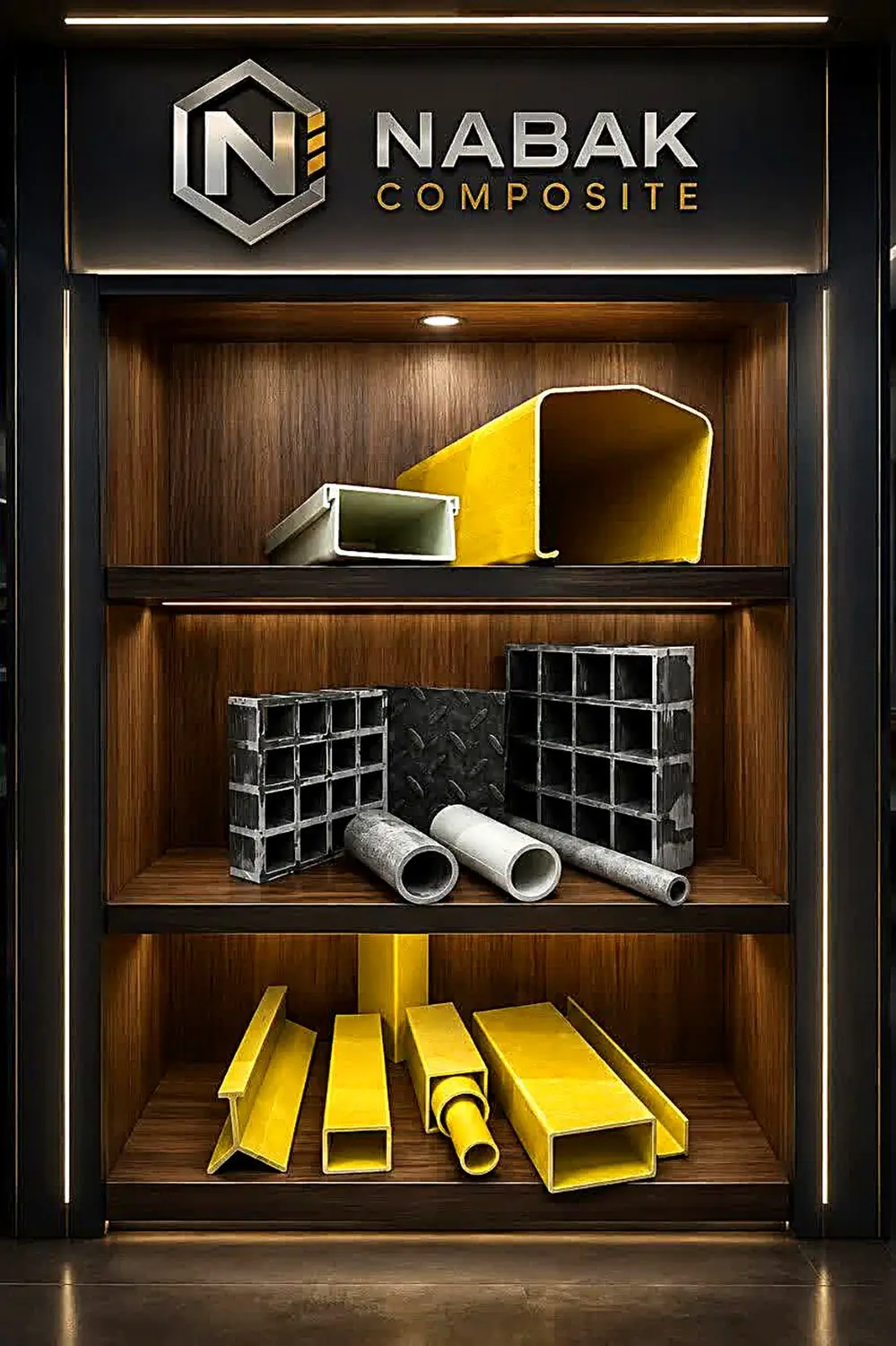
Nabak Composite produces molded, covered and pultruded grating in various heights, colors and resin grades, and cuts and ships panels to each application's drawing — from circular manhole covers to curved tank-surround platforms. Besides grating, fiberglass sheet (corrugated fiberglass), composite box sections, fiberglass angles, composite channels, composite beams, fiberglass pipe, composite flat bars, polymer rods, composite wire and cable trays and ladders are also produced, so that every project can be built as a complete composite system. For composite grating prices and technical advice on fiberglass mesh panels, contact the Nabak team.
Frequently asked questions about applications of grating and FRP products
In which industries is composite grating used?
Composite grating is used in oil, gas, petrochemicals and refining, water and wastewater treatment, power plants and substations, metro and rail transport, airports, ports and shipbuilding, the chemical, food, dairy and pharmaceutical industries, swimming pools, water parks and car washes, agriculture and greenhouses, and in building, architecture and public spaces.
Is FRP grating suitable for channel and manhole covers?
Yes; because of its low weight, freedom from rust, insulation and lack of scrap value (less theft), fiberglass grating is a good option for channel, gutter, drain, hatch and manhole covers. For vehicle traffic, height and span must be checked against the wheel load and the load table.
What is the best grating for oil and gas platforms and stairs?
38 mm molded grating with vinyl ester resin, a fire-retardant grade and an anti-slip surface is usually recommended; for spans longer than about one meter, pultruded grating is the better option.
Why are FRP handrails and cable trays used in substations and metros?
FRP products are electrically insulating and non-magnetic, need no earthing, do not spark and do not rust in tunnel humidity or outdoors. That is why composite grating, handrails, ladders and cable trays increase staff safety against electric shock and stray currents.
Is composite grating hygienic for swimming pools and the food industry?
Yes; composite grating resists chlorine, detergents and disinfectants, does not rust, has a non-porous, washable surface and, with an anti-slip surface, keeps bare feet and wet shoes safe. For the food industry, grades suitable for indirect food contact are produced.
Summary
From park benches to refinery platforms and from metro tunnels to pool surrounds, the use of composite grating and FRP products grows every year. On walking surfaces (walkways, ramps, stairs, platforms and flooring), in covers (channel covers, gutters, drains, hatches, manholes and screens) and in architectural and urban uses (facades, suspended ceilings, benches, tree grates, bridges, handrails and fences), FRP grating — light, rust-free, insulating, non-sparking, hygienic and available in many colors — is a durable, economical alternative to metal grating. In power plants, metros and airports, insulation is the decisive property; in pools and the food industry, resistance to chlorine and washdown; and in oil and gas, non-sparking behavior and chemical resistance. Choosing the right type, height, resin and color for each application and building an integrated composite system ensure the performance and long life of Nabak composite products.

This article was prepared by the technical team of Nabak Composite, a manufacturer of grating, pultruded profiles, sheets and composite products.