
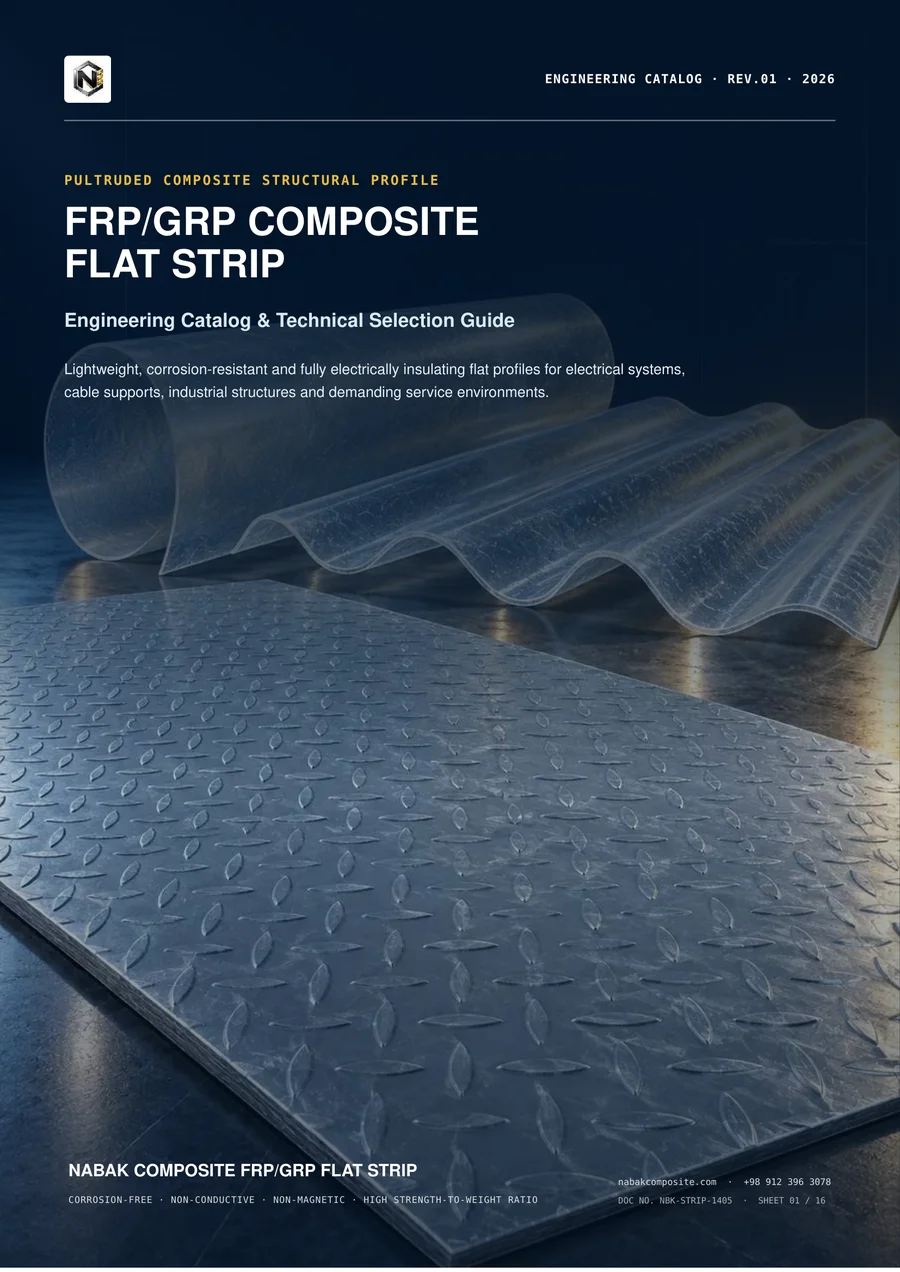
NABAK Pultruded FRP/GRP Flat Strip Engineering Catalog | Technical Specs & Dimension Table
مشاهدهی آنلاین سنددانلود فایل PDF ENGINEERING CATALOG · REV.01 · 2026
FRP/GRP COMPOSITE
FLAT STRIP
Engineering Catalog & Technical Selection Guide
Lightweight, corrosion-resistant and fully electrically insulating flat profiles for electrical systems, cable supports, industrial structures and demanding service environments.
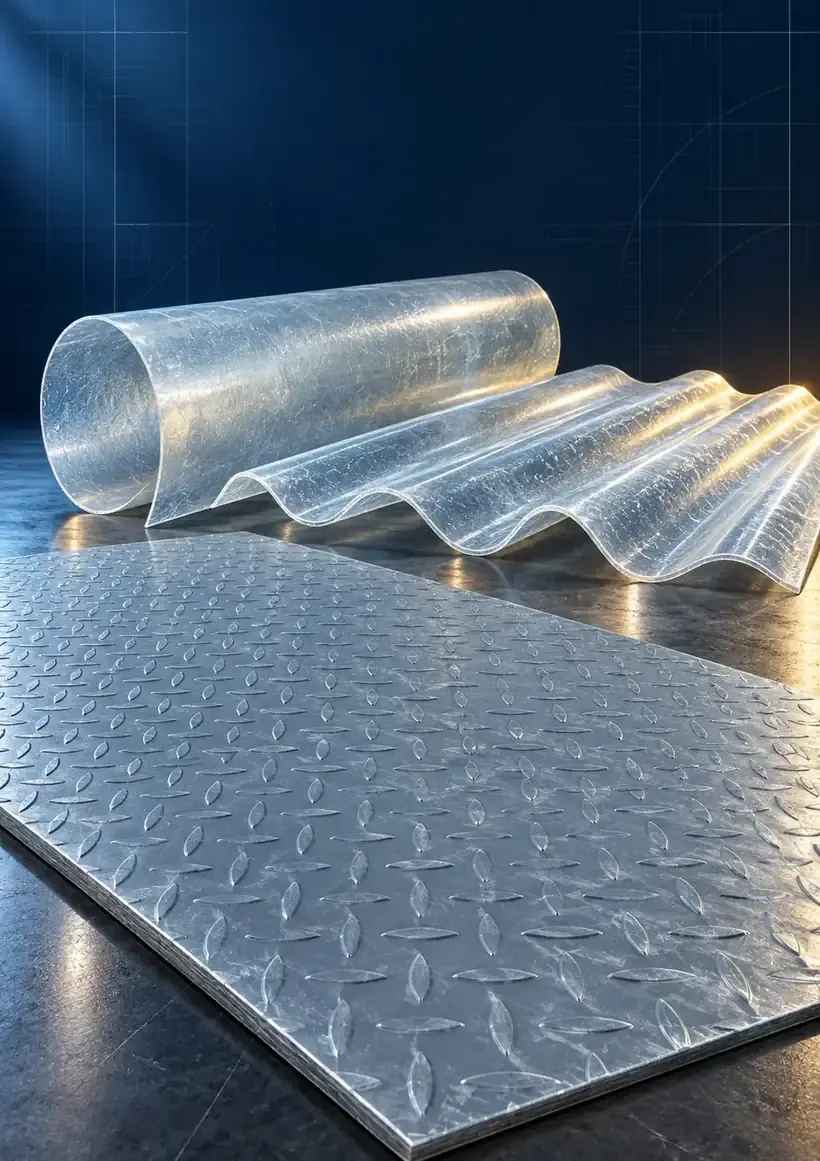
TABLE OF CONTENTS
- Sh.03 About Nabak Composite and the composite-profile production line
- Sh.04 Why composite flat strip? Application sectors
- Sh.05 What is FRP/GRP flat strip? Structure and mechanical properties
- Sh.06 Pultrusion manufacturing process and raw materials
- Sh.07 Composite strip versus steel and aluminum strip - comparison table
- Sh.08 Composite flat-strip production specifications
- Sh.09 Complete dimensions and weight table - 15 standard sizes
- Sh.10 Section details and surface quality
- Sh.11 Ordering, cutting and delivery guide
- Sh.12 Colors, surface finishes and pricing
- Sh.13 Industrial packaging, dispatch and quality control
- Sh.14 Electrical, oil and gas, water treatment and petrochemical applications
- Sh.15 Life-cycle cost in corrosive environments and selection guide
- Sh.16 Why Nabak Composite? Contact information
ABOUT NABAK COMPOSITE
Nabak Composite manufactures pultruded FRP/GRP profiles using current composite-material technology, including channels, angles, I-beams, composite sheets and flat strips. These products provide a dependable alternative to metal and aluminum strips in environments where corrosion, moisture, aggressive chemicals and electrical-insulation requirements sharply reduce the life and performance of metallic components.
The production line is designed to deliver a lightweight, insulating and durable substitute for steel strip in projects where component weight, electrical safety and corrosion resistance are critical. Typical uses include electrical equipment and switchboards, cable-tray supports, lightweight industrial structures and installations where metal corrosion or conductivity increases safety risk and maintenance cost. Glass-fiber content, resin cure and section dimensions are controlled throughout production.
"A strip that never rusts, never conducts."
In many industrial and electrical projects, corrosion and electrical conductivity in metal strip increase long-term maintenance costs and safety risks. By manufacturing composite flat strip, Nabak Composite removes these fundamental sources of cost and hazard from the project life cycle.
WHY COMPOSITE FLAT STRIP?
Moisture and chemical corrosion, unwanted electrical conductivity near energized installations, and high handling and installation weight are three common challenges of steel and aluminum strips. FRP/GRP composite strip eliminates these risk mechanisms and is engineered for applications where electrical safety, long service life and reduced maintenance cost are essential.
Electrical and Switchboard Industries
Insulating strips for switchboards, phase spacers and non-conductive parts near energized equipment.
Oil, Gas and Petrochemical
Cable-tray supports, equipment bracing strips and non-conductive components in process units exposed to corrosive vapors.
Water and Wastewater Treatment
Equipment supports and grating frames in continuous contact with moisture and chlorine.
Marine and Coastal Structures
Bracing and connection strips for coastal equipment exposed directly to saltwater and marine humidity.
- Eliminates corrosion and rust throughout the profile service life
- Reduces dead load and handling and installation costs
- Inherently electrically insulating and non-magnetic
- High chemical resistance to moisture, vapors and salts
- No periodic painting or maintenance after installation
- Custom dimensions, colors and resin systems for project requirements
"The strip should never be the risk on site."
In many industrial and electrical projects, the metal strip itself becomes a cost and safety risk because of corrosion or conductivity - not because of the primary design load. Composite strip removes this root cause from the project life cycle.
WHAT IS FRP/GRP FLAT STRIP?
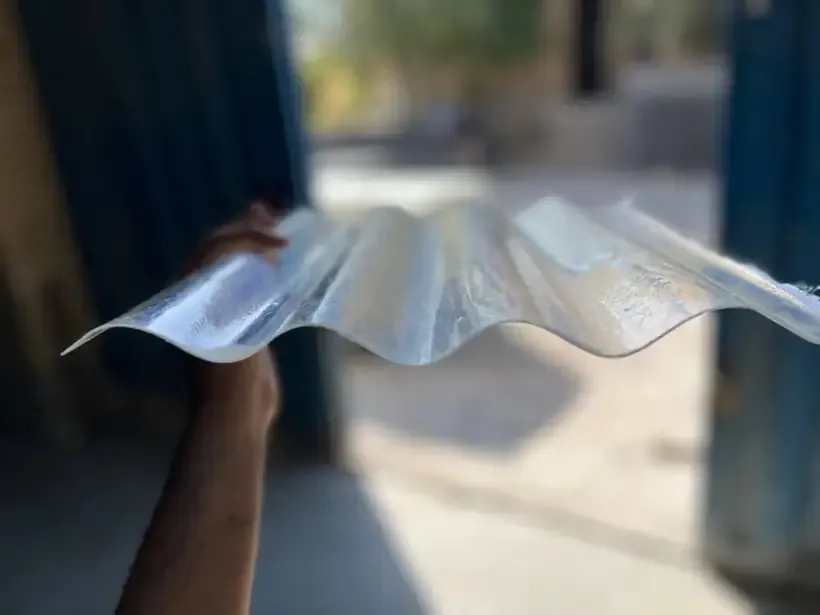
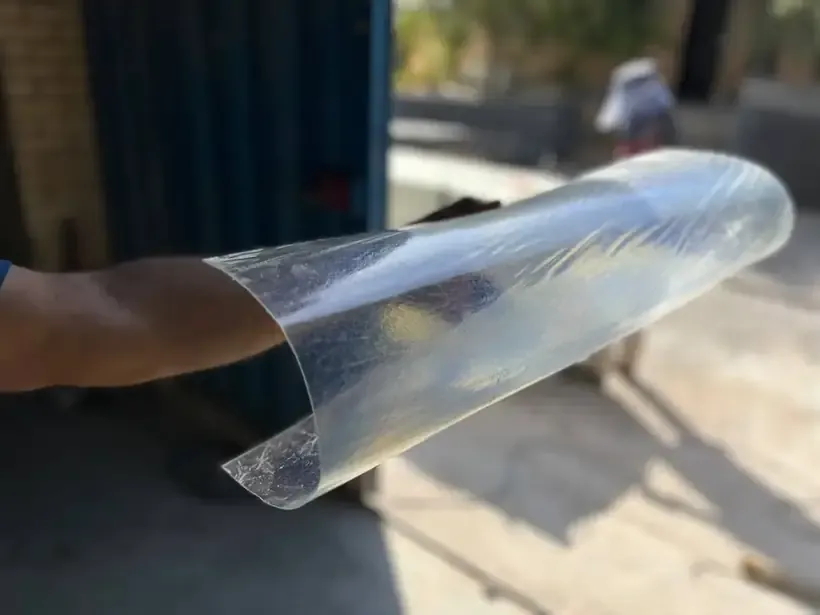
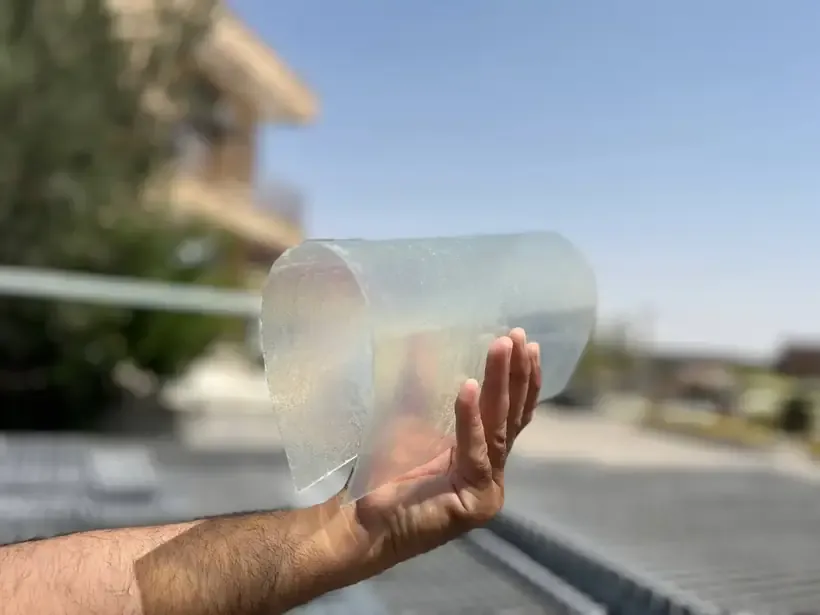
Composite flat strip is made from thousands of continuous glass-fiber strands embedded in a thermoset resin matrix and pulled into a uniform flat section. Its simple geometry provides consistent material distribution across the width and thickness, giving reliable behavior under tensile and light flexural loads. Electrical insulation and complete corrosion resistance further distinguish it from comparable metal strip.
Reinforcing Fibers
Continuous E-glass fibers, approximately 65% of the section, provide the strip's primary tensile and flexural strength.
Resin Matrix
UV-resistant isophthalic polyester is standard; vinyl ester is available for higher chemical resistance.
External Profile Surface
A thin protective resin-rich surface veil provides a uniform finish and enhanced resistance to UV degradation.
| Property | Typical Value | Compared with Steel / Aluminum |
|---|---|---|
| Density (specific gravity) | 1.8 - 2.0 g/cm3 | Approximately one-quarter the weight of steel |
| Longitudinal tensile strength | 240 - 400 MPa | Higher strength-to-weight ratio than steel |
| Flexural strength | 250 - 350 MPa | Suitable for light to moderate flexural loads |
| Elastic modulus | 22 - 30 GPa | Approximately one-eighth to one-seventh of steel (200 GPa) |
| Dielectric behavior | Complete electrical insulation | Conducts electric current |
| Magnetic behavior | Non-magnetic | Magnetic (steel) |
| Outdoor corrosion resistance | Corrosion-free | Susceptible to corrosion and rust |
* Values are typical for FRP composite flat-strip material based on widely used international test practices, including ASTM D638 and ISO 14125, and consistent Nabak Composite production. Allowable load and section selection must be determined by the project design engineer.
PULTRUSION MANUFACTURING PROCESS AND RAW MATERIALS
Nabak Composite flat strip is manufactured by pultrusion, a continuous process in which resin-saturated glass fibers are pulled through a heated steel die with an accurate flat-section geometry, then cured and drawn continuously. The process provides consistent dimensions and stable mechanical quality along the full profile length.
| Production Parameter | Specification |
|---|---|
| Manufacturing method | Pultrusion - continuous pulling of the flat section through a heated die |
| Reinforcement | Continuous E-glass fiber; approximately 65% of section volume |
| Standard base resin | UV-resistant isophthalic polyester |
| Optional resin | Vinyl ester for enhanced chemical resistance; made to order at approximately twice the standard listed rate |
| Standard fire performance | Self-extinguishing additive incorporated during production |
| Special fire performance | Fire-retardant resin systems available for projects with demanding HSE requirements |
* This is a summary of the Nabak Composite pultrusion process. A size- and order-specific technical datasheet is available from the engineering department.
COMPOSITE FLAT STRIP VS. STEEL AND ALUMINUM STRIP
Selection must consider environmental exposure, electrical-safety requirements and the project's life-cycle cost horizon. The table compares the principal performance indicators.
| Criterion | FRP/GRP Flat Strip | Steel / Aluminum Strip |
|---|---|---|
| Corrosion in wet or chemical environments | Resistant and corrosion-free | Prone to rust or surface corrosion |
| Relative weight at equal volume | Lightweight - about one-quarter of steel | Heavier (steel) |
| Electrical conductivity | Fully insulating | Conducts electric current |
| Magnetic behavior | Non-magnetic | Magnetic (steel) |
| Periodic protective painting | Not required - integrally pigmented | Required for steel in corrosive environments |
| Handling and installation cost | Lower due to low weight | Higher for steel |
| Elastic modulus / stiffness | Lower - requires appropriate design | Higher (steel: 200 GPa) |
| Life-cycle maintenance cost | Low | High in corrosive environments |
Engineering takeaway
Composite flat strip is not a universal replacement for steel. Its lower elastic modulus requires design in accordance with structural principles and allowable loads. In corrosive environments, electrical panels and projects where maintenance and electrical safety matter, however, eliminating corrosion and conductivity makes FRP the superior option.
* Values are typical ranges reported in industry references for FRP profiles and common metals and may vary with resin and reinforcement grade.
COMPOSITE FLAT STRIP - PRODUCTION SPECIFICATIONS
| Production Parameter | Specification |
|---|---|
| Manufacturing method | Pultrusion - continuous pulling through a heated flat-section die |
| Reinforcement | Continuous E-glass fiber; approximately 65% by weight |
| Standard base resin | UV-resistant isophthalic polyester |
| Optional resin | Vinyl ester for enhanced project-specific chemical resistance |
| External surface | Protective resin-rich surface veil with a uniform gloss finish |
| Standard fire performance | Self-extinguishing additive incorporated during production |
| Special fire performance | Fire-retardant resin systems available for projects with demanding HSE requirements |
| Primary applications | Electrical equipment and panels, cable-tray supports and lightweight industrial structures; compatible with bolted connections |
ASTM D638 / ISO 14125
ASTM D635 / UL 94
ASTM G154
* Values are typical of the Nabak Composite flat-strip production line. Size-specific technical datasheets and test certificates are available on request.
COMPLETE DIMENSIONS AND WEIGHT TABLE - F7 TO F100 COMPOSITE FLAT STRIP
The full Nabak Composite production range with accurate mass per linear meter for rapid order-tonnage estimates and project logistics planning.
| Profile Code | Width A (mm) | Thickness T (mm) | Weight per Meter (kg/m) | 12 m Length Weight (kg) |
|---|---|---|---|---|
| F7 | 7 | 4 | 0.045 | 0.54 |
| F8 | 8 | 5 | 0.070 | 0.84 |
| F10 | 10 | 3 | 0.060 | 0.72 |
| F30 | 30 | 5 | 0.350 | 4.20 |
| F33 | 33 | 10 | 0.650 | 7.80 |
| F40.5 | 40 | 5 | 0.450 | 5.40 |
| F40.10 | 40 | 10 | 0.760 | 9.12 |
| F44 | 44 | 10 | 0.900 | 10.80 |
| F50.6 | 50 | 6 | 0.600 | 7.20 |
| F50.10 | 50 | 10 | 1.010 | 12.12 |
| F60 | 60 | 6 | 0.750 | 9.00 |
| F64 | 64 | 10 | 1.350 | 16.20 |
| F70 | 70 | 10 | 1.390 | 16.68 |
| F87 | 87 | 10 | 1.700 | 20.40 |
| F100 | 100 | 10 | 2.000 | 24.00 |
Table guide: A = strip width; T = strip thickness. The 12 m piece weight is calculated using the minimum orderable length.
- Small components, spacers and compact electrical-insulation parts
- Cable-tray supports, lightweight framing and switchboard components
- Light-to-medium structures, bracing and industrial connections
- Highest load capacity within the product family for more demanding industrial applications
* The table lists standard Nabak Composite flat-strip dimensions and weights. Final size selection must be based on design loads and project use by the design engineer; exact order data will be stated in the official pro forma invoice.
SECTION DETAILS AND SURFACE QUALITY
Dimensional Accuracy
Precision steel dies keep section tolerances within accepted industrial limits, allowing fittings, bolts and accessories to be installed without additional machining.
Cutting and Machining
Composite strip can be cut and drilled in the workshop with conventional tools such as diamond saws and grinders, with no welding or specialist equipment.
Protective Resin Surface
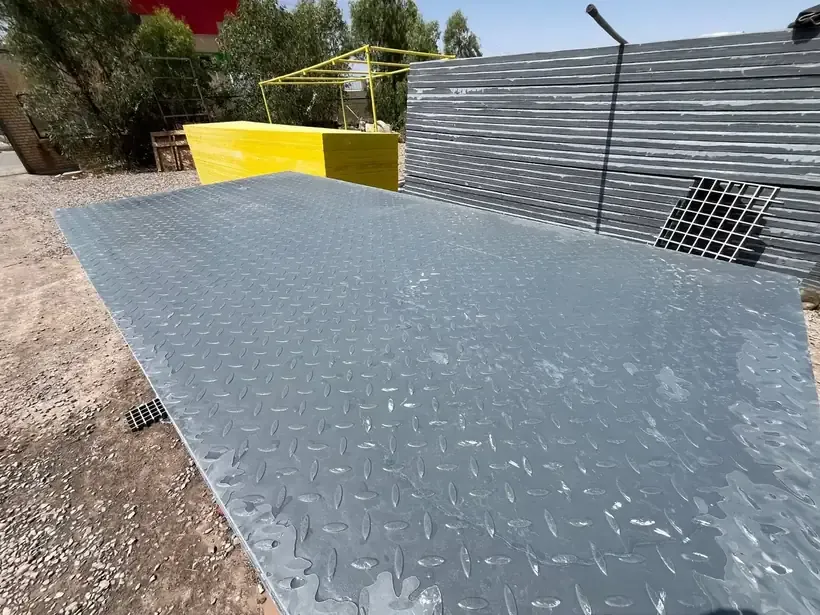
The thin resin-rich surface veil produces a uniform glossy finish, prevents glass-fiber bloom and improves UV resistance.
Mechanical Connection Compatibility
Strips can be connected with bolts, composite or galvanized-metal plates, and structural epoxy adhesives. Correct edge distance prevents local cracking.
* FRP/GRP profiles cannot be welded. Connections must use bolts, connection plates or structural adhesives.
ORDERING, CUTTING AND DELIVERY GUIDE
- Orders are cut and supplied to the customer's technical requirements and requested length. The minimum orderable length is 12 meters.
- Where stock is available, estimated delivery is approximately five working days.
- If the requested size is not in stock, it enters a new production cycle. The minimum production quantity is 200 linear meters. The exact lead time is stated transparently in the pro forma invoice according to production capacity.
- Final pricing requires a complete specification inquiry. After cut lengths and quantities are confirmed, the final rate is stated in the pro forma invoice.
- Higher-volume orders that can be scheduled into the production cycle are eligible for graduated discounts and special rate adjustments.
- Payment terms, shipping method and final delivery location are stated separately in each pro forma invoice. Depending on destination, full-truck, cargo-bus or nationwide freight-company delivery is available.
* These ordering and delivery terms summarize Nabak Composite's standard sales procedure and do not replace the official pro forma invoice. Final figures and conditions are valid only as stated in that document.
COLORS, SURFACE FINISHES AND PRICING NOTES
For orders supplied from inventory, the final color is confirmed according to available stock in the pro forma invoice; typical stock colors are yellow, grey and white. New production orders may select yellow, grey, white or black. Other custom colors are available for sufficiently large production quantities.
- Integral Pigmentation - pigment is added to the resin during production
- Wood-Grain Finish - available to order for architectural and visual applications
- Custom RAL Coating - applied to the requested RAL code
- Enhanced UV Resistance - achieved through appropriate RAL coating for outdoor exposure
Integral pigments are mixed directly into the resin during production, so color extends into the section and remains stable against superficial scratching. Project-specific surface coatings are formulated for composite substrates and provide strong adhesion, improved appearance and additional sunlight resistance.
- Dimensions and weights provide a preliminary basis for order-tonnage estimation and do not constitute a final price. Final rates are issued after cut lengths and quantities are confirmed.
- Production-scale orders and larger quantities are eligible for rate adjustments and graduated discounts.
* These color and pricing terms summarize Nabak Composite's standard sales procedure and do not replace an official pro forma invoice.
INDUSTRIAL PACKAGING, DISPATCH AND QUALITY CONTROL
- Profiles arranged on wooden pallets with appropriate spacing to prevent local pressure
- Industrial strapping with edge protectors at all contact points
- Protective film against moisture and dust during transport
- Full-truck, cargo-bus or nationwide freight-company delivery according to destination
- Waybill and shipping documents supplied with product quality certification
- Final verification of dimensions, cut lengths and quantities against the pro forma invoice before dispatch
Quality commitment
Every shipment is inspected for dimensions, cut length, quantity and surface quality before dispatch to ensure complete conformity with the issued pro forma invoice. Stable quality throughout production, packaging and transport is Nabak Composite's commitment to industrial clients.
* Packaging and shipping methods may vary according to product, destination and order volume. Final shipment details are specified in the pro forma invoice.
COMPOSITE FLAT-STRIP APPLICATIONS ACROSS INDUSTRIES
Electrical and Switchboard Industries
Insulating strip for panels, phase spacers and non-conductive parts near energized equipment
Oil, Gas and Petrochemical
Cable-tray supports and bracing for precision equipment and piping in process units with acidic vapors
Water and Wastewater Treatment
Grating framing strips and equipment supports in continuous contact with moisture and chlorine
Marine and Coastal Structures
Bracing and connection strips for jetties and equipment exposed directly to saltwater and marine humidity
Power Generation and Mining
Support strips in halls with corrosive dust and non-conductive parts near energized installations
Mining and Processing Industries
Lightweight strip for dusty, high-humidity environments as an alternative to galvanized steel
* Final component arrangement, strip size and load capacity are engineered by the Nabak Composite technical department according to site conditions and project safety requirements.
LIFE-CYCLE COST OF METAL STRIP IN CORROSIVE ENVIRONMENTS AND A PRACTICAL COMPOSITE-SELECTION GUIDE
In industrial and electrical projects located in humid regions or process units with chemical contaminants, the real cost of a metal strip extends far beyond its purchase price. Periodic painting, electrical-safety risk near energized equipment and premature replacement are hidden costs often omitted from initial calculations. Composite strip eliminates corrosion and conductivity from the project life cycle. Although its initial price per meter may exceed basic steel, its total cost of ownership over a 15- to 25-year horizon can be substantially lower.
- Project Environment - exposure to moisture, chemical vapors or sea salt
- Electrical Safety - requirement for complete insulation near energized equipment
- Resin System - polyester for general service; vinyl ester for higher chemical resistance
- Fire Requirements - dedicated fire-retardant resin where required by HSE criteria
- Connection Method - bolts, connection plates or structural epoxy adhesive
- Special Requirements - electrical insulation or non-magnetic section behavior
Engineering takeaway
Because composite strip has a lower modulus than steel, it requires a different design approach to loads and supports. In return, it eliminates the principal life-cycle sources of metal-strip cost and risk: corrosion and electrical conductivity. Nabak Composite's technical team supports engineers in selecting section size, resin system and connection layout for each project.
CONCLUSION: Where corrosion, electrical safety or long-term maintenance matters, FRP/GRP composite strip improves component safety and durability while significantly reducing project life-cycle cost.
WHY NABAK COMPOSITE?
- A project-specific engineering solution, not merely a component sale
- Domestic production of composite strip and other FRP profiles with documented quality control throughout the process
- Technical support from section and resin selection to connection layout and installation planning
- Compatibility with internationally recognized composite-industry standards
- Custom production of length, color and resin system to suit project requirements
QUALITY · INNOVATION · DURABILITY
Quality, innovation and durability are the guiding principles of Nabak Composite in every entrusted project.
For supplementary technical documents, test reports and reference-project lists, contact the Nabak Composite technical and sales departments.